
Reviewed · OSAKA SAMURAI & NINJA EXPERIENCES
Trial slashing in Bushido with Samurai Sword real sharpnes
The sharpest moment comes near the end, when you trade the practice sword for a real Japanese sword and cut a rolled straw target. This is not a stage show. You follow instructions, control the blade, and treat the weapon with care.
I like the compact one-hour format and the small maximum of five people. I also like the mix of physical practice and Bushido manners, including the formal bow at both ends of the lesson. The main consideration is simple: drawing a real sword is dangerous, so this requires focus and moderate physical fitness.
In This Review
- Key points to know before you book
- From Osaka Castle station to Samurai Honor
- Changing into dogi and hakama
- Bow first, then learn the rules
- Practice the sword without a sharp blade
- Basic kata and direct instruction
- The real test: cutting rolled straw
- Photos and the final bow
- What the $78.83 price gives you
- Who will get the most from this lesson
- Timing, fitness, and safety
- How this compares with a basic samurai photo stop
- Should you book Trial Slashing in Bushido?
- FAQ
- Where does the samurai sword activity meet?
- Where does the activity finish?
- How long does the experience last?
- How much does the experience cost?
- How many people can join the class?
- Is a real Japanese sword used?
- What clothing is provided?
- Is photography included?
- What languages are available?
- Can I cancel for a full refund?
Key points to know before you book
- Real sword cutting: You use a Japanese sword to make a controlled cut through rolled straw.
- Samurai clothing: The session begins with dogi and hakama, helping you shift into the role before handling a blade.
- Small class size: A maximum of five people allows room for close instruction and individual correction.
- Traditional sequence: You learn stance, sword swings, battou, chiburui, and nottou before attempting the cut.
- Near Osaka Castle: Samurai Honor is about a one-minute walk from Osaka-jo Koen Station on the JR Osaka Loop Line.
- Photos included: Serious action photographs are sent to your designated email address within two days.
From Osaka Castle station to Samurai Honor
The activity takes place at Samurai Honor, listed at 2-chōme 319, Excellence Takayama, Shiginonishi, Joto Ward, Osaka. The location is described as a one-minute walk from Osaka-jo Koen Station on the JR Osaka Loop Line, the station used for Osaka Castle.
That setting matters. You can pair this lesson with time around the castle grounds without giving up half a day to transport. The activity itself lasts about one hour, so it fits neatly before or after sightseeing. You still need to allow time to find the exact building and arrive ready for the start, since this is a scheduled lesson rather than an open-door attraction.
The class ends back at the same meeting point. Public transport, hotel transfers, and other transportation are not included, so you make your own way there.
More samurai and ninja experiences:
- Samurai Training Experience KENDO in Osaka
★ 5.0 · 515 reviews - OSAKA NIGHT FUSION Japanese Taiko Kabuki Samurai Dance Show
★ 4.8 · 155 reviews - Osaka: Samurai Training Experience KENDO in Osaka
★ 5.0 · 111 reviews
Changing into dogi and hakama
Your first task is to change into samurai clothing. The outfit includes a dogi and hakama, the familiar jacket and divided skirt-like trousers associated with Japanese martial arts and traditional dress.
This is more than a costume photograph. The clothing sets the tone for the lesson and gives the activity a clear ritual shape. You are not simply handed a sword and asked to swing it. You dress, listen, practice, and follow a formal sequence.
The supplied information describes the Japanese sword as something traditionally worn by samurai. In the class, that idea appears through manners and controlled movement. The outfit helps you understand that the sword is treated as a serious object, not a theatrical prop.
The clothing may feel unusual if you have never worn it. You will want to follow the instructor’s directions closely and avoid treating the first few minutes as a free-for-all photo session. The point is to prepare for the lesson.
Bow first, then learn the rules
The class begins with a bow and ends with another bow. That bookending gives the hour a calm structure, especially when compared with action-focused sword demonstrations.
You then receive an explanation of swords and samurai manners. Bushido is presented through ideas such as loyalty, discipline, and respect for one’s lord. The session also introduces samurai language, described as speech used mainly by the samurai class during Japan’s Warring States period.
This part may be especially useful if you are interested in the culture behind the weapon. You get a short lesson in conduct, not just blade mechanics. A souvenir phrase from the instructor is also included, such as Arigataki shiawase, a traditional expression meaning extremely fortunate or a rare coincidence.
Some of the language about samurai etiquette is deliberately formal. The class explains that a samurai’s words carried great weight and that permission from a lord or superior shaped when one could speak. You do not need prior knowledge of Japanese customs, but you do need to listen carefully and respect the tone of the session.
Practice the sword without a sharp blade
Before the real cutting begins, you practice with an iai practice sword. This is the most important safety stage, and it also gives the hour a useful rhythm.
You work on the basic stance and sword swing, then learn three named actions:
- Battou: Drawing the sword from its scabbard to cut.
- Chiburui: The symbolic movement used to remove blood from the blade after a cut.
- Nottou: Returning the sword to its sheath after the chiburui motion.
These movements are not presented as random flourishes. Each has a place in the sequence. You learn how to begin, cut, symbolically clear the blade, and return it to the scabbard.
The iai sword lets you repeat the basic actions before any sharp blade appears. That makes the lesson more approachable for a first-timer, but it does not make the activity casual. You are learning a sequence that depends on body position and control.
The available information does not name the instructor, but it does specify a certified professional instructor and direct teaching from a master. The small group limit, five people, is helpful here. You are not lost in a large crowd while trying to remember which hand moves first.
A completely different way to spend a day in Osaka:
- Osaka Go Karting Tour with Funny Costume
★ 5.0 · 2,658 reviews - Osaka Castle: Museum and Tower Entry Ticket
★ 4.5 · 2,380 reviews - Osaka: Shinsekai Food Tour with 13-15 Dishes at 5 Eateries
★ 4.8 · 2,204 reviews - Osaka Food Tour: 13 Dishes at 5 Local Eateries
★ 5.0 · 2,149 reviews
Basic kata and direct instruction
The instructor demonstrates basic kata, stances, and sword swings, then guides you through the same movements. Kata means a set form, so the focus is on repeating a defined pattern rather than improvising.
That distinction is useful. If you arrive hoping to stage a movie fight, this is not that sort of activity. The lesson is about posture, sequence, and restraint. You learn how to handle the sword within rules.
The class lasts only about an hour, so the instruction is necessarily concentrated. You will not leave with a full martial arts education. You can, however, get a clear introduction to the structure of sword practice and the manners tied to it.
The reported experiences describe people learning several moves and getting one-on-one attention from the samurai trainer. That fits the maximum group size and suggests you should expect direct correction rather than a lecture from across a room. Still, the exact amount of individual time can vary with the number of people booked.
The real test: cutting rolled straw
The highlight is trial slashing with a real Japanese sword. The target is rolled straw, and the task is to make a controlled cut rather than simply swing hard.
This is where the practice matters. Your stance, angle, draw, and follow-through all affect the result. The instructor controls the pace and tells you when you may draw the sword. The safety guidance is explicit: drawing swords without permission is prohibited.
The wording around real sharpness should be taken seriously. This is a genuine blade-handling activity, not a foam-sword game. You need to keep your attention on the instructor, wait for permission, and avoid sudden movement.
At the same time, the target is straw rather than a dangerous stunt setup. That gives you a clear physical goal while keeping the exercise within a controlled lesson. You are testing a cutting technique, not pretending to fight another person.
The class can be satisfying even if your cut is not perfect. The value lies in feeling how much control is needed to use a sword properly. A powerful swing alone is not the lesson. You are learning that a clean cut depends on the full movement.
Photos and the final bow
Photography is included, and the service is designed to capture your serious expression and posture during the activity. Photo data is sent to your designated email address within two days.
This is a useful inclusion because your hands are occupied during the lesson. You do not have to ask a companion to stand outside the practice area or try to operate a phone around a sharp blade. The photographs also record the costume, kata, and cutting attempt, not just a posed portrait.
The activity ends with a bow, matching the opening ritual. That small detail gives the class a sense of completion. You change out of the samurai clothing and leave from the same meeting point.
Tips and a souvenir from the instructor are also included. The exact form of the souvenir is not specified, so I would treat it as a small cultural extra rather than the reason to book.
What the $78.83 price gives you
At $78.83 per person, the fee is reasonable if you want a focused, hands-on activity rather than a museum visit or a short photo opportunity. You receive samurai clothing, a certified professional instructor, practice with an iai sword, instruction in kata and manners, real sword cutting, photography, and gratuities.
The price also covers the part that is hardest to arrange independently: supervised access to a real Japanese sword. You should not try to recreate the cutting exercise on your own. The controlled setting and professional direction are central to the value.
The one-hour length keeps the total cost from becoming a major half-day commitment. On the other hand, anyone seeking extensive martial arts training may find the session brief. You get an introduction and a memorable practical exercise, not a long course.
Transportation is extra. You pay for your train or other way to reach the meeting point, and bottled water is not included. Personal costs are also separate. Movie shooting is listed as a paid option at ¥33,000 per person, so ask about that before assuming the standard package includes professional filming.
Who will get the most from this lesson
I would recommend this for adults and older children who can follow safety instructions, maintain focus, and manage moderate physical activity. One father attended with his 22-year-old son, and the format also suits two friends, couples, or solo visitors who want a cultural activity with a physical element.
It is a good match for you if you:
- Want to learn, not simply pose with a sword.
- Have an interest in Bushido, samurai manners, or Japanese martial arts.
- Prefer a small class to a large performance.
- Are visiting Osaka Castle and want a nearby activity.
- Like the idea of leaving with action photos sent by email.
It may be a poor fit if you want a relaxed, hands-off attraction. The class asks you to listen and control your movements. The sword is sharp, and the safety rules are not decorative.
The experience also has limits. The lesson is conducted in English by default, with Italian, Spanish, French, Chinese, Thai, and Indonesian available by inquiry. You should confirm language arrangements before booking if you need one of those options.
Timing, fitness, and safety
The activity lasts approximately one hour, and the average booking time is 27 days in advance. That advance pattern suggests you should reserve early if the class is an important part of your Osaka plans, especially since the maximum is only five people.
You need moderate physical fitness. The lesson involves standing, taking a stance, swinging a practice sword, drawing and returning a sword, and performing a controlled cut. The supplied information does not provide age, clothing, or mobility rules, so contact the provider if you need a specific accommodation.
The central safety instruction is clear: do not draw a sword without permission. Keep the blade pointed and handled exactly as directed. Do not turn the activity into a joke for a photograph. The serious tone is part of what makes the lesson work.
Free cancellation is available if you cancel at least 24 hours before the start time. Cancellations made later, and changes made less than 24 hours before the start, are not accepted for a refund. The cut-off follows local Osaka time.
How this compares with a basic samurai photo stop
A costume photo stop gives you an image. This class gives you a short progression: dress, bow, learn manners, practice forms, handle a real sword under supervision, cut straw, and receive activity photos afterward.
That progression is the strongest reason to choose it. You can connect the clothing and language to the physical practice, even within a compact hour. The cutting target supplies a clear finish, while the bows and etiquette keep the activity tied to Bushido rather than pure entertainment.
You should not expect a full historical seminar. The information supplied focuses on sword use, manners, language, and basic training. If your priority is detailed castle history or a long museum-style explanation, you will need another Osaka activity as well.
Should you book Trial Slashing in Bushido?
Book it if you want a small, well-structured introduction to samurai practice near Osaka Castle, and if the chance to cut rolled straw with a real sword matters to you. The combination of dogi and hakama, formal etiquette, iai practice, direct kata instruction, and a supervised sharp-blade exercise gives the hour real substance.
Skip it if you are uncomfortable with weapons, want a completely passive attraction, or need a long and detailed martial arts course. For the right person, $78.83 buys more than a costume picture: it buys a carefully controlled lesson in movement, manners, and responsibility, with photos to remember the occasion.
FAQ
Where does the samurai sword activity meet?
The activity meets at Samurai Honor, listed at Japan, 536-0014 Osaka, Joto Ward, Shiginonishi, 2-chōme 319, Excellence Takayama. It is described as a one-minute walk from Osaka-jo Koen Station on the JR Osaka Loop Line.
Where does the activity finish?
The activity ends back at the meeting point.
How long does the experience last?
The activity lasts approximately one hour.
How much does the experience cost?
The listed price is $78.83 per person.
How many people can join the class?
The maximum group size is five people.
Is a real Japanese sword used?
Yes. You practice first with an iai practice sword, then try cutting rolled straw with a real Japanese sword under instruction.
What clothing is provided?
A samurai outfit consisting of dogi and hakama is included.
Is photography included?
Yes. Photography is included, and the data is sent to your designated email address within two days.
What languages are available?
English is the default language. Italian, Spanish, French, Chinese, Thai, and Indonesian may be available by inquiry.
Can I cancel for a full refund?
Yes, if you cancel at least 24 hours before the experience start time. Cancellations or changes made less than 24 hours before the start are not accepted for a refund.
Just added around Osaka
- Nara Day Trip from Osaka with a Licensed Guide★ 5.0 · 3 reviews
- Osaka Early Morning Osaka Castle Tour Avoid Crowds★ 5.0 · 3 reviews
- Guided Tour of Some Attractions in Osaka by Private Car★ 5.0 · 3 reviews
- Private Transfer Between Kyoto and Kansai Airport KIX★ 5.0 · 3 reviews
- Shared Arrival Transfer: Osaka Itami Airport to Osaka City★ 5.0 · 3 reviews
- Osaka: Sushi Making Class and Dotonbori Food Tour★ 4.7 · 3 reviews
- Osaka Night Photography Workshop★ 5.0 · 3 reviews
- Kyoto Full day Tour Kinkakuji, Kiyomizu-dera and Fushimi Inari★ 4.5 · 3 reviews
Osaka Samurai & Ninja Experiences, compared.
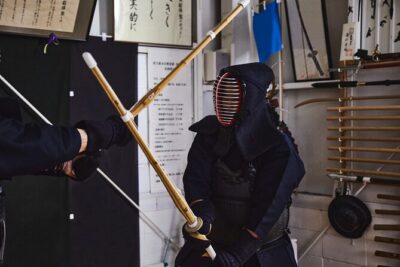
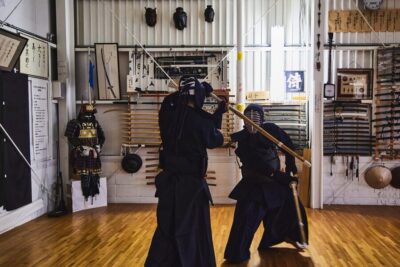

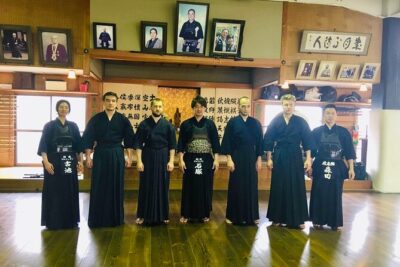
Osaka 2-Hour Genuine Kendo / Samurai Experience In Japan
Read our review →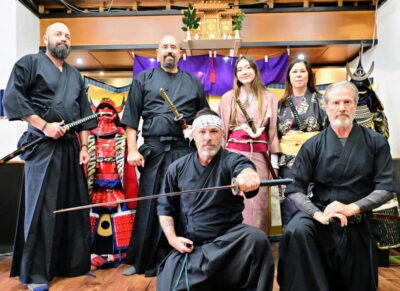
Learn Bushido – Trial Slashing with Samurai Sword
Read our review →
Samurai Show, Tea Ceremony, Japanese Traditional Activities
Read our review →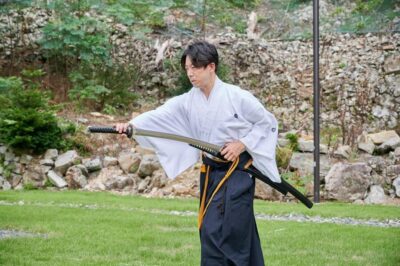
Private Samurai Experience – Train with Sword Master
Read our review →
Honor – Experience Samurai & traditional Culture to the fullest
Read our review →Browse the lists this tour appears in