
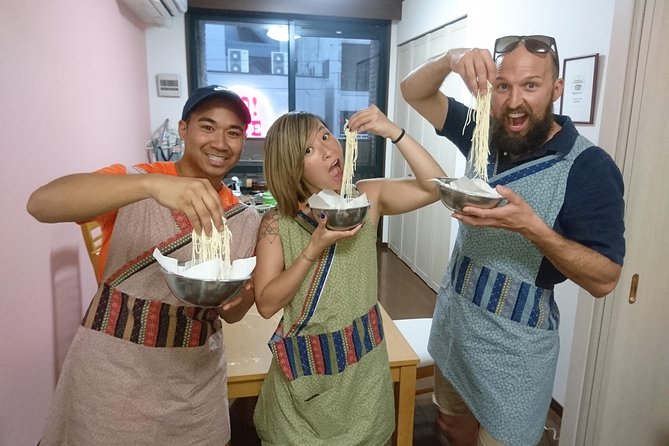
Reviewed · RAMEN & GYOZA COOKING CLASSES
Three Types of Ramen Cooking Class in Osaka
Making three bowls of ramen in one sitting is the clever idea behind this Osaka cooking class. You prepare noodles from scratch, then turn them into salt, soy sauce, and miso ramen with different toppings. Fumi and the Sakura Cook team keep the work friendly and easy to follow.
I like the hands-on noodle making and the useful printed recipe you take home. I also like the generous meal: the class includes all three ramen styles, dessert, seasonal fruit, and green tea. The main consideration is quantity. The total noodle amount is 100 grams, but with three soups and toppings, the meal can still feel very filling.
In This Review
- Key points to know before booking
- Why three ramen styles make this class worthwhile
- Starting with handmade ramen noodles
- Preparing the three broths and toppings
- Eating your ramen at the end
- The instructors and teaching style
- Group size, timing, and location in Osaka
- Is $79.28 a fair price?
- Who will enjoy this class most?
- Small practical details that matter
- Should you book the three-ramen class?
- FAQ
- How long does the ramen cooking class last?
- Where does the class meet?
- Does the activity end at the meeting point?
- Which types of ramen do you make?
- Do I make the ramen noodles from scratch?
- Are ingredients and cooking equipment included?
- Is food included in the price?
- Can vegetarian diners take the class?
- Is hotel pickup included?
- What is the cancellation policy?
Key points to know before booking
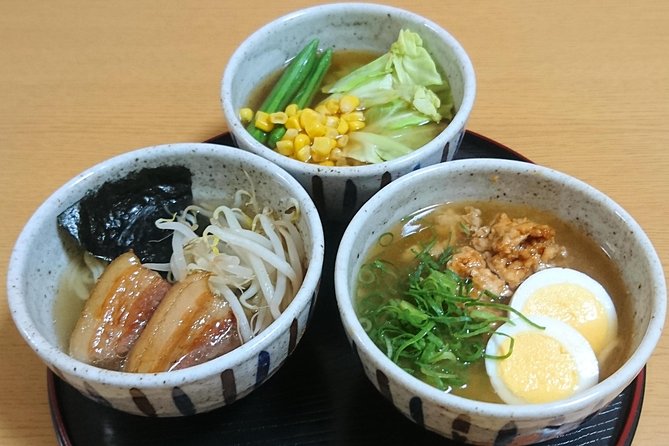
- Three ramen styles in one class: Make salt, soy sauce, and miso ramen rather than focusing on one recipe.
- Noodles made from scratch: The class teaches the part many visitors never see in a ramen shop.
- Small-group format: It is promoted as limited to eight people, though the additional booking information gives a maximum of 12.
- Fumi and Sakura Cook instructors: Fumi is praised for clear English, patient guidance, and practical cooking tips.
- A complete meal is included: Enjoy the ramen you prepare, plus dessert, seasonal fruit, and green tea.
- Kitahorie location: Meet at Banix Kitahorie, near public transportation, and return to the same place when the class ends.
Why three ramen styles make this class worthwhile
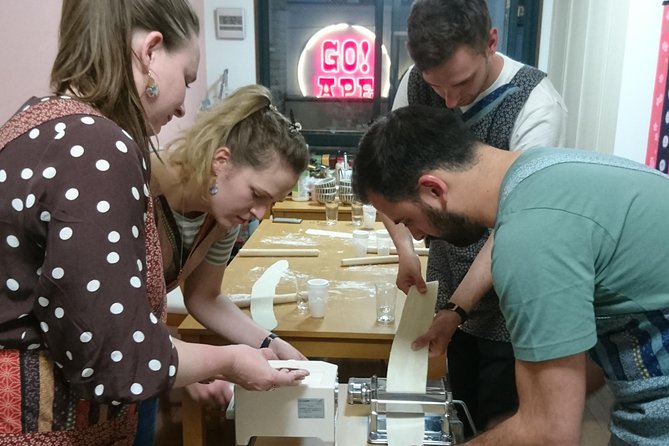
Many ramen classes teach one bowl and call it a day. This one shows you how much the soup base and toppings can change the result. The noodles stay central, but the seasoning takes you in three different directions.
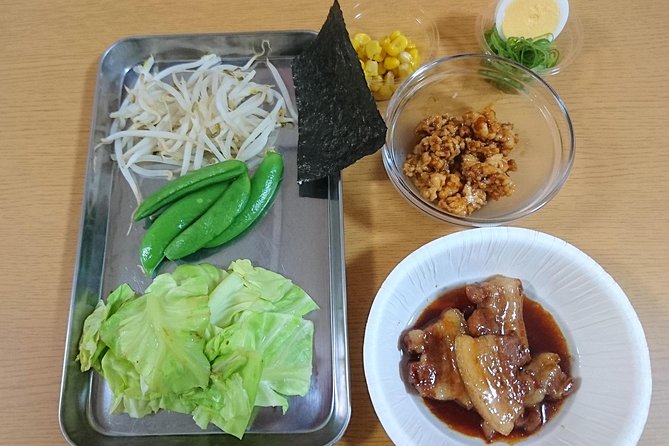
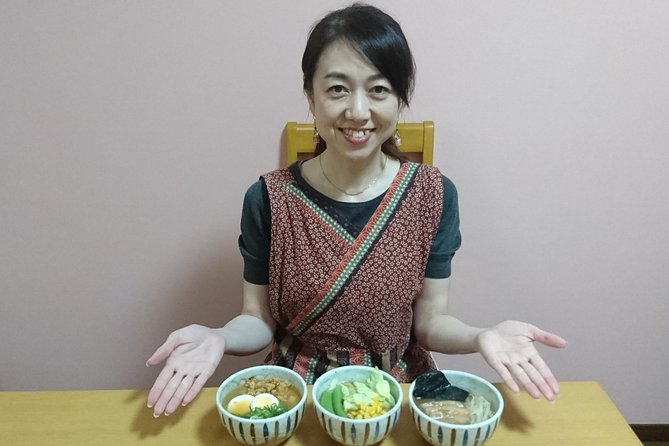
The salt ramen is paired with sweet, juicy pork, bean sprouts, and seaweed. The soy sauce version gets steamed cabbage, green vegetables, and sweet corn. The miso ramen comes with spicy chicken, boiled egg, and green onion.
That range gives you a useful lesson in balance. Salt ramen lets the toppings and broth speak clearly. Soy sauce brings a deeper, more savory flavor. Miso adds a stronger, fuller taste, with the spicy chicken giving it extra heat.
You do not simply watch an instructor assemble three bowls. You make the noodles, prepare the soup bases, and work on the toppings. That makes the class useful for anyone who wants to repeat the meal at home rather than just enjoy a one-time lunch.
The class lasts about two and a half hours, which is long enough to teach the process without turning the day into a full cooking-school session. You should still expect an active class. This is not a quick demonstration followed by a bowl handed to you.
More ramen and gyoza classes:
- Osaka: Five Must-See Highlights Walking Tour & Ramen Lunch
★ 4.7 · 411 reviews - Osaka: Ramen and Gyoza Cooking Class in Dotonbori
★ 5.0 · 378 reviews - Ramen and Gyoza Cooking Class in Osaka
★ 5.0 · 202 reviews
Starting with handmade ramen noodles
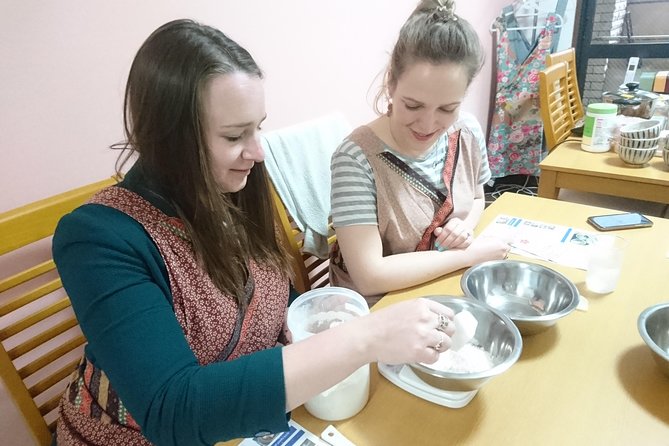
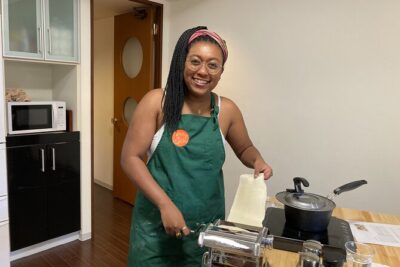
The class begins with an apron and the noodle-making process. This is the most distinctive part for many people because it takes ramen beyond the familiar restaurant bowl.
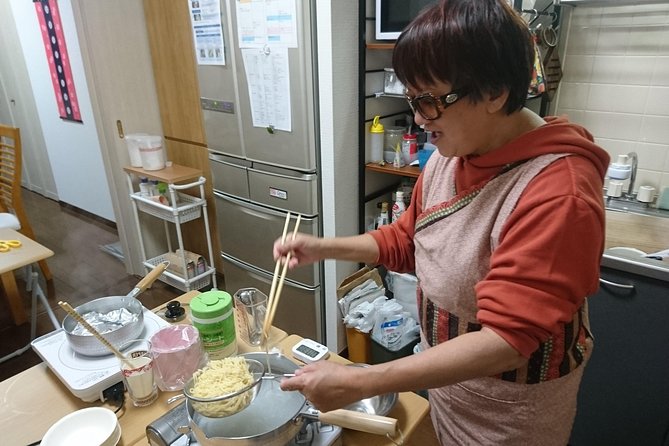
You learn how the noodles are made from basic ingredients and work through the process with the instructor’s help. The instructions are designed for beginners, and the class has worked well for children as young as 10, according to the information provided.
That matters if you are cooking with family or someone who rarely cooks. You do not need professional technique, and you do not need to bring kitchen equipment. Utensils, ingredients, and cooking tools are supplied.
The class teaches a practical skill rather than a party trick. Several participants have gone home confident enough to make ramen again, and the printed recipe gives you a guide for doing so. You should not expect to reproduce every restaurant bowl perfectly on your first attempt, but you will leave with a clear method and a better sense of how ramen comes together.
The total amount of noodles is 100 grams. Since that amount is divided among three ramen styles, the noodles are not three full restaurant-size portions. Still, the separate soups, proteins, vegetables, egg, and other toppings make the final meal substantial.
Preparing the three broths and toppings
After the noodles, the work shifts to the soups and toppings. This is where the class earns its title. You get to compare three flavor profiles in one session, rather than trying to remember the difference between them from a menu.
For salt ramen, the toppings include pork, bean sprouts, and seaweed. The combination is fairly direct and lets you notice the broth’s seasoning. If you enjoy lighter ramen flavors, this may be your favorite bowl.
The soy sauce ramen uses steamed cabbage, green vegetables, and sweet corn. The corn adds a mild sweetness, while the vegetables make this bowl feel different from the pork-based salt version.
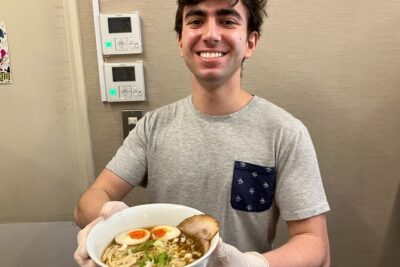
The miso ramen includes spicy chicken, boiled eggs, and green onions. This is the boldest combination of the three, so take care with any chili oil offered at the table. One especially practical tip is to add the chili oil slowly. It is easy to overdo, and the heat can linger well after the meal.
The instructor explains the ingredients as you work. That guidance is valuable because ramen is less about one fixed recipe than it is about adjusting broth, seasoning, noodles, and toppings until they work together.
Vegetarian diners should contact the provider in advance. Vegetarian versions have been prepared with attention to the ingredients, including a broth without animal products. Do not assume a standard class automatically includes this adjustment. Request it when booking.
Eating your ramen at the end
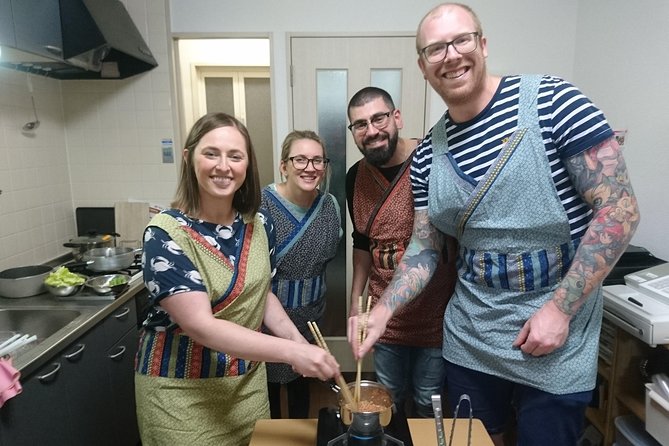
The reward comes at the end, when the dishes are placed with chopsticks and you say itadakimasu. You then eat the three ramen styles you prepared.
This final meal is more than a convenient lunch or dinner. You can compare the bowls while the cooking steps are still fresh in your mind. The different broths make it easier to understand how small changes in seasoning and toppings affect the finished dish.
The meal also includes dessert, seasonal fruit, and green tea. Those extras help round out the class, especially since you have spent a couple of hours cooking and tasting along the way.
Portions can be surprisingly filling. The noodle amount is listed as 100 grams in total, but three soups with meat, vegetables, and egg add up. If you are cooking with a child or someone with a small appetite, you may not finish every bowl. That is not a problem, but it is useful to know before booking the class as a light snack.
More Japanese home cooking classes:
- Osaka: Sumo Stage Show with Bento or Snack + Fight & Photo
★ 4.3 · 364 reviews - Osaka: Traditional Mochi Pounding Experience with Tasting
★ 4.9 · 306 reviews - Osaka Cooking Class: Okonomiyaki &Japanese cuisines experience
★ 5.0 · 261 reviews - Osaka Sake Tasting with Takoyaki Cooking
★ 5.0 · 156 reviews
The instructors and teaching style
Fumi is the instructor name most closely associated with this experience. The teaching style is practical and patient, with clear directions at each stage. English ability is described as strong, which is important in a class where timing and small cooking details matter.
Other instructor names connected with sessions include Keiyo, Keigo, and Fumiyo. The exact instructor may depend on the date and group. The consistent point is that Sakura Cook uses attentive teachers who guide the cooking rather than leaving you to guess what comes next.
The class suits people with very different cooking backgrounds. If you cook often, you will pick up tips about Japanese ingredients, broth seasoning, and noodle preparation. If you can barely boil water, the step-by-step format keeps the task manageable.
The atmosphere is warm rather than formal. You can expect help when you need it, along with photographs taken during the session in some classes. That makes this a good choice for families, couples, and solo visitors who want an activity with conversation and a shared meal.
Group size, timing, and location in Osaka
The meeting point is Banix Kitahorie, at 3-chome 6-2 Kitahorie in Osaka’s Nishi Ward, postal code 550-0014. The activity ends back at the same meeting point.
Kitahorie is near public transportation, but you should still allow time to find the exact entrance. One useful detail from the practical instructions is that an instructor may be outside in a red apron. Keep an eye out for that rather than walking past the building in a hurry.
The experience is advertised as a small-group class limited to eight people, giving the instructor more time to help each person. The additional information lists a maximum of 12 travelers. That is a minor inconsistency, so confirm the expected group size if a very small class is important to you.
A small class matters here. Handmade noodles and several soups involve more active work than a simple cooking demonstration. With fewer people, you can ask questions, get corrections, and avoid spending the session waiting for a station to open.
The class runs for approximately two hours and 30 minutes. It works well as a lunch or dinner plan, but leave a little space around it. Cooking times can vary, and you will want to arrive without rushing.
Is $79.28 a fair price?
At $79.28 per person, this is not the cheapest ramen meal in Osaka. It is also not priced like a basic restaurant lunch. You are paying for instruction, ingredients, kitchen use, a full hands-on session, and three different ramen bowls.
The value improves if you want to learn a recipe you can use again. All utensils and ingredients are included, so you do not need to buy supplies before class. The printed recipe adds another practical benefit, particularly if you plan to cook Japanese food after returning home.
The meal itself includes more than ramen. Dessert, seasonal fruit, and green tea are included, with no need to arrange a separate lunch or dinner afterward. Personal expenses and additional drinks are not included.
For a family, the total cost can add up quickly. For a ramen fan, food-focused visitor, or anyone looking for a rainy-day Osaka activity, the price is easier to justify because the class combines entertainment with a skill you can take home.
I would choose this over a standard food tour if you want to participate rather than simply eat. I would choose a restaurant meal instead if your main goal is sampling many professional ramen shops at the lowest possible cost.
Who will enjoy this class most?
This experience is a strong fit for:
- Ramen fans who want to understand the cooking process
- First-time cooks who prefer clear guidance
- Families with children who can follow simple instructions
- Couples looking for a shared Osaka activity
- Visitors interested in Japanese home cooking
- Vegetarian diners who arrange their dietary needs ahead of time
- Cooks who want a recipe they can repeat at home
It is less suitable if you dislike group activities, have very limited time, or want a quiet meal without preparation. You will be wearing an apron, handling ingredients, and working through several stages before you eat.
The class is also better for curious eaters than for people seeking a single perfect bowl. Part of the fun is comparing the three versions and noticing which seasoning suits you best.
Small practical details that matter
Confirmation arrives within 48 hours of booking, subject to availability. The tour uses a mobile ticket, so keep your booking accessible on your phone.
Hotel pickup and drop-off are not included. You make your own way to Kitahorie and return there after the class.
All kitchen equipment and ingredients are supplied. You do not need to pack utensils, cooking tools, or ingredients. A printed recipe is provided for home use.
Free cancellation is available if you cancel at least 24 hours before the experience start time. Cancellations or changes made within 24 hours are not accepted for a refund, and the cut-off follows Osaka local time.
The activity is offered by Sakura Cook. It has a 4.9 rating from 119 reviews, with 100 percent recommending it, but the more useful takeaway is what the class actually delivers: noodles made by hand, three distinct soups, plenty of guided cooking, and a meal at the end.
Should you book the three-ramen class?
I would book this class if you want a useful, social Osaka experience with something to eat at the finish. The handmade noodles are the main reason to choose it, while the three broths give you more variety than most short cooking classes.
Book ahead if you want a smaller group, and ask about vegetarian preparation before your date. Arrive early enough to locate Banix Kitahorie, watch for the red apron, and use chili oil carefully.
Skip it if you only want the cheapest ramen meal or if a two-and-a-half-hour cooking session sounds like work. For everyone else, especially families, couples, and food lovers who want to bring a Japanese recipe home, this is a well-balanced use of an Osaka afternoon.
FAQ
How long does the ramen cooking class last?
The class lasts approximately two hours and 30 minutes.
Where does the class meet?
You meet at Banix Kitahorie, 3-chome 6-2 Kitahorie, Nishi Ward, Osaka, 550-0014, Japan.
Does the activity end at the meeting point?
Yes. The activity ends back at the same meeting point.
Which types of ramen do you make?
You make salt ramen, soy sauce ramen, and miso ramen.
Do I make the ramen noodles from scratch?
Yes. The class includes handmade noodle preparation from scratch.
Are ingredients and cooking equipment included?
Yes. Ingredients, kitchen utensils, and cooking equipment are included.
Is food included in the price?
Yes. The class includes the ramen meal, dessert, seasonal fruit, and green tea. Additional drinks and personal expenses are not included.
Can vegetarian diners take the class?
Vegetarian ramen can be prepared when requested. Contact Sakura Cook in advance so the ingredients and broth can be adjusted.
Is hotel pickup included?
No. Hotel pickup and drop-off are not included, so you must make your own way to and from the Kitahorie meeting point.
What is the cancellation policy?
You can receive a full refund if you cancel at least 24 hours before the experience start time. Cancellations or changes made less than 24 hours before the start time are not accepted for a refund.
Just added around Osaka
- Osaka Early Morning Osaka Castle Tour Avoid Crowds★ 5.0 · 3 reviews
- Guided Tour of Some Attractions in Osaka by Private Car★ 5.0 · 3 reviews
- Nara Day Trip from Osaka with a Licensed Guide★ 5.0 · 3 reviews
- Private Transfer Between Kyoto and Kansai Airport KIX★ 5.0 · 3 reviews
- Shared Arrival Transfer: Osaka Itami Airport to Osaka City★ 5.0 · 3 reviews
- Osaka: Sushi Making Class and Dotonbori Food Tour★ 4.7 · 3 reviews
- Osaka Night Photography Workshop★ 5.0 · 3 reviews
- Kyoto Full day Tour Kinkakuji, Kiyomizu-dera and Fushimi Inari★ 4.5 · 3 reviews
Ramen & Gyoza Cooking Classes, compared.

Five Must-See Highlights Walking Tour & Ramen Lunch
Read our review →


Walking Tour of Osaka’s 5 Must-See Sights, with Ramen for Lunch
Read our review →
Cooking Ramen&Gyoza/KatsuCurry/Bento/Okonomiyaki+Store Tour@Osaka
Read our review →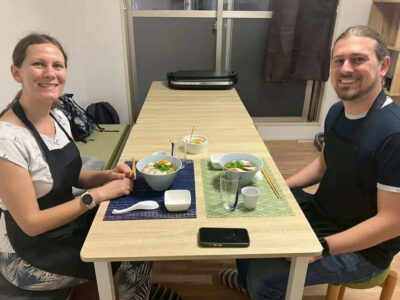
Ramen and Gyoza Cooking Class in Osaka Dotonbori
Read our review →Browse the lists this tour appears in