
Reviewed · RAMEN & GYOZA COOKING CLASSES
Ramen Craftsman Experience in Osaka
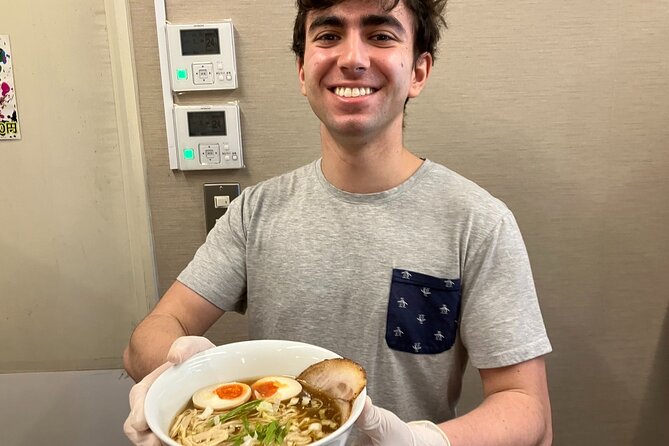
The best part of this Osaka experience is that you do not just sit down with a bowl of noodles. You step behind the counter at Menya SHU, learn what goes into the soup, boil the noodles, add toppings, and eat the ramen you helped finish. Chef Shu leads the session, with help from his family, including Amanda on some bookings.
I like the tiny four-person class, which gives you room to ask questions and take your turn at the stove. I also like the choice of four ramen styles, from chicken white soup to sea bream dashi salt ramen. The main consideration is simple: this is a final-preparation workshop, not a full course in making broth from scratch. The soup takes days to prepare, so Shu handles that part before you arrive.
In This Review
- Key points to know before booking
- What happens inside Menya SHU
- Four bowls, four different directions
- The broth lesson, and what you actually make
- Your turn at the stove
- Eating what you prepared
- Is one hour enough?
- The value of $42.94
- Who will enjoy this most?
- Practical details for a smooth visit
- Should you book the Ramen Craftsman Experience?
- FAQ
- Where does the Ramen Craftsman Experience take place?
- How long does the experience last?
- How many people can join?
- Which ramen styles can I choose?
- Is food included in the price?
- Do I make the ramen broth from scratch?
- Can young children participate?
- What happens if I arrive late?
- What is the cancellation policy?
Key points to know before booking
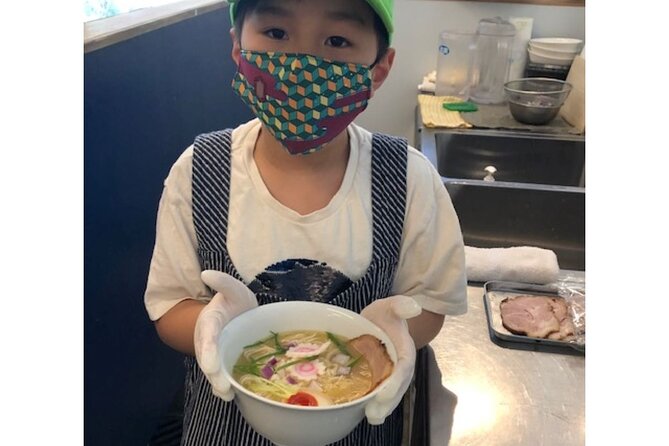
- Four ramen choices: Pick chicken white soup, seafood chicken white soup with clam broth, Chinese soba with soy sauce, or sea bream dashi salt ramen.
- A real ramen-shop kitchen: You work behind the counter at Menya SHU, not in a detached cooking studio.
- Very small class size: The activity takes up to four people, making it easy to follow the chef and get hands-on time.
- About one hour: The session covers an ingredient talk, noodle boiling, soup preparation, bowl presentation, and eating.
- Broth is prepared in advance: You learn about the long process, but you do not spend days making the base soup.
- A gas stove is used: Infants cannot join, and the experience is aimed at children from about age seven upward.
What happens inside Menya SHU
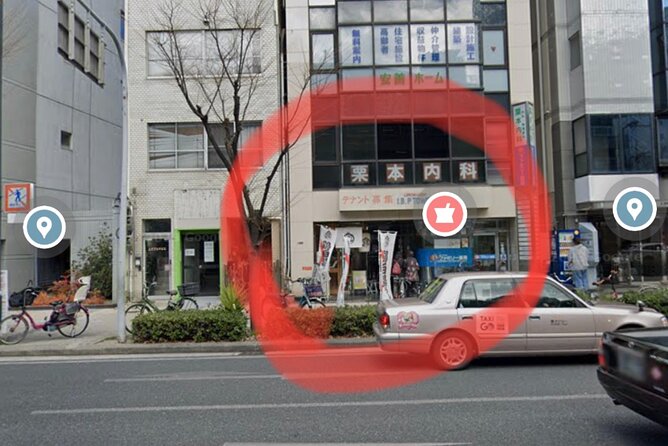
The meeting point is Menya SHU, at 11-7 Higashikōzu-chō in Osaka’s Tennoji Ward. The activity begins and ends at the ramen shop, and the location is near public transportation. You arrange your own way there, since private transport is not included.
The shop setting matters. You are not practicing with a toy kitchen or working from a printed recipe in a classroom. You are using the sort of counter and cooking tools that support the restaurant’s own service. That gives the hour a useful sense of purpose: every step connects to the way a real bowl reaches the customer.
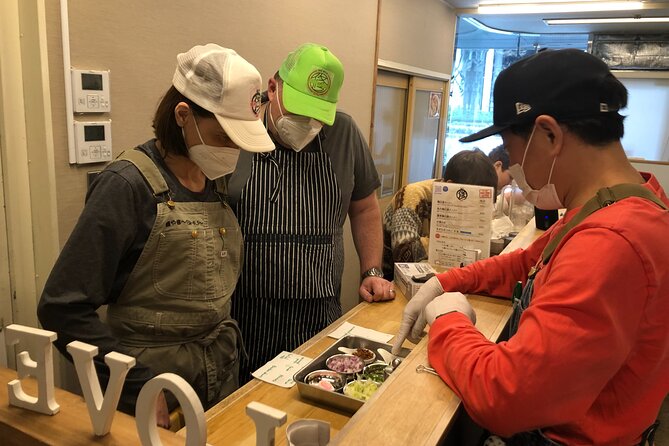
Shu begins by explaining the ingredients and utensils. This opening is more than a quick list of toppings. It helps you see that ramen is built from separate parts, each with its own job. The soup brings body and seasoning, the noodles need careful cooking, and the toppings finish the bowl visually and texturally.
The small group makes this introduction easy to follow. With no more than four people, you can stand close enough to watch the demonstrations and ask about the differences between the ramen styles. Shu has been described as friendly, energetic, and comfortable explaining the process in English, though you should still expect a hands-on food session rather than a formal culinary lecture.
More ramen and gyoza classes:
- Osaka: Five Must-See Highlights Walking Tour & Ramen Lunch
★ 4.7 · 411 reviews - Osaka: Ramen and Gyoza Cooking Class in Dotonbori
★ 5.0 · 378 reviews - Ramen and Gyoza Cooking Class in Osaka
★ 5.0 · 202 reviews
Four bowls, four different directions
Your biggest choice comes before the cooking begins. You select one ramen style from four options:
- Chicken white soup ramen
- Seafood chicken white soup ramen with clam broth
- Chinese soba with soy sauce
- Sea bream dashi salt ramen
The chicken white soup is the natural choice if you want a fuller, creamier-tasting bowl built around poultry. The seafood chicken version adds clam broth, giving the soup a different line of flavor without leaving the chicken base behind.
Chinese soba is the soy sauce ramen option. It is a good pick if you want a more familiar Japanese ramen profile with a clear, savory seasoning. Sea bream dashi salt ramen offers the most distinct choice on the menu, pairing fish stock with salt rather than soy sauce.
The exact topping choices are not listed in the booking information, but the activity does let you choose your preferred toppings. You also take part in presentation, so your finished bowl is not simply handed over fully assembled. Some participants have been able to cut the egg in half, handle the noodles, and finish other parts of the bowl under Shu’s direction.
It is worth choosing a flavor that differs from the ramen you plan to eat elsewhere in Osaka. If you expect to try several rich pork or chicken bowls during your trip, sea bream dashi salt or clam broth can give you a useful contrast. If you are new to ramen styles, ask Shu to explain the differences before you decide.
The broth lesson, and what you actually make
One of the most useful lessons here is learning what you cannot realistically make in an hour. Ramen soup can take eight to twelve hours, and some of the preparation stretches over several days. Shu prepares the base before the class, allowing you to focus on the final stages that can be completed during a short visit.
That means the experience is best understood as a ramen craftsman session, not a complete broth-making course. You learn how the ingredients fit together and see the professional process up close, but you do not leave with a method for reproducing the entire soup that evening at home.
I see that as a sensible trade. A full broth workshop would need far more time, and the result would not be ready to eat during a one-hour booking. Here, you get both instruction and lunch, with the long work already done. The compromise is that you will not personally simmer the stock from its first ingredient to its final taste.
Shu’s explanations also give the meal more context. You can compare the role of chicken, clam, soy sauce, salt, and sea bream, rather than treating every bowl of ramen as the same dish with different names. For anyone interested in Japanese cooking, that distinction is one of the strongest reasons to book.
Your turn at the stove
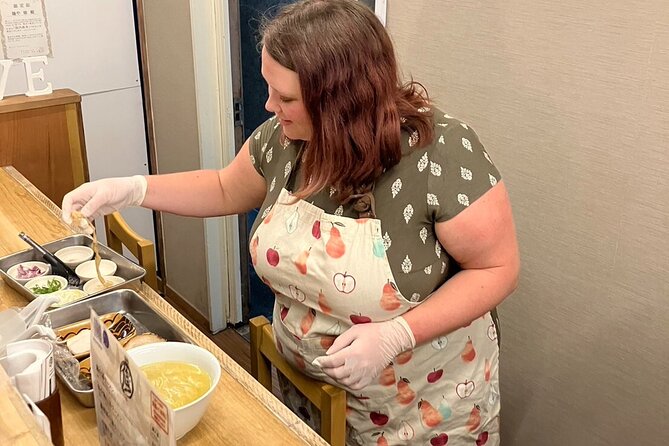
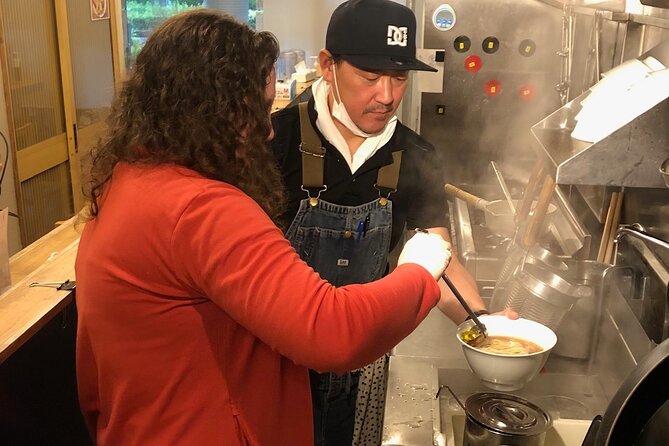
After the ingredient explanation, the class moves into action. You boil the noodles, prepare the soup, add the toppings, and arrange the bowl. The stove is gas powered, so Shu or his helpers can guide you closely through the hot parts of the process.
The activity is designed to include everyone in a group of four. One participant may cook while another watches, then the system rotates so each person has a turn. This keeps the session from becoming a demonstration where two people work and everyone else stands back.
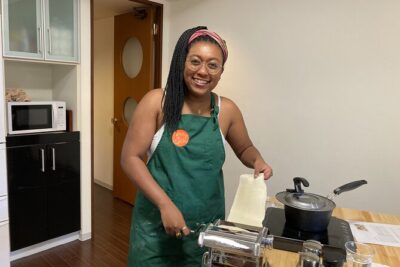
The boiling stage is simple in theory but important in practice. Timing affects the noodles, and the cooking process gives you a better feel for why ramen is served quickly after the noodles are ready. You may also get to shake or handle the noodles, torch meat, or complete the egg and topping steps, depending on the bowl and the flow of the session.
The kitchen is small, which is both a strength and a limitation. It creates close contact with the chef and makes it easy to see what is happening. It also means you should not expect a large, spacious classroom with individual workstations. For most people, the compact counter is part of the charm. If you dislike close quarters while cooking, keep that in mind.
Photos and video are welcome according to the information provided, so you can record the process. Still, do not let the camera take over. The most useful moments are brief: watching the noodles, following the chef’s hand movements, and seeing how the separate ingredients become a balanced bowl.
A completely different way to spend a day in Osaka:
- Osaka Go Karting Tour with Funny Costume
★ 5.0 · 2,658 reviews - Osaka Castle: Museum and Tower Entry Ticket
★ 4.5 · 2,380 reviews - Osaka: Shinsekai Food Tour with 13-15 Dishes at 5 Eateries
★ 4.8 · 2,204 reviews - Osaka Food Tour: 13 Dishes at 5 Local Eateries
★ 5.0 · 2,149 reviews
Eating what you prepared
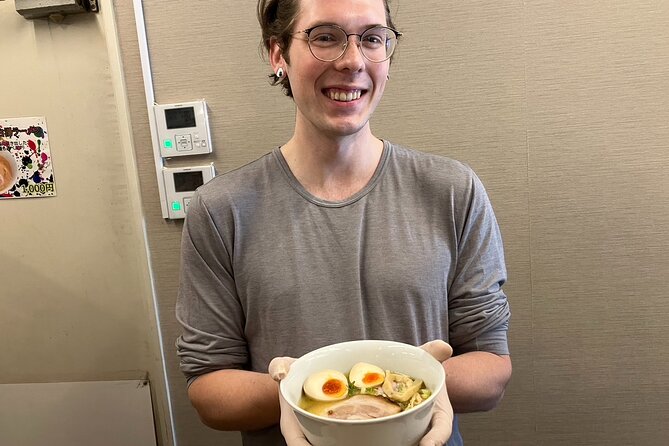
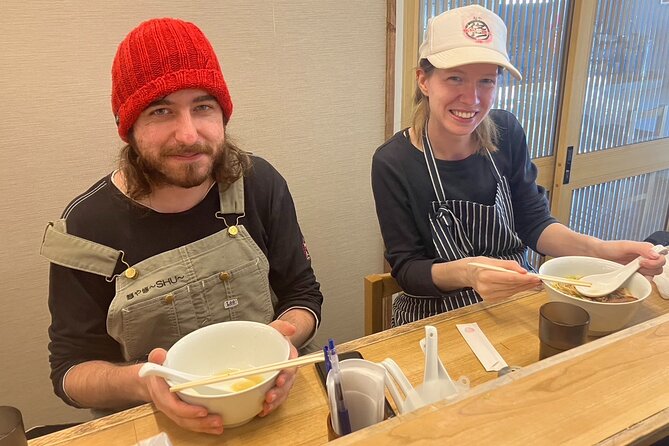
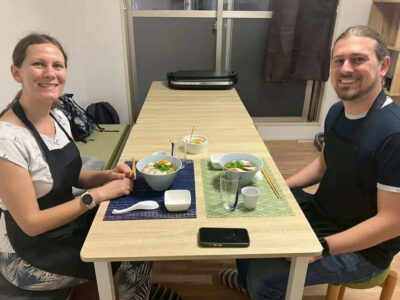
The final step is the best reward. You sit down with the ramen you helped complete and eat it at the same shop where the lesson took place. Lunch is included, along with the cooking utensils, apron, and gloves.
The meal is not an afterthought. The strongest praise for this experience centers on the taste of the finished ramen, with particular appreciation for the fresh ingredients and unusual soup choices. You may find the flavors different from standard restaurant ramen, especially if you select sea bream dashi salt or the clam-based seafood chicken soup.
The meal also gives you a chance to ask follow-up questions. Once you taste the broth, you can better understand Shu’s earlier explanations about seasoning and stock. This makes the class feel complete: first you learn the parts, then you handle the noodles and toppings, and finally you taste the result.
The hosts add a warm family touch. Shu’s wife and family sometimes help with the session, and the atmosphere is described as relaxed and easy to talk in. Families have found the setting welcoming for older children. One family even ended the meal with a friendly Rubik’s Cube game, a small detail that shows how informal the visit can become.
Is one hour enough?
One hour is enough for the activity as described, but you should set your expectations correctly. You will not master ramen making in sixty minutes, and you will not prepare the base soup from raw ingredients. You will learn the structure of a bowl, see the key final steps, cook the noodles, assemble your meal, and eat it.
That is a good length for a busy Osaka schedule. You can fit the workshop between sightseeing plans without sacrificing half a day. It also works well if your group includes people who enjoy food but would not commit to a long cooking class.
The short duration does mean the session has a clear limit. If you want a detailed recipe, extensive knife practice, or a long talk about noodle production, this may feel light. If you want a personal look at how a ramen order is finished in a working shop, the pacing makes sense.
Arrive on time. You must tell the host if you will be late, and the booking is cancelled if you have not arrived within 15 minutes of the scheduled start. That firm rule protects the next session, but it leaves little room for a wrong turn or a delayed train.
The value of $42.94
At $42.94 per person, this costs more than ordering a bowl of ramen. You are paying for the food, the chef’s time, a private kitchen booking, equipment, protective items, instruction, and a small group capped at four people.
The value is strongest if you want more than lunch. You get a meal and a close look at the work behind it, with enough personal attention to take part rather than simply watch. A family or group of friends can also use the private format to share the experience without being mixed into a large class.
The price is less compelling if your only goal is to eat inexpensive ramen. Osaka has many places where a bowl costs far less, and this activity will not teach you every stage of ramen production. You are buying access and participation, not just noodles.
The high rating of 4.9 from 81 ratings and a 98 percent recommendation rate fit the experience’s main strengths: the food, the host’s personal approach, and the small class. I would still read the format carefully before booking, especially the fact that the soup is prepared in advance.
Who will enjoy this most?
I would choose this for someone who loves ramen and wants to understand why different bowls taste different. It also suits first-time visitors who want an activity tied to local food without joining a large tour group.
Families with children around seven or older can enjoy it, provided the child can follow instructions around a gas stove. Infants cannot participate. The compact kitchen and hot equipment make this a better fit for attentive older children than for toddlers.
It is also a good rainy-day or midday plan. Since the activity takes place indoors and lasts about an hour, you get a focused break from Osaka’s streets. The shop setting feels more personal than a large cooking school, and the chef’s family involvement can make the session feel like a visit to a working local business.
I would be more cautious about booking if you need step-free access, have strict dietary restrictions, or want detailed information about allergies. The supplied details do not explain those points, so contact Menya SHU before paying if they affect your decision.
Practical details for a smooth visit
Your mobile ticket is confirmed at booking, and you meet at Menya SHU in Tennoji Ward. The activity returns to that same point, with no private transportation included.
Wear something comfortable for standing and cooking. An apron and gloves are supplied, but hot soup and noodles still call for care. Keep your group small if possible, since the four-person maximum is a major part of the experience.
Cancellation is free up to 24 hours before the local start time. Within 24 hours, you receive no refund, and changes are not accepted. Since late arrival can also cause cancellation after 15 minutes, plan to reach the shop early rather than cutting it close.
The experience is typically booked about 10 days ahead, so I would reserve it before your Osaka schedule fills up. Confirmation arrives at booking, and the mobile ticket makes the entry process straightforward.
Should you book the Ramen Craftsman Experience?
Book it if you want a personal, food-centered hour with a real ramen chef, especially if you like the idea of going behind the counter and finishing your own bowl. Shu’s friendly teaching, the four-person limit, and the choice of unusual broths give this more character than a standard meal.
Skip it if you want to make broth entirely from scratch or if you are only looking for the cheapest ramen lunch in Osaka. For everyone else, $42.94 is a fair price for a small, hands-on session that teaches the final craft of ramen and feeds you well afterward.
FAQ
Where does the Ramen Craftsman Experience take place?
It takes place at Menya SHU, located at 11-7 Higashikōzu-chō, Tennoji Ward, Osaka, 543-0021, Japan.
How long does the experience last?
The activity lasts approximately one hour.
How many people can join?
The class has a maximum of four participants.
Which ramen styles can I choose?
You can choose chicken white soup ramen, seafood chicken white soup ramen with clam broth, Chinese soba with soy sauce, or sea bream dashi salt ramen.
Is food included in the price?
Yes. Lunch is included, along with cooking utensils, aprons, and gloves.
Do I make the ramen broth from scratch?
No. Shu prepares the ramen soup in advance because the process takes several days. You learn about the ingredients and complete the soup preparation, noodle boiling, presentation, and eating stages during the session.
Can young children participate?
The activity is not suitable for infants because a gas stove is used. Children from about seven years old may participate.
What happens if I arrive late?
You should contact the host if you will be late. If you have not arrived within 15 minutes of the reservation start time, the activity will be cancelled.
What is the cancellation policy?
You can cancel at least 24 hours before the start time for a full refund. Cancellations or changes made less than 24 hours before the experience are not accepted and are not refunded.
Just added around Osaka
- Nara Day Trip from Osaka with a Licensed Guide★ 5.0 · 3 reviews
- Osaka Early Morning Osaka Castle Tour Avoid Crowds★ 5.0 · 3 reviews
- Guided Tour of Some Attractions in Osaka by Private Car★ 5.0 · 3 reviews
- Private Transfer Between Kyoto and Kansai Airport KIX★ 5.0 · 3 reviews
- Shared Arrival Transfer: Osaka Itami Airport to Osaka City★ 5.0 · 3 reviews
- Osaka: Sushi Making Class and Dotonbori Food Tour★ 4.7 · 3 reviews
- Osaka Night Photography Workshop★ 5.0 · 3 reviews
- Kyoto Full day Tour Kinkakuji, Kiyomizu-dera and Fushimi Inari★ 4.5 · 3 reviews
Ramen & Gyoza Cooking Classes, compared.

Five Must-See Highlights Walking Tour & Ramen Lunch
Read our review →


Walking Tour of Osaka’s 5 Must-See Sights, with Ramen for Lunch
Read our review →
Cooking Ramen&Gyoza/KatsuCurry/Bento/Okonomiyaki+Store Tour@Osaka
Read our review →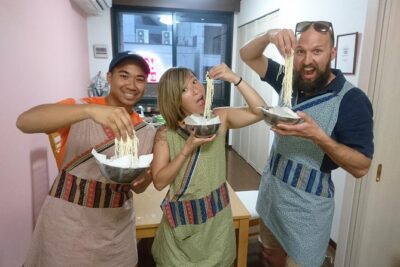
Ramen and Gyoza Cooking Class in Osaka Dotonbori
Read our review →Browse the lists this tour appears in