
Reviewed · DOTONBORI & NAMBA TOURS
Ramen and Gyoza Cooking Class in Osaka Dotonbori
The best part of this Osaka cooking class is that you do not simply watch someone prepare dinner. You knead ramen noodles by hand, build the soup from scratch, chop the gyoza filling, and fold the dumplings yourself. By the time you sit down, you have made a proper Japanese meal rather than just sampled one.
I like the small maximum group of eight, which gives the instructors time to correct your technique and answer questions. I also like the practical focus: you receive recipes to take home, learn about substitutions, and get advice for vegetarian, pescatarian, no-fish, and other dietary needs. The main catch is that the class is held in an apartment building, so finding the right entrance and room on the eighth floor takes care.
In This Review
- Key points at a glance
- Making ramen in Osaka’s Dotonbori area
- The opening lesson: ingredients, customs, and technique
- Kneading ramen noodles by hand
- Building the fish and chicken ramen broth
- Preparing and folding the gyoza
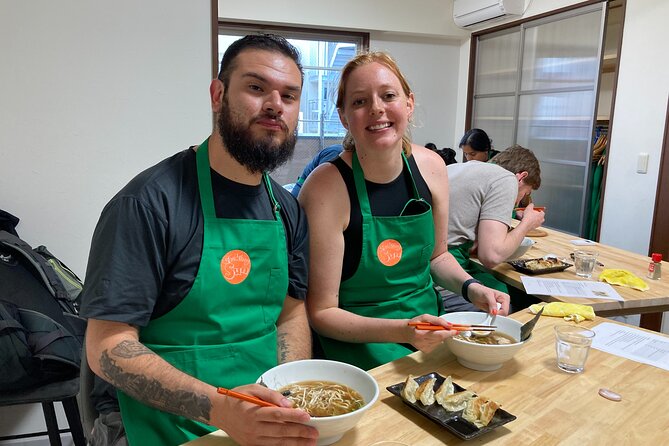
- Sitting down to your own early dinner
- What the $71.35 price gets you
- Who will enjoy this class most
- Timing, meeting point, and small practical details
- Should you book the ramen and gyoza class?
- FAQ
- How long is the Ramen and Gyoza Cooking Class in Osaka?
- What time does the class start?
- Where does the class meet?
- Where does the activity end?
- Is the class taught in English?
- What food do you make?
- Are dietary options available?
- What happens if I cancel?
Key points at a glance

- Ramen noodles are made from scratch: You knead the dough by hand instead of relying on prepared noodles.
- The broth is built in class: The soup uses fish and chicken elements, with explanations about fish flakes, soy sauce, and miso.
- Gyoza is a hands-on project: You chop the filling, season it, and fold the dumplings with prepared wrappers.
- The group is capped at eight: This keeps the lesson personal and works well for families or small groups.
- You eat what you make: The class ends with a filling ramen and gyoza meal, not just a cooking demonstration.
- Dietary requests need advance notice: Vegetarian, pescatarian, and no-fish options are available, but gluten-free cooking is not.
Making ramen in Osaka’s Dotonbori area
Osaka is famous for dishes such as takoyaki, okonomiyaki, and ramen. This experience takes you beyond ordering those foods at a restaurant and shows you the work behind two everyday Japanese favorites: ramen and gyoza.
The class begins at 1:30 pm and lasts about three hours. You meet at Cooking SunJapan, at 2-chome 9-14, Shimanouchi, in Osaka’s Chuo Ward. The activity finishes at the same location.
Dotonbori is a handy base for a food class. You can pair the lesson with a walk through central Osaka before or after, though you should leave enough time to locate the building. The address is more useful than searching only for the business name in a map app. One map search sent a participant to the wrong place, while the full street address worked better.
The venue is on the eighth floor of an apartment building, in room 807. There may not be the kind of large street sign you expect from a restaurant or formal cooking school. Look for the building, take the elevator, and check the room number. If you are running late or uncertain, ask someone nearby for help rather than wandering the surrounding streets.
More of Dotonbori and Namba after dark:
- Osaka Local Foodie Walking Tour in Dotonbori and Shinsekai
★ 5.0 · 985 reviews - Osaka: Dotonbori District River Cruise with Drink Discount
★ 4.2 · 876 reviews - Ultimate Osaka Walking Tour: Castle, Dotonbori & Hidden Gems
★ 5.0 · 862 reviews
The opening lesson: ingredients, customs, and technique
The class is taught in English, and the instruction follows a clear, step-by-step format. The teachers explain not only what to do, but also why a particular order or method matters.
That explanation is useful. Japanese cooking often depends on small choices that are easy to miss when you are only eating the finished dish. You get a closer look at ingredients such as different kinds of fish flakes, types of soy sauce, and varieties of miso. The point is not to turn you into a professional cook in one afternoon. It is to help you understand flavor, salt, texture, and balance well enough to repeat the meal at home.
The instructors also explain customs connected with the food. That gives the class a little more depth than a recipe lesson. You learn how the dishes fit into ordinary Japanese eating habits, including the familiar ramen and gyoza combination found at many casual restaurants.
Miki and Jun are praised for their clear English and patient teaching. Kassa and Marina are also singled out for making the recipes easy to follow and the class relaxed. The exact instructor depends on the session, but you can expect an English-speaking team rather than a self-guided worksheet and a cooking bench.
Kneading ramen noodles by hand
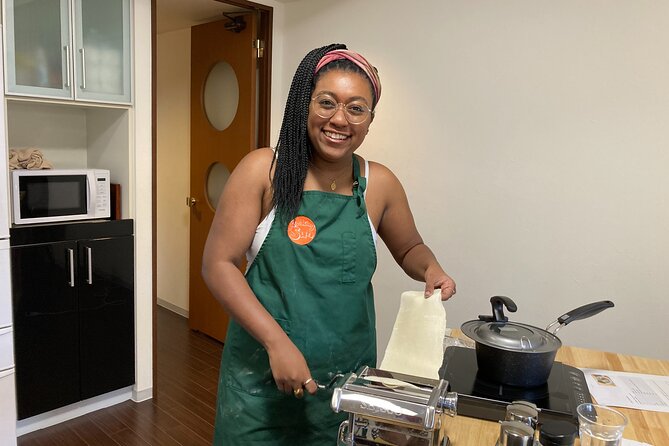
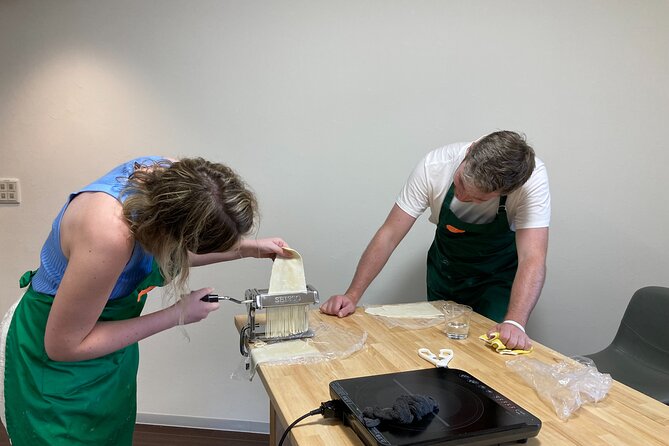
Making the noodles is the most distinctive part of the afternoon. You work with the dough from the beginning and knead it by hand, a process that takes more effort than many people expect.
That is part of the appeal. Ramen can look simple in a bowl, but the noodles require time and attention before they reach the pot. You get a feel for the dough and see why homemade noodles differ from the packaged kind. The process is also approachable for people who rarely cook. A family with a 12-year-old and another with teenage children found the hands-on work enjoyable, even for those who did not normally spend time in the kitchen.
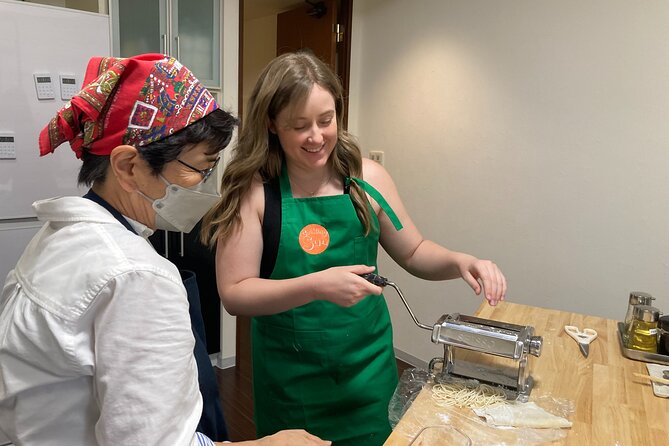
The class keeps the pace moving because there are several jobs to finish. The instructors demonstrate each stage, then let you work. If your first attempt is untidy, that is fine. The teachers are there to guide you through mistakes rather than leave you to guess what went wrong.
For a visitor interested in Japanese food, this is the point where the class earns its price. You are learning a technique that is difficult to understand from a menu description, and you can take the method home with you.
Building the fish and chicken ramen broth
The soup is also made from scratch, using fish and chicken as the base. That combination matters if you are used to restaurant ramen with a heavier pork broth. The result gives you a chance to taste how fish-based flavor can work with chicken stock.
If you do not usually enjoy fish, tell the instructor before cooking begins. The broth was well received even by people who were unsure about fish flavor, but the class information specifically asks you to note a no-fish preference when booking. A no-fish option is available, while a gluten-free option is not.
You also get choices in the finishing touches. Toppings can be adjusted to suit your taste, and the instructors explain how ingredients can be changed for different diets. This is more useful than a fixed recipe because ramen is easy to adapt once you understand the soup base.
The soup lesson also introduces pantry items you may want to find after returning home. Explanations about soy sauce, miso, and fish flakes help you shop with more confidence. You may not find the exact Japanese products in your local store, but the class gives you a way to think about suitable replacements.
More ramen and gyoza classes:
- Osaka: Five Must-See Highlights Walking Tour & Ramen Lunch
★ 4.7 · 411 reviews - Osaka: Ramen and Gyoza Cooking Class in Dotonbori
★ 5.0 · 378 reviews - Ramen and Gyoza Cooking Class in Osaka
★ 5.0 · 202 reviews - Walking Tour of Osaka’s 5 Must-See Sights, with Ramen for Lunch
★ 5.0 · 158 reviews
Preparing and folding the gyoza
The gyoza portion gives you a second kind of kitchen practice. You chop the ingredients for the filling, mix and season it, then place it into ready-made wrappers and fold the dumplings.
Using prepared wrappers keeps the class at a manageable length. Making the dough for both ramen and gyoza in one afternoon would turn a three-hour lesson into a much longer project. You still handle the part that makes gyoza feel like gyoza: getting the filling right and creating the folded edge.
This is a good activity for mixed-age groups. Teenagers can take part without needing advanced knife skills, and adults who already cook will still have details to refine. The instructors help with the folds and make sure nobody is left behind.
The finished dumplings are cooked and served with the ramen. You get to see how your filling and folding affect the final result. Even imperfect dumplings can taste excellent, and that makes this section less intimidating than it may sound.
Sitting down to your own early dinner
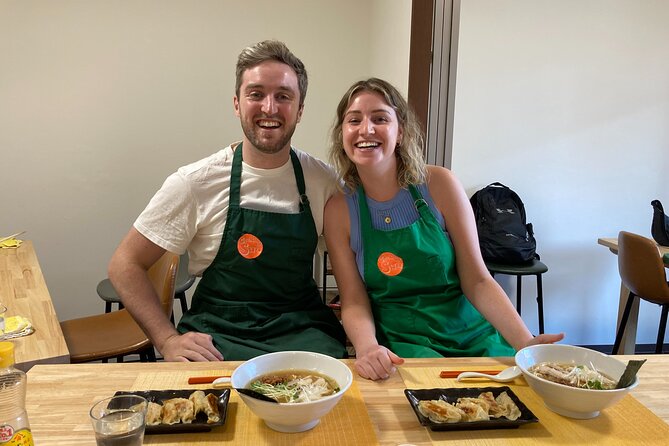
The class ends with a complete meal of ramen and gyoza. Several people finished cooking around 3:30 pm, so you should eat a light lunch beforehand if you tend to get hungry in the afternoon. The food is substantial enough to function as an early dinner.
This meal is not an extra restaurant course added to the price. It is the result of the work you have just done, which gives the final bowl more meaning. You can compare the broth, noodles, toppings, and dumplings with the methods you used only an hour or two earlier.
The cooking area is described as clean, modern, and well organized. That matters in a class where several people are chopping, mixing, boiling, and assembling food at once. Two instructors work with a full group of eight, and the compact setting allows them to keep an eye on the process.
You also receive printed recipes. I consider this one of the strongest practical features. Without a handout, it would be easy to remember the broad idea but forget the proportions or cooking order once you are back home.
What the $71.35 price gets you
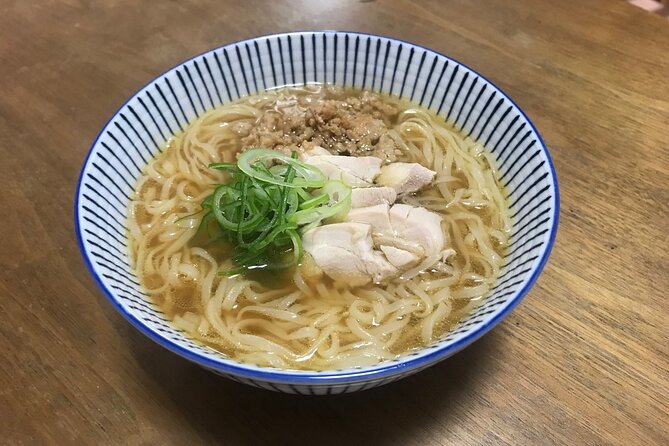
At $71.35 per person, this is not the cheapest way to eat ramen in Osaka. A restaurant meal costs much less, and Dotonbori offers plenty of inexpensive food.
The comparison is not quite fair, though. The fee covers all ingredients, utensils, instruction, recipes, taxes, and the meal you prepare. You are paying for a three-hour activity as well as dinner. The smaller group size adds value because you are not standing at the back of a large demonstration.
I think the price makes the most sense if you want a skill you can use after Japan, or if you are looking for an activity that brings a family or couple together. It is less compelling if your only goal is to taste the best ramen in Osaka. For that, choose a restaurant and spend the rest of your budget eating around the city.
The recipe sheet and ingredient explanations push this beyond a one-time holiday diversion. You learn which flavors can be adjusted and how to replace ingredients available only in Japan. That practical instruction is what helps justify the cost.
Who will enjoy this class most
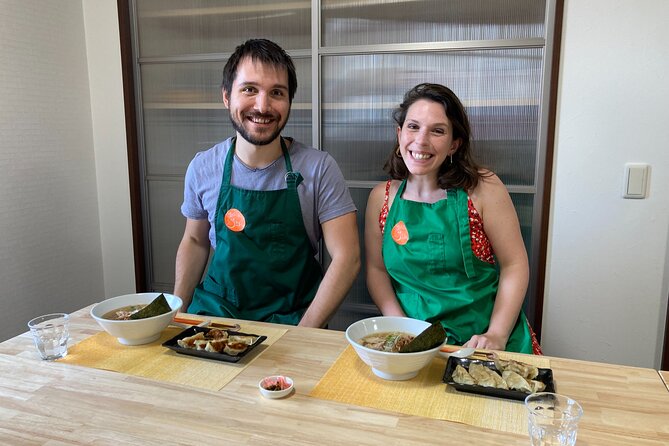
This experience suits people who want to participate rather than watch. You will be chopping, kneading, folding, and following directions for much of the session.
It works especially well for:
- Families with older children or teenagers
- Couples who want a shared afternoon activity
- People interested in Japanese food culture
- Home cooks who want a repeatable ramen method
- Anyone seeking a break from sightseeing in central Osaka
You do not need to be an experienced cook. The instructors keep the steps clear and are patient when techniques take a few tries.
The class can also accommodate vegetarian, pescatarian, and no-fish requests, but you must leave a note when booking. Ask about allergies in advance as well. One family received helpful adjustments for a child with food allergies, but the stated options are not a guarantee that every allergy can be managed.
You should not book this class if you need gluten-free preparation. The experience is specifically not recommended for people with gluten intolerance.
Timing, meeting point, and small practical details
The 1:30 pm start gives you a useful mid-afternoon plan. You can spend the morning sightseeing, have a modest lunch, then walk toward Shimanouchi for the class. Since the cooking can run until about 3:30 pm or later within the advertised three-hour window, do not schedule a tight tour immediately afterward.
The activity is near public transportation, but the exact building is more important than the provider name when using navigation. Enter the full address:
542-0082 Osaka, Chuo Ward, Shimanouchi, 2-chome 9-14, room 807.
The class ends where it starts, so you do not need to arrange a separate return transfer. A mobile ticket is provided, and confirmation arrives at booking.
Free cancellation is available if you cancel at least 24 hours before the local start time. Inside that window, the payment is not refunded, and changes are not accepted.
Should you book the ramen and gyoza class?
I would book this if you want a small, useful food experience rather than another meal at a restaurant. The hand-kneaded noodles, homemade broth, gyoza folding, recipe sheet, and patient English instruction give you plenty to do and plenty to remember.
The main reasons to pause are the apartment-style meeting point, the need to plan around a 1:30 pm start, and the lack of a gluten-free option. You should also mention vegetarian, pescatarian, no-fish, or allergy needs at booking, not after the class begins.
For families, couples, and curious home cooks, the $71.35 cost is reasonable because it includes instruction, food, equipment, and a meal. If you only want a quick taste of Osaka ramen, spend less at a local shop. If you want to understand how the bowl is made and try the recipe again at home, this class is a strong pick.
FAQ
How long is the Ramen and Gyoza Cooking Class in Osaka?
The class lasts approximately three hours.
What time does the class start?
The scheduled start time is 1:30 pm.
Where does the class meet?
It meets at Cooking SunJapan in Shimanouchi, Osaka’s Chuo Ward, at 2-chome 9-14, room 807 on the eighth floor.
Where does the activity end?
The class ends back at the meeting point.
Is the class taught in English?
Yes. An English-speaking instructor leads the hands-on class.
What food do you make?
You make ramen noodles and soup from scratch, along with gyoza. The ramen uses fish and chicken elements, and you prepare the gyoza filling before folding the dumplings.
Are dietary options available?
Vegetarian, pescatarian, and no-fish options are available if you leave a note when booking. Gluten-free cooking is not available.
What happens if I cancel?
You receive a full refund when you cancel at least 24 hours before the experience start time. Cancellations or changes made within 24 hours are not accepted and are not refunded.
More Japanese Home Cooking Classes
- Osaka: Sumo Stage Show with Bento or Snack + Fight & Photo
★ 4.3 · 364 reviews - Osaka: Traditional Mochi Pounding Experience with Tasting
★ 4.9 · 306 reviews - Osaka Cooking Class: Okonomiyaki &Japanese cuisines experience
★ 5.0 · 261 reviews - Osaka Sake Tasting with Takoyaki Cooking
★ 5.0 · 156 reviews
Just added around Osaka
- Nara Day Trip from Osaka with a Licensed Guide★ 5.0 · 3 reviews
- Osaka Early Morning Osaka Castle Tour Avoid Crowds★ 5.0 · 3 reviews
- Guided Tour of Some Attractions in Osaka by Private Car★ 5.0 · 3 reviews
- Private Transfer Between Kyoto and Kansai Airport KIX★ 5.0 · 3 reviews
- Shared Arrival Transfer: Osaka Itami Airport to Osaka City★ 5.0 · 3 reviews
- Osaka: Sushi Making Class and Dotonbori Food Tour★ 4.7 · 3 reviews
- Osaka Night Photography Workshop★ 5.0 · 3 reviews
- Kyoto Full day Tour Kinkakuji, Kiyomizu-dera and Fushimi Inari★ 4.5 · 3 reviews
Dotonbori & Namba Tours, compared.

Osaka Local Foodie Walking Tour in Dotonbori and Shinsekai
Read our review →
Dotonbori District River Cruise with Drink Discount
Read our review →
Ultimate Osaka Walking Tour: Castle, Dotonbori & Hidden Gems
Read our review →


Dotonbori River Cruise with Glico Sign & Neon Views
Read our review →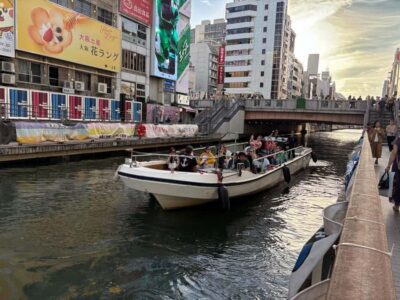
Browse the lists this tour appears in