
Reviewed · DOTONBORI & NAMBA TOURS
Osaka: Cooking Class Ramen & Gyoza Course in Nanba
Making ramen from flour and folding gyoza by hand gives this Osaka activity more substance than a standard food tasting. You do the chopping, noodle preparation, and shaping yourself, with English-speaking instructors such as Nana, Yuriko, Ryota, and Mimi guiding the work.
I like the small groups of up to eight, which leave room for questions and help with tricky gyoza folds. I also like the recipes to take home, since this is one of the few food activities that can continue in your own kitchen.
The main point to check is the timing. The experience is advertised as two hours, but the detailed schedule lists 30 minutes of preparation, 1.5 hours of cooking, and a one-hour tasting session, which adds up to three hours. Confirm the start and end time before booking.
In This Review
- Key points at a glance
- Why this Osaka class is worth your kitchen time
- Finding Dear Court Semba 303 in Chuo Ward
- The first 30 minutes: orientation and preparation
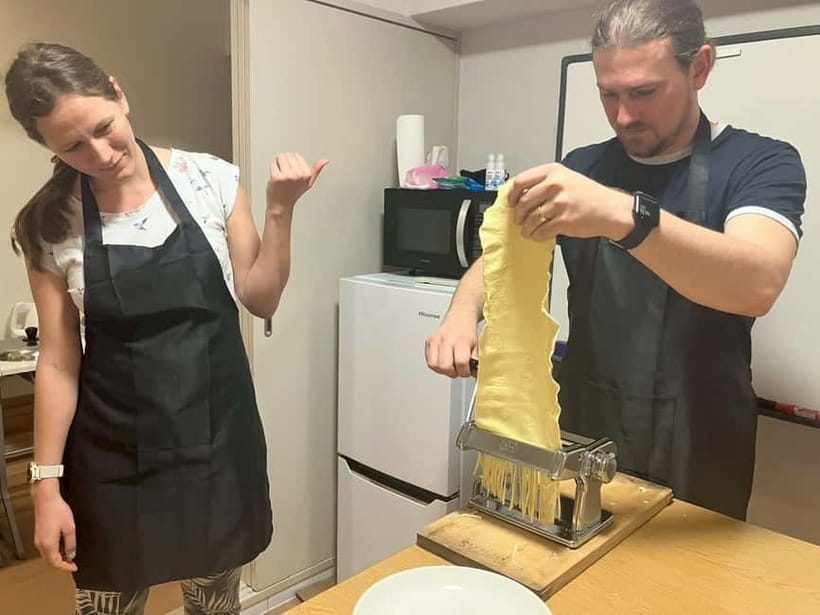
- Making ramen noodles from flour
- Folding gyoza with vegetables and pork
- Dietary requests and group cooking
- The tasting session: your ramen, gyoza, and drinks
- Recipes you can actually use at home
- Who should book this class
- Timing, booking, and cancellation details
- Is the $70 price good value?
- Should you book the Nanba ramen and gyoza class?
- FAQ
- Where does the ramen and gyoza class take place?
- How do I enter the building?
- How long does the activity last?
- Is the class suitable for beginners?
- What languages are available?
- What is included in the price?
- Can I cancel the booking?
Key points at a glance
- Make noodles from scratch: You prepare the ramen dough rather than simply assembling a ready-made bowl.
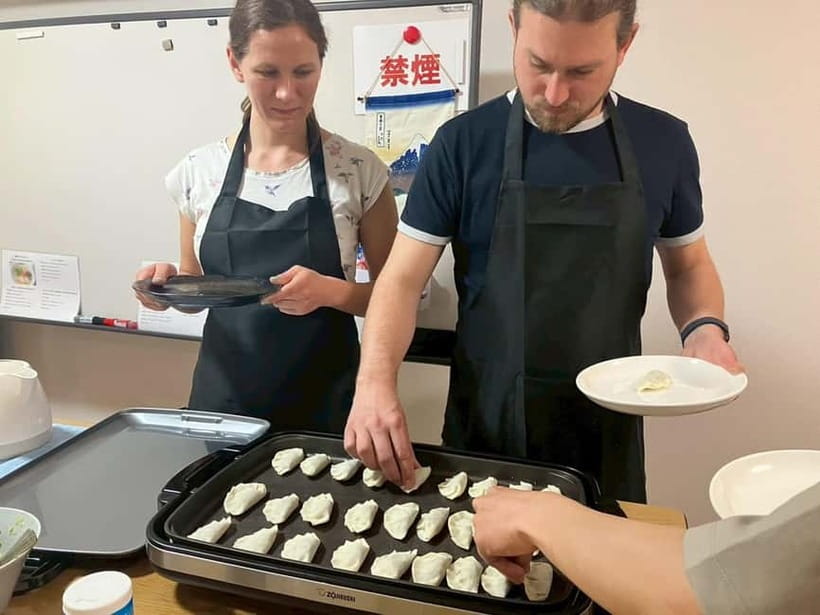
- Learn gyoza folding: The instructors show you how to shape Japanese dumplings filled with vegetables and pork.
- Eat what you cook: Your ramen and gyoza become the meal, served with sake, beer, or soft drinks.
- Small class size: A maximum of eight people keeps the session practical and social.
- Recipes go home with you: You receive instructions for trying the dishes again after Japan.
- Central Osaka meeting point: The class takes place at Dear Court Semba 303 in Chuo Ward, in an apartment building near Chuo-dori.
Why this Osaka class is worth your kitchen time
Osaka is easy to explore through its food, but eating ramen in a shop only gives you the final result. This class shows you some of the work behind the bowl. You handle the ingredients, learn the basic techniques, and sit down to eat a meal you helped make.
That makes the class especially useful if you want a food activity with a clear sense of progress. You arrive as a beginner, work through the preparation, and finish with ramen and gyoza on the table. The cooking is the main event, not a short demonstration followed by a meal.
At $70 per person, this is not the cheapest way to eat ramen in Osaka. A bowl of ramen from a casual shop costs much less. The price makes more sense if you value instruction, the social setting, drinks, recipes, and the chance to make the food yourself. You are paying for an activity as well as dinner.
The class has earned a 4.9 rating from 86 reviews, and the praise is remarkably consistent. The strongest points are the friendly instruction, the amount of hands-on work, the quality of the finished food, and the relaxed feel of cooking alongside other people.
More of Dotonbori and Namba after dark:
- Osaka Local Foodie Walking Tour in Dotonbori and Shinsekai
★ 5.0 · 985 reviews - Osaka: Dotonbori District River Cruise with Drink Discount
★ 4.2 · 876 reviews - Ultimate Osaka Walking Tour: Castle, Dotonbori & Hidden Gems
★ 5.0 · 862 reviews
Finding Dear Court Semba 303 in Chuo Ward
The meeting point is Dear Court Semba 303, at 4-chōme-3-1 Bakurōmachi, Chuo Ward, Osaka 541-0059. This is not a street-front restaurant with a large sign, so allow a few extra minutes to get your bearings.
At the building entrance, look for the doorbell panel. Press 303, then press the button marked Call 呼. Once the door opens, use the stairs or elevator to reach Room 303 on the third floor.
One useful detail comes from a family that had trouble finding the building: it is tucked about a block behind the Ferrari dealership, near a large stairway leading to a gym and an outdoor lounge area with couches. Treat that as a landmark rather than an official direction, but it may help when the building entrance is not obvious.
There is no hotel pickup or drop-off. You make your own way to the address, so this suits an independent Osaka day rather than a packaged sightseeing schedule. Since the building is in Chuo Ward, you can pair the class with time around central Osaka, but the supplied information does not specify walking times from particular stations.
The first 30 minutes: orientation and preparation
The session begins with a 30-minute orientation and preparation period. This is when you get introduced to the ingredients, tools, and basic plan for the class.
That opening matters for first-time cooks. You do not need to arrive with ramen-making experience, and the class is specifically described as suitable for beginners and food enthusiasts. The instructors provide all ingredients and equipment, so you only need to bring yourself.
The teaching is available in English and Japanese. Several accounts specifically praise the clear English instruction, including a Canadian family whose teenagers were able to follow along. The instructors are not simply present to watch the work. They explain the steps, demonstrate techniques, and help when someone struggles with the details.
The preparation also sets up the group atmosphere. You cook alongside other people rather than working through a private lesson. That can make the class more enjoyable if you like talking while you chop and shape, though it means the pace is shared with the rest of the group.
Making ramen noodles from flour
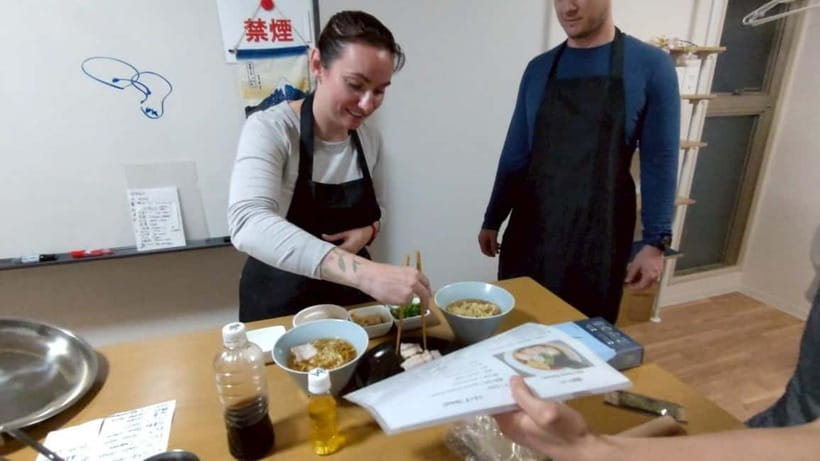
The ramen portion is more hands-on than a class that uses packaged noodles. You work with the flour and make the noodles from scratch, learning how the dough comes together before it becomes the base of the soup.
This is one of the most praised parts of the activity. People who had never made ramen before were surprised by how much they learned, and several specifically singled out the fresh noodles. The appeal is not just novelty. Making the noodles helps you understand why ramen has a particular texture and why preparation takes more than boiling water.
You should expect a practical lesson rather than a professional culinary course. The class lasts a limited time, and the aim is to give you a workable introduction to the process. The instructors help you through the steps, so you are not left to guess how the dough should look or what to do next.
The finished bowl is also a useful test of the class. The food is cooked and served after the preparation, letting you judge the flavor for yourself. Several accounts describe the ramen as delicious, with one person calling it the best ramen they had during the trip. That is subjective, of course, but it supports the idea that the class is not only about making something that looks right.
More ramen and gyoza classes:
- Osaka: Five Must-See Highlights Walking Tour & Ramen Lunch
★ 4.7 · 411 reviews - Osaka: Ramen and Gyoza Cooking Class in Dotonbori
★ 5.0 · 378 reviews - Ramen and Gyoza Cooking Class in Osaka
★ 5.0 · 202 reviews - Walking Tour of Osaka’s 5 Must-See Sights, with Ramen for Lunch
★ 5.0 · 158 reviews
Folding gyoza with vegetables and pork
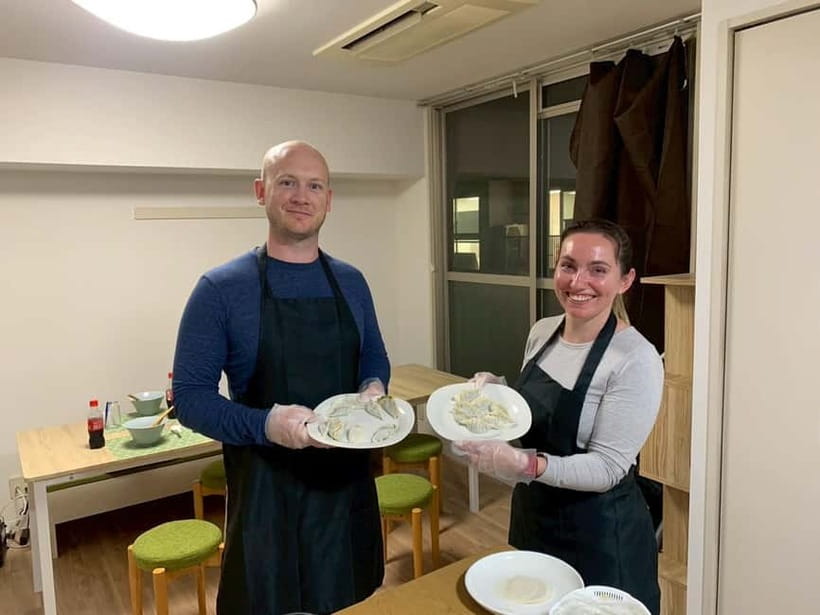
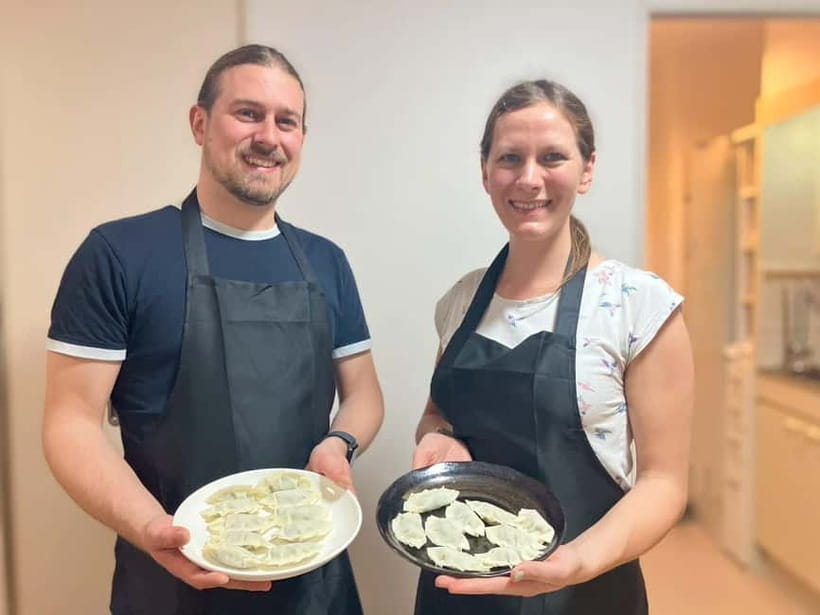
Gyoza adds a second skill and keeps the class from becoming a one-dish lesson. You prepare Japanese dumplings filled with vegetables and pork, then learn how to fold them.
The folding is the fiddly part. A gyoza wrapper is small, and neat pleats take practice. The instructors demonstrate the technique and help you improve your shape. You might produce a few uneven dumplings at first, but that is part of the fun and gives the lesson a clear, hands-on feel.
Several instructors are praised for patience when people had trouble with the folds. The teaching team has included Ryota, Kiho, Keiichi, Mimi, Yuma, Nana, Yuriko, and others, so the exact instructors can vary by session. You can expect English and Japanese guidance, but you should not assume a particular named instructor will be present on your date.
The gyoza was a favorite for many people, and the dumpling work seems to be one of the best reasons to choose this class over a simple ramen lesson. You learn a technique that you can repeat at home, even if your first batch is not as tidy as the instructors’ examples.
Dietary requests and group cooking
Vegetarian and vegan adjustments have been possible for some sessions. Vegetarian versions were prepared for participants who requested them, and one person with vegan requirements said the instructors accommodated the request. Still, you should communicate dietary needs when booking rather than assuming every menu change is automatic.
The standard gyoza filling includes vegetables and pork, so this point matters if you do not eat meat. The supplied details do not spell out every possible substitution, allergy procedure, or cross-contamination policy. Ask the provider in advance if you have a serious allergy or a strict dietary restriction.
The class is designed for a group of no more than eight. That is large enough to create conversation, but small enough for the instructors to provide individual help. You might cook with families, couples, solo participants, or other international visitors.
This format suits you if you like a social meal and do not mind sharing counter or kitchen space. It is less suitable if you want a private cooking lesson, a quiet meal, or complete control over the pace.
The tasting session: your ramen, gyoza, and drinks
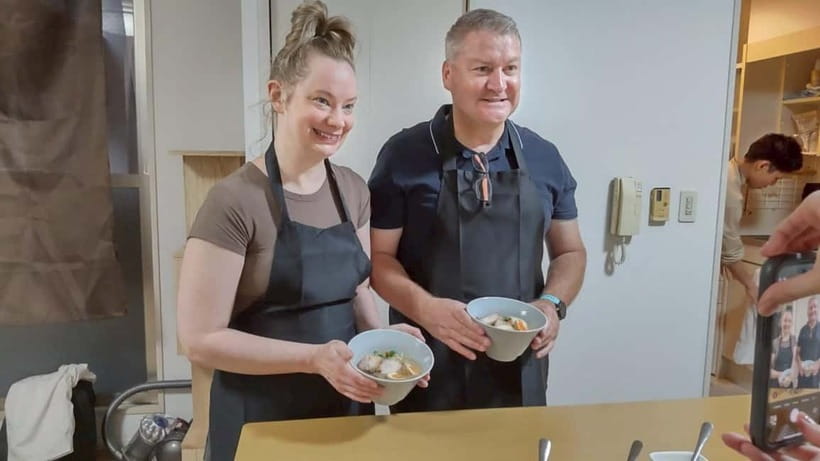
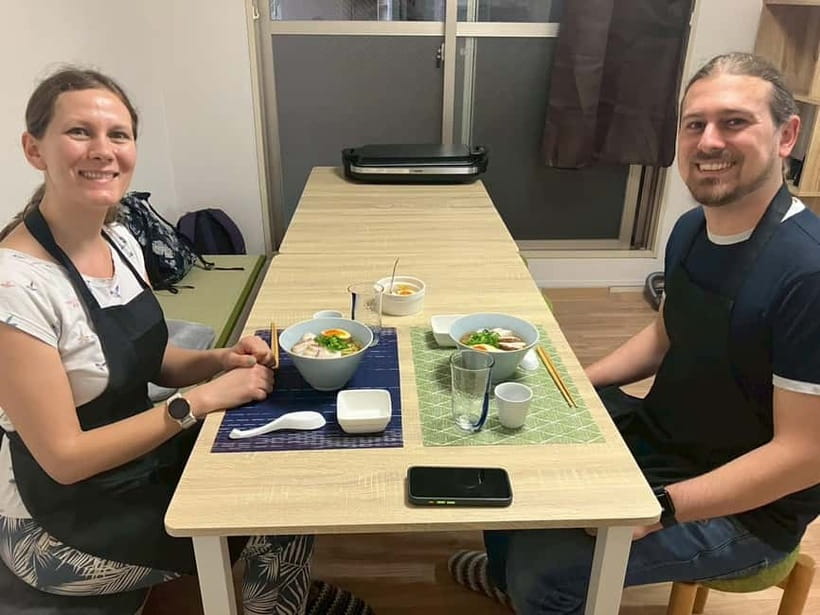
After the cooking, you sit down to eat the food you prepared. The tasting session includes ramen and gyoza, along with drinks such as sake, beer, and soft drinks.
The meal is the payoff, but it also gives the cooking a purpose. You can see how the dough, filling, folding, and cooking steps come together on the plate. Eating immediately after preparation makes the session feel like a dinner with a lesson attached, rather than a classroom with a small sample at the end.
The atmosphere is informal. Several people describe it as feeling like cooking with friends, and that is a useful way to picture the evening. The instructors are involved throughout the class, although one person would have preferred to eat with the staff as well. That is a fair consideration if the shared meal is important to you.
The included drinks add value, particularly for an evening booking. Sake and beer give the meal a distinctly Japanese touch, while soft drinks provide a nonalcoholic option. Additional food and drinks beyond the included tasting are not covered, so do not treat the class as an open-ended dinner plan.
Recipes you can actually use at home
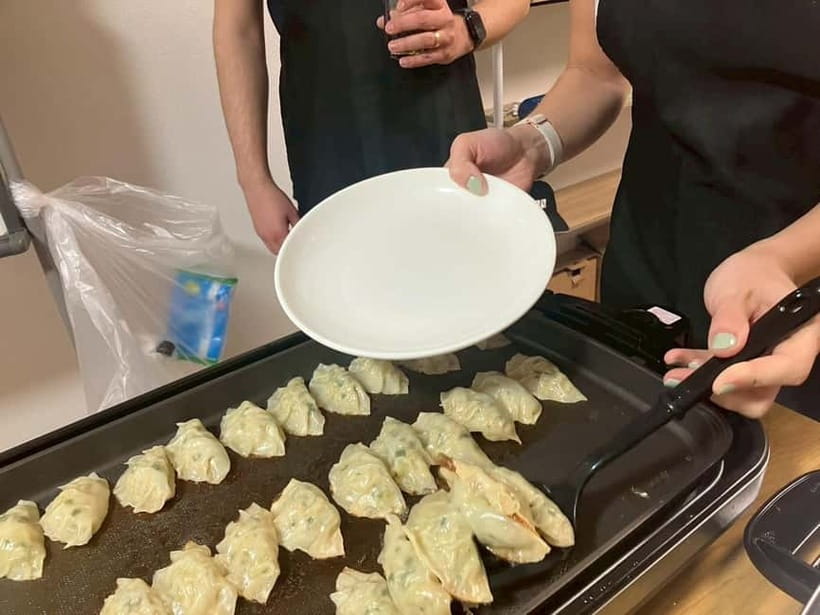
The take-home recipes are a major advantage. A cooking class can be enjoyable for two hours and then disappear into your holiday memories. Written recipes give you a chance to repeat the ramen and gyoza once you are back home.
The recipes are described as full recipe cards, and several people appreciated leaving with enough confidence to make the dishes again. That confidence is important. You are not only watching a chef perform an impressive trick. You are doing the preparation yourself and receiving a record of the steps.
There is one practical limit: some Japanese ingredients may be difficult to find in your home country. One participant specifically noted that certain ingredients were authentic but not easy to source at home. Before booking, consider whether you are happy to adapt the recipe with local substitutes.
The class cannot promise that your home version will taste exactly the same. Ingredients, flour, sauces, cooking equipment, and practice all affect the result. Still, the recipe cards turn a one-time Osaka activity into something you can share with family and friends later.
Who should book this class
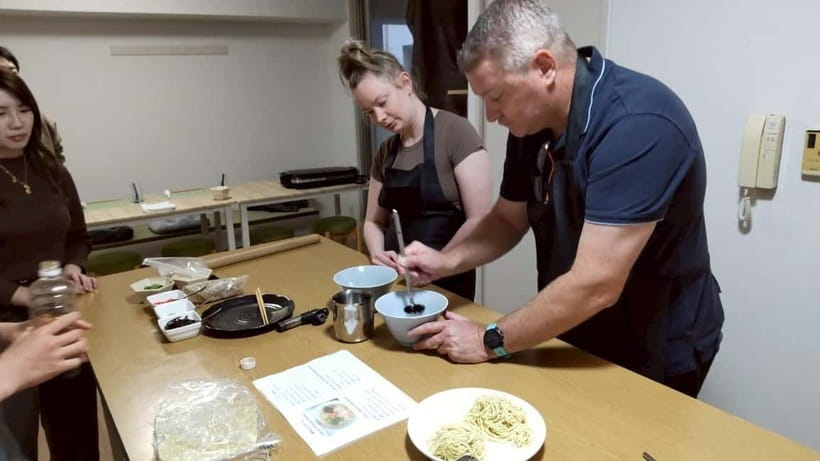
I would choose this for a first visit to Osaka if you want to add a food activity to the usual sightseeing. It works particularly well for:
- Families with older children or teenagers
- Couples looking for a relaxed evening activity
- Solo visitors who enjoy meeting people through food
- Beginners who want clear, guided instruction
- Anyone who already loves ramen and gyoza
- Visitors seeking a practical souvenir instead of another shop purchase
The class is also a good choice for people who prefer participation over observation. You will not simply watch a chef prepare dinner. You will chop, mix, shape, cook, and eat.
Families should note that the group format means children need to take part in a shared kitchen setting. The information describes the class as suitable for beginners, but it does not provide a specific minimum age. If you are booking with young children, ask the provider about age suitability.
The activity is listed as wheelchair accessible. Since it takes place in an apartment building with stairs and an elevator, contact the provider ahead of time with any mobility questions and confirm that the room setup meets your needs.
Timing, booking, and cancellation details
Booking is essential, and you should reserve at least one day in advance. Starting times vary, so check availability for your date rather than planning around a fixed hour.
There is a useful reserve-now-and-pay-later option, which helps if your Osaka schedule is still changing. You can also cancel up to 24 hours in advance for a full refund, according to the supplied conditions.
Pay close attention to the duration shown at checkout. The headline says two hours, while the detailed breakdown says 30 minutes of orientation, 1.5 hours of cooking, and one hour of tasting. Those sections total three hours. This may reflect a timing error or an overlap in the schedule, but you should clarify it before arranging a train, dinner, or evening show afterward.
Is the $70 price good value?
At $70, you are paying well above the cost of a basic ramen meal in Osaka. If your only goal is to eat ramen, choose a shop and spend the difference elsewhere.
If you want instruction and a social activity, the calculation changes. The price includes ingredients, tools, expert guidance, 1.5 hours of cooking, the orientation, the tasting session, selected drinks, and take-home recipes. You also avoid buying specialty ingredients and equipment for a one-off attempt.
The value is strongest for families and small groups who want a shared activity. It is also strong for food-focused visitors who will use the recipes at home. It is weaker for people with limited time, people who dislike group activities, or anyone mainly interested in Osaka’s restaurant scene rather than cooking.
The high rating is supported by specific strengths: patient instructors, clear English, fresh noodles made from scratch, enjoyable gyoza folding, tasty final dishes, and a friendly mood. Those are useful reasons to book, not just a number on a booking page.
Should you book the Nanba ramen and gyoza class?
Book it if you want to make rather than simply eat Japanese food, and if you have enough time for a group activity. The class offers real participation, patient help, a full meal, drinks, and recipes you can use later. It is a particularly good fit for families, beginners, and anyone who sees food as one of the best ways to connect with a place.
Skip it if you only want a quick meal or a private lesson. Also confirm the confusing duration before paying, and state any vegetarian, vegan, or allergy needs in advance.
For $70, this is a fair buy when you count the food, instruction, and lasting recipe cards. Just arrive with the address details in hand, press 303 and Call 呼 at the entrance, and be ready to make a few imperfect dumplings before dinner gets delicious.
FAQ
Where does the ramen and gyoza class take place?
The meeting point is Dear Court Semba 303, 4-chōme-3-1 Bakurōmachi, Chuo Ward, Osaka 541-0059, Japan.
How do I enter the building?
Press 303 on the entrance doorbell panel, then press the Call 呼 button. After the door opens, take the stairs or elevator to Room 303 on the third floor.
How long does the activity last?
The activity is advertised as two hours, but the detailed schedule lists 30 minutes of orientation and preparation, 1.5 hours of cooking, and a one-hour tasting session. Confirm the exact timing when booking.
Is the class suitable for beginners?
Yes. The class is described as suitable for beginners and food enthusiasts, and the instructors provide guidance throughout the cooking.
What languages are available?
Instruction is available in English and Japanese.
What is included in the price?
The price includes ingredients, cooking tools, instructor guidance, the orientation, 1.5 hours of hands-on cooking, the tasting session, selected drinks, and recipes to take home.
Can I cancel the booking?
You can cancel up to 24 hours in advance for a full refund. A reserve-now-and-pay-later option is also available.
More Japanese Home Cooking Classes
- Osaka: Sumo Stage Show with Bento or Snack + Fight & Photo
★ 4.3 · 364 reviews - Osaka: Traditional Mochi Pounding Experience with Tasting
★ 4.9 · 306 reviews - Osaka Cooking Class: Okonomiyaki &Japanese cuisines experience
★ 5.0 · 261 reviews - Osaka Sake Tasting with Takoyaki Cooking
★ 5.0 · 156 reviews
Just added around Osaka
- Guided Tour of Some Attractions in Osaka by Private Car★ 5.0 · 3 reviews
- Nara Day Trip from Osaka with a Licensed Guide★ 5.0 · 3 reviews
- Osaka Early Morning Osaka Castle Tour Avoid Crowds★ 5.0 · 3 reviews
- Private Transfer Between Kyoto and Kansai Airport KIX★ 5.0 · 3 reviews
- Shared Arrival Transfer: Osaka Itami Airport to Osaka City★ 5.0 · 3 reviews
- Osaka: Sushi Making Class and Dotonbori Food Tour★ 4.7 · 3 reviews
- Osaka Night Photography Workshop★ 5.0 · 3 reviews
- Kyoto Full day Tour Kinkakuji, Kiyomizu-dera and Fushimi Inari★ 4.5 · 3 reviews
Dotonbori & Namba Tours, compared.

Osaka Local Foodie Walking Tour in Dotonbori and Shinsekai
Read our review →
Dotonbori District River Cruise with Drink Discount
Read our review →
Ultimate Osaka Walking Tour: Castle, Dotonbori & Hidden Gems
Read our review →


Dotonbori River Cruise with Glico Sign & Neon Views
Read our review →
Browse the lists this tour appears in