
Reviewed · OSAKA CRAFT WORKSHOPS
Tea and Calligraphy Session at a Table in Osaka
The most appealing part of this Osaka experience is its simple pairing of matcha tea and Japanese calligraphy in one short session. You sit at a table rather than on tatami, so you can focus on the customs, tools, and movements without worrying about kneeling. I like the hands-on format, and I like that your calligraphy becomes a small souvenir instead of staying on the wall. The main consideration is time: one hour gives you a taste, not a full study of either art.
I also like the friendly, attentive approach, including help with photographs and clear guidance for first-timers. The central Shinsaibashi location makes this an easy cultural stop between shopping, dining, and sightseeing. Just note that samurai activities, costume dressing, and traditional music cost extra, so check what you are booking before you arrive.
In This Review
- Key points at a glance
- A compact culture lesson in Shinsaibashi
- What happens during the one-hour session
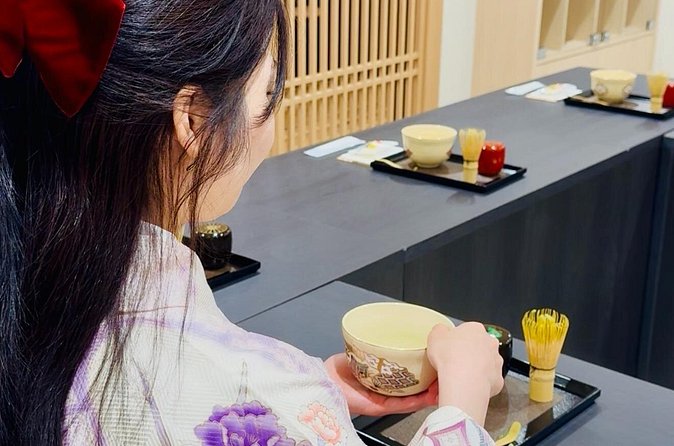
- The tea portion: matcha, sweets, and guided etiquette
- The calligraphy class and your take-home piece
- The setting at Shinsaibashi ARTY Inn
- Is $22.76 a fair price?
- Who will enjoy this experience most?
- Booking, timing, and cancellation details
- My verdict: a smart short stop for beginners
- FAQ
- Where does the tea and calligraphy session take place?
- How long does the experience last?
- Can I choose only tea ceremony or only calligraphy?
- What is included in the tea ceremony?
- Can I take my calligraphy artwork home?
- How many people can join the activity?
- Is the activity held on tatami?
- Are samurai, kimono, and ninja activities included?
- How far in advance is the experience usually booked?
- What is the cancellation policy?
Key points at a glance
- Two Japanese arts in one hour: Combine matcha preparation and calligraphy without committing half a day.
- Table seating instead of tatami: A practical choice if kneeling is uncomfortable or unfamiliar.
- Make-and-take artwork: You create Japanese calligraphy and take the finished piece home.
- Professional instruction: A tea master guides the tea portion, with staff support throughout the session.
- Small group setting: The activity accepts a maximum of 10 people, allowing room for personal help.
- Convenient Shinsaibashi base: Start and finish at Shinsaibashi ARTY Inn, near public transportation.
A compact culture lesson in Shinsaibashi
Osaka is famous for food, shopping, and quick-moving city life. In the middle of Shinsaibashi, this session gives you a quieter hour with two traditional Japanese arts. It is designed for people who want more than a photo opportunity but do not have time for a long formal class.
You meet at Shinsaibashi ARTY Inn, at 2-chōme-17-3 Nishishinsaibashi, Chuo Ward. The activity returns to that same point, which keeps the logistics tidy. You do not need to arrange a separate transfer or find your way across Osaka after the session.
The experience is especially approachable because it uses tables. Traditional tea ceremonies can involve sitting on tatami and following formal movements that feel daunting if you have never seen them before. Here, the setting lowers that barrier. You still get an introduction to matcha, sweets, and Japanese customs, but the physical demands are modest.
The group limit is 10 people. That is small enough to make individual help possible, though the exact group size on your date can vary. If you want a private lesson, this is not advertised as one, but the cap should make the class feel more manageable than a large cultural show.
More traditional craft workshops:
- 1.5〜2 Hours Traditional Kintsugi Work Shop in Namba Osaka
★ 5.0 · 75 reviews - Osaka: Private Japanese Calligraphy Experience
★ 5.0 · 66 reviews - From Osaka: Sakai Knife Maker or Blacksmith Walking Tour
★ 4.9 · 64 reviews
What happens during the one-hour session
The schedule is built around tea ceremony and calligraphy. You can take part in both, or choose only one if you prefer. The combined option gives you the best value and creates a nice rhythm: one activity centers on careful preparation and hospitality, while the other lets you practice brushwork and make something of your own.
Because the total duration is about an hour, expect an introduction rather than an advanced course. You will gain a quick working sense of what each tradition involves, why the tools matter, and how the activity fits into Japanese culture. You should not expect a long historical lecture or a professional-level calligraphy lesson.
That short format is useful on a busy Osaka itinerary. You can fit it around lunch, shopping in Shinsaibashi, or another appointment. The tradeoff is that neither art receives a great deal of practice time. If you want detailed instruction in brush technique or a formal tea ceremony with a long sequence of rituals, you may find this session too brief.
The tea portion: matcha, sweets, and guided etiquette
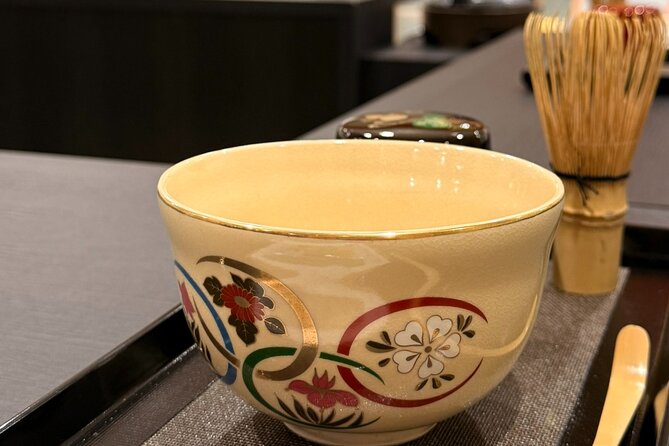
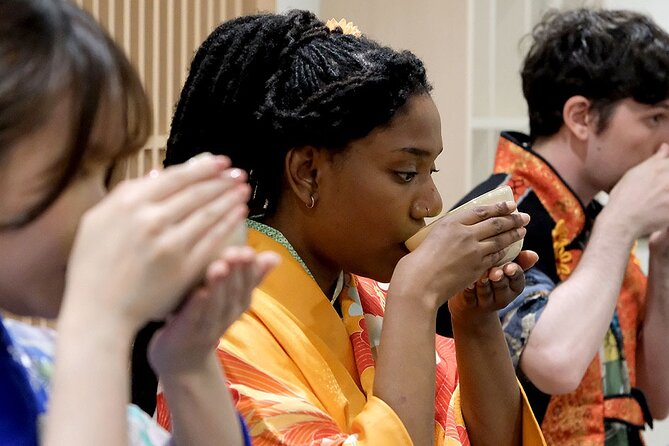
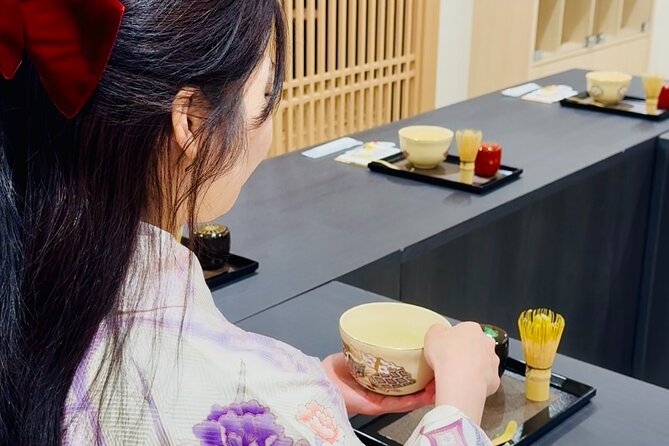
A professional tea master personally guides the tea ceremony portion. That matters because matcha is not simply green tea served in a bowl. The preparation, presentation, and gestures all have meaning, and a trained guide can explain what you are seeing as you take part.
You can expect matcha and Japanese sweets as part of the included experience. The sweets provide a small contrast to the tea’s bitter edge, and they make the session feel like a proper cultural encounter rather than a simple beverage tasting.
The table arrangement is the key practical feature. You can watch the tea preparation and follow the guide without having to sit in the formal kneeling position often associated with tea ceremony. For many people, especially first-timers, that makes it easier to pay attention to the host’s movements and explanations.
The experience also suits people who feel uncertain about etiquette. You do not have to arrive already knowing how to hold the bowl or when to taste the sweet. The point is to learn through direction, not to perform a ritual perfectly. Staff are described as attentive and friendly, and help with photographs adds a relaxed touch.
One limitation is that the details of the tea master’s name and the exact sequence are not provided. If meeting a named practitioner is important to you, confirm that before booking. What is clear is that a professional tea master leads the tea portion, and the session is set up for beginners.
The calligraphy class and your take-home piece
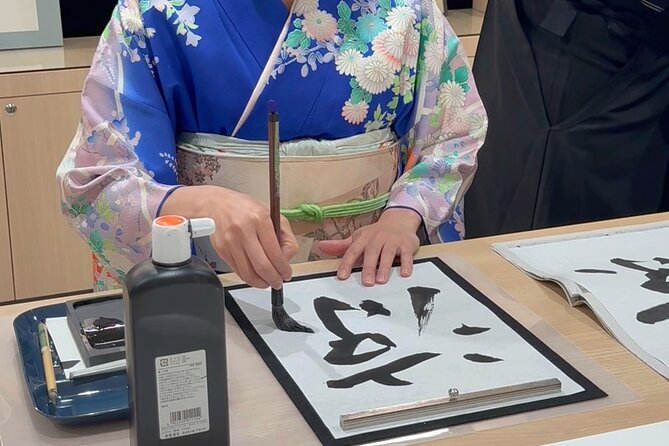
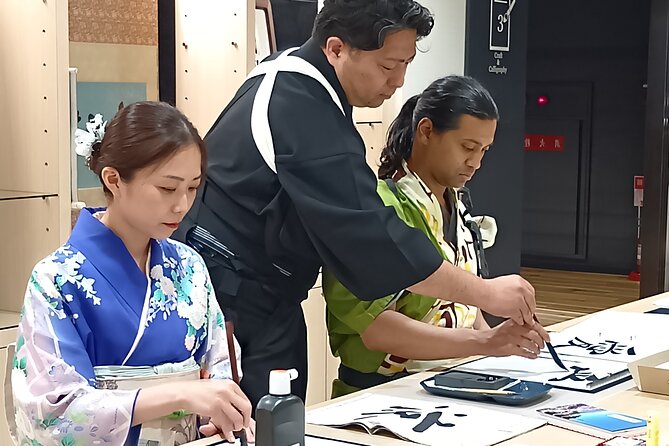
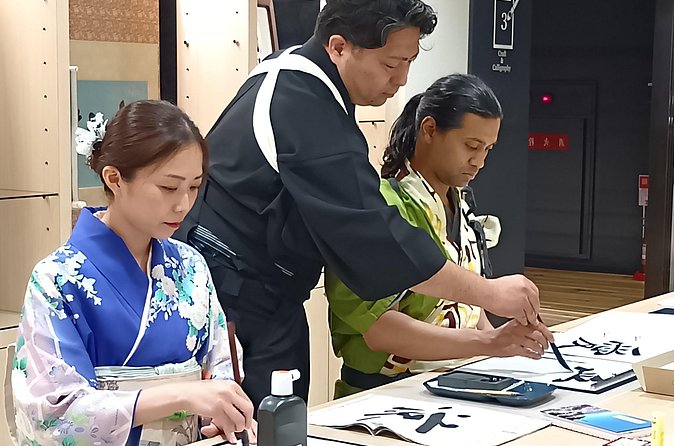
The calligraphy part is more active. Rather than only watching an instructor write, you create your own artwork. You then take it home, giving you a physical reminder of Osaka that is more personal than a standard souvenir.
Japanese calligraphy can look effortless when an expert makes a single bold stroke. Try it yourself and you quickly see the control involved. Brush pressure, ink, spacing, and the order of strokes all affect the final shape. A short class will not turn you into a calligrapher, but it can give you respect for the craft and a better eye for the work you see in temples, shops, and museums.
This portion is likely to be the most appealing choice for children and creative adults because it has a clear result. You are not just listening to an explanation. You are handling the materials and producing something that belongs to you.
The take-home artwork also affects packing. Keep the finished piece flat and protected after the class. The provided information does not specify the size or type of paper, so bring a little care if you are carrying it through the rest of your Osaka trip.
If you are short on time, choosing only calligraphy may suit you. If you want the fuller cultural experience, combine it with tea. The two activities complement each other without requiring a full-day commitment.
A completely different way to spend a day in Osaka:
- Osaka Go Karting Tour with Funny Costume
★ 5.0 · 2,658 reviews - Osaka Castle: Museum and Tower Entry Ticket
★ 4.5 · 2,380 reviews - Osaka: Shinsekai Food Tour with 13-15 Dishes at 5 Eateries
★ 4.8 · 2,204 reviews - Osaka Food Tour: 13 Dishes at 5 Local Eateries
★ 5.0 · 2,149 reviews
The setting at Shinsaibashi ARTY Inn
The meeting point is in Nishishinsaibashi, part of the wider Shinsaibashi area. This is a useful base for visitors staying in central Osaka because the activity is near public transportation and surrounded by places to eat and shop.
Starting and ending at the same address makes this easy to place in your schedule. You can plan it as a midday break from the city or as a cultural activity before an evening meal. Since the session lasts roughly one hour, allow extra time to locate the entrance and settle in, even though the activity itself is short.
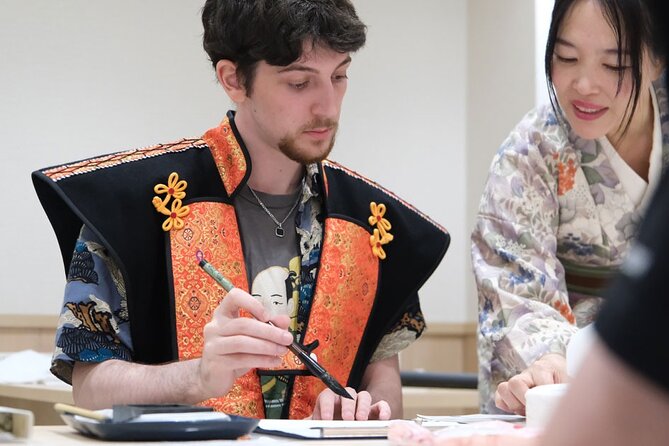
The setting also includes displays of samurai outfits, which add visual interest before or after the class. The samurai display is not the same as the tea and calligraphy experience, and some related activities cost extra. You may see the costumes as part of the facility, but do not assume that armor dressing or a samurai presentation is included in the basic price.
Optional add-ons listed separately include a samurai immersive experience with traditional Japanese music for ¥3,300 per person, samurai armor dressing for ¥12,000, kimono dressing for ¥12,000, and ninja dressing for ¥5,000. These can make the visit longer and more photo-focused, but they change the cost quickly.
Is $22.76 a fair price?
At $22.76 per person, the combined session offers solid value if you want an introduction to two activities. You receive matcha, Japanese sweets, professional tea guidance, calligraphy instruction, and a piece of your own artwork. The small time commitment is also part of the value, particularly in a city where you may be fitting many plans into one day.
The price looks less compelling if you only want a very formal tea ceremony or an extended calligraphy workshop. This is a sampler. Its strength is variety and ease, not depth.
I would compare it with the cost of buying a matcha drink and a souvenir separately. The class adds instruction, context, and participation. The calligraphy artwork may also save you from buying a generic keepsake that has no connection to your own experience.
The extra activities require a separate budget. If you are attracted by the samurai displays, decide in advance if you want to pay for music, armor, kimono, or ninja dressing. The base booking should be understood as the tea and calligraphy plan, not a complete costume package.
The activity is often booked about 18 days ahead. That suggests planning is sensible, especially if you have only one free afternoon in Osaka. The maximum group size is 10, which can also make popular dates fill sooner.
Who will enjoy this experience most?
I would recommend this for first-time visitors who want a straightforward introduction to Japanese culture. It works well for couples, families, solo visitors, and small groups who prefer doing something rather than simply looking at an exhibit.
It is also a good choice for anyone with a tight schedule. One hour is long enough to feel purposeful but short enough to place between other Shinsaibashi plans. The nearby public transportation makes it easier to reach than an out-of-town cultural workshop.
Families may appreciate the calligraphy element, especially if children enjoy making art. The table setup is another advantage for people who do not want to sit on tatami or kneel for a formal ceremony.
You should think twice if you want a lengthy, highly ceremonial tea event. The same goes for serious calligraphy students looking for advanced technical coaching. The session is aimed at a broad audience, so the teaching must remain accessible and quick.
Service animals are allowed, and most people can participate. The available details do not describe every physical feature of the venue, so contact the provider if you have a specific mobility need beyond the seating arrangement.
Booking, timing, and cancellation details
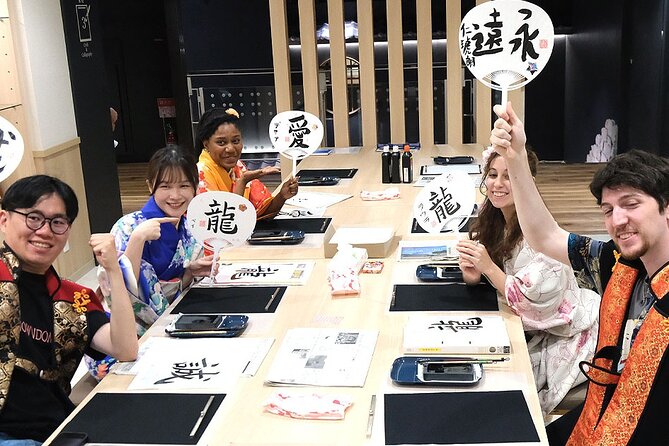
You receive confirmation when you book, and the ticket is mobile, so you can keep the reservation on your phone. Check the meeting address carefully: 2-chōme-17-3 Nishishinsaibashi, Chuo Ward, Osaka, 542-0086, Japan.
The activity ends where it begins. That is helpful if you have onward plans, but remember that the listed duration is approximate. A little buffer is wise if you have a restaurant reservation or train to catch.
Cancellation is free up to 24 hours before the start time. Cancel at least 24 hours ahead for a full refund. Cancellations or changes made within 24 hours are not accepted for a refund, and the cut-off follows local Osaka time.
My verdict: a smart short stop for beginners
Book this session if you want hands-on culture without a major time commitment. The combination of tea, sweets, professional guidance, and take-home calligraphy gives you more substance than a quick photo stop. The table seating, central location, and small maximum group make it easy for beginners.
Skip it if your main goal is a long, formal tea ceremony or advanced brush training. For most visitors, though, the $22.76 price is reasonable because you get two activities, not just a demonstration. I would choose the combined option, arrive ready to take part, and keep the rest of the afternoon open for Shinsaibashi.
FAQ
Where does the tea and calligraphy session take place?
It takes place at Shinsaibashi ARTY Inn, 2-chōme-17-3 Nishishinsaibashi, Chuo Ward, Osaka, 542-0086, Japan.
How long does the experience last?
The session lasts approximately one hour.
Can I choose only tea ceremony or only calligraphy?
Yes. You can take part in both activities or choose only the tea ceremony or only the calligraphy session.
What is included in the tea ceremony?
The tea portion includes matcha, Japanese sweets, and guidance from a professional tea master.
Can I take my calligraphy artwork home?
Yes. You create a piece of Japanese calligraphy and take your artwork home.
How many people can join the activity?
The maximum group size is 10 people.
Is the activity held on tatami?
No. The experience uses table seating rather than traditional tatami seating.
Are samurai, kimono, and ninja activities included?
No. These are separate paid options. Samurai immersive activities with traditional Japanese music cost ¥3,300 per person, samurai armor dressing and kimono dressing cost ¥12,000 per person, and ninja dressing costs ¥5,000 per person.
How far in advance is the experience usually booked?
It is booked an average of 18 days in advance.
What is the cancellation policy?
You can cancel up to 24 hours before the start time for a full refund. Cancellations and changes made less than 24 hours before the start time are not accepted for a refund.
Just added around Osaka
- Nara Day Trip from Osaka with a Licensed Guide★ 5.0 · 3 reviews
- Osaka Early Morning Osaka Castle Tour Avoid Crowds★ 5.0 · 3 reviews
- Guided Tour of Some Attractions in Osaka by Private Car★ 5.0 · 3 reviews
- Private Transfer Between Kyoto and Kansai Airport KIX★ 5.0 · 3 reviews
- Shared Arrival Transfer: Osaka Itami Airport to Osaka City★ 5.0 · 3 reviews
- Osaka: Sushi Making Class and Dotonbori Food Tour★ 4.7 · 3 reviews
- Osaka Night Photography Workshop★ 5.0 · 3 reviews
- Kyoto Full day Tour Kinkakuji, Kiyomizu-dera and Fushimi Inari★ 4.5 · 3 reviews
Osaka Craft Workshops, compared.
1.5〜2 Hours Traditional Kintsugi Work Shop in Namba Osaka
Read our review →
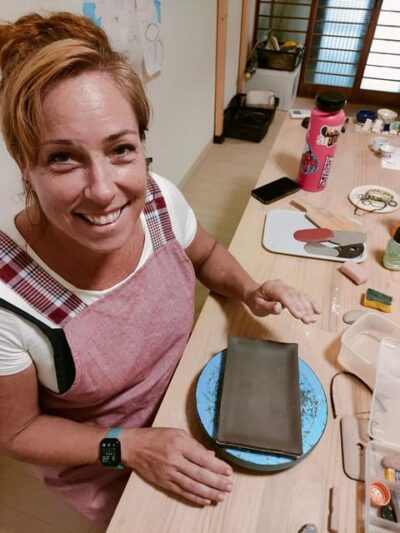
Traditional Japanese Ceramics Private Experience
Read our review →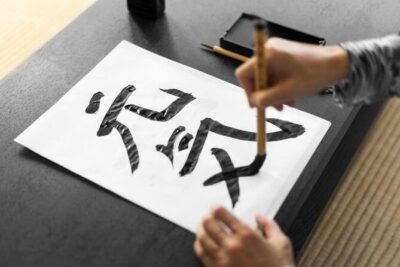

Learning Zen of Japanese Calligraphy in kimono near Osaka Castle
Read our review →
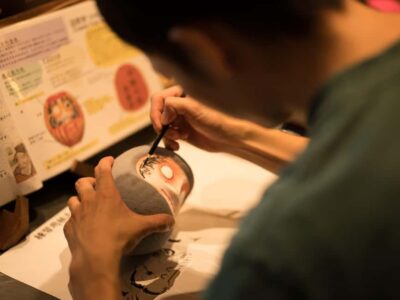
Osaka Daruma Workshop — Paint Your Own Good-Luck Daruma
Read our review →Browse the lists this tour appears in