
Reviewed · OSAKA CRAFT WORKSHOPS
Sharpen Japanese Knives in Osaka
Sakai’s knife craft is not just about buying a sharp souvenir. It is about seeing how several specialists bring one blade to life, then learning the patient skill that keeps it working. This experience takes you to the Sakai Traditional Industrial Hall before putting you at a whetstone in the family-run Wada Store.
I like the small group limit of five, which gives you real time with the sharpener, and I like that you take home your own knife rather than only watching a demonstration. Guide Yuji has been praised for clear English and punctual help, including meeting groups at Sakai Station. The main drawback is price: at $213 for about two hours, this is a specialist activity, not a cheap sightseeing stop.
In This Review
- Key points at a glance
- Why Sakai is the right place to learn knife care
- Starting at Sakai Traditional Industrial Hall
- The Wada Store sharpening lesson
- Fitting the handle to your own knife
- What the $213 price really buys you
- How the timing works in a day from Osaka
- What makes guide Yuji important
- Who should book this experience
- Small group benefits and possible limits
- Should you book Sharpen Japanese Knives in Osaka?
- FAQ
- Where does the experience start?
- Where does the activity end?
- How long does the experience last?
- What is included?
- Are meals included?
- How many people can join?
- Can most people participate?
- What happens if bad weather cancels the activity?
Key points at a glance
- A 450-year knife tradition: Sakai has been making knives for roughly four and a half centuries, with craft skills still practiced today.
- Two very different stops: Begin with displays and explanations at Sakai Traditional Industrial Hall, then move into hands-on work at Wada Store.
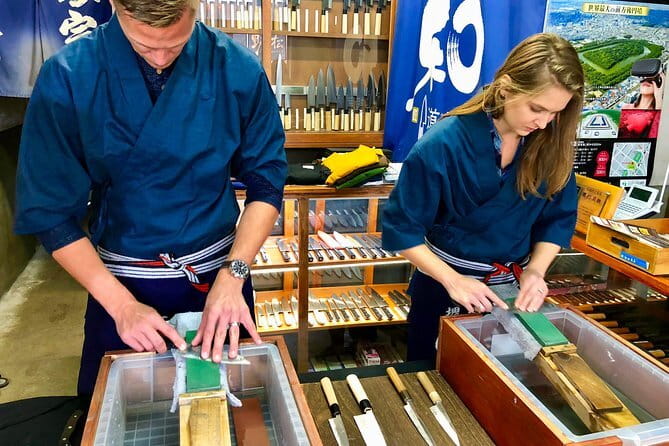
- You sharpen a knife yourself: The lesson uses whetstones and covers proper technique rather than offering only a quick demonstration.
- Handle fitting is included: You also learn how to fit a handle into a blade using a traditional method.
- A genuinely small group: The maximum is five people, useful when your hands and technique need close correction.
- Useful inclusions: Your knife, apron, sharpening tools, and coffee or tea are included. Meals and snacks are not.
Why Sakai is the right place to learn knife care
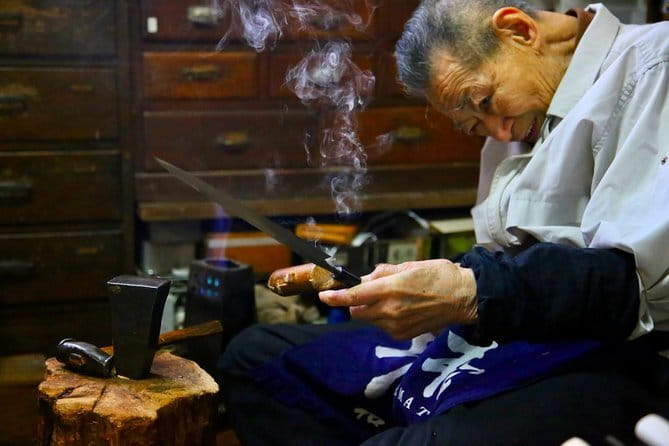
Sakai is known as knife city Sakai, with knife-making skills reaching back about 450 years. The important point for you is not simply the age of the craft. It is the way the work is divided among professionals, each handling a different part of the knife-making process.
That makes this more than a shopping trip. At the industrial hall, you get a look at the range of knives made for different purposes and how handwork remains part of the process. Then, at Wada Store, you shift from seeing the finished objects to working on one yourself.
Sharpening is often the least understood part of owning a Japanese knife. Many people know that Japanese blades have a strong reputation, but fewer know how to maintain them. A whetstone lesson gives you a practical skill you can continue using at home, provided you are willing to practice slowly and carefully.
I also like the family connection behind the workshop. The Wada family has a long background in knife sharpening and related work, and that gives the session a personal sense of continuity. You are not being rushed through a generic craft activity made for a large crowd.
More traditional craft workshops:
- 1.5〜2 Hours Traditional Kintsugi Work Shop in Namba Osaka
★ 5.0 · 75 reviews - Osaka: Private Japanese Calligraphy Experience
★ 5.0 · 66 reviews - From Osaka: Sakai Knife Maker or Blacksmith Walking Tour
★ 4.9 · 64 reviews
Starting at Sakai Traditional Industrial Hall
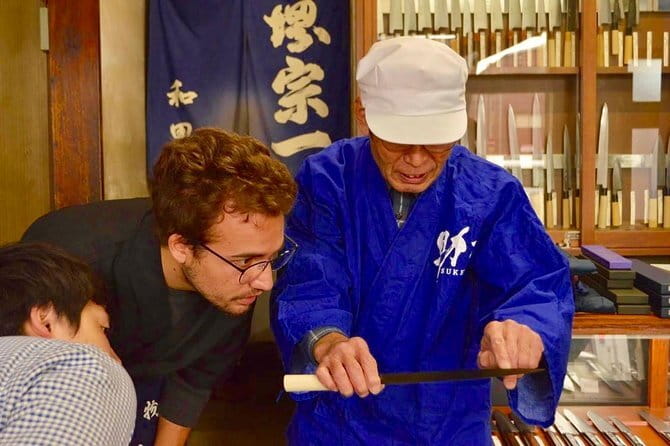
The first stop lasts about 30 minutes and has no separate admission charge. Here you learn how many kinds of knives exist for different jobs and how they are made by hand.
That short visit gives the workshop context. Without it, sharpening could feel like an isolated technical exercise. With it, you can place the blade in a wider story of Sakai metalwork and understand that a finished knife is the result of several skilled stages.
Do not expect a huge museum visit. Thirty minutes is enough for an introduction, not a full day of exhibits. That suits this experience because the main event is the workshop. If you prefer long museum visits and detailed independent browsing, the hall may feel brief. If you want a useful background before handling a blade, the timing is about right.
Guide Yuji adds value here. His English has been described as excellent, and he explains the displays rather than simply walking you through them. That matters because the objects make more sense when you understand what you are looking at and why different knives serve different purposes.
One practical point: the stated meeting point is Wada Store at 1-chōme-1-1 Shinmeichōhigashi, Sakai Ward, Sakai, Osaka 590-0935. A previous arrangement had Yuji meeting people at Sakai Station and walking roughly half a mile to the hall, so confirm the exact meeting instructions before you set out. The activity is near public transportation, but the supplied details do not specify a particular station exit or route.
The Wada Store sharpening lesson
The workshop at Wada Store takes about 90 minutes, making it the heart of the experience. You put on the provided apron, use the sharpening tools, and work with whetstones under instruction from a professional sharpener.
The value is in the correction you receive while your hands are actually on the knife. Proper sharpening is not just rubbing metal against a stone. Angle, pressure, movement, and patience all matter, and a small group makes it easier for the instructor to see where you need to adjust.
The lesson is designed to teach you how to sharpen properly, not merely to let you try it once. Still, you should arrive with realistic expectations. Two hours can introduce the method and give you meaningful practice, but it cannot turn a beginner into a master. The craft has been refined over generations, so your first result may be useful without being perfect.
That is part of the charm. This is a hands-on lesson where concentration matters. You will likely spend more time controlling simple movements than admiring dramatic demonstrations. If you like activities that reward care and attention, you will get more from this than from a quick souvenir-making class.
The provided tools remove a common worry. You do not need to bring an apron or sharpening equipment. Coffee or tea is also included, a small touch that makes the workshop feel more personal without pretending to be a meal.
Fitting the handle to your own knife

The workshop also teaches you how to fit a handle into the blade using a traditional method. This is a particularly nice feature because it lets you take part in another stage of knife preparation rather than stopping at sharpening.
You leave with your own knife, which gives the activity lasting value. It is not just something you handle for ten minutes and return to a shelf. You have a blade connected to the lesson, along with a better understanding of how its care works.
The supplied details do not specify the knife’s size, style, or exact model, so do not book expecting a particular blade unless JLB Tours confirms it in advance. That is worth asking if the knife is a major reason you are considering the experience.
Handle fitting can also appeal to people who enjoy traditional handwork more than cooking itself. You do not need to be a serious home chef to appreciate the process. At the same time, anyone hoping to make a full custom knife from raw metal should choose a different activity. This lesson focuses on sharpening and fitting the handle, not forging an entire blade.
A completely different way to spend a day in Osaka:
- Osaka Go Karting Tour with Funny Costume
★ 5.0 · 2,658 reviews - Osaka Castle: Museum and Tower Entry Ticket
★ 4.5 · 2,380 reviews - Osaka: Shinsekai Food Tour with 13-15 Dishes at 5 Eateries
★ 4.8 · 2,204 reviews - Osaka Food Tour: 13 Dishes at 5 Local Eateries
★ 5.0 · 2,149 reviews
What the $213 price really buys you

At $213, this is expensive for a two-hour activity. You are paying about $106.50 per hour before considering the included knife and materials. Compared with a general Osaka attraction, that is a high rate.
The price makes more sense if you assign value to the small group, direct instruction, specialist setting, and take-home equipment. Your fee includes an apron, sharpening tools, your own knife, coffee or tea, and admission to the industrial hall. You are also paying for access to a skill that is not easy to understand from a shop display or a video.
The group limit matters here. With no more than five people, the sharpener can watch your technique and offer individual help. A cheaper class with 20 or 30 people might give you the same basic explanation, but less personal attention when you make mistakes.
I would not book this simply because you want an inexpensive Osaka souvenir. I would book it if the craft itself interests you, if you like practical lessons, or if you want a small-group activity with a lasting object attached to it.
Lunch, dinner, and snacks are not included. The session is only about two hours, so plan your food separately. Coffee or tea is a pleasant addition, but it should not be treated as a meal.
How the timing works in a day from Osaka

The activity lasts approximately two hours, split between the 30-minute industrial hall visit and the 90-minute Wada Store lesson. The published end point is the same as the meeting point, so you return to Wada Store when the activity finishes.
This makes the experience easy to pair with other plans in Sakai, though the supplied information does not provide exact travel times from central Osaka. Allow extra time to reach the meeting point, especially if you are unfamiliar with Sakai. The tour is near public transportation, but confirm the route and meeting instructions before booking.
The earlier account of a walk from Sakai Station to the museum suggests that some arrangements may involve meeting at the station and walking to the first stop. Since the official start location is Wada Store, contact the provider if your confirmation does not make the sequence clear.
Good weather is required. If poor weather forces a cancellation, you are offered another date or a full refund. That protection is useful, but the activity has a strict non-refundable policy for your own cancellation or requested change. Do not book until your schedule is firm.
What makes guide Yuji important
Yuji is the named guide connected with the experience, and his role appears to cover both the meeting arrangements and the explanations at the industrial hall. Clear English is especially useful here because knife-making terms and sharpening instructions can be hard to follow through gestures alone.
You should still expect the sharpener at Wada Store to be central to the hands-on lesson. The experience joins a guide-led introduction with instruction from a working specialist, rather than asking one person to provide every part of the craft.
Yuji has also been described as punctual and friendly in his handling of the meeting. One useful detail is that he has met groups at Sakai Station, then walked with them to the knife museum and onward to a small shop. Because the official meeting information places the start at Wada Store, treat that station meeting as something to confirm, not as a guaranteed arrangement.
If you enjoy asking questions, this is the kind of activity where it pays to speak up. Ask about the different knife purposes at the hall, the reason for each sharpening step, and how to care for your blade after you return home. The smaller group should make those questions easier to handle.
Who should book this experience
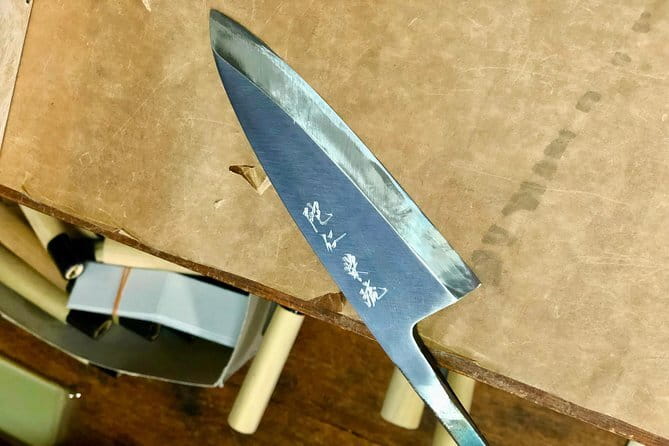
I would recommend it most strongly to people with a clear interest in Japanese craft, cooking tools, traditional work, or practical souvenirs. It also suits anyone looking for a half-day outing from Osaka that feels different from the city’s major sights.
Families can participate, since most people are eligible, but the activity still requires attention and careful handling of a blade. The supplied information does not set a minimum age, so ask JLB Tours if you are booking for young children.
This is also a good choice for repeat visitors to Osaka. If you have already seen the major shopping streets and temples, Sakai offers a more focused look at a local trade. You are not simply buying a knife in a polished retail setting. You are learning something about how it is made and maintained.
I would be less likely to recommend it to someone with a tight Osaka schedule, a low activity budget, or little interest in using the knife afterward. Two hours is not a long commitment, but the cost is high if you only want a quick cultural stop.
Small group benefits and possible limits
A maximum of five people is one of the strongest features. Sharpening requires close attention to hand position and blade movement, so personal correction is far more useful than a large class where you watch from the back.
The small size may also make it easier to speak with Yuji and the sharpener about the family’s work and Sakai’s craft traditions. The experience can feel more like a workshop visit than a standard tour.
There are limits. A small class does not guarantee that every part of the lesson will match your exact interests. The description gives no fixed detail about the knife model, the whetstone type, the final sharpness standard, or the specific handle material. Contact the provider if any of those points affect your decision.
The activity also returns to the meeting point rather than taking you onward to another Osaka sight. That is convenient if your next stop is in Sakai, but you must plan your own transportation afterward.
Should you book Sharpen Japanese Knives in Osaka?
Book it if you want to work with your hands and leave with a real knife, not just photographs. The strongest reasons are the five-person limit, Yuji’s clear English, the visit to Sakai Traditional Industrial Hall, and the chance to learn both whetstone sharpening and traditional handle fitting.
Skip it if $213 feels too high for two hours or if you want a broad sightseeing tour. This is a focused craft lesson, and its value depends on your interest in the subject.
For the right person, it is a memorable half-day addition to Osaka: compact, practical, and rooted in Sakai’s long knife-making tradition. Confirm the meeting location, check the knife details, and book only when your plans are firm because cancellations by you are not refundable.
FAQ
Where does the experience start?
The stated meeting point is Wada Store at 1-chōme-1-1 Shinmeichōhigashi, Sakai Ward, Sakai, Osaka 590-0935, Japan.
Where does the activity end?
The activity ends back at the meeting point.
How long does the experience last?
It lasts approximately two hours, with about 30 minutes at Sakai Traditional Industrial Hall and 90 minutes at Wada Store.
What is included?
An apron, tools for sharpening knives, your own knife, and coffee or tea are included. Admission to the industrial hall is free, and admission to the workshop is included.
Are meals included?
No. Lunch, dinner, and snacks are not included. Coffee or tea is provided.
How many people can join?
The experience has a maximum of five participants.
Can most people participate?
Yes. The activity information states that most people can participate and that it is near public transportation.
What happens if bad weather cancels the activity?
If poor weather causes a cancellation, you are offered a different date or a full refund. If you cancel or request a change yourself, the experience is non-refundable and cannot be changed.
Just added around Osaka
- Nara Day Trip from Osaka with a Licensed Guide★ 5.0 · 3 reviews
- Osaka Early Morning Osaka Castle Tour Avoid Crowds★ 5.0 · 3 reviews
- Guided Tour of Some Attractions in Osaka by Private Car★ 5.0 · 3 reviews
- Private Transfer Between Kyoto and Kansai Airport KIX★ 5.0 · 3 reviews
- Shared Arrival Transfer: Osaka Itami Airport to Osaka City★ 5.0 · 3 reviews
- Osaka: Sushi Making Class and Dotonbori Food Tour★ 4.7 · 3 reviews
- Osaka Night Photography Workshop★ 5.0 · 3 reviews
- Kyoto Full day Tour Kinkakuji, Kiyomizu-dera and Fushimi Inari★ 4.5 · 3 reviews
Osaka Craft Workshops, compared.
1.5〜2 Hours Traditional Kintsugi Work Shop in Namba Osaka
Read our review →
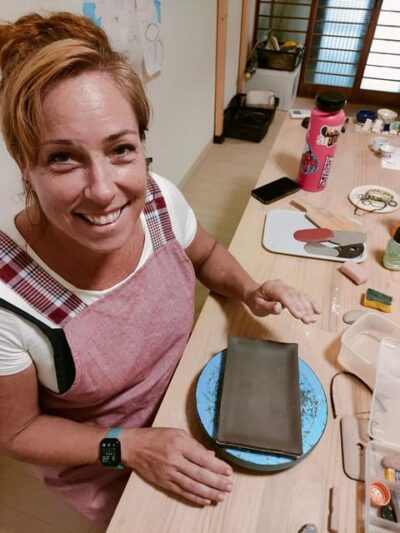
Traditional Japanese Ceramics Private Experience
Read our review →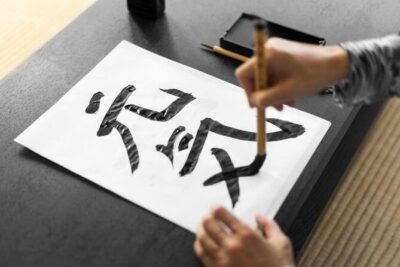

Learning Zen of Japanese Calligraphy in kimono near Osaka Castle
Read our review →
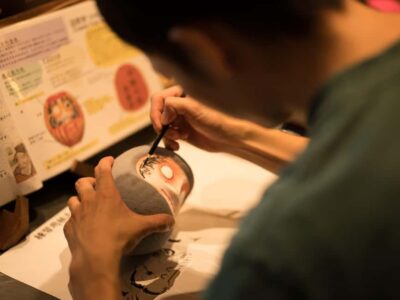
Osaka Daruma Workshop — Paint Your Own Good-Luck Daruma
Read our review →Browse the lists this tour appears in