
Reviewed · OSAKA SAMURAI & NINJA EXPERIENCES
Ninja Experience in Osaka
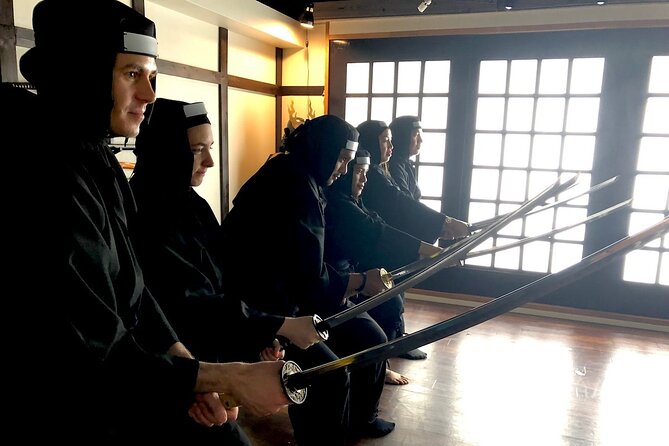
Osaka’s Ninja-Do offers a playful hour of ninja training, not a museum lecture. You learn how to walk like a ninja, handle a sword, throw shuriken stars, and pose in costume. Sensei Tsujimura keeps the lesson moving with humor, clear English, and plenty of time for pictures.
I like two things here. First, the costume rental turns a simple class into a proper family activity, especially for children and teenagers. Second, the small group, limited to eight people, gives the instructor room to work with each participant. The main consideration is that the session may feel closer to a staged introduction than serious martial arts training, and one account found it lasted about 45 minutes rather than the advertised hour.
In This Review
- Key points at a glance
- What the Ninja-Do hour is really like
- Getting into costume before the lesson
- Learning the ninja walk and body control
- Handling the sword in a controlled setting
- Throwing shuriken stars and taking pictures
- Sensei Tsujimura’s role in the experience
- Who will get the most from this Osaka activity
- Is $30.80 good value for one hour?
- Pairing Ninja-Do with Shinsekai and Abeno Harukas
- Practical details before you book
- Should you book Ninja-Do?
- FAQ
- Where does the Ninja Experience in Osaka take place?
- How long does the activity last?
- What activities are included?
- Is a ninja costume included?
- Who leads the session?
- How many people can join?
- Is the activity suitable for most people?
- What is the cancellation policy?
Key points at a glance
- Sensei Tsujimura leads a lively class: Expect friendly instruction, jokes, and personal attention.
- Three hands-on skills are included: Practice ninja walking, sword technique, and shuriken-star throwing.
- Costumes are part of the package: You can use the outfit for the lesson and the photo session.
- The class is built for families: Young children, older kids, and skeptical teenagers can all take part.
- The group is capped at eight: That keeps the lesson more personal than a large stage show.
- Shinsekai and Abeno Harukas are nearby: You can pair the class with other Osaka sights in the same outing.
What the Ninja-Do hour is really like
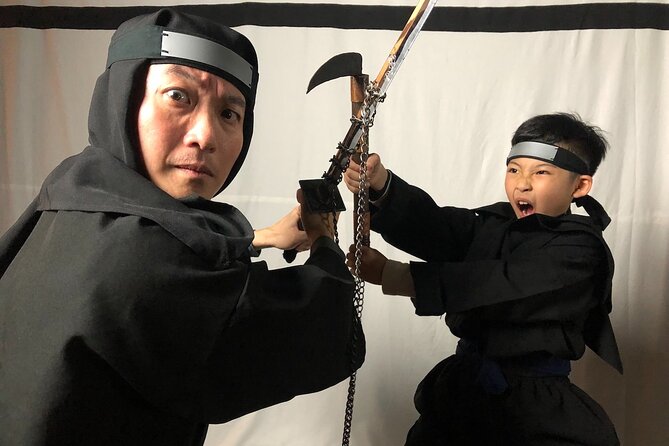
The Ninja-Do session takes place in Osaka’s Nishinari Ward, at 1 Chome Taishi, inside the Wakaba Building on the fourth floor. This is an indoor activity, so it gives you a useful break from Osaka heat, rain, or a packed sightseeing schedule.
The format is short and direct. You arrive at the dojo, get into a ninja costume, and begin a guided introduction to the skills associated with ninja training. The program includes walking technique, a sword lesson, and shuriken-star practice. It also brings in games, ninja background, and time for photos and videos.
I would set your expectations correctly. This is not a demanding combat course, and it is not presented as a formal qualification in martial arts. It is a safe, theatrical introduction that lets you try several classic ninja actions under supervision. For most families, that is the point: you get activity, history, humor, and pictures without giving up half a day.
The experience ends where it begins. That simple arrangement matters in Osaka, where a short activity can fit neatly between a morning in another district and an evening meal.
More samurai and ninja experiences:
- Samurai Training Experience KENDO in Osaka
★ 5.0 · 515 reviews - OSAKA NIGHT FUSION Japanese Taiko Kabuki Samurai Dance Show
★ 4.8 · 155 reviews - Osaka: Samurai Training Experience KENDO in Osaka
★ 5.0 · 111 reviews
Getting into costume before the lesson
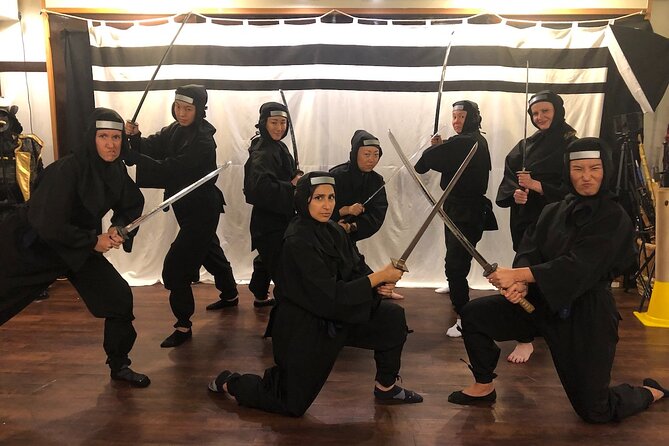
The costume rental is one of the strongest parts of the package. Children get an immediate role to play, and adults can join in without needing to bring anything special. The costume also makes the photo session more memorable than ordinary snapshots in a plain training room.
The outfit is not just decoration. It helps the instructor frame the lesson around how a ninja might move, stand, and handle equipment. The result is part class and part photo session, with the two sides supporting each other.
If you are booking for a family, allow everyone to take part rather than treating the activity as something only for children. Parents and older siblings can practice alongside younger participants, and the small group allows the instructor to give individual attention. One solo participant even used a tripod for personal photos and videos, so the format can work for an individual visitor as well.
Learning the ninja walk and body control
The first training section focuses on movement. You learn how to walk in a controlled ninja style, using posture and careful steps rather than rushing around the room. This may sound simple, but it gives the class a clear starting point and helps children understand that ninja skills depend on body control.
The lesson also connects physical movement with the ninja idea of training both body and mind. You are not simply handed a prop and told to pose. The instructor explains the purpose behind the actions, then lets you try them.
For younger children, this section works because it is active without being exhausting. For adults, it is a light challenge and a chance to play along. The class is best approached with a sense of humor. If you expect an intense athletic workout, you may find it too gentle. If you want a structured activity with a historical theme, it fits well.
Handling the sword in a controlled setting
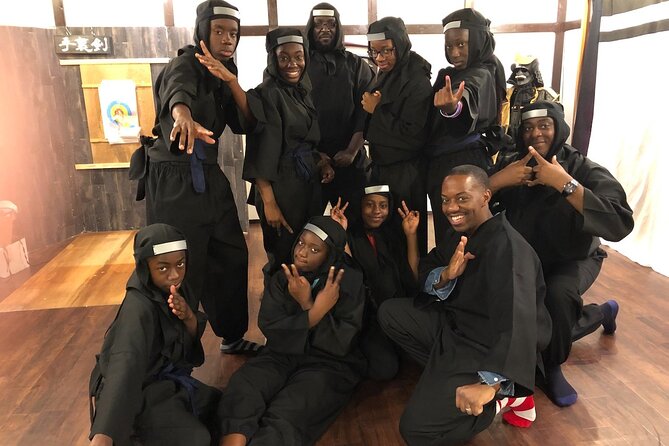
The sword lesson is likely to be the moment many people anticipate most. Sensei Tsujimura explains how to hold and use the sword in a ninja style, then gives participants time to practice. The instruction is presented as a supervised lesson, not free play, which helps keep the activity organized.
The appeal is partly physical and partly theatrical. A sword immediately makes the ninja role feel real to a child, while the instructor’s demonstrations give the session a sense of purpose. The lesson also gives each person a chance to perform rather than simply watch.
The instructor’s personal approach is important here. He has been praised for spending one-on-one time with participants and for making the class easy to follow in English. That is useful when a family includes people of different ages or confidence levels. A child can receive extra help while other members of the group continue practicing.
Do not expect a long technical lesson. The class has several parts to cover within about an hour, so the sword section is an introduction. You will learn the basic idea, practice the movement, and then move on to the next activity.
A completely different way to spend a day in Osaka:
- Osaka Go Karting Tour with Funny Costume
★ 5.0 · 2,658 reviews - Osaka Castle: Museum and Tower Entry Ticket
★ 4.5 · 2,380 reviews - Osaka: Shinsekai Food Tour with 13-15 Dishes at 5 Eateries
★ 4.8 · 2,204 reviews - Osaka Food Tour: 13 Dishes at 5 Local Eateries
★ 5.0 · 2,149 reviews
Throwing shuriken stars and taking pictures
Shuriken-star practice adds another clear goal to the hour. It gives you a skill that feels different from the sword lesson and keeps the pace lively. The instructor guides the activity, and the setup is designed for participation rather than passive viewing.
This is also where the photo opportunities become especially useful. You can take pictures in costume while practicing or posing with the equipment. The dojo setup and music help create a playful stage for family photos and short videos.
Several details make this more than a quick costume change. The instructor takes time to explain the actions, lets you practice, and leaves room for photographs. If you are traveling with children, bring a phone with enough storage and battery power. The class is specifically suited to photos, and you will likely want more than one shot of each person.
The photo side does have a tradeoff. If you want nonstop training, the picture breaks may feel like interruptions. If your goal is a souvenir and a fun shared memory, they are part of the value.
Sensei Tsujimura’s role in the experience
The instructor is central to how well this activity works. Sensei Tsujimura is described as friendly, funny, informative, and patient. His English is strong enough to explain the lesson to families from abroad, which removes one common worry with hands-on activities in Japan.
His humor also matters. A child who arrives shy can ease into the activity, while an older child or teenager who thinks the idea sounds silly may become more involved once the lesson starts. The instructor’s style appears flexible enough to handle both enthusiastic children and doubtful teenagers.
I especially like the personal scale of the class. With a maximum of eight participants, the session does not have to feel like a performance aimed at a crowd. Each person can receive instruction, try the movements, and get a chance to pose.
That small size also makes the activity a better choice for a private family outing than for a large school-style group. It does not guarantee a private class, since the maximum is eight rather than one family, but it keeps the setting manageable.
Who will get the most from this Osaka activity
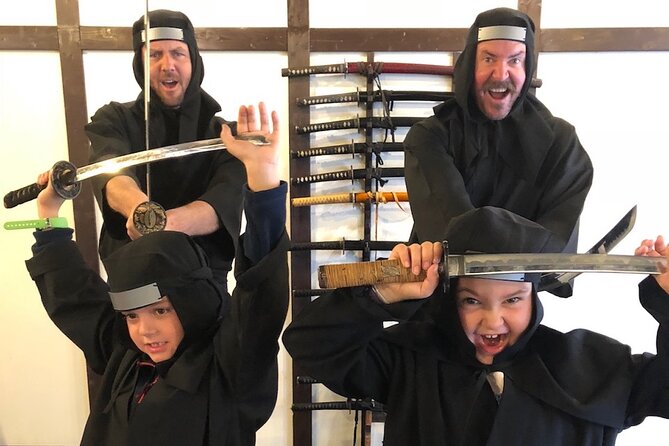
This is a strong match for families with younger children. The mix of movement, costumes, weapons, games, and photographs gives children several ways to stay interested. Parents can join without needing special fitness or prior knowledge.
It also suits anyone looking for a gentle first Japanese activity. You get a small taste of ninja culture in a format that is easy to understand, rather than a long presentation with lots of background information. The class can work as an early trip activity because it is short, friendly, and practical.
Teenagers may go either way. The costume element could seem childish at first, but the sword work, shuriken practice, and instructor’s humor can win over a reluctant participant. One teenager who began skeptical ended up engaged, which suggests the class has more range than its playful surface implies.
Solo visitors can also book. You will not need a family to make the session worthwhile, and the instructor can provide individual attention. The photo side may even be easier to manage in a small group, particularly if you want to set up a tripod.
I would be less likely to recommend it to someone seeking serious martial arts instruction, a long historical tour, or advanced weapons training. The class is brief, staged, and designed for fun.
Is $30.80 good value for one hour?
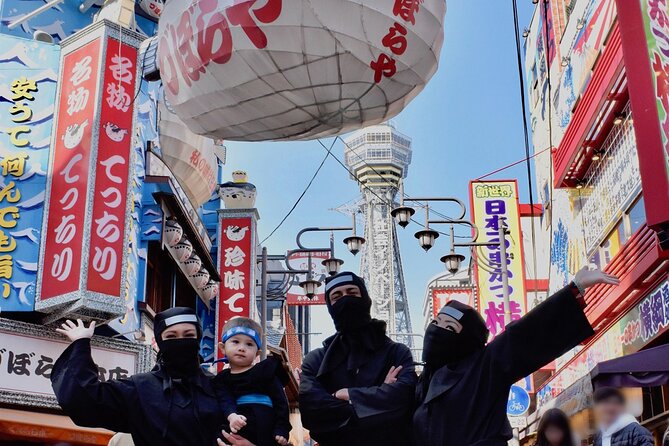
At $30.80 per person, the price is fair if you value the full package: instruction, costume rental, equipment, a small group, and time for photos. You are paying for an organized activity with an English-speaking instructor, not simply access to a costume rack.
The value improves for families because several people can share the same activity and photos. It also saves you from arranging separate entertainment for children during a sightseeing day. The one-hour length makes it easier to fit into a larger Osaka plan.
The calculation changes if the session runs closer to 45 minutes. One participant found that the actual class was shorter than expected, so I would treat the listed duration as approximate rather than guaranteed. Even then, the price can work if you see it as a compact themed activity, but it is less attractive if you expect a full hour of constant training.
The best comparison is not with a serious dojo course. Compare it with a family attraction or a short photo experience that also includes teaching. On that basis, the combination is reasonable, especially when the instructor gives personal attention.
Pairing Ninja-Do with Shinsekai and Abeno Harukas
The location gives you useful options before or after the class. Shinsekai is nearby, so you can combine your ninja visit with a walk through one of Osaka’s best-known sightseeing areas. That pairing creates a good contrast: old Osaka atmosphere and food streets on one side, a playful indoor lesson on the other.
Abeno Harukas is also close. As Japan’s tallest commercial building, it offers a very different follow-up from the dojo. You can move from a low-key costume activity to a major modern Osaka landmark without building a separate full-day plan around the class.
I would avoid scheduling the ninja session as the only event in your day. Its short duration makes it better as one piece of a neighborhood outing. Check the meeting address carefully: 忍者堂 Ninja-DoJapan, 557-0002 Osaka, Nishinari Ward, Taishi, 1 Chome 118 Wakaba Building, fourth floor. The activity is near public transportation, and it finishes back at the meeting point.
Practical details before you book
Confirmation is provided at booking, and the activity uses a mobile ticket. Service animals are allowed, and most people can participate. The maximum group size is eight.
Free cancellation is available when you cancel at least 24 hours before the local start time. If you cancel later, the payment is not refunded, and changes made within that same 24-hour window are not accepted.
Plan for a class that mixes instruction and photographs. Wear something that will be comfortable under or with a costume, though the supplied information does not specify a dress code. Since the activity is short, arriving ready to take part will help you get the most from the time.
Should you book Ninja-Do?
Book this if you want a family-friendly Osaka activity with costumes, simple hands-on training, and memorable photos. The instructor’s humor, clear English, and personal attention are major reasons to choose it, especially if your group includes children or a reluctant teenager.
Think twice if you want a serious martial arts lesson or a full hour of intense practice. The format is partly performance and partly photo session, and the actual timing may be shorter than advertised.
For most families, the mix works. At $30.80, it offers a compact break from temples, shopping, and city streets, while its location near Shinsekai and Abeno Harukas makes it easy to add to an Osaka sightseeing day.
FAQ
Where does the Ninja Experience in Osaka take place?
It begins and ends at 忍者堂 Ninja-DoJapan, located at 557-0002 Osaka, Nishinari Ward, Taishi, 1 Chome 118, Wakaba Building, fourth floor.
How long does the activity last?
The stated duration is approximately one hour. One participant found the session lasted about 45 minutes, so you should treat the timing as approximate.
What activities are included?
The program includes ninja walking practice, a sword lesson, and shuriken-star practice. It also includes ninja background, games, and opportunities for photos and videos.
Is a ninja costume included?
Yes. Ninja costume rental is included in the activity.
Who leads the session?
Sensei Tsujimura leads the experience. The supplied information describes his instruction as friendly, funny, informative, and available in good English.
How many people can join?
The activity accepts a maximum of eight participants.
Is the activity suitable for most people?
Yes. Most people can participate, and service animals are allowed. The experience is particularly suited to families and younger children.
What is the cancellation policy?
You can cancel at least 24 hours before the local start time for a full refund. Cancellations or changes made less than 24 hours before the start are not accepted for a refund.
Just added around Osaka
- Nara Day Trip from Osaka with a Licensed Guide★ 5.0 · 3 reviews
- Osaka Early Morning Osaka Castle Tour Avoid Crowds★ 5.0 · 3 reviews
- Guided Tour of Some Attractions in Osaka by Private Car★ 5.0 · 3 reviews
- Shared Arrival Transfer: Osaka Itami Airport to Osaka City★ 5.0 · 3 reviews
- Private Transfer Between Kyoto and Kansai Airport KIX★ 5.0 · 3 reviews
- Osaka: Sushi Making Class and Dotonbori Food Tour★ 4.7 · 3 reviews
- Osaka Night Photography Workshop★ 5.0 · 3 reviews
- Kyoto Full day Tour Kinkakuji, Kiyomizu-dera and Fushimi Inari★ 4.5 · 3 reviews
Osaka Samurai & Ninja Experiences, compared.

Osaka 2-Hour Genuine Kendo / Samurai Experience In Japan
Read our review →
Learn Bushido – Trial Slashing with Samurai Sword
Read our review →
Samurai Show, Tea Ceremony, Japanese Traditional Activities
Read our review →
Private Samurai Experience – Train with Sword Master
Read our review →
Honor – Experience Samurai & traditional Culture to the fullest
Read our review →Browse the lists this tour appears in