
Reviewed · OSAKA WALKING TOURS
Osaka Walking Tour
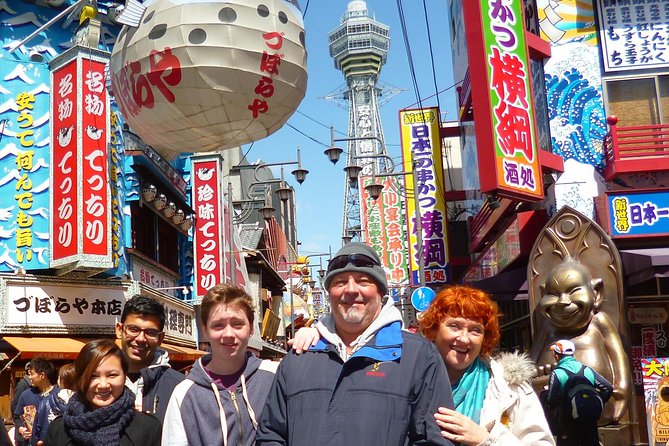
Osaka’s appeal comes into focus through its contrasts: polished Osaka Station City, old-school Shinsekai, and the neon-lined streets around Dotonbori. This three-hour walk connects those very different parts of town, giving you a useful first look rather than parking you at one famous sight.
I like the small groups, capped at 10 people, and the way the route uses the subway, restaurants, shopping streets, and local neighborhoods together. I also like the guides’ practical style. Hide, Harry, Keiko, Minako, Rika, Ichi, and Ichiro are all praised by name for clear English, patient pacing, and helpful advice.
The trade-off is value. At $53.06 per person, you are paying mainly for orientation, guiding, and the local perspective, not for major admission tickets. You must also pay the subway fare separately, and anyone expecting a full food tour or a long list of landmark entrances may find the experience too light.
In This Review
- Key points to know before booking
- Why this short Osaka walk works
- Meeting at Osaka Station City
- Riding the subway into another Osaka
- Shinsekai and the kushikatsu stop
- Side streets, shopping lanes, and Osaka’s everyday face
- Dotonbori and the finish at Ebisu Bridge
- What the $53.06 price really covers
- Pace, weather, and practical comfort
- Who should choose this walk
- Should you book the Osaka Walking Tour?
- FAQ
- How long is the Osaka Walking Tour?
- Where does the tour begin?
- What time should I arrive?
- How will I find the guide?
- Is the subway fare included?
- What food and drinks are included?
- Where does the tour end?
Key points to know before booking
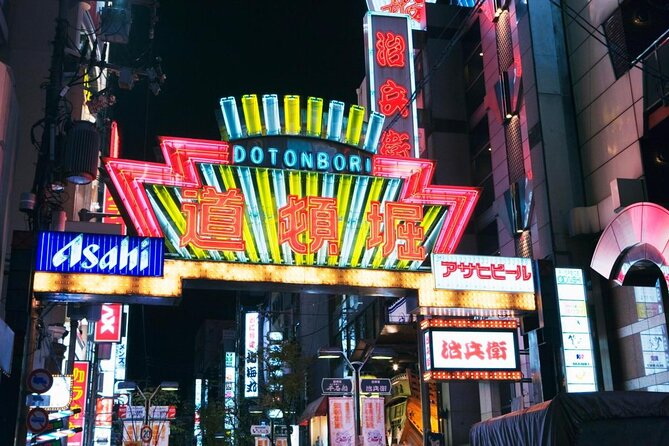
- Osaka in three distinct moods: Start in modern Umeda, continue to food-focused Shinsekai, and finish amid the signs and crowds of Dotonbori.
- A real local-food stop: Your package includes kushikatsu, Osaka’s deep-fried snack on a skewer, plus one non-alcoholic drink.
- Small groups matter: The maximum is 10 people, and some departures may be much smaller.
- The subway is part of the lesson: You ride like a local, but the adult or youth fare of 430 yen is not included.
- Best for a first day: The route helps you understand Osaka’s main areas before you explore on your own.
- Meet carefully: Osaka Station is large and confusing, so arrive early at the Tourist Information Center with the yellow All Star Osaka flag in view.
Why this short Osaka walk works
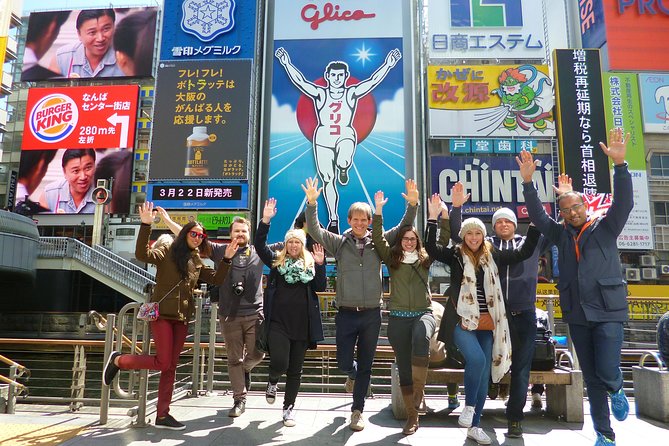
Osaka can feel scattered when you first arrive. Umeda, Shinsekai, Namba, and Dotonbori each have a different personality, and a map alone does not explain how they fit together.
This tour gives you a quick city lesson through movement. You begin at Osaka Station, ride public transport, walk through a neighborhood famous for soul food, pass commercial streets and theaters, and finish at Ebisu Bridge in Dotonbori. In three hours, you get a rough mental map and enough context to decide where to return.
I see this as an orientation walk, not a sightseeing checklist. You will not spend long inside museums or monuments. Instead, your guide explains what you are seeing as the city changes around you.
The guide makes the difference. The strongest reports describe Hide and Harry as friendly and clear, Keiko and Minako as generous with practical advice, and Ichi and Ichiro as particularly good at explaining Osaka’s development and history. Guide quality can vary from departure to departure, but the experience depends heavily on having someone who can connect ordinary streets with the larger story.
More guided walks on foot:
- Deep Backstreet Osaka Tours (Option to add Dinner)
★ 5.0 · 1,290 reviews - Osaka Local Foodie Walking Tour in Dotonbori and Shinsekai
★ 5.0 · 985 reviews - Osaka: Deep Backstreets Walking Tour with Dinner Option
★ 4.9 · 902 reviews
Meeting at Osaka Station City
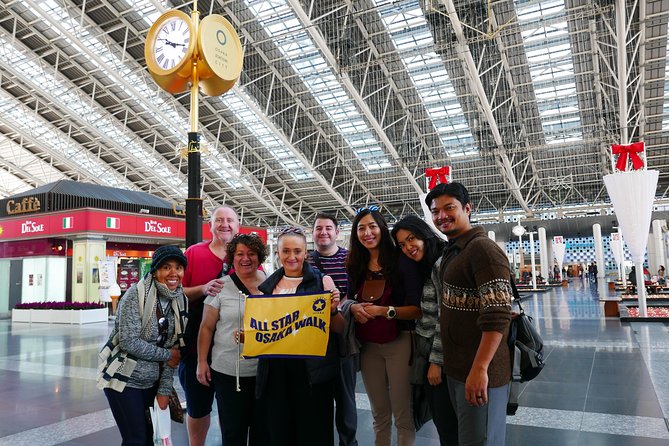
The meeting point is the Osaka Tourist Information Center on the ground level, in front of the central gate of JR Osaka Station. You meet at 9:50 a.m., and the tour begins exactly at 10 a.m.
Give yourself extra time. Osaka Station is a maze of platforms, department stores, underground passages, and signs. Even people who manage Tokyo and Kyoto stations can find Osaka’s layout awkward at first. The most useful detail is the guide’s yellow All Star Osaka flag, which should help you spot the group.
The first 45 minutes take place around Osaka Station City. This is a modern transport and shopping complex in the north center of the city. It is not an ancient Osaka introduction, but that is precisely why it belongs here. Your guide can show you the city’s current commercial face before the route shifts toward older districts.
This opening also helps you get oriented to Umeda, one of Osaka’s major urban centers. You might learn how the station area functions, how the city developed around transport, and how to navigate the large facilities without wasting time.
The drawback is clear: if you came hoping to see Osaka Castle, a shrine garden, or a historic interior, walking around a station may feel underwhelming. One less favorable experience found this opening too ordinary for the price. I would book this tour only if you value explanation and orientation as much as landmark views.
Riding the subway into another Osaka
The subway ride is short in the schedule, but useful in practice. You are not simply being driven between attractions. You get a small lesson in the system that residents use to cross the city.
The fare is extra: 430 yen for an adult or youth and 220 yen for a child. Keep that cost in mind when comparing the tour with a private walk or a sightseeing pass. The guide handles the route, but the transit ticket is your responsibility.
The public transport portion also changes the rhythm. You begin among office towers and department stores, then move toward districts with older storefronts, restaurants, arcades, and theatrical signs. That shift helps explain why Osaka feels less like one unified center and more like a collection of distinct urban pockets.
The guide may also give practical advice for continuing your day. Minako, in particular, is praised for sharing tips about Osaka and Japan beyond the scheduled route. Some guides have helped with directions after the tour, including advice for reaching a cruise ship.
Shinsekai and the kushikatsu stop
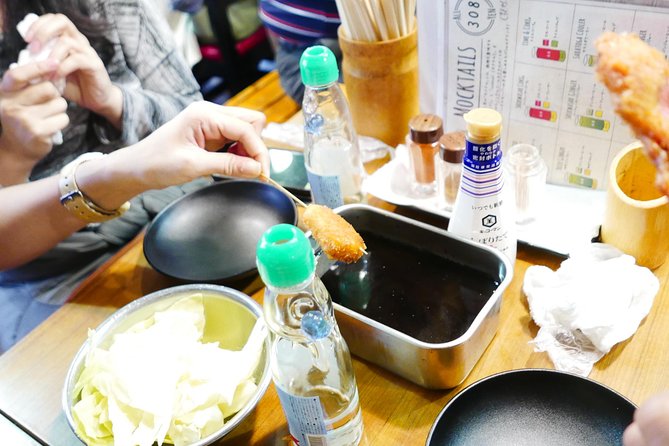
Shinsekai is the route’s most distinctive neighborhood. It is known for restaurants serving kushikatsu, a local specialty made by deep-frying food on skewers. The tour stops at a restaurant, and your booking includes the tasting and one non-alcoholic drink.
Think of the food as a sample, not lunch at a long tasting menu. The experience gives you a reason to sit down, try a local staple, and ask your guide how Osaka’s eating culture works. Some departures have included a snack served in an unusual setting, such as inside an old Volkswagen van, but the exact restaurant setup may vary.
This is one of the better parts of the tour because food makes the neighborhood easier to understand. Shinsekai is not presented as a polished postcard. You see the restaurant signs, narrow lanes, and everyday commercial life that give the area its character.
The food stop also provides a welcome break. Osaka can be hot and humid, and the walking pace is described as relaxed rather than hurried. On a hot day, a guide may keep more of the route indoors, as Ichiro did for one departure, but you should still dress for outdoor walking.
Do not book this as a dedicated food crawl. The included tasting is modest, and any extra food or drinks are yours to buy. If you want a full afternoon of regional specialties, you will need another experience. If you want one local bite folded into a city walk, this part fits well.
A completely different way to spend a day in Osaka:
- Osaka Go Karting Tour with Funny Costume
★ 5.0 · 2,658 reviews - Osaka Castle: Museum and Tower Entry Ticket
★ 4.5 · 2,380 reviews - Osaka: Shinsekai Food Tour with 13-15 Dishes at 5 Eateries
★ 4.8 · 2,204 reviews - Osaka Food Tour: 13 Dishes at 5 Local Eateries
★ 5.0 · 2,149 reviews
Side streets, shopping lanes, and Osaka’s everyday face
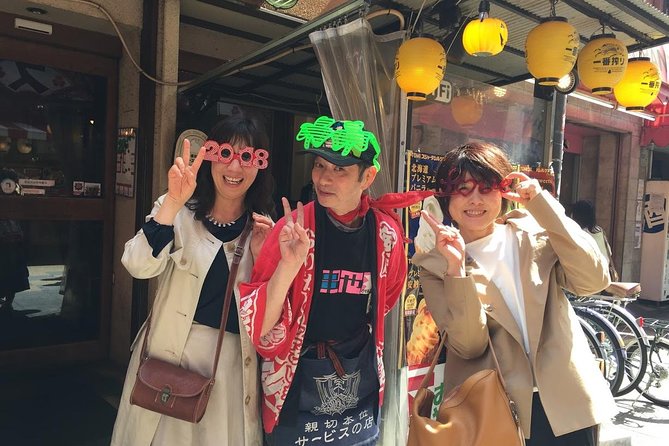
Between the named stops, the route passes through a small restaurant-lined alley and a busy commercial district filled with shops, restaurants, theaters, and bright advertising signs. These sections may not sound important on a standard itinerary, but they are where the tour feels most like an introduction to daily Osaka.
Your guide can point out how people use these spaces, explain local customs, and answer questions that would be hard to resolve by walking alone. Several guides are praised for stopping at a comfortable pace and taking time to explain details. That matters in a small group, especially if you are adjusting to Japanese signs, train etiquette, and unfamiliar food.
The route also gives you a useful contrast. Osaka Station City shows the city as a modern business and retail center. Shinsekai brings you closer to its inexpensive food culture. The commercial streets between the neighborhoods show how shopping, entertainment, and eating overlap in Osaka.
There is no promise of a major formal attraction in these sections. You may spend much of the time walking past shops and signs. That is either the point or the problem, depending on what you want. I find this kind of route valuable early in a trip, but less appealing if you already know Namba and Dotonbori well.
Dotonbori and the finish at Ebisu Bridge
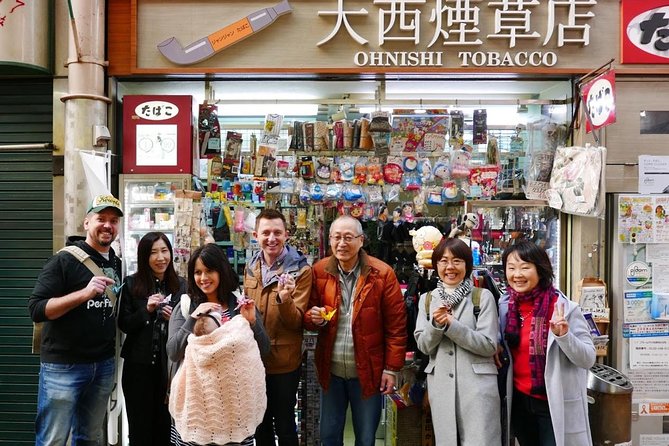
The tour ends at Ebisu Bridge, in the heart of Dotonbori. The bridge sits in Osaka’s liveliest entertainment area, lined with restaurants, shops, theaters, and the famous oversized advertising displays that make this part of town instantly recognizable.
The final stop lasts about 10 minutes, but the location is useful. You finish in a place where you can continue exploring, eat on your own, shop, or simply watch the stream of people along the canal. You are not returned to the starting point, so plan the rest of your day from Dotonbori rather than Osaka Station.
This ending is one of the tour’s practical strengths. You arrive in an area that most first-time visitors want to see, but with some context for what lies beyond the main signs. The route also passes through Namba, which one experience described as the most atmospheric area of the day.
Keep your bearings after the guide leaves. The tour ends on Ebisu Bridge, not at your hotel or at the original meeting point. If you are continuing to a cruise ship or another part of Osaka, ask your guide for directions before the group breaks up.
What the $53.06 price really covers
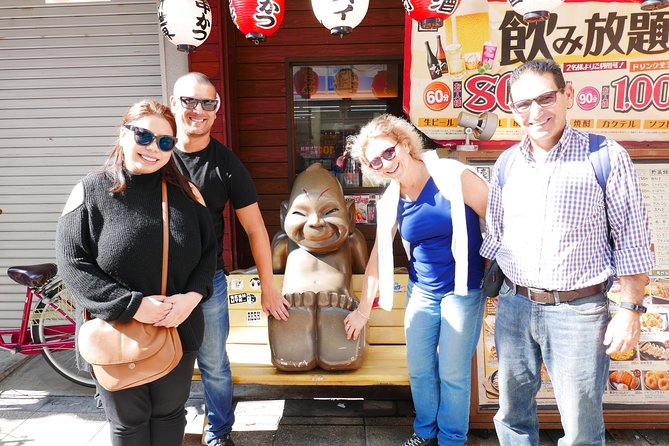
The $53.06 price buys a three-hour guided walk, a small group, one kushikatsu tasting, one non-alcoholic drink, and the guide’s explanations. It does not include subway fare, additional food, insurance, hotel transfers, or admission to separate attractions.
That is a fair price if you are arriving in Osaka with little preparation and want a human guide to connect several areas quickly. You also avoid the uncertainty of finding a suitable restaurant for your first local snack and figuring out the subway route on your own.
The value drops if you view the tour as a paid transfer between public streets. There are no significant admission tickets included, and most of the sights are experienced from outside. The one critical experience described the route as too much station and market walking for the cost. That is a reasonable warning for budget-conscious visitors.
The small-group limit helps. With no more than 10 people, the guide can answer questions and adjust the pace more easily than on a large bus tour. One departure had only one participant, while another had five. A tiny group is not guaranteed, but the cap keeps the format personal.
The tour is booked, on average, 39 days ahead. That suggests you should reserve early if the date matters, especially during a short Osaka stay.
Pace, weather, and practical comfort
This is a moderate walking experience. Wear comfortable shoes and expect escalators, some steps, station walking, and time outdoors. A stroller may be awkward because of the steps and transit connections, and children must stay with an adult.
The stated operating guidance says the tour runs rain or shine, but poor weather can also lead to cancellation with a choice of another date or a full refund. The practical message is simple: carry weather protection and check for any same-day changes.
Hot and humid weather deserves special attention. One departure moved indoors more often during extreme heat, and another kept an easy pace through the day. Still, you should bring water beyond the included drink, use sun protection, and avoid heavy luggage.
The start time is 10 a.m., and the duration is about three hours. That makes the walk easy to fit into a first afternoon, a short stay, or a day when you want time afterward for Dotonbori. It is less suitable if your schedule requires a precise return to Osaka Station, since the route ends elsewhere.
Who should choose this walk
I would recommend it most strongly to first-time visitors who want a quick feel for Osaka before setting off alone. It suits people who enjoy local explanation, public transport, street scenes, and one small food experience more than formal sightseeing.
It also works well for a short stay. If you have only one day, the route gives you a practical sample of several districts without requiring you to plan every train connection. The guides can add useful advice for the rest of your visit.
Families can join, provided children are accompanied by an adult and everyone is comfortable with moderate walking, escalators, and steps. The route may be harder with a stroller.
I would choose something else if you want a castle tour, an in-depth food itinerary, a private experience, or extensive time inside cultural sites. I would also skip it if you already know Osaka’s main neighborhoods and prefer to spend three hours exploring independently.
Should you book the Osaka Walking Tour?
Book it if you want a friendly, compact introduction to Osaka’s different districts, especially at the start of your trip. The strongest guides, including Hide, Harry, Keiko, Minako, Rika, Ichi, and Ichiro, are praised for clear English, useful history, relaxed pacing, and genuine affection for the city.
The smartest way to use it is on your first full day. Afterward, stay in Dotonbori for lunch or dinner, return to Shinsekai if you want more kushikatsu, or use the new subway confidence to explore farther.
Skip it if $53.06 feels high for a walking route with no major admission tickets. You are paying for the guide’s time and local context. For many first-time visitors, that orientation is worth it. For independent explorers who already understand Osaka’s layout, it may not be.
FAQ
How long is the Osaka Walking Tour?
The tour lasts approximately three hours.
Where does the tour begin?
It begins at the Osaka Tourist Information Center on the ground level, in front of the central gate of JR Osaka Station in Umeda.
What time should I arrive?
Meet at 9:50 a.m. The tour starts exactly at 10 a.m.
How will I find the guide?
The guide will hold an All Star Osaka yellow flag.
Is the subway fare included?
No. The adult and youth fare is 430 yen, and the child fare is 220 yen.
What food and drinks are included?
The experience includes a kushikatsu tasting and one non-alcoholic drink. Additional food and drinks are not included.
Where does the tour end?
It ends at Ebisu Bridge in Dotonbori, on Ebisu-bashi Bridge. Hotel pickup and drop-off are not included.
Just added around Osaka
- Nara Day Trip from Osaka with a Licensed Guide★ 5.0 · 3 reviews
- Osaka Early Morning Osaka Castle Tour Avoid Crowds★ 5.0 · 3 reviews
- Guided Tour of Some Attractions in Osaka by Private Car★ 5.0 · 3 reviews
- Private Transfer Between Kyoto and Kansai Airport KIX★ 5.0 · 3 reviews
- Shared Arrival Transfer: Osaka Itami Airport to Osaka City★ 5.0 · 3 reviews
- Osaka: Sushi Making Class and Dotonbori Food Tour★ 4.7 · 3 reviews
- Osaka Night Photography Workshop★ 5.0 · 3 reviews
- Kyoto Full day Tour Kinkakuji, Kiyomizu-dera and Fushimi Inari★ 4.5 · 3 reviews
Osaka Walking Tours, compared.

Deep Backstreet Osaka Tours (Option to add Dinner)
Read our review →
Osaka Local Foodie Walking Tour in Dotonbori and Shinsekai
Read our review →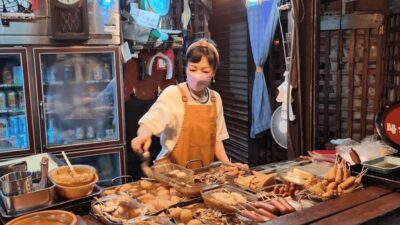
Deep Backstreets Walking Tour with Dinner Option
Read our review →
Ultimate Osaka Walking Tour: Castle, Dotonbori & Hidden Gems
Read our review →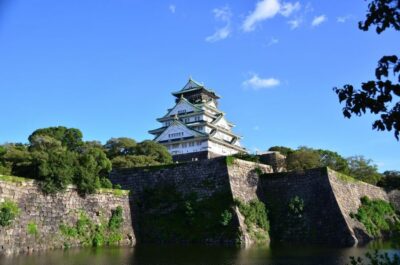
Main Sights and Hidden Spots Guided Walking Tour
Read our review →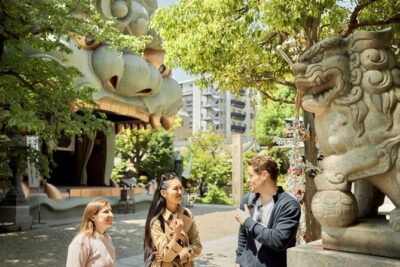
Private Osaka Walking Tour: Highlights & Hidden Gems
Read our review →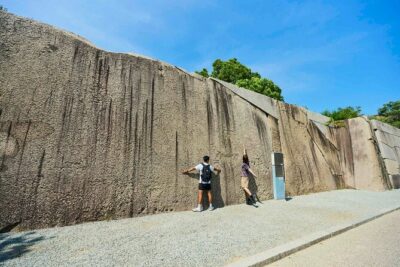
Osaka Castle Walking Tour and Castle Tower Admission
Read our review →
Kuromon Market Food Walking Tour in Osaka (6 stops, 6 tastes)
Read our review →Browse the lists this tour appears in