
Reviewed · OSAKA CRAFT WORKSHOPS
Osaka: Private Japanese Traditional Ceramics Experience
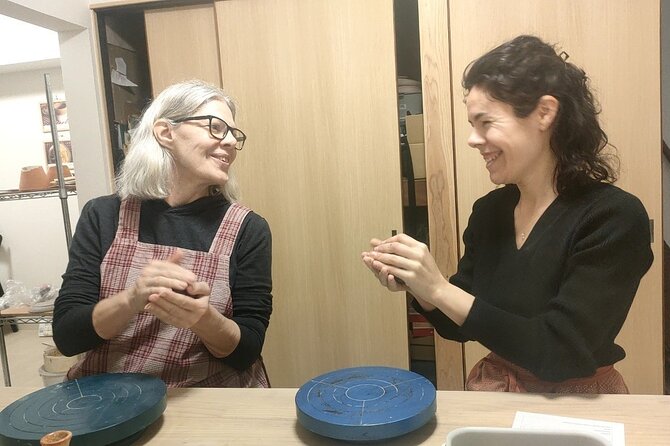
Osaka’s Ceramics Tocoton workshop takes you away from the neon and shopping streets and into a century-old house in the city’s southern neighborhoods. You’ll build a Japanese food-related piece by hand, with Anna, Ryo, and their team explaining both the craft and the culture behind it.
I especially like the private format, which gives beginners patient, personal help instead of a rushed turn at a crowded table. I also like the walk from Teradacho Station through a local food street, a small slice of everyday Osaka that most sightseeing plans miss.
The main catch is that your pottery is not ready to take home that day. It needs firing and takes about a month and a half to ship, with postage charged separately, so this works best if you’re happy to wait for your souvenir.
In This Review
- Key points to know before you book
- A pottery class with a local Osaka address
- What Anna and Ryo bring to the class
- Pick a sake set, sushi set, or tea bowl
- The value of a private two-hour session
- Small gifts make the package more special
- Tea, conversation, and a slower look at Japan
- What the schedule and meeting point mean
- Who will enjoy this Osaka experience
- Practical details that affect your decision
- Should you book Ceramics Tocoton?
- FAQ
- Where does the pottery experience begin?
- How long does the workshop last?
- Is this a private activity?
- What can I make during the class?
- Is the class suitable for beginners?
- Which languages are available?
- Are materials and firing included?
- Can I take my pottery home on the day?
- What additional souvenirs are included?
- Can I cancel for a full refund?
Key points to know before you book
- Choose your own Japanese food piece: Make a sake set, a sushi plate with chopstick holder, or a tea bowl.
- Work in a real local setting: The studio occupies a century-old, two-storey house in southern Osaka.
- Get one-on-one guidance: This is a private activity for your group, not a shared class.
- Expect hand-building, not wheel throwing: The focus is shaping clay by hand, a good fit for first-timers and experienced potters.
- Plan for delayed delivery: Firing is included, but shipping costs are not, and the finished work takes roughly six weeks to arrive.
- Receive extra handmade gifts: Your package includes a small traditional-glazed sushi dish and a sakura-shaped chopstick rest made by Anna.
A pottery class with a local Osaka address
The experience begins at Teradacho Station, at 2 Chome-3 Tennojichokita in Abeno Ward. From there, the studio sits near a street lined with shops selling local food. The setting matters. You are not being ushered into a purpose-built attraction designed for quick photo stops. You are heading into a lived-in part of Osaka, where the walk itself gives you a look at the city beyond Namba and the usual sightseeing circuit.
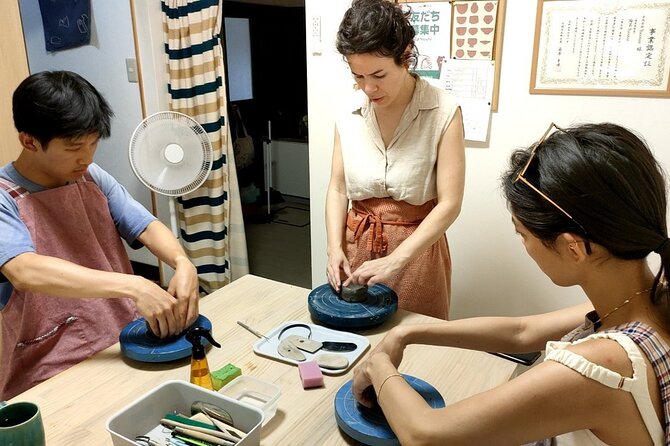
The house is about a century old and has two floors. Its character connects the class with the Showa era, a period often associated with the everyday homes, shops, and postwar culture of twentieth-century Japan. You will spend the workshop in this older domestic setting rather than in a large, anonymous classroom.
That does not mean the outing is a full neighborhood tour. The walk from the station and the nearby food shops are part of the setting, not a separately guided sightseeing program. Still, if you have already seen Osaka Castle, Dotonbori, and the major shopping districts, this gives your day a welcome change of pace.
More traditional craft workshops:
- 1.5〜2 Hours Traditional Kintsugi Work Shop in Namba Osaka
★ 5.0 · 75 reviews - Osaka: Private Japanese Calligraphy Experience
★ 5.0 · 66 reviews - From Osaka: Sakai Knife Maker or Blacksmith Walking Tour
★ 4.9 · 64 reviews
What Anna and Ryo bring to the class
Anna leads the workshop, with Ryo and the wider team involved in welcoming and guiding participants. The class is available in English, Spanish, Catalan, and Japanese. The Spanish and Catalan options are particularly useful, since this is the only ceramics experience in the provider’s range offered in those languages.
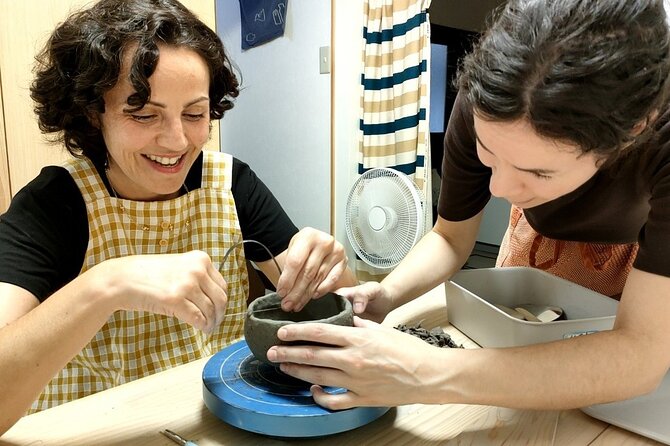
The teaching style is gentle and practical. Anna helps you understand the hand-building process and encourages you to make the piece your own rather than copying a fixed model. That is important for beginners, who can otherwise worry about making a perfect object. Here, an uneven edge or slight variation becomes part of the handmade result.
You also get conversation about Japanese culture and traditional pottery as you work. The subject is tied to Japanese gastronomy, so the objects are not random craft projects. A sake set relates to serving and drinking, the sushi set to presentation and table use, and the tea bowl to the long tradition of tea culture.
Past sessions have worked well for couples, families, and parents with teenagers. The two-hour length gives you enough time to focus without turning the activity into an all-day commitment. It also leaves room to continue sightseeing or find dinner afterward.
Pick a sake set, sushi set, or tea bowl
You choose one of three projects:
- Sake set: A small bottle and drinking glass.
- Sushi set: A sushi plate and chopstick holder.
- Tea bowl: A chawan, the traditional bowl used for tea.
Each option has a different feel. The sake set is a natural choice if you want a matched pair of objects and like the idea of using the finished piece for drinks at home. The sushi set is practical and closely tied to Japanese dining, while the tea bowl has a quieter, more ceremonial character.
Your choice also affects the kind of souvenir you receive. A tea bowl is a single substantial form, while the sake and sushi projects involve smaller related pieces. The supplied description does not promise a particular color or final glaze for your own work, so you should treat the finished appearance as part of the craft process rather than selecting this class for a precise decorative result.
The class uses clay and focuses on hand-building. That is different from wheel throwing, where you shape a spinning lump of clay with both hands. Hand-building lets you construct the form more slowly and directly, which makes it accessible if you have never touched pottery before. Experienced potters can also enjoy the change in technique and the chance to make an object linked to Japanese food culture.
The value of a private two-hour session
At $94.13 per person, this is not the cheapest short activity in Osaka. The price makes more sense when you look at what is included: instruction, clay and other materials, firing, tax, refreshments, and two small handmade gifts.
The private setup is the biggest value point. You are not sharing the teacher’s attention with a large room of strangers. Anna can explain the process at your pace, offer corrections when needed, and answer questions about Japanese ceramics or culture as they arise. If one person in your group works quickly and another needs more help, the format can accommodate both.
You also avoid the pressure of producing a perfect object in a single sitting. The workshop is about making, learning, and talking, not simply collecting a souvenir from a conveyor-belt activity. For couples, the price buys a shared memory as well as the pottery itself. For a family, it offers a hands-on project that can hold a teenager’s attention better than another museum visit.
Still, the price does not cover delivery. Your pottery must be fired, packed, and sent to your home, and the shipping fee is extra. Because the finished pieces arrive about a month and a half later, you should ask about postage during or after the session if your budget is tight. The delayed arrival can be fun, but it is a real cost and a practical detail to plan for.
A few more Osaka tours and experiences worth a look
- Private Osaka Walking Tour: Highlights & Hidden Gems
★ 5.0 · 569 reviews - 3/4/5 Hours Private Tour in Osaka with Local Guide
★ 5.0 · 189 reviews - Osaka’s Best and Brightest: Private Full-Day Tour by Vehicle
★ 5.0 · 147 reviews - Full Day Tour of Kyoto with Private Transportation
★ 5.0 · 130 reviews
Small gifts make the package more special
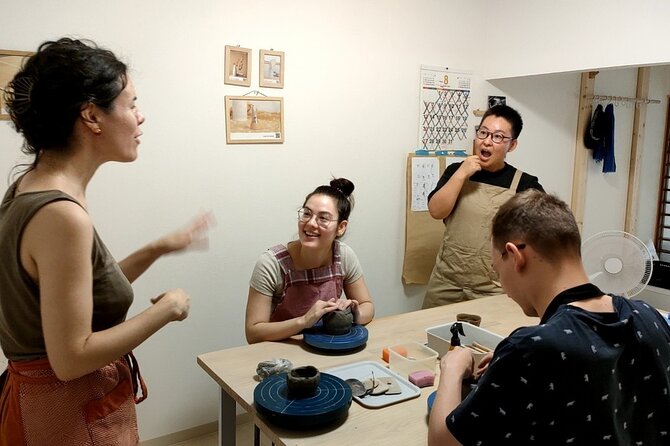
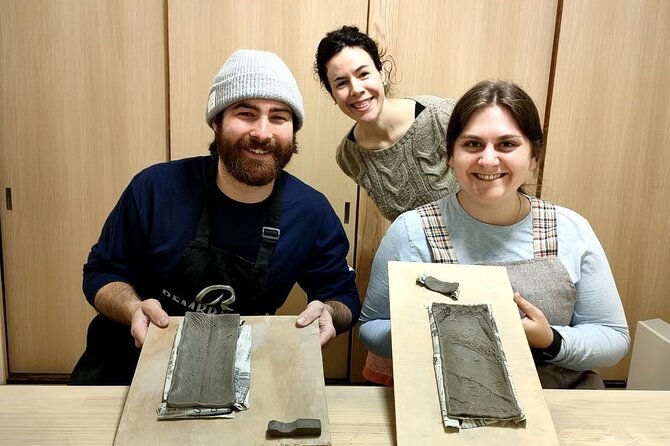
Everyone receives a small sushi plate decorated with traditional glaze and a chopstick rest shaped like a sakura flower. Anna makes these items, so they are not generic factory souvenirs added to the booking.
These gifts help if you are concerned about waiting for your own pottery. You leave the class knowing you have something in hand, while your larger piece goes through firing and delivery. They also reflect the food-centered theme of the workshop and make useful reminders of the meal culture discussed during the class.
Your handmade work can be sent to your home after firing. The delivery time is approximately one and a half months, and shipping is not included. Make sure the provider has the correct address and understand that the pottery will not travel home with you in your luggage.
Tea, conversation, and a slower look at Japan
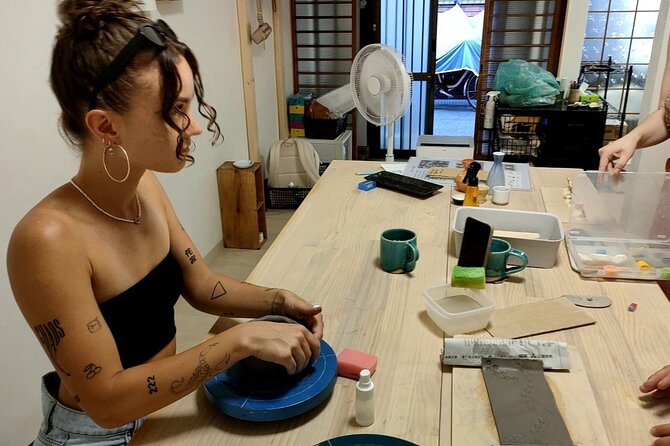
Japanese green tea, coffee, or water is included. It is a modest touch, but it suits the pace of the class. You can settle in, work with your hands, and talk rather than rush from one formal explanation to the next.
The cultural content is informal and connected to what you are making. You may learn why certain vessels are shaped as they are, how ceramics relate to Japanese meals, and how traditional pottery fits into ordinary customs. The exact conversation will vary with the group and the language used.
This is one reason the private format helps. You can ask about a tea bowl if you chose a sushi plate, or talk about Japanese dining while making a sake set. The experience is not just a technical lesson. It gives you context for objects you may see later in restaurants, homes, shops, or temples.
What the schedule and meeting point mean
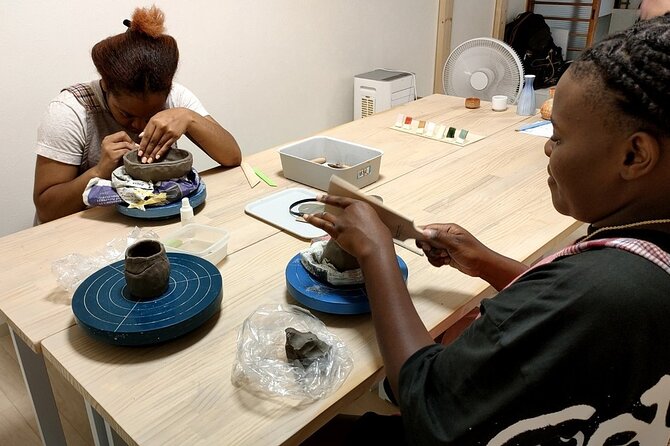
Morning and afternoon start times are available. That flexibility is useful in Osaka, where a clear daily plan can quickly get crowded with meals, shopping, and train connections.
The activity lasts about two hours and ends back at the meeting point. Since it begins at Teradacho Station and stays near the studio, you do not spend the session crossing the city. Allow extra time to reach the station, especially if you are coming from a different part of Osaka and are unfamiliar with the local train system.
The station location is near public transportation, and confirmation is received when you book. A mobile ticket is provided, so you can keep the booking details on your phone. The meeting instructions should be read carefully, since this is a neighborhood studio rather than a large attraction with a prominent entrance.
Some past groups were met at the station and walked through the local market area to the house. That walk is part of the charm, but you should follow the current meeting instructions rather than assume a station pickup beyond the stated meeting point.
Who will enjoy this Osaka experience
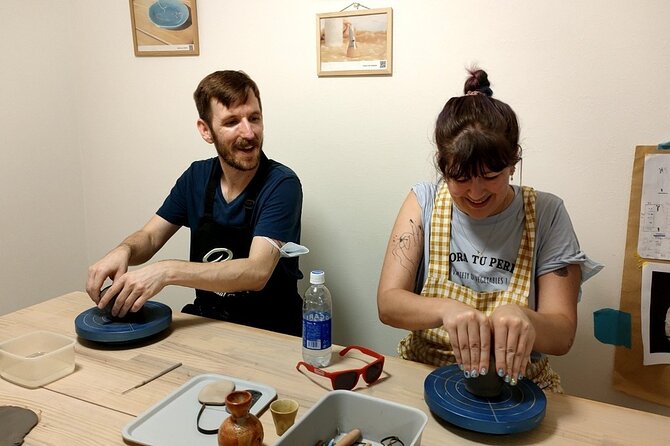
This is a strong choice for first-time potters. You do not need prior experience, and the hand-building method is less intimidating than sitting down at a spinning wheel for the first time. Anna’s patient guidance lets you focus on the material and the shape instead of worrying about technical mistakes.
It also suits people who already make pottery. The class offers a different way to work with clay and gives you a Japanese food or tea object to take home. The instruction is personal enough that experienced participants can ask more detailed questions, while beginners can receive extra help.
Couples are a natural match for the format, especially if you want an activity that creates two related but individual souvenirs. Families can also enjoy it, including a parent and teenager working side by side. The class has been described as warm, social, and easygoing, with plenty of conversation and humor.
I would be less likely to recommend it if you need a souvenir immediately, have no interest in food culture or pottery, or want a large-scale sightseeing tour. It is also not the right pick if shipping costs are a deal breaker. The activity is deliberately small and local, not a major Osaka landmark visit.
Practical details that affect your decision
The experience is private, so only your group participates. That gives you control over the mood and makes it easier to ask questions, but it also means the cost is set per person rather than spread across a large class.
The listed price is $94.13 per person. Materials and firing are included, but delivery is not. The finished pottery takes about six weeks to ship, so keep the extra fee in mind when comparing this with classes where you carry a small item away immediately.
The class is offered in English, Spanish, Catalan, and Japanese. Most people can participate, and the studio is near public transportation. The supplied information does not give a detailed accessibility description, so contact the provider if you need specific information about stairs, seating, or movement inside the two-storey house.
Free cancellation is available up to 24 hours before the start time for a full refund. Changes or cancellations inside that window are not accepted for a refund. The experience also requires good weather, and if poor weather causes cancellation, you are offered another date or a full refund.
Should you book Ceramics Tocoton?
I would book this if you want a personal, hands-on Osaka activity and like souvenirs with a story behind them. The century-old house, the local food street near Teradacho, the choice of three projects, and the relaxed teaching from Anna and Ryo give the class a clear sense of place.
Book it with realistic expectations. Your own pottery will not be perfect, it will not be ready that afternoon, and shipping costs extra. But if you can wait roughly six weeks and value time with a local teacher more than a quick keepsake, the $94.13 price is fair for a private two-hour session with materials, firing, refreshments, and additional handmade gifts included.
FAQ
Where does the pottery experience begin?
It begins at Teradacho Station, at 2 Chome-3 Tennojichokita, Tennoji Chokita, Abeno Ward, Osaka, 545-0001, Japan.
How long does the workshop last?
The workshop lasts approximately two hours and ends back at the meeting point.
Is this a private activity?
Yes. Only your group participates in the activity, so the instructor can provide personal guidance.
What can I make during the class?
You can choose a sake set with a small bottle and glass, a sushi set with a sushi plate and chopstick holder, or a chawan tea bowl.
Is the class suitable for beginners?
Yes. The activity is designed for people with different levels of pottery experience, including beginners.
Which languages are available?
The workshop is offered in English, Spanish, Catalan, and Japanese.
Are materials and firing included?
Yes. The instructor, materials, firing fee, and tax are included in the price.
Can I take my pottery home on the day?
No. Your work needs to be fired and takes about one and a half months to ship. Shipping costs are not included.
What additional souvenirs are included?
You receive a small sushi dish with traditional glaze and a sakura-shaped chopstick rest made by Anna.
Can I cancel for a full refund?
Yes, if you cancel at least 24 hours before the experience starts. Cancellations or changes made less than 24 hours in advance are not refunded or accepted.
Just added around Osaka
- Nara Day Trip from Osaka with a Licensed Guide★ 5.0 · 3 reviews
- Osaka Early Morning Osaka Castle Tour Avoid Crowds★ 5.0 · 3 reviews
- Guided Tour of Some Attractions in Osaka by Private Car★ 5.0 · 3 reviews
- Private Transfer Between Kyoto and Kansai Airport KIX★ 5.0 · 3 reviews
- Shared Arrival Transfer: Osaka Itami Airport to Osaka City★ 5.0 · 3 reviews
- Osaka: Sushi Making Class and Dotonbori Food Tour★ 4.7 · 3 reviews
- Osaka Night Photography Workshop★ 5.0 · 3 reviews
- Kyoto Full day Tour Kinkakuji, Kiyomizu-dera and Fushimi Inari★ 4.5 · 3 reviews
Osaka Craft Workshops, compared.
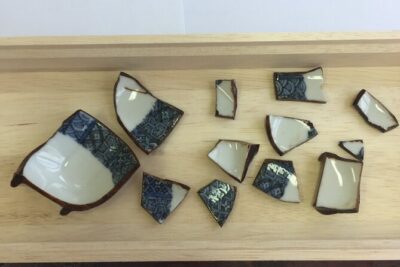
1.5〜2 Hours Traditional Kintsugi Work Shop in Namba Osaka
Read our review →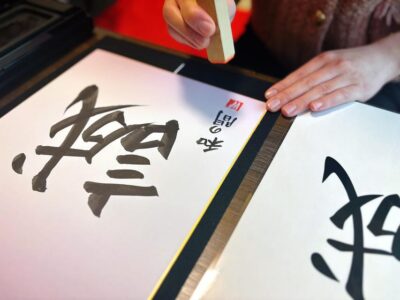
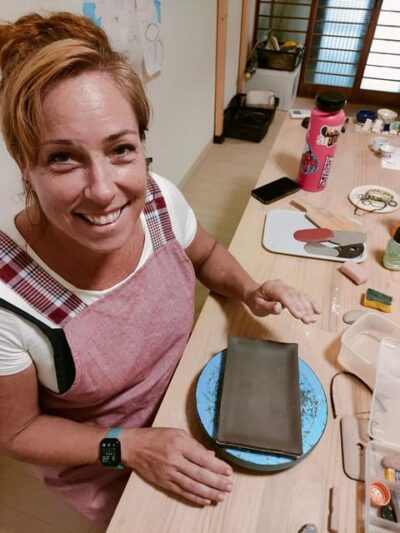
Traditional Japanese Ceramics Private Experience
Read our review →

Learning Zen of Japanese Calligraphy in kimono near Osaka Castle
Read our review →
Osaka Daruma Workshop — Paint Your Own Good-Luck Daruma
Read our review →Browse the lists this tour appears in