
Reviewed · OSAKA CRAFT WORKSHOPS
Osaka: Private Ceramic Painting Workshop
Osaka’s Ceramics Tocoton workshop gives you more than a painted plate. You meet at JR Teradacho Station, walk through a quiet south Osaka neighborhood, and enter a century-old house for a private class with Anna and her team. I like the local setting, and I like that the class can be taught in English, Spanish, Catalan, or Japanese.
You paint a dish made with clay from the Shigaraki area, using Japanese patterns or your own ideas. You also receive a small traditional dish and a sakura-shaped chopstick holder to take home that day. The main piece is fired later and shipped to your home, but shipping costs are extra and delivery takes about a month and a half.
The main thing to plan for is the delayed souvenir. You will not carry your painted dish home in your luggage, and the final shipping bill is not included in the $61 price. If that timing and extra cost work for you, this is a warm, personal way to spend two hours in Osaka.
In This Review
- Key points to know before booking
- Meeting Ryo at JR Teradacho Station
- Inside the century-old house
- Choosing a design for your dish
- Painting at your own pace
- What happens after the paint dries
- Why the private format matters
- A local Osaka experience, not a major attraction
- Language options and cultural conversation
- What you receive for $61
- Who should book this workshop?
- Should you book Ceramics Tocoton?
- FAQ
- Where do I meet the instructor?
- How long does the activity last?
- What languages are available?
- Is the workshop private?
- Can I take my painted dish home that day?
- What do I receive immediately after the class?
- Is the activity suitable for young children?
- What happens if I am late?
- Can I cancel the activity?
Key points to know before booking
- Your class is private: The workshop is reserved exclusively for your group, so you can work at your own pace and ask questions freely.
- The walk is part of the experience: Ryo meets you at JR Teradacho Station and leads you through a non-touristy part of Osaka with Showa-era character.
- You choose the design: Paint Mount Fuji, sushi, cherry blossoms, other Japanese images, or a word written in kanji.
- Anna and her team keep the class relaxed: You do not need artistic training. Guidance is available when you need help, while your design remains your own.
- The finished plate comes later: Your painted ceramic is fired and sent to your home in about six weeks. Shipping is not included.
- You get two gifts immediately: A small handmade plate with a traditional pattern and a sakura chopstick rest are included in the course price.
Meeting Ryo at JR Teradacho Station
Your starting point is the north exit of JR Teradacho Station. Look for a guide holding a sign with the name Ceramics Tocoton. Ryo has handled the station pickup, and the short walk to the studio is an important part of the outing rather than a simple transfer.
This is south Osaka, away from the city sights most people build their schedules around. The route shows a more ordinary side of Osaka, with the kind of Showa-era atmosphere that does not usually appear in sightseeing brochures. You are not being led through a famous district or a polished attraction. You are getting a glimpse of a lived-in neighborhood on the way to the class.
I like this arrangement because it gives the workshop a sense of place. You start at a clear railway meeting point, then move from the station into the local streets. The walk also gives you time to talk with your guide before you sit down to paint. Ryo has been described as friendly and easy to talk with, and the conversation can set the tone for the rest of the visit.
Plan to arrive on time. If you will be more than 15 minutes late, contact the workshop. More than 15 minutes late is treated as a no-show, so this is not a good activity to squeeze between a late lunch and a distant sightseeing stop.
More traditional craft workshops:
- 1.5〜2 Hours Traditional Kintsugi Work Shop in Namba Osaka
★ 5.0 · 75 reviews - Osaka: Private Japanese Calligraphy Experience
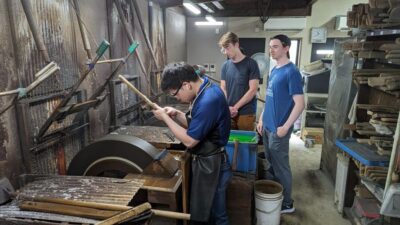
★ 5.0 · 66 reviews - From Osaka: Sakai Knife Maker or Blacksmith Walking Tour
★ 4.9 · 64 reviews
Inside the century-old house
The workshop takes place in a century-old house in the southern part of Osaka. The setting matters. You are not painting in a large commercial studio built for a constant stream of short classes. You are visiting a home-based space where the teaching, conversation, and surroundings all feel closely connected.
Anna welcomes you at the studio, and the class is designed for a private group. That makes a real difference if you are shy about drawing, want help with kanji, or simply prefer not to work beside strangers. You can ask for guidance without feeling that you are holding up a larger class.
The atmosphere also allows conversation about Japanese culture. This is not only a craft lesson. While you paint, you can talk about designs, symbols, Japanese life, and the neighborhood around you. Tea has been served at the end of the class, and the friendly welcome is one of the strongest reasons to choose this workshop over a more formal activity.
Upstairs, there is a small gallery where Anna’s Japanese ceramics may be available to buy. That shopping opportunity is not the main event, and you should not count on a particular item being available, but it gives you a chance to see finished work before or after painting. It can also help you understand how simple shapes and traditional patterns look once they have been fired.
Choosing a design for your dish
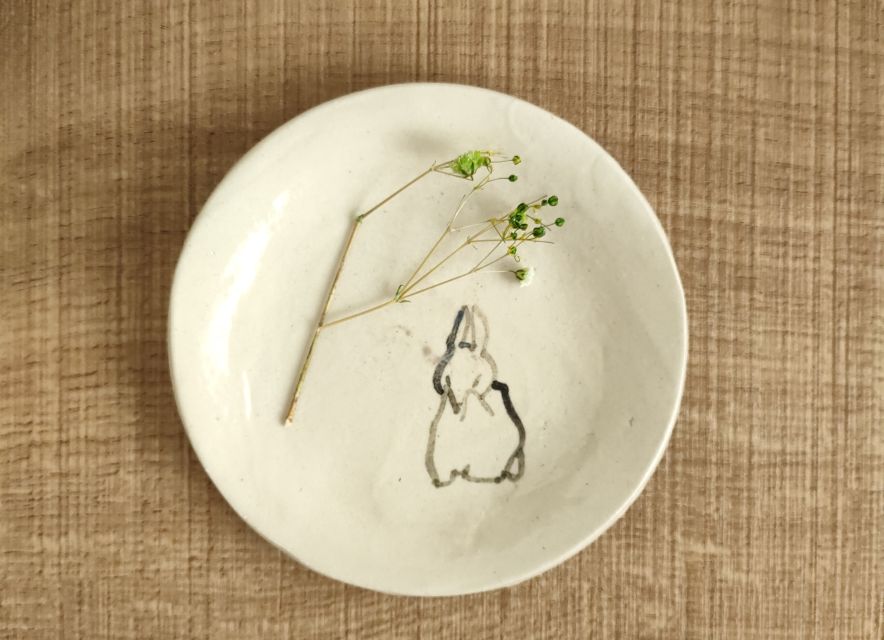
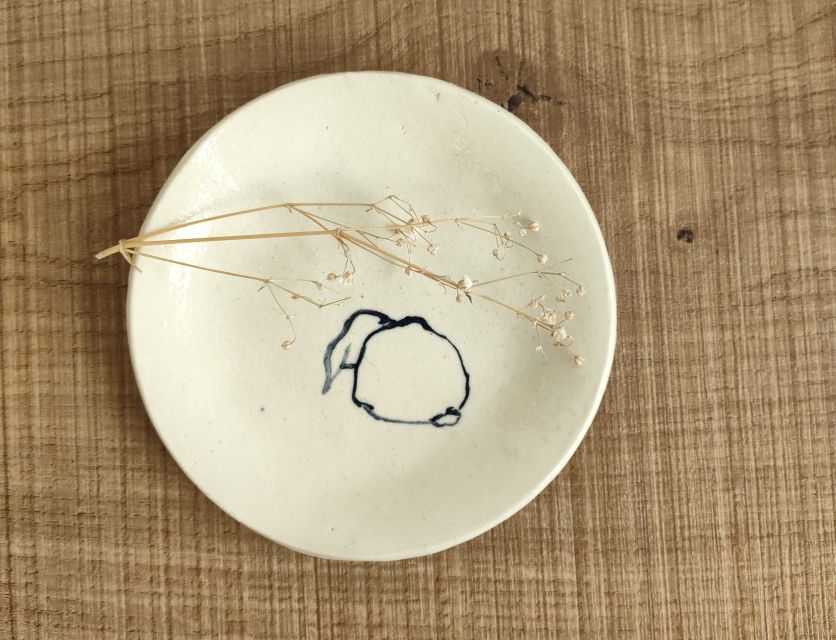
The main project is a ceramic dish made with clay from the Shigaraki area. Shigaraki is associated with Japanese ceramics, and using clay from that area gives the activity a direct link to Japanese pottery rather than making it a generic painting class.
You can choose from traditional designs or images connected with Japan. Suggested subjects include:
- Mount Fuji
- Sushi
- A sakura tree
- Other Japanese cultural images
- A word written in kanji
This choice is one of the class’s best features. You can follow a traditional pattern if you want a clear starting point, or you can create something more personal. A word in kanji can make the dish feel tied to a specific memory, but ask the instructor for help with the meaning and writing before you paint it.
You do not need to arrive with a finished plan. The point is to make a souvenir that reflects your trip, not to produce museum-quality work. If you are comfortable drawing, you can spend more time on your own design. If you are less confident, the available examples and instructor guidance give you a safer path.
I would think about your subject before the appointment, but keep the idea simple. A small dish has limited space, and a clean image usually works better than trying to fit an entire Osaka skyline onto it. A single flower, mountain, food item, or character can make a stronger result.
Painting at your own pace
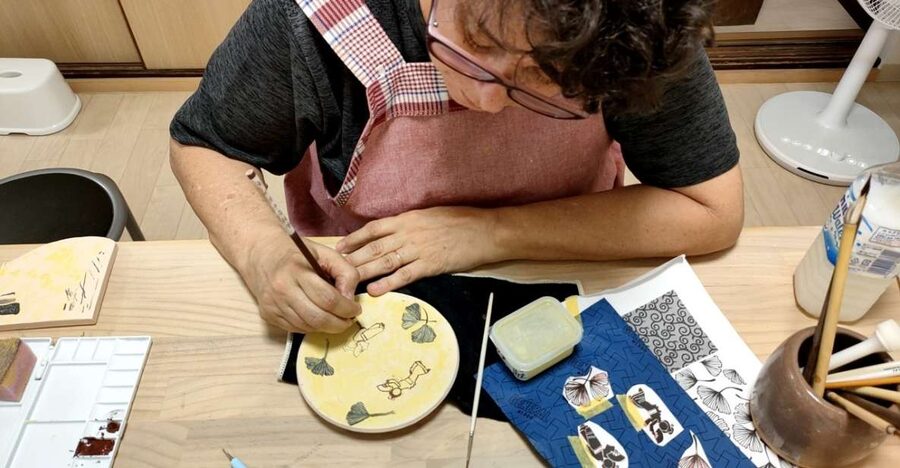
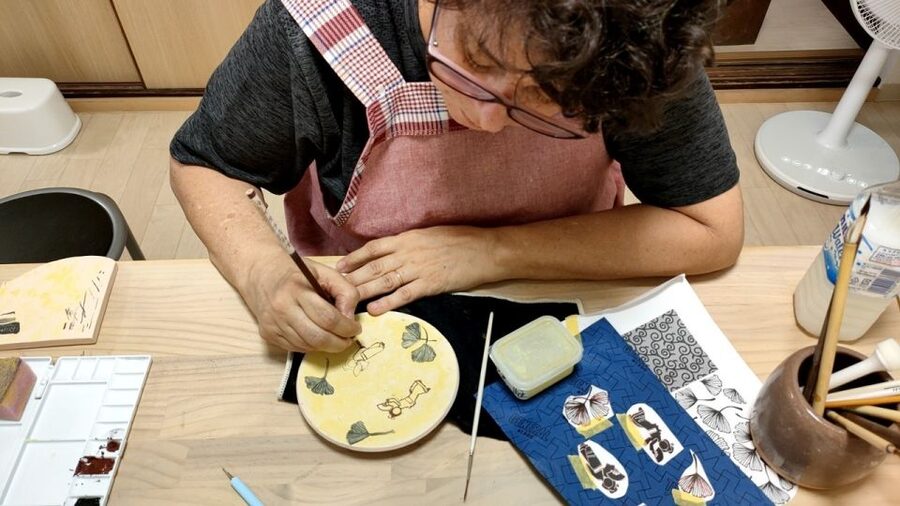
The painting is done with a brush. The instructor explains the process and helps you with the ceramic colors and patterns. You have room to make choices, and the private format means the class does not need to move at the speed of a large group.
This is a good match for someone who enjoys making things but does not call themselves an artist. One useful point from the experience is that interest matters more than technical skill. If you have trouble with a design, the instructors can guide you. You are not expected to arrive with pottery experience.
The two-hour length gives you enough time for a focused project and conversation without turning the activity into an all-day commitment. Still, your exact painting pace will depend on your design. A detailed image or kanji lettering may take more concentration than a simple pattern, so listen to the instructor when it is time to finish.
The class is taught in English, Catalan, Spanish, or Japanese. The Spanish and Catalan options are especially useful because ceramic activities in those languages are not common in Osaka. If you are booking in one of those languages, confirm the language choice when arranging the experience.
One small point is worth understanding: the dish you paint is not an instant souvenir. It must be fired after the class. You take your gifts with you on the day, but the painted work is shipped later.
A few more Osaka tours and experiences worth a look
- Private Osaka Walking Tour: Highlights & Hidden Gems
★ 5.0 · 569 reviews - 3/4/5 Hours Private Tour in Osaka with Local Guide
★ 5.0 · 189 reviews - Osaka’s Best and Brightest: Private Full-Day Tour by Vehicle
★ 5.0 · 147 reviews - Full Day Tour of Kyoto with Private Transportation
★ 5.0 · 130 reviews
What happens after the paint dries
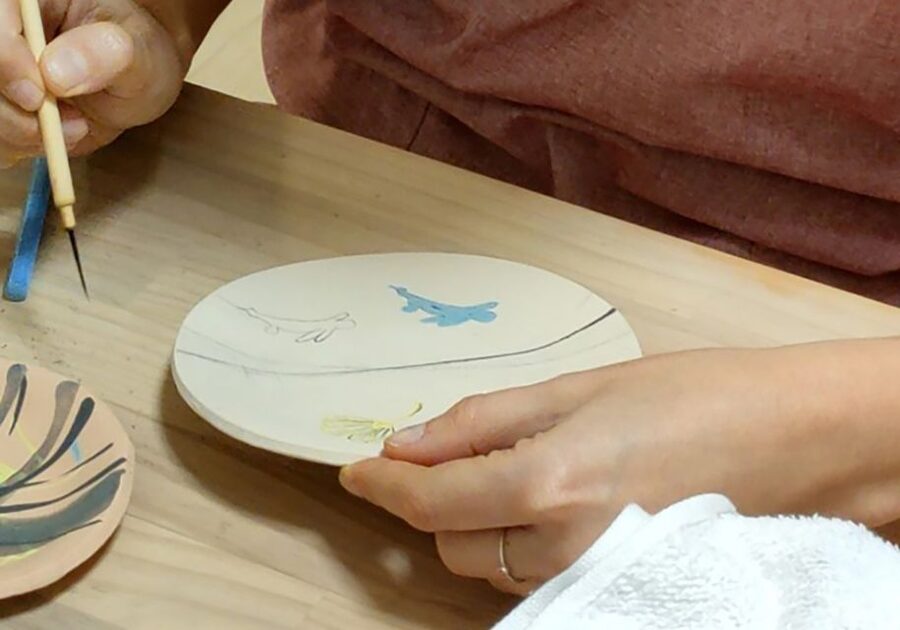
Your ceramic piece takes about one and a half months to reach you. The workshop sends it to your home after firing, and shipping costs are not included in the activity price.
This delay is normal for a handmade ceramic piece, but it affects how you plan your souvenir. You cannot inspect the fired result before leaving Japan, and you need to provide a reliable home delivery address. If you are moving between hotels or returning to a different country, home shipping is more practical than trying to add the dish to your luggage.
The extra shipping charge also changes the real cost. The listed price is $61 per person, which covers the instructor, materials, the Shigaraki clay dish, pickup from the station, and the two immediate gifts. It does not cover shipping. I consider the price fair for a private two-hour class with multilingual teaching and a local walk, but you should budget beyond $61 for the finished dish to be delivered.
You also receive a small handmade plate with a traditional Japanese pattern and a sakura-shaped chopstick holder. These are made for your use and can go home with you right away. That is helpful if you want something physical from the workshop on the day itself.
Why the private format matters
A private class changes the mood. You are not watching an instructor repeat the same instructions for a room full of people. You can ask about the design, request help with a brushstroke, or spend extra time talking about Japanese culture.
The private setup is also practical for mixed-ability groups. One person can work on a simple image while another tries kanji or a more involved pattern. You do not have to match the pace of strangers, and you have more control over how much of the session is spent painting versus talking.
The class is a particularly good fit for couples, families with older children, and small groups of friends. Children under five are not suitable for the activity, and the use of brushes and ceramic materials may require patience from younger participants. The private setting can help, but the minimum age rule still applies.
Solo visitors can also benefit from the format. You have direct access to the instructor and do not need to feel awkward joining a group activity alone. The conversation can make the session feel social without requiring you to spend the day with a tour group.
A local Osaka experience, not a major attraction
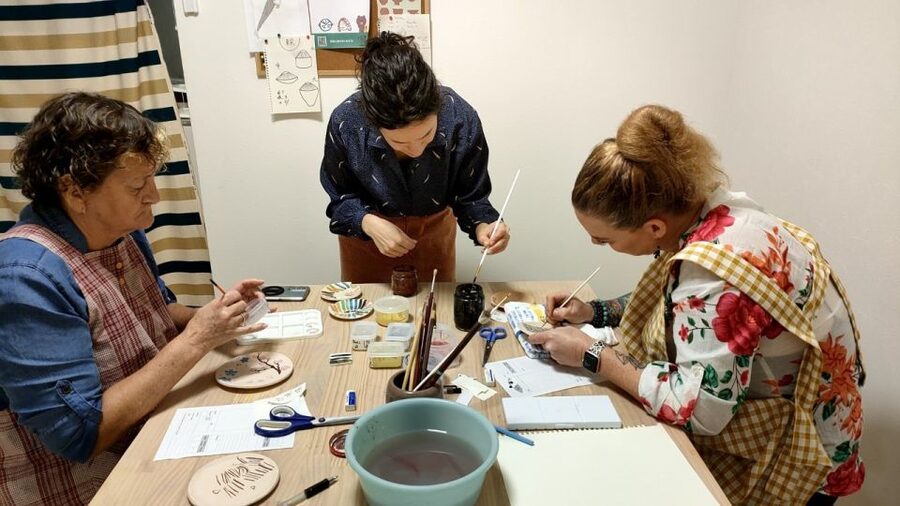
The workshop does not take place beside Osaka Castle, Dotonbori, or another headline sight. That is both its appeal and its limit. If you want a packed sightseeing program with famous views, this is not the right choice.
Instead, you spend time in a non-touristy part of the city. The route from Teradacho Station shows an everyday Osaka setting, and the old house gives you a more personal connection to the city. The value comes from contact and context, not from a long list of sights.
I like this for a day when you want to slow down. You can pair it with other plans in Osaka, but allow enough travel time to reach Teradacho Station and avoid booking something that begins immediately afterward on the other side of the city. The activity itself lasts two hours, and the station walk is part of the schedule.
The local setting may feel less polished than a purpose-built tourist studio. That is worth knowing. You are visiting a home and working in a personal space, so the experience is best for people who value warmth and conversation over a slick presentation.
Language options and cultural conversation
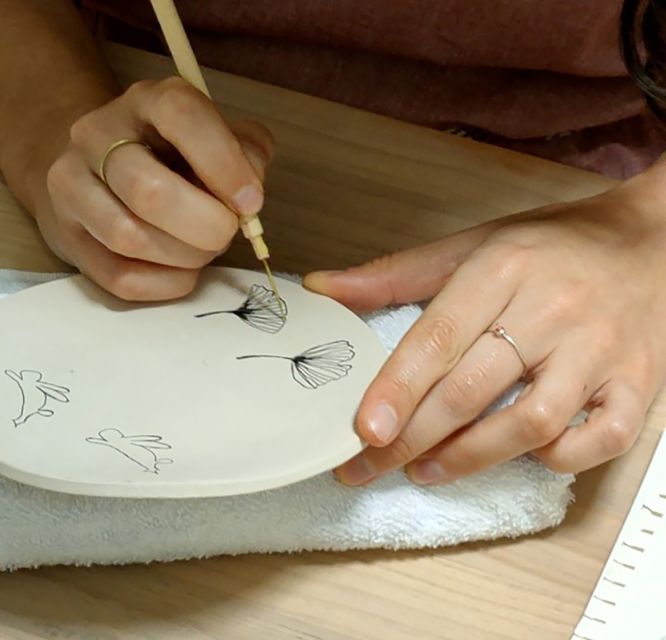
The language choice is unusually broad for a small craft activity. English, Spanish, Catalan, and Japanese are available. For Spanish and Catalan speakers, this is the only ceramic-related option described here with those languages, which makes it a useful choice if you want detailed instruction without relying on translation.
The conversation is not limited to brush technique. You can talk about Japanese culture while working, and the relaxed format gives those discussions time to develop. The class can feel like a visit with local hosts rather than a quick demonstration followed by a rushed activity.
The exact balance will depend on your group. If you want to concentrate quietly, you can focus on your dish. If you enjoy asking questions, the private setting gives you room to do that. Anna and the other instructors have been described as friendly and welcoming, and the personal tone is a central part of the experience.
Tea at the end has also been part of the welcome. It is a small detail, but it fits the pace of the workshop. You finish with a drink, a look at the studio, and your two ready-to-take-home gifts.
What you receive for $61
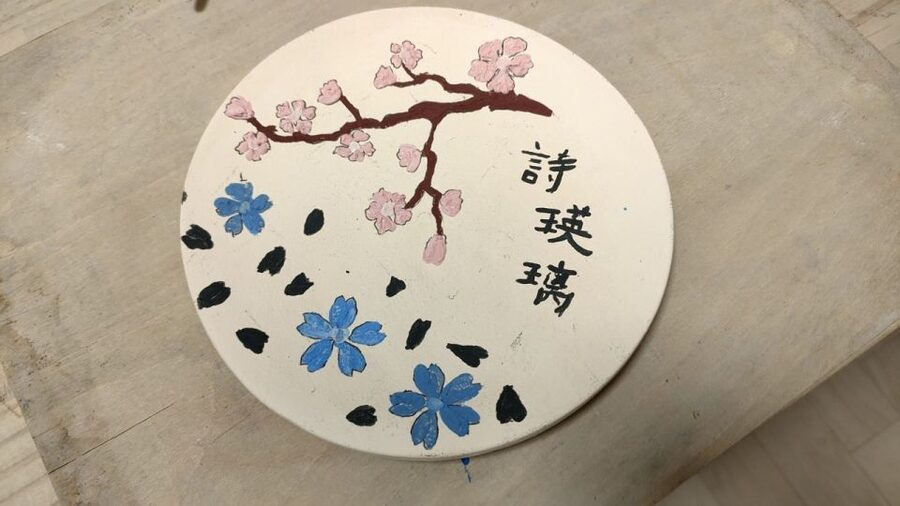
The $61 per-person price includes:
- A private two-hour workshop
- An instructor
- Ceramic painting materials
- One dish made with clay from the Shigaraki area
- Pickup from JR Teradacho Station
- A small handmade dish with a traditional Japanese pattern
- A sakura-shaped chopstick holder
The price excludes shipping for the painted piece. That matters because the main dish is the item you spend the class creating, and it will not be ready to carry home.
Compared with a standard group craft class, the private instruction and multilingual support add value. The station pickup and local walk also make the visit easier to navigate. I would not choose it solely as a cheap souvenir purchase, since the shipping cost comes later. I would choose it as a personal cultural activity that happens to produce a useful keepsake.
The gifts help balance the wait. You leave with something handmade that day, while the larger piece follows after firing. If you are trying to keep your Japan spending exact, ask about shipping before you commit so the total cost does not surprise you.
Who should book this workshop?
I would recommend it to you if you like hands-on activities, want a personal connection to Osaka, or prefer small private experiences to crowded attractions. It works especially well for couples and friends who want a shared souvenir that carries a story.
It is also a strong choice for Spanish and Catalan speakers, families with children aged five and older, and anyone who wants to discuss Japanese culture while doing something practical. You do not need previous ceramic or art experience.
You may want to skip it if you need to take every souvenir home on the same day, dislike making design decisions, or have only a short window between major Osaka sights. The delayed delivery and extra shipping charge are the main practical drawbacks.
Should you book Ceramics Tocoton?
Book this workshop if the best part of a souvenir is the memory attached to it. You walk through a less-touristy part of Osaka, enter a century-old house, talk with Anna and her team, and paint a dish that reflects your own trip. The private setting and choice of English, Spanish, Catalan, or Japanese make it more personal than a standard group class.
Skip it if you are looking for a quick, ready-to-pack purchase or a famous Osaka landmark. For everyone else, $61 is a reasonable price for two hours of instruction, materials, station pickup, cultural conversation, and two small gifts, as long as you plan for shipping and the six-week wait.
FAQ
Where do I meet the instructor?
Meet at the north exit of JR Teradacho Station. Look for the guide carrying a sign with the name Ceramics Tocoton.
How long does the activity last?
The workshop lasts two hours. Check the available starting times when booking.
What languages are available?
The instructor can teach in English, Catalan, Spanish, or Japanese.
Is the workshop private?
Yes. The class is for a private group exclusively for you.
Can I take my painted dish home that day?
No. Your painted dish is fired after the workshop and shipped to your home. Delivery takes about one and a half months, and shipping costs are not included.
What do I receive immediately after the class?
You can take home a small dish with a traditional Japanese pattern and a sakura-shaped chopstick holder. Both are included in the course price.
Is the activity suitable for young children?
Children under five are not suitable for this experience.
What happens if I am late?
Contact the workshop if you will be more than 15 minutes late. Being more than 15 minutes late is considered a no-show.
Can I cancel the activity?
You can cancel up to 24 hours in advance for a full refund. You can also reserve now and pay later.
Just added around Osaka
- Nara Day Trip from Osaka with a Licensed Guide★ 5.0 · 3 reviews
- Osaka Early Morning Osaka Castle Tour Avoid Crowds★ 5.0 · 3 reviews
- Guided Tour of Some Attractions in Osaka by Private Car★ 5.0 · 3 reviews
- Private Transfer Between Kyoto and Kansai Airport KIX★ 5.0 · 3 reviews
- Shared Arrival Transfer: Osaka Itami Airport to Osaka City★ 5.0 · 3 reviews
- Osaka: Sushi Making Class and Dotonbori Food Tour★ 4.7 · 3 reviews
- Osaka Night Photography Workshop★ 5.0 · 3 reviews
- Kyoto Full day Tour Kinkakuji, Kiyomizu-dera and Fushimi Inari★ 4.5 · 3 reviews
Osaka Craft Workshops, compared.
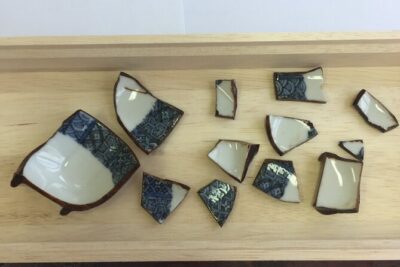
1.5〜2 Hours Traditional Kintsugi Work Shop in Namba Osaka
Read our review →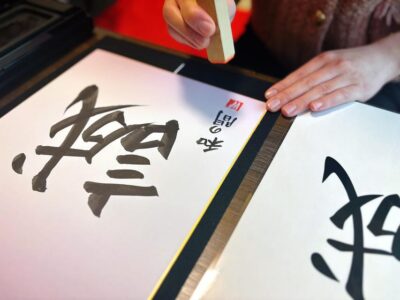
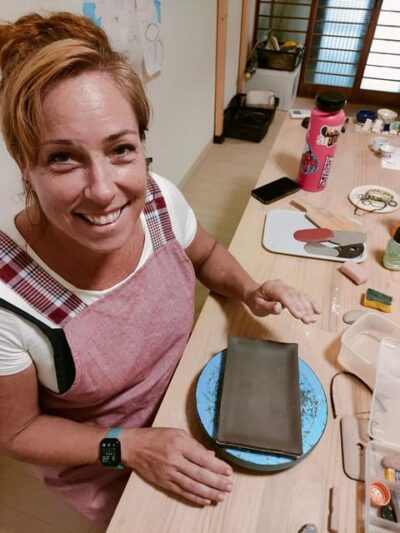
Traditional Japanese Ceramics Private Experience
Read our review →

Learning Zen of Japanese Calligraphy in kimono near Osaka Castle
Read our review →
Osaka Daruma Workshop — Paint Your Own Good-Luck Daruma
Read our review →Browse the lists this tour appears in