
Reviewed · OSAKA COOKING CLASSES
Osaka Michelin Food Tour Experience Kaiseki and Local dishes
Osaka’s food culture gets the full treatment here, from a carefully presented Michelin-starred kaiseki meal to hot takoyaki eaten in the youth district of Amerikamura. The contrast is the point: you see how formal Japanese cooking and casual street food can share the same city.
I like the small group limit of six, which gives your English-speaking guide room to explain unfamiliar dishes and dining customs. I also like the mix of food and place, including the Pottery Shrine and a ceramics shop with Edo-era tableware. The main caution is dietary: takoyaki contains octopus and fish broth, and the tour cannot handle vegan, gluten-free, or shellfish allergy requests.
In This Review
- Key points at a glance
- Why this Osaka food tour works
- Starting at Hibuse Pottery Shrine
- Sitting down at Ajikitcho Bunbuan
- Walking through Shinsaibashi’s shotengai
- Looking at Edo-era tableware
- Eating takoyaki in Amerikamura
- Finishing with matcha near Shinsaibashi or Namba
- What the $162.58 price includes
- Who will enjoy this experience most
- Practical details that affect your afternoon
- Should you book this Osaka food tour?
- FAQ
- How long does the Osaka Michelin food tour last?
- Where does the tour start and finish?
- How many people can join the tour?
- Is a vegetarian meal available?
- Can the tour accommodate vegan, gluten-free, or shellfish-free diets?
- Are drinks included?
- What happens if I need to cancel?
Key points at a glance
- Michelin-starred kaiseki in Honmachi: Spend about an hour with seasonal ingredients, artistic presentation, tea, and water included.
- Bib Gourmand takoyaki in Amerikamura: Try Osaka’s famous octopus snack at a Michelin-recognized shop.
- A group of no more than six: The setting is better suited to questions and conversation than a large coach tour.
- A pottery theme beyond the plate: Visit Hibuse Pottery Shrine and, if open, a ceramics shop selling Imari ware and antique tableware.
- Matcha to finish: End near Shinsaibashi or Namba Station with a matcha dessert and drink.
- A serious dietary warning: Vegetarian courses need advance notice, while vegan, gluten-free, and shellfish-free arrangements are not available.
Why this Osaka food tour works
This is not just a snack crawl. In three and a half hours, you move through several layers of Osaka dining, beginning with a quiet shrine, sitting down to a formal meal, then returning to the street for takoyaki and matcha.
That range gives you useful context. Kaiseki is built around seasonality, balance, and presentation. Takoyaki is hot, quick, social, and wonderfully messy. The tour lets you compare those styles on the same afternoon instead of treating Japanese food as one broad category.
The current rating is 5 out of 5 from four reviews, and the strongest praise centers on the quality of the food and the guide’s personal touch. One guide, Chie, helped a participant write their name in Japanese katakana, a small extra that shows how this experience can go beyond eating from one stop to the next.
The pace is fairly gentle, with about 2 to 3 kilometers of walking. You should still wear comfortable shoes, since the route links several neighborhoods and includes shopping streets. The start time is 11:30 a.m., a practical choice if you want a substantial midday meal without losing the entire day.
More Japanese home cooking classes:
- Osaka: Ramen and Gyoza Cooking Class in Dotonbori
★ 5.0 · 378 reviews - Osaka: Sumo Stage Show with Bento or Snack + Fight & Photo
★ 4.3 · 364 reviews - Osaka: Traditional Mochi Pounding Experience with Tasting
★ 4.9 · 306 reviews
Starting at Hibuse Pottery Shrine
The tour begins at 7-Eleven Osaka Kyutaromachi 4-chome in Chuo Ward. From there, you make a short visit to Hibuse Pottery Shrine, with about 20 minutes at the site.
The shrine has a direct connection to the area’s pottery trade. Locals once prayed here for protection from fire and for prosperity in ceramics. That detail sets up the later ceramics stop and gives the food tour a clear local thread.
Do not expect a long shrine visit or a major sightseeing site. This is a brief introduction, not a full temple-and-shrine tour. Its value comes from the connection between place, craft, and food. Japanese cuisine is often judged by the vessel as well as the ingredients, and the shrine visit helps explain why ceramics matter.
Meet on time. The tour starts promptly, and late arrivals cannot join, reschedule, or receive a refund. That rule is worth taking seriously, especially if you are coming from another part of Osaka.
Sitting down at Ajikitcho Bunbuan
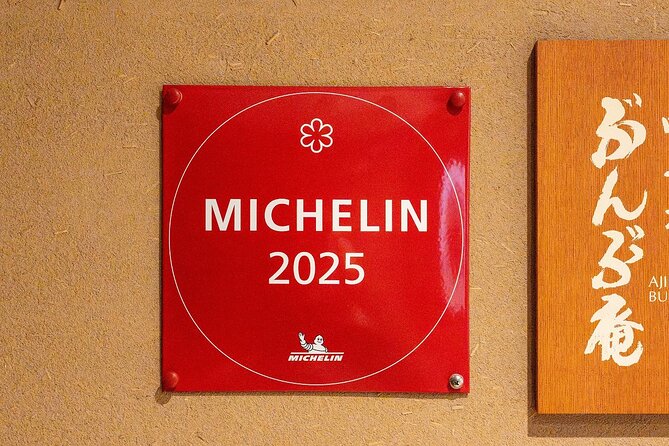
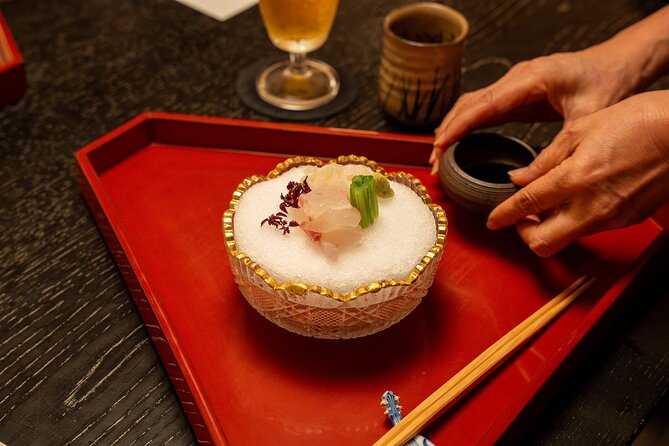
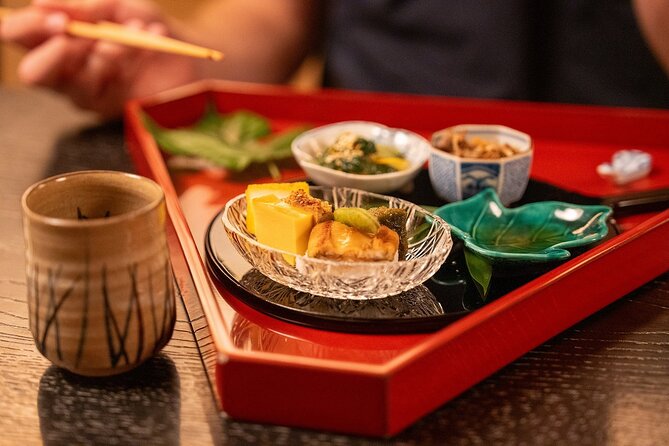
The centerpiece is a one-hour meal at Ajikitcho Bunbuan in Honmachi. This is the part that makes the price higher than a standard Osaka street-food walk.
The restaurant is known for kaiseki, a formal Japanese meal built around seasonal ingredients and careful presentation. The restaurant’s name comes from the first-generation couple and the idea of pursuing excellence in both culinary arts and culture. You are not simply being handed a plate of local food. You are being shown a more refined side of Osaka cooking.
The exact dishes can vary with the season, so it is better to think in terms of style than a fixed menu. Expect the meal to place importance on appearance, order, and the natural qualities of the ingredients. The artistic presentation is part of the experience, not decoration added after the cooking is done.
Tea and water are included. Alcohol and soft drinks cost extra, so budget accordingly if you want something beyond the included beverages. You do not need to pay for the guide’s food or drinks.
Dress with some care. The restaurant asks for moderate attire, and off-shoulder tops should be avoided. You do not need formal evening clothes, but this is not the moment for beachwear or very casual resort clothing.
Vegetarians can request a vegetarian course, but you must do so in advance. Same-day changes cannot be accepted. This meal is prepared by the partner restaurant, so complete adjustments and allergy-free preparation cannot be guaranteed.
Walking through Shinsaibashi’s shotengai
After lunch, you leave the office district and walk through a local shotengai, or covered shopping street, toward Amerikamura. The stop lasts about 20 minutes.
A shotengai is useful for seeing daily urban life rather than only famous sights. Shops, food counters, and practical businesses line these streets, giving you a sense of how Osaka residents shop and move around. The walk also breaks up the meal and lets the guide explain the shift from Honmachi’s business district to Shinsaibashi’s retail areas.
This portion is more about atmosphere and orientation than a single attraction. If you want a tour packed with landmark photo stops, the route may feel light on sightseeing. If you like seeing how neighborhoods connect, it adds welcome texture.
The walking distance is manageable for most people, but the tour is not fully stationary. Weather-appropriate clothing matters because the tour operates in rain unless extreme conditions force a change.
More street food walks and tastings:
- Osaka: Shinsekai Food Tour with 13-15 Dishes at 5 Eateries
★ 4.8 · 2,204 reviews - Osaka Food Tour: 13 Dishes at 5 Local Eateries
★ 5.0 · 2,149 reviews - Hungry Osaka Street Food Tour:15 Tastings & 3 Drinks with a Local
★ 5.0 · 1,727 reviews - Osaka Local Foodie Walking Tour in Dotonbori and Shinsekai
★ 5.0 · 985 reviews
Looking at Edo-era tableware
The next stop is a ceramics shop specializing in Imari ware and antique tableware designed for everyday use. It is scheduled for about 30 minutes, though the shop may be closed. If that happens, the guide suggests an alternative.
This is an especially good stop for anyone who noticed the dishes during the kaiseki meal and wondered about their role. Japanese tableware can frame a dish, reflect the season, and create contrast with the food. Imari ware also gives you a chance to see a different side of Japanese ceramics, with pieces that can be appreciated as objects as well as used at home.
Do not treat this as a guaranteed shopping opportunity. The shop’s availability depends on whether it is open, and no purchase is included. The stop works best if you enjoy craft and design, not if you need a major retail session.
The pottery connection also makes the route feel more thought through. You begin with a shrine tied to ceramics, eat food presented with care, and then look at tableware made to serve daily meals. Those links make the afternoon feel like a story instead of a string of unrelated tastings.
Eating takoyaki in Amerikamura
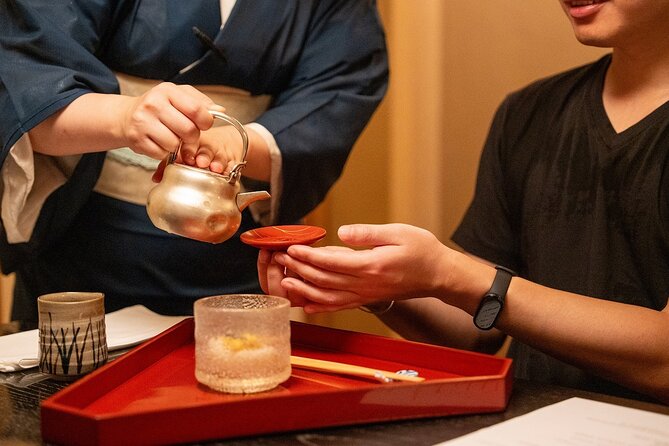
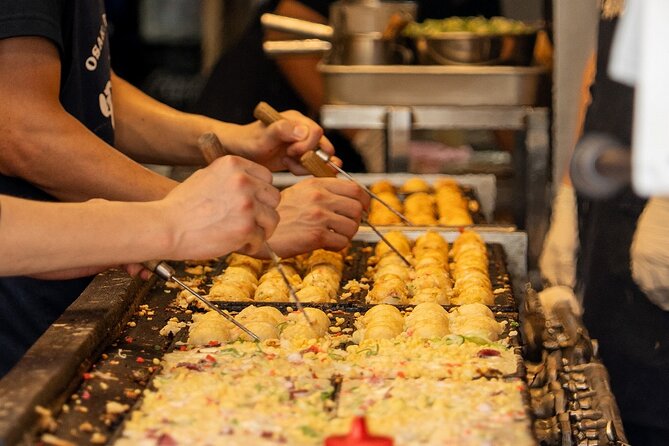
In Amerikamura, you try takoyaki from a shop recognized with a Bib Gourmand. The tasting lasts about 40 minutes.
Takoyaki is one of Osaka’s signature foods: small, round batter cakes cooked around pieces of octopus. The outside is crisp, while the center stays soft and hot. The contrast is part of the appeal, but it also means you should take your first bite carefully.
This stop brings the tour back to casual Osaka eating. You are no longer seated for a formal course with deliberate presentation. You are eating a famous local snack in a district linked to Osaka’s youth culture, shopping, and street energy.
The Michelin connection is useful here, but do not confuse Bib Gourmand with a Michelin star. Bib Gourmand recognizes good food at a reasonable price. That fits takoyaki well: a humble dish that can still be prepared with real skill.
The ingredients create firm limits. The takoyaki contains octopus and dashi made with fish broth. It cannot be substituted. If you cannot eat it, the tour may offer extra matcha desserts instead, but you should not book this experience expecting a fully customized replacement meal.
Amerikamura adds a different feel from Honmachi. The neighborhood is livelier and more youthful, and the food is meant to be eaten casually. That contrast is one of the tour’s best features, but you should be comfortable with a route that moves between polished dining and ordinary street food.
Finishing with matcha near Shinsaibashi or Namba
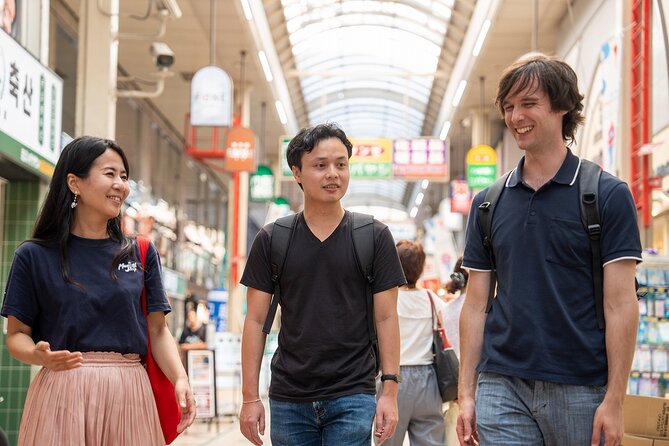
The final stop is a matcha dessert at a local tea shop near Shinsaibashi or Namba Station. You have about 30 minutes, and the included drink gives the tour a cool, sweet ending after the savory food.
Matcha can be grassy and slightly bitter, which is why it works well after takoyaki and a full kaiseki meal. The dessert gives you a final taste of Japanese tea culture without adding another large course.
The tour ends at Shinsaibashi Station, though the exact tea stop is near Shinsaibashi or Namba. This is convenient if you plan to continue shopping, explore Dotonbori, or return to your hotel by train. You are not dropped back at the starting point, so plan your afternoon from the end location.
Three and a half hours is enough time to enjoy each stop without turning the outing into an all-day commitment. It is also long enough that you should not schedule a major activity requiring you to be elsewhere immediately after the matcha.
What the $162.58 price includes

At $162.58 per person, this is a premium food tour. You are paying for more than the individual food portions. The price covers a small group, an English-speaking guide, the Michelin-starred kaiseki meal, the takoyaki tasting, the matcha dessert, and the cultural stops between them.
The kaiseki course does much of the value work. A formal meal at a renowned restaurant can cost a significant amount on its own, and the guide adds explanation that you may not get by booking lunch independently. The small group also matters. With no more than six participants plus the guide, you should have a better chance to ask about ingredients, etiquette, and cooking traditions.
The value is weaker if you mainly want cheap, filling food. You can find takoyaki and matcha elsewhere for far less. This tour makes more sense if you want an organized introduction to several food styles and would otherwise be unsure how to choose a kaiseki restaurant or understand the meal.
Group discounts may be available, and the tour uses a mobile ticket. Free cancellation is allowed up to 24 hours before the start time, which gives you some flexibility. Inside that 24-hour window, refunds and changes are not accepted.
Who will enjoy this experience most
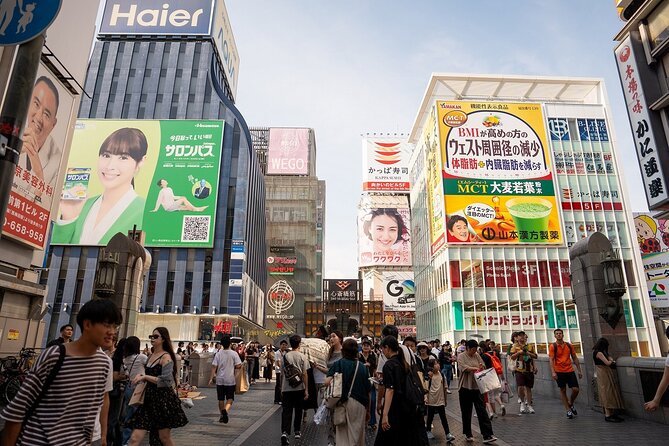
I would choose this for a first visit to Osaka if you want food to guide your sightseeing. The route is compact, the stops are connected by neighborhood walks, and the guide can explain customs that are easy to miss when you eat alone.
It also suits couples, small groups of friends, and families with older children who can manage a few hours of walking and a formal meal. Children aged three and under may join their parents, but no meal is provided for them.
Food-focused visitors should appreciate the range. You get high-end kaiseki, a famous Osaka snack, tea, and a look at ceramics. That is a stronger introduction than a tour that serves five similar street foods.
I would be cautious if you are vegan, gluten-free, or allergic to shellfish. The operator cannot accommodate those requests. Vegetarians have a better chance, but only if the course is requested ahead of time, and even then the restaurant cannot promise complete adjustments.
This also is not the best fit if you want a private experience. The standard group can include other participants, with a maximum of six guests plus the guide. A private booking is needed if you want the group to be only your own party.
Practical details that affect your afternoon
Start at the listed 7-Eleven in Kyutaromachi at 11:30 a.m. Arrive early enough to find the meeting point. Osaka’s streets can be confusing when you are watching train exits and shop signs, and lateness means losing the tour without a refund.
Wear comfortable shoes and clothing suited to the weather. The route covers roughly 2 to 3 kilometers at a leisurely pace, but you will spend time walking through shopping streets and urban neighborhoods.
Keep your clothing modest for Ajikitcho Bunbuan. Off-shoulder tops are specifically discouraged. Tea and water are included at the restaurant, while other drinks are extra.
The tour runs in rain or shine. Only extreme weather is expected to bring a change, in which case the operator will contact you. Confirmation arrives when you book, and the tour is near public transportation.
Should you book this Osaka food tour?
Book it if you want a polished introduction to Osaka food that includes both formal dining and everyday specialties. The combination of Ajikitcho Bunbuan’s seasonal kaiseki, Bib Gourmand takoyaki, matcha, and pottery makes the experience more distinctive than a basic food walk.
The best reasons to book are the small group, the Michelin-level meal, and the cultural links between food and ceramics. A guide such as Chie can add personal touches, including help with writing your name in katakana, that make the afternoon more memorable.
Skip it if you need strict dietary control, dislike octopus or fish broth, or want a low-cost street-food tour. At $162.58, the price is justified mainly by the kaiseki meal and the guided context. For the right eater, it is a compact way to understand Osaka through its table, its shopping streets, and its favorite snack.
FAQ
How long does the Osaka Michelin food tour last?
The tour lasts approximately 3 hours and 30 minutes, beginning at 11:30 a.m.
Where does the tour start and finish?
The meeting point is 7-Eleven Osaka Kyutaromachi 4-chome in Chuo Ward. The tour ends at Shinsaibashi Station, with the final matcha dessert served near Shinsaibashi or Namba Station.
How many people can join the tour?
The group is limited to six guests plus the guide. Other participants may be included unless you book a private tour.
Is a vegetarian meal available?
Yes, a vegetarian course is available only when requested in advance. Same-day requests cannot be accommodated.
Can the tour accommodate vegan, gluten-free, or shellfish-free diets?
No. The tour cannot accommodate vegan, gluten-free, or shellfish allergy requests. The takoyaki contains octopus and fish broth, and it cannot be substituted.
Are drinks included?
Tea and water are included at the kaiseki restaurant. Alcoholic and soft drinks are available for purchase. The guide’s food and drinks do not need to be covered by you.
What happens if I need to cancel?
You can cancel for a full refund up to 24 hours before the local start time. Cancellations or changes made less than 24 hours before the start are not refunded or accepted.
Just added around Osaka
- Nara Day Trip from Osaka with a Licensed Guide★ 5.0 · 3 reviews
- Osaka Early Morning Osaka Castle Tour Avoid Crowds★ 5.0 · 3 reviews
- Guided Tour of Some Attractions in Osaka by Private Car★ 5.0 · 3 reviews
- Private Transfer Between Kyoto and Kansai Airport KIX★ 5.0 · 3 reviews
- Shared Arrival Transfer: Osaka Itami Airport to Osaka City★ 5.0 · 3 reviews
- Osaka: Sushi Making Class and Dotonbori Food Tour★ 4.7 · 3 reviews
- Osaka Night Photography Workshop★ 5.0 · 3 reviews
- Kyoto Full day Tour Kinkakuji, Kiyomizu-dera and Fushimi Inari★ 4.5 · 3 reviews
Osaka Cooking Classes, compared.


Sumo Stage Show with Bento or Snack + Fight & Photo
Read our review →
Traditional Mochi Pounding Experience with Tasting
Read our review →
Osaka Cooking Class: Okonomiyaki &Japanese cuisines experience
Read our review →


Osaka Sake Tasting & Takoyaki Cooking Experience
Read our review →
Cooking Ramen&Gyoza/KatsuCurry/Bento/Okonomiyaki+Store Tour@Osaka
Read our review →Browse the lists this tour appears in