
Reviewed · KYOTO DAY TRIPS FROM OSAKA
Osaka/Kyoto: Arashiyama, Nara Park, Fushimi Shrine Tour
The day’s biggest appeal is simple: you can see three of the Kansai region’s essential sights without changing trains, studying timetables, or working out how to connect Osaka, Kyoto, and Nara. You’ll walk through Arashiyama’s bamboo groves, meet Nara’s famous deer, and pass beneath the red torii gates of Fushimi Inari.
I like the early start at Arashiyama, when the air is cooler and the paths may feel less crowded. I also like having a coach and tolls covered, especially if you are traveling with children or carrying a full day’s worth of sightseeing plans. The tradeoff is a tight schedule, basic commentary, and a strict meeting-time rule that leaves little room for delay.
In This Review
- Key points to know before booking
- Three famous places without three separate travel plans
- Arashiyama at 10:00, bamboo paths and Togetsukyo Bridge
- Nara Park and the deer with 1,300 years of tradition
- Fushimi Inari after 15:20, the red gates continue uphill
- How the shared coach changes the day
- What the guide service is really like
- The strict meeting time matters
- Is $51 good value for this route?
- Who should book this day trip?
- Should you book it?
- FAQ
- How long does the tour last?
- Where can I join the tour?
- Which places are included?
- How much time do I get at each attraction?
- What languages are available?
- Are meals included?
- Can I cancel the booking?
Key points to know before booking
- Three major sights in one day: Arashiyama, Nara Park, and Fushimi Inari are all included.
- Early Arashiyama visit: You arrive around 10:00, with about two hours for the bamboo forest, Togetsukyo Bridge, and nearby paths.
- Free-roaming deer in Nara: The park has more than 1,000 deer, regarded in local tradition as divine messengers.
- Short but useful Fushimi Inari stop: About 80 to 90 minutes gives you time for the lower torii gates, though not the full mountain route.
- Shared coach transportation: The bus links Osaka and Kyoto with the sightseeing stops, but road traffic can make the day feel long.
- Basic rather than full guiding: You receive an overview and assistance, not detailed commentary at every site.
Three famous places without three separate travel plans
This is a high-output day. Arashiyama, Nara Park, and Fushimi Inari each deserve more time than this tour gives them, but they are also spread across different parts of the Kansai region. For a first visit, the coach format can save you from piecing together several train rides and local connections.
The route begins in Osaka or Kyoto. The listed Osaka meeting point is in Dotonbori, at 1-chōme-1-3 Dōtonbori. The Kyoto meeting point is the sightseeing bus area at Kyoto Station’s Hachijo Exit. You return to Kyoto around 17:00 and Osaka around 18:00, although traffic, weather, and group size can shift those times.
I would think of this as a transportation-led sightseeing day, not a private tour. The vehicle may carry international visitors, and the guide may also drive in a smaller group. That keeps the price at about $51 per person, but it also means the experience depends on the day’s traffic and the guide’s available time.
The tour includes transport, toll fees, parking, fuel, and a host or greeter who may speak Chinese, English, Japanese, or Korean. Meals, drinks, and personal spending are yours to cover. Food is not allowed in the vehicle, so plan to eat at the stops rather than bring lunch aboard.
More day trips over to Nara:
- Ancient Capital Tour: Kyoto and Nara Highlights from Kyoto/Osaka
★ 4.5 · 332 reviews - Kyoto and Nara Day Trip from Osaka
★ 4.0 · 175 reviews - Discover Himeji, Kobe and Nara from Osaka
★ 5.0 · 101 reviews
Arashiyama at 10:00, bamboo paths and Togetsukyo Bridge
The first major stop is Arashiyama, reached at about 10:00 after the morning departures. You get around two hours of free time, with no professional guided walk through the area. This gives you room to choose between the bamboo forest trails, Togetsukyo Bridge, and the surrounding streets.
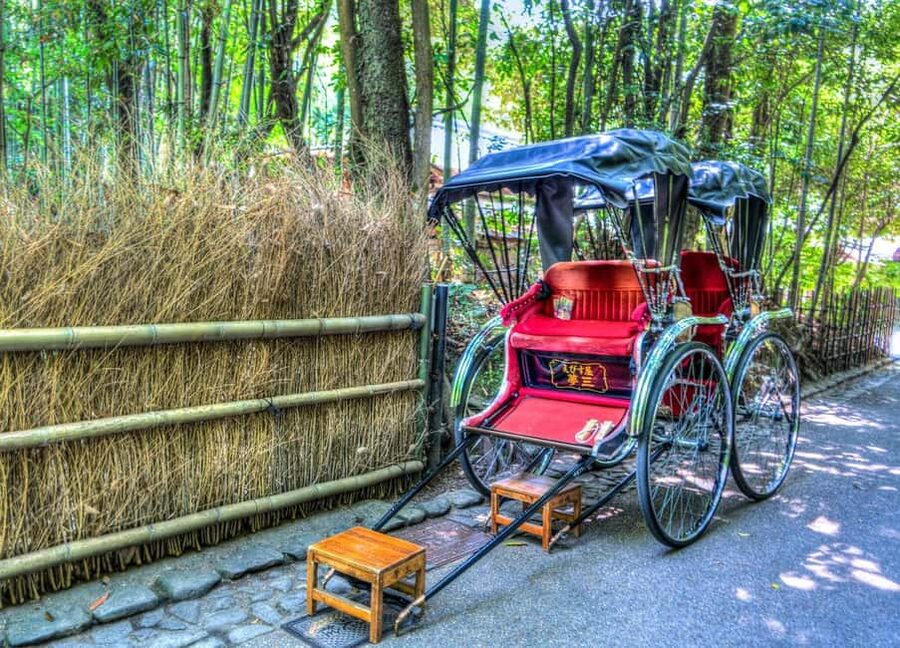
The bamboo forest is the visual star. Tall green stalks crowd the narrow paths, creating a cool, shaded walk that feels very different from central Kyoto. You should expect plenty of photographs, but do not assume the whole two-hour stop will be quiet. Arashiyama is one of Kyoto’s best-known sights, and the calmest part of the visit is usually the first part of the morning.
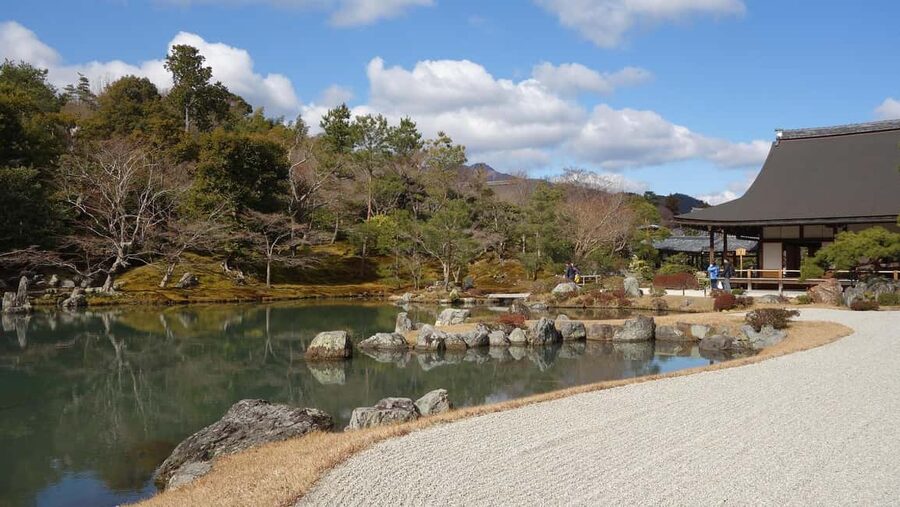
Togetsukyo Bridge gives you a broad view of the river and surrounding hills. The scenery changes with the seasons, which is one reason this stop works well even if you have already seen photographs of the bamboo. You can cross the bridge, pause for pictures, and then use the rest of the time for the bamboo paths.
Two hours is enough for a good introduction, but not enough for every corner of Arashiyama. You may find yourself choosing between a longer bamboo walk and time near the bridge. Keep an eye on your watch, because the coach cannot wait for a late return.
The morning arrival is one of the tour’s better choices. You reach Arashiyama before the later part of the day, when more people may arrive and the walking paths can become harder to enjoy. If Arashiyama is your main reason for booking, remember that this is a self-guided visit, so save the locations you want to see before departure.
Nara Park and the deer with 1,300 years of tradition
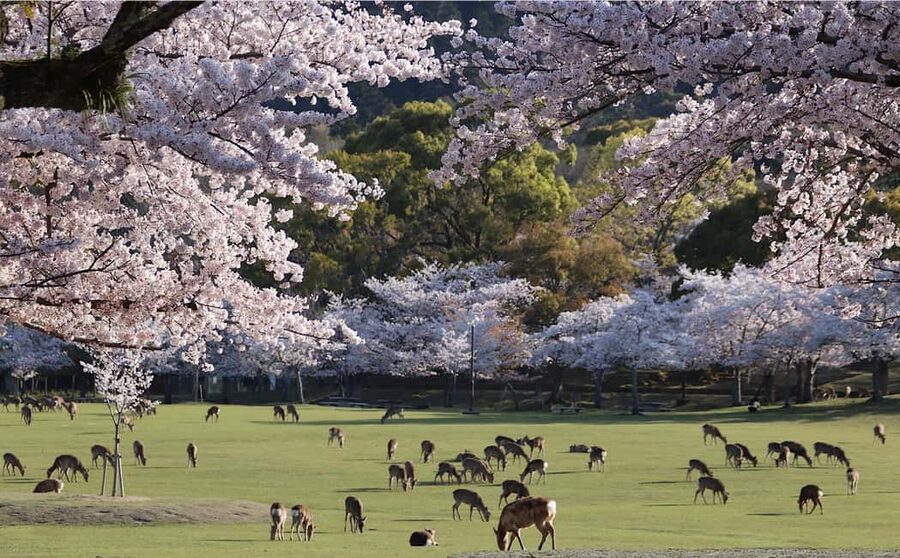
The coach reaches Nara at about 13:15. The planned stop is listed as 80 minutes in one part of the schedule and about one hour 30 minutes in the updated timetable. In practice, you should treat this as a short visit and follow the guide’s exact return instructions on the day.
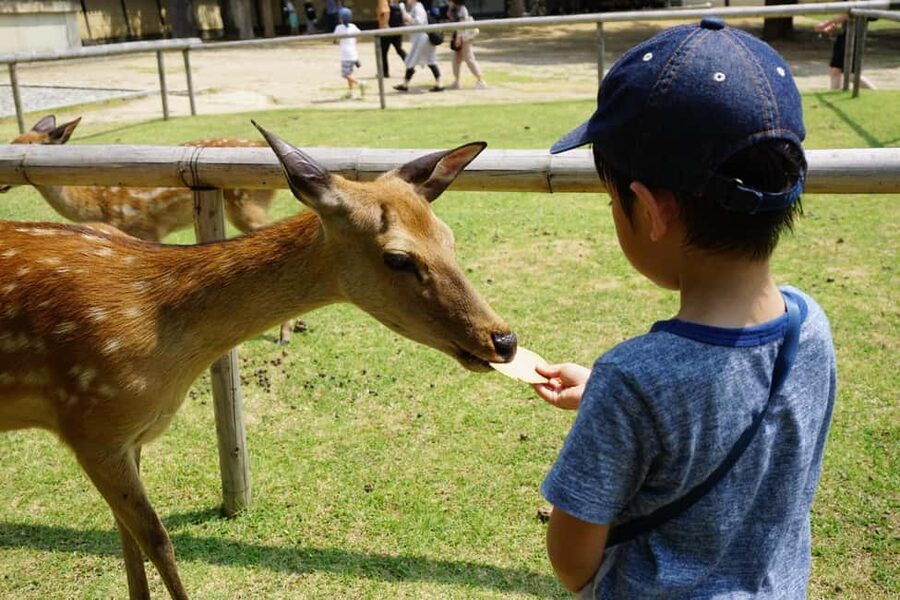
Nara Park is a wide green area beside Kasuga Taisha Shrine. More than 1,000 deer roam freely here, and they are recognized as a national natural monument. Local tradition regards them as messengers of the gods, a belief tied to more than 1,300 years of religious history in Nara.
The deer are not behind fences, which makes the encounter memorable. You can see them resting near paths, moving through open grass, or approaching people. That freedom is part of the appeal, but you should give the animals space and follow local instructions. A deer encounter is more enjoyable when you watch calmly instead of treating the animals like props for photographs.
With roughly an hour and a half at most, your visit will focus on the park area rather than a full exploration of Nara’s temples and museums. Kasuga Taisha is nearby, but the schedule does not promise a detailed shrine visit. You may have time to walk toward it, but do not count on seeing every building or completing a long route.
This stop is especially useful for families. The deer give children an immediate connection to the place, and the open park provides a change of pace after the narrow bamboo paths. Still, the timing is not leisurely. If you stop often for photographs or spend a long time with the deer, your remaining walking time will shrink quickly.
Fushimi Inari after 15:20, the red gates continue uphill
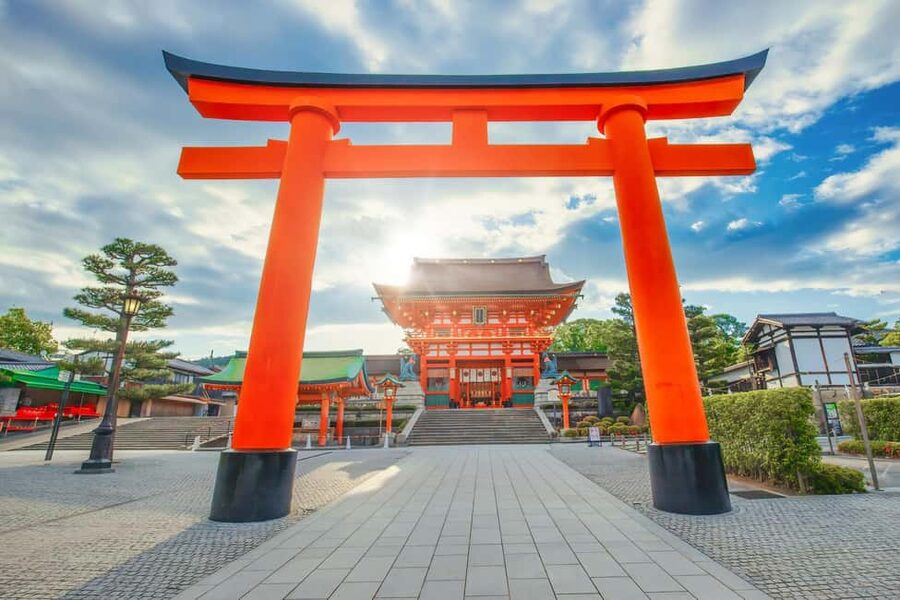
The final major stop begins around 15:20 and lasts about 80 to 90 minutes. Fushimi Inari Taisha is the head shrine of roughly 30,000 Inari shrines across Japan. Its history reaches back to 711, and the shrine is dedicated to Inari, a deity associated with rice, agriculture, and business.
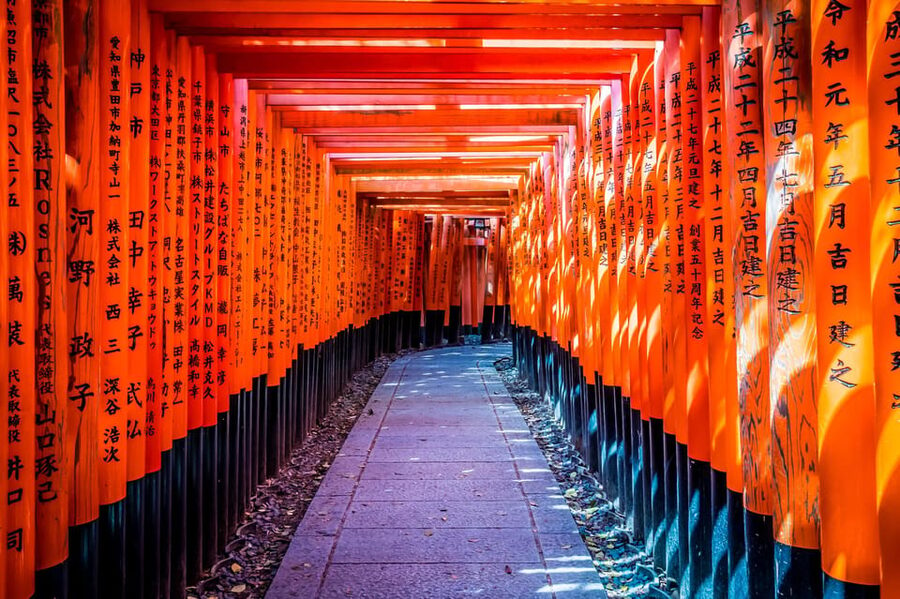
The famous torii gates begin near the main shrine buildings and continue up Mount Inari. Donated gates create the long red corridors that make this one of Kyoto’s most recognizable sights. The first section is the most accessible part of the visit, and it is where you can get the classic photographs without committing to a long uphill walk.
You will not complete the entire mountain circuit in the allotted time. The gates continue much farther than most first-time visitors expect, and the route becomes more physically demanding as it rises. Use the first part of the stop to see the lower shrine area and walk through a section of the torii. Then turn back with enough time to reach the coach.
The late-afternoon timing has one advantage: you can see the shrine after the day’s first two stops, when the light may be softer. The disadvantage is that you may feel rushed, especially after walking in Arashiyama and Nara. Wear shoes suited to uneven paths and stairs, and do not spend all your time at the first photo spot.
Fushimi Inari is a good closing stop because you can adjust the walk to your energy level. If you are tired, stay near the lower gates. If you still have energy, continue uphill until your return time requires you to head back.
More day trips over to Kyoto:
- Osaka/Kyoto: Hiroshima Miyajima Bus Tour & Shinkansen Ticket
★ 4.7 · 919 reviews - Osaka/Kyoto: Amanohashidate & Miyama Tour with Boat & Lunch
★ 4.6 · 207 reviews - Sagano Romantic Train & Arashiyama, Kiyomizudera, Fushimi Inari Taisha Day Tour
★ 4.5 · 171 reviews - Volleyball in Osaka, Kobe & Kyoto with locals!
★ 4.8 · 131 reviews
How the shared coach changes the day
The bus is the practical reason to consider this experience. You avoid arranging separate transport between Osaka, Kyoto, Arashiyama, Nara, and Fushimi Inari. Parking, fuel, tolls, and transport are included, so the $51 price covers more than admission-free sightseeing.
The bus is also the source of the main limitation. The route begins in Osaka, passes through Kyoto, travels to Arashiyama and Nara, returns toward Kyoto for Fushimi Inari, and then continues back to Kyoto or Osaka. That means road time can take a substantial part of the day.
If you already understand Japan’s rail system, you could potentially visit these places independently and set your own pace. Public transport may be quicker on a traffic-heavy day, and trains would let you stay longer at one sight. The tour makes more sense if you value a fixed route and do not want to manage transfers.
Traffic delays are possible, and the time at each stop can change with road conditions or the number of people in the group. Poor weather may also alter the schedule. In cases involving severe weather or a natural disaster, the day may be canceled.
What the guide service is really like
This is not a full lecture tour. The included service is a basic overview, with free time at each attraction. In a small group, the driver may also act as the guide, so commentary can be brief.
The tour is mainly conducted in Chinese. English and Korean staff may be available if requested at booking, while Japanese support is also listed, but language arrangements are not guaranteed. If you need detailed English explanations at each stop, confirm the language situation before paying.
The strongest guide experiences have come from staff members such as Levi and CC, who provided clear directions and practical help. HuaHua has also been singled out for good organization, while another traveler specifically praised a leader simply for doing the job well. These details suggest that the guide can make a real difference, but you should not book this expecting a guaranteed named guide or a fixed level of commentary.
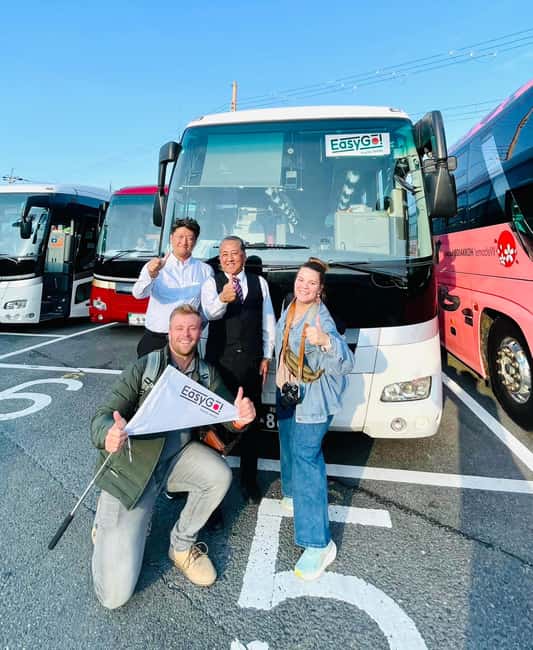
At the meeting point, look for staff wearing an EASY GO vest or holding an EASY GO flag. The guide does not necessarily contact you in advance, so you need to go directly to the stated location and check in yourself.
The strict meeting time matters
The most serious practical warning is the departure rule. One family arrived after the bus had left and was told to make their own way to the next stop, about an hour away. The precise timing in that incident appears to have been confused, but the lesson is clear: arrive early and confirm the departure time on site.
Do not rely on a last-minute message or assume the bus will wait. Osaka and Kyoto meeting points can be busy, and the coach may be shared with other international visitors. Build in extra time for finding the correct bus area, especially at Kyoto Station.
At each stop, ask exactly where the vehicle will be parked and how many minutes you have. This matters most at Nara Park and Fushimi Inari, where paths can lead you farther from the road than expected.
Is $51 good value for this route?
At $51, the tour can be good value if you want convenience. You are paying for a long-distance coach route, parking, tolls, fuel, and someone to keep the day moving. For a first visit with limited time, those practical benefits may outweigh the loss of independence.
The price is less compelling if you are comfortable using trains and buses. You may prefer to spend a full morning in Arashiyama, a longer afternoon in Nara, or several hours walking Mount Inari. This tour gives you highlights, not a slow look at each place.
Food is not included, and the schedule does not promise a long meal break. Carry money for meals and drinks at the stops, but remember that food cannot be eaten in the vehicle. Because you are moving between several areas, a quick meal is more realistic than a long restaurant sitting.
Free cancellation up to 24 hours before departure and the option to reserve now and pay later make the booking less rigid. The activity is also listed as wheelchair accessible, although the historic paths, bamboo trails, stairs, and mountain route may still require careful planning at each site.
Who should book this day trip?
I would recommend it to first-time visitors staying in Osaka or Kyoto who want a broad introduction to the region. It also suits families, small groups, and anyone who would rather pay for transport than work through several connections.
It is a good fit if your priority is seeing the deer, the bamboo forest, and the red torii gates in one day. The guides who have been praised, including Levi and CC, add useful direction when the day is running quickly.
I would hesitate if you want quiet time, detailed cultural explanations, or a flexible schedule. Independent visitors who already know the train system may find the coach route slow, especially if traffic builds between Osaka and Kyoto.
Should you book it?
Book this tour if breadth and convenience matter more to you than a relaxed pace. You will see three major sights, avoid most transport planning, and keep the total cost fairly modest for a full day.
Skip it if you want to hike all the way up Mount Inari, explore Nara’s temples in depth, or linger in Arashiyama. In that case, split the sights across separate days and use public transport.
For anyone who books, the best advice is plain: arrive early, confirm the language, wear comfortable shoes, save your meeting times, and return to the coach before the stated deadline. Those small habits will protect you from the tour’s main weakness, a busy schedule with little room for error.
FAQ
How long does the tour last?
The activity lasts about 10 hours. The listed schedule departs Osaka at 8:00, departs Kyoto at 9:20, returns to Kyoto around 17:00, and reaches Osaka around 18:00.
Where can I join the tour?
You can choose a meeting point in Kyoto at the sightseeing bus area by Kyoto Station’s Hachijo Exit, or in Osaka at 1-chōme-1-3 Dōtonbori. The exact meeting point depends on the option selected.
Which places are included?
The tour includes Arashiyama, Nara Park, and Fushimi Inari Taisha Shrine. Each stop is mainly self-guided free time.
How much time do I get at each attraction?
Arashiyama has about two hours. Nara Park is listed as 80 minutes in one schedule and about one hour 30 minutes in the updated timetable. Fushimi Inari has about 80 to 90 minutes.
What languages are available?
The tour is mainly conducted in Chinese. English, Japanese, and Korean support may be available upon request, but language service is not guaranteed and depends on the arrangements for that departure.
Are meals included?
No. Meals and beverages are not included, and food is not allowed inside the vehicle.
Can I cancel the booking?
You can cancel up to 24 hours in advance for a full refund. You can also reserve now and pay later, subject to the booking conditions.
More Temples and Shrines Worth the Walk
- Osaka: Minoh, Katsuoji Temple, & Minoh Falls Full-day Tour
★ 4.9 · 172 reviews - Full Day Kyoto Tour : Bamboo Forest, Golden Temple, Fushimi Inari
★ 5.0 · 84 reviews - Osaka Temple Cool Foot Bath & Matcha Experience〈45min〉
★ 4.9 · 82 reviews - Osaka: Mind & Spirit Balance Temple Reiki Healing
★ 5.0 · 41 reviews
Just added around Osaka
- Nara Day Trip from Osaka with a Licensed Guide★ 5.0 · 3 reviews
- Osaka Early Morning Osaka Castle Tour Avoid Crowds★ 5.0 · 3 reviews
- Guided Tour of Some Attractions in Osaka by Private Car★ 5.0 · 3 reviews
- Private Transfer Between Kyoto and Kansai Airport KIX★ 5.0 · 3 reviews
- Shared Arrival Transfer: Osaka Itami Airport to Osaka City★ 5.0 · 3 reviews
- Osaka: Sushi Making Class and Dotonbori Food Tour★ 4.7 · 3 reviews
- Osaka Night Photography Workshop★ 5.0 · 3 reviews
- Kyoto Full day Tour Kinkakuji, Kiyomizu-dera and Fushimi Inari★ 4.5 · 3 reviews
Kyoto Day Trips from Osaka, compared.

Osaka/Kyoto: Hiroshima Miyajima Bus Tour & Shinkansen Ticket
Read our review →
Ancient Capital Tour: Kyoto and Nara Highlights from Kyoto/Osaka
Read our review →
Osaka/Kyoto: Amanohashidate & Miyama Tour with Boat & Lunch
Read our review →

Sagano Romantic Train & Arashiyama, Kiyomizudera, Fushimi Inari Taisha Day Tour
Read our review →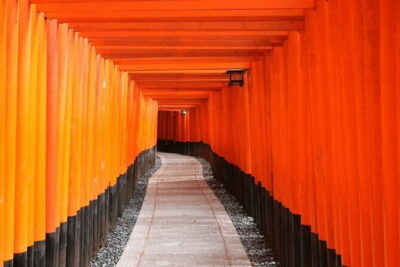
Full Day Tour of Kyoto with Private Transportation
Read our review →
Kyoto & Nara Private customized tour with English speaking Guide
Read our review →Full Day Kyoto Tour : Bamboo Forest, Golden Temple, Fushimi Inari
Read our review →Browse the lists this tour appears in