
Reviewed · RAMEN & GYOZA COOKING CLASSES
Osaka: Gluten-Free Ramen and Gyoza Cooking Class
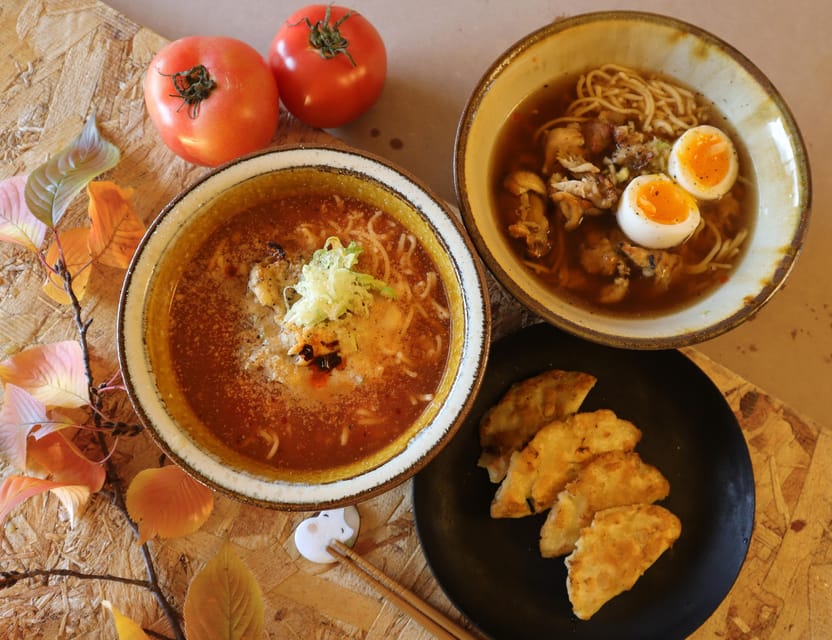
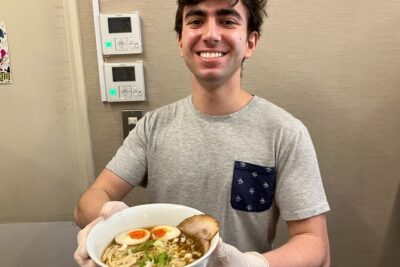
The clever part of this Osaka cooking class is that you make the dishes most visitors struggle to find gluten-free: chewy ramen noodles and crisp-bottomed gyoza. In Yuki’s Japanese-style home, you work with rice flour, prepare two ramen styles, fold dumplings, then sit down to eat what you made.
I like the small four-person limit, which gives Yuki room to correct your technique and answer questions. I also like that the recipes are practical enough to recreate at home, not just a one-off holiday show. The main consideration is the $103 price for three hours, plus your own transport to Nukata Station.
In This Review
- Key points to know before booking
- Why gluten-free ramen in Osaka takes planning
- Arriving at 4-19 Nukata-cho
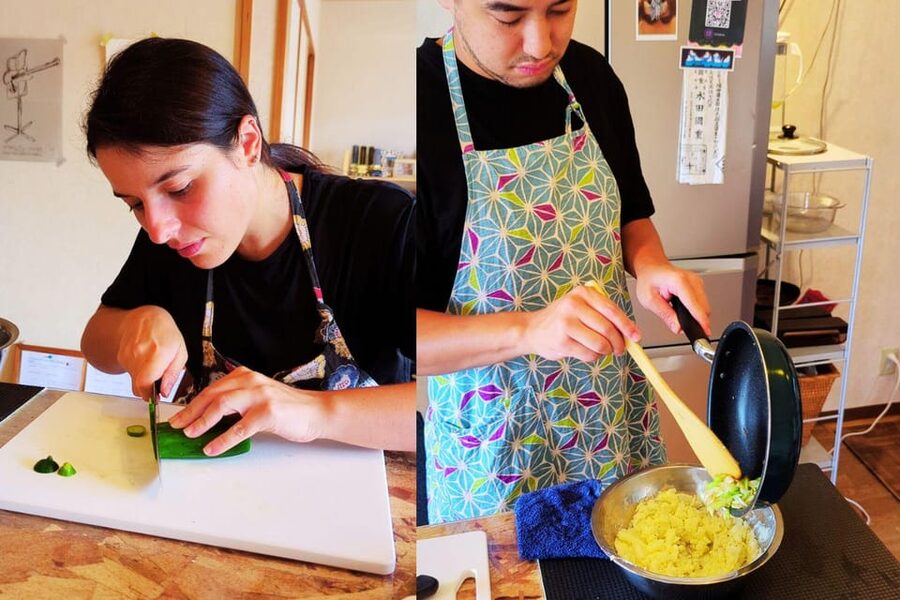
- Meeting Yuki and setting up the kitchen
- Making rice-flour ramen noodles
- Two bowls, two different ideas of ramen
- Rolling and folding gluten-free gyoza
- Sitting down to eat your own work
- Adding the three-sake pairing
- What the $103 price gets you
- Who will enjoy this class most
- Practical booking advice for Osaka
- Should you book Yuki’s Osaka ramen class?
- FAQ
- How long does the Osaka gluten-free ramen and gyoza class last?
- Where does the cooking class take place?
- Is the class taught in English?
- Do I need cooking experience?
- What food will I make?
- Is sake included?
Key points to know before booking
- Two ramen styles in one class: Prepare savory soy sauce ramen and a less common tomato ramen.
- Rice flour from start to finish: Make both the ramen noodles and gyoza wrappers without wheat.
- Yuki teaches personally: The English-language class is led by a chef with more than 10 years of professional experience.
- A true small-group lesson: No more than four people take part, making this a personal home-kitchen experience.
- You eat a full meal: Your homemade ramen and gyoza form the main reward at the end.
- Optional sake tasting: Add three 45-milliliter pours, including chilled Junmai, chilled Junmai Ginjo, and warm Junmai.
Why gluten-free ramen in Osaka takes planning
Osaka is a fine place to eat, but gluten-free visitors cannot assume that a bowl of ramen or a plate of gyoza is safe. Wheat appears in the noodles and wrappers, and soy sauce also needs careful attention. That makes this class useful beyond its three-hour schedule: you learn how these dishes are built and how to make them without the usual wheat-based ingredients.
You do not need cooking experience. The class is designed for beginners, but it also gives confident home cooks something worthwhile to practice. Working with rice flour is not simply a matter of swapping one flour for another. Texture matters, especially when you want noodles that feel pleasantly chewy rather than soft or brittle.
Yuki’s class focuses on that problem directly. You handle the dough, shape the noodles, and learn the steps that produce a better texture. The lesson also gives you recipes and tips to take home, so the value is not limited to the meal you eat in Osaka.
If you have a serious allergy or celiac disease, contact the provider before booking and explain your needs clearly. The class is presented as gluten-free, but individual dietary concerns deserve a direct check before you arrive.
More ramen and gyoza classes:
- Osaka: Five Must-See Highlights Walking Tour & Ramen Lunch
★ 4.7 · 411 reviews - Osaka: Ramen and Gyoza Cooking Class in Dotonbori
★ 5.0 · 378 reviews - Ramen and Gyoza Cooking Class in Osaka
★ 5.0 · 202 reviews
Arriving at 4-19 Nukata-cho
The cooking class takes place at 4-19 Nukata-cho in Osaka, about a five-minute walk from Nukata Station. This is a quiet residential setting rather than a restaurant or a large commercial cooking studio. Look for the welcoming sign at the entrance and use the detailed directions supplied after booking.
That residential setting shapes the experience. You are entering a working Japanese home, with a cozy dining area and a personal teaching style. It feels closer to being invited into someone’s kitchen than attending a formal culinary demonstration.
The location does require a little attention. Transportation is not included, and you need to make your own way to the venue. Allow enough time to find the address without rushing, especially if you are carrying luggage or navigating Osaka for the first time.
Wear comfortable clothes suitable for cooking. You will be handling dough, fillings, flour, and hot pans, so this is not the moment for your best holiday outfit. Come hungry, both for food and for instruction.
Meeting Yuki and setting up the kitchen
Yuki begins with a welcome and an introduction to the ingredients and tools. She teaches in English and Japanese, and her background includes more than a decade of professional culinary work, along with experience teaching international visitors.
The small group size matters here. With up to four participants, you can ask questions as the work progresses instead of waiting for a long demonstration to finish. If your dough feels wrong or your first dumpling folds badly, Yuki has the time to show you what to adjust.
The class is designed to move through several dishes without feeling like a race. Past participants have especially valued Yuki’s patience, clear explanations, and ability to work with different skill levels. That makes this a better choice for a first cooking lesson than a class where you simply copy a chef at a distance.
The setting also gives the lesson a social side. You cook together, talk with Yuki, and share a meal at the end. It is a good fit if you want an activity that combines food, conversation, and a little Japanese home culture.
Making rice-flour ramen noodles
The first major task is the ramen noodle dough. Instead of standard wheat flour, you use rice flour and learn how to form noodles with a chewy texture.
This is the part where the class earns its keep for gluten-free cooks. You are not just told that rice flour works. You take part in the process and see how the mixture behaves. Yuki explains the technique step by step, which helps you understand what to repeat when you try the recipe at home.
The work is hands-on and practical. You shape the noodles yourself, rather than watching a prepared batch appear at the right moment. That means your final noodles may not look perfectly uniform, but that is part of the lesson. You leave with a better feel for the dough and a recipe you can practice.
For people who already cook gluten-free food, this is still a useful skill. Ramen is one of those dishes that can be easy to miss in Japan, and learning to make a substitute from scratch gives you more control at home.
More Japanese home cooking classes:
- Osaka: Sumo Stage Show with Bento or Snack + Fight & Photo
★ 4.3 · 364 reviews - Osaka: Traditional Mochi Pounding Experience with Tasting
★ 4.9 · 306 reviews - Osaka Cooking Class: Okonomiyaki &Japanese cuisines experience
★ 5.0 · 261 reviews - Osaka Sake Tasting with Takoyaki Cooking
★ 5.0 · 156 reviews
Two bowls, two different ideas of ramen
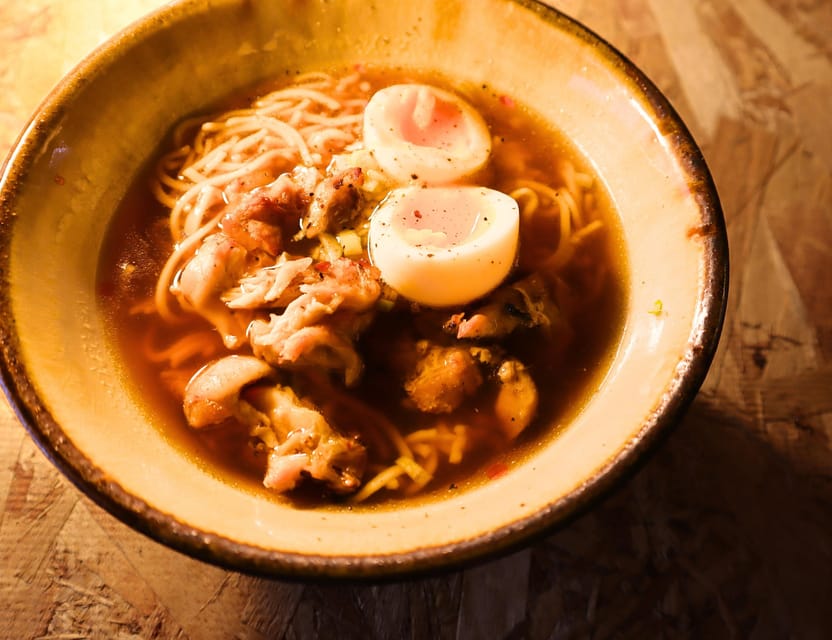
After the noodles, the class moves into two broths: soy sauce ramen and tomato ramen. The soy-based version is the familiar Japanese direction, with a savory broth that lets the handmade noodles take center stage.
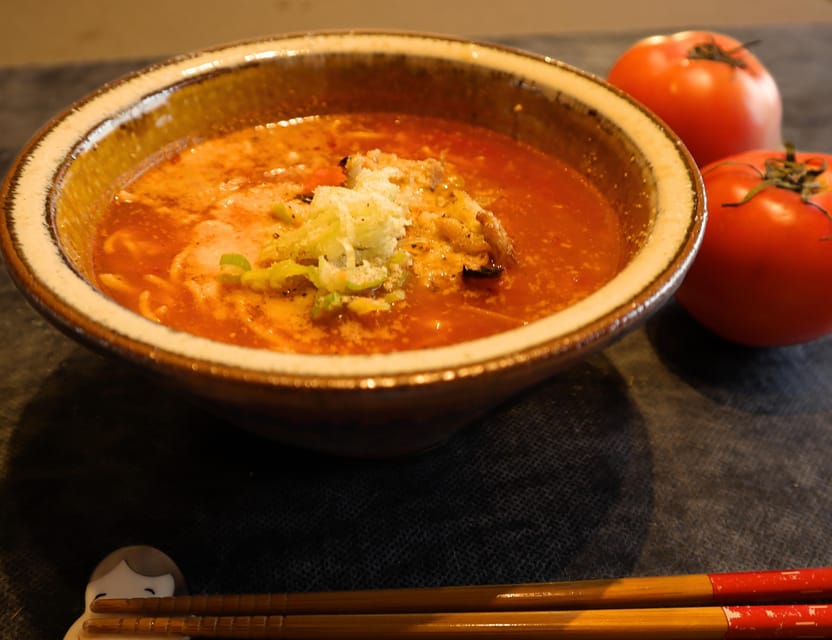
The tomato ramen brings a different mood. It is described as a modern variation that remains uncommon in Japan, with a tangy, refreshing character. Making both versions in one class helps you see how much the broth changes the final dish. The noodle-making technique stays central, but the flavor profile shifts from traditional and savory to brighter and more creative.
That contrast is one of the best parts of the schedule. You are not spending three hours repeating one recipe. You learn a classic style and then try a less expected interpretation of ramen.
The two bowls also give you useful ideas for cooking at home. A soy sauce broth may satisfy the craving for familiar Japanese flavors, while tomato ramen gives you another route when you want something lighter or different. Yuki explains the Japanese flavoring involved, so the lesson is not simply a list of ingredients.
Rolling and folding gluten-free gyoza
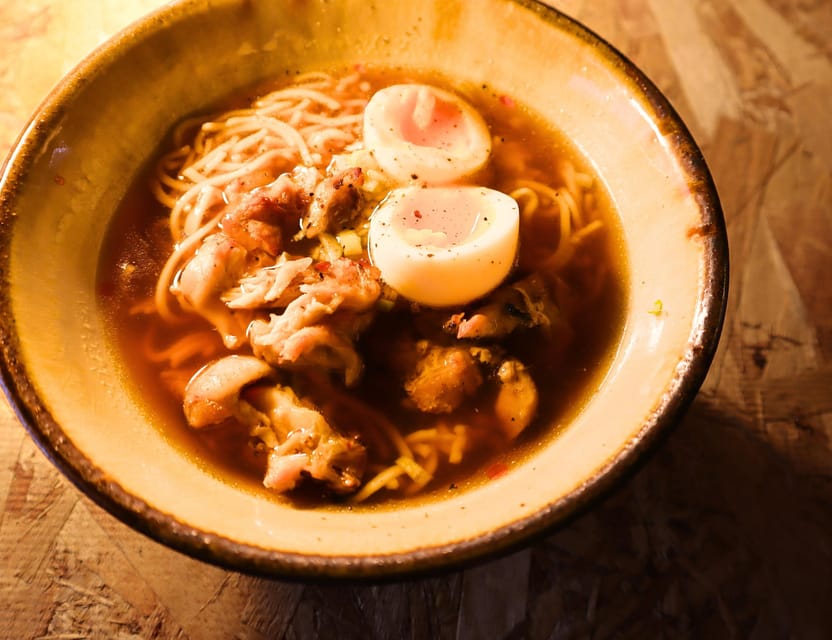
The gyoza section begins with wrappers made from rice flour. As with the ramen noodles, the point is to learn how to make a gluten-free version of a food normally associated with wheat.
You then prepare the savory filling and begin folding. Gyoza look simple until you try to make a neat, secure dumpling. Yuki shows you how to shape the wrappers, place the filling, and create the folds. Beginners should expect the first few to take practice.
The goal is not just appearance. A well-folded dumpling needs to hold its filling and cook evenly. The class gives you time to repeat the motion, so the technique becomes less mysterious by the end.
Cooking brings the final test. The gyoza are pan-fried until the bottoms turn crisp while the centers stay tender. That contrast is the key pleasure of good gyoza, and it is satisfying to produce it yourself rather than receive a finished plate from a kitchen.
This is also where the class becomes especially useful for families and couples. Folding dumplings is shared work, and the results arrive quickly enough to keep the energy up. You can compare your shapes, laugh at the early attempts, and improve as you go.
Sitting down to eat your own work
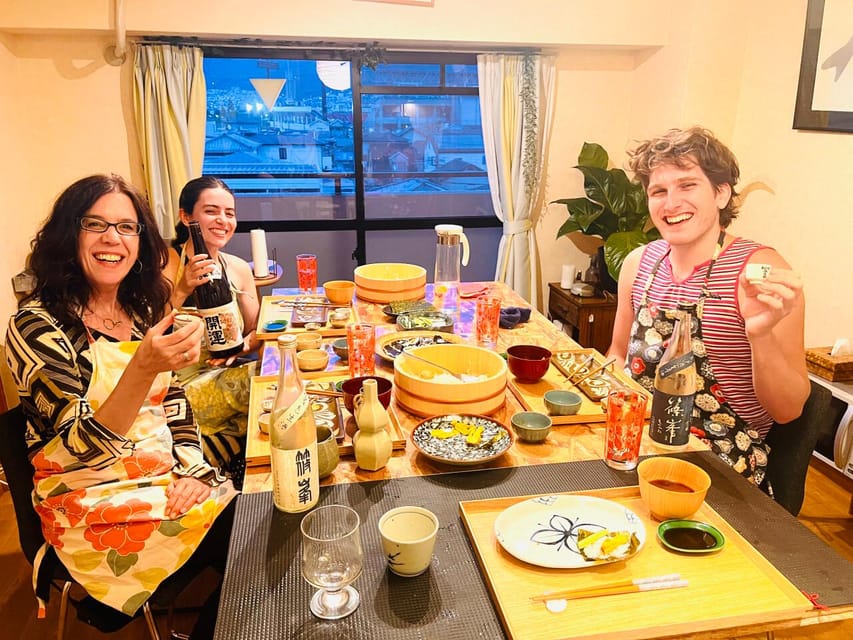
Once the cooking is finished, you gather in the dining area and eat the ramen and gyoza you prepared. The meal includes your handmade creations, not just a small taste offered alongside a demonstration.
That matters for the price. You are paying for instruction, ingredients, use of the kitchen, and a complete meal, not simply a bowl of noodles. You also receive recipes and tips, which extend the experience beyond the day itself.
The meal is the natural payoff after the work. You can taste the difference between the soy sauce and tomato ramen, check the texture of the noodles, and see how your gyoza folding affected the finished dumplings. Yuki guides the conversation around the flavors and Japanese dining culture.
The food is not the only reward. Cooking in a home setting lets you ask the kinds of questions that often do not fit into a restaurant meal. You can discuss techniques, traditional flavoring, and ways to make the recipes again once you return home.
Adding the three-sake pairing
You can add a sake pairing to the meal. It includes three 45-milliliter servings: chilled Junmai, chilled Junmai Ginjo, and warm Junmai.
The pours are small, which is sensible alongside a hands-on cooking class and a full meal. The tasting gives you a simple way to compare how temperature and sake style work with the ramen and gyoza. Yuki explains how the pairing fits the dishes rather than treating it as a separate drinking stop.
This option will appeal most if you are interested in Japanese food culture beyond the recipes. It is not necessary for the class, and anyone who does not drink can focus on the cooking and meal itself.
What the $103 price gets you
At $103 per person, this is not a cheap meal. Osaka offers less expensive bowls of ramen, and you could certainly buy gyoza for far less than the class fee.
But that comparison misses the point. Here, you spend three hours learning several techniques, make two ramen styles, prepare gyoza wrappers and filling, eat a full meal, and receive recipes for later use. The four-person cap also gives you more personal attention than a large group class.
I consider the price fair for a visitor who specifically needs gluten-free food or wants a serious hands-on activity. It is less compelling if you only want to eat ramen and have no interest in cooking.
The optional sake pairing adds a cultural touch, but the core class is the better value. Book it for the teaching and the recipes first, then add the sake if that fits your interests.
Who will enjoy this class most
This class is a strong match for gluten-free visitors who want more than a restaurant search. It also suits couples, friends, solo cooks, and anyone who likes returning from a trip with a skill rather than another souvenir.
Beginners should feel comfortable. Yuki’s teaching style is patient and clear, and no prior cooking experience is required. Experienced cooks may enjoy the challenge of working with rice flour and learning a less common tomato ramen variation.
The small group makes the class particularly appealing if you prefer calm instruction. You will not be one face in a crowded room, and the home setting gives the activity a personal feel.
It may not suit someone who dislikes cooking, wants a fast meal, or prefers a large social event. The class asks you to participate from the first stage of the dough through the final pan-frying, so you should arrive ready to work.
The stated age restriction excludes people over 95. Comfortable clothing is required, and transportation to the Nukata-cho address is your responsibility.
Practical booking advice for Osaka
The class lasts three hours, with starting times based on availability. Since it takes place in a small home kitchen, check the date carefully before making other plans.
The meeting point is a short walk from Nukata Station, but do not rely on finding the address by chance. Use the directions provided after booking and look for the sign at the entrance.
Free cancellation is available up to 24 hours before the start time for a full refund. You can also reserve and pay later, which helps if your Osaka plans are still shifting.
The experience has a perfect 5 rating from 42 reviews, with repeated praise for Yuki’s warmth, clear instruction, delicious food, and personal approach. The most useful takeaway is not the score itself. It is the consistent focus on patient teaching and recipes that people expect to recreate at home.
Should you book Yuki’s Osaka ramen class?
Book this class if gluten-free ramen and gyoza are high on your Osaka wish list, or if you want a personal cooking lesson in a Japanese home. The combination of two ramen styles, handmade noodles, rice-flour wrappers, crispy dumplings, and optional sake gives the three hours plenty of substance.
Skip it if you are looking only for the cheapest meal or if you would rather spend your Osaka time sightseeing than cooking. At $103, the value comes from learning and doing, not from the food alone.
For most gluten-free visitors, food-focused travelers, and curious beginners, I would book it. You leave with a full meal, new techniques, and a realistic chance of making the dishes again at home.
FAQ
How long does the Osaka gluten-free ramen and gyoza class last?
The class lasts three hours. Starting times vary, so check availability when booking.
Where does the cooking class take place?
It takes place at 4-19 Nukata-cho in Osaka, in Yuki’s Japanese-style home. The venue is about a five-minute walk from Nukata Station.
Is the class taught in English?
Yes. The instructor is Yuki, and the class is offered in English. Japanese is also used as part of the instructor’s communication.
Do I need cooking experience?
No. The class is suitable for beginners and includes step-by-step instruction. Comfortable clothing suitable for cooking is recommended.
What food will I make?
You will make gluten-free ramen noodles from rice flour, soy sauce ramen, tomato ramen, gyoza wrappers, gyoza filling, and pan-fried gyoza dumplings. You then eat your homemade dishes.
Is sake included?
Sake is an optional pairing rather than part of the core activity. The pairing includes three 45-milliliter servings: chilled Junmai, chilled Junmai Ginjo, and warm Junmai.
Just added around Osaka
- Nara Day Trip from Osaka with a Licensed Guide★ 5.0 · 3 reviews
- Osaka Early Morning Osaka Castle Tour Avoid Crowds★ 5.0 · 3 reviews
- Guided Tour of Some Attractions in Osaka by Private Car★ 5.0 · 3 reviews
- Private Transfer Between Kyoto and Kansai Airport KIX★ 5.0 · 3 reviews
- Shared Arrival Transfer: Osaka Itami Airport to Osaka City★ 5.0 · 3 reviews
- Osaka: Sushi Making Class and Dotonbori Food Tour★ 4.7 · 3 reviews
- Osaka Night Photography Workshop★ 5.0 · 3 reviews
- Kyoto Full day Tour Kinkakuji, Kiyomizu-dera and Fushimi Inari★ 4.5 · 3 reviews
Ramen & Gyoza Cooking Classes, compared.

Five Must-See Highlights Walking Tour & Ramen Lunch
Read our review →


Walking Tour of Osaka’s 5 Must-See Sights, with Ramen for Lunch
Read our review →
Cooking Ramen&Gyoza/KatsuCurry/Bento/Okonomiyaki+Store Tour@Osaka
Read our review →
Browse the lists this tour appears in