
Reviewed · OSAKA STREET FOOD TOURS
Osaka Food Quest: Self-Guided Culinary & History Adventure
Osaka Food Quest turns a walk through the city into a food-themed treasure hunt. You solve 10 phone-based puzzles while moving from Dotonbori and Ebisu Bridge to Kuromon Market, Hozenji Temple, the National Bunraku Theater, and Namba Yasaka Shrine. The clues tie local dishes to Osaka’s past and temple customs.
I like the freedom to pause for takoyaki or market snacks, and I like the way the route mixes famous sights with less obvious cultural stops. At $7.85 per person, it is an inexpensive way to add shape to a free afternoon.
The main catch is the technology. One person found the app slow and gave up, though the operator said the quest itself is only 2.5 MB and processed a refund. Bring a charged phone, a working data connection, and patience if the directions take a moment to load.
In This Review
- Key Points to Know Before You Start
- A Food Hunt Through Osaka’s Old Entertainment Quarter
- Ebisu Bridge and the Start in Dotonbori
- Takoyaki, Horumon, and Osaka’s Food Vocabulary
- Hozenji Temple and the Quiet Side of Namba
- Bunraku Theater and Osaka’s Traditional Stage
- Kuromon Market and the Best Place to Browse
- Namba Yasaka Shrine and the Route’s Final Stretch
- What the $7.85 Price Really Buys You
- Phone Setup, Timing, and Practical Concerns
- Who Will Enjoy This Osaka Quest Most
- Should You Book Osaka Food Quest?
- FAQ
- How much does Osaka Food Quest cost?
- How long does the quest take?
- Is there a physical tour guide?
- Where does the quest start?
- Where does the quest end?
- What places are included on the route?
- Are food and attraction tickets included?
- Can I pause the quest?
- What is the cancellation policy?
Key Points to Know Before You Start
- Ten puzzles connect food with place: Each challenge sends you to a new point and adds a short piece of Osaka’s culinary or cultural story.
- The route covers major Namba sights: You walk through Dotonbori, Kuromon Market, Hozenji, and the area around Namba Yasaka Shrine.
- Your group plays privately: There is no physical guide, and only your own party takes part.
- The listed time is about one hour: In practice, allow two or three hours if you want time for food, photos, and browsing.
- The low price is a real strength: At $7.85, the quest costs less than most guided food walks, but food purchases are extra.
- It works best for self-directed visitors: You set the pace, choose your snack stops, and can pause or resume as needed.
A Food Hunt Through Osaka’s Old Entertainment Quarter
Osaka has long been known as the Nation’s Kitchen, a nickname tied to its role as a major trading and commercial center. This quest uses food as your thread through the city, but it is not a tasting tour with reserved dishes or a guide leading you from counter to counter.
Instead, your phone gives you a series of puzzles. You look around each stop, find the answer, and move on. That simple structure makes the walk feel more purposeful than wandering without a plan, while still leaving room for your own choices.
The route begins at 1 Chome-6 Dotonbori, in one of Osaka’s most recognizable districts. It ends at 2-chōme-9-19 Motomachi, in the Naniwa area, near Namba Yasaka Shrine. The walk links tourist sights, food shops, a market, a temple, a theater, and a shrine.
The advertised playing time is approximately one hour. That is best understood as the puzzle-solving time rather than the full outing. One participant finished in about two hours while pressed for time and suggested allowing at least three hours if you want to explore properly. That advice makes sense. You will likely stop to eat, take photos, inspect shop displays, and spend a few quiet minutes at Hozenji Temple.
More street food walks and tastings:
- Osaka: Shinsekai Food Tour with 13-15 Dishes at 5 Eateries
★ 4.8 · 2,204 reviews - Osaka Food Tour: 13 Dishes at 5 Local Eateries
★ 5.0 · 2,149 reviews - Hungry Osaka Street Food Tour:15 Tastings & 3 Drinks with a Local
★ 5.0 · 1,727 reviews
Ebisu Bridge and the Start in Dotonbori
Ebisu Bridge is a smart starting point because it places you in the middle of Osaka’s famous food and shopping zone. The bridge connects the Shinsaibashi-suji and Ebisubashi-suji shopping streets, so you can expect plenty of movement, signs, storefronts, and visual details around you.
The bridge was originally built to provide access to nearby Ebisu Shrine. It is also linked to a famous baseball superstition involving the Hanshin Tigers. The story concerns a curse said to have affected the team after fans celebrated on the bridge. The quest uses this kind of local detail to make the first puzzle more than a simple directional exercise.
Here, you will search the area for the answer rather than listen to a guide explain it. That matters because the surroundings become part of the game. You must look closely at signs and landmarks, which can help you notice details you might otherwise pass without seeing.
The stop itself is listed as about five minutes, but you should not feel rushed. Dotonbori is one of the best places to grab a first snack, though the quest price does not include food. This is where Osaka specialties begin to tempt you, and it is worth deciding before you arrive if you want to eat as you go or save your appetite for Kuromon Market.
Takoyaki, Horumon, and Osaka’s Food Vocabulary
The next stops point you toward the food culture that gives this walk its character. At the Konamon Museum, you can learn about and make takoyaki, the round batter snacks filled with octopus that are closely associated with Osaka.
The museum is also a place where you can eat. The activity does not include a food tasting or a making session, so treat this as an optional stop rather than a promised part of your booking. Still, it is a useful place to connect the puzzle’s story with a dish you can actually try.
Takoyaki is often served hot, so take care if you buy some on the spot. The value of the quest is not that it feeds you for $7.85. Its value is that it tells you why the food matters and points you toward places where you can make your own choices.
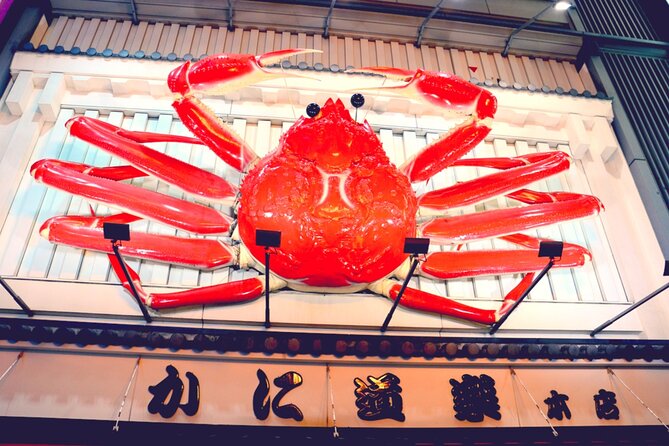
Another stop is Showa Taishu Horumon Dotonbori, a restaurant specializing in beef offal. This gives the route a broader view of Osaka cooking. The city’s food identity is not limited to the familiar dishes shown on tourist signs. Horumon introduces a more specific restaurant tradition, one that may appeal to adventurous eaters but may not suit everyone.
You do not need to eat at every food stop to complete the puzzles. That flexibility is useful for families, couples, and small groups with different appetites. One person can investigate the clue while another checks the menu or takes a break.
Hozenji Temple and the Quiet Side of Namba
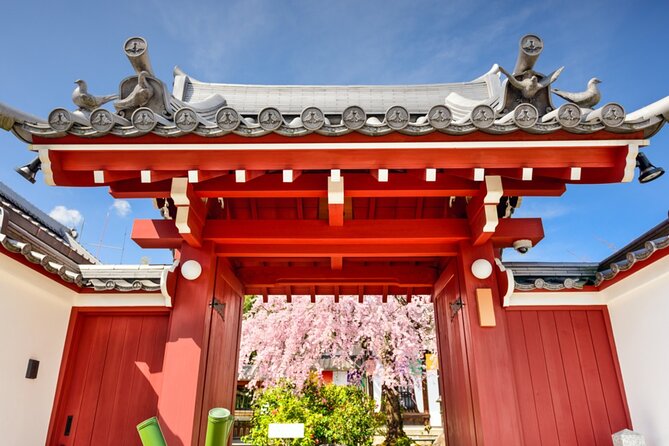
Hozenji Temple provides one of the route’s strongest changes of mood. After the bright signs and food stalls of Dotonbori, the temple offers a smaller, more reflective place to pause.
The temple was built in 1637 and honors Fudo Myoo, one of Buddhism’s five guardians. Its setting also links to the area’s entertainment past. During the 1600s, Namba and Dotonbori grew as centers for kabuki and bunraku performances. Food, theater, and religious life were not separate worlds here. They developed side by side in the same district.
That connection gives the quest more substance than a list of snack stops. You are seeing how Osaka’s eating culture grew within a wider social setting. The temple is not simply a photo stop between restaurants.
The puzzle asks you to look around and find an answer. Keep your voice low and be respectful, since this is an active religious site rather than a themed attraction. The quest may send you there for only a short challenge, but you can pause the game if you want more time.
I especially like this stop for visitors who want a break from Dotonbori’s noise. It shows that the same part of Namba can offer spectacle, food, theater, and quiet corners within a short walk.
A few more Osaka tours and experiences worth a look
- Osaka: Castle History Walking Tour / Castle Tower Admission
★ 4.9 · 230 reviews - Osaka: Osaka Castle & Historical Museum Guided Tour
★ 4.8 · 28 reviews - Osaka Castle & Samurai History Walking Tour
★ 5.0 · 22 reviews - Osaka: Kyoto & Nara & Uji Historical and Scenic One-Day Tour
★ 4.7 · 21 reviews
Bunraku Theater and Osaka’s Traditional Stage
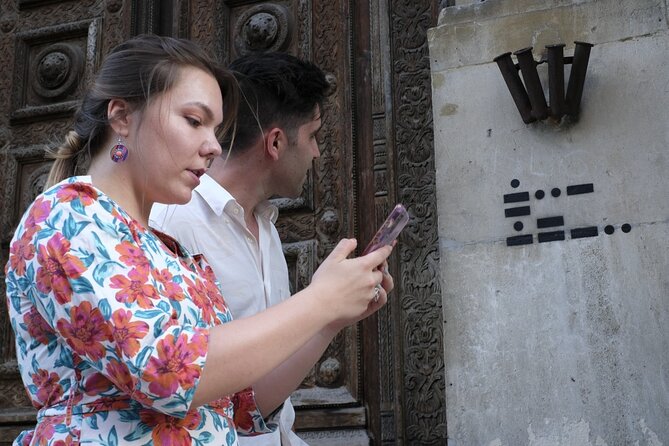
The National Bunraku Theater adds another cultural layer to the route. It opened in 1984 as the Kansai home of bunraku, Japan’s traditional puppet theater. Its main hall seats 753 people, while the small hall seats 159.
The main hall is used mainly for bunraku, along with traditional Japanese dance and other forms of drama. The quest does not include admission to a performance, so do not plan on attending a show as part of the $7.85 activity. Instead, you will use the theater as a location for a puzzle and a short piece of local context.
This stop makes sense beside Hozenji Temple. The two places help explain why Dotonbori and Namba became entertainment districts in the first place. Food is part of the story, but it was supported by theaters, shrines, markets, and public gathering places.
For you, the practical benefit is variety. If you spend the whole quest staring at restaurants, the walk can feel repetitive. The theater gives the route a cultural pause and helps you see Namba as more than a collection of neon signs.
Kuromon Market and the Best Place to Browse
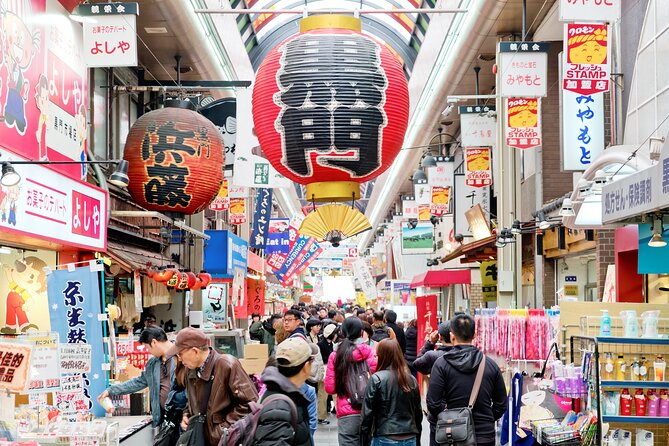
Kuromon Market is probably the most natural food stop on the route. Its name means black gate, a reference to the black gate of Enmyo Temple, which once stood in the area. The market began as a fish market around 1822 and was approved as an official market in 1902.
This background explains why Kuromon feels tied to Osaka’s food trade rather than simply being a modern shopping arcade. The market has long been associated with fresh ingredients and food sellers, making it a good place to connect the quest’s historical clues with what you see in front of you.
The listed stop time is about 10 minutes, but that is short if you plan to eat. You might find seafood, prepared snacks, and other market foods that catch your eye, but the supplied information does not promise particular vendors or dishes. Plan your spending separately, since all food is extra.
Kuromon is also a place where a self-guided format has a clear advantage. You do not have to keep up with a group while you browse. You can stop for a snack, resume the quest later, or take a longer look at a stall without holding anyone back.
The drawback is that markets can make phone-based clues harder to follow. Signs, people, and shop displays compete for your attention. Keep your phone secure, pause in a safe spot when reading instructions, and make sure you know the next destination before moving on.
Namba Yasaka Shrine and the Route’s Final Stretch
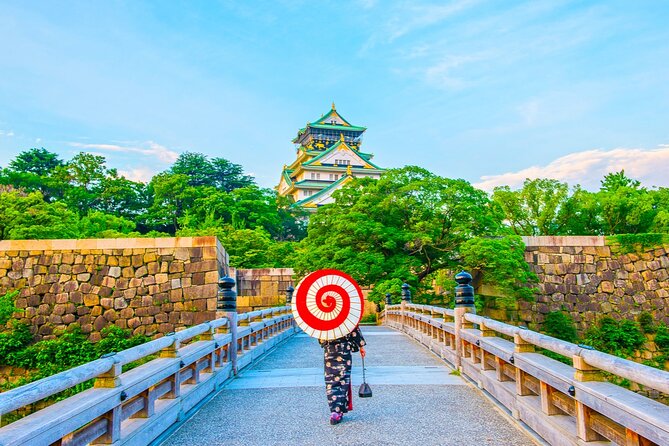
The route finishes at Namba Yasaka Shrine, which gives the quest a strong endpoint away from the busiest part of Dotonbori. The shrine is said to have been commissioned by Emperor Hanzei in honor of his father, Emperor Nintoku. Its original site was in what is now Kawachi Matsubara City.
The shrine was later moved to its current location after Toyotomi Hideyoshi began construction of Osaka Castle. That detail links the final stop to a major period of Osaka’s political and urban development.
The supplied route information does not specify the exact puzzle time at this stop, so allow a little flexibility. The endpoint is not just a place to finish the app. It gives you another chance to reflect on how Osaka changed as power, trade, entertainment, and food shaped the city.
Ending here also helps the walk feel like a cross-section of Osaka. You begin amid shopping streets and famous signs, pass through food businesses and a market, visit a temple and a theater, then finish at a historic shrine.
What the $7.85 Price Really Buys You
At $7.85 per person, this is a low-cost activity. You are paying for mobile access to the quest, 10 puzzles, and the written story connecting Osaka food with local history. You are not paying for a guide, transport, entrance tickets, or meals.
That makes it good value if you already plan to be in Dotonbori and Namba. The route adds structure to an area you may explore anyway, and the private format means you do not need to coordinate with strangers.
The price is less compelling if you expect a food tour. You will not receive included tastings, and the activity does not promise a reservation or a hands-on cooking class. Your final cost depends on how much you choose to buy along the way.
Group discounts may make the activity even more attractive for families or friends. Since only your own group participates, you can discuss answers together and set your own pace.
Phone Setup, Timing, and Practical Concerns
You receive a mobile access code at booking confirmation. The activity operates every day, with hours listed as midnight to 11:59 p.m., so you have wide control over when to begin.
You can pause and resume the quest. That is useful in Osaka, where a quick walk can easily turn into a meal, a shopping stop, or a photo session. It also means you can split the experience around other plans, though the total time depends on how long you stop.
The main technical concern is app performance. One participant reported that the app was too slow to follow and claimed it used 3 GB of data. The operator responded that the quest is only 2.5 MB and said the problem may have involved other apps using data at the same time. A refund was processed.
I would prepare before starting. Charge your phone, keep mobile data available, close unnecessary apps, and take a screenshot of the access details if possible. These simple steps reduce the chance of losing time while standing in a crowded street.
The activity is near public transportation, and most people can participate. Service animals are allowed. No physical guide is provided, so you are responsible for navigation and for deciding when to cross streets, stop eating, or continue.
Who Will Enjoy This Osaka Quest Most
This works best for food-minded visitors who like a bit of play. You will get more from the walk if you enjoy spotting details, solving clues, and learning short historical stories rather than receiving a long spoken explanation.
It is also a good fit for a couple or family that wants a private activity. The puzzles give children and adults a shared task, while the flexible timing prevents the group from feeling locked into a guide’s schedule.
Solo visitors can use it well, too. One person with only a day in Osaka can follow a ready-made path through several major areas without committing to a fixed tour time. The route has enough food and culture to make a short visit feel organized.
You may want a different activity if you need a polished, human-led food experience. There is no guide to explain a menu, translate at a restaurant, answer follow-up questions, or adjust the route in real time. This is a game-led walk, not a traditional culinary tour.
Should You Book Osaka Food Quest?
Book it if you want a cheap, flexible way to explore Dotonbori and Namba while adding food history to your walk. The strongest reasons are the private format, the 10 puzzles, the pause-and-resume option, and the route’s mix of takoyaki, horumon, Kuromon Market, Hozenji Temple, bunraku, and shrine culture.
Allow two or three hours if you want to eat and look around. Think of the one-hour estimate as the basic puzzle route, not the time needed for a relaxed outing.
Skip it if you want included tastings, a personal guide, or guaranteed smooth app performance. For everyone else, $7.85 is a modest price for a playful introduction to Osaka’s food streets and cultural landmarks. Just bring a charged phone, keep your expectations clear, and leave room in your budget for the dishes that catch your eye.
FAQ
How much does Osaka Food Quest cost?
The price is $7.85 per person. Group discounts are available.
How long does the quest take?
The listed duration is approximately one hour. In practice, allow two or three hours if you want time for food, browsing, photos, and longer stops.
Is there a physical tour guide?
No. The experience is self-guided and uses a mobile access code with 10 puzzles.
Where does the quest start?
It starts at 1 Chome-6 Dotonbori, Chuo Ward, Osaka, 542-0071, Japan.
Where does the quest end?
It ends at 2-chōme-9-19 Motomachi, Naniwa Ward, Osaka, 556-0016, Japan.
What places are included on the route?
The route includes Ebisu Bridge, the Konamon Museum, Showa Taishu Horumon Dotonbori, Hozenji Temple, the National Bunraku Theater, Kuromon Market, and Namba Yasaka Shrine.
Are food and attraction tickets included?
No. The price includes mobile access, the 10 puzzles, and the food and history storyline. Food purchases and admission tickets are not included.
Can I pause the quest?
Yes. You can pause and resume the activity whenever you like.
What is the cancellation policy?
You can cancel for a full refund up to 24 hours before the experience start time. Cancellations or changes made less than 24 hours before the start time are not refunded or accepted.
More Self-Guided Tours in Osaka
- Osaka Castle & Temple Walking Tour with Multilingual Audio Guide
★ 5.0 · 5 reviews
Just added around Osaka
- Nara Day Trip from Osaka with a Licensed Guide★ 5.0 · 3 reviews
- Osaka Early Morning Osaka Castle Tour Avoid Crowds★ 5.0 · 3 reviews
- Guided Tour of Some Attractions in Osaka by Private Car★ 5.0 · 3 reviews
- Private Transfer Between Kyoto and Kansai Airport KIX★ 5.0 · 3 reviews
- Shared Arrival Transfer: Osaka Itami Airport to Osaka City★ 5.0 · 3 reviews
- Osaka: Sushi Making Class and Dotonbori Food Tour★ 4.7 · 3 reviews
- Osaka Night Photography Workshop★ 5.0 · 3 reviews
- Kyoto Full day Tour Kinkakuji, Kiyomizu-dera and Fushimi Inari★ 4.5 · 3 reviews
Osaka Street Food Tours, compared.
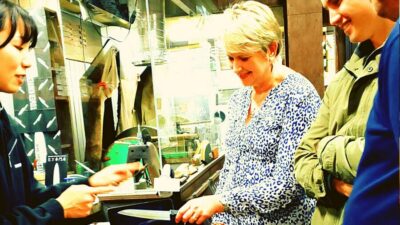
Shinsekai Food Tour with 13-15 Dishes at 5 Eateries
Read our review →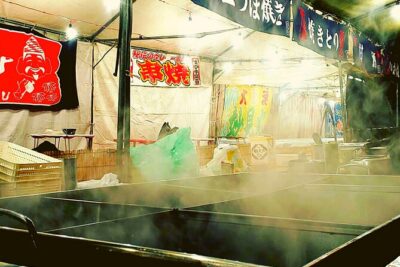
Osaka Food Tour: 13 Dishes at 5 Local Eateries
Read our review →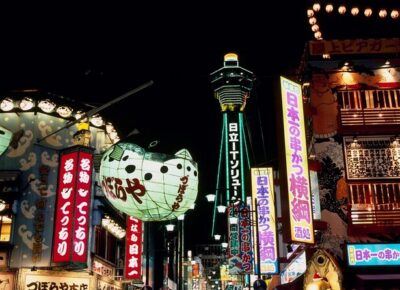
Hungry Osaka Street Food Tour:15 Tastings & 3 Drinks with a Local
Read our review →
Osaka Local Foodie Walking Tour in Dotonbori and Shinsekai
Read our review →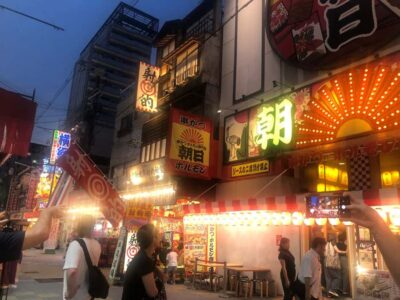
Hungry Osaka Street Food Tour: 15 Dishes & 3 Drinks
Read our review →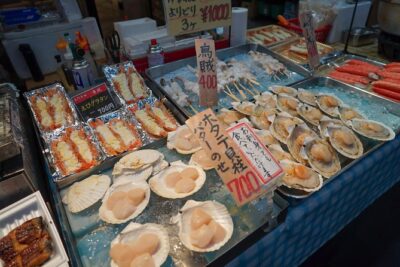
Kuromon Market Food Walking Tour in Osaka (6 stops, 6 tastes)
Read our review →
Guided Food Tour with 12 Dishes at 4 Local Eateries
Read our review →
Browse the lists this tour appears in