
Reviewed · OSAKA STREET FOOD TOURS
Absolute Osaka Food Tour
Osaka’s food culture makes the most sense on foot, with a small plate in one hand and a guide pointing out the story behind the neon in the other. This three-hour evening tour moves from the Glico sign through Dotonbori, side streets, market lanes, and old entertainment districts, with four food stops along the way.
I like the way the tour mixes familiar Osaka foods such as takoyaki and kushikatsu with less obvious places, including Hozenji Yokocho and a quiet shrine. I also like the small-group limit of 10 people, which makes it easier to ask questions and follow a guide such as Asli, Melissa, or Marie. The main caution is price: at $231 per person, you are paying for guidance and access, not simply dinner.
In This Review
- Key points at a glance
- Why this Osaka food walk works
- Meeting the Glico runner at 5 p.m.
- Dotonbori without following the queues
- Hozenji Yokocho and a quieter Osaka
- Kuromon Market and Doguyasuji
- The Misono Building and Osaka’s after-dark character
- What is included in the food stops
- Guide quality and group size
- Is $231 a fair price?
- Timing, weather, and cancellation
- Who should book the Absolute Osaka Food Tour?
- FAQ
- How long does the Absolute Osaka Food Tour last?
- What time does the tour start?
- Where does the tour begin?
- Where does the tour end?
- What food and drinks are included?
- Are vegetarian options available?
- Is the tour suitable for gluten-free diners?
- Can I cancel for a refund?
Key points at a glance
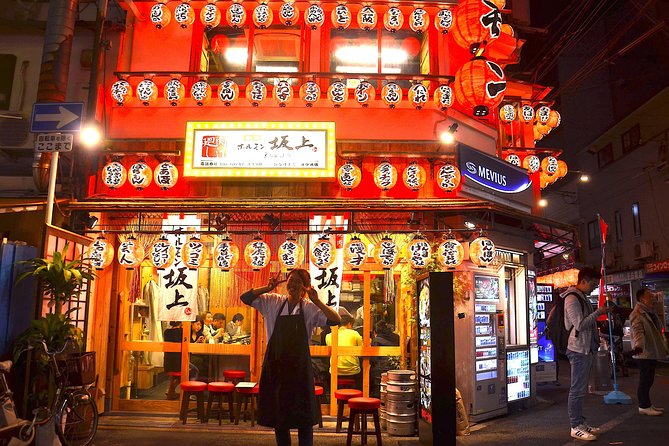
- Four food stops in three hours: Try Osaka specialties, one included drink, and a traditional Japanese dessert.
- A useful first evening in Osaka: The 5 p.m. start brings you into Dotonbori as the signs begin to glow.
- More than neon: The route includes Hozenji Yokocho, Kuromon Market, Doguyasuji, and the Misono Building.
- Small groups help: The maximum of 10 people suits solo visitors and makes conversation with the guide easier.
- Good for mixed food interests: Vegetarian and pescetarian options are possible, but gluten-free diners should think twice.
- The cost needs consideration: $231 is a premium price for a three-hour walk, so the cultural context and food guidance must matter to you.
Why this Osaka food walk works
Osaka is often called Japan’s culinary capital, but that label can lead you toward giant signs, long queues, and restaurants aimed mainly at first-time visitors. The value of this tour is that it tries to move you a few steps away from the obvious choices while keeping the famous sights in view.
You begin in the Minami area, the wider district around Namba and Dotonbori. This is Osaka’s main eating and entertainment zone, similar in role to Shibuya in Tokyo. It can feel loud and crowded, but the energy is part of the point. The guide helps you read the place instead of simply photographing it.
The format is straightforward: four food stops, one drink, and a traditional Japanese dessert, all wrapped into about three hours. You will not be left to order a full meal at each restaurant. Instead, you sample different local dishes and learn how they fit into Osaka’s food traditions.
That approach suits you if you want a broad first taste rather than one long dinner. It also helps if you are unsure what to order on your own. A guide can explain unfamiliar ingredients, suggest alternatives, and steer you past restaurants with tourist queues.
More street food walks and tastings:
- Osaka: Shinsekai Food Tour with 13-15 Dishes at 5 Eateries
★ 4.8 · 2,204 reviews - Osaka Food Tour: 13 Dishes at 5 Local Eateries
★ 5.0 · 2,149 reviews - Hungry Osaka Street Food Tour:15 Tastings & 3 Drinks with a Local
★ 5.0 · 1,727 reviews
Meeting the Glico runner at 5 p.m.
The tour starts at 5 p.m. near the Dotonbori Glico sign. This is an easy landmark to recognize, though the surrounding streets are busy and full of bright signs, so allow extra time to reach the meeting point.
The sign shows an athlete crossing a finish line with his arms raised. The story behind it adds a useful local detail: the image was inspired by Fortunato Catalon, a Filipino sprinter whose success encouraged people and helped shape the identity of the Glico company.
You only spend about five minutes here, so this is not a long photo stop. That is sensible. Dotonbori has much more to offer than one famous sign, and the tour quickly shifts from sightseeing to food and local stories.
Starting at 5 p.m. is also practical. You get some daylight for the early part of the walk, then see Dotonbori change as the evening lights come on. Wear comfortable shoes, since the route involves walking through busy streets and shopping arcades.
Dotonbori without following the queues
Dotonbori is easy to enjoy and easy to misunderstand. The signs are enormous, the restaurant fronts are theatrical, and the food photos can make every dish look like the city’s one essential meal. It is fun, but you can also spend too much time in lines for places chosen mainly because they are famous online.
The guide’s role here is important. Instead of treating the district as a checklist, the tour points you toward smaller streets and less obvious places. You still get the neon and the famous atmosphere, but the focus is on finding food with a local connection.
Takoyaki is one of the key foods to expect. These hot octopus-filled batter balls are closely tied to Osaka’s street-food identity. They are usually served very hot, so take care with the first bite. The point of trying them on a guided tour is not only flavor. You also get a better sense of how a simple snack became such a strong symbol of the city.
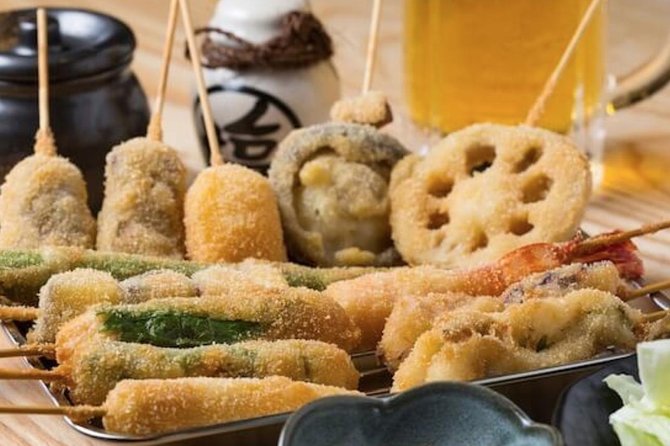
Kushikatsu is another major stop or theme. These skewers are coated and fried, and they are associated with Osaka’s casual eating culture. The contrast between takoyaki and kushikatsu gives you two different textures and cooking styles in a short time.
The exact food lineup can change with the season and restaurant availability. Public holidays, weather, restaurant schedules, and other unexpected changes can also alter the route. That flexibility is worth accepting, since it allows the guide to keep the evening moving rather than forcing a fixed plan.
Hozenji Yokocho and a quieter Osaka
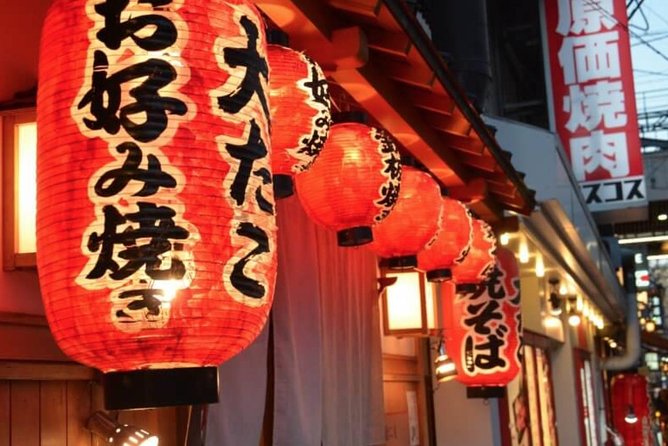
Hozenji Yokocho offers a welcome change from Dotonbori’s bright signs. Its narrow lanes have a more traditional feel, and the nearby Hozenji temple area gives the tour a cultural pause between food stops.
The tour also includes a visit to a secret or lesser-seen shrine away from the main crowds. The supplied details do not identify the shrine by name, so you should not expect a formal temple tour with a long historical lecture. Think of it as a short stop that shows you a quieter side of Minami.
I like this part of the route because it keeps the food from becoming a series of unrelated bites. Osaka’s eating districts developed alongside temples, theaters, markets, and shopping streets. A short walk through an older lane helps explain why the modern restaurant signs sit where they do.
There is a practical tradeoff. Hozenji Yokocho and similar lanes can be tight, and Dotonbori remains busy nearby. If you have limited mobility or dislike crowded walking routes, the tour’s stated requirement for moderate physical fitness matters.
A completely different way to spend a day in Osaka:
- Osaka Go Karting Tour with Funny Costume
★ 5.0 · 2,658 reviews - Osaka Castle: Museum and Tower Entry Ticket
★ 4.5 · 2,380 reviews - Osaka: Tea Ceremony Experience
★ 4.9 · 1,426 reviews - Osaka Kickstart: Hotspots & Hidden Gems Tour
★ 5.0 · 1,306 reviews
Kuromon Market and Doguyasuji

Kuromon Market is one of Osaka’s best-known food areas, with stalls and shops selling ingredients and prepared foods. The tour’s visit gives you a chance to see the market as part of the city’s food system rather than only as a place for quick snacks.
Market conditions change. Some stalls may be open while others are closed, and the guide may adjust the stop depending on timing. You should treat Kuromon as a chance to understand Osaka’s food trade and local shopping culture, not as a promise of a specific stall or dish.
Sennichimae Doguyasuji Shotengai adds another useful layer. This shopping arcade is associated with restaurant supplies and kitchen goods. It helps explain Osaka’s strong connection to professional cooking, from knives and pans to the visual tools that make Japanese restaurants so recognizable.
These stops are especially useful for first-time visitors. You see that Osaka’s food identity is not limited to famous dishes. It also includes markets, restaurant equipment, neighborhood suppliers, and the everyday businesses that support the city’s dining culture.
The Misono Building and Osaka’s after-dark character
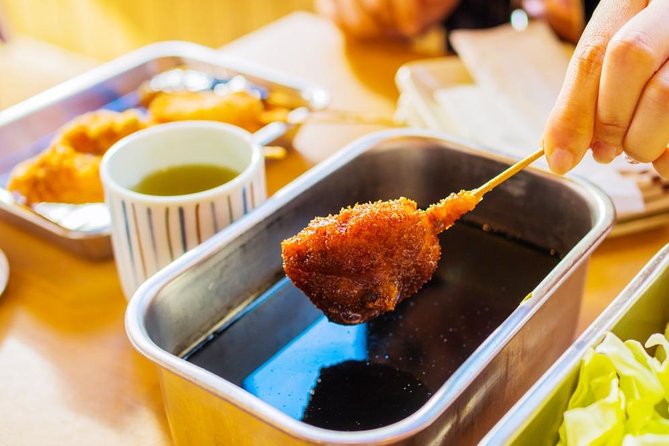
The Misono Building appears later in the route, along with the Sennichimae area where the tour ends. This part of Osaka has an older entertainment-district character and gives the evening a different mood from the polished main streets.
You may find the building and surrounding streets more atmospheric than tidy. That is part of their appeal, but it also means the experience is not designed as a neat, postcard-perfect walk. If you prefer polished attractions and clear historical displays, this tour may feel loose. If you like seeing the edges of a city’s nightlife districts, it should be more rewarding.
The route ends in Sennichimae rather than returning you to the starting point. That is useful if you want to continue eating or exploring Namba afterward. You will need to arrange your own way back, and transportation costs are not included.
What is included in the food stops
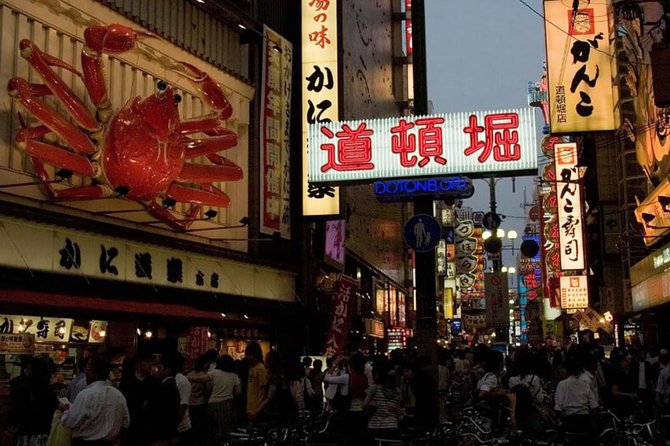
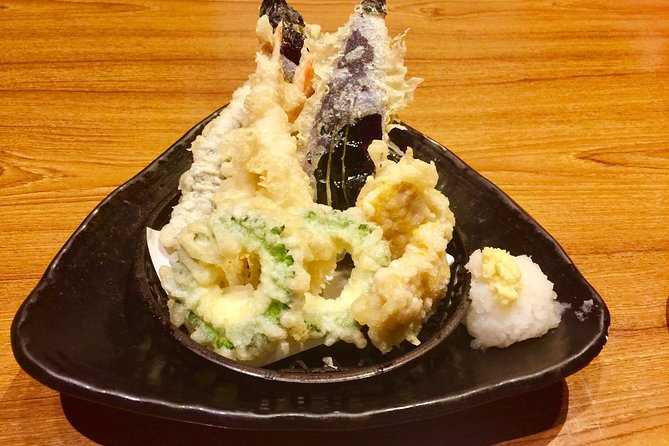
Four food stops are included, along with one drink and a traditional Japanese dessert. The best way to think about this is a guided tasting menu spread across the neighborhood, not an unlimited food crawl.
The included dishes are meant to cover Osaka staples and local flavors. Takoyaki and kushikatsu are specifically highlighted, while the remaining food depends on season and availability. That uncertainty is normal for a market-based food tour, but it means you should not book expecting a fixed restaurant menu.
Additional food and drinks cost extra. Come hungry, but not so hungry that you rush through the first dishes. Three hours is enough time to sample several foods, hear explanations, and walk between stops, though it is not a full evening of sit-down dining.
Vegetarian and pescetarian diners can be accommodated. One especially useful detail is that vegetarian alternatives have been found at each stop for at least one mixed-diet group. Still, you should state your needs when booking, since substitutions depend on the restaurants.
This tour is not recommended for gluten-free diners. Japanese sauces, batter, breading, and shared preparation areas can make strict gluten avoidance difficult. If gluten is a medical concern, choose an experience designed for that need instead.
Guide quality and group size
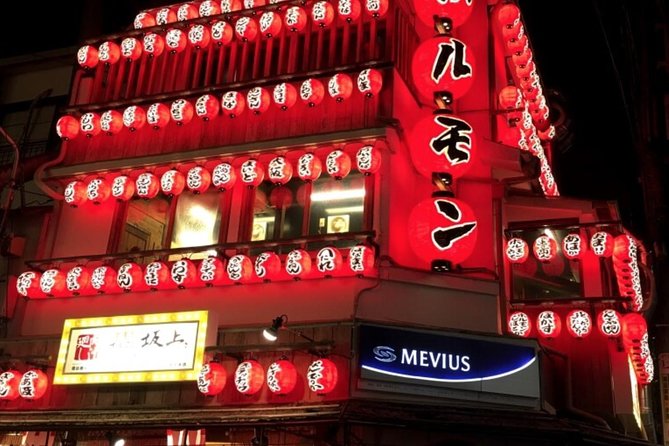
The English-speaking guide is central to the experience. Guides named in the supplied feedback include Asli, Melissa, and Marie, and the strongest praise focuses on guides who do more than lead people from restaurant to restaurant.
A good guide here explains Osaka history, translates the food culture, and helps you try dishes you might skip when eating alone. Melissa, for example, was able to find vegetarian choices while also adding historical context. Asli was praised for leading a group through four different restaurants around Dotonbori, while Marie helped coordinate a smooth experience for a group.
Guide assignments can change, so do not book on the assumption that one particular person will lead your date. The important feature is the local English-speaking host and the small-group format.
With a maximum of 10 people, the group is compact enough for questions and conversation. It also accepts solo participants, which is useful if you are in Osaka alone and want a social evening without committing to a large bus tour.
Children must be accompanied by an adult. Children aged 10 and above require a copy of passport information, according to the tour conditions. The experience is described as family-friendly, but the 5 p.m. timing, crowded streets, and food temperature may still be worth considering for younger children.
Is $231 a fair price?
At $231 per person, this is expensive for a three-hour food walk in Osaka. The food alone is unlikely to justify that figure if your main goal is simply to eat takoyaki, kushikatsu, and dessert.
The price makes more sense if you place a high value on personal guidance and a carefully organized route. You are paying for four stops, an included drink, dessert, cultural explanations, restaurant coordination, and the chance to avoid spending your evening guessing where to go.
I would compare it with the cost of a self-guided night. You can certainly eat in Dotonbori for far less, but you may spend time in queues, choose restaurants at random, and miss the quieter lanes and shrine stop. The tour is most defensible early in your Osaka stay, when the guide can give you ideas for the rest of your visit.
It is less compelling for an experienced Japan visitor who already knows Osaka’s food districts and is comfortable ordering alone. In that case, put the $231 toward several independent meals instead.
Timing, weather, and cancellation
The tour starts at 5 p.m. and lasts about three hours. Hotel pickup is not included, though it can be arranged for an extra charge. Public transportation is nearby, but you pay your own transportation costs.
A mobile ticket is provided, and confirmation arrives when you book. Same-day booking is available, but the tour is often reserved well ahead, with the average booking made 38 days before the date. If this is important to your schedule, booking early is sensible.
The experience requires good weather. If poor weather cancels it, you can receive a different date or a full refund. The same applies if the minimum number of participants is not reached.
You can cancel for a full refund up to 24 hours before the start time. Cancellations or changes inside that window are not accepted for a refund, so check the local Osaka time before making changes.
Who should book the Absolute Osaka Food Tour?
I would recommend this tour to first-time Osaka visitors who want an organized introduction to Minami, especially solo visitors, couples, and small groups with different levels of food confidence. It is also a good fit if you want someone to explain local customs and help you try dishes you might otherwise avoid.
Vegetarians and pescetarians can consider it, provided they communicate their needs in advance. Families can book too, but adults should be ready for walking, crowds, and a fairly late start.
I would skip it if you need a strict gluten-free diet, dislike busy nightlife districts, or judge a food tour mainly by the quantity of food. I would also think carefully about the price if you already know Dotonbori and Kuromon Market.
Book it for the guidance, neighborhood context, and access to a broad sample of Osaka food culture. Skip it if you only want a cheap meal. The strongest reason to choose this experience is the balance between famous dishes and less obvious streets, with a guide helping you make sense of both.
FAQ
How long does the Absolute Osaka Food Tour last?
The tour lasts approximately three hours.
What time does the tour start?
The tour starts at 5 p.m.
Where does the tour begin?
The meeting point is at Japan, 542-0071 Osaka, Chuo Ward, Dotonbori, 1-chome 8-19, near the Dotonbori Glico sign area.
Where does the tour end?
The tour ends in the Sennichimae area of Osaka.
What food and drinks are included?
The tour includes local dishes at four food stops, one drink, and a traditional Japanese dessert.
Are vegetarian options available?
The tour is vegetarian and pescetarian friendly. Food can change based on season and availability, so share your dietary needs when booking.
Is the tour suitable for gluten-free diners?
The tour is not recommended for gluten-free diners.
Can I cancel for a refund?
You can cancel up to 24 hours before the experience start time for a full refund. Poor weather or failure to meet the minimum number of participants may also lead to a different date or a full refund.
Just added around Osaka
- Nara Day Trip from Osaka with a Licensed Guide★ 5.0 · 3 reviews
- Osaka Early Morning Osaka Castle Tour Avoid Crowds★ 5.0 · 3 reviews
- Guided Tour of Some Attractions in Osaka by Private Car★ 5.0 · 3 reviews
- Private Transfer Between Kyoto and Kansai Airport KIX★ 5.0 · 3 reviews
- Shared Arrival Transfer: Osaka Itami Airport to Osaka City★ 5.0 · 3 reviews
- Osaka: Sushi Making Class and Dotonbori Food Tour★ 4.7 · 3 reviews
- Osaka Night Photography Workshop★ 5.0 · 3 reviews
- Kyoto Full day Tour Kinkakuji, Kiyomizu-dera and Fushimi Inari★ 4.5 · 3 reviews
Osaka Street Food Tours, compared.

Shinsekai Food Tour with 13-15 Dishes at 5 Eateries
Read our review →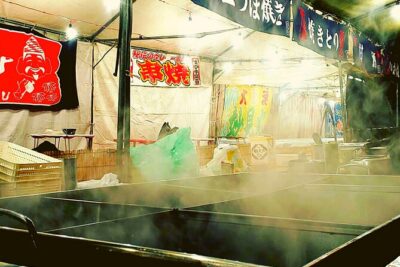
Osaka Food Tour: 13 Dishes at 5 Local Eateries
Read our review →
Hungry Osaka Street Food Tour:15 Tastings & 3 Drinks with a Local
Read our review →
Osaka Local Foodie Walking Tour in Dotonbori and Shinsekai
Read our review →
Hungry Osaka Street Food Tour: 15 Dishes & 3 Drinks
Read our review →
Kuromon Market Food Walking Tour in Osaka (6 stops, 6 tastes)
Read our review →
Guided Food Tour with 12 Dishes at 4 Local Eateries
Read our review →
Kuromon Market Food Walking Tour (6 stops, 6 tastes)
Read our review →Browse the lists this tour appears in