
Reviewed · OSAKA CASTLE TOURS
Osaka: Castle History Walking Tour / Castle Tower Admission
Osaka Castle was built to make an attacking army lose time, direction, and nerve. This 90-minute walk explains the castle’s triple moats, zigzag routes, and trap-like gates before taking you up the tower for a broad view of Osaka. I like that the tour treats the castle as a working military machine, not just a pretty reconstruction. I also like the practical separate entrance, which can save you from a long ticket queue.
The strongest guides, including Mao, Saya, Spike, Yuta, Ken, and Kaz, bring the story to life with clear English and plenty of room for questions. My one caution is that this is a history-focused walk, with enough stonework, battle strategy, and dates to test anyone who only wants quick photos. You will also explore the museum floors on your own rather than receive a guided explanation of every display.
In This Review
- Key things to know before you book
- Why Osaka Castle makes more sense as a fortress
- Moats, masugata gates, and the art of slowing an army
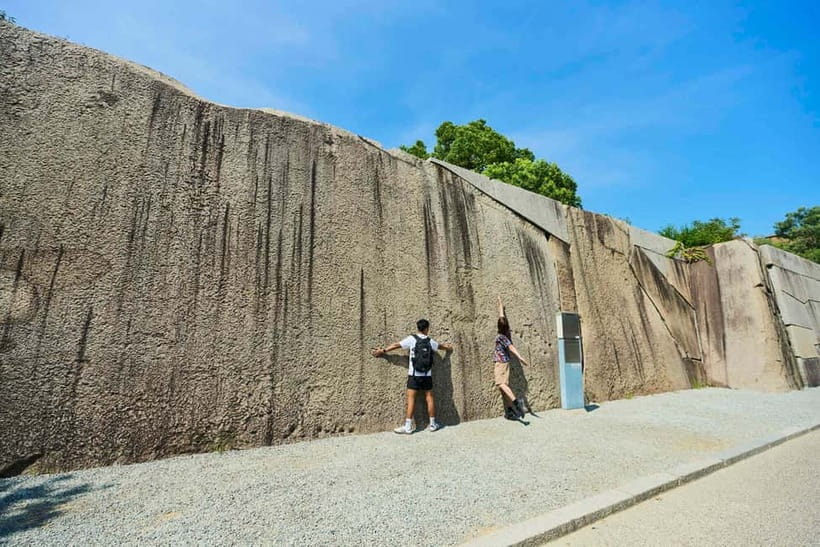
- The largest stone and the marks left by craftsmen
- Hokoku Shrine and the Toyotomi connection
- Inside the tower, from command post to last defense
- How an invincible fortress fell
- What the guides do best
- Is $33 good value for Osaka Castle?
- Practical details for a smooth visit
- Should you book the Osaka Castle walking tour?
- FAQ
- How long does the Osaka Castle tour last?
- What is included in the price?
- Is the castle museum guided?
- Is skip-the-line entry included?
- Where is the meeting point?
- What language is the tour offered in?
- What should I bring?
- Can I cancel the booking?
Key things to know before you book
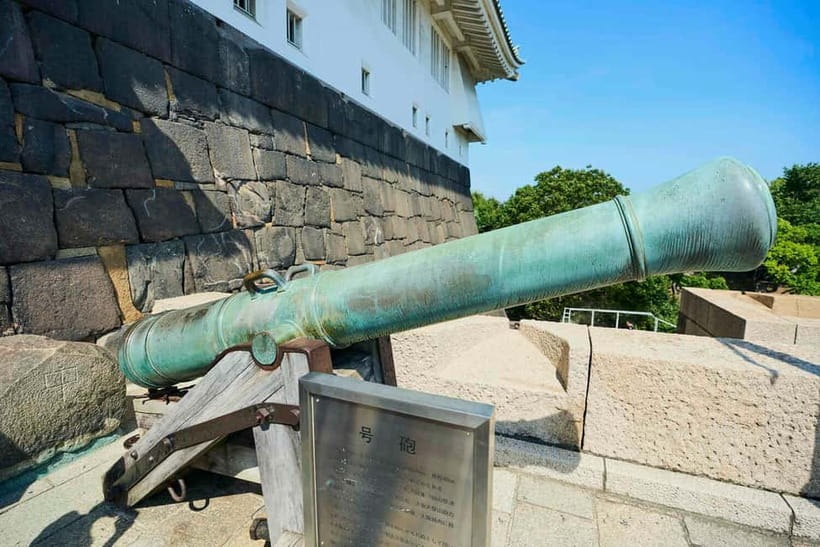
- The castle walls were part of the weapon: Angled stonework, tall walls, moats, gates, and gun ports worked together to slow and expose attackers.
- The largest stone has its own story: You learn how enormous blocks were moved in the 16th century and how craftsmen marked their work.
- The route is more useful than a simple tower visit: Your guide points out details you could easily miss when walking alone.
- The tower view rewards the climb: The upper level gives you a city view after the ground-level military explanation.
- An early start can help: The 9 a.m. departure has been especially useful for avoiding longer lines that build later in the morning.
- Hokoku Shrine adds a political layer: The visit connects the castle with Toyotomi Hideyoshi and the struggle that ended in 1614 and 1615.
Why Osaka Castle makes more sense as a fortress

Osaka Castle is easy to admire from a distance. Its white tower, green roof details, and gold decoration make it one of Osaka’s familiar sights. But the outside appearance tells only part of the story. The real interest is in how the castle was designed to control movement.
Your guide begins near Lawson S Otemae Rest House Store and leads you through the castle grounds toward the main tower. There are several Lawson shops in the area, so check the supplied Google Maps location carefully. Look for the Local Guide Stars sign at the meeting point.
The walk focuses on defense in layers. An attacker did not simply reach a wall and climb it. First came the moats. Then came gates, turns, narrow approaches, and walls arranged to divide a large force into smaller groups. Every delay gave defenders more time to fire.
I like this approach because it changes how you look at the grounds. A wall stops being a background for a selfie and becomes part of a plan. A turn in the path is no longer random. It was meant to make an enemy slow down, lose formation, or walk into a position covered by defenders.
The tour is conducted in English by a live guide. The guide roster includes people such as Saya, Mao, Spike, Yuta, Ken, Kaz, Yu, Soy, Ami, and others. The individual style may vary, but the repeated strengths are clear: friendly delivery, strong command of the castle’s story, good English communication, and patience with questions.
More tours of Osaka Castle and its grounds:
- Osaka Castle: Museum and Tower Entry Ticket
★ 4.5 · 2,380 reviews - Osaka Castle Walking Tour and Castle Tower Admission
★ 5.0 · 561 reviews - 5-Hour Osaka Bike Tour to the Neighborhood of Osaka Castle
★ 5.0 · 319 reviews
Moats, masugata gates, and the art of slowing an army
The outer moats are among the best parts of the walk because they make the scale of the defenses easier to grasp. You see how water, stone, and distance created separate barriers around the central stronghold.
The guide explains the triple-moat arrangement and the layered gates. A key feature is the masugata entrance, a squared or bent entry space designed to trap attackers between gates. An invading force could be forced into a confined area, then attacked from above and from the sides.
That design is much easier to understand while standing beside it than by reading a short museum caption. Your guide can point out the direction an enemy would have approached and show why the route was not a straight march to the tower.
Expect plenty of walking over historical ground. Comfortable shoes matter, and weather-appropriate clothing is a good idea because the tour moves through open areas. The route is not described as a strenuous hike, but the tower visit and castle grounds require you to stay on your feet.
The walk also uses the castle’s zigzagging routes to explain military thinking. Each bend forced attackers to expose themselves again. Defenders could fire from protected positions while the invading force struggled to keep moving.
This is where the experience suits people interested in military strategy and architecture. If you enjoy asking why a wall is angled a certain way or why a gate does not line up with the next one, you will get plenty from the route. If you mainly want interior art and museum objects, the tower visit may feel more self-directed than expected.
The largest stone and the marks left by craftsmen
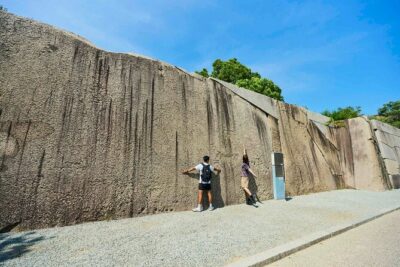
One of the tour’s most memorable stops is the castle’s largest stone. The point is not only its size. You also learn about the practical problem of moving huge blocks in the 16th century, long before modern lifting equipment.
The guide uses the stone to make construction feel physical. Someone had to cut it, move it, position it, and fit it into a defensive wall. The explanation of period transport methods gives you a better sense of the labor behind the castle than a quick look at the polished tower can provide.
You may also see marks hidden in the stonework. These symbols are linked to the master craftsmen or groups responsible for particular sections. They are easy to miss without someone directing your attention to them, and they add a human detail to a structure usually presented as the work of famous rulers.
I particularly like this stop because it connects grand political history with ordinary skill. Hideyoshi and Ieyasu dominate the larger story, but the fortress also depended on masons who knew how to shape and place stone with accuracy.
Your guide will also discuss the angles of the walls. Smooth, sloping surfaces made climbing difficult, while the arrangement of large stones created a strong defensive face. The result was not simply a tall barrier. It was a barrier designed to deny handholds and keep attackers exposed.
Hokoku Shrine and the Toyotomi connection
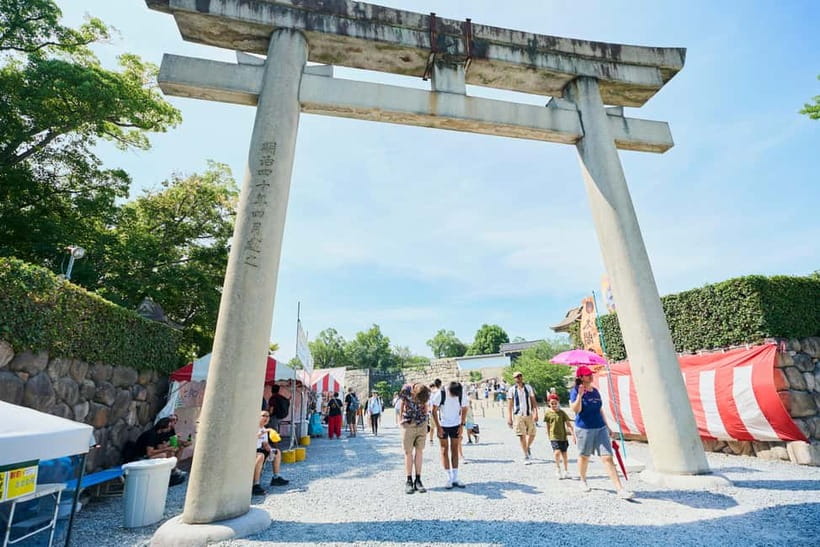
The tour includes a guided visit to Hokoku Shrine. This stop helps connect the physical castle with Toyotomi Hideyoshi, the leader whose legacy shaped Osaka’s identity and the castle’s original purpose.
The shrine adds a change of pace after the walls, moats, and gates. It also gives your guide a place to explain the political meaning of the castle and the fierce rivalry between the Toyotomi side and Tokugawa Ieyasu.
One useful detail is that the shrine can occasionally be active in ways that add a cultural layer to the visit. A tour group once encountered a traditional Japanese wedding ceremony there. Such an event is not guaranteed, but the shrine is a functioning cultural site rather than just another empty photo stop.
The guide does not treat the shrine as an isolated attraction. Instead, it helps frame Osaka Castle as part of a larger struggle for power. That context matters because the castle’s story did not end when construction finished.
More attraction tickets and viewing decks:
- Osaka: Umeda Sky Building Official E-Ticket
★ 4.6 · 1,131 reviews - Osaka: Expo 2025 Admission Ticket
★ 3.6 · 251 reviews - Osaka: Abeno Harukas 300 Observatory E-Ticket
★ 4.2 · 169 reviews - Osaka: Tsutenkaku Tower Entry Ticket
★ 3.8 · 125 reviews
Inside the tower, from command post to last defense
The tower admission is included in the $33 price, and the tour uses a separate entrance to help you bypass the regular ticket line. This is one of the clearest practical benefits of booking a guide, especially on a busy morning.
The timing can matter. One visitor who chose the 9 a.m. departure found that lines were much longer by around 11 a.m., including the wait for the castle elevator. An early start also left time for the food stalls to open after the visit. I would choose an early slot if your schedule allows it, though the separate entrance does not mean every part of the tower will be empty.
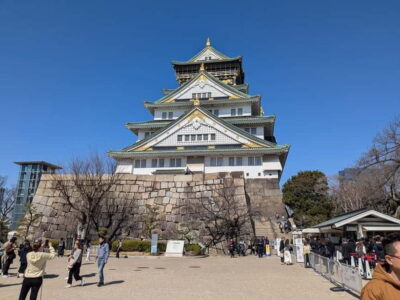
The guide brings you to the castle tower and explains its role as a command post and final defensive position. Look for arrow slits and gun ports, details that make the building’s military purpose clearer. The tower was also designed to project power. Gold decoration was not only decorative. It helped signal wealth, authority, and confidence to anyone approaching.
The city view from the top is the visual payoff. After studying walls at ground level, you can look out across Osaka and understand why a high command position mattered. You also get time to take photographs and continue exploring on your own.
The important limitation is that the guide does not lead you through every floor of the castle museum. You receive the tower admission ticket, but the interior museum displays are self-guided. If you want to read every panel or spend time with each exhibit, plan extra time after the 90-minute experience.
That arrangement works well for many people. The guide handles the confusing military story and the route to the tower, then you can set your own pace inside. It is less ideal if you want a floor-by-floor museum lecture.
How an invincible fortress fell
The final historical lesson is also the most dramatic. Osaka Castle was built to appear extremely difficult to conquer, yet it fell during the campaigns of 1614 and 1615.
The guide explains how the rivalry between Toyotomi Hideyoshi’s heirs and Tokugawa Ieyasu’s ambition brought the fortress into war. The castle’s defenses were formidable, but military strength does not exist apart from politics, leadership, alliances, and changing strategy.
This ending gives the tour a useful balance. You learn why the castle was so hard to attack, then you learn why strong walls alone could not guarantee survival. The story is about engineering, but also about power and timing.
The castle’s present tower is a reconstruction, so the visit is not a walk through an untouched 16th-century building. The value is in reading the surviving grounds, walls, gates, and stonework while using the modern tower and museum to explain the past. A good guide makes that distinction clear without taking away from the experience.
What the guides do best
The human side of this experience is one of its biggest strengths. Guides such as Saya, Mao, Spike, Yuta, Ken, Yu, Kaz, and Ami are repeatedly praised for being warm, clear, and willing to answer questions.
That matters at Osaka Castle because the site is large and the visual information can feel scattered. A guide gives you a route and a story. You do not waste your visit wondering which wall, gate, or stone deserves your attention.
Several guides have also been praised for adjusting their pace. One guide made sure an older guest was comfortable and safe. Another adapted the walk for a family member dealing with a recent injury. That suggests a considerate approach, though you should still tell the guide about mobility concerns at the start.
Families can fit well here too. A guide once kept even a three-year-old engaged for the full experience, while another group found that teenage children enjoyed the stops and stories. The military theme gives children something concrete to follow: traps, walls, weapons, and secret marks.
Private-feeling departures can happen if few people book a particular time, but you should not count on having the guide to yourself. The regular promise is a professional English-speaking guide, not a private tour.
Is $33 good value for Osaka Castle?
At $33 per person, the price is higher than simply buying a standard castle admission and walking around alone. The value comes from the explanation, route planning, and separate entrance rather than from the ticket alone.
I think the price is fair if Osaka Castle is important to you and you want to understand what you are seeing. The guide points out details you might walk past, explains the defensive layout in a logical order, and connects the castle to the Toyotomi and Tokugawa conflict.
The value is also stronger if your Osaka schedule is tight. In 90 minutes, you get the main grounds, key military features, Hokoku Shrine, tower admission, and the city view. You do not need to prepare the history yourself or work out the best sequence of stops.
It is a weaker deal if you prefer to wander slowly, read every museum panel, or spend a long time taking photographs. The tower museum is not guided floor by floor, and the tour has a planned pace. You can stay afterward to explore, but that requires extra time beyond the stated experience.
Practical details for a smooth visit
Meet in front of Lawson S Otemae Rest House Store. This is important because several Lawson shops serve the surrounding area. Use the provided Google Maps point, then look for the Local Guide Stars sign.
Wear comfortable shoes. The route passes through moats, gates, walls, shrine grounds, and the castle area, with the tower visit included. Bring clothing suited to the weather because much of the experience takes place outdoors.
The activity is offered in English and lasts 90 minutes. Starting times vary, so check availability when you book. Cancellation is free up to 24 hours before the start time, and you can reserve now and pay later, which helps if your Osaka plans are still shifting.
The tour is best for people who want a guided introduction rather than an unstructured visit. It can suit families, solo visitors, couples, and small groups, especially if you enjoy architecture, military history, or Japanese political history.
Should you book the Osaka Castle walking tour?
I would book this tour if you want Osaka Castle to make sense. The strongest reason is not simply the skip-the-line entry. It is the way the guide turns moats, gates, wall angles, giant stones, and gun ports into parts of one carefully planned fortress.
Choose an early departure if possible, especially if you want to reduce the chance of longer lines later in the morning. Plan to spend extra time inside the museum after the guided portion if you like exhibits and photographs.
Skip it if you only want a quick tower visit and prefer to explore every floor alone. For everyone else, the $33 fee buys useful context, a more efficient route, and a better understanding of why Osaka Castle was feared, admired, and eventually defeated.
FAQ
How long does the Osaka Castle tour last?
The activity lasts 90 minutes, including the guided walk through the castle grounds, the Hokoku Shrine visit, and admission to the castle tower.
What is included in the price?
The $33 price includes Osaka Castle Tower admission and a professional English-speaking guide.
Is the castle museum guided?
No. The guide explains the castle and leads you to the tower, but the individual museum floors are not guided. You can explore those displays on your own.
Is skip-the-line entry included?
Yes. The experience includes access through a separate entrance intended to help you avoid the regular ticket line.
Where is the meeting point?
Meet in front of Lawson S Otemae Rest House Store. There are multiple Lawson shops nearby, so confirm the exact location with Google Maps and look for the Local Guide Stars sign.
What language is the tour offered in?
The tour is conducted in English by a live guide.
What should I bring?
Bring comfortable shoes and clothing suitable for the weather. The experience includes walking through outdoor historical areas.
Can I cancel the booking?
Yes. You can cancel up to 24 hours in advance for a full refund. Reserve now and pay later is also available.
More Historical Tours in Osaka
- Osaka: Osaka Castle & Historical Museum Guided Tour
★ 4.8 · 28 reviews - Osaka Castle & Samurai History Walking Tour
★ 5.0 · 22 reviews - Osaka: Kyoto & Nara & Uji Historical and Scenic One-Day Tour
★ 4.7 · 21 reviews - (Ticket Included) Explore Osaka Castle & Museum of History
★ 4.8 · 21 reviews
More Guided Walks on Foot
- Deep Backstreet Osaka Tours (Option to add Dinner)
★ 5.0 · 1,290 reviews - Osaka Local Foodie Walking Tour in Dotonbori and Shinsekai
★ 5.0 · 985 reviews - Osaka: Deep Backstreets Walking Tour with Dinner Option
★ 4.9 · 902 reviews - Ultimate Osaka Walking Tour: Castle, Dotonbori & Hidden Gems
★ 5.0 · 862 reviews
Just added around Osaka
- Nara Day Trip from Osaka with a Licensed Guide★ 5.0 · 3 reviews
- Osaka Early Morning Osaka Castle Tour Avoid Crowds★ 5.0 · 3 reviews
- Guided Tour of Some Attractions in Osaka by Private Car★ 5.0 · 3 reviews
- Shared Arrival Transfer: Osaka Itami Airport to Osaka City★ 5.0 · 3 reviews
- Private Transfer Between Kyoto and Kansai Airport KIX★ 5.0 · 3 reviews
- Osaka: Sushi Making Class and Dotonbori Food Tour★ 4.7 · 3 reviews
- Osaka Night Photography Workshop★ 5.0 · 3 reviews
- Kyoto Full day Tour Kinkakuji, Kiyomizu-dera and Fushimi Inari★ 4.5 · 3 reviews
Osaka Castle Tours, compared.
Osaka Castle Walking Tour and Castle Tower Admission
Read our review →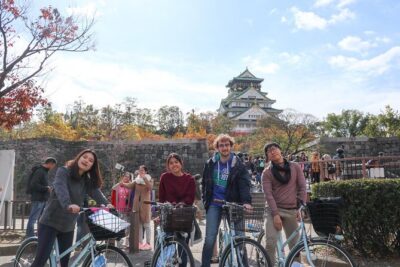
5-Hour Osaka Bike Tour to the Neighborhood of Osaka Castle
Read our review →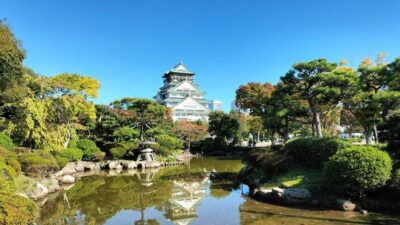

PRIVATE 6hr, Food tour from Osaka Castle, Kuromon, Dotonbori.
Read our review →
A Tour to Explore the Symbol of Osaka: Osaka Castle
Read our review →
Learning Zen of Japanese Calligraphy in kimono near Osaka Castle
Read our review →Browse the lists this tour appears in