
Reviewed · DOTONBORI & NAMBA TOURS
Osaka Dotonbori: Vegan/Vegetarian Sushi Making Experience
Osaka’s Dotonbori is famous for eating, but this 90-minute sushi class lets you do more than sit at a restaurant table. You season the rice, shape each piece, add vegetable toppings, and then eat what you made with Japanese sake. Instructors such as Yumiko, Makoto, Mayo, and Cann keep the lesson friendly and easy to follow.
I like the class for two clear reasons: vegan and halal options make it useful for mixed-diet groups, and the sushi cosplay gives the activity a playful Japanese touch. The main thing to consider is the price, $45 per person, which is fair for a guided food activity but more than a simple meal in Osaka.
In This Review
- Key points
- Why a sushi class works so well in Dotonbori
- Step one: seasoning the shari
- Step two: shaping rice for 12 pieces
- Step three: adding vegetable toppings and wasabi
- Step four: forming the finished sushi
- Eating your sushi with Japanese sake
- Sushi cosplay and the photo session
- What the $45 price really buys you
- Who should book this Dotonbori activity
- Timing, language, and booking details
- The main strengths and the small cautions
- Should you book the sushi class?
- FAQ
- Where does the sushi making experience take place?
- How long does the class last?
- How much does it cost?
- How many pieces of sushi will I make?
- Is the sushi vegan?
- Is halal sushi available?
- Is the class taught in English?
- Is Japanese sake included?
- What else is included besides the ingredients?
- Can I cancel the booking?
Key points
- Make 12 pieces yourself: You season the sushi rice, form it, add toppings, and shape each piece by hand.
- Vegetarian, vegan, and halal-friendly: All vegetable ingredients are included, with vegan and halal sushi available.
- English instruction: The staff explain sushi, ingredients, and technique step by step.
- Sake and cosplay included: Enjoy Japanese sake with your sushi, then put on sushi-themed costumes for photos.
- A certificate to take home: Each participant receives a sushi master certificate.
- Easy planning: The class lasts 90 minutes, is wheelchair accessible, and allows free cancellation up to 24 hours before the start.
Why a sushi class works so well in Dotonbori
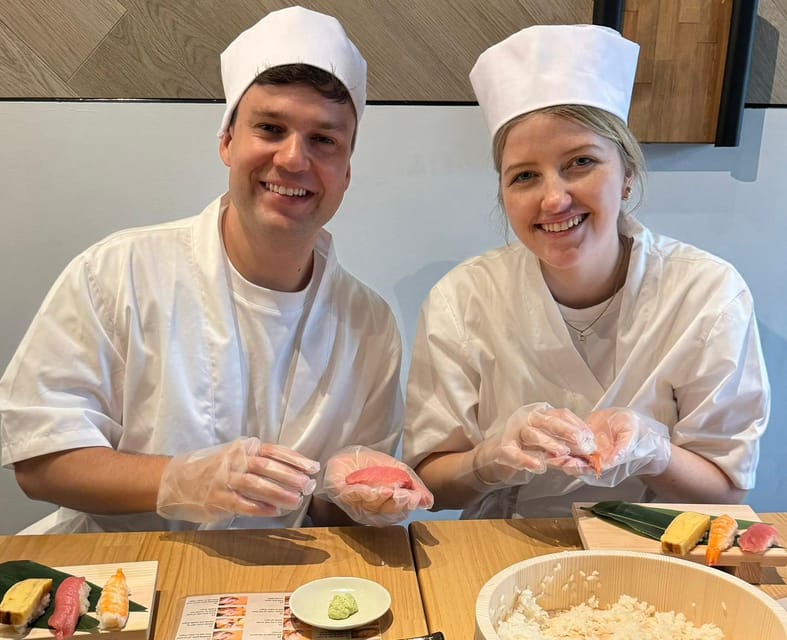
Dotonbori is one of Osaka’s best-known food districts, and this class gives you a hands-on way to connect with that food culture. You are not only eating a finished dish. You are learning the basic parts of sushi and seeing how a few simple steps turn seasoned rice and toppings into something recognizable.
The lesson begins with an explanation of what sushi is, what the ingredients do, and how the pieces are assembled. That makes the class suitable even if you have never made sushi before. You do not need prior cooking skill, and the staff show you what to do rather than leaving you to guess.
I especially like the balance between instruction and fun. The class has enough structure to teach a real technique, but the costumes, photo session, sake, and certificate keep it from feeling like a formal cooking school.
The location also matters. Since the activity takes place in Dotonbori, you can pair it with the area’s restaurants, signs, canals, and evening lights. The class itself lasts only 90 minutes, so it fits neatly into a busy Osaka day.
More of Dotonbori and Namba after dark:
- Osaka Local Foodie Walking Tour in Dotonbori and Shinsekai
★ 5.0 · 985 reviews - Osaka: Dotonbori District River Cruise with Drink Discount
★ 4.2 · 876 reviews - Ultimate Osaka Walking Tour: Castle, Dotonbori & Hidden Gems
★ 5.0 · 862 reviews
Step one: seasoning the shari
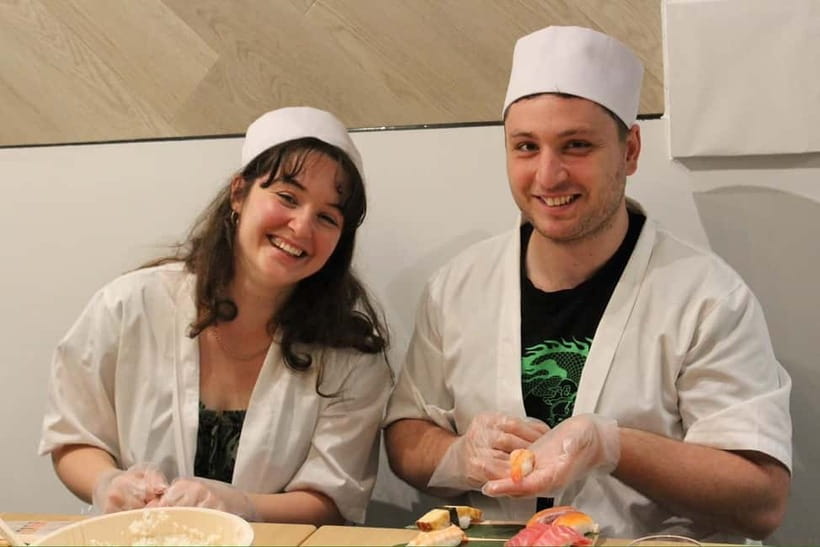
The first practical task is making shari, the seasoned sushi rice. You pour sushi vinegar over the rice, following the instructor’s directions so the flavor spreads through the batch.
This step may look simple, but it gives you a useful sense of what makes sushi rice different from ordinary cooked rice. The vinegar adds the familiar sharp, lightly sweet flavor that must support the toppings without overpowering them.
The class is designed for direct participation. Rather than watching a long demonstration, you make the rice yourself with guidance from the English-speaking staff. The instructors explain each part carefully and help you as you work.
For families, this is a good early stage because it is easy to understand and gives children an immediate job. One recent booking included a two-year-old alongside a vegan participant and a halal participant, showing how the class can work for groups with different needs. The supplied information does not promise a separate children’s program, so parents should still decide if the 90-minute format suits their child.
Step two: shaping rice for 12 pieces
Once the rice is ready, you make small rice balls and shape them. The aim is to create a firm base that holds together without becoming too dense.
You will make 12 pieces in total. That number gives you enough practice to improve as you go. Your first piece may not look as neat as the last one, but that is part of the point. You get several chances to adjust your grip and pressure.
The instructors watch over the process and correct your technique. This personal help is one of the class’s strongest features. Yumiko, Makoto, Mayo, and Cann are among the staff named in the feedback, and their patient teaching is repeatedly praised for making the activity easy to follow.
Do not expect restaurant-level speed or perfect uniformity. This is a class, not a professional sushi counter. The value comes from making the food with your own hands and learning the logic behind each movement.
Step three: adding vegetable toppings and wasabi
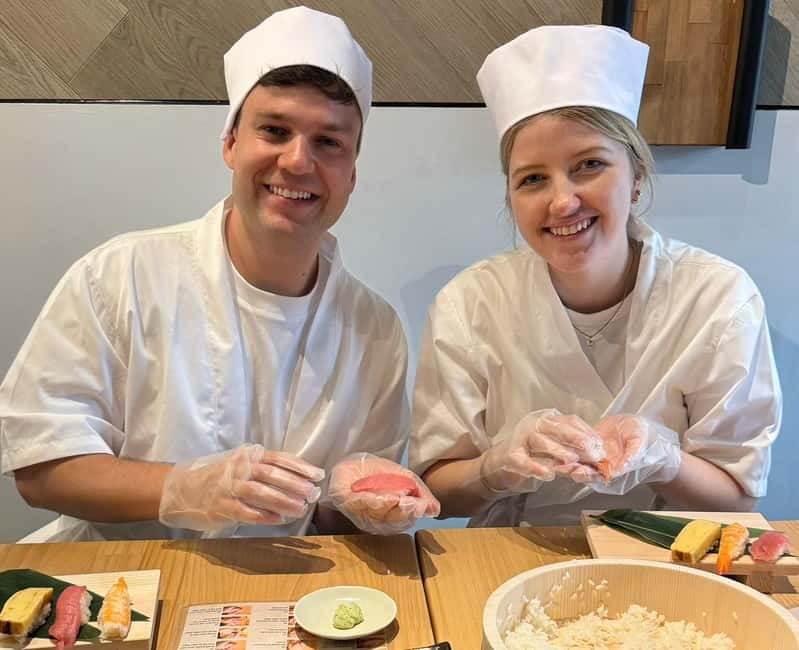
Next, you bring the neta, or sushi topping, together with the rice. You place wasabi on the topping, then join it to the shaped rice.
All the ingredients for the 12 pieces are vegetable-based. That makes the class a practical choice for vegetarians and vegans, rather than a standard sushi lesson with one special substitute added at the last minute.
Halal sushi is also available. That is useful for a group where one person follows halal guidelines and another follows a vegan diet. You should still state your dietary needs when booking or before the class begins, since the activity information confirms availability but does not spell out every ingredient or preparation detail.
Wasabi is part of the process, but you should follow the instructor’s guidance on how much to use. If you are sensitive to heat, ask the English-speaking staff for help before adding it. The information provided does not confirm a wasabi-free version, so it is sensible to raise that concern in advance.
This stage also gives you a closer look at the role of proportion. Sushi can appear minimal, yet the rice, topping, vinegar, and wasabi all need to work together. The lesson turns that small package into a food culture lesson without becoming too technical.
More sushi making classes:
- Sushi Making Osaka Roll and Authentic Japanese Sushi Class
★ 5.0 · 1,220 reviews - Osaka Sushi Making Experience
★ 5.0 · 400 reviews - Osaka: Roll and Authentic Sushi Making Class in Dotonbori
★ 4.9 · 239 reviews - Osaka: Sushi Class in Dotonbori
★ 4.9 · 160 reviews
Step four: forming the finished sushi
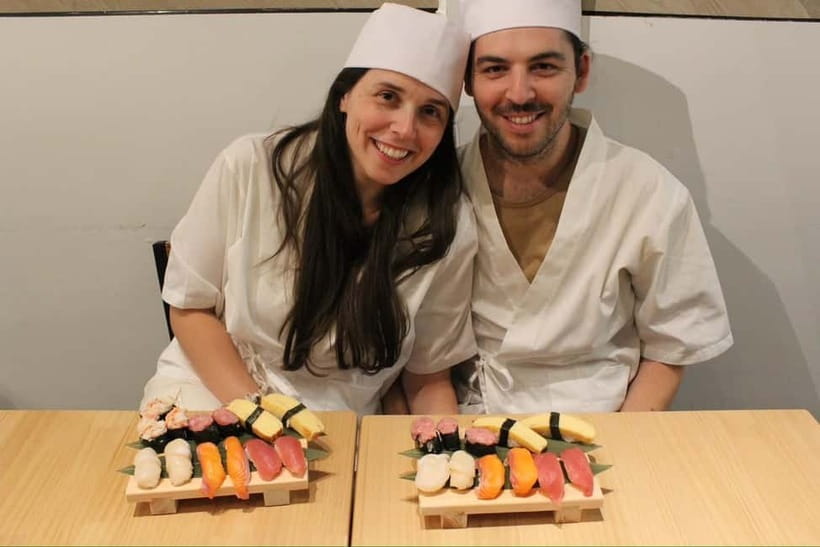
The final technique is shaping the sushi with your fingers. You press and form the rice and topping into a finished piece, using the instructor’s method.
This is where the earlier steps come together. If the rice is too loose, the piece may fall apart. If you press too firmly, it can become heavy. The staff demonstrate the hand movements and continue to guide you as you make the full set of 12.
I would treat the result as a personal achievement rather than a test. The point is not to produce twelve identical pieces. It is to understand how sushi is built and to enjoy the small satisfaction of eating something you assembled yourself.
The class also gives you a better appreciation for sushi makers. Even a basic piece requires control, timing, and a light touch. You will leave with a clearer sense of why experienced sushi chefs make the work look easier than it is.
Eating your sushi with Japanese sake
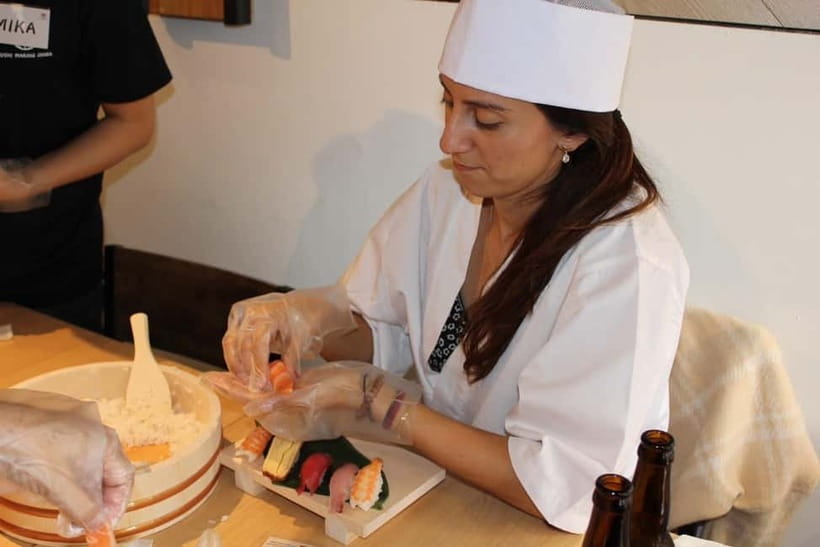
After the making session, you can enjoy the sushi with Japanese sake. This adds a social element that a standard cooking demonstration would miss.
The pairing is also a chance to think about how Japanese meals are enjoyed. Sake is not simply an extra drink here. It is part of the cultural setting that the class is trying to explain through food.
Alcohol is not suitable for everyone, and the supplied details do not confirm a nonalcoholic replacement. If you do not drink, ask the provider what alternatives are available before booking. The confirmed feature is Japanese sake served with the sushi.
The 90-minute length helps keep the meal from becoming drawn out. You learn, make the food, take part in the photo activities, and eat within a compact session. That works well before dinner or between other Dotonbori plans.
Sushi cosplay and the photo session
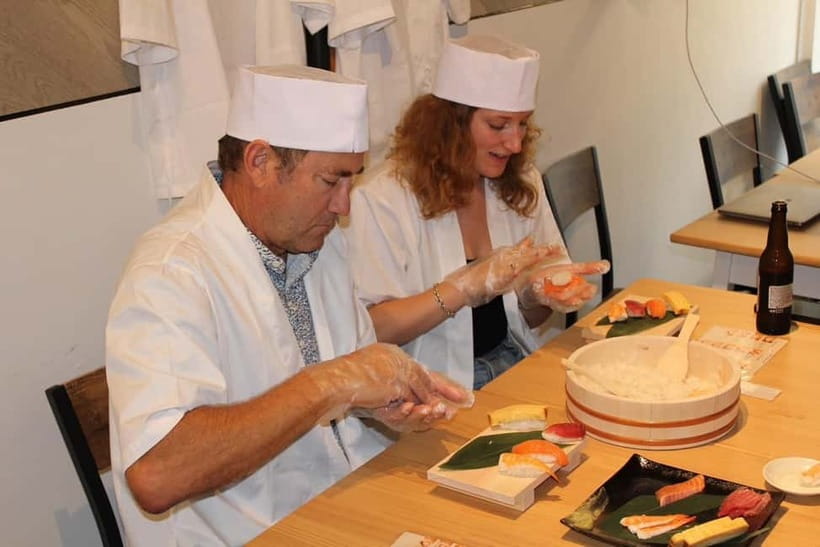
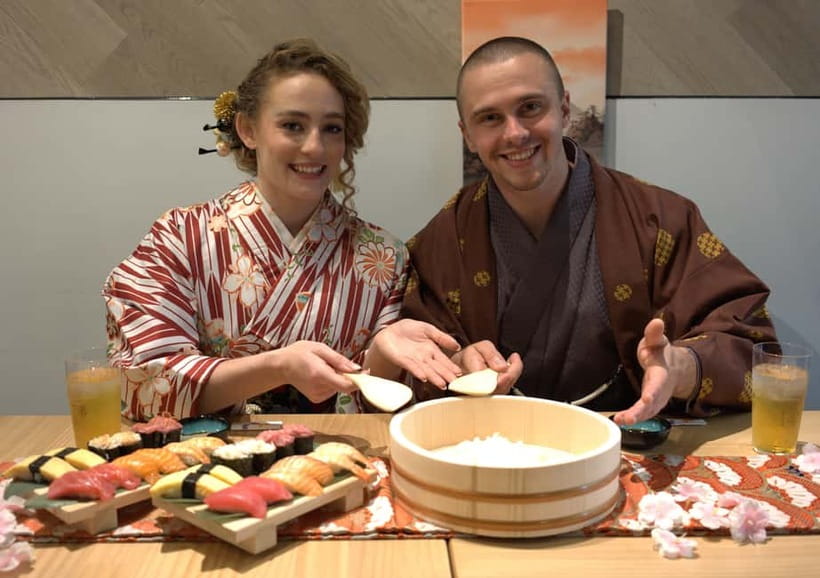
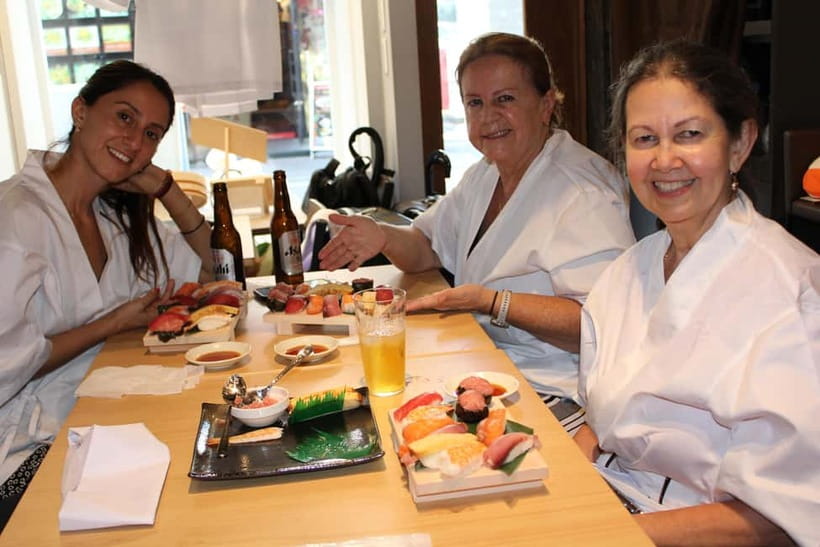
The cosplay portion is the class’s most unusual extra. You can put on sushi-themed costumes and take photos after making your food.
This is not essential if your only goal is learning rice technique. It is valuable if you want a lighthearted memory from Osaka, especially when you are traveling with children, friends, or a partner. The activity information also mentions a photo session and a special gift, while the included features specifically confirm sushi cosplay and the sushi master certificate.
The costumes change the mood from cooking lesson to shared experience. You do not need to take the activity too seriously, and that is part of its appeal. Dotonbori already has a theatrical feel, so the photo element fits the neighborhood.
If you prefer a quiet, serious culinary lesson, this may feel a little gimmicky. If you want food, culture, and a few silly pictures in one booking, it makes the $45 price easier to justify.
What the $45 price really buys you
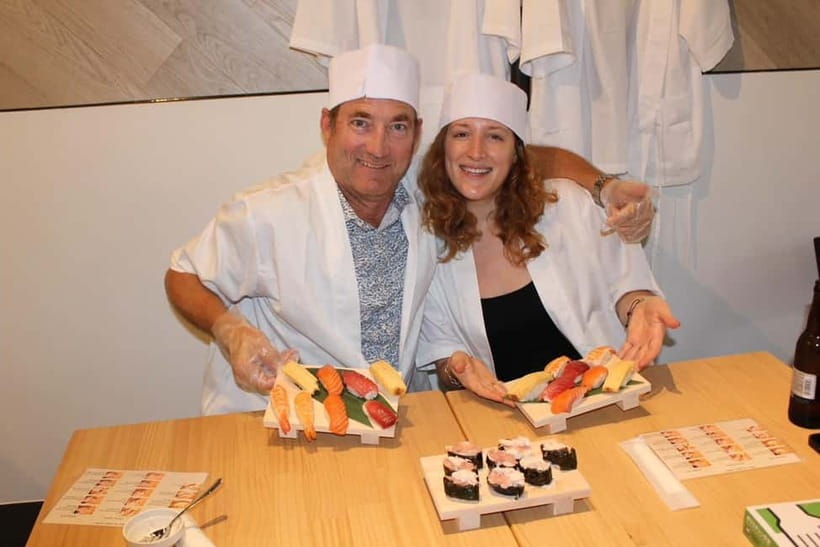
At $45 per person, this is not the cheapest way to eat vegetarian sushi in Osaka. You could spend less on a casual meal, especially if you do not care about making the food yourself.
The comparison changes when you count what is included. You receive the ingredients for 12 pieces, English instruction, sushi cosplay, Japanese sake, and a sushi master certificate. The class also offers the cultural explanation and direct help that you cannot get from ordering a finished plate.
I see the strongest value for people who want an activity rather than only lunch. You are paying for a guided memory, a lesson, a meal, and photos. The price is also easier to accept when several people in your group need vegan or halal food, because the menu is designed to accommodate those requirements.
The value is weaker for solo visitors on a strict food budget or for anyone who already knows how to make sushi. In that case, the hands-on teaching and certificate may not add enough.
Who should book this Dotonbori activity
This class suits first-time sushi makers who want clear guidance and a finished meal at the end. The English instruction is especially useful for visitors who want more than a silent food demonstration.
It is also a strong choice for mixed-diet groups. Vegan, vegetarian, and halal options are available, and the activity has been used by a group that included a vegan participant, a halal participant, and a young child.
Families may like the playful format, though the provider does not give a minimum age or a dedicated children’s schedule. The activity is wheelchair accessible, which removes one concern for many visitors, but you should still confirm any personal access needs before arrival.
Couples and friends can enjoy the photo session and certificate as shared souvenirs. Solo participants can still take part, but the social costume and photo elements may appeal more to people who enjoy a group setting.
Timing, language, and booking details
The experience lasts 90 minutes, with starting times shown according to availability. That makes it easy to fit into a day in Osaka, but you should allow extra time around the class if you have a fixed restaurant booking or train connection.
Instruction is in English. The staff explain the meaning of sushi, the ingredients, and the method in a step-by-step format. Names associated with the class include Yumiko, Makoto, Mayo, and Cann.
You can reserve now and pay later, which is useful if your Osaka plans are still moving around. Free cancellation is available up to 24 hours before the activity for a full refund.
The class is wheelchair accessible. The supplied information does not give a meeting-point description, group size, or exact starting times, so check those details when selecting your date.
The main strengths and the small cautions
The most praised qualities are the staff, the clear explanations, the convenient Dotonbori location, and the enjoyable food. Those are the parts I would give the most weight when deciding. A friendly instructor can make a simple activity feel worthwhile, and this class appears built around direct help rather than a one-way demonstration.
The food itself is another strong point for the right audience. You make 12 vegetable sushi pieces and eat them fresh as part of the activity. That is a better fit for vegan and halal visitors than a general sushi class where dietary needs might be secondary.
The cautions are fairly simple. The price is higher than buying a vegetarian meal, the sake may not suit everyone, and the cosplay may feel less appealing if you want a serious cooking lesson. The class also does not provide enough published detail to judge group size or exact ingredient lists.
The current rating is 5 out of 5 from nine ratings, with praise focused on the instructors and the enjoyable, easy-to-follow format. That score cannot tell you whether the activity matches your personal style, but it does support the idea that the teaching and atmosphere are its strongest points.
Should you book the sushi class?
Book it if you want an easy, social Osaka activity that combines food, instruction, Japanese sake, photos, and a small souvenir. I would especially recommend it for vegan or halal visitors, families seeking a hands-on activity, and friends who want something more memorable than another restaurant meal.
Skip it if your priority is the lowest-cost food or advanced sushi training. At $45, the class earns its price through the teaching, 12 pieces, dietary flexibility, cosplay, sake, and certificate, not through the meal alone.
For most first-time visitors looking for a short activity in Dotonbori, it is a sensible pick. You get to make the food, learn the basic method, and leave with a certificate that proves you survived your first attempt at sushi shaping.
FAQ
Where does the sushi making experience take place?
The activity takes place in Dotonbori, Osaka, on Honshu, Japan.
How long does the class last?
The sushi making experience lasts 90 minutes.
How much does it cost?
The listed price is $45 per person.
How many pieces of sushi will I make?
You will make 12 pieces of sushi using vegetable ingredients.
Is the sushi vegan?
Vegan sushi is available. The activity also includes vegetable ingredients for the 12 pieces.
Is halal sushi available?
Yes, halal sushi is available.
Is the class taught in English?
Yes, the instructor language is English.
Is Japanese sake included?
You can enjoy Japanese sake with the sushi during the experience.
What else is included besides the ingredients?
Sushi cosplay and a sushi master certificate are included. The activity also offers a photo session and a special gift.
Can I cancel the booking?
You can cancel up to 24 hours in advance for a full refund. You can also reserve now and pay later.
Just added around Osaka
- Nara Day Trip from Osaka with a Licensed Guide★ 5.0 · 3 reviews
- Osaka Early Morning Osaka Castle Tour Avoid Crowds★ 5.0 · 3 reviews
- Guided Tour of Some Attractions in Osaka by Private Car★ 5.0 · 3 reviews
- Private Transfer Between Kyoto and Kansai Airport KIX★ 5.0 · 3 reviews
- Shared Arrival Transfer: Osaka Itami Airport to Osaka City★ 5.0 · 3 reviews
- Osaka: Sushi Making Class and Dotonbori Food Tour★ 4.7 · 3 reviews
- Osaka Night Photography Workshop★ 5.0 · 3 reviews
- Kyoto Full day Tour Kinkakuji, Kiyomizu-dera and Fushimi Inari★ 4.5 · 3 reviews
Dotonbori & Namba Tours, compared.

Osaka Local Foodie Walking Tour in Dotonbori and Shinsekai
Read our review →
Dotonbori District River Cruise with Drink Discount
Read our review →
Ultimate Osaka Walking Tour: Castle, Dotonbori & Hidden Gems
Read our review →


Dotonbori River Cruise with Glico Sign & Neon Views
Read our review →
Browse the lists this tour appears in