
Reviewed · KYOTO DAY TRIPS FROM OSAKA
Kyoto and Nara UNESCO Highlights Full-day Tour From Osaka
Kyoto’s hillside temples, Fushimi Inari’s red torii gates, and Nara’s friendly deer make a strong one-day combination. I like that the route covers three major Kansai sights without making you work out several train connections, and that guides such as Leo, Lu, Jason, and Ms. Zhao have helped guests keep the day on track with clear directions and group messages.
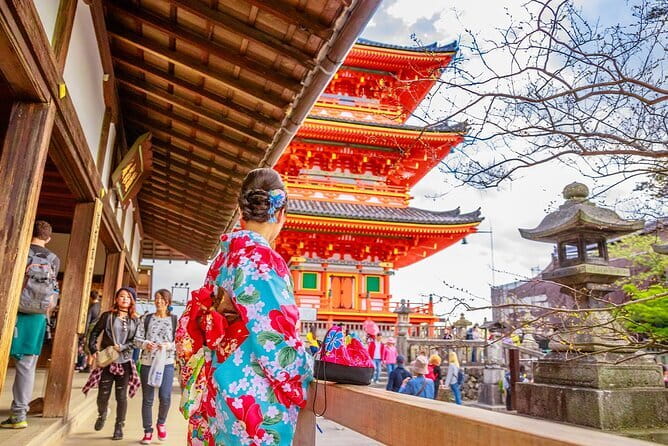
I also like the generous 2.5-hour stop around Kiyomizu-dera, enough time for the temple and nearby old streets, plus the chance to explore each place independently. The tradeoff is a tight schedule: you cover a lot of ground, walk plenty, and traffic or weather can shorten your time at a stop.
In This Review
- Key points to know before booking
- Why this Kyoto and Nara day works from Osaka
- Morning meeting points in Osaka or Kyoto
- Kiyomizu-dera and Kyoto’s old wooden lanes
- Fushimi Inari’s thousands of red gates
- Nara Park, deer, and Todaiji Temple
- What the bus and guide add to the day
- Timing, food, and practical costs
- Who should book this full-day route
- Should you book it?
- FAQ
- Where does the tour start?
- Where does the tour end?
- How long does the tour last?
- Are temple entrance fees included?
- Is lunch included?
- What happens if I arrive late?
Key points to know before booking
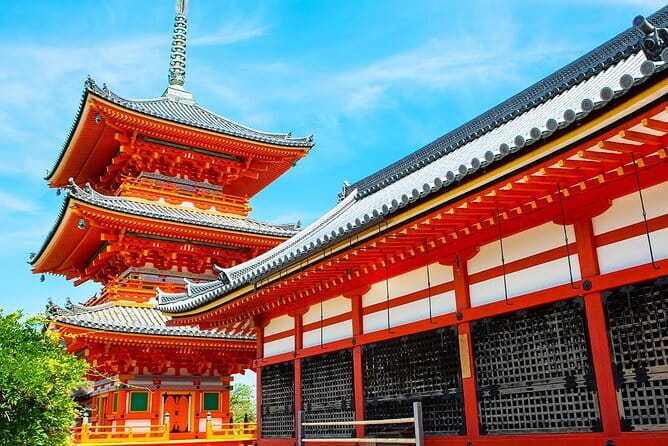
- Three major sights in one day: Kiyomizu-dera, Fushimi Inari-taisha, and Nara Park with Todaiji Temple.
- A practical Osaka base: Pickup starts at Nipponbashi or Kyoto Station, but the return drop-off is only in Osaka.
- Mostly independent sightseeing: Your guide gives instructions and background, then you explore each site during set free time.
- Plenty of walking: Expect hills, temple approaches, old lanes, and a walk from the bus parking area to some sights.
- Extra costs are modest but real: Kiyomizu-dera and Todaiji require separate admission, and lunch is not included.
- A shared group of up to 40: Explanations are given in English, Mandarin, and Japanese.
Why this Kyoto and Nara day works from Osaka
At $62.75 per person, this is a useful transport-and-sightseeing package rather than a private guided tour. You are paying for the bus, designated pickup and drop-off, and a guide who handles the route between Osaka, Kyoto, and Nara.
The value becomes clearer if you want to see all three areas in one day. Doing this independently means planning trains and buses, finding each entrance, watching the clock, and getting back to Osaka after Nara. This tour removes much of that work.
You should budget another $12 for the two listed admissions: about $5 for Kiyomizu-dera and $7 for Todaiji Temple. Lunch is also on your own, so the realistic day cost is higher than the base fare. Bring cash because some places may not accept cards.
This is not the right choice if you want long, quiet visits at each temple. It is a good fit if you have limited time in Kansai and want a broad first look at Kyoto and Nara without managing the transport yourself.
More day trips over to Nara:
- Ancient Capital Tour: Kyoto and Nara Highlights from Kyoto/Osaka
★ 4.5 · 332 reviews - Kyoto and Nara Day Trip from Osaka
★ 4.0 · 175 reviews - Discover Himeji, Kobe and Nara from Osaka
★ 5.0 · 101 reviews
Morning meeting points in Osaka or Kyoto
The Osaka meeting point is at 1-chōme-3-6 Nipponbashi, Chuo Ward. The pickup is listed as Nipponbashi Exit 2 at 8:40 a.m. There is also a Kyoto pickup at the Kyoto-Hachijoguchi Bus Loading Area at 9:50 a.m.
Arrive 15 minutes early. Look for the guide holding a yellow flag with the Gogoday logo, and bring the name used on your booking. Late arrivals and no-shows are not refundable, so this is not a morning for cutting things close.
The Kyoto option can help if you are already staying there, but remember the important catch: the only drop-off location at the end is in Osaka. If you board in Kyoto, plan for that return journey and do not schedule an important activity immediately afterward.
The bus is shared, with up to 40 people from different countries. The guide provides explanations in English, Mandarin, and Japanese. Names reported for guides on this route include Leo, Lu, Jason, Yujun, Ako, Rick, and Ms. Zhao, but your guide is assigned for the day and may be different.
Kiyomizu-dera and Kyoto’s old wooden lanes
The first main stop begins at about 10 a.m. and lasts roughly 2.5 hours. Kiyomizu-dera sits on a hillside, so your visit starts with uphill walking and uneven urban streets around the temple.
The setting is one of the strongest parts of the day. From the temple area, you get broad views over Kyoto, with especially attractive color in autumn. The famous wooden stage and hillside setting give the visit a sense of place that a quick city-center temple stop cannot match.
Admission is not included and costs about $5 per person. You will want cash ready, especially since the tour specifically advises carrying it.
The surrounding streets are almost as important as the temple itself. Ninenzaka and Sannenzaka are historic lanes lined with traditional wooden buildings, shops, and food stops. Ishibe Alley is quieter and narrower, with a more restrained old Kyoto feel.
The itinerary also points you toward Gion and Hanamikoji Streets. These areas help you see the contrast between Kyoto’s temple district and its traditional entertainment quarters. You may not have time to wander every lane at an easy pace, but the stop gives you a useful taste of several classic Kyoto settings in one stretch.
This is where the schedule feels generous compared with the later stops, but 2.5 hours can still pass quickly. You need to allow time for the temple, photographs, uphill walking, old streets, and a return to the bus. If you stop often for shops or food, you may need to choose between exploring the lanes and spending more time inside Kiyomizu-dera.
Guides generally provide background before releasing you to explore. That arrangement suits me because you get useful context without having to remain in a single group all morning. It also means you must pay attention to the meeting time and location.
Fushimi Inari’s thousands of red gates
Around 1:30 p.m., the bus reaches Fushimi Inari-taisha Shrine for about 70 minutes. Admission is free, which makes this a simple stop financially, but the short visit requires a clear plan.
Fushimi Inari is known for its Senbon Torii, the long corridors of red-orange gates that climb through the wooded shrine grounds. The gates are the visual center of the visit, and even a short walk gives you the repeating pattern that makes this place so memorable.
You will not have time to treat this as a full mountain hike. Use the hour wisely: walk into the torii tunnel, take photographs, and turn back in time for the bus. The route is easy to underestimate because the gates keep drawing you farther uphill.
This stop is mostly free time rather than a long escorted tour. That works well if you already know what you want to see. If you prefer detailed explanations at every shrine feature, listen closely to the guide’s introduction before setting off.
Fushimi Inari can also feel crowded, especially around the entrance. Walking farther into the torii path may give you a calmer experience, but the clock matters. I would rather see a shorter stretch carefully than miss the departure while trying to reach a more distant section.
More day trips over to Kyoto:
- Osaka/Kyoto: Hiroshima Miyajima Bus Tour & Shinkansen Ticket
★ 4.7 · 919 reviews - Osaka/Kyoto: Amanohashidate & Miyama Tour with Boat & Lunch
★ 4.6 · 207 reviews - Sagano Romantic Train & Arashiyama, Kiyomizudera, Fushimi Inari Taisha Day Tour
★ 4.5 · 171 reviews - Volleyball in Osaka, Kobe & Kyoto with locals!
★ 4.8 · 131 reviews
Nara Park, deer, and Todaiji Temple
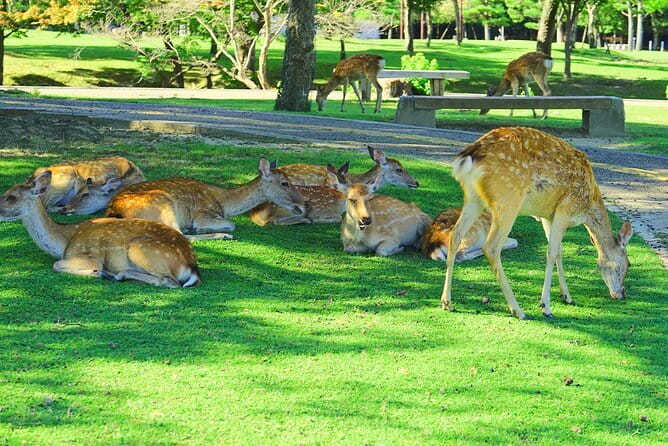
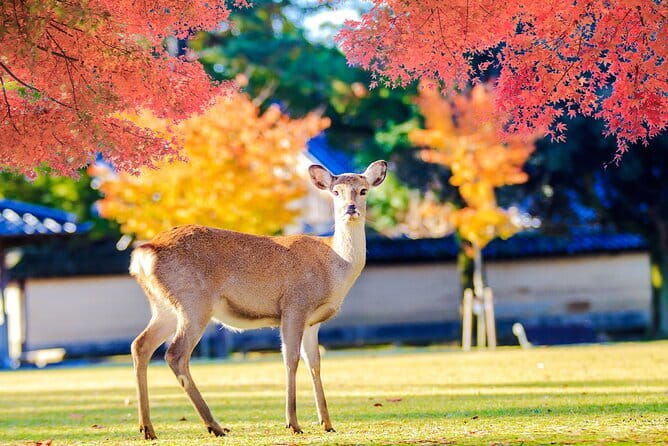
The final major stop starts around 4 p.m. in Nara Park and lasts about 1.5 hours. The park sits at the foot of Mt. Wakakusa and includes major sights such as Todaiji Temple and Kasuga Taisha Shrine.
The deer are the immediate attraction. You can walk among them in the park and, where permitted, feed them. The deer encounter is a very different experience from Kyoto’s temples, and it gives the day a lighter, more playful finish.
You should still treat the deer with care and follow local instructions. They are accustomed to people, but they remain animals, not tame pets. Keep your attention on them while feeding and do not let the excitement make you forget the meeting time.
Todaiji is the cultural anchor of the Nara stop. The temple is home to the world’s largest bronze Buddha, an enormous figure housed inside the temple hall. The scale of the building and statue makes this more than a quick photo stop.
The main limitation is timing. With only about 1.5 hours for Nara Park, the deer, walking, and Todaiji, you may need to move briskly. One visit described only about an hour before the temple closed, with darkness arriving quickly at the end of the day. Seasonal daylight and the day’s traffic can affect how much time remains.
Todaiji admission costs about $7 and is not included. If seeing the temple interior is your priority, go there early in the Nara stop, then return to the deer and park paths afterward. If the deer are your main goal, reverse that order only if your guide’s timing allows it.
What the bus and guide add to the day
The air-conditioned bus is the practical reason to choose this tour. Kyoto and Nara are close enough to combine on paper, but the transfers can eat up a day when you are handling them yourself. A shared bus lets you rest between stops and avoids repeated station changes.
There is one important caution about comfort. On very hot days, the bus may not be able to keep idling with the air conditioning running while parked in a residential area. Reports from a 93-degree day describe uncomfortable heat, and another account described the bus as a hot box when air conditioning was not available.
That issue may depend on weather, parking rules, and the vehicle used that day. Still, it is worth knowing if you are visiting in midsummer. Carry water, wear light clothing, and do not assume the bus will always be a cool waiting room.
The guide’s role is part escort and part trip coordinator. You receive history and cultural background during the route, then clear instructions about when and where to return. Guides including Lu and Jason have been praised for multilingual explanations, humor, punctuality, and help through WhatsApp or a group message.
That support can matter more than a long lecture. When you are moving through three places in one day, a clear meeting instruction may save more stress than another paragraph about temple architecture. You still need to stay alert, since the sightseeing is largely self-directed.
The bus parking lot may be some distance from the scenic sites, so walking begins before you reach the attraction. Wear shoes suited to hills and extended time on foot. Kiyomizu-dera is the most obvious uphill section, but all three stops involve walking.
Timing, food, and practical costs
The advertised duration is about 9 hours and 20 minutes. That is a full day, and the route leaves little room for a separate evening plan. Traffic, weather, or other unexpected problems can lead to shorter sightseeing periods or a canceled attraction.
For that reason, I would not book a theater ticket, dinner reservation, or train connection that depends on an exact return time. The tour ends back at the Osaka meeting point, but the arrival time can shift.
Lunch is not included. The schedule gives you a chance to buy food around the stops, but the exact meal opportunity depends on traffic and group timing. Bring cash and consider carrying a small snack so you are not forced into the first available option.
The base price is attractive for the amount of ground covered. Add roughly $12 in entrance fees and your own lunch, then compare that total with the cost of separate transport. If you value convenience and want to see all three places, the tour is a sensible buy.
If you are traveling with a large family or want to linger at one temple, the value is less clear. A private plan or a slower single-city day would give you more control, though it would require more planning and could cost more.
Who should book this full-day route
I would recommend this tour to a first-time visitor staying in Osaka who wants a quick introduction to Kyoto and Nara. It is also useful for anyone who dislikes navigating several rail and bus connections in one day.
You will get the most from it if you are comfortable with a brisk pace and independent exploring. Pay attention to the guide, note the bus meeting time, and decide in advance whether Kiyomizu-dera, Fushimi Inari, the deer, or Todaiji is your top priority.
Families with older children may like the mix of temples, red gates, and deer. The deer in Nara provide a welcome change after several historic sites, while the bus keeps the group together between cities.
I would hesitate to recommend it to anyone with limited walking stamina or a strong wish for a slow temple visit. The route includes hills, long approaches, and a bus parking area that may not be close to the sights.
The tour is recommended by 92 percent of its participants and has a 4.7 rating from 50 reviews. Those figures suggest a dependable experience, but they do not erase the main tradeoffs: heat can affect bus comfort, the day is tightly packed, and your sightseeing time is controlled by the group schedule.
Should you book it?
Book this Kyoto and Nara tour if you want maximum sightseeing from an Osaka base and accept a fast, shared itinerary. Kiyomizu-dera, Fushimi Inari, and Nara Park are a strong trio, and the included transport saves you from piecing together a complicated day.
Skip it if you want to hike far through Fushimi Inari, spend a long afternoon inside Todaiji, or explore Gion after dark. For everyone else, the $62.75 starting price offers a practical way to sample Kansai’s temples, old streets, torii gates, and deer in one long day.
Free cancellation is available when you cancel at least 24 hours before the start time. Changes or cancellations inside that window are not refunded.
FAQ
Where does the tour start?
You can meet at Nipponbashi Exit 2 in Osaka at 8:40 a.m., or at the Kyoto-Hachijoguchi Bus Loading Area at 9:50 a.m.
Where does the tour end?
The only drop-off location is the Osaka meeting point at 1-chōme-3-6 Nipponbashi, Chuo Ward.
How long does the tour last?
The total duration is approximately 9 hours and 20 minutes.
Are temple entrance fees included?
No. Kiyomizu-dera costs about $5 per person, and Todaiji Temple costs about $7 per person. Fushimi Inari-taisha Shrine and Nara Park are listed as free.
Is lunch included?
No. Lunch is not included, so you need to pay for your own meal and should carry some cash.
What happens if I arrive late?
Arrive 15 minutes early and look for the guide carrying a yellow Gogoday flag. Late arrivals and no-shows are not eligible for a refund.
More Full-Day in Osaka
- Osaka: Minoh, Katsuoji Temple, & Minoh Falls Full-day Tour
★ 4.9 · 172 reviews - Osaka’s Best and Brightest: Private Full-Day Tour by Vehicle
★ 5.0 · 147 reviews - Full Day Tour of Kyoto with Private Transportation
★ 5.0 · 130 reviews - Full Day Hiroshima and Miyajima Tour by Bullet Train from Osaka
★ 4.5 · 117 reviews
More Highlights and Hidden Gems Tours
- Osaka Kickstart: Hotspots & Hidden Gems Tour
★ 5.0 · 1,306 reviews - Ultimate Osaka Walking Tour: Castle, Dotonbori & Hidden Gems
★ 5.0 · 862 reviews - Osaka: Main Sights and Hidden Spots Guided Walking Tour
★ 4.9 · 702 reviews - Private Osaka Walking Tour: Highlights & Hidden Gems
★ 5.0 · 569 reviews
Just added around Osaka
- Nara Day Trip from Osaka with a Licensed Guide★ 5.0 · 3 reviews
- Osaka Early Morning Osaka Castle Tour Avoid Crowds★ 5.0 · 3 reviews
- Guided Tour of Some Attractions in Osaka by Private Car★ 5.0 · 3 reviews
- Private Transfer Between Kyoto and Kansai Airport KIX★ 5.0 · 3 reviews
- Shared Arrival Transfer: Osaka Itami Airport to Osaka City★ 5.0 · 3 reviews
- Osaka: Sushi Making Class and Dotonbori Food Tour★ 4.7 · 3 reviews
- Osaka Night Photography Workshop★ 5.0 · 3 reviews
- Kyoto Full day Tour Kinkakuji, Kiyomizu-dera and Fushimi Inari★ 4.5 · 3 reviews
Kyoto Day Trips from Osaka, compared.

Osaka/Kyoto: Hiroshima Miyajima Bus Tour & Shinkansen Ticket
Read our review →
Ancient Capital Tour: Kyoto and Nara Highlights from Kyoto/Osaka
Read our review →
Osaka/Kyoto: Amanohashidate & Miyama Tour with Boat & Lunch
Read our review →

Sagano Romantic Train & Arashiyama, Kiyomizudera, Fushimi Inari Taisha Day Tour
Read our review →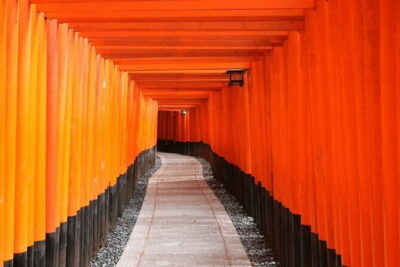
Full Day Tour of Kyoto with Private Transportation
Read our review →
Kyoto & Nara Private customized tour with English speaking Guide
Read our review →Full Day Kyoto Tour : Bamboo Forest, Golden Temple, Fushimi Inari
Read our review →Browse the lists this tour appears in