

Reviewed · OSAKA KIMONO & YUKATA EXPERIENCES
Japanese miniature kimono made with origami in Osaka
Making a kimono from one sheet of origami paper is the clever twist here. With patient guidance from Hiroko, you first practice the folds, then create a miniature kimono from a beautiful patterned sheet. I like the tiny pocket, which can hold a coin, note, or small gift, and the fact that you leave with instructions to repeat the project at home.
I also like the private format. Your group works at its own table, so a child or first-time folder can ask for help without holding up strangers. The main consideration is that the meeting point is outside Abeno Station, not at the classroom itself, and the $65.32 price is best justified if you value personal instruction and a handmade souvenir.
In This Review
- Key points to know before you book
- Folding a kimono near Abeno Station
- The practice fold makes the class beginner friendly
- Choosing patterned paper for the final kimono
- The tiny pocket gives the souvenir a purpose
- What the $65.32 price includes
- A private lesson that works for families and friends
- Pairing the class with Abeno and Tennoji
- Booking details, timing, and cancellation
- Who should book this origami kimono class?
- Should you book the Japanese miniature kimono experience?
- FAQ
- Where do I meet for the origami kimono activity?
- How long does the experience last?
- Is the class suitable for beginners and children?
- Is this a private activity?
- What is included in the price?
- Can I cancel for a full refund?
Key points to know before you book
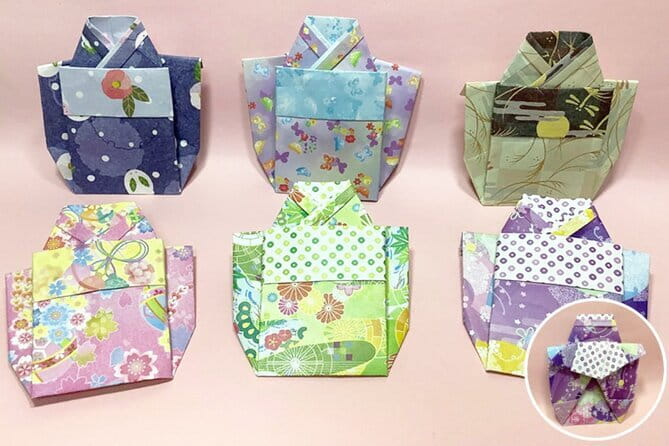
- A miniature kimono with a working pocket: The finished paper costume is decorative, but its pocket can hold a coin, pick, or short note.
- A practice fold comes first: You do not begin with the best paper. Hiroko guides you through a rehearsal before you tackle the patterned design.
- Private lesson for your own group: Only your party takes part, making this a calm choice for families and friends.
- Up to 20 traditional designs: If time allows, you can choose a favorite work from a selection of 20 traditional pieces.
- A useful take-home guide: A QR code links to a video, and a folding diagram helps you make more kimonos after Osaka.
- Abeno location with sightseeing nearby: Abeno Harukas, Tsutenkaku Tower, and Tennoji Zoo are all close enough to pair with the lesson.
Folding a kimono near Abeno Station
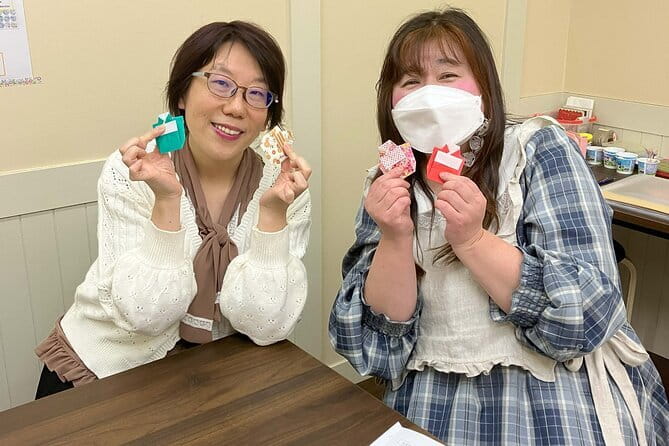
The experience begins at the bottom of the stairs at Exit 7 of Abeno Station on the Osaka Metro Tanimachi Line. This detail matters. You are not simply wandering into a classroom, so give yourself enough time to find the correct exit and wait at the stated meeting spot.
The address is in Abeno, Osaka, in the 545-0052 postal area. The building sits in a general facility with several stores, which means the first part of the activity feels tied to everyday Osaka rather than set apart as a formal cultural show. You meet the instructor holding origami and walk together to the classroom.
I like this arrangement for first-time visitors because it removes one awkward step: finding an unfamiliar room inside a larger building. Still, you should not assume the listed meeting point and classroom are the same place. Keep the meeting instructions handy on your phone.
Abeno is also a useful base for a day of sightseeing. Abeno Harukas, Osaka’s tallest building, is nearby, as are Tsutenkaku Tower and Tennoji Zoo. The lesson lasts about 1 hour and 30 minutes, so you can fit it between other plans without giving up an entire day.
More kimono and yukata experiences:
- Osaka: Sumo Show & Experience w/ Optional Kimono & Hot Pot
★ 4.5 · 609 reviews - Learning Zen of Japanese Calligraphy in kimono near Osaka Castle
★ 4.5 · 53 reviews - Osaka: Kimono or Yukata Rental &Photos Service Options
★ 4.9 · 25 reviews
The practice fold makes the class beginner friendly
Once inside, you choose a seat at the table and select an origami paper for the activity. The teaching method is sensible: Hiroko has you fold one piece together as practice before you use the final patterned paper.
That rehearsal is important because a kimono shape depends on neat folds and accurate placement. If you have little origami experience, the first attempt gives you a chance to understand the sequence without worrying about ruining the paper you like best.
The class is designed for beginners and small children, but the word beginner friendly should not be mistaken for completely effortless. Several steps can feel tricky, especially if this is your first miniature kimono. The useful part is that you can stop and ask questions as you go.
The instructor’s teaching style is one of the strongest reasons to book. Hiroko is described as gentle, careful, bright, and easy to understand. That combination matters more here than a long speech about Japanese costume. Tiny paper work can become frustrating when instructions move too quickly, and this lesson allows room for repeated explanations.
If your folding goes wrong, the class does not appear to treat that as a failure. The instruction is hands-on, and you can have a step shown again. One practical tip is to accept the practice fold as part of the fun rather than rushing toward the finished piece.
Choosing patterned paper for the final kimono
After practice, you move on to the real project. This is the moment when the activity becomes more than a standard origami lesson. You choose a paper with a beautiful pattern, then use the folds to create the body, sleeves, belt, and back details of a tiny kimono.
The instructor’s kimono design is original to this class. That gives the finished piece a local character, even though the raw material is simple paper. It also explains why this activity feels different from folding a familiar crane or flower from a printed diagram.
The range of paper matters. If you have extra time, you can choose a favorite from 20 traditional works. The exact choice may depend on the session and available time, so do not treat the full selection as a guarantee of unlimited crafting time. The scheduled class is approximately 90 minutes.
Look closely at the back of the finished kimono. The belt and rear detail are part of the charm, and the shape is meant to look like a miniature garment from more than one angle. This is a small project, not a full-size kimono lesson, so the reward comes from precision and appearance rather than from learning how to wear traditional clothing.
The tiny pocket gives the souvenir a purpose
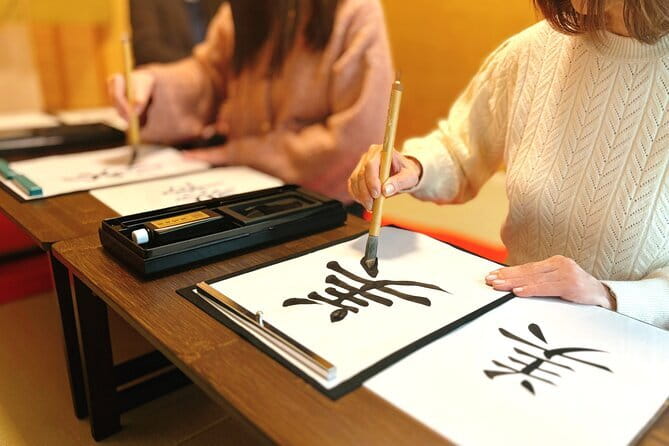
The finished kimono is cute, but the small pocket adds a useful touch. You can place a coin, a pick, or a short note inside it, turning the folded paper into a small gift instead of something that simply sits on a shelf.
That feature makes the activity work well for families. A child can make a kimono for someone at home, and an adult can use it as a compact Osaka souvenir. It also gives you a reason to choose a particular paper for a particular person.
You should handle the finished piece with care. It is still origami, not a durable fabric garment, and the folds can lose their shape if crushed in luggage. The provided folding diagram and video QR code help you make another one later, so you do not have to treat your first attempt as your only chance.
I consider the follow-up material a real part of the value. Many craft activities end when you leave the room. Here, you receive a way to repeat the design at home, share it with family, or make several small gifts after your trip.
More traditional craft workshops:
- 1.5〜2 Hours Traditional Kintsugi Work Shop in Namba Osaka
★ 5.0 · 75 reviews - Osaka: Private Japanese Calligraphy Experience
★ 5.0 · 66 reviews - From Osaka: Sakai Knife Maker or Blacksmith Walking Tour
★ 4.9 · 64 reviews - Osaka: Traditional Japanese Ceramics Private Experience
★ 5.0 · 57 reviews
What the $65.32 price includes
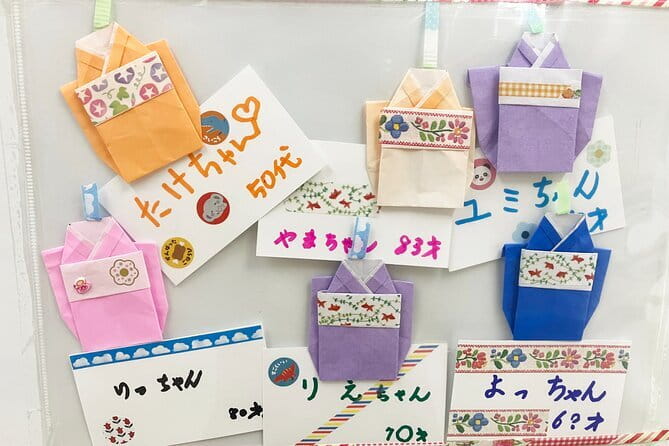
At $65.32 per person, this is not the cheapest one-hour activity in Osaka. The price includes the tools and materials needed for the class, but not your transportation. You are responsible for reaching Abeno Station and for any travel after the lesson.
The price makes more sense for a private activity than it would for a basic drop-in origami table. Only your group participates, and the instructor can spend time correcting folds and answering questions. That personal attention is especially useful for children, first-time folders, and anyone who tends to lose track of multi-step instructions.
I would compare the price with your group size and priorities. If you want a quick, inexpensive souvenir, a shop-bought item will cost less. If you want to sit down, learn a specific original design, and leave with a handmade object plus a repeatable video guide, the cost is easier to defend.
Group discounts are offered, so larger parties should check the booking price rather than assuming everyone pays the full listed rate. Confirmation is sent within 48 hours, subject to availability, which is worth noting if your Osaka schedule is tight. The experience is often reserved well ahead, with an average booking lead time of 155 days. That suggests you should not wait until the last minute if the timing matters.
A private lesson that works for families and friends

The private format changes the feel of the activity. You can choose your own pace, and a child who needs extra help is not competing with a large class. Friends can also compare patterns and make a set of kimonos together.
Most people can take part, and service animals are allowed. The activity is near public transportation, which helps, but the information provided does not describe the classroom’s exact step-free access or the size of its tables. If you need those details, ask before booking.
This is also a good choice for someone who has folded origami before but wants a fresh project. The design is more involved than a very basic shape, yet the practice round gives experienced folders a chance to settle into the method before choosing a final paper.
The class can take longer in practice. The scheduled duration is about 90 minutes, while one account describes spending around two hours and feeling that the time passed quickly. I would leave a little space in your schedule, especially if you want to look through the available designs or make more than one kimono.
Pairing the class with Abeno and Tennoji

The location gives you several sensible ways to build the rest of your day. Abeno Harukas is close by if you want a major city landmark after the craft lesson. Tsutenkaku Tower offers another well-known Osaka stop, and Tennoji Zoo is a practical pairing for families.
Do not book this activity only because it is near those sights. The lesson itself is the point, and you need to reach Exit 7 at the right time. But the nearby attractions make it easier to fit into an itinerary than a class far from the places you already plan to visit.
A short lesson also gives you a change of pace. Osaka sightseeing can involve stations, shopping, towers, and crowded streets. Sitting at a table and working with paper offers a quieter hour and a half. I like that contrast, especially if you are building a day around Tennoji and Abeno.
The setting is not presented as a historic house or a traditional costume museum. It is a classroom in a general commercial facility. That may disappoint you if you expect an old-style workshop, but it can be convenient if you prefer a straightforward activity near transport and shops.
Booking details, timing, and cancellation

The meeting point is Abeno Station, Exit 7, at the bottom of the stairs. The listed start location is in Osaka’s Abeno Ward. Transportation costs are not included, so budget for your own metro or other travel.
Mobile tickets are available, and group discounts may reduce the per-person cost. The activity is private, meaning only your own group participates. Confirmation arrives within 48 hours if space is available.
Free cancellation applies when you cancel at least 24 hours before the local start time. Cancellations inside that 24-hour window are not refunded, and changes made during that period are not accepted. This is a useful rule to keep in mind because the experience is commonly booked far ahead.
Who should book this origami kimono class?
I would choose this for a family, a pair of friends, or a small private group looking for a hands-on Osaka souvenir. It suits you if you enjoy making something with your own hands and do not mind a few careful folds before the result begins to look like a kimono.
It is also a good pick for a child who likes crafts, provided the child can sit at a table and follow instructions with help. The private setup keeps the lesson more forgiving than a large public class.
You may want to skip it if your main goal is a full lesson in Japanese kimono culture, fabric, dressing, or history. That is not what is offered. You are learning an original origami design shaped like a kimono, then taking home a paper keepsake.
Should you book the Japanese miniature kimono experience?
Book it if you want a rare, compact activity with patient instruction, a private setting, and a souvenir you make yourself. The strongest practical advantages are Hiroko’s careful teaching, the practice fold, the choice of patterned papers, and the QR code that lets you repeat the design later.
Think twice if $65.32 feels high for a paper craft or if your schedule leaves no room for a lesson that may run longer than the stated 90 minutes. For the right person, though, the value is not in the cost of the paper. It is in the quiet time, the personal help, and the chance to carry home a small piece of your own work from Osaka.
FAQ
Where do I meet for the origami kimono activity?
Meet at the bottom of the stairs at Abeno Station, Exit 7, on the Osaka Metro Tanimachi Line. The instructor will meet you there and walk with you to the classroom.
How long does the experience last?
The scheduled duration is approximately 1 hour and 30 minutes. You may want to allow extra time if you hope to look through the available traditional designs or make more than one kimono.
Is the class suitable for beginners and children?
Yes. Beginners and small children can participate, and the lesson begins with a practice fold before you make the final patterned kimono.
Is this a private activity?
Yes. Only your group participates in the activity. Group discounts are also offered.
What is included in the price?
The tools and materials needed for the activity are included. Transportation to and from the meeting point is not included.
Can I cancel for a full refund?
You can receive a full refund if you cancel at least 24 hours before the experience start time. Cancellations or changes made less than 24 hours before the start are not accepted, and the amount paid is not refunded.
Just added around Osaka
- Nara Day Trip from Osaka with a Licensed Guide★ 5.0 · 3 reviews
- Osaka Early Morning Osaka Castle Tour Avoid Crowds★ 5.0 · 3 reviews
- Guided Tour of Some Attractions in Osaka by Private Car★ 5.0 · 3 reviews
- Private Transfer Between Kyoto and Kansai Airport KIX★ 5.0 · 3 reviews
- Shared Arrival Transfer: Osaka Itami Airport to Osaka City★ 5.0 · 3 reviews
- Osaka: Sushi Making Class and Dotonbori Food Tour★ 4.7 · 3 reviews
- Osaka Night Photography Workshop★ 5.0 · 3 reviews
- Kyoto Full day Tour Kinkakuji, Kiyomizu-dera and Fushimi Inari★ 4.5 · 3 reviews
Osaka Kimono & Yukata Experiences, compared.
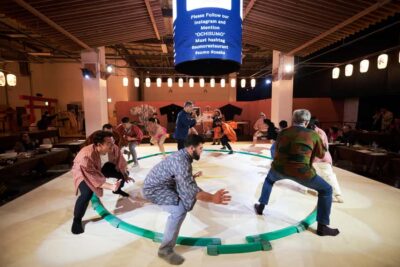
Sumo Show & Experience w/ Optional Kimono & Hot Pot
Read our review →
Learning Zen of Japanese Calligraphy in kimono near Osaka Castle
Read our review →

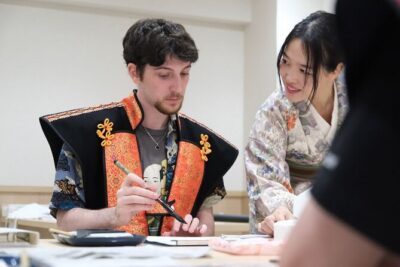
Premium Kimono Dressing, Tea Ceremony, Calligraphy, Samurai show
Read our review →
Osaka Kimono Experience – Quick Traditional Dress & Photos
Read our review →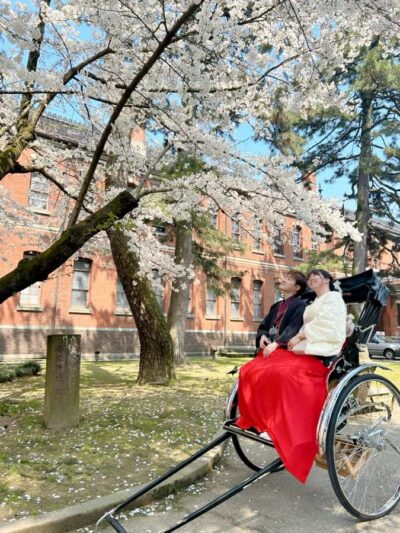

Browse the lists this tour appears in