
Reviewed · OSAKA CRAFT WORKSHOPS
Japanese Calligraphy Experience in Osaka
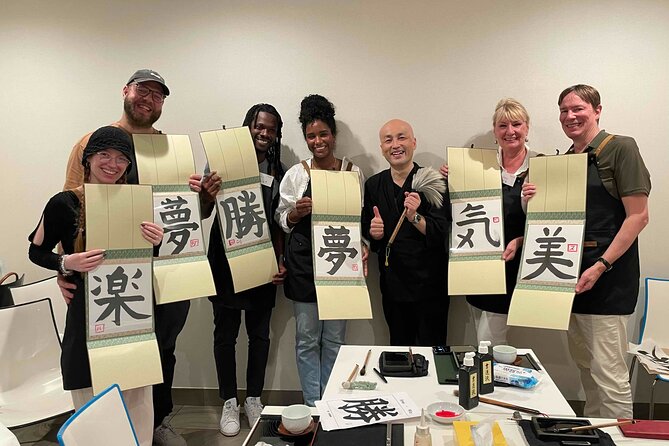
Japanese calligraphy becomes much more personal when you leave Osaka with a piece you made yourself. In this 90-minute session, instructor Ryusho explains the letters and tools, demonstrates the brush, and guides you toward one of 16 popular kanji for your finished artwork.
I like the careful, step-by-step teaching, especially the practice with horizontal and diagonal strokes before you attempt the final piece. I also like the portable art board and foldable display case, which turn your work into a useful souvenir rather than another fragile item in your luggage.
The main consideration is the fixed 2:00 pm start. You need to reach the Shinsaibashi meeting point on time, and the class is focused on a prepared set of kanji rather than free-form Japanese lettering. That keeps things manageable, but it gives you less choice if you already have a specific character in mind.
In This Review
- Key points at a glance
- Why this Osaka calligraphy class works as a souvenir
- Meeting Ryusho and learning the tools
- Practicing strokes before the final kanji
- Choosing one of 16 kanji
- Making the 242 by 273 millimeter artwork
- Green tea, Japanese sweets, and the closing photo
- Getting to the Shinsaibashi meeting point
- What $51.24 means in practical value
- Who should book this experience
- Should you book the Osaka calligraphy experience?
- FAQ
- Where does the Japanese calligraphy experience take place?
- How far is the meeting point from public transportation?
- What time does the class start?
- How long does the activity last?
- How many kanji can I choose from?
- Can I take my calligraphy home?
- What happens at the end of the class?
Key points at a glance
- Choose from 16 kanji: Pick a character from a selection designed to appeal to people from overseas.
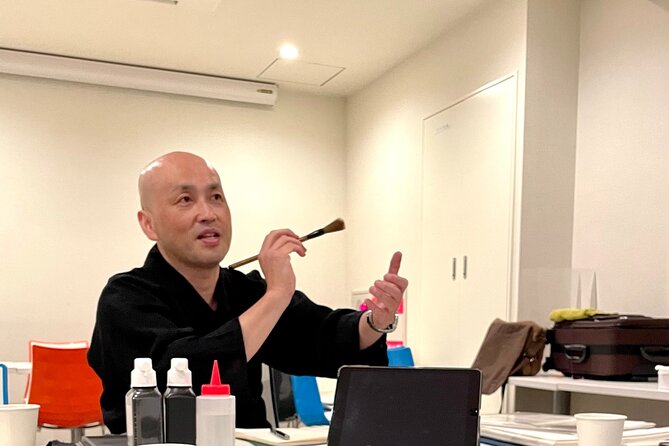
- Learn from Ryusho: The instructor has 27 years of calligraphy teaching experience and explains the tools and brush movements in clear stages.
- Take home finished art: Your work goes on a 242 by 273 millimeter board and into a foldable display case styled as a hanging scroll.
- Finish with tea and sweets: Green tea and Japanese sweets give the final part a calm, distinctly Japanese feel.
- Easy Shinsaibashi location: The activity takes place on the first floor of a hotel, about a one-minute walk from a subway station.
- Small group format: A maximum of 10 people keeps the class personal without making it a private lesson.
Why this Osaka calligraphy class works as a souvenir
Many Osaka activities leave you with photographs. This one gives you something physical to display at home, and the connection is stronger because you make it yourself. The final piece is not simply a souvenir bought from a shop. It records an hour of concentration, practice, and a few brave brush strokes.
You choose one kanji from 16 prepared examples. The characters are popular with people from overseas, so you are not expected to read Japanese or arrive with a firm grasp of the writing system. You can choose a character for its meaning, shape, or personal connection, then learn how to put it onto paper with the correct balance.
That choice is important. Japanese calligraphy is not just handwriting with a fancy brush. The direction, pressure, speed, and finish of each stroke affect the character. You will not become a master in 90 minutes, but you can gain a better sense of why the art requires such focus.
I especially like that the session treats the finished work as art. You sign your name, mount the piece on a special board, and place it in a display case that looks like a compact hanging scroll. The case folds for easier transport, so you do not need to carry a large rigid frame through the rest of your Japan trip.
More traditional craft workshops:
- 1.5〜2 Hours Traditional Kintsugi Work Shop in Namba Osaka
★ 5.0 · 75 reviews - Osaka: Private Japanese Calligraphy Experience
★ 5.0 · 66 reviews - From Osaka: Sakai Knife Maker or Blacksmith Walking Tour
★ 4.9 · 64 reviews
Meeting Ryusho and learning the tools
The class begins with an introduction to Japanese calligraphy and its place in Japanese culture. Ryusho has 27 years of experience as a calligraphy instructor, and the structure reflects that background. You start with context, then move to equipment, technique, and practice instead of being handed a brush and told to copy a character.
You learn how the calligraphy tools are used before you begin writing. That matters because the brush feels different from a pen or pencil. You control it with a combination of hand position and pressure, and the ink responds to each movement. A short explanation at the start helps you understand what you are trying to do.
Ryusho then gives a demonstration. Watching the brush in motion is useful because the written instructions alone would not show how a stroke begins, changes direction, or comes to an end. The demonstration also gives you a realistic idea of the final task. You can see that the aim is not perfect handwriting at speed. It is controlled movement and a calm mind.
The teaching style described by the class structure is friendly to beginners. You do not need previous calligraphy experience, and the activity is open to most people. If you feel unsure about making a mark on a clean sheet, the practice stage gives you room to get used to the brush before the final attempt.
Practicing strokes before the final kanji
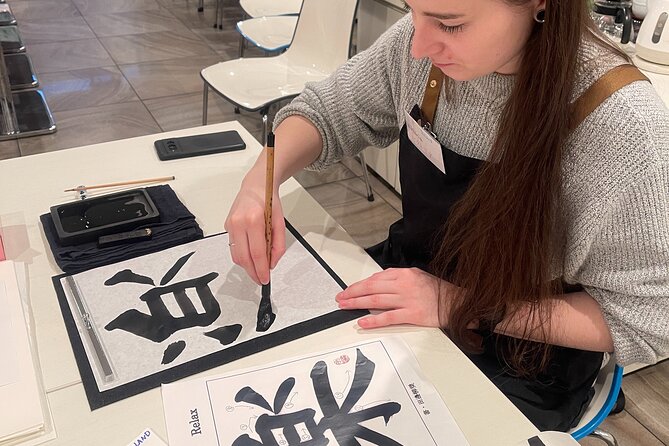
After the demonstration, you practice basic brush use. The exercises include different strokes, such as horizontal and diagonal lines. This part may look simple, but it is where you start to notice the weight of the brush and the amount of ink it carries.
I would take this stage seriously rather than rushing toward the finished character. The practice helps you learn how the brush reacts. It also gives Ryusho a chance to see where you need help and explain the movement again.
This is likely to be the most useful part for anyone who wants more than a quick photo opportunity. You are not just copying a complete symbol. You are learning the building blocks that make the symbol work. That gives the final artwork more meaning, even if your brush control is not perfect.
The class has a maximum of 10 people. That is large enough for a social activity, but small enough for the instructor to keep an eye on individual work. It is not advertised as a private lesson, so you should expect to share the room and instruction with other participants. Still, the group limit is modest for a hands-on class.
The experience lasts about 1 hour and 30 minutes. That is enough time for an introduction, demonstration, practice, final work, framing, and refreshments without turning the activity into a full afternoon commitment. You can fit it around sightseeing in central Osaka, though the fixed start time means you should plan your day around 2:00 pm.
Choosing one of 16 kanji
Once you have practiced, you choose your favorite kanji from the prepared selection. This is a good compromise between freedom and guidance. You have a meaningful choice, but you do not need to decide how to write an unfamiliar character from scratch.
For many people, the meaning will guide the decision. You might choose a character connected with strength, peace, love, happiness, or another idea that matters to you. The exact 16 options are not specified in the activity details, so you should not assume that a particular character will be available.
The shape can matter just as much as the translation. Some kanji look balanced and bold, while others have more delicate details. You can ask about the options and select one that feels right for a home display. If you have a specific kanji in mind, confirm before booking that it is among the prepared samples. The experience promises a choice from 16 popular examples, not a custom character service.
You then practice the selected kanji before making your final version. This is where the earlier brush exercises come together. The aim is to create one original piece, not to produce a stack of finished copies. You should expect small variations and personal marks. That is part of the appeal.
A completely different way to spend a day in Osaka:
- Osaka Go Karting Tour with Funny Costume
★ 5.0 · 2,658 reviews - Osaka Castle: Museum and Tower Entry Ticket
★ 4.5 · 2,380 reviews - Osaka: Shinsekai Food Tour with 13-15 Dishes at 5 Eateries
★ 4.8 · 2,204 reviews - Osaka Food Tour: 13 Dishes at 5 Local Eateries
★ 5.0 · 2,149 reviews
Making the 242 by 273 millimeter artwork
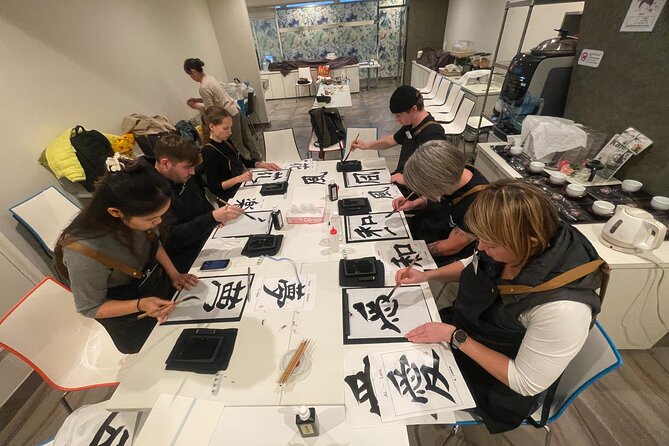
The final work is placed on a special board measuring 242 by 273 millimeters. This is large enough to display clearly, but compact enough to carry home without much trouble.
You sign your name as part of the finished piece. That small detail changes the feel of the souvenir. It marks the work as yours, and it gives you a personal record of the day rather than a generic decorative object.
The mounting process is included. Your artwork goes into a display case designed to resemble a hanging scroll, and the case folds for portability. You can take it home and display it in a room, hallway, or another small space.
Do not expect museum-quality calligraphy from a first session. The value is in the experience and the finished personal object. Ryusho’s demonstration and corrections can help you produce something pleasing, but the class does not promise professional results. If you are hard on yourself, remember that brush calligraphy rewards expression as much as mechanical precision.
The finished work also makes this activity a practical choice for people who prefer experiences over shopping. You still receive a keepsake, but you spend the time learning how it was made.
Green tea, Japanese sweets, and the closing photo
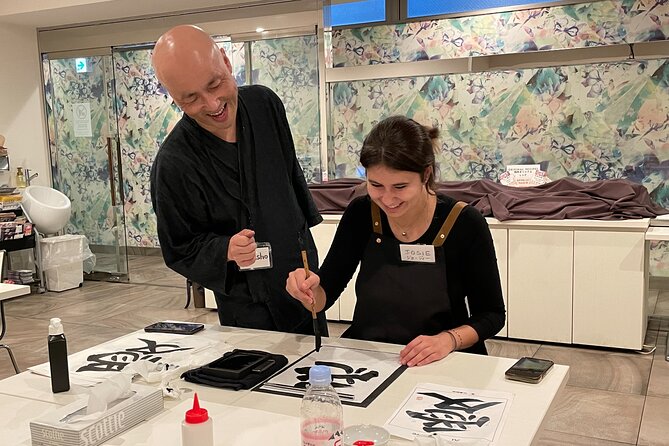
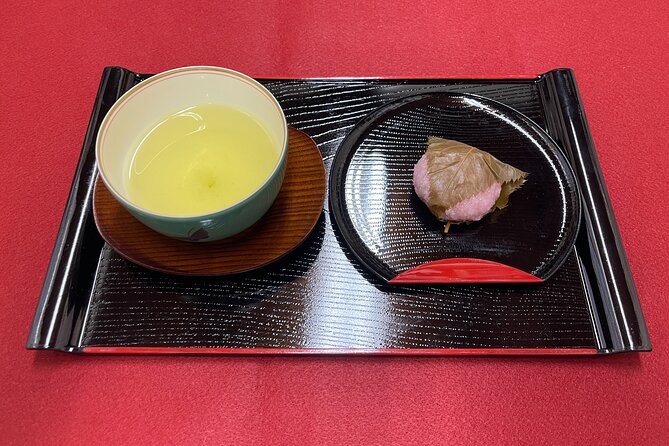
The class ends with Japanese green tea and sweets. This is not a full meal, but it gives the session a pleasant closing ritual. After the concentration required for the brush work, sitting with tea lets you look at your finished piece and enjoy the result.
The refreshments also add cultural context. The activity is not limited to a craft lesson. It introduces several parts of a traditional setting: the brush, the kanji, the quiet attention, the tea, and the sweets.
You can take a commemorative photograph at the end. The photo gives you a record of the activity, while the framed calligraphy gives you something to keep. Both are useful, especially if you are looking for a quieter Osaka memory to balance busy sightseeing days.
The class takes place on the first floor of a hotel. That is less atmospheric than a historic temple or traditional house, but it has practical advantages. You have a clear indoor meeting point, and the central location makes the activity easy to reach.
Getting to the Shinsaibashi meeting point
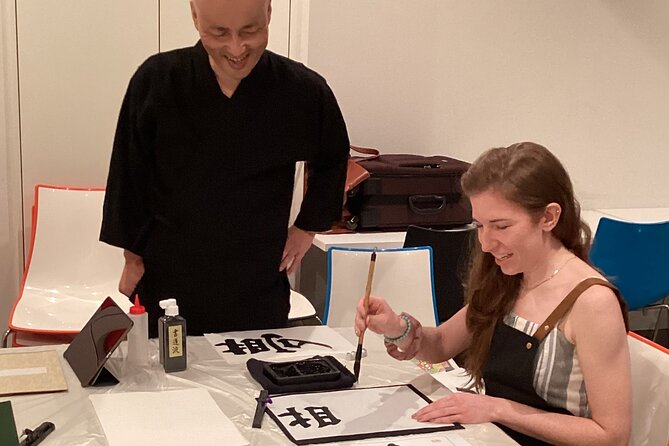
The meeting point is at 1-chōme-1-3 Higashishinsaibashi, in Chuo Ward, Osaka. It is about a one-minute walk from a subway station and close to public transportation.
Shinsaibashi is a useful base for visitors because it sits in central Osaka. The short walk matters if you are carrying shopping bags, traveling with children, or trying to arrive with enough time to settle in. Look for the hotel meeting point and allow a little extra time to find the correct first-floor entrance.
The activity starts at 2:00 pm and ends back at the same meeting point. Since the location and return point are simple, you do not need to arrange a separate pickup or work out how to get back after the class.
The fixed start is the main logistical limitation. If you plan a morning visit to another part of Osaka, leave time for lunch and transport. Arriving late could mean missing the introduction or demonstration, and those parts set up everything that follows.
What $51.24 means in practical value
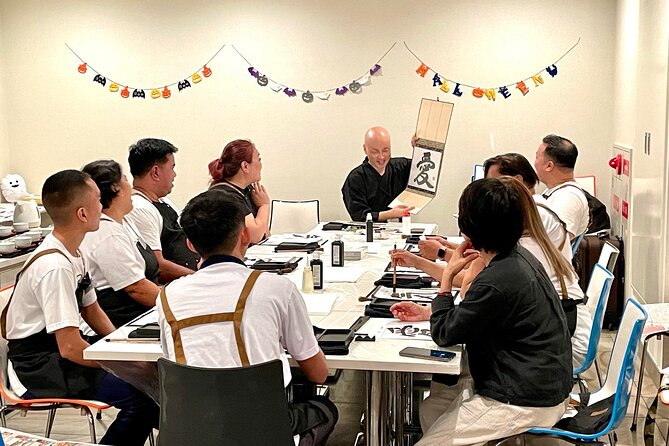
The listed price is $51.24 per person. That is more than the cost of buying a small souvenir, but the comparison is not quite fair. You are paying for instruction, materials, the prepared kanji choices, mounting, refreshments, and a guided cultural activity lasting about 90 minutes.
I consider the price reasonable if you value a hands-on experience and want a finished object to take home. The foldable frame adds practical value because you do not need to arrange packaging for a bulky souvenir. The lesson also gives you context that a shop purchase cannot provide.
The value is weaker if you only want a quick introduction to Japanese culture or are mainly interested in sightseeing. This is a focused activity. A substantial part of the time is spent practicing strokes and repeating brush movements. That suits you if you enjoy making things, but it may feel slow if you prefer fast-moving tours.
The small group cap helps support the price. With no more than 10 people, the session has a chance to feel personal, and the instructor can give basic guidance as you work. It is still worth remembering that the class is not a private appointment, and the fee is per person.
The experience is generally booked about 39 days ahead. That is a useful planning signal if your Osaka dates are fixed. You may want to reserve early, especially if you need the 2:00 pm slot to fit around other plans.
Who should book this experience
I would recommend this class to adults and families who want a calm, creative activity in central Osaka. It should suit complete beginners because the session starts with cultural background, tool instruction, and a demonstration before you choose your kanji.
It also works well for couples or friends who want matching or contrasting artworks. You can each select from the same group of characters, then compare the different brush styles and finished pieces over tea.
The class may appeal to children, but the supplied information does not give a minimum age or specific child policy. If you are booking for young children, check that point before paying. The activity requires concentration and careful brush handling.
You should also book it if you like souvenirs with a story. The final board, signature, display case, tea, and photograph all connect to the time you spent learning. If your priority is a private lesson, a large selection of characters, or advanced instruction, this may not be the right match.
Free cancellation is available when you cancel at least 24 hours before the local start time. Changes or cancellations inside that window are not accepted for a refund, so keep the fixed 2:00 pm appointment in mind when arranging your Osaka day.
Should you book the Osaka calligraphy experience?
Book it if you want to slow down, learn the basics of a traditional Japanese art, and take home something you made yourself. Ryusho’s long teaching experience, clear sequence, small group limit, and final framing make the class more substantial than a simple brush-writing demonstration.
I would be especially keen to book it for a first visit to Osaka when I wanted a cultural activity that was easy to reach and did not consume half a day. The one-minute walk from the subway, central Shinsaibashi location, green tea, sweets, and portable hanging-scroll frame all add up to a tidy and memorable experience.
Skip it if you need complete control over the kanji, want advanced calligraphy training, or dislike structured craft activities. For everyone else, the $51.24 cost buys a lesson, a personal artwork, and a quiet pause in the middle of Osaka’s city energy.
FAQ
Where does the Japanese calligraphy experience take place?
It takes place on the first floor of a hotel at 1-chōme-1-3 Higashishinsaibashi, Chuo Ward, Osaka, 542-0083, Japan.
How far is the meeting point from public transportation?
The meeting point is about a one-minute walk from a subway station and is near public transportation.
What time does the class start?
The experience starts at 2:00 pm.
How long does the activity last?
The activity lasts approximately 1 hour and 30 minutes.
How many kanji can I choose from?
You choose one favorite kanji from 16 popular kanji samples prepared for the class.
Can I take my calligraphy home?
Yes. You place your finished work on a 242 by 273 millimeter board and put it into a foldable display case styled as a hanging scroll.
What happens at the end of the class?
You enjoy Japanese green tea and sweets, appreciate your finished work, and take a commemorative photo. The activity ends at the original meeting point.
Just added around Osaka
- Nara Day Trip from Osaka with a Licensed Guide★ 5.0 · 3 reviews
- Osaka Early Morning Osaka Castle Tour Avoid Crowds★ 5.0 · 3 reviews
- Guided Tour of Some Attractions in Osaka by Private Car★ 5.0 · 3 reviews
- Private Transfer Between Kyoto and Kansai Airport KIX★ 5.0 · 3 reviews
- Shared Arrival Transfer: Osaka Itami Airport to Osaka City★ 5.0 · 3 reviews
- Osaka: Sushi Making Class and Dotonbori Food Tour★ 4.7 · 3 reviews
- Osaka Night Photography Workshop★ 5.0 · 3 reviews
- Kyoto Full day Tour Kinkakuji, Kiyomizu-dera and Fushimi Inari★ 4.5 · 3 reviews
Osaka Craft Workshops, compared.
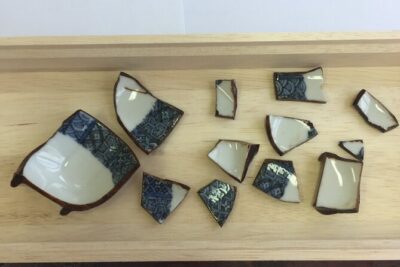
1.5〜2 Hours Traditional Kintsugi Work Shop in Namba Osaka
Read our review →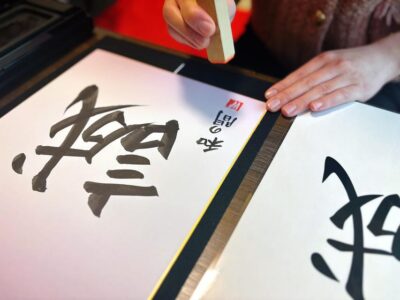
Traditional Japanese Ceramics Private Experience
Read our review →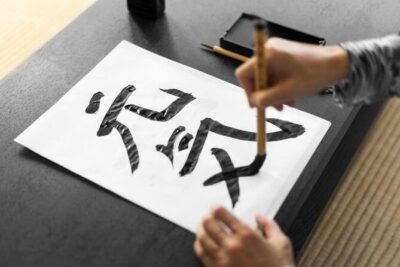

Learning Zen of Japanese Calligraphy in kimono near Osaka Castle
Read our review →
Osaka Daruma Workshop — Paint Your Own Good-Luck Daruma
Read our review →Browse the lists this tour appears in