
Reviewed · OSAKA SAMURAI & NINJA EXPERIENCES
Immerse in Judo Martial Arts Class from Japan
The best part of this Osaka experience is that you do not simply watch a martial arts demonstration. You step onto the tatami mat and learn basic judo from Akihiro Matsuura, an eighth-dan sensei who has taught for almost 50 years. I like the direct contact with a working dojo and the clear focus on respect, balance, and safe movement.
I also like the small group limit of six people, which should give you room to ask questions and receive guidance. The friendly dojo setting is another plus, especially if you want to meet local judoka rather than spend another hour sightseeing. The main drawback is time: 90 minutes is enough for an introduction, but not enough to master much, and physical contact may not suit everyone.
In This Review
- Key points to know before you book
- Why this Osaka judo class feels different
- What happens during the 90-minute session
- Learning from Akihiro Matsuura
- Beginners and experienced judoka
- The dojo setting and the cultural value
- Is $97.55 a fair price?
- Getting there and planning your visit
- Who will get the most from this class?
- What the five-star feedback tells me
- Booking, cancellation, and final advice
- FAQ
- Where does the judo class take place?
- How long does the experience last?
- Do I need previous judo experience?
- What can experienced judoka practice?
- Who teaches the class?
- What languages does the instructor speak?
- How many people can join the class?
- Can I cancel for a full refund?
Key points to know before you book
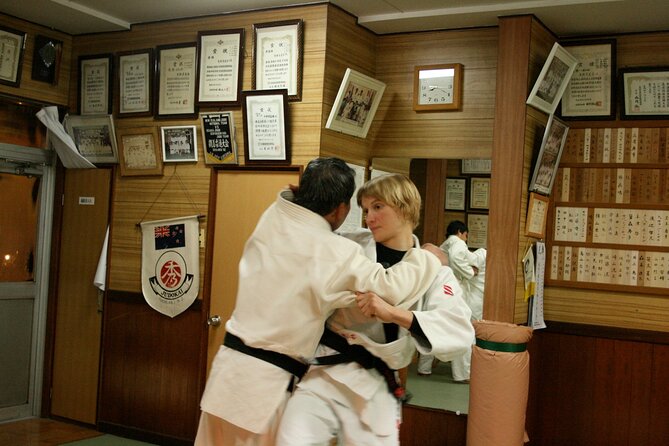
- Train at a dojo founded in 1976: Daishin Judo Club offers a real practice setting rather than a staged cultural show.
- Learn from Akihiro Matsuura: The sensei holds an eighth-dan black belt and has taught judo for nearly five decades.
- Beginners are welcome: You can learn posture, movement, grappling, ukemi breakfalls, and basic throwing forms without prior experience.
- Experienced judoka get more advanced work: Practice may include nage-waza throwing techniques, ne-waza ground techniques, and randori.
- Ask questions in three languages: The instructor speaks Japanese, English, and Korean, and can discuss judo’s history as well as its techniques.
- Expect a compact, active session: The class lasts about 90 minutes, costs $97.55 per person, and returns to the starting point in Osaka.
Why this Osaka judo class feels different
Many cultural activities let you watch someone else perform. This one asks you to take part. At Daishin Judo Club, you learn through movement, contact, and correction on the tatami mat. That makes the experience more physical than a museum visit and more personal than a standard martial arts demonstration.
Judo also gives you a practical way to understand Japanese customs. Bowing, discipline, control, and care for a training partner are not side details. They are part of the practice. You may come for the chance to throw or grapple, but you also leave with a better sense of how etiquette shapes the class.
The dojo was founded in 1976, and Akihiro Matsuura has taught for almost 50 years. His eighth-dan rank signals long experience in the art, though rank alone does not tell you exactly how the class will feel. The useful point for you is that instruction comes from a senior teacher with enough experience to work with first-timers and people who already know judo.
The group limit matters here. With no more than six participants, you are not being placed in a large commercial class where it is easy to disappear at the back. You should have a better chance to ask about a movement, check your form, or clarify a point about judo’s traditions.
More samurai and ninja experiences:
- Samurai Training Experience KENDO in Osaka
★ 5.0 · 515 reviews - OSAKA NIGHT FUSION Japanese Taiko Kabuki Samurai Dance Show
★ 4.8 · 155 reviews - Osaka: Samurai Training Experience KENDO in Osaka
★ 5.0 · 111 reviews
What happens during the 90-minute session
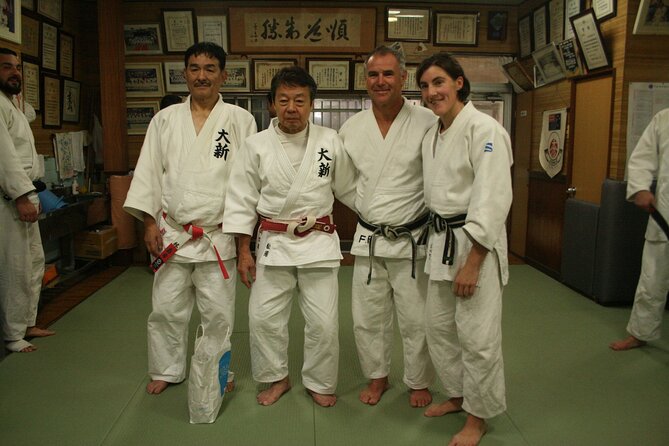
The exact flow can vary with the group, but the class is designed to meet you at your level. If you are new to judo, you begin with basic posture and movement. These early exercises may look simple, but they introduce the balance and body control that make later techniques safer and more effective.
You also learn how to grapple. That does not mean you are expected to arrive ready for a full contest. The purpose is to become familiar with the close contact and controlled movements that define judo. If you are nervous about physical contact, tell the instructor before the class begins and use the opportunity to understand what participation will involve.
A key beginner lesson is ukemi, the art of breakfalling. Learning how to fall safely is one of the most valuable parts of an introductory class. It helps you protect yourself during practice and gives you the confidence to try other movements without stiffening up every time your balance changes.
Basic throwing forms follow for beginners. You should not expect to become a polished judoka in one session. Instead, treat the throws as a first look at how judo uses timing, leverage, and balance rather than brute strength. The class gives you a physical introduction to those ideas, not a complete course.
If you already practice judo, the content can move further. The instructor can work with nage-waza, or throwing techniques, and ne-waza, or ground techniques. You can also ask about the history of judo, which helps connect the physical drills with the wider culture of the art.
One participant particularly enjoyed randori, the controlled practice of free sparring. Randori can be intense and enjoyable, but it is not something I would assume every beginner will do in the same way. Your experience level and the instructor’s judgment will shape how far the session goes.
Learning from Akihiro Matsuura
The instructor is one of the strongest reasons to consider this class. Akihiro Matsuura holds an eighth-dan black belt and has been teaching for nearly 50 years. You are not simply being handed a few tourist-friendly moves by someone giving an occasional demonstration.
Matsuura speaks Japanese, English, and Korean. That is useful for safety instructions, technique questions, and cultural context. Martial arts depend on precise movement, so the ability to ask a question in a language you understand is a real advantage.
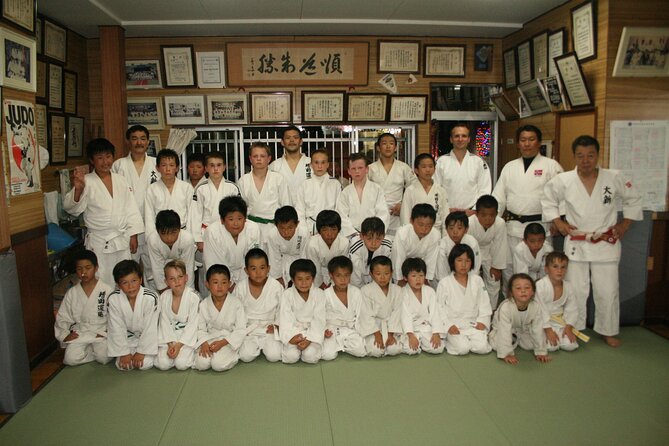
The class also appears to have a social side. The experience brings you into contact with other black-belt athletes and local students at the dojo. That can make the hour and a half feel more like a visit to a genuine practice community than a packaged performance for outsiders.
The atmosphere described by participants is welcoming and helpful. I would still keep your expectations sensible. A dojo is a training space, not a theater, and the class may feel focused and physical rather than polished for an audience. That is part of its appeal, but it may not suit someone looking for a passive cultural activity.
Beginners and experienced judoka
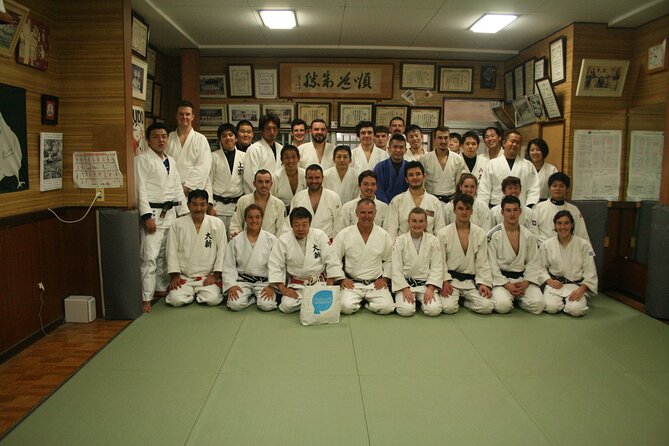
You do not need previous judo experience. The beginner path covers posture, movement, grappling, ukemi, and basic throwing forms. The important requirement is willingness to try, not a background in martial arts.
For a first-time participant, the breakfall lesson may be the most useful takeaway. Throws are exciting, but knowing how to land safely gives you a foundation for future practice. Pay close attention to the instructor’s demonstrations and do not rush to copy a movement before you understand its purpose.
If you have trained before, tell Matsuura what you already know. You can use the session to study nage-waza and ne-waza instead of repeating only the most basic material. The option to ask about technique and history also means you can shape the class around your interests.
The small group size should help both types of participant. Beginners can ask basic questions without embarrassment, while experienced judoka may have more opportunity to receive focused corrections. Still, the class lasts only about 90 minutes, so an experienced practitioner should view it as a valuable visit and training sample, not a full seminar.
A completely different way to spend a day in Osaka:
- Osaka Go Karting Tour with Funny Costume
★ 5.0 · 2,658 reviews - Osaka Castle: Museum and Tower Entry Ticket
★ 4.5 · 2,380 reviews - Osaka: Shinsekai Food Tour with 13-15 Dishes at 5 Eateries
★ 4.8 · 2,204 reviews - Osaka Food Tour: 13 Dishes at 5 Local Eateries
★ 5.0 · 2,149 reviews
The dojo setting and the cultural value
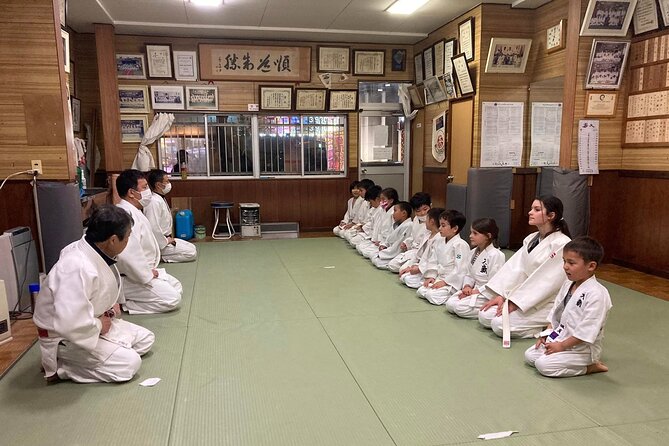
Daishin Judo Club operates from a traditional dojo connected with Daishin Judo Orthopedic Clinic. The meeting point is Daishinjudo Orthopedic Clinic at 10-22 Funahashicho in Tennoji Ward, Osaka. You return to this same point when the activity ends.
The setting gives the experience a stronger cultural link than a hotel meeting room or a temporary studio. A dojo is a place for training, focus, and etiquette. You are entering a space built around practice, not just borrowing Japanese imagery for a short class.
Judo teaches more than self-defense. The session introduces respect for a partner, controlled use of strength, discipline, and mental focus. These ideas are especially clear when you learn ukemi or practice a throw that depends on cooperation and timing.
That said, you should not book this expecting a lecture on Japanese culture. The cultural learning happens through participation. You will understand the customs best by following the class, observing how people interact, and asking questions when the instructor invites them.
Is $97.55 a fair price?
At $97.55 per person, this is not a cheap drop-in exercise class. The session lasts about 90 minutes, so the price works out to roughly $65 per hour. For a visitor focused only on fitness, that may feel high.
The value improves if you care about personal instruction and local access. You receive a small-group class, instruction from an eighth-dan teacher, the use of a traditional dojo, and a chance to train alongside local practitioners. Those are difficult experiences to arrange on your own during a short stay in Osaka.
The six-person limit is important to the price calculation. A class of six gives you more direct attention than a large group, though no booking can promise equal one-to-one instruction for the full session. If the class is full, you should still expect to share practice time with others.
I would compare this cost with other hands-on cultural activities, not with a normal gym visit. If you want a meaningful introduction to judo and Japanese etiquette, the fee can be reasonable. If you simply want to watch martial arts or try a few dramatic throws, you may find better value elsewhere.
The activity is often booked about 30 days ahead. That does not guarantee that every date sells out, but it is a useful planning clue. If this is important to your Osaka schedule, reserving well ahead makes sense.
Getting there and planning your visit
The class begins and ends at Daishinjudo Orthopedic Clinic, 10-22 Funahashicho, Tennoji Ward, Osaka, postal code 543-0024. The location is near public transportation, which makes it practical to reach without arranging a private vehicle.
Use the full address when planning your route. The activity is associated with Daishin Judo Club, but the stated meeting point is the clinic. Confirming that distinction before you set out can prevent a rushed arrival.
The mobile ticket is convenient for a day of sightseeing. You can keep the confirmation on your phone instead of carrying a printed voucher. Confirmation is provided when you book.
The class ends back at the meeting point, so you do not need to arrange a separate pickup. That also makes it easier to plan a meal or another activity afterward, though you should allow yourself time to change and recover if the training is demanding.
The provider states that service animals are allowed and that most people can participate. The class involves falling, grappling, and throwing practice, so you should think honestly about your comfort with physical activity before booking. The available information does not provide a detailed list of clothing, equipment, or changing facilities, so ask the provider if those details matter to you.
Who will get the most from this class?
I would recommend this experience to you if you want to do something active and culturally grounded in Osaka. It suits solo visitors, couples, and small groups who like learning by doing.
It is especially good for:
- First-time visitors curious about judo
- Martial arts students who want to train in Japan
- People interested in Japanese etiquette and traditional practice
- Visitors who prefer small-group activities
- Anyone who enjoys meeting local people through a shared activity
Families and older participants should consider the physical side carefully. The information says most people can participate, but it does not describe a special children’s version or a modified class for limited mobility. If you have an injury or concern about falling, contact the provider before reserving.
This is also not the best choice if you dislike close physical contact. Judo is built around gripping, balance, falls, and controlled throws. Even a beginner lesson asks you to take part rather than stand at the edge and watch.
What the five-star feedback tells me
The strongest pattern is the welcome. The experience has been praised for friendly instructors, helpful students, and a respectful atmosphere. That matters because stepping into a dojo as an outsider can feel intimidating, especially if the other people in the room have years of training.
Another clear strength is accessibility for beginners. You do not need experience, but you do need to be open to trying the movements. The class is designed to teach the basics rather than assume you already know how to bow, grip, fall, or move.
The feedback also points to the quality of the training itself. Randori was described as intense and enjoyable, which suggests the session can offer genuine practice rather than a watered-down tourist activity. I would still remember that intensity is likely to depend on your level and the structure of your class.
Finally, the dojo community seems open to repeat visits. That is a useful sign for anyone staying in Osaka longer or returning to Japan. You are not being promised a private master class, but you can expect a chance to train with people who are happy to share their sport.
Booking, cancellation, and final advice
You can cancel for a full refund up to 24 hours before the local start time. Cancellations and changes made less than 24 hours before the activity are not accepted for a refund, so avoid booking it on a day when your plans are uncertain.
I would book this class if you want an active introduction to Japanese culture and are comfortable with falling, grappling, and learning in a real dojo. The small group, multilingual instruction, senior sensei, and friendly training community give the experience substance beyond a quick photo opportunity.
I would skip it if you want a relaxed, observation-only activity or if the price feels too high for 90 minutes. For the right person, though, this is a memorable way to spend part of an Osaka visit, especially if you value authentic contact, practical instruction, and the discipline behind the sport.
FAQ
Where does the judo class take place?
The class begins at Daishinjudo Orthopedic Clinic, 10-22 Funahashicho, Tennoji Ward, Osaka, 543-0024, Japan. The activity ends back at this meeting point.
How long does the experience last?
The judo class lasts approximately 1 hour and 30 minutes.
Do I need previous judo experience?
No. Beginners can learn basic posture and movements, grappling, ukemi breakfalls, and basic throwing forms.
What can experienced judoka practice?
Participants with judo experience can work on nage-waza throwing techniques and ne-waza ground techniques. You can also ask questions about judo’s history.
Who teaches the class?
The sensei is Akihiro Matsuura, an eighth-dan black belt who has taught judo for almost 50 years.
What languages does the instructor speak?
The instructor can speak Japanese, English, and Korean.
How many people can join the class?
The activity has a maximum of six participants.
Can I cancel for a full refund?
Yes. You can cancel at least 24 hours before the experience start time for a full refund. Cancellations or changes made less than 24 hours before the start time are not refunded or accepted.
Just added around Osaka
- Nara Day Trip from Osaka with a Licensed Guide★ 5.0 · 3 reviews
- Osaka Early Morning Osaka Castle Tour Avoid Crowds★ 5.0 · 3 reviews
- Guided Tour of Some Attractions in Osaka by Private Car★ 5.0 · 3 reviews
- Private Transfer Between Kyoto and Kansai Airport KIX★ 5.0 · 3 reviews
- Shared Arrival Transfer: Osaka Itami Airport to Osaka City★ 5.0 · 3 reviews
- Osaka: Sushi Making Class and Dotonbori Food Tour★ 4.7 · 3 reviews
- Osaka Night Photography Workshop★ 5.0 · 3 reviews
- Kyoto Full day Tour Kinkakuji, Kiyomizu-dera and Fushimi Inari★ 4.5 · 3 reviews
Osaka Samurai & Ninja Experiences, compared.

Osaka 2-Hour Genuine Kendo / Samurai Experience In Japan
Read our review →
Learn Bushido – Trial Slashing with Samurai Sword
Read our review →
Samurai Show, Tea Ceremony, Japanese Traditional Activities
Read our review →
Private Samurai Experience – Train with Sword Master
Read our review →
Honor – Experience Samurai & traditional Culture to the fullest
Read our review →Browse the lists this tour appears in