
Reviewed · OSAKA SAMURAI & NINJA EXPERIENCES
Experience Samurai and traditional Culture to the fullest
The sharpest part of this Osaka experience comes when you handle a real samurai sword and try cutting practice under instruction. You also write a kanji character, take part in a tea ceremony, and wear armor for photographs connected to the 1615 Battle of Osaka. The mix of arts and martial training gives the afternoon more substance than a simple dress-up session.
I like the patient, step-by-step teaching, especially for calligraphy and sword handling. I also like that a photographer sends your pictures to a designated email address, so you can focus on the activity instead of managing your phone. The main consideration is the price: at $168 per person for three hours, this suits visitors who want a private, hands-on cultural activity rather than a quick photo stop.
In This Review
- Key points to know before booking
- A samurai afternoon with real structure
- Kimono, brush, and the discipline of the first stroke
- Samurai calligraphy and words written before death
- Tea ceremony, manners, and the value of slowing down
- Learning the katana before making a cut
- Armor and the 1615 Battle of Osaka
- The optional seppuku section needs careful thought
- Is $168 a fair price?
- Who will enjoy this Osaka experience?
- Practical details that make the day easier
- Should you book the samurai experience?
- FAQ
- How long does the samurai experience last?
- How much does the experience cost?
- Is transportation included?
- Where does the activity take place?
- What is the meeting point landmark?
- What language is used by default?
- What should I bring?
- Can children join the experience?
- Can I cancel or pay later?
Key points to know before booking
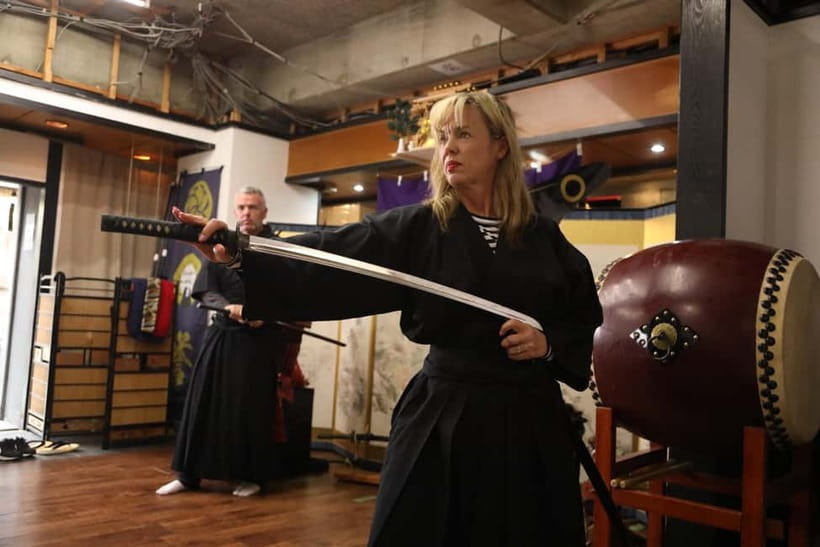
- Katana cutting is a guided activity: You learn how to hold and use the sword before attempting the cut.
- The day begins with kimono and calligraphy: You practice brush strokes, choose a kanji character, and write it in a formal style.
- Tea ceremony teaches manners as much as tea: The focus is on courtesy, gestures, and hospitality.
- Armor photographs connect to Osaka history: You pose as a Toyotomi soldier during the 1615 Osaka Summer Battle.
- The group is private: Your three-hour session is not combined with a large public class.
- Arrive 30 minutes early: You need time for instructions and changing clothes.
A samurai afternoon with real structure
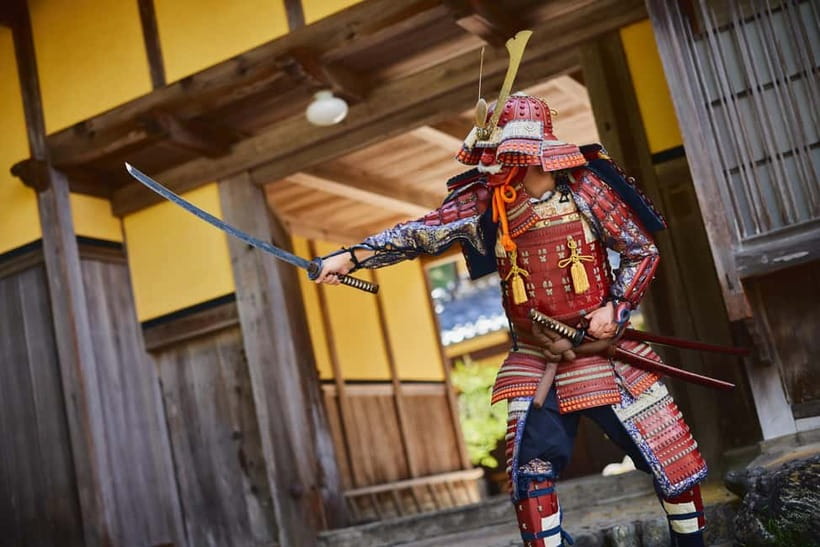
This is not just a costume rental beside Osaka Castle. The three-hour program moves through several parts of traditional Japanese culture, then shifts into sword practice and armor photography.
You begin by changing into a kimono. That matters because the clothing sets the tone for the calligraphy and tea portions, where posture, controlled movement, and courtesy are part of the lesson. Later, you change into samurai clothing and armor for the martial section and photographs.
The program is private, and the staff includes English-speaking personnel and a certified professional instructor. English is the default language for interpretation. Italian, Spanish, French, Chinese, Thai, and Indonesian support may be possible, but you need to ask about staff availability before booking.
The address is Excellence Takayama 1F, 2-3-19 Shiginonishi, Joto-ku, Osaka-shi. Look for a wooden sign reading Honor of the Samurai, along with activity pamphlets and kimonos or hakama hanging outside. You should arrive 30 minutes before your booked time. That early arrival is not wasted time, since changing clothes and receiving instructions are part of getting ready.
More samurai and ninja experiences:
- Samurai Training Experience KENDO in Osaka
★ 5.0 · 515 reviews - OSAKA NIGHT FUSION Japanese Taiko Kabuki Samurai Dance Show
★ 4.8 · 155 reviews - Osaka: Samurai Training Experience KENDO in Osaka
★ 5.0 · 111 reviews
Kimono, brush, and the discipline of the first stroke
The calligraphy lesson is a quiet start to an otherwise physical afternoon. You learn how to prepare for writing, hold the brush, and use the traditional tools. The instructor then introduces basic strokes called tome, hane, and harai.
These terms describe different ways of ending or moving a brush stroke. The lesson is not about producing perfect Japanese handwriting in a few minutes. It is about learning controlled movement and paying attention to the order of each stroke.
You choose one kanji character and copy it according to the correct stroke order. This personal choice gives the activity a small creative element, but the method remains disciplined. You are not simply painting a decorative symbol. You are learning why the order and shape matter.
The practice lasts about 20 minutes. That is enough time to understand the basics without letting the quieter part of the program take over the whole afternoon. If you have never used a Japanese calligraphy brush, expect a little awkwardness at first. The useful part is the patient correction. One participant specifically praised the staff for taking time with questions and for guiding the techniques carefully.
Samurai calligraphy and words written before death
Next comes a shorter exercise called Samurai Calligraphy. You write the kanji character you just selected while paying closer attention to technique.
The theme is resignation, meaning the final words a person writes before leaving this world. This is a serious idea, and it gives the calligraphy portion a connection to the samurai code rather than treating the brush as a simple craft prop.
The lesson takes about 10 minutes. You should not expect a long lecture on Japanese history, since the supplied schedule gives this portion a brief time slot. Instead, the point is to write with care and understand how words, character, and personal conduct are linked in the activity’s presentation of Bushido.
This section may appeal most to adults and older children who enjoy historical themes. It may feel too solemn for someone looking only for a light costume experience. The minimum age is 10, and that limit makes sense here.
Tea ceremony, manners, and the value of slowing down
The tea ceremony lasts about 30 minutes. A tea master prepares and serves powdered green tea while explaining the etiquette and gestures involved.
You are learning more than how to drink tea. The focus includes manners, hospitality, respect, and the careful movements expected in a formal setting. The program connects these values to honor in the Bushido tradition.
I like this part because it gives the afternoon a needed change of pace. Calligraphy asks for concentration, sword work demands physical attention, and the tea ceremony makes you watch how a host and guest behave toward one another.
The experience description does not promise a full historical tea-school lecture, so book this as a practical introduction rather than a specialist study session. You will gain a sense of the ceremony’s rules and spirit within the half-hour format.
The tea section also helps explain why the program includes several different activities. Samurai culture is presented here through writing, hospitality, clothing, weapons, and public duty. That broader approach gives the $168 price more justification than a single sword lesson would.
A completely different way to spend a day in Osaka:
- Osaka Go Karting Tour with Funny Costume
★ 5.0 · 2,658 reviews - Osaka Castle: Museum and Tower Entry Ticket
★ 4.5 · 2,380 reviews - Osaka: Shinsekai Food Tour with 13-15 Dishes at 5 Eateries
★ 4.8 · 2,204 reviews - Osaka Food Tour: 13 Dishes at 5 Local Eateries
★ 5.0 · 2,149 reviews
Learning the katana before making a cut
The sword trial is the most physically dramatic part of the program. You first learn how to use a samurai sword and consider the responsibility of carrying a deadly weapon.
The activity then allows you to handle a serious sword and try cutting practice with instructor guidance. The schedule gives this portion about 30 minutes. That is enough for an introduction, but not enough to turn you into a trained swordsman. The program itself stresses that training has no end, which is a useful reminder not to confuse a supervised trial with martial arts instruction.
You should listen closely and follow every safety direction. The value is not only the thrill of making a cut. The lesson connects sword handling with self-respect, discipline, and responsibility.
Recent written feedback gives this part particular weight. One participant described the katana as incredible to use, while another praised the patient teaching of the sword technique. That combination matters. A sword activity can feel rushed if the instructor moves too quickly, but the available feedback suggests that careful instruction is one of this program’s strengths.
The description uses language about the world’s best cutting edge, but you should read that as promotional wording, not a technical comparison. The practical promise is simpler: you will learn basic handling and attempt a supervised cut.
Armor and the 1615 Battle of Osaka
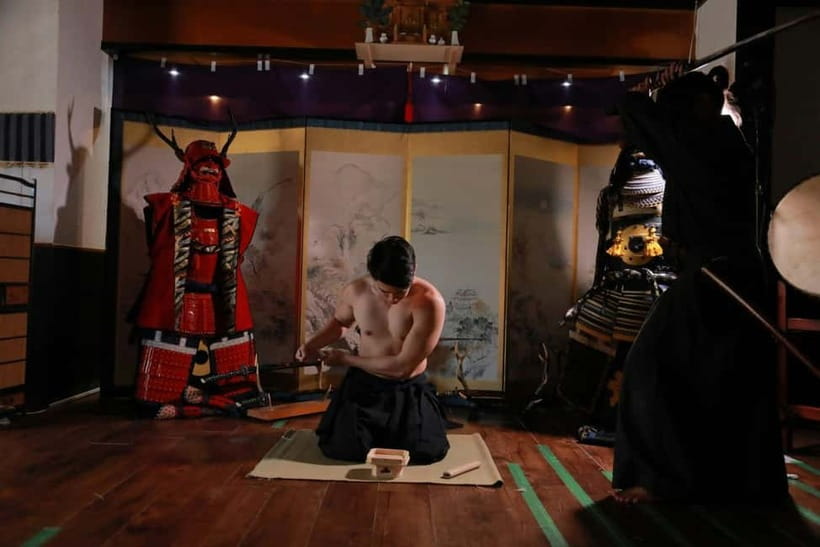
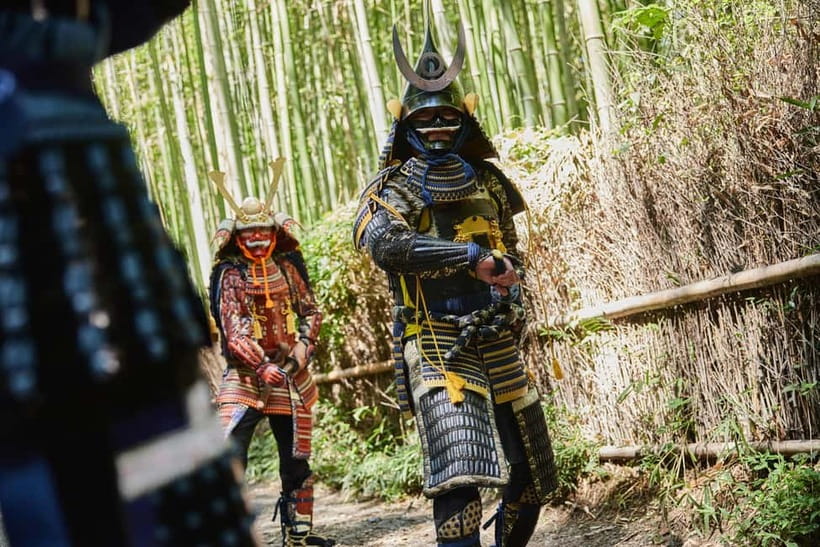
After the sword lesson, you put on samurai armor and take part in a staged battle theme connected to Osaka’s past. The story is set in April 1615, when the Osaka Summer Battle began.
You take the role of a soldier on Toyotomi’s side and pose as one of the best fighters. The photographs are taken on the grounds of Osaka Castle, with the castle used as the key background and historical symbol.
The schedule lists about 30 minutes for wearing armor and participating in the battle theme, followed by another 30 minutes for photography. The wording of the activity information mentions wearing armor indoors in the included features, while also describing photographs on the grounds of Osaka Castle. Ask the operator how the current session divides indoor armor fitting and outdoor photographs, since weather and site arrangements may affect the exact flow.
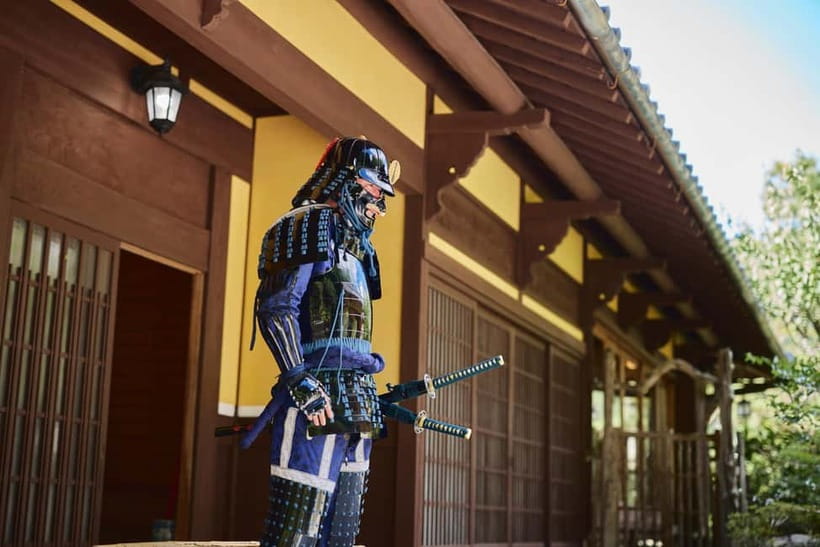
Armor is heavier and less flexible than a rental kimono, so wear a simple T-shirt underneath. The activity specifically asks you to bring one. Pets, baby strollers, alcohol, and drugs are not allowed, and the experience is not designed for babies or children under 10.
The photographs are a real part of the value here. A photographer covers the events and sends the image data to a designated email address. That means you do not have to stop each activity to take self-portraits, and you get a record of the calligraphy, sword, and armor portions rather than one standard costume picture.
The optional seppuku section needs careful thought
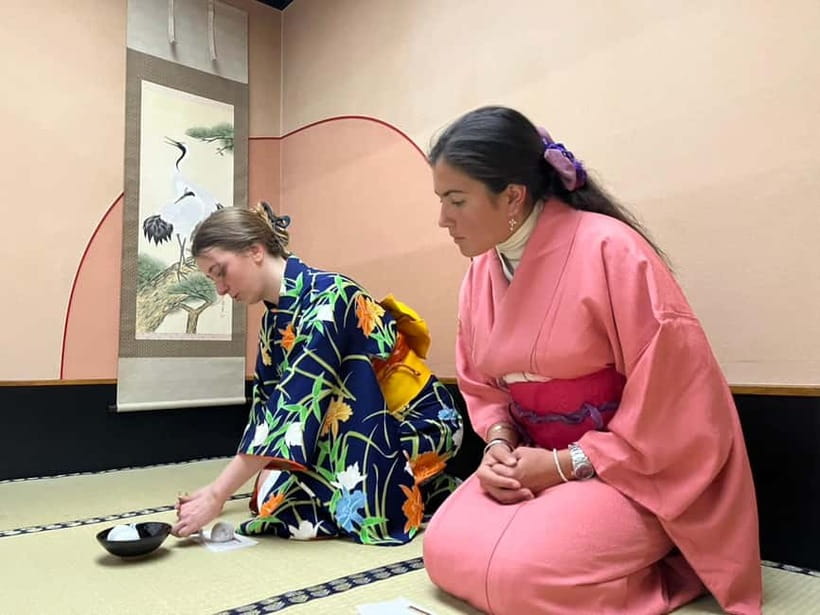
There is an optional 30-minute activity about seppuku, also called harakiri. It presents the samurai idea of preparing to die for one’s lord, the role of righteousness, and the concept of making a beautiful death part of a beautiful life.
This is a serious historical and cultural theme, not a casual game. The description discusses how samurai might choose death if they could not die in battle, and it frames the subject through Bushido and honor.
You should ask for a clear explanation of what the option involves before adding it. The supplied information identifies it as an activity, but does not describe any physical staging, props, or safety arrangements. If you prefer the calligraphy, tea, sword, and armor sections, you can simply take the main program without this option.
Is $168 a fair price?
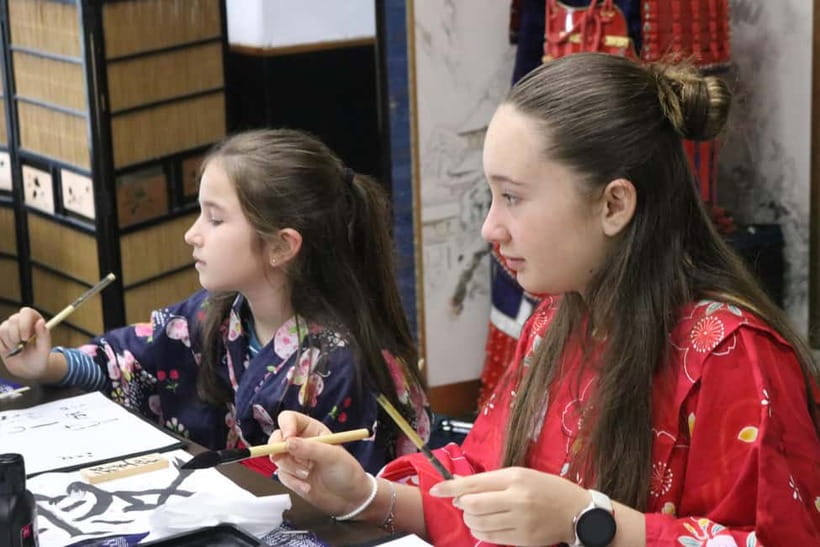
At $168 per person, this is not a bargain activity. The price becomes easier to justify if you value private instruction, several different cultural lessons, professional photography, and the chance to wear armor near Osaka Castle.
You are paying for three hours of staff time, a certified instructor, clothing, armor, calligraphy supplies, tea ceremony instruction, sword practice, and photographs. Transportation is not included, and there is no hotel or train-station pickup. You need to make your own way to the Osaka address.
For comparison purposes, ask yourself what kind of afternoon you want. If you only want one samurai photograph, a less expensive costume session may suit you better. If you want a structured program that combines traditional arts with supervised sword handling, this package offers much more.
The private format is important for the value calculation. You are not placed in a large crowd, and the staff can give direct attention during brush work and sword handling. That personal guidance was one of the clearest strengths in the available feedback, with particular praise for patient answers and friendly instruction.
Who will enjoy this Osaka experience?
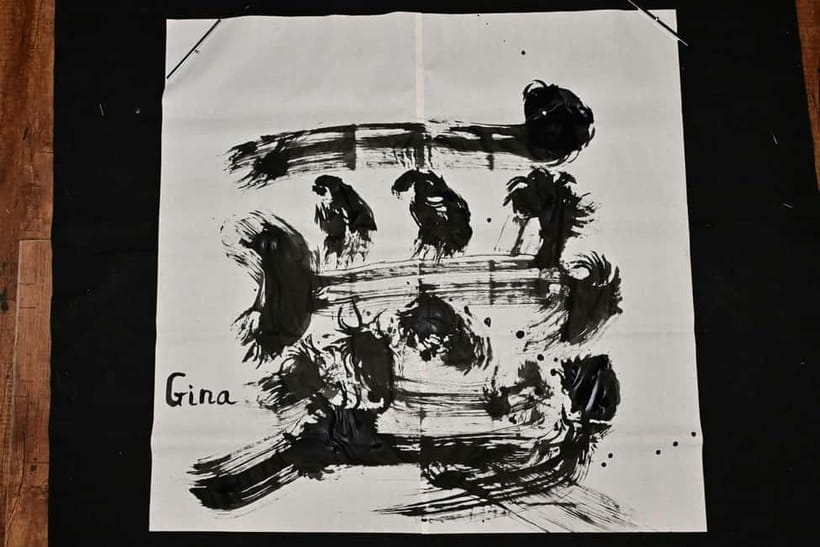
I would recommend it to adults, older children aged 10 and above, couples, families with older children, and anyone who wants a more active cultural lesson.
It is especially suitable if you:
- Want photographs in samurai armor with Osaka Castle connected to the scene
- Have never tried Japanese calligraphy or a tea ceremony
- Prefer a private group to a large class
- Want English-language instruction
- Enjoy historical role-play with a serious tone
- Are comfortable handling a sword under close instruction
It may not suit you if you dislike changing clothes, have limited time, or want a relaxed sightseeing stop with no physical activity. The sword portion requires attention, and the armor portion may feel warm or restrictive. The experience is also not suitable for babies, children under 10, or people over 95.
Practical details that make the day easier
Bring a T-shirt for wearing under the clothing and armor. Arrive 30 minutes early for changing and instructions, rather than treating the reservation time as the moment you walk through the door.
English is the default language. Other language interpretation may be available in Spanish, Italian, French, Chinese, Thai, or Indonesian, but staff availability is limited. Confirm this before paying if language support is important to you.
The experience offers free cancellation up to 24 hours before the start time, and you can reserve now and pay later. Those policies help if your Osaka schedule is still moving around, but they do not include transportation or personal expenses.
The meeting landmark is unusually clear: find the wooden Honor of the Samurai sign, the pamphlet rack, or the kimonos and hakama outside. You can use the provided map link to check the route before leaving.
Should you book the samurai experience?
Book it if you want an afternoon that combines Japanese etiquette, calligraphy, tea, sword handling, and armor photography in one private session. The patient instruction, photographer, and variety of activities make it more meaningful than a quick costume rental.
Think twice if $168 feels high for a three-hour activity or if your main goal is only a photograph. Also ask about the exact armor photography arrangements and any interpreter needs before booking.
For the right visitor, this is a strong Osaka choice. You leave with practical impressions of several traditional arts, a supervised attempt at samurai sword cutting, and photographs tied to Osaka Castle and the Battle of Osaka.
FAQ
How long does the samurai experience last?
The main experience lasts three hours. The optional seppuku and harakiri activity is listed as an additional 30-minute section.
How much does the experience cost?
The listed price is $168 per person.
Is transportation included?
No. Transportation and pickup or drop-off at a train station or hotel are not included.
Where does the activity take place?
The meeting address is Excellence Takayama 1F, 2-3-19 Shiginonishi, Joto-ku, Osaka-shi, Osaka 536-0014.
What is the meeting point landmark?
Look for a wooden sign reading Honor of the Samurai. A rack with activity pamphlets is in front of the store, and kimonos and hakama may be hanging outside.
What language is used by default?
English is the default language for interpreters. Spanish, Italian, French, Chinese, Thai, and Indonesian support may be available if staff schedules allow it.
What should I bring?
Bring a T-shirt to wear under the clothing and armor.
Can children join the experience?
Children under 10 are not permitted. Babies under 1 year and people over 95 are also listed as unsuitable for the activity.
Can I cancel or pay later?
You can cancel up to 24 hours in advance for a full refund. Reserve now and pay later is also available.
Just added around Osaka
- Nara Day Trip from Osaka with a Licensed Guide★ 5.0 · 3 reviews
- Osaka Early Morning Osaka Castle Tour Avoid Crowds★ 5.0 · 3 reviews
- Guided Tour of Some Attractions in Osaka by Private Car★ 5.0 · 3 reviews
- Private Transfer Between Kyoto and Kansai Airport KIX★ 5.0 · 3 reviews
- Shared Arrival Transfer: Osaka Itami Airport to Osaka City★ 5.0 · 3 reviews
- Osaka: Sushi Making Class and Dotonbori Food Tour★ 4.7 · 3 reviews
- Osaka Night Photography Workshop★ 5.0 · 3 reviews
- Kyoto Full day Tour Kinkakuji, Kiyomizu-dera and Fushimi Inari★ 4.5 · 3 reviews
Osaka Samurai & Ninja Experiences, compared.

Osaka 2-Hour Genuine Kendo / Samurai Experience In Japan
Read our review →
Learn Bushido – Trial Slashing with Samurai Sword
Read our review →
Samurai Show, Tea Ceremony, Japanese Traditional Activities
Read our review →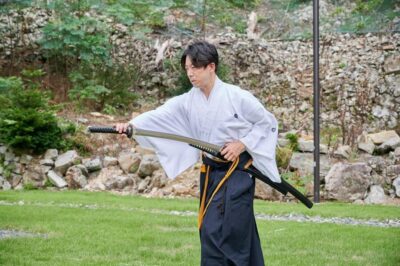
Private Samurai Experience – Train with Sword Master
Read our review →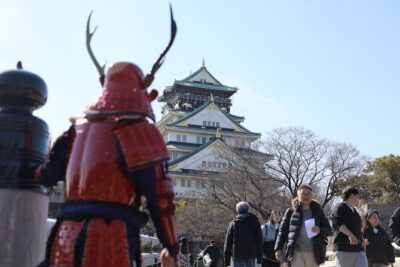
Honor – Experience Samurai & traditional Culture to the fullest
Read our review →Browse the lists this tour appears in