
Reviewed · RAMEN & GYOZA COOKING CLASSES
Cooking Class for Ramen and Gyoza in a Quiet Old Osaka House
The best part of this Osaka class is the setting: you cook in a renovated 90-year-old house, not a polished restaurant kitchen. Ayumi, a local cooking teacher and certified dietary education instructor, guides you through ramen and gyoza while sharing the home-style food culture she grew up with.
I like the small maximum of six people, which leaves room for questions and conversation. I also like that you make both the ramen and the gyoza from their basic components, including homemade wrappers, rather than simply watching a demonstration. The main consideration is the price, $93.44 per person, which is a serious lunch cost even though it includes instruction and a full meal.
In This Review
- Key points to know before booking
- Cooking ramen inside an old Osaka home
- First, learn the ingredients behind Japanese home cooking
- Building soy-sauce ramen from the kitchen up
- Making gyoza wrappers and filling
- Eating lunch with the instructor
- Ayumi’s teaching style and the group atmosphere
- The small gift at the end
- Is $93.44 a fair price?
- Who will enjoy this cooking class most?
- Meeting, cancellation, and timing tips
- Should you book the ramen and gyoza class?
- FAQ
- Where does the cooking class meet?
- What time does the class begin?
- How long does the experience last?
- What food will I cook?
- Is the class taught in English?
- How many people can join?
- Can children under six attend?
Key points to know before booking
- Cook in a 90-year-old Osaka house: The restored home provides a quieter, more personal setting than a large culinary school.
- Make two Japanese staples: You prepare soy-sauce ramen with pork toppings and gyoza filled with pork or beef and vegetables.
- Learn with Ayumi: She is a local instructor with more than five years of teaching experience and conducts the class in English.
- Small group size: The class accepts no more than six people, helping it feel like a shared meal rather than a crowded lesson.
- Take home a small gift: Each participant receives Japanese-made chopsticks in an origami holder with cute decorations.
- Plan ahead: The class is often booked about 38 days in advance, and confirmation arrives within 48 hours if space is available.
Cooking ramen inside an old Osaka home
You meet at 10:30 am at 6 Chome-13 Tanimachi, in Osaka’s Chuo Ward. The activity begins and ends at this same location, and it is near public transportation. You need to arrange your own way there, since private transportation is not included.
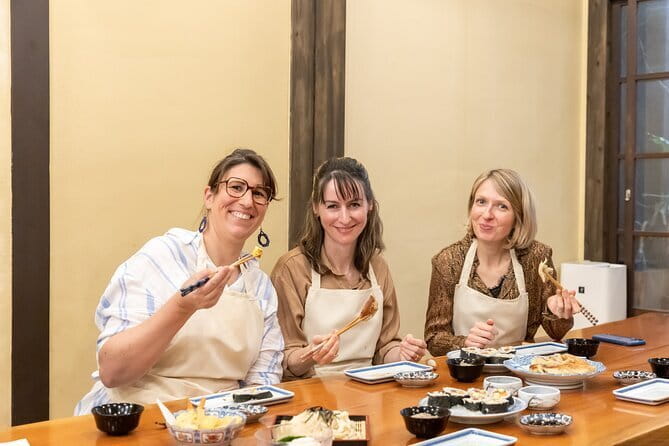
The house itself is part of the appeal. A 90-year-old building gives the class a domestic feel that a modern cooking studio cannot easily copy. You are not just learning a restaurant dish in a commercial room. You are entering a place designed to feel like a Japanese home, with the atmosphere that comes from old rooms and a smaller kitchen setting.
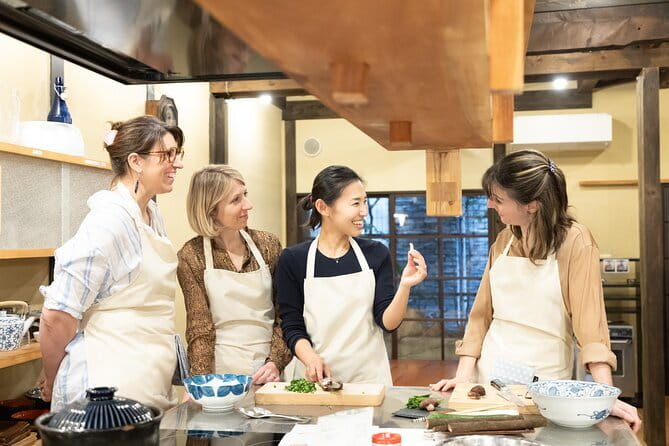
That setting matters because the class is built around conversation. Ayumi grew up eating Japanese home cooking every day, and she teaches from that personal background. You get practical food information, but you also have room to compare Japanese customs with your own cooking habits.
The class lasts about two hours and 45 minutes. That is enough time for an introduction, hands-on preparation, cooking, and eating without making the morning feel rushed. Still, this is not a quick drop-in lesson. You should set aside most of the late morning and early afternoon.
More ramen and gyoza classes:
- Osaka: Five Must-See Highlights Walking Tour & Ramen Lunch
★ 4.7 · 411 reviews - Osaka: Ramen and Gyoza Cooking Class in Dotonbori
★ 5.0 · 378 reviews - Ramen and Gyoza Cooking Class in Osaka
★ 5.0 · 202 reviews
First, learn the ingredients behind Japanese home cooking
The class begins with an introduction to ingredients and condiments commonly found in Japanese kitchens. This opening gives you a useful base before you start handling the food.
That matters especially if you want to repeat the recipes at home. Ramen and gyoza can look simple when served in a bowl or arranged on a plate, but the result depends on how ingredients work together. Learning what the condiments do helps you understand the dish instead of merely copying a sequence of steps.
The available information does not list every ingredient or seasoning by name, so you should not expect a detailed shopping list in advance. The clear focus is on common Japanese kitchen items, cooking methods, and the way those ingredients come together in everyday meals.
Ayumi’s teaching background is a plus here. She has more than five years of experience teaching cooking at home and at school, and she is a certified dietary education instructor. That combination suggests a class aimed at clear instruction rather than a theatrical cooking show.
The class is offered in English. A detailed account describes Ayumi’s English as perfect, which should make it easier for you to ask about ingredients, preparation, and food customs as the session moves along.
Building soy-sauce ramen from the kitchen up
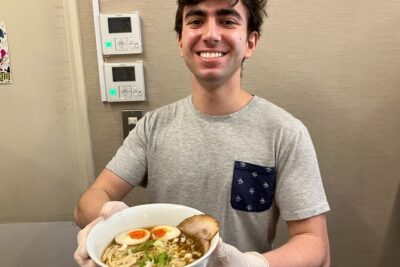
The ramen portion includes a soy-sauce-based soup with pork toppings. You cook it as part of the group, then eat it for lunch.
Soy sauce gives the bowl a familiar savory base, but the value of the class is learning how the parts are assembled. You are not simply handed a finished bowl. You take part in the preparation and can ask questions while the food is being made.
The exact process and recipe details are not provided, so the class should not be booked on the promise of a particular regional ramen style or a long broth-making session. This is a practical home-cooking lesson, not a specialist ramen apprenticeship. If you want to study noodle production, extended stock preparation, or restaurant-level technique, this may feel limited.
For most visitors, that limitation is reasonable. The class fits a single morning in Osaka and gives you a dish you can plausibly attempt again at home. The ramen also forms one half of a complete lunch, rather than being a small tasting portion.
Making gyoza wrappers and filling
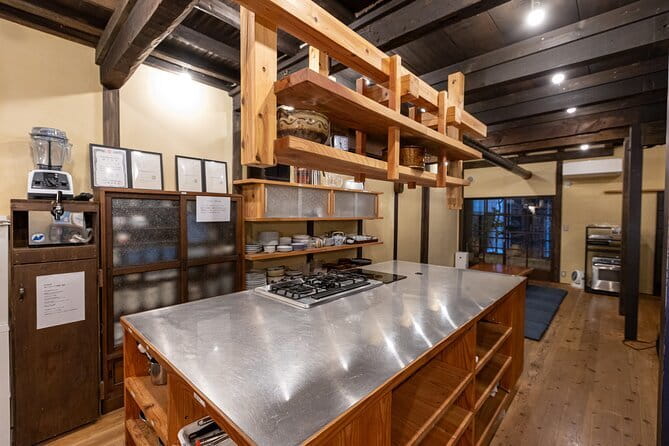
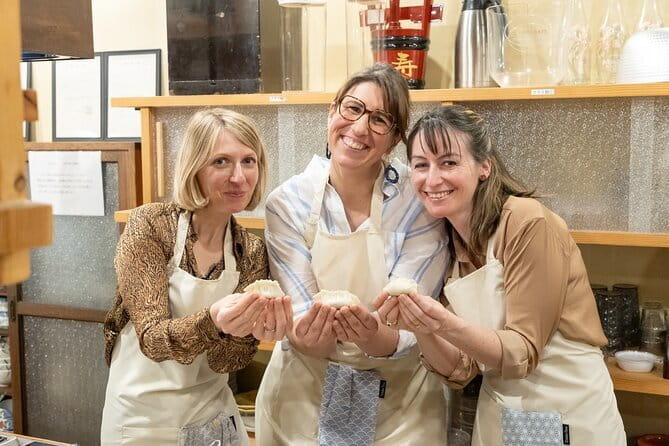
The gyoza lesson adds a second type of cooking skill. You prepare homemade wrappers, then fill them with pork or beef and vegetables.
Making the wrappers yourself is one of the more useful details of the class. Many casual cooking lessons use ready-made wrappers because they save time. Here, you get a closer look at the dough and the way the dumplings are put together.
The filling combines meat and vegetables, with pork or beef listed as the meat options. Because the class asks you to share allergies and dietary restrictions when booking, you should provide that information early. The instructor will try to accommodate those needs, but the wording does not promise that every restriction can be handled.
Gyoza also gives the lesson a social rhythm. You prepare several pieces together, then cook and eat them as a group. The process leaves room for comparing folding habits and food customs, which is part of the class’s stated purpose.
If you are hoping to return home able to cook Japanese food for friends, this is a strong match. One detailed assessment of the class found the recipes practical enough to use for friends at home. That is a better measure of value than simply leaving with a full stomach.
More Japanese home cooking classes:
- Osaka: Sumo Stage Show with Bento or Snack + Fight & Photo
★ 4.3 · 364 reviews - Osaka: Traditional Mochi Pounding Experience with Tasting
★ 4.9 · 306 reviews - Osaka Cooking Class: Okonomiyaki &Japanese cuisines experience
★ 5.0 · 261 reviews - Osaka Sake Tasting with Takoyaki Cooking
★ 5.0 · 156 reviews
Eating lunch with the instructor
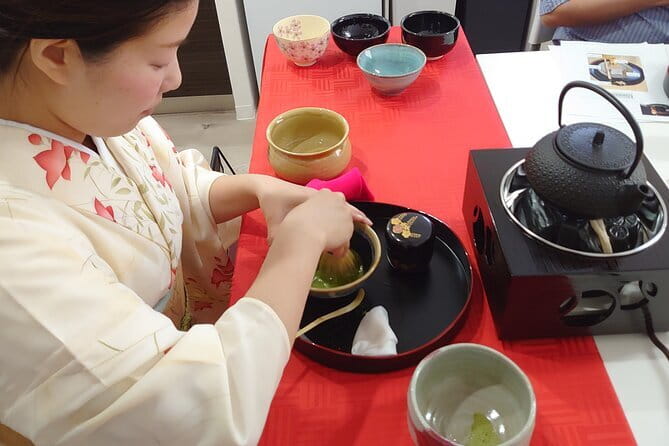
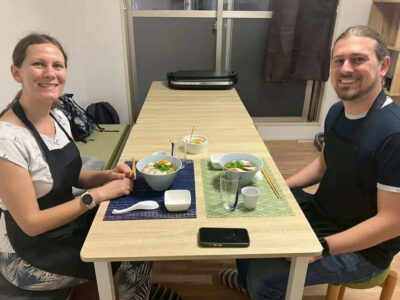
After the preparation and cooking, you eat the ramen and gyoza together. This shared meal is not an extra stop or a separate restaurant visit. It is the payoff for the work you have just done.
I like this format because it joins instruction with context. You can taste the final dishes while the methods are still fresh in your mind. You also have time to talk with Ayumi and the other people in the group about food customs in Japan and elsewhere.
The small group limit helps here. With no more than six participants, you are less likely to feel lost in a crowd, and Ayumi has a better chance to answer individual questions. The class may be shared or private, depending on the arrangement.
Families should pay attention to the age rule. Children under six must be booked into a private class, so a family with a young child should contact the provider directly before booking. The supplied information does not describe special child facilities or a separate children’s menu.
Ayumi’s teaching style and the group atmosphere
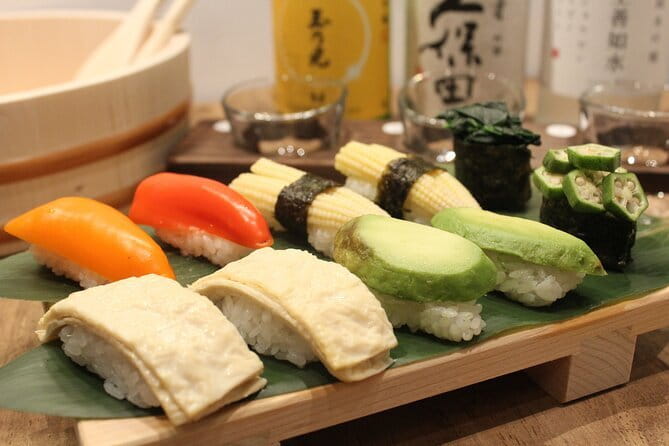
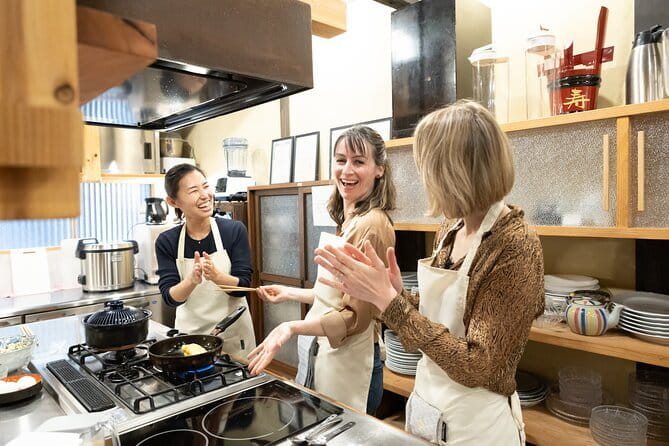
The strongest feature of the class is its personal tone. Ayumi is described as warm, friendly, and easy to spend time with. One detailed account said she made the cooking session feel like friends had come over to laugh and cook together.
That does not mean the class is unstructured. The same account describes the setup as well organized, and another assessment specifically praised the ability to make both dishes while learning from an expert. You get a relaxed mood without giving up the basic shape of a proper lesson.
Ayumi’s responses to the class assessments also show that conversation is central to her approach. She emphasizes chatting, cooking together, and exchanging food culture. If you want a quiet, formal demonstration with little personal interaction, this class may not suit you as well.
The English format is important for visitors who cannot follow a Japanese-language lesson. You should still tell the provider about food allergies or restrictions during booking. That gives the instructor the best chance to prepare suitable options.
The small gift at the end
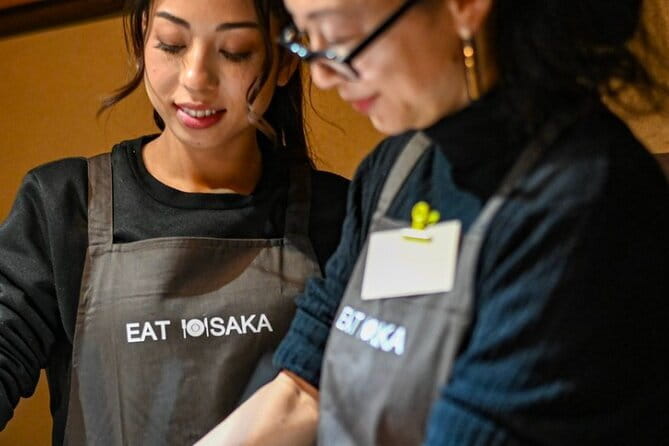
Every participant receives Japanese-made chopsticks in a holder made with origami and decorated with cute details. It is a modest gift, but a good one.
Chopsticks are useful after the trip, and the handmade-style holder gives the item a connection to the class rather than making it feel like generic merchandise. I would not choose the class for this gift alone, but it adds a pleasant finish and gives you a physical reminder of the morning.
The larger souvenir is the ability to repeat the food at home. One person who took the class said they left knowing they could make all of it for friends. Another planned to use the recipes at home and rated the experience far above a normal cooking lesson.
Is $93.44 a fair price?

At $93.44 per person, this class costs more than buying a bowl of ramen and a plate of gyoza in Osaka. That comparison is fair, but incomplete.
Your fee includes nearly three hours of instruction, the ingredients, a full lunch, use of the cooking studio, the chance to make two dishes, and the chopsticks gift. You are also paying for a small group and direct time with an English-speaking local instructor.
The value is best if you care about learning a repeatable skill and having a personal encounter in an old Osaka home. If you only want an inexpensive meal, the price will feel high. Osaka offers cheaper ways to eat ramen and gyoza.
Group discounts may reduce the cost for people booking together. A private class is available by direct arrangement, but the supplied information does not give a private-class price. Ask before you book if privacy or a special family setup matters to you.
The fact that the class is often booked 38 days ahead is a practical sign that you should not leave it until the last minute. Confirmation is sent within 48 hours of booking, subject to availability.
Who will enjoy this cooking class most?
I would choose this class for you if you want to meet a local instructor, cook rather than watch, and bring home recipes you can use again. It suits couples, small groups of friends, and solo visitors who enjoy sharing a table with others.
It is also a good fit for anyone who wants a quieter Osaka activity away from large attractions. The old house, limited group size, and home-cooking focus give the morning a personal scale.
Families with children under six need to arrange a private class. People with food allergies or dietary restrictions should disclose them at booking and understand that accommodation is attempted rather than guaranteed.
You may want to skip it if you dislike group cooking, have very little time in Osaka, or want advanced ramen technique. The class teaches accessible home-style dishes, not a professional chef’s full ramen program.
Meeting, cancellation, and timing tips
The meeting point is 6 Chome-13 Tanimachi, Chuo Ward, Osaka, postal code 542-0012. The activity ends back at the same place, so you do not need to plan a separate return transfer.
The start time is 10:30 am. Since the session lasts about two hours and 45 minutes, plan for it to finish in the early afternoon. Do not place a tightly timed activity immediately afterward.
Free cancellation is available if you cancel at least 24 hours before the local start time. Cancellations or changes made within 24 hours are not refunded or accepted. The booking is confirmed within 48 hours, subject to availability.
Should you book the ramen and gyoza class?
Book it if you want a hands-on Japanese home-cooking lesson with a friendly English-speaking instructor and a setting that feels personal. The combination of ramen, homemade gyoza wrappers, lunch, conversation, and a small group gives the price a clear purpose.
I would be especially keen on it for a first visit to Osaka when you want more than sightseeing and restaurant meals. The main cautions are the cost, the need to plan ahead, and the limited information about exact ingredient substitutions.
If those points work for you, this is a well-focused morning: two useful dishes, a local teacher named Ayumi, and a restored old house where the lesson feels connected to daily life in Japan.
FAQ
Where does the cooking class meet?
It meets at 6 Chome-13 Tanimachi, Chuo Ward, Osaka, 542-0012, Japan.
What time does the class begin?
The class begins at 10:30 am.
How long does the experience last?
It lasts approximately 2 hours and 45 minutes.
What food will I cook?
You will make ramen in a soy-sauce-based soup with pork toppings, along with gyoza made with homemade wrappers and pork or beef and vegetable filling.
Is the class taught in English?
Yes. The cooking class is offered in English.
How many people can join?
The class has a maximum of six participants. Shared and private classes are available, with private bookings arranged directly.
Can children under six attend?
Children under six can attend only when the family books a private class. You should also provide any food allergies or restrictions when booking.
Just added around Osaka
- Nara Day Trip from Osaka with a Licensed Guide★ 5.0 · 3 reviews
- Osaka Early Morning Osaka Castle Tour Avoid Crowds★ 5.0 · 3 reviews
- Guided Tour of Some Attractions in Osaka by Private Car★ 5.0 · 3 reviews
- Private Transfer Between Kyoto and Kansai Airport KIX★ 5.0 · 3 reviews
- Shared Arrival Transfer: Osaka Itami Airport to Osaka City★ 5.0 · 3 reviews
- Osaka: Sushi Making Class and Dotonbori Food Tour★ 4.7 · 3 reviews
- Osaka Night Photography Workshop★ 5.0 · 3 reviews
- Kyoto Full day Tour Kinkakuji, Kiyomizu-dera and Fushimi Inari★ 4.5 · 3 reviews
Ramen & Gyoza Cooking Classes, compared.

Five Must-See Highlights Walking Tour & Ramen Lunch
Read our review →


Walking Tour of Osaka’s 5 Must-See Sights, with Ramen for Lunch
Read our review →
Cooking Ramen&Gyoza/KatsuCurry/Bento/Okonomiyaki+Store Tour@Osaka
Read our review →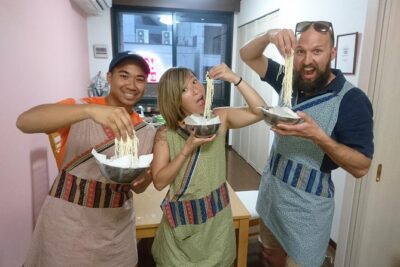
Browse the lists this tour appears in