
Reviewed · OSAKA TEMPLE & SHRINE TOURS
1-Day walking tour in Osaka:Castle, temples and Ukiyoe
Osaka’s past and present come together neatly on this full-day route. You move from the rebuilt towers of Osaka Castle and Japan’s first Buddhist temple to market stalls, giant Dotonbori signs, and a traditional ukiyoe art session. It is a useful way to see several sides of the city without spending your day working out train connections.
I like the strong mix of places and the personal guidance from Winki, who explains Japanese history clearly and patiently. I also like that the tour includes train tickets, entrance fees, and the ukiyoe activity. The tradeoff is simple: this is a long outdoor day with plenty of walking, fixed meeting times, and food at Kuromon Market paid separately.
In This Review
- Key points at a glance
- Why this Osaka day works so well
- Meeting Winki at JR Osaka Station
- Osaka Castle and the story behind the rebuilt tower
- Shitennoji Temple and Buddhism’s route to Japan
- Lunch at Kuromon Ichiba Market
- Dotonbori, local shrines, and Osaka’s famous face
- A hands-on introduction to ukiyoe
- Shinsaibashi and the return to Osaka Station
- What the $136 price includes
- Is this tour suitable for you?
- Should you book the Osaka Castle, temples, and ukiyoe tour?
- FAQ
- Where does the tour meet?
- What time does the tour begin?
- Is the tour conducted in English?
- Are train fares included?
- Is lunch included?
- What should I wear and bring?
Key points at a glance
- Osaka Castle Museum: Learn how the castle was completed in 1597, destroyed more than once, and rebuilt by the Japanese government in 1995.
- Shitennoji Temple: See one of Japan’s most important early Buddhist sites and hear how Buddhism traveled from India through China to Japan.
- Kuromon Ichiba Market: Get an hour for lunch and free time among roughly 150 shops spread along about 580 meters.
- Dotonbori and ukiyoe: Pair Osaka’s famous oversized signs with a hands-on look at one of Japan’s best-known traditional art forms.
- Public transportation: Trains connect the main sights, so you should expect station corridors, platforms, and regular walking between stops.
- A guide-led day: Winki provides English explanations, helps with the route, and keeps the group together during free time.
Why this Osaka day works so well
This tour is built around contrast. In the morning, you are looking at castles, temple grounds, Buddhist practice, and centuries of political and religious change. By afternoon, the focus shifts to food, shopping, signs, photography, and Osaka’s quick-moving city center.
That change of mood is one of the best reasons to book it. A castle and a temple alone can leave you with beautiful pictures but little sense of how the city works. Here, you get a broad introduction to Osaka in one day, with someone explaining what you are seeing as you go.
Winki is an important part of the experience. The guide is described as friendly, patient, and able to answer questions, which matters when you are traveling with children or when the group has different levels of interest in Japanese history. One family found that even a five-year-old enjoyed her company, while another praised the day as a quick course in Japanese history.
The pace is not lazy. The plan includes roughly two hours at Dotonbori, but the full day also includes several train rides and long stretches outdoors. I would choose this tour if you want an active introduction to Osaka, not if you prefer to linger at one museum or temple for half a day.
More temples and shrines worth the walk:
- Osaka: Minoh, Katsuoji Temple, & Minoh Falls Full-day Tour
★ 4.9 · 172 reviews - Sagano Romantic Train & Arashiyama, Kiyomizudera, Fushimi Inari Taisha Day Tour
★ 4.5 · 171 reviews - Full Day Kyoto Tour : Bamboo Forest, Golden Temple, Fushimi Inari
★ 5.0 · 84 reviews
Meeting Winki at JR Osaka Station
The day begins at 9:25 at Akatsuki Plaza, written 暁の広場, on the first floor of the North Gate Building inside JR Osaka Station. Look for the open area with two escalators on either side. Stay on the first floor and do not go up the escalators.
The meeting point is just north of the Central Exit ticket gates, near the North Central Exit. The guide holds a sign marked SNOW MONKEY RESORTS.
JR Osaka Station is large, so allow extra time to find the plaza. If you arrive on the Midosuji Subway Line from Namba or Shinsaibashi, follow signs toward JR Osaka Station. You may need to use connecting hallways or stairs before reaching the Central Exit area. Once you are at the Central Exit, walk north toward Yodobashi Camera and look for the open space with the escalators.
This is not a place where I would cut the timing close. Osaka’s rail stations can feel confusing at first, and meeting the guide at the right spot is much easier when you are not rushing.
Osaka Castle and the story behind the rebuilt tower
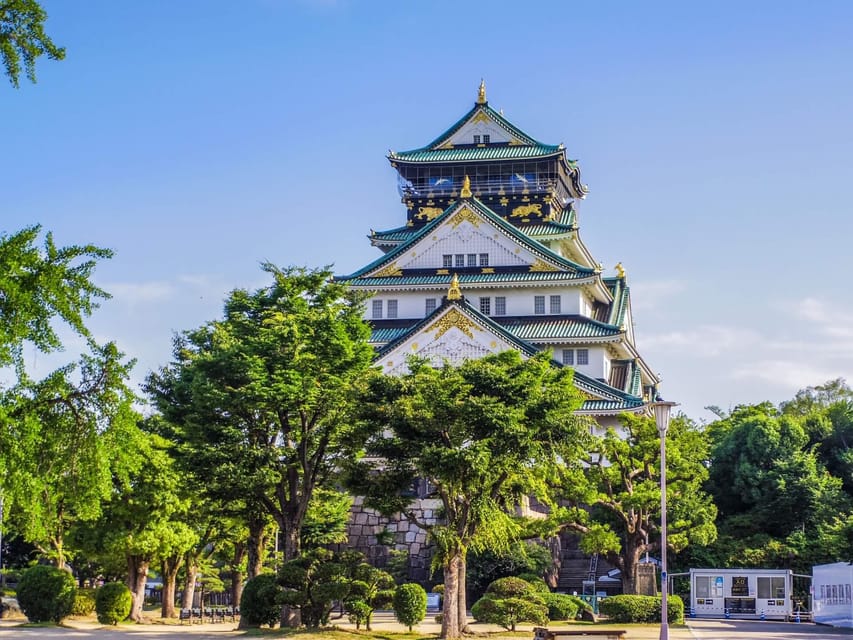
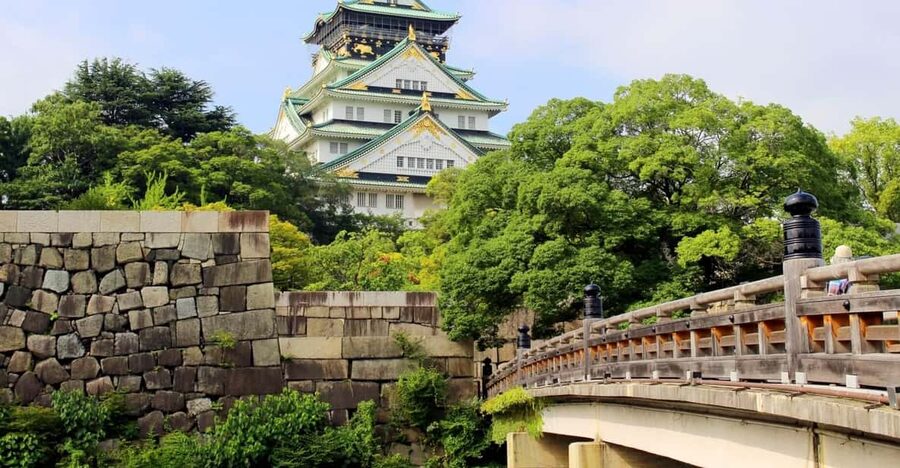
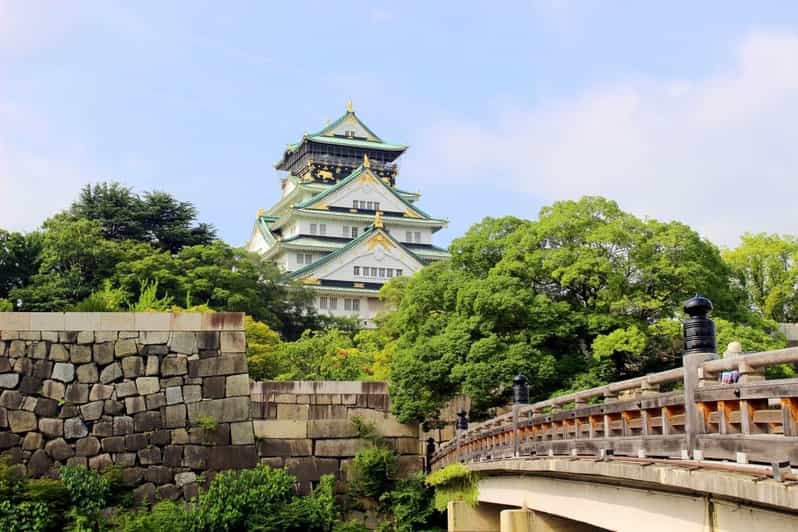
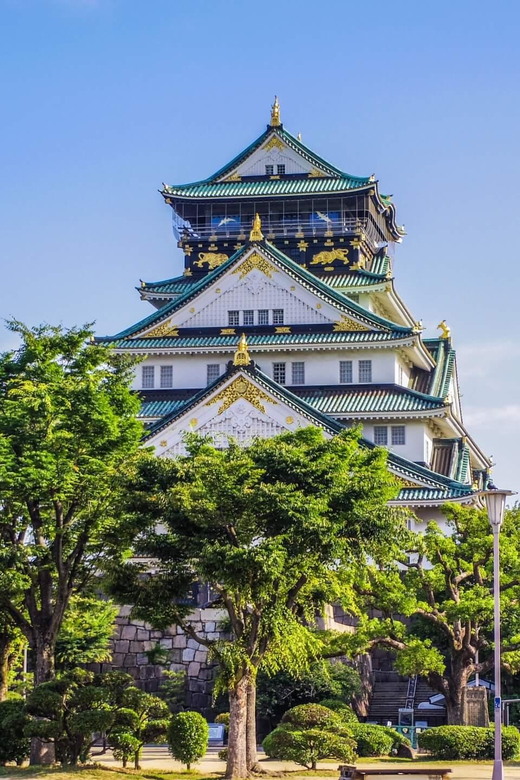
Your first major stop is Osaka Castle. The visit includes the Osaka Castle Museum, with about an hour for the guided stop and sightseeing around the castle.
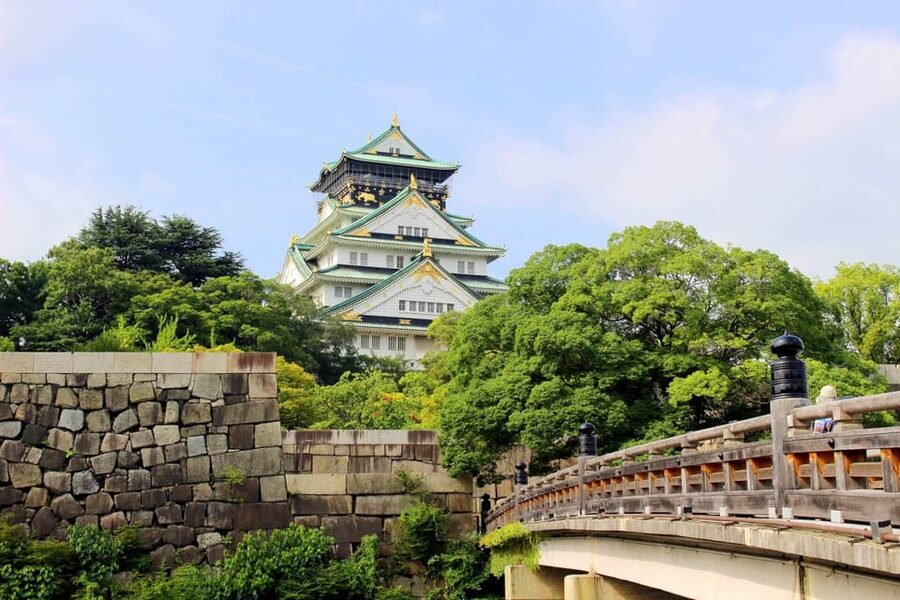
The castle was completed in 1597, but it was destroyed several times. The present building was rebuilt by the Japanese government in 1995, so it looks different from the original structure. That distinction is worth keeping in mind. You are not looking at a perfectly preserved 16th-century castle. You are seeing a modern reconstruction connected to a much older and often troubled past.
The museum gives you a way to understand Osaka’s place in Japanese history rather than simply admiring the rooflines. Winki explains the castle and the city, helping you connect the building to the events around it. The setting also gives you time outdoors, with the broad castle grounds providing a change from station platforms and city streets.
I like beginning here because the castle gives the day a clear historical starting point. You learn about power, conflict, rebuilding, and memory before moving into Osaka’s religious and commercial life.
The one limitation is time. An hour is enough for an introduction, but not enough for a slow museum visit, detailed reading of every display, and a long walk around the grounds. If Osaka Castle is your main interest, you may want to return on your own after the tour.
Shitennoji Temple and Buddhism’s route to Japan
After Osaka Castle, a train ride of about 30 minutes takes you to Shitennoji Temple. The guided visit lasts around 50 minutes.
Shitennoji is described as the first Japanese Buddhist temple in Japan. Here, the guide explains how Buddhism traveled from India to China and then reached Japan thousands of years ago. That wider story gives the temple more meaning than a quick photo stop. You are not only looking at buildings and gates. You are following the movement of an idea across countries and cultures.
The temple visit can also include moments of active religious life. The day may allow you to see ceremonies, hear monks chanting prayers, visit the top of the Buddhist temple, and pay respects to a relic. These details are not guaranteed at every departure, but they show the kind of experience possible when the timing is right.
I especially like this part of the route because it slows the day down. Osaka is often presented through food and neon, but Shitennoji reminds you that the city has a serious spiritual side. The contrast with Dotonbori later is sharp and useful.
You should be prepared for an outdoor visit on temple grounds. The tour is not designed as a long, quiet meditation period, and 50 minutes passes quickly. Still, the guide’s explanations make the stop more rewarding than visiting without context.
More guided walks on foot:
- Deep Backstreet Osaka Tours (Option to add Dinner)
★ 5.0 · 1,290 reviews - Osaka Local Foodie Walking Tour in Dotonbori and Shinsekai
★ 5.0 · 985 reviews - Osaka: Deep Backstreets Walking Tour with Dinner Option
★ 4.9 · 902 reviews - Ultimate Osaka Walking Tour: Castle, Dotonbori & Hidden Gems
★ 5.0 · 862 reviews
Lunch at Kuromon Ichiba Market
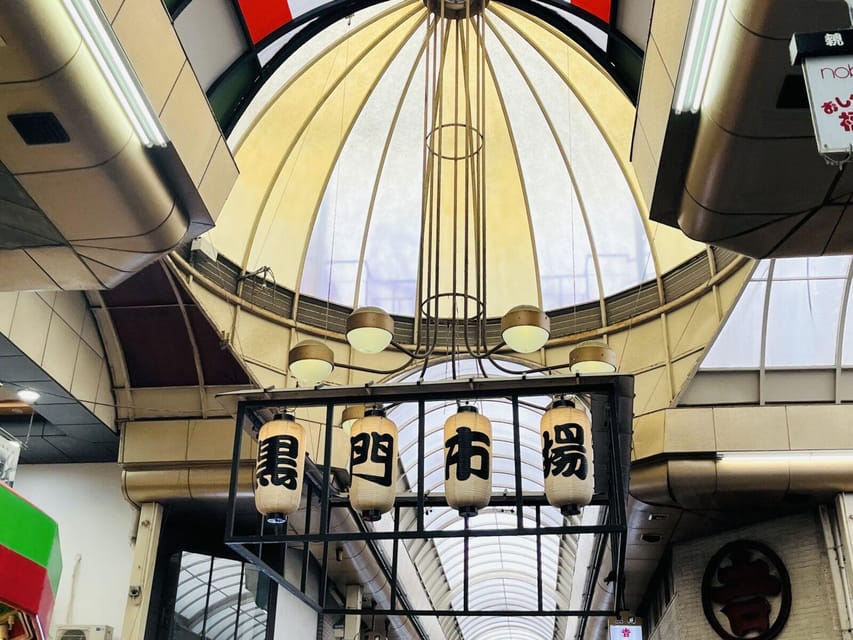
The next train ride takes about 30 minutes, followed by an hour at Kuromon Ichiba Market. This is one of Osaka’s leading food markets, with roughly 150 shops selling seafood, vegetables, fruit, prepared food, drinks, clothing, and other goods along an area about 580 meters long.
Lunch is not included, so you choose and pay for what you want. That is a benefit if you enjoy grazing rather than sitting down for a fixed meal. You can try local foods in small portions, look at fresh ingredients, or simply choose something familiar if you are traveling with children.
The market is also a good place to see everyday commerce beside tourism. It is not only a food attraction. The range of shops gives you a quick look at how the neighborhood serves local shoppers as well as people sightseeing in Osaka.
An hour is enough for a taste of the market, but not for a relaxed meal and a full walk through every section. Decide what you want to eat fairly quickly, especially if the group has a set departure time. Winki makes sure everyone knows when and where to meet again, which is important during free time.
Bring cash or a payment method you normally use in Japan, but do not assume every stall will accept every type of payment. The supplied details do not promise a particular payment system, so it is wise to check before ordering. Also remember that food and drinks are your own expense, even though the tour covers other entrance and transportation costs.
Dotonbori, local shrines, and Osaka’s famous face
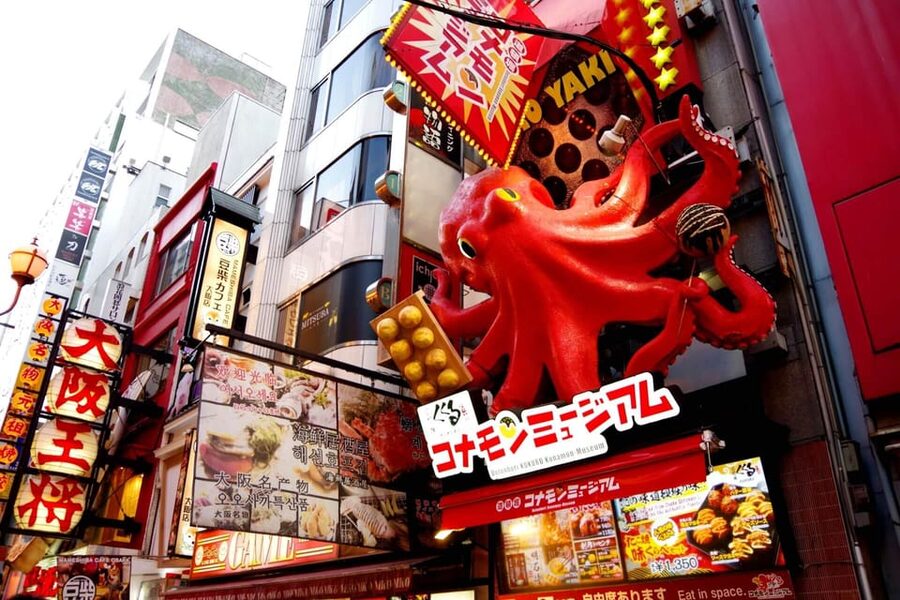
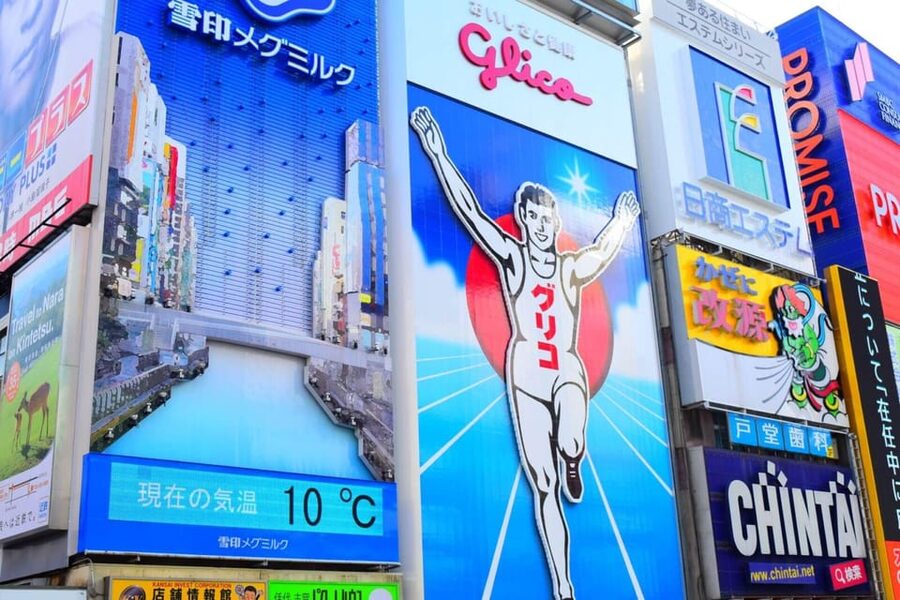
After lunch, the route moves to a nearby unique shrine and then spends about two hours in Dotonbori. This is the symbolic commercial center of Minami, Osaka, known for huge three-dimensional billboards and a dense concentration of shops and restaurants.
Dotonbori gives you the city at full volume. The morning’s castle and temple visits feel distant here. You will have time to see the signs, walk through the area, take photographs, and learn how this part of Osaka became such a major business and entertainment district.
The tour is not simply another meal stop, although you can eat again if you like. Its value is in having a guide point out the character of the area while you walk. A short visit alone can become a blur of signs and crowds. Winki helps turn it into part of the larger story of Osaka.
The two-hour period is generous compared with the shorter stops earlier in the day. It gives you room to enjoy the atmosphere without sprinting from one photo point to another. Still, this is a busy city center, and you should expect noise, people, traffic, and frequent stops for pictures.
A hands-on introduction to ukiyoe
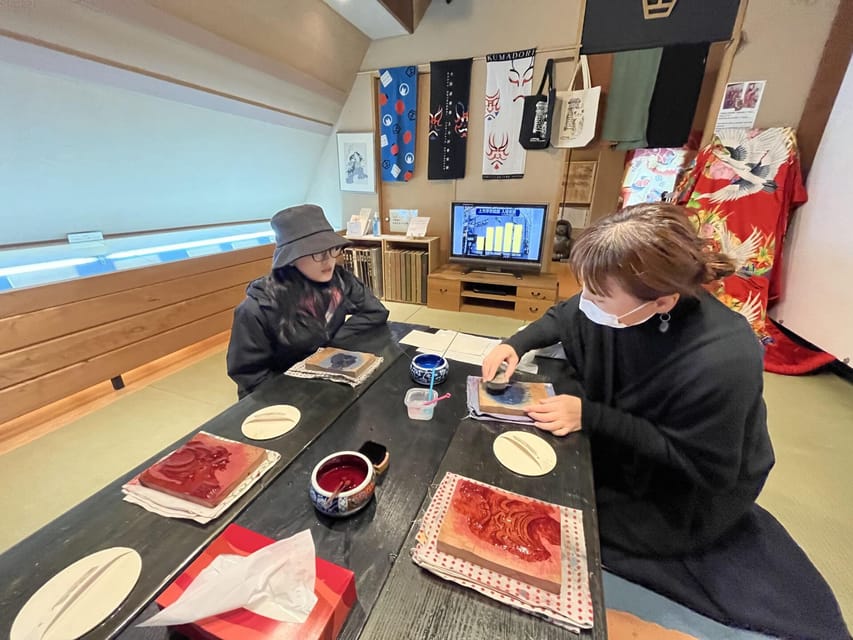
The Dotonbori portion also includes a traditional Japanese art experience focused on ukiyoe. Early ukiyoe works appeared in the 1670s, and the art form flourished from the 17th through the 19th centuries. Today, ukiyoe is one of the images most closely associated with Japan.
The activity fee is included, which makes this more than a quick explanation in a museum. The exact format is not specified, so you should think of it as a guided cultural activity rather than expect a particular finished item or technique.
I like the placement of ukiyoe here. After seeing modern advertising and giant signs, you get a chance to look at an older Japanese art tradition. It shows how visual culture has long played a major role in Japan, even though the style and setting have changed.
The activity also breaks up the walking. By this point, you will have already visited a castle, a temple, a market, and several stations. A seated or hands-on art session can give your feet a short rest before the final walk through Shinsaibashi.
Shinsaibashi and the return to Osaka Station
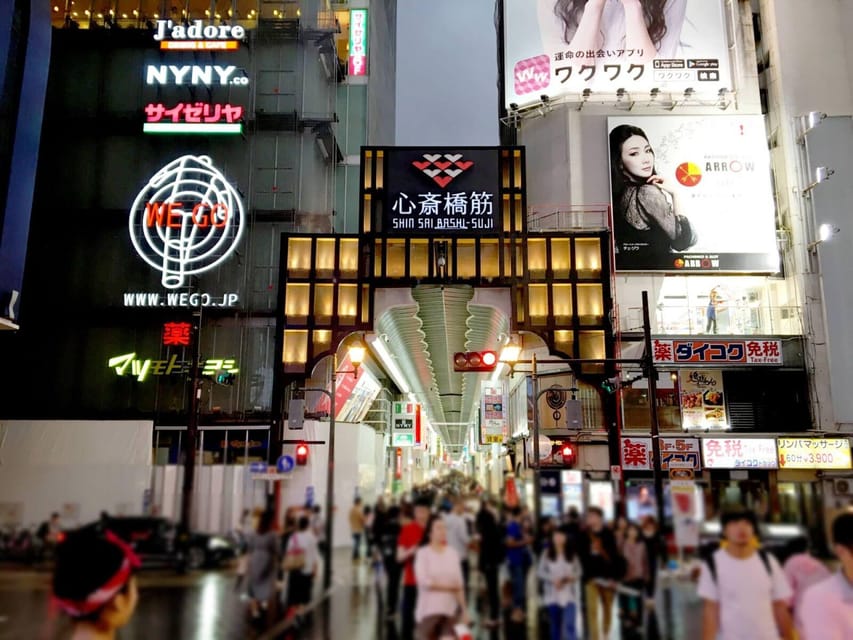
The final area is Shinsaibashi, reached on foot from Dotonbori. The guided walk lasts about 30 minutes.
Shinsaibashi is a long-established shopping street and a regional commercial center. You will find Japanese shops alongside international brands, making it a useful place to see Osaka’s shopping culture in both local and global forms.
Along the way, you pass the famous billboard associated with Osaka and have time to pose for photographs. This gives the day a natural ending: the route finishes with the city image many people expect from Osaka, but only after you have seen its older religious and political sites.
The group then returns together to Akatsuki Plaza at JR Osaka Station. You can also choose to remain in the city center after the tour if you want to continue shopping or sightseeing. Winki can help you make plans for the rest of your day, although the tour does not include train tickets for journeys before or after the scheduled route.
What the $136 price includes
At $136 per person, this is not a budget walking tour. The value depends on how much structure and explanation you want.
The price includes entrance fees for each scheduled attraction, train tickets needed during the tour, the ukiyoe experience, and an English-speaking guide. Food and drinks are extra, as are any train fares you need before meeting the group or after the tour ends.
I think the cost is reasonable for a first day in Osaka if you would otherwise pay separate admission fees, navigate several train journeys, and hire no guide at all. The strongest part of the value is not the transportation. Osaka’s trains are efficient, but figuring out the right station exits and transfers can take time. The guide gives you a clear route and historical context while you move.
The value is weaker if you already know Osaka well or prefer complete freedom. You will have set times at the castle, temple, market, and meeting points. You also pay separately for lunch, so budget for that on top of the tour price.
Free cancellation is available up to 24 hours before the start for a full refund, and you can reserve now and pay later. Those terms help if your Osaka plans are still shifting.
Is this tour suitable for you?
I would choose this tour if you are in Osaka for one day, want to understand the city quickly, or feel uneasy arranging several train journeys on your own. It also suits families who benefit from a patient English-speaking guide and a day with frequent changes of scene.
You should be comfortable walking outdoors for hours. Wear supportive shoes and clothing suited to the weather. Bring sun protection and rain protection when needed. The schedule can change because of weather or train conditions, so treat the listed times as a guide rather than a promise.
The free time at Kuromon Market and Dotonbori adds flexibility, but you must listen carefully for the next meeting point. If you lose track of the group, contact the tour provider immediately.
Should you book the Osaka Castle, temples, and ukiyoe tour?
Book it if you want one organized day that covers Osaka’s castle, Buddhist tradition, food market, famous entertainment district, shopping street, and Japanese art. The guide’s patient explanations, especially from Winki, are a major reason to choose it.
Skip it if you want long museum visits, an unhurried lunch, or a day built around one neighborhood. For most first-time visitors with limited time, though, the route gives you a useful and lively introduction to Osaka, with enough history to make the modern city easier to understand.
FAQ
Where does the tour meet?
Meet at Akatsuki Plaza, or 暁の広場, on the first floor of the North Gate Building inside JR Osaka Station. It is just north of the Central Exit ticket gates, near the North Central Exit, with two escalators on either side.
What time does the tour begin?
The meeting time is 9:25 at JR Osaka Station. The exact schedule during the day can change because of weather and train conditions.
Is the tour conducted in English?
Yes. The tour includes a live English-speaking guide. The guide named in the tour information is Winki.
Are train fares included?
Train tickets required for the scheduled tour are included. Train tickets used before the tour begins or after it ends are not included.
Is lunch included?
No. Lunch at Kuromon Ichiba Market is not included. You pay separately for food and drinks, and the market visit includes guided time and free time.
What should I wear and bring?
Wear comfortable shoes and clothing because the tour takes you outdoors for hours and includes walking and public transportation. Bring sun protection and rain protection when needed.
More 1-Day Tours in Osaka
- Kyoto and Nara Day Trip from Osaka
★ 4.0 · 175 reviews - Hiroshima & Miyajima 1 Day Bus Tour with Bullet Train Tickets
★ 4.5 · 105 reviews - From Osaka: Hiroshima and Miyajima Day Trip by Bullet Train
★ 4.6 · 83 reviews - Amanohashidate & Ine Funaya Sightseeing Full Day Trip from Kyoto
★ 4.5 · 62 reviews
Just added around Osaka
- Osaka Early Morning Osaka Castle Tour Avoid Crowds★ 5.0 · 3 reviews
- Guided Tour of Some Attractions in Osaka by Private Car★ 5.0 · 3 reviews
- Nara Day Trip from Osaka with a Licensed Guide★ 5.0 · 3 reviews
- Private Transfer Between Kyoto and Kansai Airport KIX★ 5.0 · 3 reviews
- Shared Arrival Transfer: Osaka Itami Airport to Osaka City★ 5.0 · 3 reviews
- Osaka: Sushi Making Class and Dotonbori Food Tour★ 4.7 · 3 reviews
- Osaka Night Photography Workshop★ 5.0 · 3 reviews
- Kyoto Full day Tour Kinkakuji, Kiyomizu-dera and Fushimi Inari★ 4.5 · 3 reviews
Osaka Temple & Shrine Tours, compared.
Minoh, Katsuoji Temple, & Minoh Falls Full-day Tour
Read our review →
Sagano Romantic Train & Arashiyama, Kiyomizudera, Fushimi Inari Taisha Day Tour
Read our review →Full Day Kyoto Tour : Bamboo Forest, Golden Temple, Fushimi Inari
Read our review →
Osaka Temple Cool Foot Bath & Matcha Experience〈45min〉
Read our review →
Katsuo-ji Temple, Arashiyama Forest, & Nara Park
Read our review →
Minoh Waterfall & Katsuo-ji Temple Half-Day Tour
Read our review →
Osaka Half-day E-bike Adventure: Minoh Falls & Katsuoji Temple
Read our review →Browse the lists this tour appears in