
Reviewed · OSAKA STREET FOOD TOURS
Umami Town Street Food Tour
Osaka’s food culture makes the most sense one bite at a time, and this tour gives you a full afternoon to connect the dishes with the neighborhoods that serve them. You’ll move from Osaka Tenmangu Shrine to Kuromon Market and Dotonbori, tasting street food and restaurant dishes along the way. Takoyaki and okonomiyaki are part of the lesson, not just quick snacks.
I like the small group, capped at seven, because it gives guides such as Miyo, Miso, and Yuka room to adjust the pace and answer questions. I also like that dinner, snacks, bottled water, and alcoholic drinks are included, so you can focus on the food instead of keeping track of every small bill. The main consideration is the $175 price, which is a lot for a food outing if you mainly want inexpensive street snacks.
In This Review
- Key points at a glance
- Why this food tour works in Osaka
- Meeting at Minami-Morimachi Station
- Osaka Tenmangu Shrine and the meaning of umami
- Kuromon Market, Osaka’s food corridor
- Dotonbori and Osaka after dark, in daylight
- What you are likely to eat
- Is $175 a fair price?
- Who will enjoy this five-hour outing
- Practical details before you book
- Should you book the Umami Town Street Food Tour?
- FAQ
- How long is the Umami Town Street Food Tour?
- Where does the tour start?
- What time does the tour begin?
- Where does the activity end?
- What is included in the price?
- How many people can join the tour?
Key points at a glance
- Learn Osaka through umami: The tour explains the savory taste and ingredients behind classic Japanese dishes.
- Three very different Osaka stops: See a historic shrine, a food market, and the neon-lit Dotonbori area in one outing.
- A true small-group format: A maximum of seven people allows for personal questions and some flexibility.
- More than street stalls: Tastings can include food from small shops, stands, markets, and old-style restaurants.
- Guides add local context: Miyo, Miso, and Yuka are named among the guides praised for food knowledge, warmth, and careful planning.
- Five hours of eating and walking: The length makes this a substantial meal experience, not a quick sampler.
Why this food tour works in Osaka
Osaka is often called Japan’s kitchen, and food is woven into the city’s daily life. That makes a guided tasting useful. You are not simply handed a plate and told its name. You get help understanding what goes into it, how it is eaten, and why umami matters so much in Japanese cooking.
The tour is built around variety. You may taste familiar Osaka favorites such as takoyaki and okonomiyaki, then encounter seafood, sushi, fugu, miso-based flavors, cheesecake, or other local treats. The exact dishes can change, but the aim is clear: give you a broad view of Osaka food in one day.
I especially like the mix of places. A market alone can feel like a shopping stop, while a restaurant-only tour may keep you indoors for much of the day. Here, food is paired with streets, a shrine, and major city sights. That makes the experience useful for someone who wants to eat well but also get a better sense of how Osaka fits together.
The group limit matters. With no more than seven people, you should have a fair chance to speak with the guide, ask about ingredients, and explain food preferences. The tour has also been praised for handling different comfort levels and food allergies with care, though you should still share those needs before the outing.
More street food walks and tastings:
- Osaka: Shinsekai Food Tour with 13-15 Dishes at 5 Eateries
★ 4.8 · 2,204 reviews - Osaka Food Tour: 13 Dishes at 5 Local Eateries
★ 5.0 · 2,149 reviews - Hungry Osaka Street Food Tour:15 Tastings & 3 Drinks with a Local
★ 5.0 · 1,727 reviews
Meeting at Minami-Morimachi Station
The tour begins at 10:00 am at Minami-Morimachi Station, at 2 Chome-1 Minamimorimachi in Kita Ward. Since private transportation is not included, you are responsible for getting to the meeting point and returning from it at the end.
Starting at a station is practical for an Osaka food tour. You avoid spending part of the paid experience waiting for a hotel pickup, and you begin near a part of the city that is easy to reach by public transportation. I would allow extra time to find the correct station exit and meeting spot, especially if this is your first morning in Osaka.
The activity ends back at the meeting point. That gives you a fixed place to leave your luggage plan, but it also means you should not schedule a tight connection or a distant reservation immediately afterward. Five hours is approximate, and food tours can run at a relaxed pace.
Osaka Tenmangu Shrine and the meaning of umami
The first listed stop is Osaka Tenmangu Shrine, with about an hour set aside. The shrine is dedicated to Sugawara no Michizane, a Heian-period scholar and politician who became Tenjin, the spirit associated with learning, scholarship, and literature.
This opening stop gives the food theme a bit of breathing room. You begin with a place tied to Japanese religious and cultural life before moving into markets and entertainment streets. I like that choice because it keeps the tour from becoming a string of restaurant visits with no sense of place.
The shrine admission is free. You will want comfortable shoes, since the day combines walking with standing and eating. The available schedule does not describe every food stop within this first hour, so think of the shrine as one part of a broader route rather than the entire first segment.
The umami theme is the intellectual thread of the experience. Your guide can explain how savory depth shapes Japanese cooking and how ingredients influence familiar foods. This is useful when you are trying dishes that may look simple but depend on broth, seafood, fermented ingredients, or carefully balanced toppings.
Miyo has received particular praise for making the subject approachable and fun. Yuka is also noted for taking extra care to keep people comfortable. The guide you meet may vary, but the format gives the person leading your group time to explain the food rather than rush through a script.
Kuromon Market, Osaka’s food corridor
The route then includes about 30 minutes at Kuromon Market. The market is known for fresh seafood, meats, sushi, takoyaki, and other food sold for quick eating. Its nickname, Osaka’s Kitchen, tells you what kind of place this is: practical, food-focused, and full of ingredients used in everyday cooking.
Thirty minutes is not a long market visit. That is a benefit if you want a guided introduction without giving up half a day to browsing, but it may feel short if you like to stop at every stall. Your guide helps narrow the choices and makes the market easier to read.
A market can be confusing when you do not know which foods are worth trying, how portions work, or what an unfamiliar ingredient is. The guide’s role here is valuable because you can ask direct questions instead of guessing from a sign or a display.
The food may include seafood and sushi as well as Osaka street staples. Previous tastings on this experience have also included fugu and other treats, but the exact selection is not fixed in the information provided. If you have a serious allergy or avoid certain foods, tell the provider in advance and repeat the information to your guide at the start.
Kuromon is also where the tour’s price begins to make more sense for some people. You are paying for access to local food knowledge and for someone to organize the tasting sequence. If you would happily wander the market and buy small portions yourself, the value is less clear. If you want guidance and context, the stop is more useful.
A completely different way to spend a day in Osaka:
- Osaka Go Karting Tour with Funny Costume
★ 5.0 · 2,658 reviews - Osaka Castle: Museum and Tower Entry Ticket
★ 4.5 · 2,380 reviews - Osaka: Tea Ceremony Experience
★ 4.9 · 1,426 reviews - Osaka Kickstart: Hotspots & Hidden Gems Tour
★ 5.0 · 1,306 reviews
Dotonbori and Osaka after dark, in daylight
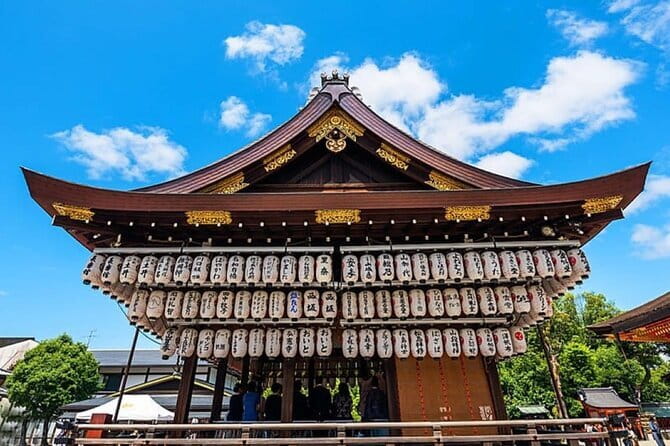
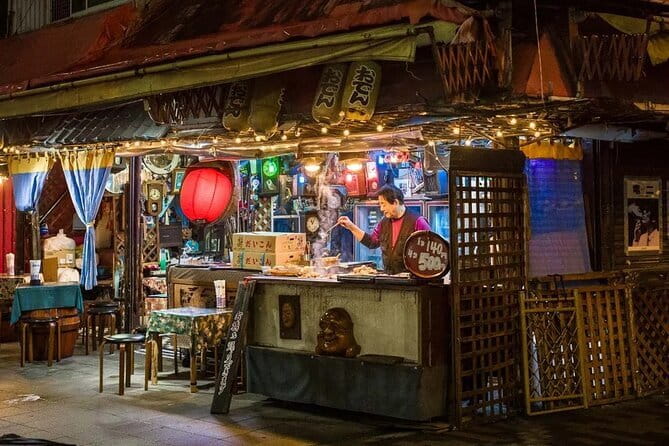
The itinerary includes about an hour at Dotonbori Tsuribori, in the Dotonbori entertainment district. This is the part of Osaka most associated with huge signs, neon lights, canal-side energy, and well-known foods such as takoyaki and okonomiyaki.
Dotonbori is a major food area, but it is also crowded and highly commercial. That is not a flaw, as long as you know what you are getting. This is the loud, colorful face of Osaka, not a quiet neighborhood stroll.
The guide helps you move through the district with a plan. You can learn what makes takoyaki different from other fried snacks, how okonomiyaki is assembled, and which ingredients create the savory taste at the center of the tour. These explanations are more useful than simply taking a photo under a giant restaurant sign.
The hour listed for Dotonbori is only one part of a five-hour activity. The supplied route names three main areas, but it does not spell out every restaurant, stall, or walking segment. Expect the day to include additional food stops between or around these locations, with the precise sequence shaped by the guide and the businesses available that day.
One unusual detail is that the experience may include places that are easy to miss on your own, such as small shops, street stands, and old-style restaurants. A guide can also point out details beyond the plate, including local stories and less obvious features of the area. Miso, for example, has been praised for sharing facts about hidden tunnels and the surroundings while keeping the food at the center.
What you are likely to eat
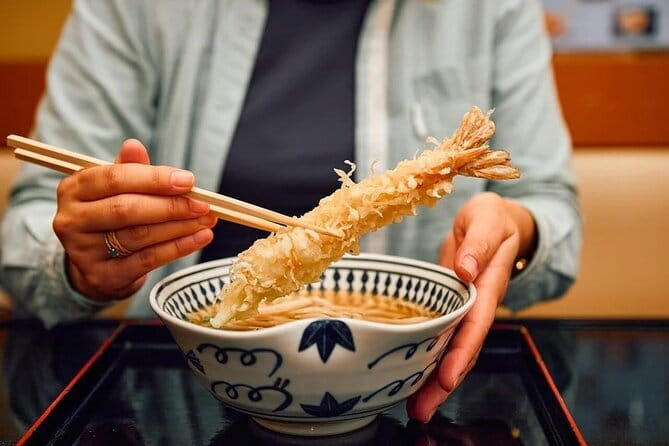
The tour is designed as a meal rather than a few token samples. Dinner, snacks, bottled water, and alcoholic beverages are included. That is important because five hours of tastings can add up quickly if every bite requires a separate payment.
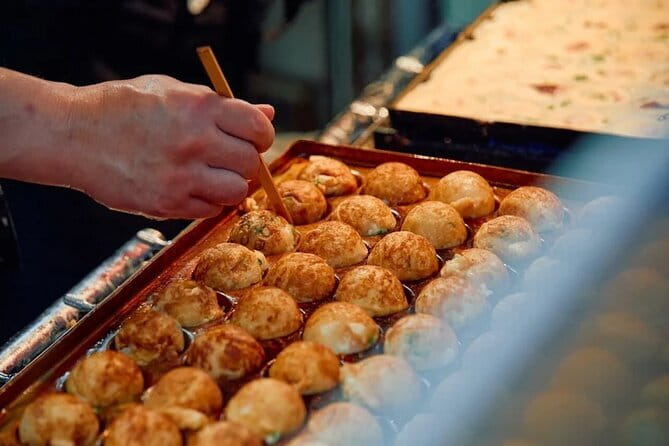
Takoyaki and okonomiyaki are the clearest Osaka classics in the description. Takoyaki are round batter snacks with octopus, while okonomiyaki is a savory griddled dish assembled with a range of ingredients. The tour uses these foods to explain local ingredients and cooking methods, rather than treating them as simple photo opportunities.
The food range can be broad. The experience has included fugu, seafood, sushi, cheesecake, and other regional treats, according to the details available. You should not treat every one of those items as guaranteed, but they show that the tour is not limited to the two most famous Osaka dishes.
The included alcohol may suit adults who want a drink with the food. If you do not drink, the rest of the inclusions still apply, and bottled water is provided. The supplied information does not give a separate child price or a detailed menu, so families should confirm suitability for younger eaters before booking.
Is $175 a fair price?
At $175 per person, this is a premium food tour. You can spend far less on takoyaki, okonomiyaki, and market snacks if you choose them yourself. The question is what else you want your money to cover.
Here, you are paying for roughly five hours, a small group, a guide, multiple tasting locations, dinner, snacks, water, and alcoholic beverages. You are also paying for someone to manage the route and explain the food. For a visitor with limited time in Osaka, that can be good value because one booking combines a meal, a neighborhood introduction, and practical food advice.
I would be less likely to recommend it to a budget-minded eater who enjoys independent planning. Dotonbori and Kuromon Market are accessible without a guide, and Osaka’s inexpensive food culture rewards casual exploration.
The value improves if you want personal attention. Miyo has been singled out for thoughtful preparation, including obtaining a popular cheesecake in advance and adapting the outing for a family with different food comfort levels. Guides have also offered recommendations for later meals and helped people communicate before and after the tour.
You should book this for expertise and convenience, not simply for quantity. The included food may fill you up, but the best part is understanding what you are eating and learning where to continue on your own.
Who will enjoy this five-hour outing

This tour suits first-time visitors who want an organized introduction to Osaka food. It is also a strong choice if you have only a short stay and want to combine eating with three recognizable parts of the city.
Food-focused couples and small groups should appreciate the seven-person limit. Solo participants may also find the guide useful, especially when ordering and moving through crowded food districts alone would feel awkward.
Families can consider it, too, but food preferences matter. One family group with four children was accommodated despite different levels of adventurous eating, yet that should not be taken as a guarantee for every dietary need. Share allergies and restrictions before booking.
This is not the best fit if you want a quiet, slow meal at one restaurant. It is also not ideal if you dislike walking, standing, shared tastings, or the noise of popular Osaka food areas. Most people can participate, and the meeting point is near public transportation, but the day still requires energy.
Practical details before you book
The tour uses a mobile ticket, and confirmation is sent when you book. It begins at 10:00 am and ends at the same meeting point. Since private transportation is not included, plan your own route to Minami-Morimachi Station.
The activity requires a minimum number of participants. If that minimum is not reached and the tour is canceled, you are offered another date or experience, or a full refund.
You can cancel for a full refund up to 24 hours before the start time. Changes or cancellations inside that 24-hour window are not accepted or refunded, and the cut-off follows local Osaka time.
Because the tour is often booked about 50 days ahead, I would reserve early if your Osaka dates are fixed. That lead time is especially sensible for small groups, where only seven places are available.
Should you book the Umami Town Street Food Tour?
Book it if you want a full food day with a guide, a manageable group, and a clear introduction to Osaka’s savory cooking. The combination of Tenmangu Shrine, Kuromon Market, and Dotonbori gives you more than a meal, while the included dinner and drinks help offset the high price.
I would choose it for a first Osaka visit, a special food-focused day, or a family group that benefits from careful guidance. I would skip it if your main goal is the cheapest possible street food, since you can sample Osaka classics independently for much less.
The strongest reason to book is the human side of the experience. Guides such as Miyo, Miso, and Yuka are described as warm, flexible, and deeply engaged with the food. If you want someone to explain the plate, steer you toward good local stops, and send you away with more Osaka recommendations, this is a well-targeted choice.
FAQ
How long is the Umami Town Street Food Tour?
The tour lasts approximately five hours.
Where does the tour start?
It starts at Minami-Morimachi Station, at 2 Chome-1 Minamimorimachi, Kita Ward, Osaka.
What time does the tour begin?
The stated start time is 10:00 am.
Where does the activity end?
The tour ends back at the meeting point.
What is included in the price?
Alcoholic beverages, bottled water, dinner, and snacks are included.
How many people can join the tour?
The maximum group size is seven travelers.
Just added around Osaka
- Nara Day Trip from Osaka with a Licensed Guide★ 5.0 · 3 reviews
- Osaka Early Morning Osaka Castle Tour Avoid Crowds★ 5.0 · 3 reviews
- Guided Tour of Some Attractions in Osaka by Private Car★ 5.0 · 3 reviews
- Private Transfer Between Kyoto and Kansai Airport KIX★ 5.0 · 3 reviews
- Shared Arrival Transfer: Osaka Itami Airport to Osaka City★ 5.0 · 3 reviews
- Osaka: Sushi Making Class and Dotonbori Food Tour★ 4.7 · 3 reviews
- Osaka Night Photography Workshop★ 5.0 · 3 reviews
- Kyoto Full day Tour Kinkakuji, Kiyomizu-dera and Fushimi Inari★ 4.5 · 3 reviews
Osaka Street Food Tours, compared.

Shinsekai Food Tour with 13-15 Dishes at 5 Eateries
Read our review →
Osaka Food Tour: 13 Dishes at 5 Local Eateries
Read our review →
Hungry Osaka Street Food Tour:15 Tastings & 3 Drinks with a Local
Read our review →
Osaka Local Foodie Walking Tour in Dotonbori and Shinsekai
Read our review →
Hungry Osaka Street Food Tour: 15 Dishes & 3 Drinks
Read our review →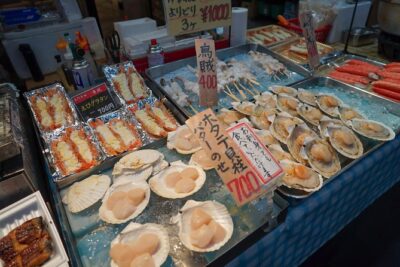
Kuromon Market Food Walking Tour in Osaka (6 stops, 6 tastes)
Read our review →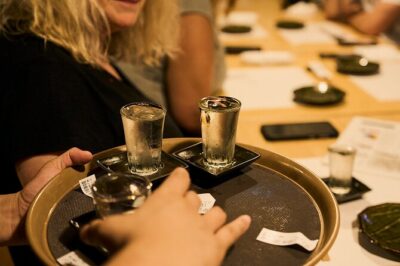
Guided Food Tour with 12 Dishes at 4 Local Eateries
Read our review →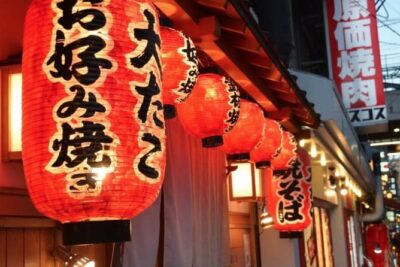
Browse the lists this tour appears in