
Reviewed · OKONOMIYAKI & TAKOYAKI CLASSES
Osaka Okonomiyaki Cooking Experience!
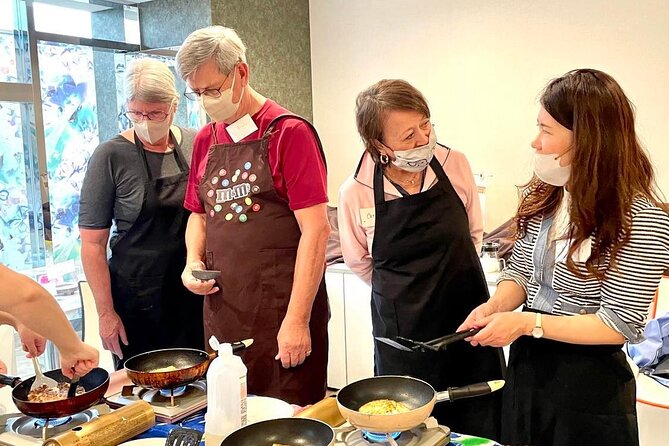
The best part of this class is that you cook your own Osaka-style okonomiyaki, then sit down and eat it with the people who helped you make it. Keiko teaches a simple method you can repeat at home, while her mother and local friends add conversation, cultural context, and a warm family feel.
I like two things in particular: the group is capped at six, so you get real help at the hot plate, and the class includes more than a recipe. You learn about Osaka and Hiroshima styles, everyday Japanese cooking, ingredient swaps, and even ways to make the dish vegan or vegetarian. The only real caution is dietary cross-contamination, and ingredients may contain refined sugar.
In This Review
- Key points to know before booking
- Cooking Osaka soul food near Nagahoribashi
- What you make: okonomiyaki and miso soup
- Keiko’s teaching style and the local welcome
- A two-hour itinerary with real participation
- Why the recipe works well at home
- Dietary needs and practical limitations
- Is $49.55 a fair price?
- Who will enjoy this class most?
- My verdict: book it if you want more than dinner
- FAQ
- Where does the Osaka okonomiyaki cooking class meet?
- What time does the class start?
- How long does the experience last?
- Where does the activity finish?
- How many people can join?
- What dishes do you prepare?
- Is the class suitable for vegans and vegetarians?
- Can Halal requests be accommodated?
- Is the class available at night?
- Can I cancel for a full refund?
Key points to know before booking
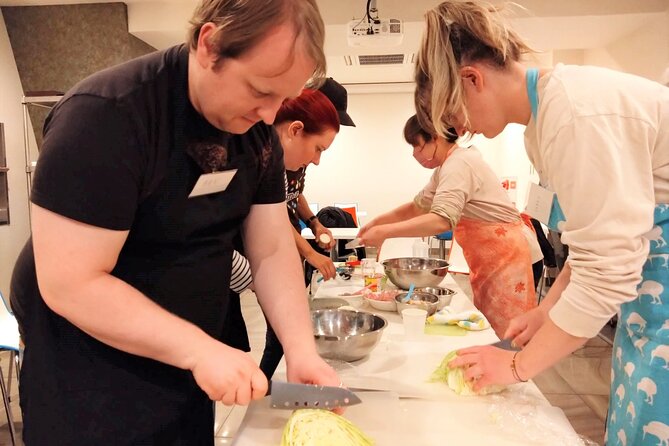
- Cook, don’t just watch: You take part in preparing okonomiyaki and miso soup from start to finish.
- Keiko leads the class: She teaches in English and explains the dish’s background, regional variations, and home-cooking method.
- Small group setting: No more than six people attend, which allows personal help and easy conversation.
- Local connection: Osaka friends may join the class, creating a relaxed exchange between visitors and residents.
- Useful after the trip: Okonomiyaki needs no special equipment, so you can make it with local ingredients at home.
- Dietary requests are possible: Vegan, vegetarian, and Halal requests can be accommodated, but cross-contamination remains possible.
Cooking Osaka soul food near Nagahoribashi
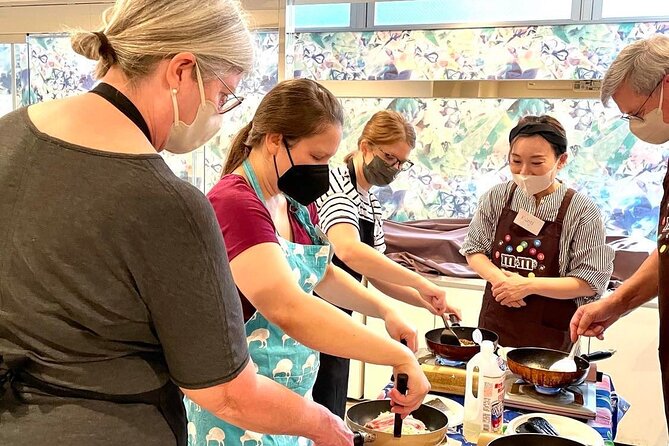
This is not a restaurant meal with a quick explanation on the side. It is a hands-on class held in a local hostel near Nagahoribashi subway station, where the meal becomes the main event.
You meet at 1-chōme-1-3 Higashishinsaibashi, Chuo Ward, at 4:00 p.m. The activity lasts about two hours and finishes at the same place. The setting is casual and communal, with cooking equipment, ingredients, and room to work together rather than a formal cooking-school atmosphere.
That location matters. Nagahoribashi puts you in central Osaka, close to the Shinsaibashi area and easy to reach by public transportation. You do not need to give up a full day for this experience. It fits neatly into an afternoon or early evening, although the class may also be offered at night on certain dates.
The host has been running this experience since 2015. That gives the class a settled feel, while the small size keeps it personal. You are not one face in a large demonstration group. Keiko can watch your technique, answer questions, and help you adjust the batter or toppings.
More okonomiyaki and takoyaki classes:
- Osaka Cooking Class: Okonomiyaki &Japanese cuisines experience
★ 5.0 · 261 reviews - Osaka Sake Tasting with Takoyaki Cooking
★ 5.0 · 156 reviews - Osaka Sake Tasting & Takoyaki Cooking Experience
★ 5.0 · 149 reviews
What you make: okonomiyaki and miso soup
Okonomiyaki is often described as a Japanese pizza or savory pancake, but those comparisons only go so far. The Osaka version is built from a batter mixed with ingredients, then cooked on a hot surface and finished with sauces and toppings.
Keiko teaches a straightforward method meant for home cooks. That is a useful distinction. Some cooking classes teach an impressive dish that is hard to repeat without specialist tools. Here, the goal is a meal you can make in your own kitchen after returning home.
You also prepare miso soup. It is a simple addition, but it rounds out the lesson by showing how okonomiyaki can fit into an everyday Japanese meal rather than existing only as a restaurant specialty.
The process is hands-on. You cook with the other people in your group, get guidance as you go, and then eat the food you prepared. The class is designed around participation, so it suits you best if you like doing rather than sitting back and taking notes.
You also get a chance to ask practical questions. What can replace a hard-to-find ingredient? How does the Osaka method differ from Hiroshima-style okonomiyaki? Can you use vegetables available in your own country? These are exactly the questions that make a cooking class useful beyond the holiday.
Keiko’s teaching style and the local welcome
Keiko is the central personality of the class. She speaks English well and explains both the cooking steps and the cultural background of the dish. Her teaching is patient and clear, which is especially helpful if you have never cooked okonomiyaki before.
Her mother often assists. She has made the fabric aprons worn during the class, and some participants have also received small bags made from used kimono material. These personal touches are not the main reason to book, and gifts should not be treated as guaranteed inclusions, but they help the session feel connected to a family rather than a generic food workshop.
Keiko also invites Osaka friends to join the cooking and conversation. This adds a social layer that you will not get from a standard restaurant visit. You may find yourself discussing food habits in your own country, helping a local practice English, or trying a little Japanese in an easy setting.
One useful feature is the language-center atmosphere. You are not expected to speak Japanese, but the class gives you a friendly place to try. If you are traveling alone, this social setup can be a good way to meet people without committing to a long group tour.
The mix of people can change from one session to the next. A small group might include couples, families, solo participants, and local residents. That variety is part of the appeal, though it also means the amount of conversation depends on the group you join.
A two-hour itinerary with real participation
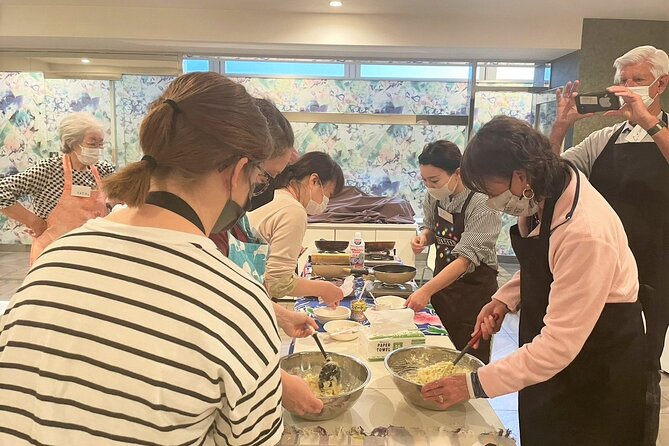
The exact order can vary, but you can expect the session to follow a clear pattern.
First comes an introduction to okonomiyaki and its place in Osaka food culture. Keiko explains the basic ingredients and the difference between regional styles. This short background helps you understand what makes Osaka-style okonomiyaki distinct instead of treating it as simply a pancake with toppings.
Next, you prepare the ingredients and batter. This is where a small class pays off. Keiko and her assistants can help if you are unsure about quantities, mixing, or how to shape the pancake.
You then cook your own okonomiyaki. The dish looks easy, but timing and turning it cleanly can take a little practice. That is part of the fun. You are given enough equipment and ingredients to take an active role, rather than watching one person cook everything for the table.
Miso soup is prepared as part of the meal. The cooking is not presented as a race. The pace is relaxed, leaving room for questions and conversation.
After the cooking, everyone sits down to eat together. Some sessions have included mochi dessert or other small extras, but these should be considered pleasant surprises rather than promised parts of the booking.
The meal is the payoff, but it is also another chance to talk. You can compare your results, ask about Japanese family meals, and discuss how to adapt the recipe at home. The whole experience takes about two hours, so you get a proper activity without losing an entire afternoon.
More Japanese home cooking classes:
- Osaka: Ramen and Gyoza Cooking Class in Dotonbori
★ 5.0 · 378 reviews - Osaka: Sumo Stage Show with Bento or Snack + Fight & Photo
★ 4.3 · 364 reviews - Osaka: Traditional Mochi Pounding Experience with Tasting
★ 4.9 · 306 reviews - Ramen and Gyoza Cooking Class in Osaka
★ 5.0 · 202 reviews
Why the recipe works well at home
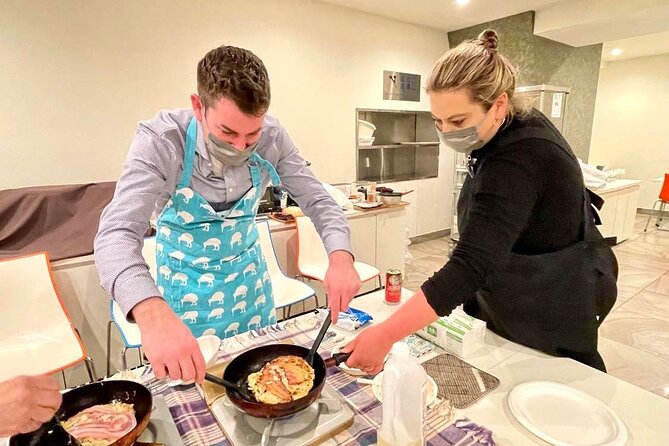
I value cooking classes most when they leave you with a method, not just a memory. This one is strong on that point.
Okonomiyaki is forgiving. You can adjust it with ingredients available where you live, and you do not need special equipment. A normal frying pan or hot plate can be enough, making it practical for a family meal or a casual party.
Keiko encourages you to create your own version. That could mean using local vegetables, changing the protein, or preparing a vegan style. The lesson gives you the basic structure, then lets you adapt it.
Some participants receive written recipe information after the class, but delivery has not been perfectly consistent for everyone. If having the recipe in writing matters to you, ask about it during or after the session rather than assuming it will arrive automatically.
The class also explains the difference between Osaka and Hiroshima okonomiyaki. That comparison gives you a better sense of Japan’s regional food culture. You leave understanding that there is no single universal version of the dish.
Dietary needs and practical limitations
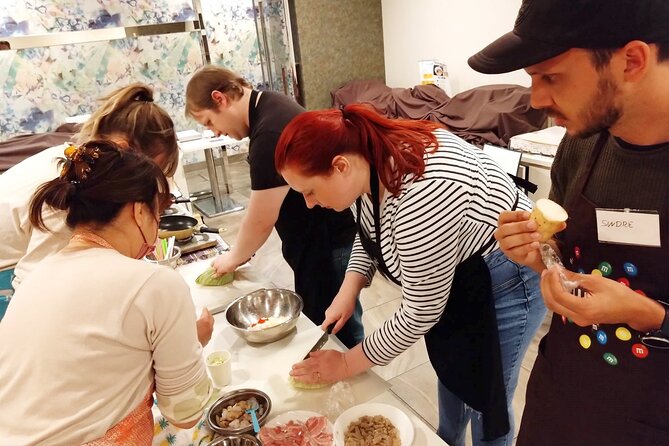
The host can accommodate vegan, vegetarian, and Halal requests. You should state your needs when booking and confirm them before the class if your restrictions are strict.
There are two important cautions. Ingredients may contain refined sugar, and group lessons create a possibility of cross-contamination. This means the class may work well for preferences and moderate dietary requests, but it may not be suitable if you need a completely controlled preparation area.
The experience is held indoors and near public transportation. The supplied details do not give a full accessibility description, so contact the provider directly if you need information about seating, stairs, cooking surfaces, or mobility equipment.
Bring an appetite, but do not plan the class as a fast meal stop. You cook first and eat afterward. At 4:00 p.m., it works nicely as a late lunch replacement or an early dinner, depending on your schedule.
Is $49.55 a fair price?
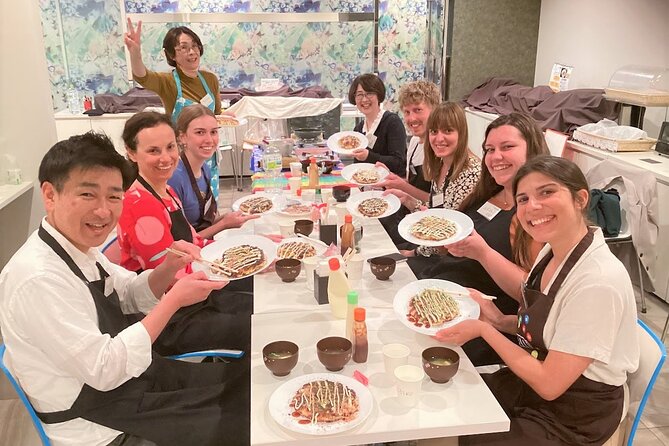
At $49.55 per person, this costs more than simply ordering okonomiyaki at a neighborhood restaurant. You are not paying only for the food. The fee covers about two hours of instruction, ingredients, hands-on cooking, a prepared miso soup, and the chance to spend time with Osaka locals.
For me, the value is strongest if you care about learning. You leave with a repeatable recipe, a better grasp of regional differences, and a dish you can make without special equipment. If you only want to taste okonomiyaki, a restaurant will be cheaper and quicker.
The maximum of six people also improves the value. A large class can leave you waiting for a turn or struggling to hear the instructor. Here, the small group supports direct help and conversation.
The class is often booked around 45 days ahead, so popular dates may not remain open close to your visit. The mobile ticket is convenient, and confirmation is provided at booking. You can cancel for a full refund up to 24 hours before the start time. After that point, the payment is not refunded, and changes made within 24 hours are not accepted.
Who will enjoy this class most?
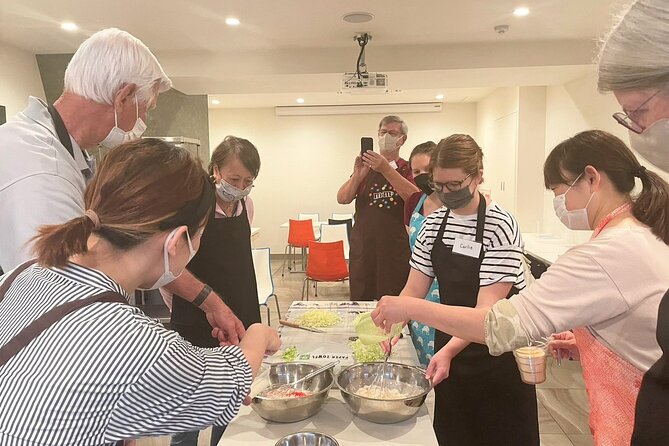
I would recommend it to you if you want a food experience with a personal, social side. It is especially well suited to:
- Couples looking for a relaxed Osaka evening
- Families, including children who enjoy hands-on activities
- Solo visitors who want an easy way to meet people
- Home cooks who want a simple Japanese recipe
- Vegetarian, vegan, or Halal diners who arrange their needs in advance
- Anyone interested in Japanese food, language, and everyday life
Families have successfully included children as young as eight and eleven, with Keiko providing patient guidance. Still, the activity involves cooking on a hot surface, so parents should decide if their children are ready to take part safely.
You may want to skip it if you dislike group activities, need a strictly allergen-free kitchen, or prefer a polished restaurant meal with no cooking work. The class is friendly and relaxed, but it is still a shared activity with people you have just met.
My verdict: book it if you want more than dinner
This is a strong choice for a first Osaka food experience because it combines a famous local dish with real participation and conversation. Keiko’s clear English, her mother’s help, the local friends, and the six-person limit give the class a warm character that a restaurant meal cannot easily match.
Book it if you want to learn a practical recipe, meet people, and understand why okonomiyaki matters in Osaka home life. Choose a restaurant instead if your main aim is speed, low cost, or a tightly controlled dietary environment.
For most visitors, the best reason to book is simple: you do not just eat Osaka-style okonomiyaki. You learn how to make it again when you get home.
FAQ
Where does the Osaka okonomiyaki cooking class meet?
The meeting point is 1-chōme-1-3 Higashishinsaibashi, Chuo Ward, Osaka, 542-0083, Japan.
What time does the class start?
The listed start time is 4:00 p.m.
How long does the experience last?
The class lasts approximately two hours.
Where does the activity finish?
The activity ends back at the meeting point.
How many people can join?
The maximum group size is six participants.
What dishes do you prepare?
You learn to prepare Osaka-style okonomiyaki and miso soup.
Is the class suitable for vegans and vegetarians?
The host can accommodate vegan and vegetarian requests. You should provide those details when booking.
Can Halal requests be accommodated?
Halal requests can be accommodated, but ingredients may contain refined sugar and cross-contamination is possible in a group class.
Is the class available at night?
A night session may be possible, depending on the day.
Can I cancel for a full refund?
Yes. You must cancel at least 24 hours before the experience start time for a full refund. Cancellations or changes made less than 24 hours in advance are not accepted for a refund.
Just added around Osaka
- Nara Day Trip from Osaka with a Licensed Guide★ 5.0 · 3 reviews
- Osaka Early Morning Osaka Castle Tour Avoid Crowds★ 5.0 · 3 reviews
- Guided Tour of Some Attractions in Osaka by Private Car★ 5.0 · 3 reviews
- Private Transfer Between Kyoto and Kansai Airport KIX★ 5.0 · 3 reviews
- Shared Arrival Transfer: Osaka Itami Airport to Osaka City★ 5.0 · 3 reviews
- Osaka: Sushi Making Class and Dotonbori Food Tour★ 4.7 · 3 reviews
- Osaka Night Photography Workshop★ 5.0 · 3 reviews
- Kyoto Full day Tour Kinkakuji, Kiyomizu-dera and Fushimi Inari★ 4.5 · 3 reviews
Okonomiyaki & Takoyaki Classes, compared.

Osaka Cooking Class: Okonomiyaki &Japanese cuisines experience
Read our review →

Osaka Sake Tasting & Takoyaki Cooking Experience
Read our review →
Cooking Ramen&Gyoza/KatsuCurry/Bento/Okonomiyaki+Store Tour@Osaka
Read our review →
Cooking Class Okonomiyaki & Takoyaki course in Nanba
Read our review →
Osaka Okonomiyaki Cooking Class “Learn here and make it at home”
Read our review →
Osaka Street Food Festival :Takoyaki&Okonomiyaki for Families
Read our review →
Okonomiyaki or Ramen&Gyoza Class with Local Shop Tour
Read our review →Browse the lists this tour appears in