
Reviewed · OKONOMIYAKI & TAKOYAKI CLASSES
Osaka Okonomiyaki Cooking Class “Learn here and make it at home”
Osaka’s two signature comfort foods become much more memorable when you make them yourself. In this three-hour cooking class, you prepare savory okonomiyaki pancakes and takoyaki balls, then sit down to eat what you made with drinks.
I like the practical lesson, especially the written recipes and the chance to see ingredient packaging that can help you find the same products in a Japanese supermarket. I also like the small maximum group of eight, which leaves room for hands-on help rather than a lecture from across the room.
The one point to weigh is the $70 price. It is not a cheap meal, but it includes food, instruction, equipment, recipes, and drinks. Also note that the activity requires good weather under its cancellation terms, an unusual condition for an indoor class.
In This Review
- Key Points at a Glance
- Making Osaka’s Favorite Foods Yourself
- A 30-Minute Start Near Shinsaibashi
- One Hour and Thirty Minutes at the Cooking Station
- Eating What You Made for One Full Hour
- The Real Value of the $70 Price
- Who Will Get the Most From This Class
- Timing, Transport, and What to Bring
- What Makes the Lesson Feel Authentic
- FAQ
- How long does the Osaka cooking class last?
- What dishes will I make?
- Are drinks included?
- Where does the class meet?
- What language is the class taught in?
- Do I need to bring cooking equipment or ingredients?
- Can vegetarian or food allergy options be arranged?
- How many people can join the class?
- Can I cancel for a full refund?
- Should You Book It?
Key Points at a Glance
- Make two Osaka classics: Prepare okonomiyaki and takoyaki rather than simply watching a demonstration.
- Three clear stages: Allow 30 minutes for preparation, 90 minutes for cooking, and one hour for eating and drinks.
- Central but calm setting: The kitchen is about a five-minute walk from Shinsaibashi and Honmachi stations.
- Small class size: No more than eight people can join, and some dates may be especially intimate.
- Useful take-home skills: Written recipes and ingredient packaging make it easier to repeat the dishes at home.
- Drinks included: Sake, beer, and soft drinks are served, with alcohol limited to people aged 20 and older.
Making Osaka’s Favorite Foods Yourself
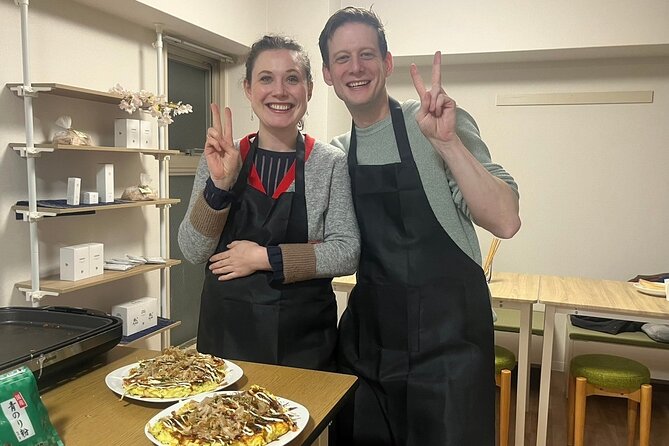
Okonomiyaki and takoyaki are easy to recognize around Osaka, but their appeal becomes clearer when you handle the ingredients and cooking tools yourself. Okonomiyaki is a savory pancake built from batter, cabbage, and fillings such as pork or seafood. It is finished with sauce, bonito flakes, and other toppings.
Takoyaki uses a soft savory batter with octopus inside. The mixture is cooked in a special molded pan, then topped with sauce, bonito flakes, and seaweed powder. The cooking method is different from okonomiyaki, so this class gives you two distinct skills in one sitting.
I like that the lesson focuses on dishes you can try to repeat at home. You are not paying only for a meal in Osaka. You are also learning how these foods are assembled, what ingredients matter, and how they may be adapted to your own kitchen.
The class is taught in English, with Japanese and Spanish available on request. That matters here because both dishes depend on timing, texture, and small movements. Clear instructions are more useful than a polished food demonstration that leaves you unsure what to do next.
More okonomiyaki and takoyaki classes:
- Osaka Cooking Class: Okonomiyaki &Japanese cuisines experience
★ 5.0 · 261 reviews - Osaka Sake Tasting with Takoyaki Cooking
★ 5.0 · 156 reviews - Osaka Sake Tasting & Takoyaki Cooking Experience
★ 5.0 · 149 reviews
A 30-Minute Start Near Shinsaibashi
The kitchen is at 南船場コレット904, 4-chōme-3-1 Bakurōmachi, Chuo Ward, Osaka. It is roughly five minutes on foot from both Shinsaibashi and Honmachi stations on the Osaka Metro, so you can fit the class into a day spent exploring central Osaka.
The address places you in a convenient part of the city, but the kitchen itself is described as being in a quiet neighborhood. That combination is useful. You do not need to spend much time reaching the class, yet the setting should feel removed from the busiest shopping streets.
The first 30 minutes are for orientation and preparation. You can expect to get familiar with the ingredients, tools, and cooking process before the heat goes on. This is also the point to tell the instructor about vegetarian needs or food allergies if you arranged that after booking.
Do not treat the opening as filler. It sets up the cooking stage, particularly if you have never used a takoyaki pan. The class provides the ingredients, kitchen tools, aprons, and disposable plastic gloves, so you only need to arrive ready to participate.
One Hour and Thirty Minutes at the Cooking Station
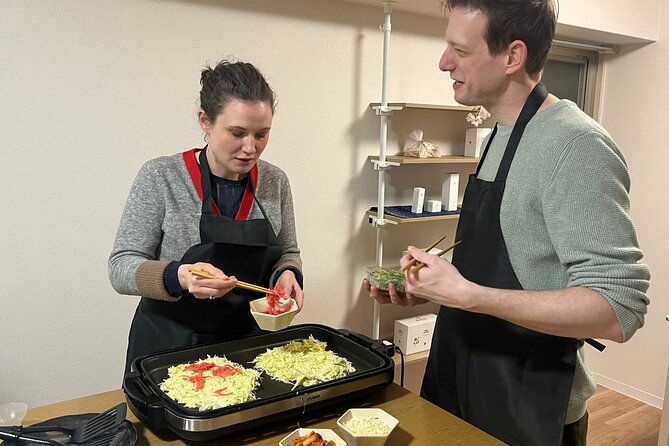
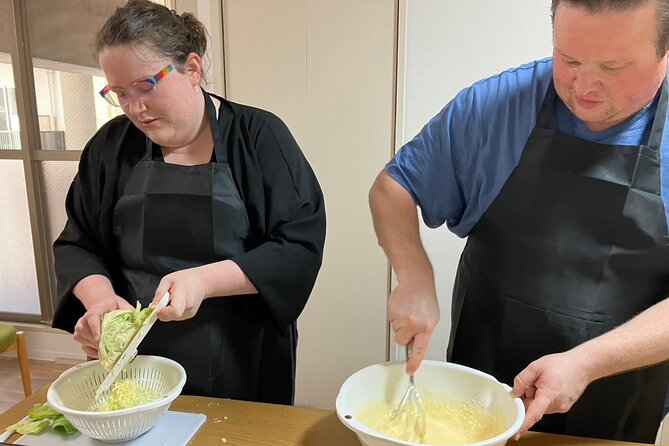
The main cooking portion lasts about 90 minutes. You prepare both dishes step by step, with the instructor guiding you through the process.
For okonomiyaki, you work with batter, cabbage, and fillings such as pork or seafood. The finished pancake receives sauce and bonito flakes. The dish is flexible by nature, which makes it a good introduction to Japanese home cooking. You can learn the basic method first, then later adjust fillings to suit your taste or what you can buy at home.
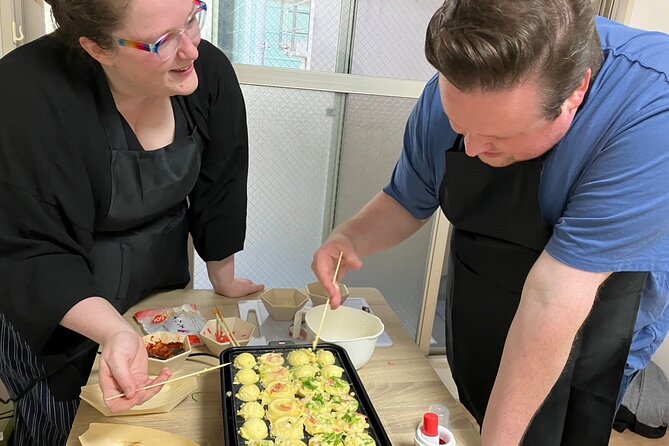
Takoyaki requires a different kind of attention. The batter is poured into round molds, and the octopus filling goes inside. The balls need to be cooked and shaped in the pan, then served with sauce, bonito flakes, and seaweed powder.
I would expect the takoyaki section to be the more hands-on part of the class. The shape is less forgiving than a pancake, and the special pan is not something every home cook already knows. If you feel awkward at first, that is part of the point. The instructor is there to help you handle the tools and understand the process.
The class has a maximum of eight people. That is small enough to make personal guidance possible, though the exact feel depends on how many people book your date. On some dates, only two people have joined, creating a more private and conversational session. A full group should still be manageable, but it may feel less personal than a two-person booking.
The multilingual instruction is another practical advantage. English is provided, while Japanese and Spanish instruction can be requested. If you need a certain language, contact the provider after booking rather than assuming it will automatically be available in every session.
Eating What You Made for One Full Hour
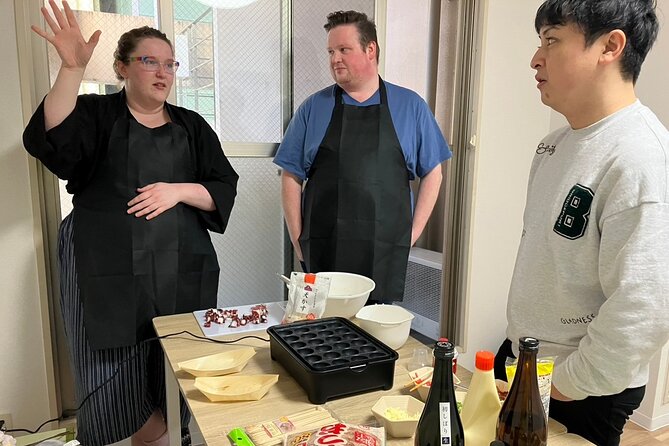
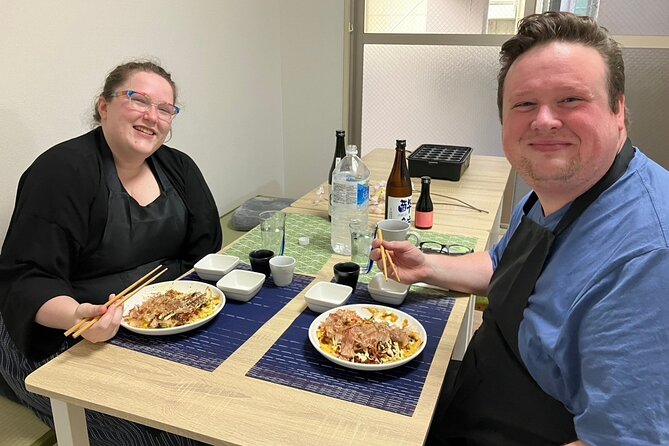
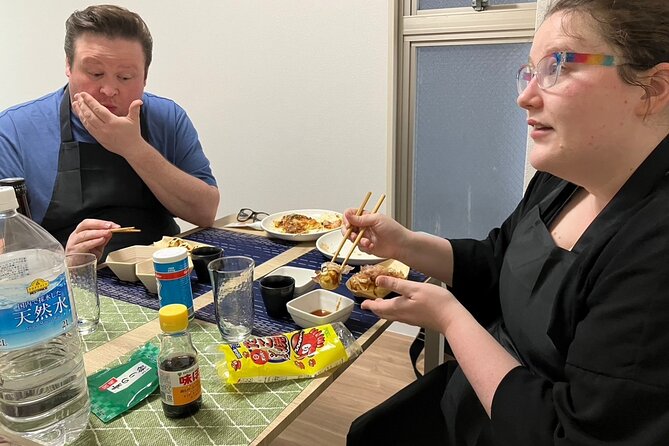
After cooking, you spend about an hour tasting the okonomiyaki and takoyaki. This is not just a quick bite at the end. The schedule gives you time to sit down, enjoy the food, and talk with the instructors and other people in the class.
Drinks include Japanese sake, beer, and soft drinks. Alcohol is served only to people aged 20 and older. Anyone under 20 receives non-alcoholic drinks, so families can join without the drinks policy becoming a problem.
The tasting stage adds value to the $70 fee. You are making a full meal rather than paying for a short demonstration followed by a small sample. Still, portion size is not stated, so I would book this for the activity and meal together, not on the assumption that it replaces every other food stop that day.
The relaxed finish is particularly helpful after 90 minutes of cooking. You can compare the two dishes, ask final questions, and think about what you would change when preparing them at home. The class is as much a social food experience as a technical lesson.
More Japanese home cooking classes:
- Osaka: Ramen and Gyoza Cooking Class in Dotonbori
★ 5.0 · 378 reviews - Osaka: Sumo Stage Show with Bento or Snack + Fight & Photo
★ 4.3 · 364 reviews - Osaka: Traditional Mochi Pounding Experience with Tasting
★ 4.9 · 306 reviews - Ramen and Gyoza Cooking Class in Osaka
★ 5.0 · 202 reviews
The Real Value of the $70 Price
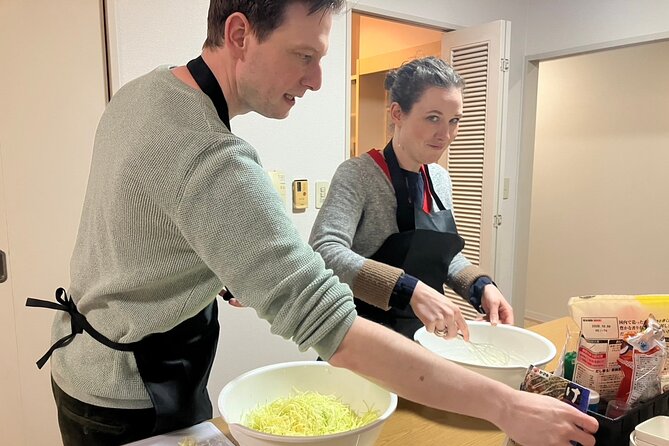
At $70 per person, this class costs more than ordering okonomiyaki or takoyaki at a casual Osaka restaurant. If you only want to eat these dishes, a restaurant meal will usually be the simpler choice.
The price makes more sense when you count what is included:
- Three hours of guided activity
- All cooking ingredients
- Kitchen tools
- Apron and disposable gloves
- English-speaking instruction
- Japanese or Spanish instruction upon request
- Okonomiyaki and takoyaki to eat
- Sake, beer, and soft drinks
- Written recipes and practical ingredient guidance
The recipes and packaging examples are especially useful. You get help recognizing the products that may appear in a Japanese supermarket, which can be more valuable than a recipe alone. A written list gives you a better chance of recreating the dishes after returning home.
I would call the price fair for someone who wants a hands-on cultural activity with a meal included. It is less compelling for a strict budget visitor, a person who dislikes cooking, or someone who has already taken several Japanese food classes.
Who Will Get the Most From This Class
This activity suits first-time visitors who want something beyond sightseeing. It also works well for couples, families, and small groups looking for a shared evening activity in Osaka.
Younger children have been accommodated successfully, but the class involves hot cooking surfaces, batter, and kitchen tools. Adults should be prepared to supervise children closely. The provider does not state a minimum age, so ask before booking if you are traveling with very young children.
Food lovers will get the most from the lesson, especially if you want to continue making these dishes at home. The class is also a good match for people who like social activities but do not want a large group. With no more than eight people, conversation should be easier than in a big cooking school.
It may be less suitable if you need a strictly private class, require detailed dietary guarantees, or prefer a passive demonstration. Vegetarian and allergy options may be possible, but you must contact the provider after booking. Do not wait until the day of the class to raise those needs.
Timing, Transport, and What to Bring
The activity lasts approximately three hours and ends back at the meeting point. There is no private transportation, but the central location makes public transit straightforward. Shinsaibashi and Honmachi stations are both about five minutes away on foot.
The booking pattern suggests that people often reserve around 19 days ahead. That is not a rule, but it is a useful planning clue if your Osaka schedule is fixed. A small class can fill on popular dates, so booking early is sensible.
You do not need to bring ingredients or cooking equipment. Aprons and disposable gloves are supplied. Bring yourself, arrive at the stated meeting point, and allow enough time to locate the building in Bakurōmachi.
The cancellation terms allow a full refund if you cancel at least 24 hours before the start time. Changes or cancellations inside that 24-hour window are not accepted for a refund. The activity also lists good weather as a requirement, with a different date or full refund offered if the provider cancels for poor weather.
That weather rule is worth checking before you commit to a tightly packed itinerary. Since the cooking takes place indoors, ask the provider if the policy affects your particular date or only certain operating conditions.
What Makes the Lesson Feel Authentic
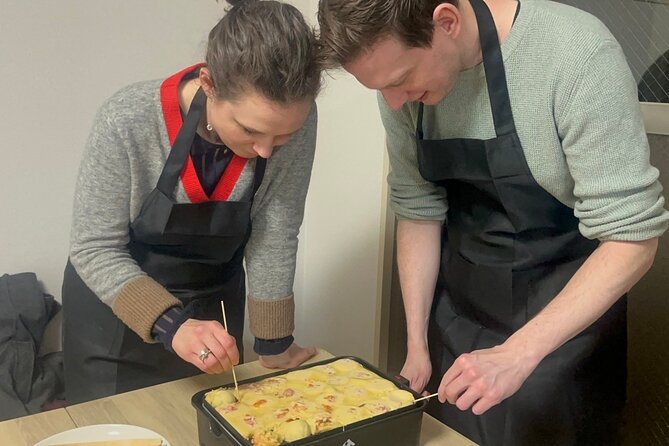
The strongest part of the class is its connection to ordinary Osaka food. Okonomiyaki and takoyaki are not formal dishes reserved for special occasions. They are casual, filling foods with a strong place in local eating culture.
Making them yourself gives you a better sense of why they work. You see how a simple mixture of batter, cabbage, fillings, and toppings becomes a complete dish. You also learn that takoyaki is not simply a small version of okonomiyaki. It has its own cooking rhythm and tools.
The inclusion of ingredient packaging is a small but smart detail. Japanese supermarkets can be confusing when you are looking for sauces, toppings, or specific flour and batter products. Seeing what to look for gives you a practical reference that a polished restaurant meal cannot provide.
The class also leaves room for conversation. The instructors are described as friendly and multilingual, and the final tasting hour gives you time to ask about the food rather than rushing straight back into Osaka’s streets.
FAQ
How long does the Osaka cooking class last?
The activity lasts approximately three hours. It includes 30 minutes of orientation and preparation, 1 hour and 30 minutes of cooking, and one hour for tasting the food with drinks.
What dishes will I make?
You will make okonomiyaki, a savory pancake with batter, cabbage, and fillings such as pork or seafood. You will also make takoyaki, savory dough balls filled with octopus.
Are drinks included?
Yes. Sake, beer, and soft drinks are included. Alcohol is served only to people aged 20 and older. Participants under 20 receive non-alcoholic drinks.
Where does the class meet?
The meeting point is 南船場コレット904, 4-chōme-3-1 Bakurōmachi, Chuo Ward, Osaka, 541-0059, Japan. The kitchen is about a five-minute walk from Shinsaibashi and Honmachi stations on the Osaka Metro.
What language is the class taught in?
An English-speaking instructor is included. Japanese and Spanish instruction can be requested.
Do I need to bring cooking equipment or ingredients?
No. The provider supplies the ingredients, kitchen tools, aprons, and disposable plastic gloves. You only need to bring yourself.
Can vegetarian or food allergy options be arranged?
You should contact the provider after booking to ask about vegetarian or food allergy options. Do not assume a suitable adaptation will be available without advance notice.
How many people can join the class?
The maximum group size is eight people. The exact number on your date may be smaller.
Can I cancel for a full refund?
You can cancel for a full refund up to 24 hours before the experience start time. Cancellations or changes made less than 24 hours before the start time are not refunded or accepted. If the provider cancels because of poor weather, you will be offered another date or a full refund.
Should You Book It?
Book this class if you want to learn two classic Osaka foods, enjoy a small-group activity, and take home recipes you can use later. The central location, included meal, drinks, and multilingual instruction make the $70 easier to justify.
Skip it if your main goal is simply the cheapest possible okonomiyaki dinner, or if you have little interest in cooking. For everyone else, this is a useful three-hour break from Osaka’s usual sights, with food you make, eat, and may be able to repeat at home.
Just added around Osaka
- Nara Day Trip from Osaka with a Licensed Guide★ 5.0 · 3 reviews
- Osaka Early Morning Osaka Castle Tour Avoid Crowds★ 5.0 · 3 reviews
- Guided Tour of Some Attractions in Osaka by Private Car★ 5.0 · 3 reviews
- Private Transfer Between Kyoto and Kansai Airport KIX★ 5.0 · 3 reviews
- Shared Arrival Transfer: Osaka Itami Airport to Osaka City★ 5.0 · 3 reviews
- Osaka: Sushi Making Class and Dotonbori Food Tour★ 4.7 · 3 reviews
- Osaka Night Photography Workshop★ 5.0 · 3 reviews
- Kyoto Full day Tour Kinkakuji, Kiyomizu-dera and Fushimi Inari★ 4.5 · 3 reviews
Okonomiyaki & Takoyaki Classes, compared.

Osaka Cooking Class: Okonomiyaki &Japanese cuisines experience
Read our review →

Osaka Sake Tasting & Takoyaki Cooking Experience
Read our review →
Cooking Ramen&Gyoza/KatsuCurry/Bento/Okonomiyaki+Store Tour@Osaka
Read our review →
Cooking Class Okonomiyaki & Takoyaki course in Nanba
Read our review →
Osaka Street Food Festival :Takoyaki&Okonomiyaki for Families
Read our review →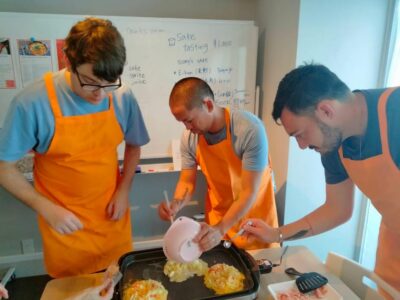
Okonomiyaki or Ramen&Gyoza Class with Local Shop Tour
Read our review →Browse the lists this tour appears in