
Reviewed · KYOTO DAY TRIPS FROM OSAKA
Osaka: Kyoto & Uji Historical Sites and Scenic Delights Tour
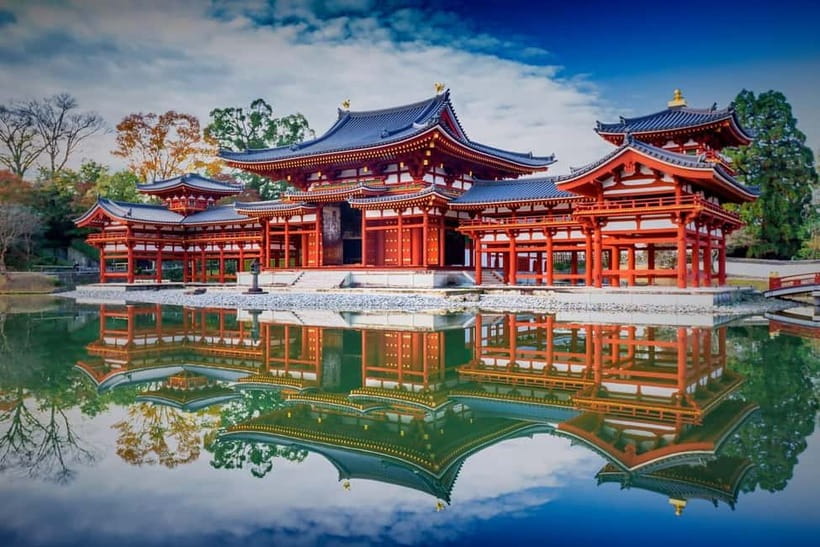
Kyoto’s most famous sights come thick and fast on this 10-hour bus tour, from the gold-covered Kinkaku-ji to the Phoenix Hall on Japan’s ten-yen coin. You get the big cultural landmarks in one long day, then add Uji’s tea town and riverfront.
I like the low $54 price, especially with round-trip transport, tolls, parking, air conditioning, and an English-speaking guide included. I also like the choice of ending in Osaka or Kyoto. The trade-off is a tight schedule, crowded temple districts, and extra admission fees at the main sights.
In This Review
- Key points at a glance
- Why this Osaka to Kyoto day trip works
- Morning departure from Osaka or Kyoto
- Kinkaku-ji, Kyoto’s gold-covered showpiece
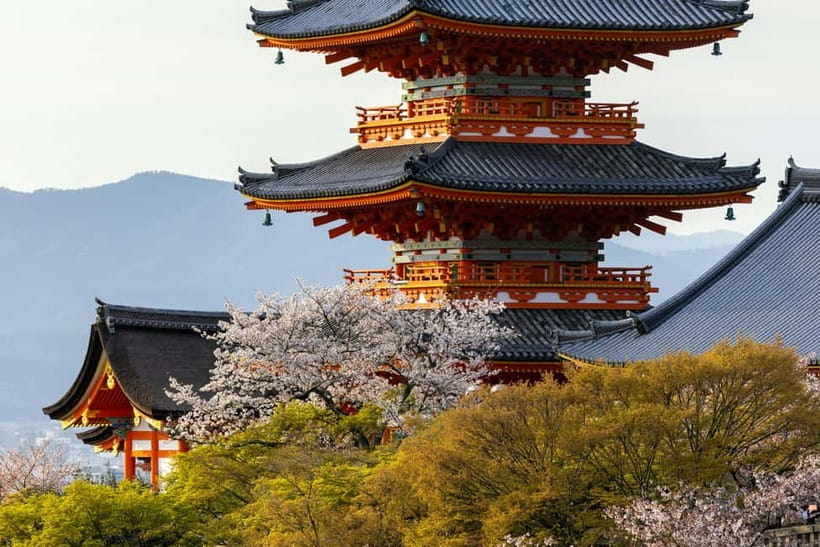
- Kiyomizu-dera and the famous wooden stage
- Ninenzaka, where the walk becomes the attraction
- Yasaka Koshindo and its colorful talismans
- Uji, Japan’s matcha town
- Uji River, Uji Shrine, and the approach to Byodo-in
- Byodo-in and the ten-yen coin connection
- What the $54 price really includes
- Walking, crowds, and who should book
- Should you book this Kyoto and Uji tour?
- FAQ
- Where does the tour depart?
- Can I finish the tour in Kyoto instead of Osaka?
- How long is the tour?
- Is the tour conducted in English?
- Are temple admission fees included?
- Is food included?
- What should I bring?
Key points at a glance
- Kinkaku-ji in 40 minutes: A short visit, but enough time to see and photograph Kyoto’s famous Golden Pavilion.
- Kiyomizu-dera gets the longest stop: Plan on nearly three hours for the temple, Ninenzaka, and Yasaka Koshindo.
- Uji adds a different mood: Tea shops, the Uji River, Uji Shrine, and Byodo-in give the afternoon more breathing room.
- Guide Amy is multilingual: Her recommendations and explanations are a useful part of the day.
- You can return to either city: Board in Osaka or Kyoto, then choose Osaka or Kyoto for drop-off.
- Admission is extra: Temple entrance fees, food, drinks, and personal purchases are not covered.
Why this Osaka to Kyoto day trip works
This tour is built for you if Kyoto is not your main base, but you still want to see its headline sights. From Osaka, independent visits to Kinkaku-ji, Kiyomizu-dera, and Uji can involve several train and bus connections. A vehicle removes much of that puzzle.
The price is the strongest argument. At $54 per person, you are paying mainly for transport and organization rather than a luxury tour. The listed price also covers fuel, environmental fees, parking, tolls, taxes, and transfers to and from the meeting point. That makes it a useful deal for first-time visitors who would rather spend the day looking out the window than studying transit maps.
You should not expect a slow, private cultural walk at this price. Most stops are self-guided, and the day covers a lot of ground. The guide helps with timing, background, and recommendations, but you will have plenty of time to explore on your own.
The overall score is 4.7 from 13 verified bookings. The strongest praise centers on organization, value, and Amy, an English-speaking multilingual guide who gives useful historical context and choices at each stop. One important warning also comes through clearly: the Kyoto shopping lane can feel overly crowded and expensive.
More day trips over to Kyoto:
- Osaka/Kyoto: Hiroshima Miyajima Bus Tour & Shinkansen Ticket
★ 4.7 · 919 reviews - Ancient Capital Tour: Kyoto and Nara Highlights from Kyoto/Osaka
★ 4.5 · 332 reviews - Osaka/Kyoto: Amanohashidate & Miyama Tour with Boat & Lunch
★ 4.6 · 207 reviews
Morning departure from Osaka or Kyoto
Departure is at 8:00 AM from Osaka or 9:00 AM from Kyoto. You need to arrive 15 minutes early, and the exact meeting point depends on the option you book. Do not assume you can change it on the morning of the tour. Any needed change should be arranged the day before.
The journey to the first sight takes about two hours by bus or coach. That is a sizable part of the day, but it is also what lets you connect Osaka with several spread-out places in Kyoto Prefecture. Air conditioning should make the ride more comfortable, though traffic and weather can change the schedule.
The bus format suits you best if you want a fixed plan and shared transport. If you prefer to linger for an hour over one temple detail, this schedule will feel less forgiving. Bring water and wear shoes that can handle pavement, steps, and a moderate amount of walking.
Kinkaku-ji, Kyoto’s gold-covered showpiece
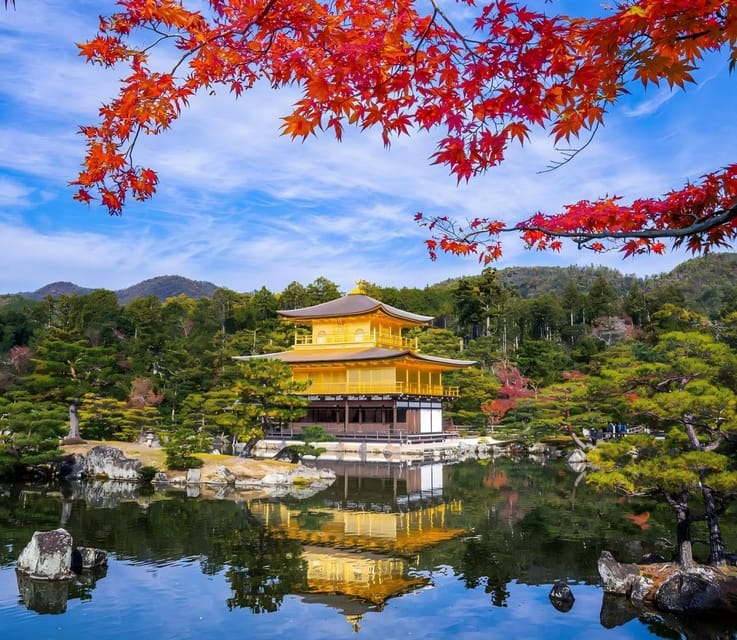
The first major stop is Kinkaku-ji, also called the Golden Pavilion. Its upper hall is covered in gold leaf, and the building reflects across the pond in the temple garden. The image is instantly recognizable, but the setting gives you more than a quick building photograph.
You get about 40 minutes here. That is enough to walk the designated route, take photographs, and look across the pond, but it is not a long temple visit. The stop is best treated as a focused introduction rather than a chance to examine every corner of the grounds.
Kinkaku-ji has been a UNESCO World Heritage site since 1994. Its central Shariden Hall is the feature everyone comes to see, so expect other people to have the same idea, particularly in peak seasons. Stay aware of the group meeting time. A missed departure here would cause problems for the rest of the day.
Admission to Kinkaku-ji is not included. You will need to budget separately for the entrance fee, along with the fees for Kiyomizu-dera and Byodo-in. The supplied tour details do not give the admission amounts, so check current prices if you are planning your cash.
Kiyomizu-dera and the famous wooden stage
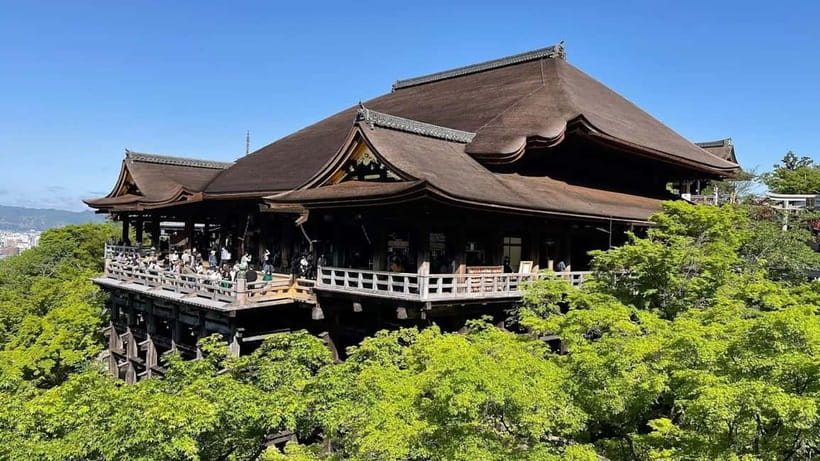
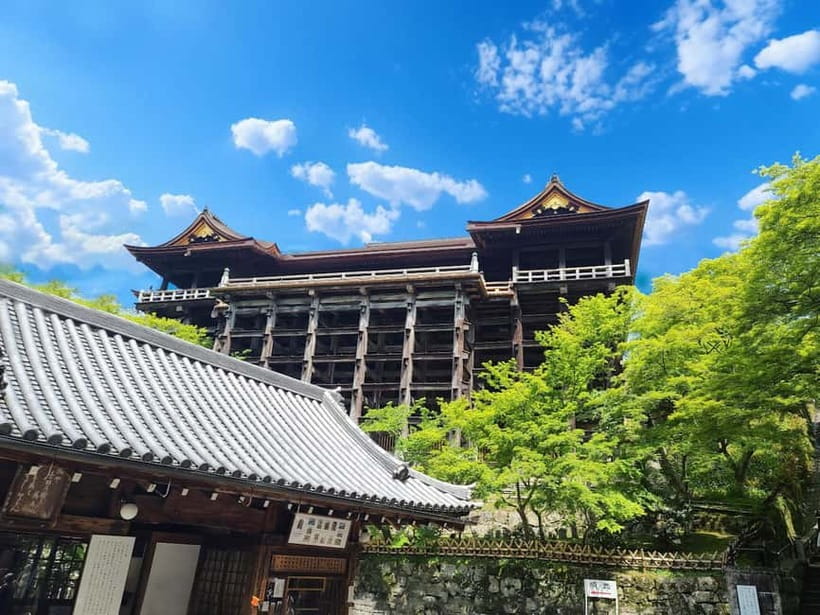
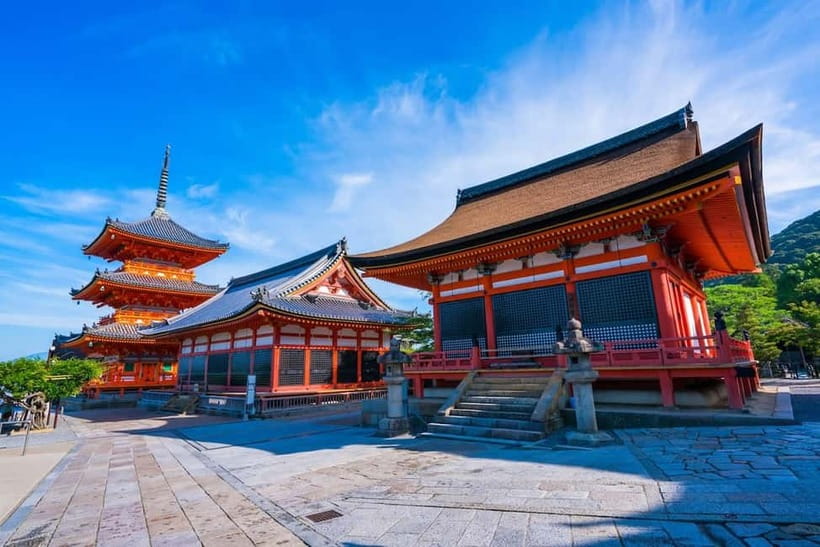
Kiyomizu-dera is the day’s main Kyoto stop. This old temple is known for its broad wooden Kiyomizu Stage, which projects from the hillside and gives you wide views over Kyoto. It is one of those places that feels instantly familiar from photographs, yet the scale is easier to appreciate in person.
The scheduled time here is about 2 hours and 40 minutes. That is a generous block compared with Kinkaku-ji, but the time also covers nearby streets and smaller stops. You will have room to see the temple, take photographs, browse shops, and decide how much time to spend on the approach.
The grounds can be crowded. The temple is a national treasure and a UNESCO World Heritage site, and its popularity is not a secret. Move patiently through busy areas and keep an eye on the clock. The long stop helps, but it does not turn a famous site into a quiet one.
Admission is extra. The tour does not include meals or drinks, so this is a sensible place to buy a snack if you need one. You might find matcha ice cream and tea-based treats along the route, though purchases are your responsibility.
A few more Osaka tours and experiences worth a look
- Osaka: Castle History Walking Tour / Castle Tower Admission
★ 4.9 · 230 reviews - Osaka: Osaka Castle & Historical Museum Guided Tour
★ 4.8 · 28 reviews - Osaka Castle & Samurai History Walking Tour
★ 5.0 · 22 reviews - Osaka: Kyoto & Nara & Uji Historical and Scenic One-Day Tour
★ 4.7 · 21 reviews
Ninenzaka, where the walk becomes the attraction
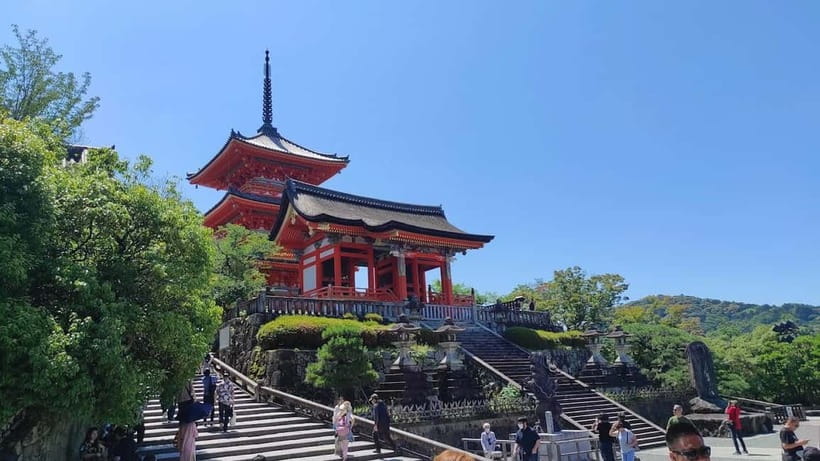
Ninenzaka is a historic lane leading toward Kiyomizu-dera. Its traditional buildings, sloping path, small shops, and snack stalls make it a pleasant contrast to the formal temple grounds. This is the part of the morning where you can slow down, browse, and enjoy Kyoto’s old-town feel.
You may want to try matcha ice cream or stop for coffee at MASUDA Tea Shop, which is specifically highlighted on the route. Uji is better known for tea later in the day, but Ninenzaka gives you an early taste of the region’s tea culture.
There is a practical downside. Ninenzaka can be extremely crowded, and one assessment of the tour found the small shopping street packed with costly souvenirs of limited quality. I would treat it as a place for architecture, atmosphere, and a snack, not as a bargain-shopping destination.
Keep your expectations realistic. The lane is photogenic, but it is also a major tourist route. You will get more from it if you look above the shop displays at the wooden façades and traditional street shape.
Yasaka Koshindo and its colorful talismans
Yasaka Koshindo is a short but distinctive stop near Ninenzaka. The small temple is known for its many colorful balls, called kukurizaru, hanging around the site. Their bright colors make this one of the easiest places on the tour to recognize in photographs.
The temple has a strong religious character despite its popularity online. You can take pictures, but keep the setting in mind and behave as you would at any active place of worship. The location has also appeared as a backdrop in Detective Conan, which adds a small pop-culture link for fans.
This stop is not a replacement for a major temple visit. It works because it is compact, unusual, and close to the Kiyomizu area. If you are interested in everyday religious customs rather than only grand architecture, give it a little attention.
Uji, Japan’s matcha town
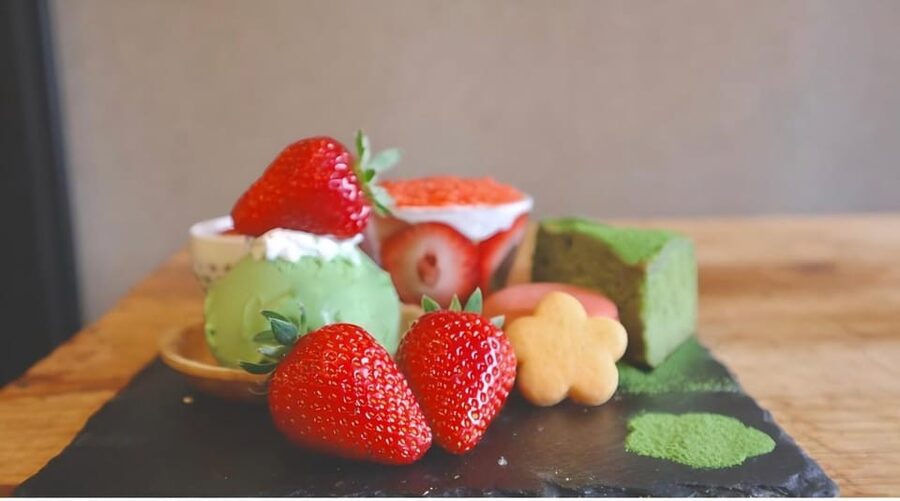
After Kyoto’s busiest sights, the tour continues to Uji for about 100 minutes. Uji is closely tied to matcha, and tea shops line the main approach. The town gives the afternoon a different pace, with the river, bridge, shrines, and tea culture all within a manageable walking area.
You will have time for a walk and photo stops, but the schedule remains organized. This is a good place to buy tea-flavored sweets or a drink, though food and beverages are not included. If you want souvenirs that feel more connected to the area than generic Kyoto merchandise, Uji tea products are the natural choice.
Uji is also valuable because it broadens the day beyond Kyoto’s standard checklist. The town has a calmer setting, and the Uji River provides an attractive pause after the crowded lanes around Kiyomizu-dera. You should still watch the time, since the group must continue to Byodo-in and then return toward Osaka or Kyoto.
Uji River, Uji Shrine, and the approach to Byodo-in
The Uji River and Uji Bridge are central to the town. A riverside walk gives you a chance to stretch your legs and take photographs without the compressed feeling of a major temple entrance. The water and bridge also help explain why Uji has long been an important cultural setting.
Uji Shrine is included as a visit with self-guided time. It is a smaller stop than the major temples, but it adds another layer to the town’s religious character. Do not expect a long guided ceremony or an extended lecture. The format lets you look around at your own pace.
The route through Uji is easy to combine with tea shopping and snacks. You may find the afternoon more relaxed than the Kyoto portion, though the exact experience depends on crowd levels and traffic earlier in the day.
Byodo-in and the ten-yen coin connection
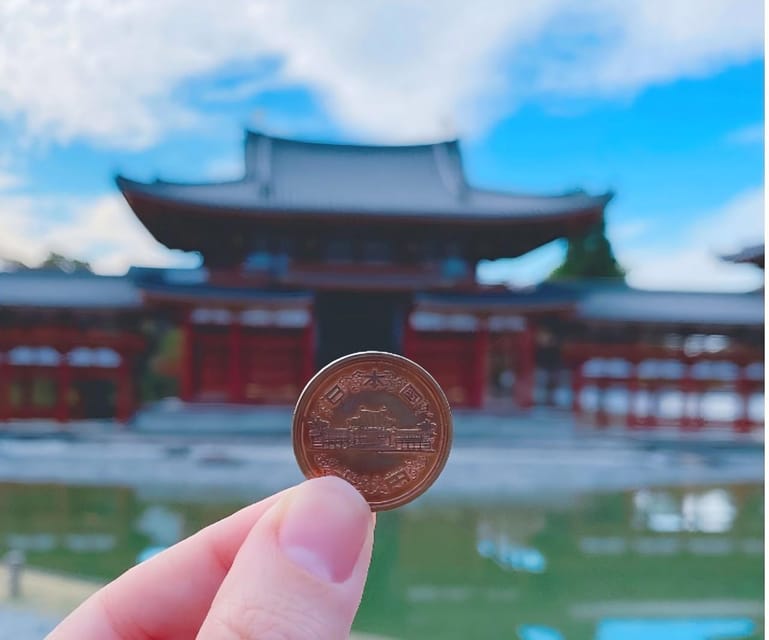
Byodo-in is the final major sight and one of the most satisfying details of the trip. Its Phoenix Hall appears on Japan’s ten-yen coin, so you can hold the coin up to the building and make the connection for yourself. The hall also appears on the ten-thousand-yen note, making it one of the country’s most familiar historic images.
The temple is a UNESCO World Heritage site, and the surrounding grounds give you more than a single frontal photograph. Look at the symmetry of the Phoenix Hall, its position beside the water, and the way the building is framed by the grounds.
The adjacent Byodo-in Omotesando is lined with local food and tea specialties. This is another good place for a small purchase, especially if you want Uji tea rather than the mass-market souvenirs found in some of Kyoto’s busiest streets.
Admission to Byodo-in is not included. As at the other temples, you should allow extra money for entry. The tour description does not specify how long the Byodo-in portion lasts, so listen carefully for the meeting instructions and do not wander too far from the agreed location.
What the $54 price really includes
At $54, this is a strong-value sightseeing day for the right kind of visitor. You receive a comfortable air-conditioned vehicle, round-trip transfers from the meeting point, an English-speaking guide, and coverage of tolls, parking, fuel, taxes, and environmental fees.
That bundled transport matters. Kinkaku-ji, Kiyomizu-dera, and Uji are not next door to one another. You are paying to connect them efficiently, not simply to enter temples.
The price does not include admissions, meals, drinks, or personal expenses. Add those costs before deciding that the tour is cheaper than public transport. Even so, the convenience is likely worth a great deal if you are staying in Osaka and want one organized day in Kyoto.
A private group option is available. The supplied details do not state the private-group price or size, so ask for those specifics before booking if personal attention is important to you.
Walking, crowds, and who should book
You should book this tour if you want the main Kyoto sights without arranging several separate connections. It suits first-time visitors, short stays, families with older children who can walk comfortably, and anyone who likes having a guide set the day’s rhythm.
It is less suitable if you have back problems, limited mobility, or use a wheelchair. Pregnant participants and people aged 70 or above are asked to sign a travel waiver on arrival, and the tour information specifically lists pregnancy as unsuitable. Strollers and large luggage must be declared when you book.
Comfortable clothes and shoes are essential. The day includes temple paths, sloped streets, and walking between sites. Smoking is not allowed.
Expect crowds, especially around Kiyomizu-dera, Ninenzaka, and Kinkaku-ji. Weather and road conditions can alter the schedule, so keep evening plans flexible. The option to finish in Kyoto or Osaka is helpful, but confirm your selected drop-off details before departure.
Should you book this Kyoto and Uji tour?
I would book it if your priority is seeing a lot in one day for a modest price. Kinkaku-ji, Kiyomizu-dera, Ninenzaka, and Byodo-in are major names, while Uji adds tea culture and a more open riverside setting. Amy’s multilingual guiding and practical recommendations are an added benefit.
I would skip it if you want quiet temple visits, long meals, or freedom to change plans on the spot. The schedule is full, Ninenzaka may feel too commercial, and admission fees are extra.
For a first Kyoto visit from Osaka, though, this is a sensible introduction. Wear good shoes, arrive early, carry money for temple entry and snacks, and treat the famous shopping lanes as places to look rather than places to hunt for bargains.
FAQ
Where does the tour depart?
Departure is at 8:00 AM from Osaka or 9:00 AM from Kyoto, depending on the option booked. The meeting point varies, so check your selected option and arrive 15 minutes early.
Can I finish the tour in Kyoto instead of Osaka?
Yes. Regardless of where you board, you can choose to disembark in either Osaka or Kyoto.
How long is the tour?
The full experience lasts 10 hours. Traffic and weather may affect the schedule.
Is the tour conducted in English?
Yes. The tour includes a live English-speaking guide. Amy is described as multilingual.
Are temple admission fees included?
No. Admission to Kinkaku-ji, Kiyomizu-dera, and Byodo-in is not included. Meals, drinks, and personal expenses are also separate.
Is food included?
No. Food and beverages are not included, but you have opportunities to buy tea, matcha treats, coffee, and local specialties during the day.
What should I bring?
Bring comfortable shoes and comfortable clothing. Tell the operator when booking if you plan to bring a stroller or large luggage.
Just added around Osaka
- Nara Day Trip from Osaka with a Licensed Guide★ 5.0 · 3 reviews
- Osaka Early Morning Osaka Castle Tour Avoid Crowds★ 5.0 · 3 reviews
- Guided Tour of Some Attractions in Osaka by Private Car★ 5.0 · 3 reviews
- Shared Arrival Transfer: Osaka Itami Airport to Osaka City★ 5.0 · 3 reviews
- Private Transfer Between Kyoto and Kansai Airport KIX★ 5.0 · 3 reviews
- Osaka: Sushi Making Class and Dotonbori Food Tour★ 4.7 · 3 reviews
- Osaka Night Photography Workshop★ 5.0 · 3 reviews
- Kyoto Full day Tour Kinkakuji, Kiyomizu-dera and Fushimi Inari★ 4.5 · 3 reviews
Kyoto Day Trips from Osaka, compared.

Osaka/Kyoto: Hiroshima Miyajima Bus Tour & Shinkansen Ticket
Read our review →
Ancient Capital Tour: Kyoto and Nara Highlights from Kyoto/Osaka
Read our review →
Osaka/Kyoto: Amanohashidate & Miyama Tour with Boat & Lunch
Read our review →

Sagano Romantic Train & Arashiyama, Kiyomizudera, Fushimi Inari Taisha Day Tour
Read our review →
Full Day Tour of Kyoto with Private Transportation
Read our review →
Kyoto & Nara Private customized tour with English speaking Guide
Read our review →Full Day Kyoto Tour : Bamboo Forest, Golden Temple, Fushimi Inari
Read our review →Browse the lists this tour appears in