
Reviewed · OSAKA TEMPLE & SHRINE TOURS
Osaka: Japan’s Oldest Temple & Bone Buddha Walking Tour
Osaka’s biggest surprise may be what lies beyond its food stalls and neon signs: temples that explain how Buddhism took root in Japan. This two-hour walk links Shitennoji, founded in 593 by Prince Shotoku, with Isshinji, where cremated ashes have been formed into striking Bone Buddha statues.
I like the clear historical arc. You begin with the early state-supported spread of Buddhism, then see how the faith became a personal and communal part of urban life. I also like the contrast between Shitennoji’s ordered temple precinct and Isshinji’s modern gate and unusual memorial tradition. The main drawback is time. Two hours is enough for an introduction, but not a slow, lingering temple visit.
In This Review
- Key points to know before booking
- Why these two Osaka temples belong together
- Meeting at Shitennoji’s stone torii
- Shitennoji and the beginning of Buddhism in Japan
- The Pure Land Garden and the meaning of sunset
- Walking to Isshinji and changing the mood
- Isshinji’s Bone Buddhas and shared memory
- How the guide adds value
- Is $65 a fair price?
- Who should book this walk?
- Should you book Osaka’s Oldest Temple and Bone Buddha Walk?
- FAQ
- How long does the tour last?
- Where does the tour begin?
- How do I identify the guide?
- Is the meeting point near public transportation?
- Which temples are included?
- Is admission included?
- What languages are available?
- Is this a private tour?
- What is not included in the price?
- Can I cancel for a full refund?
Key points to know before booking
- Shitennoji dates to 593: It is one of Japan’s oldest officially established Buddhist temples and a key site for understanding Prince Shotoku’s role in promoting Buddhism.
- The Pure Land Garden adds a quieter pause: Its design connects the setting sun with Amida Buddha’s Western Paradise and the hope of rebirth.
- Isshinji offers a very different kind of temple visit: Its modern entrance leads to a nearly 900-year-old temple known for Bone Buddhas made from cremated ashes.
- This is a private walking tour: You receive a live guide in English or Japanese rather than joining a large public group.
- The meeting point is easy to identify: Meet at Shitennoji’s stone torii gate, where your guide will hold a sign with your name.
- The $65 price buys interpretation, not just entry: Admission to Shitennoji’s main complex and Pure Land Garden is included, while transport, drinks, and personal costs are not.
Why these two Osaka temples belong together
The tour works because the temples tell different chapters of the same story. Shitennoji points back to the sixth century, when Buddhism was still gaining a place in Japanese society. Isshinji shows what Buddhist practice can look like in a dense modern city, where families need a shared place to remember relatives across generations.
That connection gives the walk more purpose than a simple temple checklist. You are not just looking at roofs, gates, and statues. You are following a change in Japanese religious life, from a faith promoted by a royal figure to one tied closely to family memory and local community.
I would choose this experience if you want historical context but do not want to spend half a day in a museum. The guide explains what you are seeing as you move, and the private format should make it easier to ask questions about Buddhism, architecture, death, and Japanese customs.
The tour is also a useful counterpoint to Osaka’s better-known entertainment districts. You still remain in the city, but the mood changes quickly. The focus shifts from food and shopping to ritual, architecture, memory, and the long survival of religious traditions.
More temples and shrines worth the walk:
- Osaka: Minoh, Katsuoji Temple, & Minoh Falls Full-day Tour
★ 4.9 · 172 reviews - Sagano Romantic Train & Arashiyama, Kiyomizudera, Fushimi Inari Taisha Day Tour
★ 4.5 · 171 reviews - Full Day Kyoto Tour : Bamboo Forest, Golden Temple, Fushimi Inari
★ 5.0 · 84 reviews
Meeting at Shitennoji’s stone torii
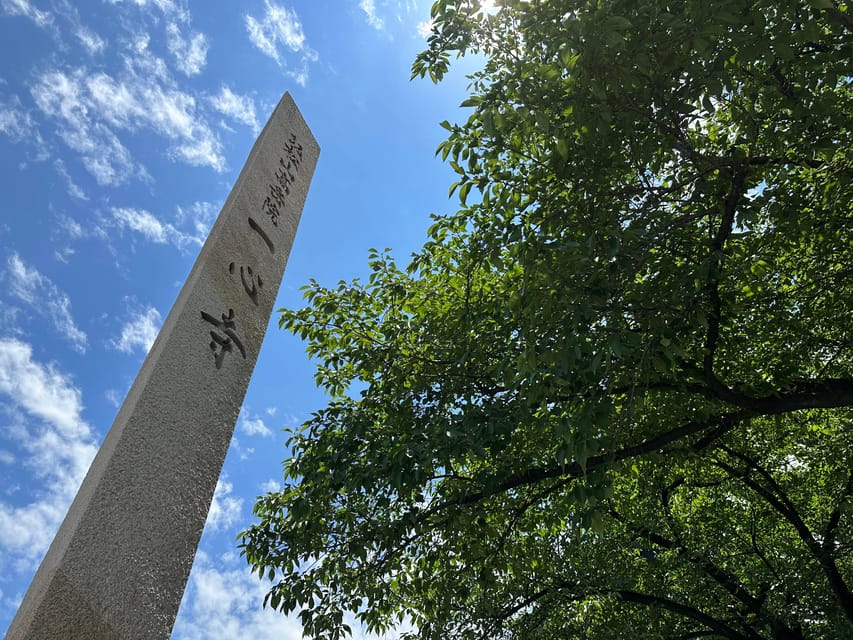
Your starting point is the stone torii gate at the main entrance to Shitennoji. This is called the Ishidori, and it gives you a clear landmark for the meeting. Your guide will hold a sign with your name, and the gate is a short walk from Shitennoji-mae Yuhigaoka Station.
Arrive with enough time to find the entrance without rushing. Transportation to the meeting point is not included, so you will need to make your own way there. The same applies at the end, since the tour finishes at Isshinji Temple rather than returning you to the starting point.
That one-way shape is practical if Shitennoji and Isshinji fit naturally into your Osaka plans. It is less convenient if you need to return to the station immediately afterward. Treat the finish at Isshinji as part of your sightseeing route, not as a round trip.
Shitennoji and the beginning of Buddhism in Japan
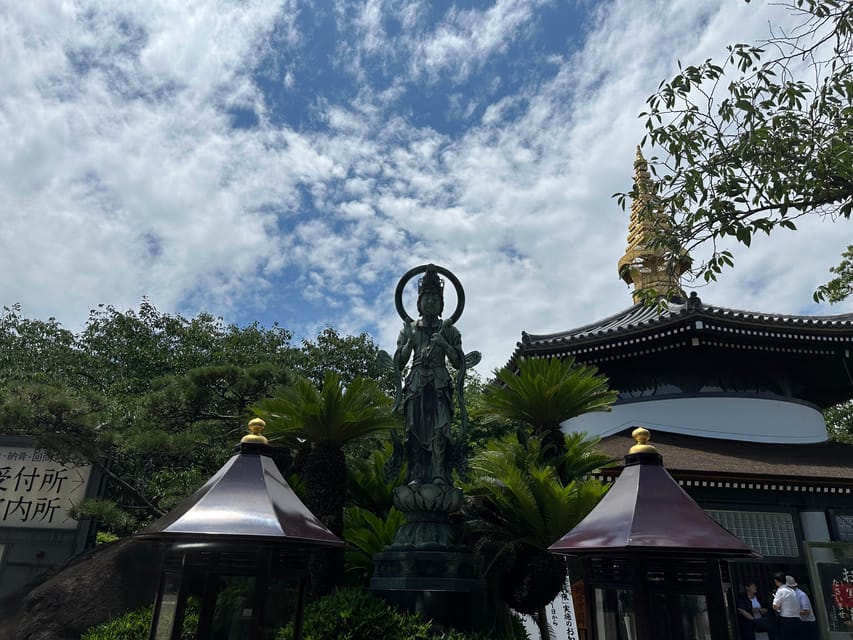
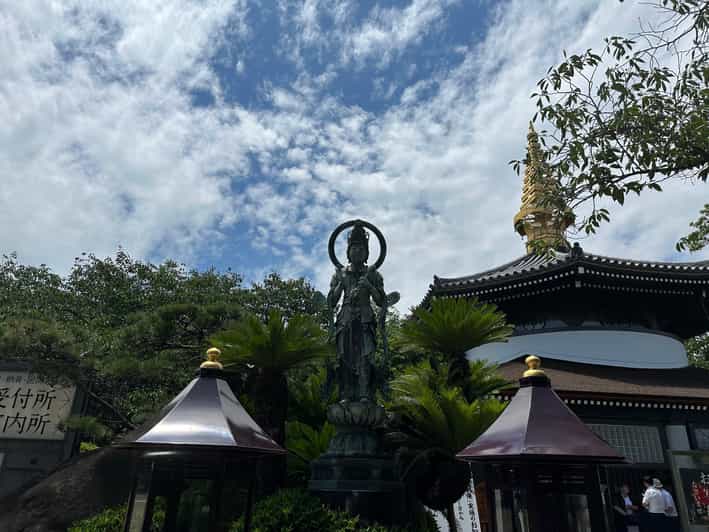
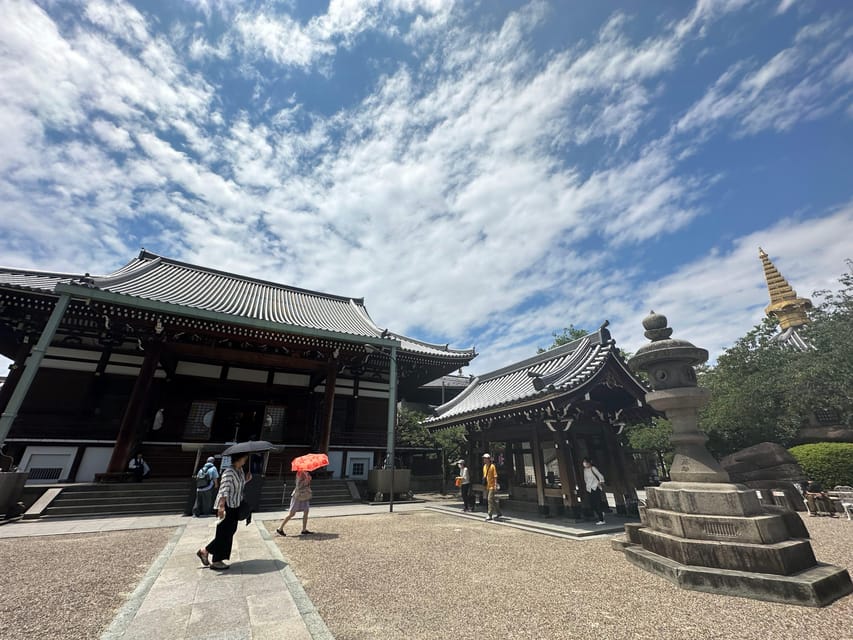
Shitennoji is the main historical anchor of the walk. Prince Shotoku founded it in 593, making it one of Japan’s oldest officially established Buddhist temples. He was an important early supporter of Buddhism, and the temple represents the point when Buddhist ideas began to take a firm place in Japanese society.
Your guide explains the temple’s connection to the Four Heavenly Kings, known as the Shitenno. These guardian deities were believed to protect the nation. Their presence helps you understand that early Buddhism was not treated only as a private spiritual choice. It was also linked to the well-being and protection of the country.
The central precinct has a symmetrical layout associated with early Japanese Buddhist design. That order is worth noticing. Instead of wandering through a collection of unrelated buildings, you see how the arrangement itself expresses religious ideas and authority.
The guide’s explanation matters here. Without context, a symmetrical temple plan can look simply neat. With context, it becomes evidence of a particular period in Japanese religious and political development. You begin to see architecture as a message.
Shitennoji has endured fires, wars, and repeated rebuilding. That means the buildings you see are not all untouched survivors from 593. The value lies in the continued identity of the site and the way its layout, practices, and religious role have carried forward despite destruction and reconstruction.
This is an important distinction for anyone expecting an ancient structure in original condition. Shitennoji is ancient as a foundation and institution, while parts of its physical form have been rebuilt over time. The guide can help you separate age, design, and continuity instead of treating them as the same thing.
The Pure Land Garden and the meaning of sunset
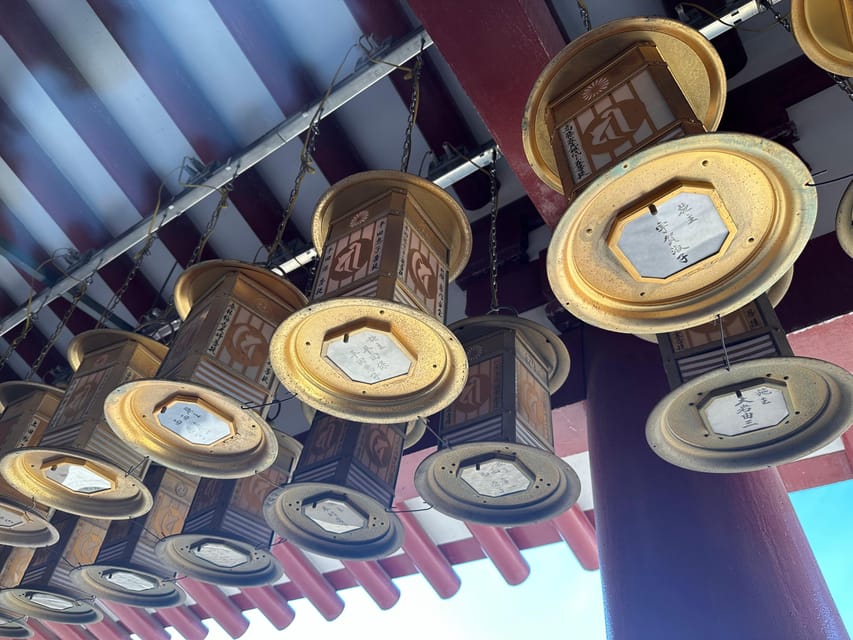
The Pure Land Garden adds a more reflective part to the Shitennoji visit. It is inspired by Buddhist visions of the Western Paradise, the realm associated with Amida Buddha.
The garden’s connection with the setting sun is especially meaningful. The area around Shitennoji has long been linked with sunset views, and the guide explains how the westward sun connects with the idea of rebirth in Amida’s paradise.
You do not need a detailed knowledge of Buddhist schools to appreciate this section. The basic idea is easy to follow: west is not just a direction on a compass. It becomes a religious symbol, pointing toward a promised paradise and the hope of rebirth.
The garden also changes the pace of the tour. The central precinct gives you structure, history, and architectural meaning. The Pure Land Garden gives you space to consider how those beliefs might have felt to people who came here for prayer, comfort, or hope.
Keep your expectations sensible. This is a guided visit within a two-hour experience, not an extended garden study. If you like Japanese gardens and want time to sit quietly or inspect every detail, you may find the schedule brisk. If you want a clear introduction to the symbolism, the stop should be enough.
More guided walks on foot:
- Deep Backstreet Osaka Tours (Option to add Dinner)
★ 5.0 · 1,290 reviews - Osaka Local Foodie Walking Tour in Dotonbori and Shinsekai
★ 5.0 · 985 reviews - Osaka: Deep Backstreets Walking Tour with Dinner Option
★ 4.9 · 902 reviews - Ultimate Osaka Walking Tour: Castle, Dotonbori & Hidden Gems
★ 5.0 · 862 reviews
Walking to Isshinji and changing the mood
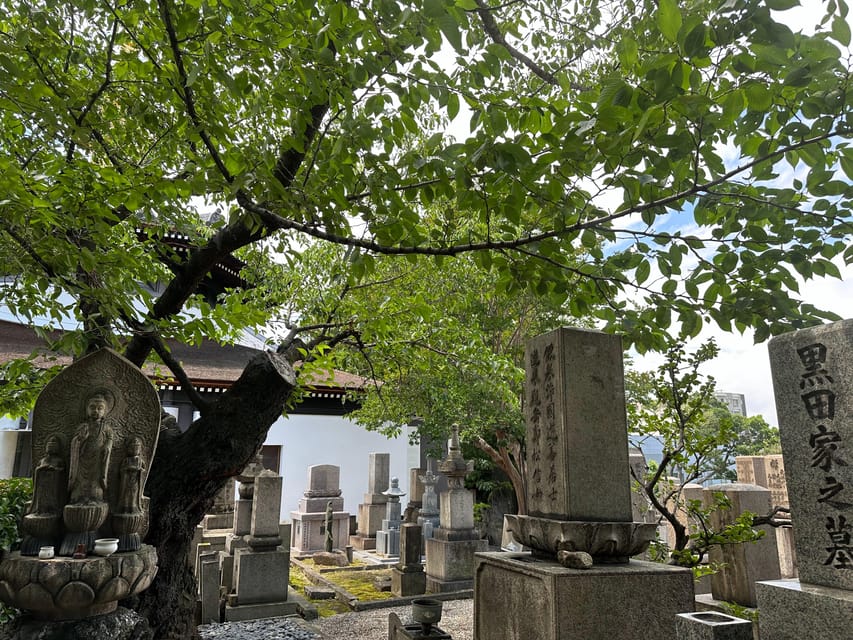
The move from Shitennoji to Isshinji is more than a change of location. It shifts the story from the beginnings of Buddhism in Japan to a later, urban form of religious practice.
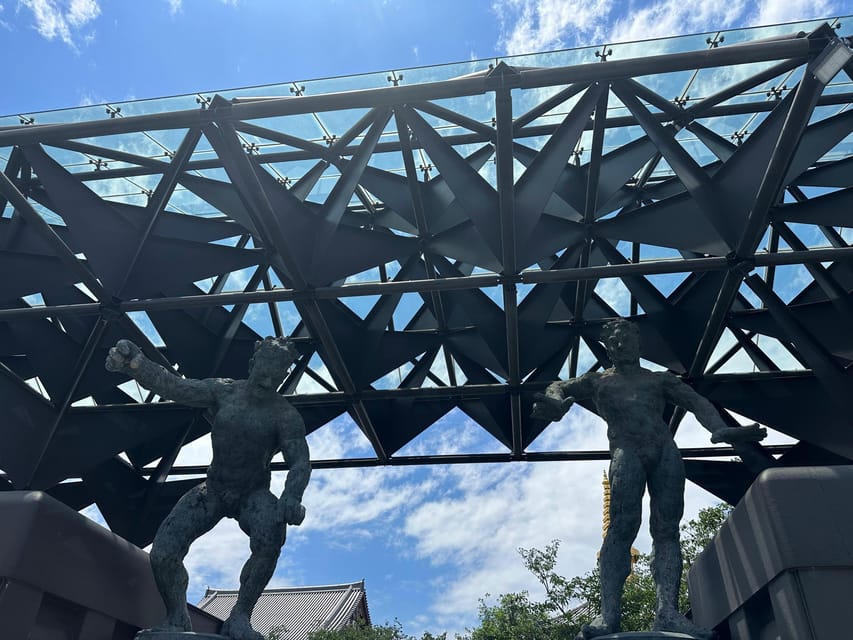
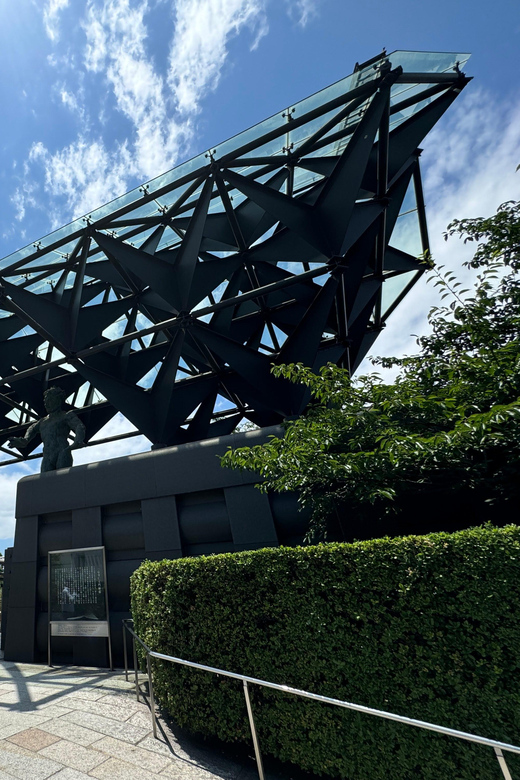
At Isshinji, the entrance immediately makes a different impression. The main gate is strikingly modern and was designed by the current head priest. That bold approach may surprise you after the ordered, traditional appearance of Shitennoji.
This contrast is one of the tour’s strongest features. Japanese temples are not all frozen in the past. Isshinji shows how a religious institution can use modern design while keeping a long spiritual role. Behind the contemporary gate is a temple with nearly 900 years of history.
The combination makes the visit more useful than a quick look at an old building. You see tradition presented in a current form, and you can ask how a temple remains relevant in a modern city. The guide’s role is especially important here because the visual contrast raises questions that are not answered by architecture alone.
Isshinji’s Bone Buddhas and shared memory
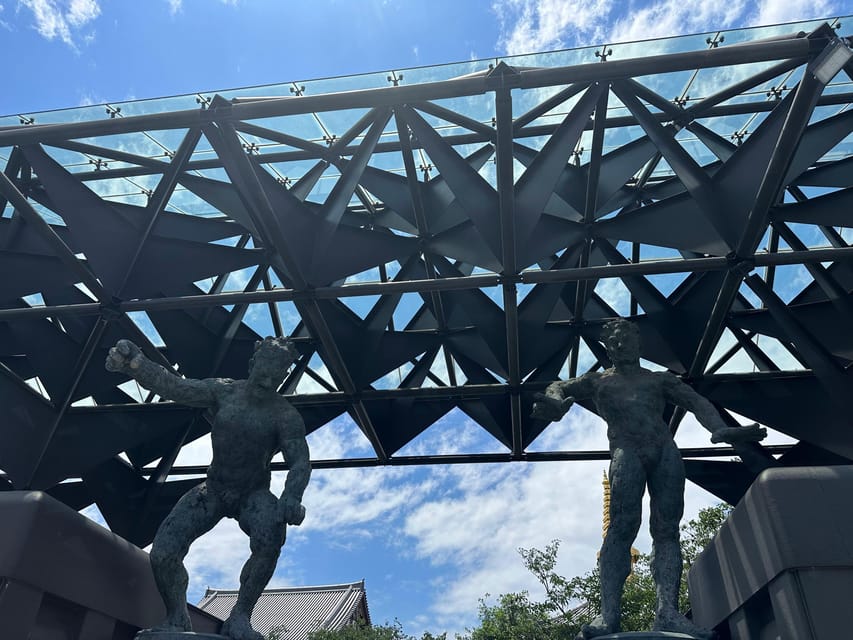
Isshinji is best known for its Bone Buddhas, called Kotsubotoke. These statues are formed from cremated ashes, creating a physical image from the remains of the dead.
The practice is unusual, but the idea behind it is direct. Isshinji holds the ashes of more than two million ancestors of Osaka residents. The temple becomes a place where private family grief and communal remembrance meet.
Your guide explains how the tradition began and how it continues to serve families across generations. That context keeps the Bone Buddhas from becoming a strange spectacle. They are not presented simply as an oddity. They reflect a way of preserving memory and maintaining a connection with relatives who have died.
This part of the visit may be powerful, but it may also feel serious. If you prefer sightseeing that stays light and decorative, Isshinji’s memorial focus could be more intense than expected. I see that as a reason to choose the tour thoughtfully, not as a flaw in the experience.
The Bone Buddhas also give the tour its most memorable subject. Many temple visits end with a general impression of peaceful grounds and attractive buildings. Isshinji offers an idea you are likely to keep thinking about: a temple using cremated remains to create shared religious objects for an entire city community.
How the guide adds value
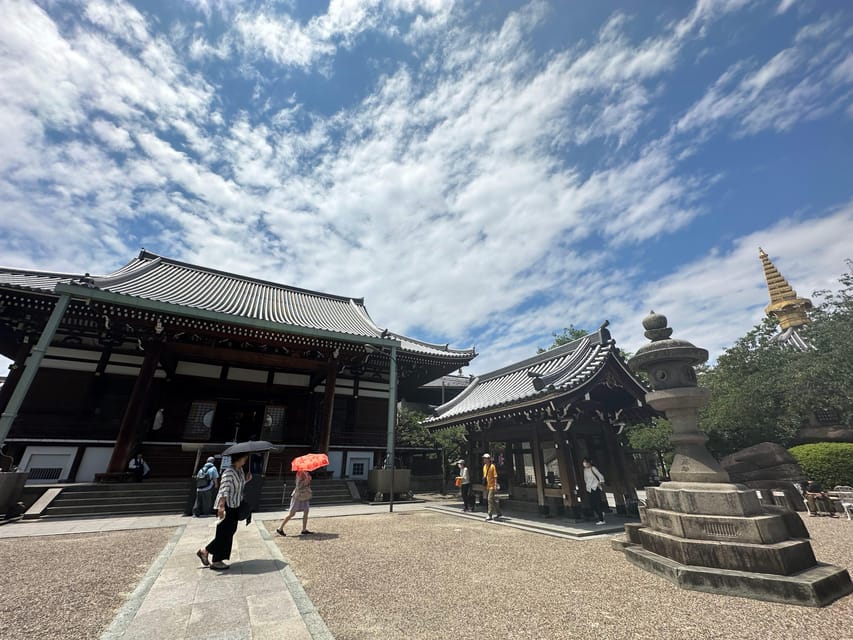
The strongest reason to book this walk is the live guide. The experience is available in English or Japanese, and it is arranged for a private group. That format gives you room to ask questions and spend more attention on the subjects that matter most to you.
The guide covers both visible details and larger ideas. At Shitennoji, that includes the Four Heavenly Kings, the symmetrical central layout, repeated rebuilding, and the spread of Buddhism under Prince Shotoku. At Isshinji, the focus turns to the modern gate, the Bone Buddha tradition, and the role of the temple in family remembrance.
One verified guest from Portugal described the guide as helping them understand Japanese culture and religion. That is the main benefit to look for here. The tour is not just about reaching two temples. It is about gaining enough explanation to understand why these places matter.
No individual guide name is provided, so you cannot request a particular guide based on the available information. Still, the tour is designed around interpretation, and the language choices are clear: English or Japanese.
Is $65 a fair price?
At $65 per person, this is not the cheapest way to see Osaka temples. It can be a fair price if you value explanation, private attention, and entry to the Shitennoji main complex and Pure Land Garden.
You are paying for a professional guide, a focused route, and a subject that is difficult to understand from signs alone. Buddhism in Japan has many schools, symbols, and layers of history. A good explanation can turn a short visit into something much more useful.
The value is lower if you only want to photograph temple buildings or walk around on your own. You must also pay separately for transportation to and from the meeting point, food, drinks, and personal expenses. The tour does not include refreshments or a return transfer.
For a private two-hour cultural experience, the price is reasonable for visitors who want a guided introduction rather than a self-directed stop. The small time commitment helps too. You can fit it into a day that also includes Osaka’s other sights.
Who should book this walk?
I would recommend it to you if you want to understand Osaka beyond its modern image. It suits first-time visitors who want a clear introduction to Japanese Buddhism, as well as repeat visitors looking for a quieter side of the city.
It is especially useful for:
- People interested in Japanese religion, architecture, and social history
- Visitors who prefer a private guide to a large group
- Anyone curious about the way temples serve families and communities
- Travelers with only two hours for a focused cultural visit
- Visitors who want a meaningful contrast with Osaka’s food and entertainment areas
You may want to skip it if your main goal is shopping, food, or a fast list of famous landmarks. The tour has a serious tone, especially at Isshinji, and the two-hour schedule leaves little room for an unhurried personal visit.
Wear comfortable shoes for walking and plan your route after the tour in advance. Since you finish at Isshinji and not at the original gate, it helps to know what you want to do next.
Free cancellation is available up to 24 hours before the start time, and you can reserve now while paying later. Those policies make it easier to fit the tour into a changing Osaka schedule.
Should you book Osaka’s Oldest Temple and Bone Buddha Walk?
Book this tour if you want a compact, guided explanation of how Buddhism shaped Japan and Osaka. Shitennoji gives you the early foundation, while Isshinji offers a striking look at modern communal remembrance.
The key question is not simply whether you like temples. Ask yourself if you want to understand what you are seeing. At $65, the tour earns its value through the guide’s cultural explanation, the included Shitennoji admission, and the unusual Bone Buddha tradition at Isshinji.
I would choose it for a thoughtful two-hour break from Osaka’s louder attractions. Just remember that the schedule is tight, the subject matter can be solemn, and your own transportation is not included.
FAQ
How long does the tour last?
The stated duration is two hours.
Where does the tour begin?
It begins in front of the stone torii gate, called the Ishidori, at the main entrance of Shitennoji Temple.
How do I identify the guide?
The guide will be holding a sign with your name.
Is the meeting point near public transportation?
Yes. The meeting point is a short walk from Shitennoji-mae Yuhigaoka Station.
Which temples are included?
The tour includes Shitennoji Temple and Isshinji Temple.
Is admission included?
Admission to Shitennoji’s main temple complex and the Pure Land Garden is included.
What languages are available?
The live guide is available in English or Japanese.
Is this a private tour?
Yes. The experience is arranged for a private group.
What is not included in the price?
Transportation to and from the meeting point, food, drinks, and personal expenses are not included.
Can I cancel for a full refund?
Yes. You can cancel up to 24 hours in advance for a full refund.
Just added around Osaka
- Osaka Early Morning Osaka Castle Tour Avoid Crowds★ 5.0 · 3 reviews
- Guided Tour of Some Attractions in Osaka by Private Car★ 5.0 · 3 reviews
- Nara Day Trip from Osaka with a Licensed Guide★ 5.0 · 3 reviews
- Private Transfer Between Kyoto and Kansai Airport KIX★ 5.0 · 3 reviews
- Shared Arrival Transfer: Osaka Itami Airport to Osaka City★ 5.0 · 3 reviews
- Osaka: Sushi Making Class and Dotonbori Food Tour★ 4.7 · 3 reviews
- Osaka Night Photography Workshop★ 5.0 · 3 reviews
- Kyoto Full day Tour Kinkakuji, Kiyomizu-dera and Fushimi Inari★ 4.5 · 3 reviews
Osaka Temple & Shrine Tours, compared.
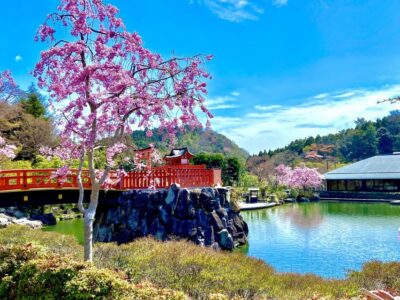
Minoh, Katsuoji Temple, & Minoh Falls Full-day Tour
Read our review →
Sagano Romantic Train & Arashiyama, Kiyomizudera, Fushimi Inari Taisha Day Tour
Read our review →Full Day Kyoto Tour : Bamboo Forest, Golden Temple, Fushimi Inari
Read our review →
Osaka Temple Cool Foot Bath & Matcha Experience〈45min〉
Read our review →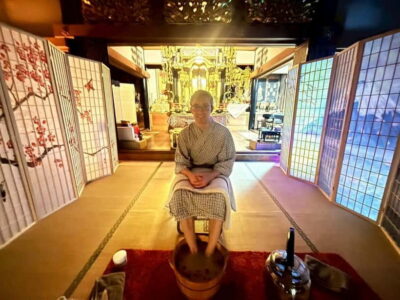
Katsuo-ji Temple, Arashiyama Forest, & Nara Park
Read our review →
Minoh Waterfall & Katsuo-ji Temple Half-Day Tour
Read our review →
Osaka Half-day E-bike Adventure: Minoh Falls & Katsuoji Temple
Read our review →Browse the lists this tour appears in