
Reviewed · OSAKA COOKING CLASSES
Osaka Home Feast Cooking and Sake Experience
Osaka’s food culture gets personal here. You do not simply sit down at a restaurant and order a plate of takoyaki. You shop for ingredients at a Japanese supermarket, choose playful fillings, then cook an entire izakaya-style meal in a small studio with an English-speaking local. The supermarket stop is the clever touch, giving you a look at everyday shopping before the cooking begins.
I like the small group limit of seven, which should make it easier to ask questions and get hands-on help. I also like the mix of food and drink: crispy takoyaki, wasabi-marinated tuna, chicken with green onion, mayo, and ponzu, plus handpicked sake pairings. The main drawback is timing. This is an evening activity starting at 4:30 pm, so it may not fit a packed sightseeing day or a late dinner plan.
In This Review
- Key points at a glance
- Why this Osaka cooking class feels different
- 4:30 pm at Minami-morimachi Station
- A Japanese supermarket before the apron goes on
- Getting started in the cooking studio
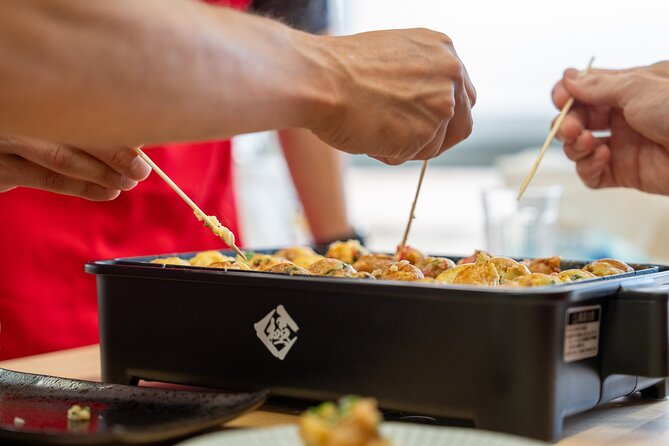
- Takoyaki is the main hands-on challenge
- Chicken, tuna, and a complete home-style spread
- Sake pairings and the taku-nomi mood
- Is $91.04 a fair price?
- Who should book this experience?
- My booking advice
- FAQ
- Where does the Osaka Home Feast Cooking and Sake Experience start?
- What time does the experience begin?
- How long does the experience last?
- Where does the experience end?
- How many people can join the activity?
- Is the cooking class offered in English?
- What will I cook?
- Are drinks included?
Key points at a glance
- A supermarket visit comes first: You browse Japanese ingredients and plan creative takoyaki fillings before heading to the studio.
- The menu feels like home cooking: Expect Mugen Cabbage, Wasabi Tuna Salad, takoyaki, and chicken with green onion, mayonnaise, and ponzu.
- Drinks are part of the lesson: You can sip selected sake, beer, or soft drinks while cooking.
- The group stays small: The maximum is seven people, creating room for questions and personal help.
- Chie and Nina have led past sessions: Both guides have been praised for making the class welcoming and answering questions about Japan.
- Recipes go home with you: A downloadable recipe pack helps you repeat the meal after your trip.
Why this Osaka cooking class feels different
Many cooking classes begin with measured ingredients laid out on a counter. This one starts earlier, at a Japanese supermarket near Minami-morimachi Station. That small change matters. You see the packaging, produce, sauces, seafood, and ready-to-cook items that local shoppers use, then think about how those ingredients can work in your meal.
The shopping stop also gives you a more useful view of Osaka than a quick food tour. You are not just tasting finished dishes. You are learning how a home cook might assemble an evening meal, with the guide explaining the ingredients and helping you consider takoyaki fillings.
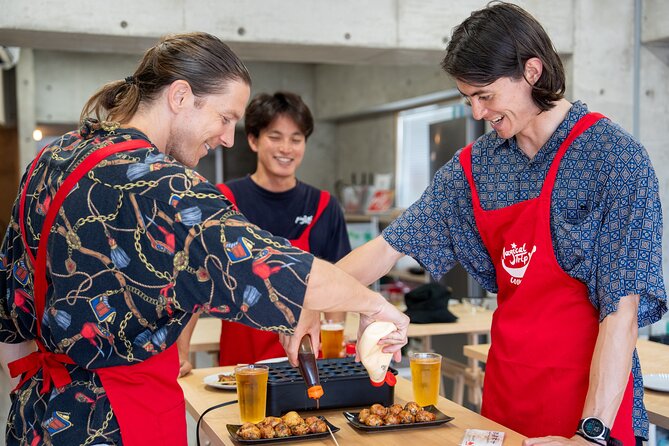
The mood is meant to be relaxed and friendly rather than formal. The session uses a taku-nomi approach, meaning home drinking around a shared meal. That makes this a good pick if you want conversation and participation, not a strict classroom with a chef at the front.
Past sessions have been led by Chie and Nina. Chie was praised for adding background about Japan and answering questions beyond the recipes. Nina made a solo booking enjoyable and waited at the meeting point when the participant arrived early. Those details suggest that the guide can shape the evening quite a bit, especially when the group is small.
More Japanese home cooking classes:
- Osaka: Ramen and Gyoza Cooking Class in Dotonbori
★ 5.0 · 378 reviews - Osaka: Sumo Stage Show with Bento or Snack + Fight & Photo
★ 4.3 · 364 reviews - Osaka: Traditional Mochi Pounding Experience with Tasting
★ 4.9 · 306 reviews
4:30 pm at Minami-morimachi Station
Your meeting point is the south side of FamilyMart Minamimorimachi station, at 2-chome 3-10, 1F, in Osaka’s Kita Ward. The activity begins at 4:30 pm and returns to the same meeting point at the end.
Plan to arrive with enough time to find the correct side of the station. The meeting point is near public transportation, but the supplied directions do not give a walking route from your hotel or a precise station exit number beyond the south side. I would save the address on your phone and avoid arriving at the last second.
Starting in late afternoon works well for a cooking evening. You can spend the earlier part of the day sightseeing, then move into food as the city shifts toward dinner. The three-hour duration should take you through shopping, preparation, cooking, eating, and the recipe handoff, though the exact pace can change with group size and questions.
Because the experience ends back at the meeting point, you do not need to arrange a separate pickup. You will be free to continue your evening in Osaka after the meal.
A Japanese supermarket before the apron goes on
The first stop is a nearby Japanese supermarket. This is not filler between the meeting point and the cooking studio. It is one of the most distinctive parts of the experience.
You will look at ingredients and discuss possible takoyaki fillings. Takoyaki is closely linked with Osaka, and the filling ideas are meant to be playful rather than locked to one narrow recipe. The guide helps you think about how familiar and less familiar ingredients might work inside the little batter balls.
The shopping visit is also a practical lesson in Japanese food habits. One past participant noticed that shoppers bag their own purchases, unlike the usual practice in the United States. That kind of small observation is exactly what makes a supermarket visit worthwhile. You get a glimpse of ordinary routines that are easy to miss when you only eat in restaurants.
The available information does not specify the exact supermarket, shopping list, or whether you personally select every ingredient. So think of this as a guided grocery stop and ingredient introduction, not a full market tour. The emphasis is on preparing for the meal.
Getting started in the cooking studio
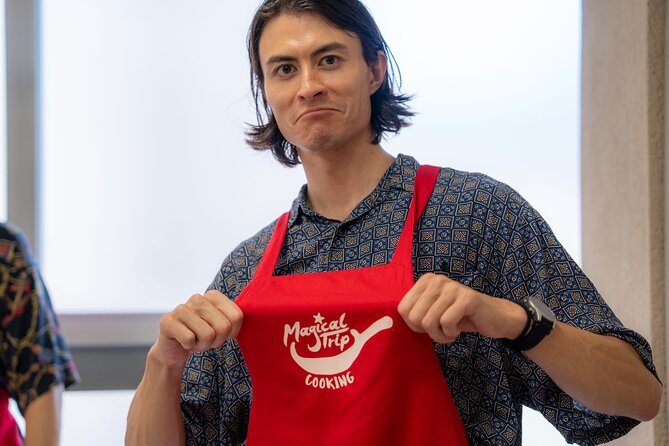
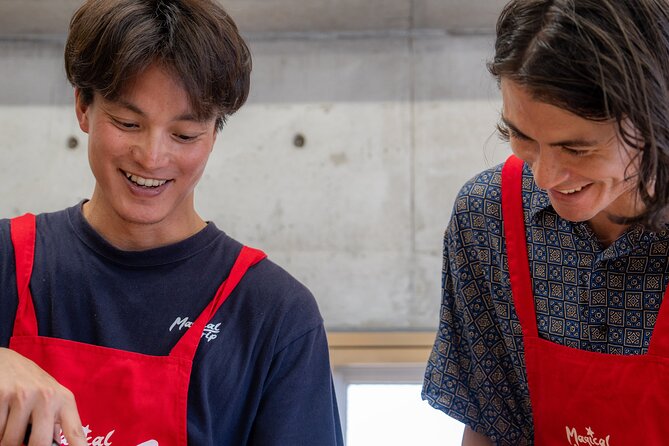
After shopping, you head to a cozy cooking studio and put on a MagicalTrip apron. The class centers on izakaya-style dishes, the sort of food that works well with drinks and shared conversation.
You begin with early bites such as Mugen Cabbage and Wasabi Tuna Salad. These dishes give you something to taste while the rest of the meal comes together. They also add contrast to the later hot dishes: crisp cabbage, sharp wasabi, and cool tuna before the more involved takoyaki and chicken.
The English-speaking local guides the cooking, so you can ask questions as you work. The experience is not presented as a professional chef course, and that is likely part of its appeal. You are learning food you can plausibly make for friends at home, rather than attempting restaurant-level work with hard-to-find equipment.
Still, you should be comfortable sharing a workspace and following instructions at a social pace. With a maximum of seven people, the group is small, but it is not necessarily a private lesson. One past booking happened to have just one participant, while another was a group experience. Your level of individual attention may depend on the final group.
A few more Osaka tours and experiences worth a look
- Osaka Sake Tasting with Takoyaki Cooking
★ 5.0 · 156 reviews - Osaka Sake Tasting & Takoyaki Cooking Experience
★ 5.0 · 149 reviews - Osaka Cooking Class and Sake Tasting with Local Supermarket Visit
★ 5.0 · 79 reviews - Osaka: Cooking Class & Sake Tasting with Local Market Visit
★ 4.8 · 31 reviews
Takoyaki is the main hands-on challenge
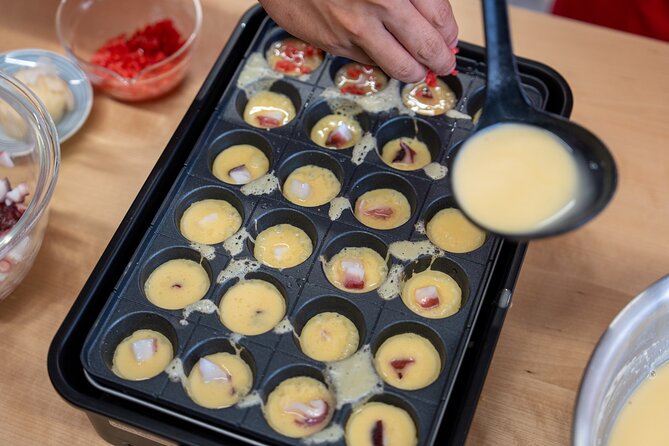
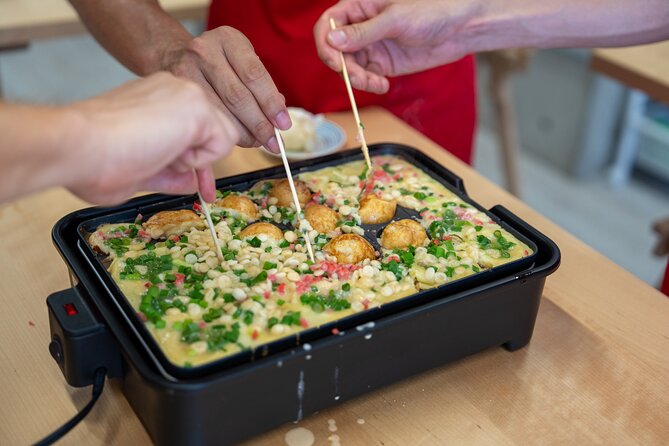
Takoyaki is the dish most closely tied to Osaka, and here you get to make it rather than simply buy it from a street stand. The goal is crispy takoyaki, with the filling ideas developed during the supermarket visit.
This is the part where the class becomes especially useful. Takoyaki looks simple when an experienced cook turns each piece with ease, but shaping the balls and getting the texture right takes practice. The guide can help you understand the process as you work through it.
The supplied details do not name the available fillings or promise a particular special ingredient. That leaves room for the group to brainstorm, but it also means you should not book expecting one fixed signature combination. The fun is in the shared decision-making and the Osaka connection.
If you want a quiet meal with no cooking effort, this is not the right format. You will be handling food, watching timing, and taking part in the preparation. For many people, that work is what makes the final plate more satisfying.
Chicken, tuna, and a complete home-style spread
The other major dish is chicken with green onion, mayonnaise, and ponzu. Ponzu brings a citrusy, savory note, while mayonnaise adds richness. Together, the flavors fit the informal drinking-food theme and offer a useful recipe for a meal at home.
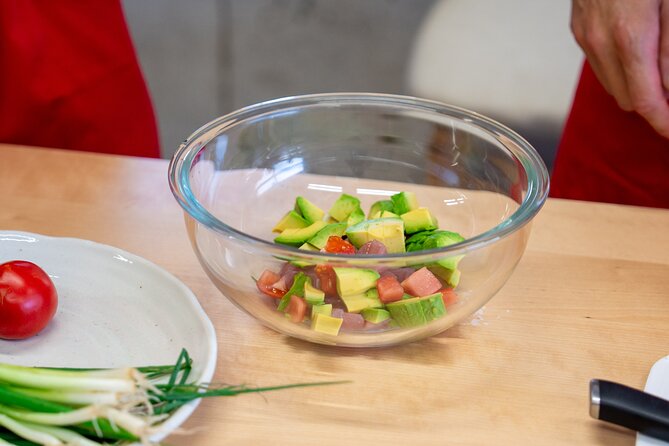
The Wasabi Tuna Salad provides a different profile. Wasabi gives the dish a sharp kick, though the exact strength may depend on preparation. Mugen Cabbage adds a simple vegetable element, helping the meal feel like a spread rather than a single cooking demonstration.
This menu has a practical advantage: the dishes are varied without being overly elaborate. You get a hot snack, a chicken dish, a tuna preparation, and a vegetable side. That makes the downloadable recipe pack more useful, since you can repeat the full meal or borrow individual dishes for a casual gathering.
The descriptions do not state that dietary substitutions are available. If you have allergies or strict dietary needs, contact the provider before booking rather than assuming the menu can be changed.
Sake pairings and the taku-nomi mood
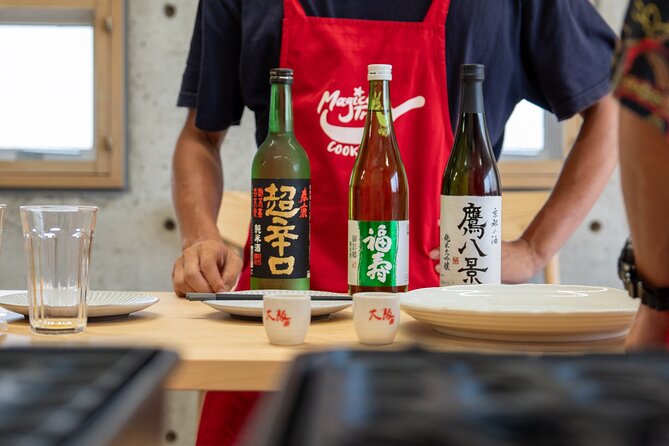
Sake is woven into the class instead of being added as an afterthought. You sip handpicked sake pairings while cooking and eat the finished dishes with the drinks. Beer and soft drinks are also listed, so you are not required to drink sake.
The pairing element gives the meal a little more structure. A sake can change how you notice salty, citrusy, spicy, or rich foods, and the guide can connect the drinks to the dishes as the evening progresses. The information does not specify the sake labels, regions, number of pours, or serving sizes, so you should not book expecting a formal tasting flight.
The taku-nomi idea keeps the mood casual. Picture a shared home meal where the food arrives in stages and conversation continues between tasks. If you enjoy learning through talk, this format should suit you well. If you want a polished restaurant service or a detailed alcohol lecture, choose a dedicated tasting instead.
Nonalcoholic options matter here. You can select soft drinks, and beer is also available, giving mixed groups some flexibility.
Is $91.04 a fair price?
At $91.04 per person, this is not the cheapest way to eat in Osaka. You can buy takoyaki and other casual dishes for far less. The value comes from combining several services in one evening: a guided supermarket visit, instruction, ingredients, a full cooked meal, drink pairings, an English-speaking local, and recipes for later use.
I think the price is reasonable if you place real value on access and context. You are paying for a small social experience, not just dinner. The supermarket visit adds an everyday local angle, while the cooking makes the food easier to understand and repeat.
The value is less convincing if your main goal is simply to fill up. You might eat more cheaply at an izakaya, and a cooking class takes time and energy. You should also check what is included in the final booking details, since the supplied information does not break down the exact drinks, quantities, or ingredient costs.
The group cap of seven helps the price. A smaller class usually gives you more chances to ask questions and more direct time with the guide than a large demonstration. That said, the experience can sometimes operate with only one participant, so the social feel may vary.
Who should book this experience?
I would point this toward people who enjoy food as a way to understand a place. It suits first-time visitors who want a low-pressure introduction to Osaka cooking, as well as repeat visitors who have already eaten takoyaki and want to learn how it is made.
It is also a good match for solo visitors. Nina’s past session with a single participant shows that the format can still work when you book alone. Couples, friends, and small families may enjoy the shared cooking and drink pairing, provided everyone is happy to participate.
The class may be less suitable for anyone seeking a formal culinary qualification, a long market tour, or a detailed sake seminar. It is also not ideal for a traveler with a tight evening schedule, since the start time is fixed at 4:30 pm and the experience lasts about three hours.
Confirmation is provided at booking, and the activity uses a mobile ticket. Free cancellation is available up to 24 hours before the start time. Cancellations or changes made inside that window are not accepted for a refund, with cut-off times based on Osaka local time.
My booking advice
Book this Osaka Home Feast Cooking and Sake Experience if you want to cook, talk, shop, and eat in one compact evening. The supermarket beginning, small group limit, friendly guide style, and recipe pack make it more personal than a standard demonstration.
Skip it if you would rather spend the evening at a restaurant or if you need a fully fixed menu with confirmed dietary adjustments. For everyone else, $91.04 buys more than a meal: it gives you a practical look at Japanese home food and a set of dishes you can try again after Osaka.
FAQ
Where does the Osaka Home Feast Cooking and Sake Experience start?
It starts at the south side of FamilyMart Minamimorimachi station in Osaka’s Kita Ward, at 2-chome 3-10, 1F.
What time does the experience begin?
The start time is 4:30 pm.
How long does the experience last?
The activity lasts approximately three hours.
Where does the experience end?
It ends back at the original meeting point.
How many people can join the activity?
The maximum group size is seven people.
Is the cooking class offered in English?
The cooking experience is guided by an English-speaking local.
What will I cook?
The menu includes crispy takoyaki, Wasabi Tuna Salad, Mugen Cabbage, and chicken with green onion, mayonnaise, and ponzu.
Are drinks included?
You can sip handpicked sake, beer, or soft drinks during the experience. The supplied details do not specify the number of drinks or serving sizes.
Just added around Osaka
- Nara Day Trip from Osaka with a Licensed Guide★ 5.0 · 3 reviews
- Osaka Early Morning Osaka Castle Tour Avoid Crowds★ 5.0 · 3 reviews
- Guided Tour of Some Attractions in Osaka by Private Car★ 5.0 · 3 reviews
- Private Transfer Between Kyoto and Kansai Airport KIX★ 5.0 · 3 reviews
- Shared Arrival Transfer: Osaka Itami Airport to Osaka City★ 5.0 · 3 reviews
- Osaka: Sushi Making Class and Dotonbori Food Tour★ 4.7 · 3 reviews
- Osaka Night Photography Workshop★ 5.0 · 3 reviews
- Kyoto Full day Tour Kinkakuji, Kiyomizu-dera and Fushimi Inari★ 4.5 · 3 reviews
Osaka Cooking Classes, compared.


Sumo Stage Show with Bento or Snack + Fight & Photo
Read our review →
Traditional Mochi Pounding Experience with Tasting
Read our review →
Osaka Cooking Class: Okonomiyaki &Japanese cuisines experience
Read our review →


Osaka Sake Tasting & Takoyaki Cooking Experience
Read our review →
Cooking Ramen&Gyoza/KatsuCurry/Bento/Okonomiyaki+Store Tour@Osaka
Read our review →Browse the lists this tour appears in