
Reviewed · OSAKA COOKING CLASSES
Osaka: Cooking Class & Sake Tasting with Local Market Visit
Osaka’s food culture makes the most sense when you cook it yourself. This four-hour class takes you from a neighborhood supermarket to a private cooking studio, where you prepare niku-sui, okonomiyaki, and gyoza with an English-speaking guide. I like the market stop for its everyday look at Osaka life, and I like that the recipes use ingredients you can find and handle at home.
The small group, limited to seven people, keeps the class friendly and hands-on. Guides such as Chie, Eri, Emi, Akko, and Ayu have made the session feel relaxed, adding local food background, city tips, and plenty of conversation. The main drawback is that gluten-free meals are not available, and the kitchen cannot guarantee allergy-free food.
In This Review
- Key points to know before booking
- Starting at Minami Morimachi Station
- The supermarket stop gives Osaka context
- Niku-sui is the class’s local surprise
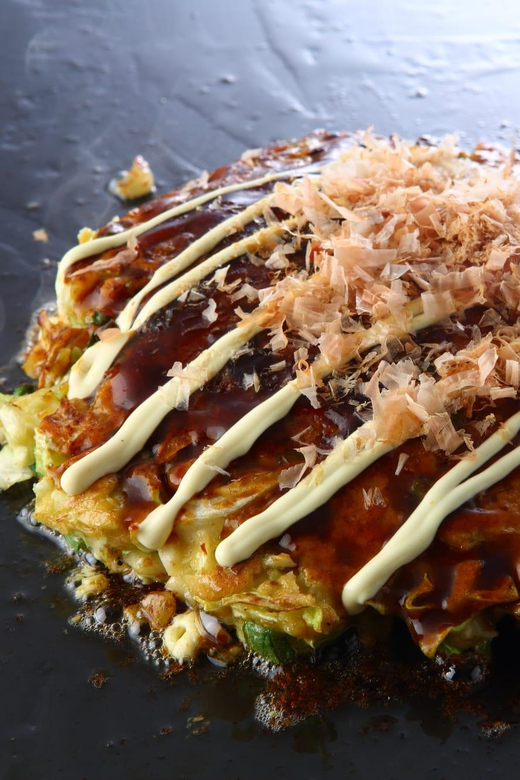
- Okonomiyaki lets you cook Osaka’s famous comfort food
- Folding gyoza adds the most group interaction
- At the studio, the guide shapes the experience
- Sake, beer, and soft drinks keep lunch social
- How much value do you get for $90?
- Who will enjoy this cooking class most?
- Practical details that can affect your day
- Should you book the Osaka cooking class?
- FAQ
- Where does the cooking class meet?
- How long does the experience last?
- What dishes will I prepare?
- Are drinks included?
- Can vegetarians and vegans join?
- Is cooking experience required?
Key points to know before booking
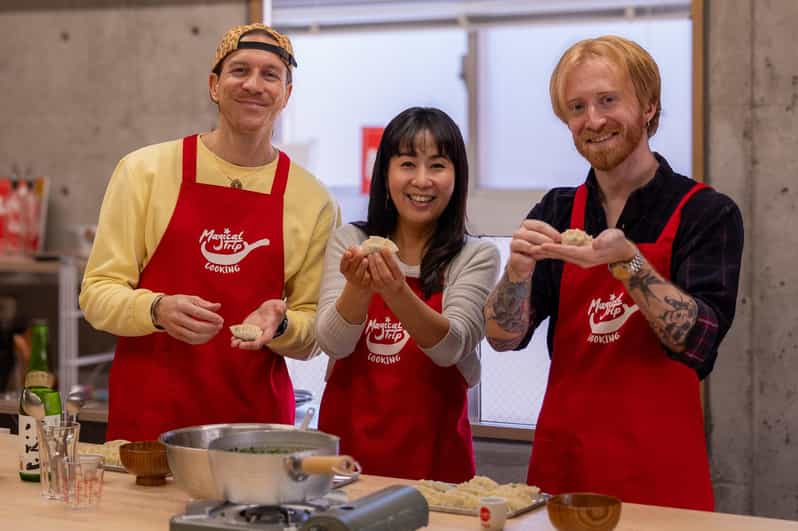
- Three Osaka dishes in one class: Make beef soup, savory pancake, and dumplings rather than watching a chef do all the work.
- A real supermarket visit: Buy the ingredients with your guide and see the products Osaka residents use every day.
- Small group of seven or fewer: You get room to ask questions, fold gyoza, and work at the counter without feeling lost.
- Three canned drinks included: Choose alcoholic or non-alcoholic drinks, with tea served during the class.
- Recipes go home with you: Download the recipes and try the meal again for friends or family.
- Ages 12 and up: Cutting and cooking with heat make this better suited to older children, teens, and adults.
Starting at Minami Morimachi Station
The meeting point is in front of FamilyMart, about a one-minute walk from Exit 4B of Minami Morimachi Station. This is a useful detail to take seriously. Osaka stations can have several exits, and using the wrong one can turn a simple meeting into a rushed search.
Plan to arrive early. The class starts on time, and a late arrival cannot join, reschedule, or receive a refund. I would allow a few extra minutes to find Exit 4B and locate the convenience store without hurry.
From there, your English-speaking guide leads the group to a local supermarket. The activity lasts four hours in total, but the exact starting time depends on the date you choose. Since lunch is part of the experience, this works well as a late-morning or midday plan, though you should confirm the available start time before booking.
More Japanese home cooking classes:
- Osaka: Ramen and Gyoza Cooking Class in Dotonbori
★ 5.0 · 378 reviews - Osaka: Sumo Stage Show with Bento or Snack + Fight & Photo
★ 4.3 · 364 reviews - Osaka: Traditional Mochi Pounding Experience with Tasting
★ 4.9 · 306 reviews
The supermarket stop gives Osaka context
The supermarket visit is not just a shopping errand. It lets you see the raw ingredients before they become familiar dishes, and it gives your guide a natural way to explain Japanese products and cooking habits.
You will pick up what the group needs for niku-sui, okonomiyaki, and gyoza. That makes the stop practical rather than decorative. You can look at the packages, compare ingredients, and ask about products that might be hard to identify during a normal visit to a Japanese store.
This part also offers a small window into ordinary Osaka life. You are not being taken only to famous food streets or a polished restaurant. You are seeing the kind of place where residents shop for a meal at home.
The supermarket visit has one modest limitation: the details can vary with the ingredients needed for the day. You should think of it as a guided food-shopping stop, not a full market tour with a long list of tastings. Its value comes from the connection between the products you see and the meal you prepare minutes later.
Niku-sui is the class’s local surprise
Niku-sui is a beef soup associated with Osaka. It is less famous internationally than okonomiyaki, which is exactly why it adds something special to the class.
You will learn how the dish comes together from simple ingredients, with the guide explaining each step. The soup gives you a chance to see how a few basic components can create a comforting local meal without a complicated technique.
I like this dish as an introduction because it broadens your idea of Osaka food. The city is often reduced to savory pancakes and street snacks, but niku-sui shows another side of its cooking. It is warm, straightforward, and realistic to make in an ordinary home kitchen.
The recipe is designed for repeat use. You are not being taught a restaurant trick that requires specialist equipment. The point is to help you understand the method well enough to make the dish again after returning home.
Okonomiyaki lets you cook Osaka’s famous comfort food
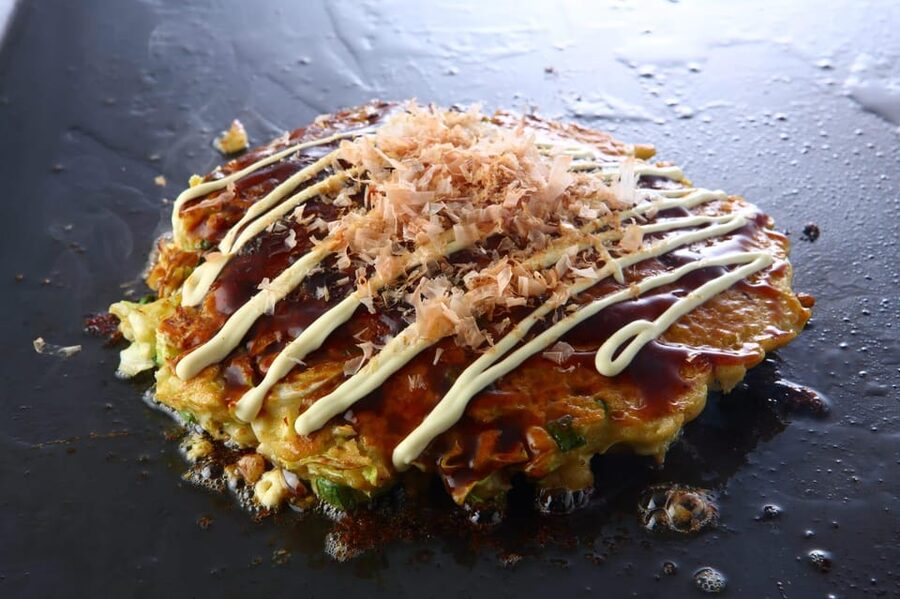
Okonomiyaki is the class’s best-known dish. Osaka’s version is a savory pancake with plenty of room for personal choices, and the class gives you a hands-on way to learn its basic structure.
Your guide walks you through preparing and cooking the mixture rather than simply placing a finished pancake in front of you. This makes the dish more useful for a home cook. You can ask questions as you work, watch the texture change, and learn how the ingredients fit together.
The class does not present one rigid formula as the only correct version. Okonomiyaki has many variations, and the cooking session gives you a base that can be adapted later. That matters if you want to recreate the dish with ingredients available in your own country.
You should also expect a substantial amount of food. The meal includes all three dishes, so come hungry and do not schedule a large lunch immediately afterward. The food serves as both lunch and the result of your work, which makes the class feel more useful than a short demonstration.
More market and shopping streets:
- Cooking Ramen&Gyoza/KatsuCurry/Bento/Okonomiyaki+Store Tour@Osaka
★ 5.0 · 138 reviews - Kuromon Market Tour: All inclusive 6~8 Dishes & 3~4 samplings
★ 5.0 · 103 reviews - Osaka Cooking Class and Sake Tasting with Local Supermarket Visit
★ 5.0 · 79 reviews - Osaka Food Walking Tour with Market Visit
★ 4.5 · 14 reviews
Folding gyoza adds the most group interaction
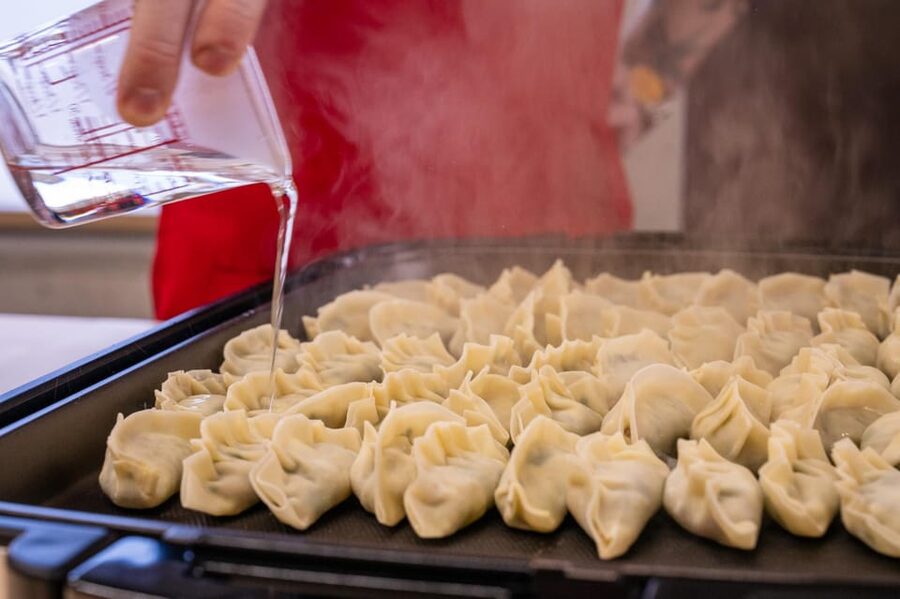
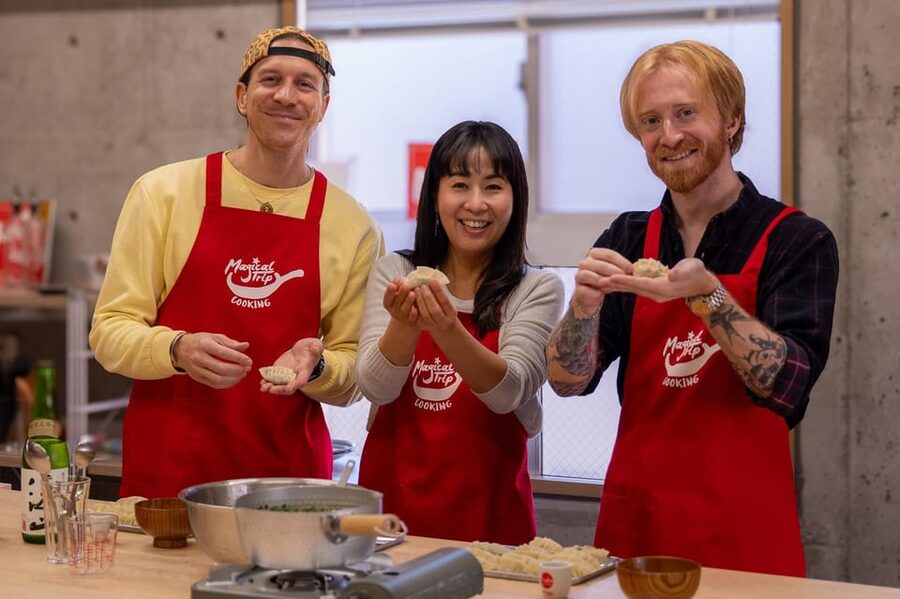
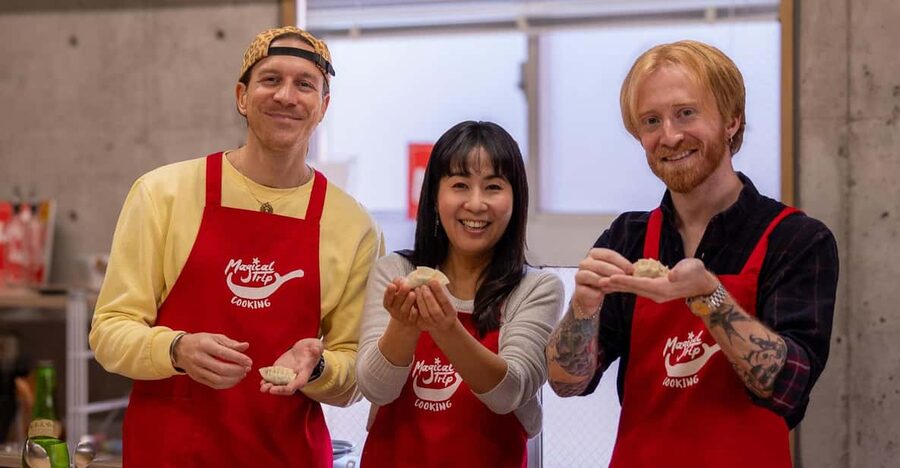
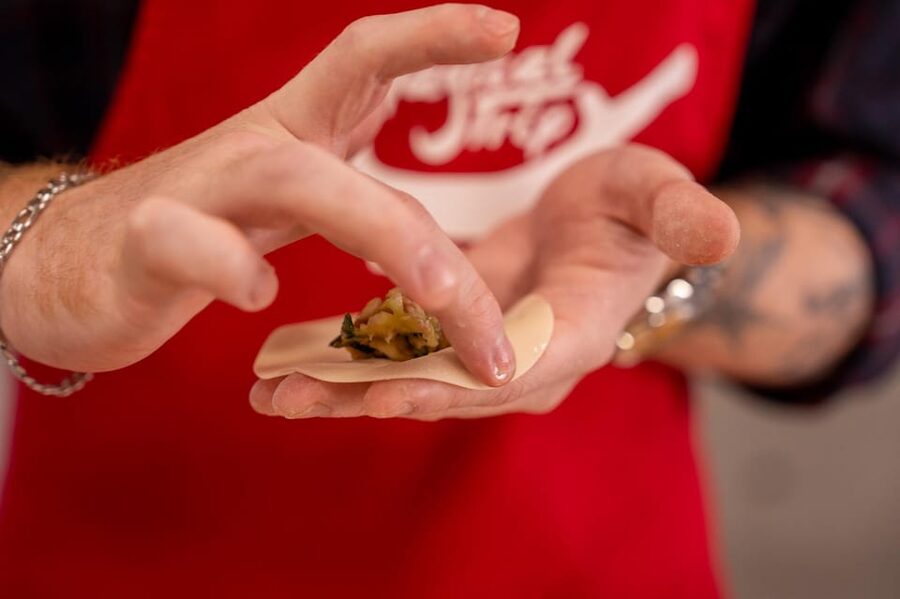
Gyoza brings the playful part of the class. Folding dumplings is easy to understand but takes a little practice, so it naturally creates conversation and laughter around the table.
You will prepare the filling and work through the folding process with guidance. The goal is not to produce identical restaurant-quality dumplings. It is to learn a repeatable method and enjoy the hands-on work.
This is a good activity for couples, families with older children, and friends who want to do something together. Solo participants can also fit in well because the group is small and the cooking gives everyone an immediate shared task.
Gyoza also gives you a recipe that is easy to revisit at home. Once you understand the filling and folding, you can make a larger batch for a casual dinner. The downloadable recipes help, but paying attention during the class matters most. Take mental notes about the order of each step and ask questions while the guide is beside you.
At the studio, the guide shapes the experience
Back at the MagicalTrip Original Cooking Studio, the class shifts from shopping to cooking. The setting is described as relaxed and welcoming, with your local guide taking you through each recipe step by step.
Guide quality matters a great deal in a cooking class, and this experience seems built around that personal contact. Chie has led especially warm, easygoing sessions, adding explanations about Japanese food, regional differences, and history. Eri has helped participants follow each stage, answer questions about Osaka and local culture, and create a calm atmosphere. Emi, Akko, and Ayu have also led classes with a friendly, attentive approach.
The guide can make the difference between a meal you merely eat and a meal you understand. You can ask about ingredients, cooking habits, Osaka, Kobe, and other parts of Japan while your hands are busy. The conversation is part of the value.
The guide may also choose or allow background music during the cooking session. That small touch helps the room feel more like a shared home kitchen than a formal lesson.
Because the experience is limited to seven participants, you should have a fair chance to see demonstrations and receive help. Still, this is a group class, not a private lesson. If you need constant one-on-one support, or if walking and standing are difficult, a private option would be more suitable.
Sake, beer, and soft drinks keep lunch social
Three canned drinks are included, and you can choose alcoholic or non-alcoholic options. Sake and beer are available, along with soft drinks, and tea is served during the experience.
The drinks are not an extra tasting course with a long formal explanation. They work more as a relaxed part of lunch and conversation. You can try local sake while preparing the food, or choose non-alcoholic drinks and still take part fully.
This setup suits a mixed group. One person can enjoy sake, another can choose beer, and someone else can stick with soft drinks. The class does not depend on alcohol to be enjoyable.
The amount is also clear: three canned drinks are included, not unlimited drinks. If you want additional sake afterward, plan to buy it separately. One participant was even taken to buy more sake, but that should not be treated as a guaranteed part of every class.
How much value do you get for $90?
At $90 per person, this is not the cheapest way to eat lunch in Osaka. You can find an inexpensive meal for far less. The price makes more sense when you count the four-hour guided experience, all ingredients, three drinks, tea, the supermarket visit, the cooking instruction, lunch, recipes, and photos sent by email.
You are paying for access to a local guide and a small class, not only for the food on the plate. The recipes make the experience useful after the trip, especially if you enjoy hosting friends or trying regional dishes at home.
I see the strongest value for people who would otherwise book a separate food tour and a separate cultural activity. Here, shopping, cooking, eating, and conversation happen in one compact session.
The value is weaker if you mainly want to eat Osaka specialties with no work. This class asks you to cut, prepare, fold, and cook. That is the appeal, but it is also the commitment. You should choose it because you want to take part, not because you want a hands-off lunch.
Who will enjoy this cooking class most?
I would recommend it to anyone who likes Japanese food and wants a practical memory of Osaka. The recipes are presented as authentic but simple, so you do not need previous cooking experience.
It works especially well for:
- Couples looking for a shared activity
- Friends who enjoy food and conversation
- Families with children over 12
- Solo visitors who want a small social setting
- Home cooks who want recipes they can repeat
- Visitors with a free half-day in Osaka
The age rule matters. Anyone over 12 can join, but the class involves knives and heat. Younger children cannot take part.
Vegetarians and vegans are welcome, but you must tell the operator about dietary needs or allergies at least one day ahead. Same-day requests cannot be accommodated. Gluten-free options are unavailable, and the kitchen cannot promise allergy-free meals because food preparation takes place in external kitchens. If you have a serious allergy, you should contact the operator before booking and consider the risk carefully.
Practical details that can affect your day
The activity is conducted in English and has a small-group format. The meeting point is easy to reach from Minami Morimachi Station, but you should use Exit 4B and arrive before the scheduled start.
The tour may include places that are not suitable for wheelchairs or strollers. It is not recommended if you have mobility problems, and the operator suggests a private tour for people who have difficulty walking.
Osaka weather can be extreme. Summer temperatures may reach 40°C, while winter temperatures can fall to -5°C. Dress for the season, especially since the supermarket walk comes before the indoor cooking session.
Cancellation is flexible up to 24 hours before the activity for a full refund, and you can reserve now and pay later. Those terms help if your Osaka schedule is still changing, but they do not protect a late arrival. That is the one timing rule I would treat as firm.
Should you book the Osaka cooking class?
Book this experience if you want to do more than sample Osaka food. The supermarket visit, three-dish menu, local guide, drinks, and take-home recipes give you a useful connection to the city’s everyday cooking.
I especially like the mix of niku-sui, okonomiyaki, and gyoza. You get one lesser-known local soup, one famous Osaka specialty, and one social food that is fun to fold and share. The guides also add value by answering questions about Japanese products, regional food, and the city.
Skip it if you need gluten-free food, require guaranteed allergy-free preparation, dislike cooking, or have mobility concerns. For everyone else, $90 is a fair price for four hours of instruction, lunch, and a small-group cultural activity you can continue at home.
FAQ
Where does the cooking class meet?
Meet in front of FamilyMart, about a one-minute walk from Exit 4B of Minami Morimachi Station in Osaka.
How long does the experience last?
The cooking class and food experience lasts four hours. Starting times vary by date, so check availability when booking.
What dishes will I prepare?
You will prepare niku-sui, a beef soup, Osaka-style okonomiyaki, and gyoza dumplings.
Are drinks included?
Yes. Three canned drinks are included, and you may choose alcoholic or non-alcoholic options. Tea is also served during the experience.
Can vegetarians and vegans join?
Yes, vegetarians and vegans are welcome. You must inform the operator about dietary needs or allergies at least one day in advance. Gluten-free options are not available, and allergy-free meals cannot be guaranteed.
Is cooking experience required?
No. The English-speaking guide explains each recipe step by step, so beginners can take part. The activity is open to people over 12 because it involves cutting and heating.
More Sake Tasting in Osaka
- Osaka Sake Tasting with Takoyaki Cooking
★ 5.0 · 156 reviews - Osaka Sake Tasting & Takoyaki Cooking Experience
★ 5.0 · 149 reviews - 3.5h Osaka Night guided Local Bar Hopping, Sake & Karaoke
★ 5.0 · 27 reviews - Sake “Omakase” in Osaka : Guided Tasting by a Active Sake brewer
★ 5.0 · 11 reviews
Just added around Osaka
- Nara Day Trip from Osaka with a Licensed Guide★ 5.0 · 3 reviews
- Osaka Early Morning Osaka Castle Tour Avoid Crowds★ 5.0 · 3 reviews
- Guided Tour of Some Attractions in Osaka by Private Car★ 5.0 · 3 reviews
- Private Transfer Between Kyoto and Kansai Airport KIX★ 5.0 · 3 reviews
- Shared Arrival Transfer: Osaka Itami Airport to Osaka City★ 5.0 · 3 reviews
- Osaka: Sushi Making Class and Dotonbori Food Tour★ 4.7 · 3 reviews
- Osaka Night Photography Workshop★ 5.0 · 3 reviews
- Kyoto Full day Tour Kinkakuji, Kiyomizu-dera and Fushimi Inari★ 4.5 · 3 reviews
Osaka Cooking Classes, compared.


Sumo Stage Show with Bento or Snack + Fight & Photo
Read our review →
Traditional Mochi Pounding Experience with Tasting
Read our review →
Osaka Cooking Class: Okonomiyaki &Japanese cuisines experience
Read our review →


Osaka Sake Tasting & Takoyaki Cooking Experience
Read our review →
Cooking Ramen&Gyoza/KatsuCurry/Bento/Okonomiyaki+Store Tour@Osaka
Read our review →Browse the lists this tour appears in