
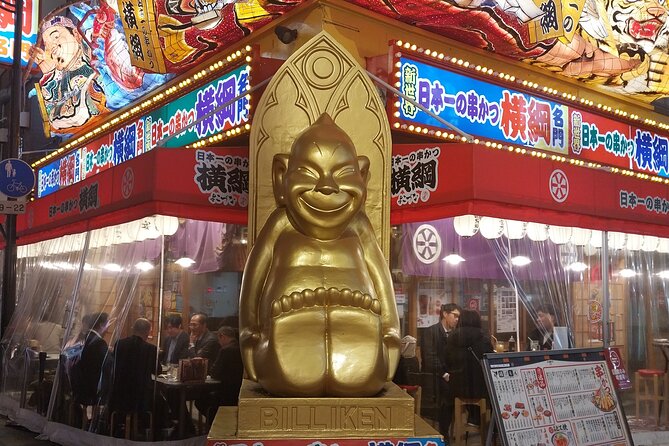
Reviewed · OSAKA STREET FOOD TOURS
Osaka Food Tour with 10 Classic Japanese Tastings & Drinks
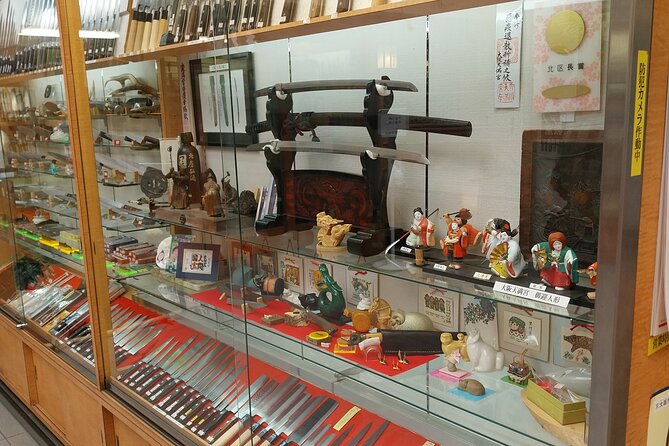
Osaka’s best food lesson may be a simple one: keep walking, keep tasting, and let someone else handle the ordering. This three-hour tour leads you through the long Tenjinbashi-Suji shopping arcade for 10 tastings and drinks, from okonomiyaki and kushi-katsu to sashimi, udon, taiyaki, and mochi skewers.
I like the small group of no more than 10 people, which gives you room to ask questions. I also like having a guide translate, order, and explain each dish instead of fumbling with menus at every stop. The drawback is timing: a 10:45 a.m. start may feel early for a food crawl, and the menu may not suit you if you dislike fish, fried food, or sweet snacks.
In This Review
- Key points to know before you book
- Why Tenjinbashi-Suji makes a good food-tour route
- The first tastes: a gentle start before the heavier dishes
- Okonomiyaki and kushi-katsu: Osaka’s famous pair
- Udon, rice crackers, and the small details of Japanese snacking
- Taiyaki, mochi, and the sweet finish
- What the guide adds to the price
- Language help without losing the local feel
- The walk, timing, and where you finish
- Who will get the most from this food walk
- Should you book this Osaka food tour?
- FAQ
- Where does the Osaka food tour start?
- What time does the tour begin?
- How long does the experience last?
- How many people can join the tour?
- What food is included?
- Where does the tour finish?
- Can I cancel for a full refund?
Key points to know before you book
- Tenjinbashi-Suji is the setting: You walk through much of Japan’s longest covered shopping arcade, nearly three miles in total.
- Ten tastings are included: Expect Osaka specialties, noodles, fish, sweets, rice crackers, and drinks.
- The guide does the language work: Ordering and explanations are handled for you at each food stop.
- The group stays small: The maximum is 10 people, useful when you want direct contact with your guide.
- Guides bring local personality: Terumi, Marcelo, and Akane have each led tours praised for their food explanations and neighborhood insight.
- The route is one-way: You meet at Minami-Morimachi Station at 10:45 a.m. and finish near the Osaka Museum of Housing and Living.
Why Tenjinbashi-Suji makes a good food-tour route
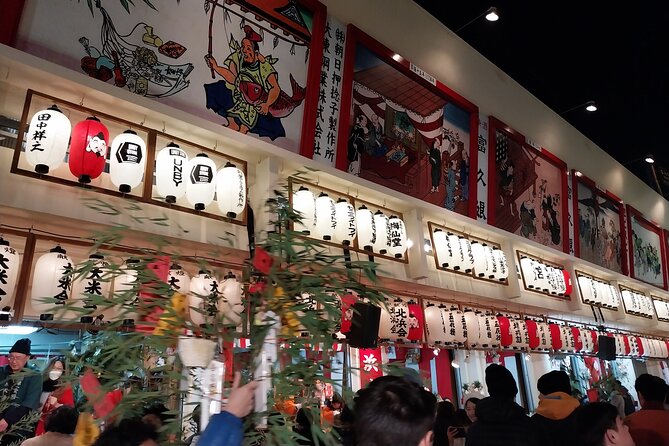
Tenjinbashi-Suji gives you a useful slice of everyday Osaka. It is not just a string of restaurants built for sightseeing. The covered arcade runs for nearly three miles, with shops and eating places along a long pedestrian route. You visit a major part of it, which helps you see how food fits into ordinary city life.
That setting matters. Osaka is famous for its food, but the city is not best understood by hopping between isolated restaurants. A walk through a shopping arcade shows you the rhythm of local errands, snack stops, small shops, and casual meals. You get a neighborhood orientation while you eat.
You meet at the Resona Bank Minami-Morimachi Branch, close to Minami-Morimachi Station. Since hotel pickup is not included, you need to make your own way to the station. The mobile ticket is handy, but give yourself enough time to find the exact meeting point.
The tour begins at 10:45 a.m. and lasts about three hours. That puts the main food experience around late morning and lunchtime. If you normally eat a large breakfast, you may want to keep it light. By the end, you should expect a full stomach rather than a small sampling session.
More street food walks and tastings:
- Osaka: Shinsekai Food Tour with 13-15 Dishes at 5 Eateries
★ 4.8 · 2,204 reviews - Osaka Food Tour: 13 Dishes at 5 Local Eateries
★ 5.0 · 2,149 reviews - Hungry Osaka Street Food Tour:15 Tastings & 3 Drinks with a Local
★ 5.0 · 1,727 reviews
The first tastes: a gentle start before the heavier dishes
The exact order can vary, but the tour begins with a snack and then moves through several food stops. This is a sensible way to start. You get a small introduction to Osaka food before the richer dishes arrive.
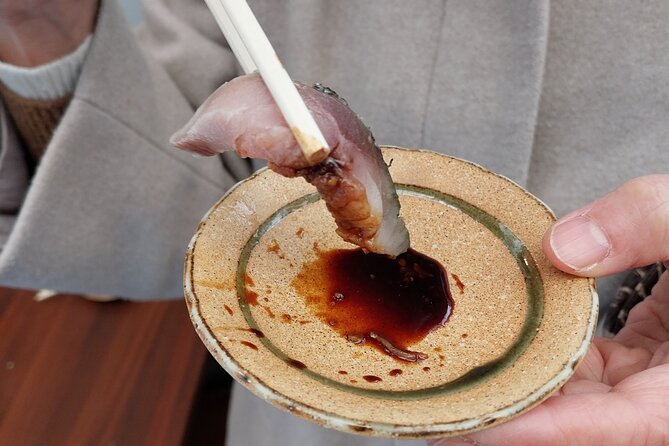
The menu includes mackerel sashimi, a useful reminder that Osaka food is not limited to fried items and pancakes. Depending on the day’s stops, you may also try straw-smoked fish, as one route experience included. Fish can be a point to consider before booking. If raw or strongly flavored seafood is not for you, ask the guide what alternatives may be possible.
The guide’s role is especially useful here. You do not have to guess how a dish is prepared or how it is normally eaten. Guides such as Terumi have explained the food clearly in English, while also handling the ordering at each venue.
One route also included a visit to a Shinto shrine as an extra stop. That is not listed as a guaranteed part of the itinerary, so treat it as a possible bonus rather than a promised feature. Still, it shows how the walk can include more than food when the guide and timing allow.
Okonomiyaki and kushi-katsu: Osaka’s famous pair
Two of the most important tastings are Osaka-style okonomiyaki and kushi-katsu. If you have only a short time in Osaka, these are the kinds of foods that help make the city feel distinct.
Okonomiyaki is a savory pancake cooked with a mixture of ingredients and topped with sauces and other seasonings. On this tour, it is paired with beer, a classic combination. You get more than a bite without committing to a full restaurant meal, though the succession of dishes means you should pace yourself.
Kushi-katsu brings the fried side of Osaka to the table. These are skewered foods coated and fried, usually eaten casually and quickly. The tour gives you a chance to try the style without spending time choosing from a large menu or working out the ordering system alone.
I like this part of the route because the guide can explain what you are eating while you are still at the place serving it. That context is worth money in Japan, especially when a restaurant has no English menu or when several unfamiliar choices appear at once.
The tradeoff is that fried food can become filling fast. With udon, okonomiyaki, and additional snacks still ahead, this is not a tour for careful calorie counting. It is better suited to you if you want a broad tasting experience rather than one perfect dish served in a leisurely meal.
Udon, rice crackers, and the small details of Japanese snacking
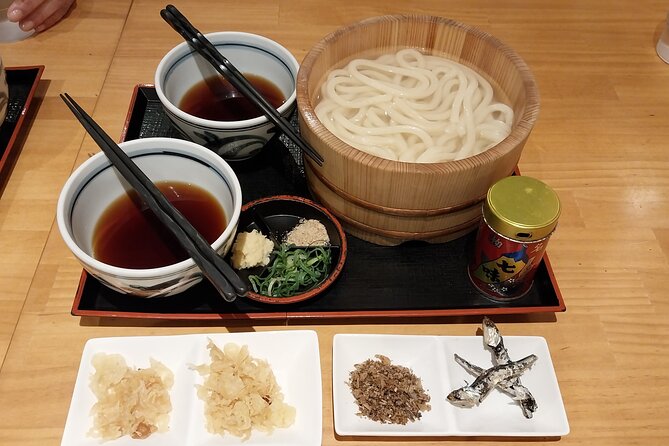
Udon is another included tasting. These thick wheat noodles are familiar to many people, but having them in Japan helps you notice the difference between a generic noodle dish and a food with its own place in daily life.
The portion is part of a larger tasting menu, not a full restaurant dinner. That is important. You get to sample udon without allowing one bowl to take over the whole afternoon.
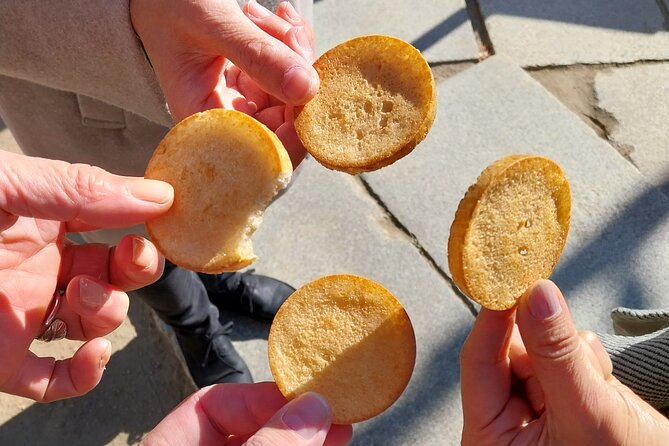
Rice crackers add a lighter stop. They are common across Japan, and the tour uses them to show a simple snack that you will see in many shops. This may not be the most dramatic tasting, but it is useful for understanding the everyday side of Japanese food. Not every good bite needs to be famous.
The tour also includes a secret dish. Since its identity is not provided in advance, you should regard it as a small surprise rather than plan your food expectations around it. If you have allergies or firm dietary limits, tell the operator before relying on the surprise element.
A completely different way to spend a day in Osaka:
- Osaka Go Karting Tour with Funny Costume
★ 5.0 · 2,658 reviews - Osaka Castle: Museum and Tower Entry Ticket
★ 4.5 · 2,380 reviews - Osaka: Tea Ceremony Experience
★ 4.9 · 1,426 reviews - Osaka Kickstart: Hotspots & Hidden Gems Tour
★ 5.0 · 1,306 reviews
Taiyaki, mochi, and the sweet finish
The sweet course includes freshly baked taiyaki and dango mochi skewers made on the day. One food experience also included custard-filled waffles and matcha tea, so the exact selection may shift with the guide, shop, or day.
Taiyaki is a fish-shaped cake commonly filled with a sweet center. Its shape is part of the fun, but the fresh preparation is the real reason to try it. A warm snack eaten soon after baking has a different appeal from one bought packaged in a convenience store.
Dango mochi skewers bring a chewy texture and a more delicate finish. Since they are made on the day, they fit the tour’s focus on food you can try right where it is sold. These sweets balance the salty fish, fried skewers, noodles, and pancake earlier in the walk.
You should not expect a dessert-focused tour. The sweet items are part of a full Osaka food route, and matcha or another drink may appear along the way. The range is the strength here: you move from seafood to fried food, noodles, pancakes, rice crackers, and sweets in one morning.
What the guide adds to the price
At $86.50 per person, this is not the cheapest way to eat in Osaka. You could buy individual snacks for less, especially if you already know where to go and can order with ease.
The value comes from the structure. Your fee covers a guide, 10 tastings including drinks, translation help, and a planned walk through a major food district. You save the time of finding suitable venues, reading menus, ordering, paying, and deciding what to try next.
The guide also helps you avoid wasting a meal on something that does not match your interests. Terumi was praised for explaining dishes and showing local expertise. Marcelo was noted for sharing Japanese cultural information, while Akane combined food explanations with a look at the neighborhood. Those details matter because the guide is not simply carrying you from snack to snack.
The small group improves that value. With a maximum of 10 people, you have a better chance to hear explanations and ask about ingredients or customs. A larger group could make the same route feel like a moving queue, while this format should feel more personal.
Still, compare the price with your own eating habits. If you prefer choosing one excellent restaurant and ordering a full meal, this may feel expensive. If you want a guided introduction to Osaka food and would otherwise spend hours figuring out where to go, the cost is easier to justify.
Language help without losing the local feel
Food tours can become less useful when the guide turns every stop into a lecture. The best part of this format is practical help at the moment you need it.
The guide translates for you, takes care of ordering, and explains each dish. That is useful in small venues where menus may be difficult to understand. You can focus on tasting instead of worrying about whether you ordered the right item.
At the same time, the route is not presented as a formal cooking class. You are walking, eating, and learning in short bursts. The information is tied to the food in front of you, which makes it easier to remember.
English ability can vary by guide, but the named guides in the food experiences were specifically praised for clear explanations. You should still use the booking process to share allergies, dislikes, or dietary restrictions. The listed foods include fish, fried foods, noodles, wheat-based items, and sweets, so this is not a menu designed around broad dietary flexibility.
The walk, timing, and where you finish
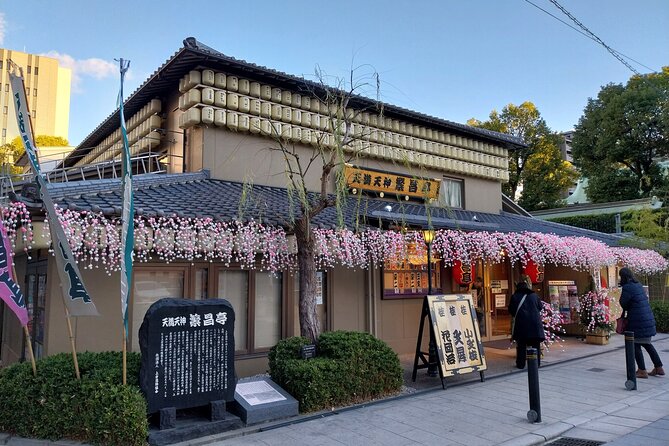
Three hours is enough time to see a useful section of Tenjinbashi-Suji without turning the experience into an all-day outing. You finish at the open space of the Osaka Museum of Housing and Living, not back at your starting station.
That finish can help you plan the rest of your day. You might continue exploring the museum or the surrounding Tenjinbashi area, but the tour does not include hotel transport. Think of it as a one-way neighborhood walk.
The route is near public transportation, and most people can take part. You should be comfortable walking between stops and standing or eating at several venues. The information does not give a precise distance or seating arrangement at every stop, so ask the operator if you need specific mobility details.
Weather can affect the tour, and a minimum number of bookings is required. If poor weather cancels the experience, you are offered another date or a full refund. The same applies if the minimum group size is not reached.
You can cancel for a full refund up to 24 hours before the 10:45 a.m. start time. Changes or cancellations inside that 24-hour window are not accepted for a refund, so keep the local cutoff time in mind.
Who will get the most from this food walk
This tour suits you if Osaka is your first stop in Japan and you want a quick introduction to local food. It also works well if you are unsure how to order, want a guide to translate, or prefer tasting several specialties instead of choosing one restaurant.
It is a good match for curious eaters who enjoy variety. You will try fish, fried food, savory pancakes, noodles, rice crackers, and Japanese sweets in one outing. The tour also gives you neighborhood context, which makes it more useful than a simple list of restaurant reservations.
Families and small groups may like the maximum size of 10, although the data does not specify a child age policy. People with strict dietary restrictions should ask before booking, since the advertised food includes several common allergens and no special menu is promised.
You may want to skip it if you dislike group activities, want a late lunch, or already have a strong Osaka food plan. The early start and fixed route limit your control over the timing and menu.
Should you book this Osaka food tour?
I would book this tour if you want a guided first taste of Osaka and value help with ordering more than the lowest possible food cost. The combination of Tenjinbashi-Suji, 10 tastings, drinks, and a group capped at 10 gives you a useful introduction in a compact three-hour format.
The strongest reasons to book are the guide support and the range of food. Guides such as Terumi, Marcelo, and Akane bring explanations, cultural notes, and neighborhood attention to what could otherwise be a simple snack crawl.
I would hesitate only if you need a fully customizable menu or a relaxed sit-down meal. For everyone else, this is a practical way to get your bearings, fill up on Osaka classics, and leave with a better idea of where to eat next.
FAQ
Where does the Osaka food tour start?
The tour starts at Minami-Morimachi Station, near the Resona Bank Minami-Morimachi Branch at 2 Chome-1 Minamimorimachi, Kita Ward, Osaka.
What time does the tour begin?
The start time is 10:45 a.m.
How long does the experience last?
The food walk lasts approximately three hours.
How many people can join the tour?
The maximum group size is 10 travelers.
What food is included?
Included tastings include mackerel sashimi, kushi-katsu, Osaka-style okonomiyaki, udon, freshly baked taiyaki, a secret dish, dango mochi skewers, and rice crackers. Drinks are also included.
Where does the tour finish?
The tour ends in the open space of the Osaka Museum of Housing and Living.
Can I cancel for a full refund?
Yes. You can cancel at least 24 hours before the experience start time for a full refund. Cancellations or changes made less than 24 hours before the start are not refunded.
Just added around Osaka
- Nara Day Trip from Osaka with a Licensed Guide★ 5.0 · 3 reviews
- Osaka Early Morning Osaka Castle Tour Avoid Crowds★ 5.0 · 3 reviews
- Guided Tour of Some Attractions in Osaka by Private Car★ 5.0 · 3 reviews
- Private Transfer Between Kyoto and Kansai Airport KIX★ 5.0 · 3 reviews
- Shared Arrival Transfer: Osaka Itami Airport to Osaka City★ 5.0 · 3 reviews
- Osaka: Sushi Making Class and Dotonbori Food Tour★ 4.7 · 3 reviews
- Osaka Night Photography Workshop★ 5.0 · 3 reviews
- Kyoto Full day Tour Kinkakuji, Kiyomizu-dera and Fushimi Inari★ 4.5 · 3 reviews
Osaka Street Food Tours, compared.

Shinsekai Food Tour with 13-15 Dishes at 5 Eateries
Read our review →
Osaka Food Tour: 13 Dishes at 5 Local Eateries
Read our review →
Hungry Osaka Street Food Tour:15 Tastings & 3 Drinks with a Local
Read our review →
Osaka Local Foodie Walking Tour in Dotonbori and Shinsekai
Read our review →
Hungry Osaka Street Food Tour: 15 Dishes & 3 Drinks
Read our review →
Kuromon Market Food Walking Tour in Osaka (6 stops, 6 tastes)
Read our review →
Guided Food Tour with 12 Dishes at 4 Local Eateries
Read our review →
Browse the lists this tour appears in