
Reviewed · OSAKA HIGHLIGHTS & HIDDEN GEMS TOURS
Osaka: A Private Guided Walking Tour of 5 Must-See Sights
Osaka packs centuries of Japanese history, neon nightlife, old temples, street food, and market stalls into one long day. This private full-day tour links five major sights with a guide who can adjust the pace, explain the setting, and help you make sense of a city that can feel scattered at first.
I like the personal attention, especially the chance to stop at small shops or ask for help with photos. I also like the food focus: Dotonbori provides lunch, while Kuromon Ichiba Market adds a more local taste of Osaka. The main drawback is simple: you will walk a lot, and the 450-minute schedule can feel tiring in hot, rainy, or very sunny weather.
In This Review
- Key points at a glance
- One long day across Osaka
- Meeting your guide at Toki no Hiroba
- Osaka Castle: a strong opening at 75 minutes
- Dotonbori: neon, signs, and a one-hour lunch
- Kuromon Ichiba Market: Osaka through food
- Shitenno-ji: a calmer temple visit
- Tsutenkaku and Shinsekai at the end of the route
- Why the private format matters
- Is $154 per person fair value?
- Who should book this Osaka tour?
- FAQ
- How long does the Osaka walking tour last?
- Where does the tour begin?
- How will I find my guide?
- Which sights are included?
- Are meals and drinks included?
- Is the tour suitable for wheelchair users?
- Should you book it?
Key points at a glance
- Osaka Castle begins the day with Japan’s political and military past, including admission to the castle.
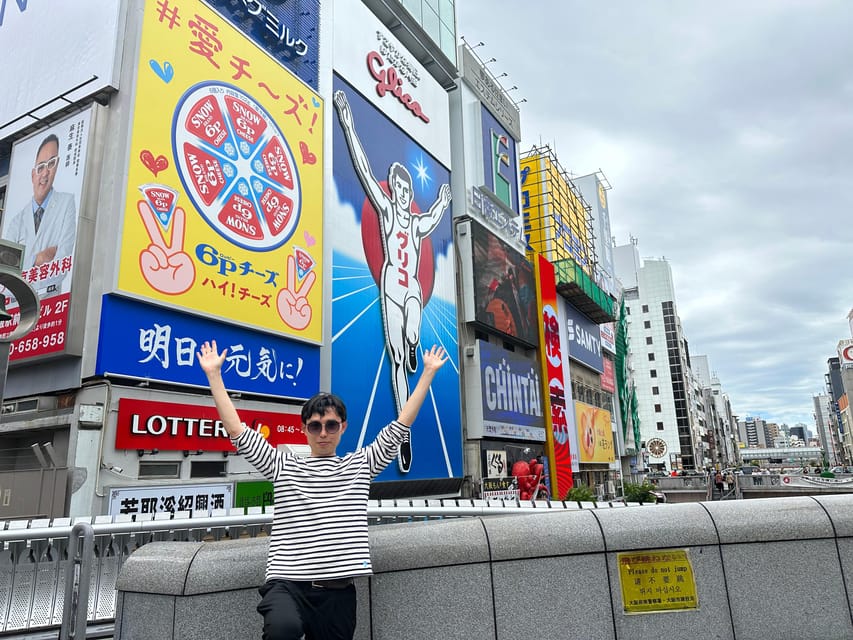
- Dotonbori gives you Osaka at full volume, with neon signs, street food, and the famous Glico running man.
- Kuromon Ichiba Market turns lunch into a food stop, with fresh seafood and local treats to inspect.
- Shitenno-ji offers a quieter change of pace, at one of Japan’s oldest temples.
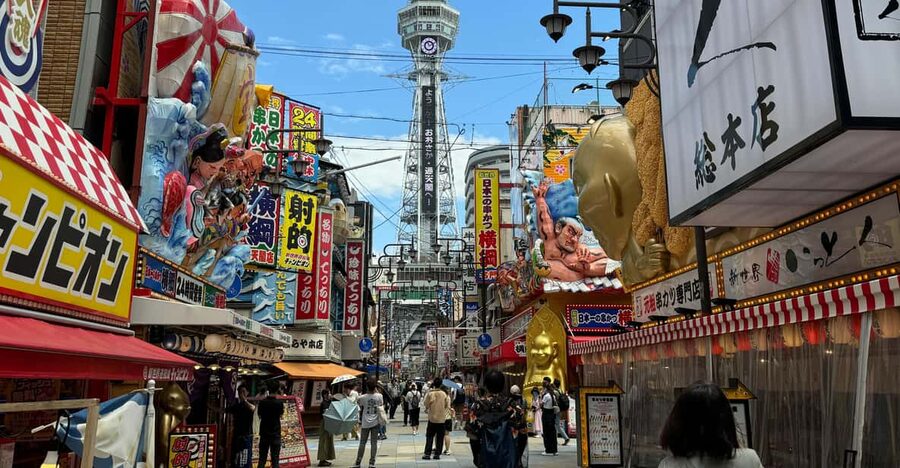
- Tsutenkaku closes the route in Shinsekai, an area known for its old-fashioned Osaka character.
- A private guide can shape the day around you, with English or Japanese guiding and room for small detours.
One long day across Osaka
This is not a gentle, sit-back sightseeing trip. The plan runs for 450 minutes, or seven and a half hours, and includes several transfers between major areas. You will see a great deal of Osaka, but you should think of the experience as an active walking day rather than five quick photo stops.
That format has a real advantage. Osaka’s most famous sights do not sit in one compact historic center. Osaka Castle is in the city’s central eastern area, while Dotonbori, Kuromon Ichiba, Shitenno-ji, and Tsutenkaku take you south through different parts of the city. A private guide helps connect those places into a story instead of leaving you to figure out the route and context alone.
The schedule includes transfers of about 40 minutes at two points, followed by shorter transfers of 15 to 20 minutes later in the day. The transfer time is part of the day’s rhythm, so do not expect seven and a half hours of nonstop sightseeing. Still, you need good shoes, water, and enough energy to keep going.
More highlights and hidden gems tours:
- Osaka Kickstart: Hotspots & Hidden Gems Tour
★ 5.0 · 1,306 reviews - Ultimate Osaka Walking Tour: Castle, Dotonbori & Hidden Gems
★ 5.0 · 862 reviews - Osaka: Main Sights and Hidden Spots Guided Walking Tour
★ 4.9 · 702 reviews
Meeting your guide at Toki no Hiroba
The tour begins at Toki no Hiroba, also called Time and Space Plaza, on the fifth floor of JR Osaka Station. Look for the Golden Clock outside the ticket counter. Your guide will be holding a bright yellow DeepExperience signboard.
This is a practical meeting point, but JR Osaka Station can feel confusing, especially if you have just arrived with luggage or are not used to Japan’s large rail stations. Give yourself extra time to find the fifth floor and the plaza. The exact meeting instructions matter here, so read them carefully before leaving your hotel.
There is no hotel pickup or drop-off. You meet the guide at the station and finish at Tsutenkaku, rather than returning to your starting point. That ending is useful if you plan to continue exploring Shinsekai, but you should not book this tour assuming you will be escorted back to your accommodation.
Osaka Castle: a strong opening at 75 minutes
The first major stop is Osaka Castle, with 75 minutes for a guided visit. The castle is one of Osaka’s defining sights, and it gives the day an immediate sense of scale. Its grand appearance and strategic importance introduce the city’s role in Japan’s political and military past.
The guide is especially useful here. A castle can be impressive from the outside while its meaning remains vague. With explanation, you can better connect the architecture and setting to the figures and events that shaped Osaka. The tour includes admission to Osaka Castle, which makes this more than an outside photo stop.
Seventy-five minutes is enough for a focused visit, but not an exhaustive study of every display. If you like museums and historical exhibits, you may want more time than the schedule allows. If you prefer a clear introduction before moving on, the length should feel well judged.
Bring your camera, but keep your attention on the guide too. The value of a stop like this is not only the view. It is learning why this particular building matters to Osaka.
Dotonbori: neon, signs, and a one-hour lunch
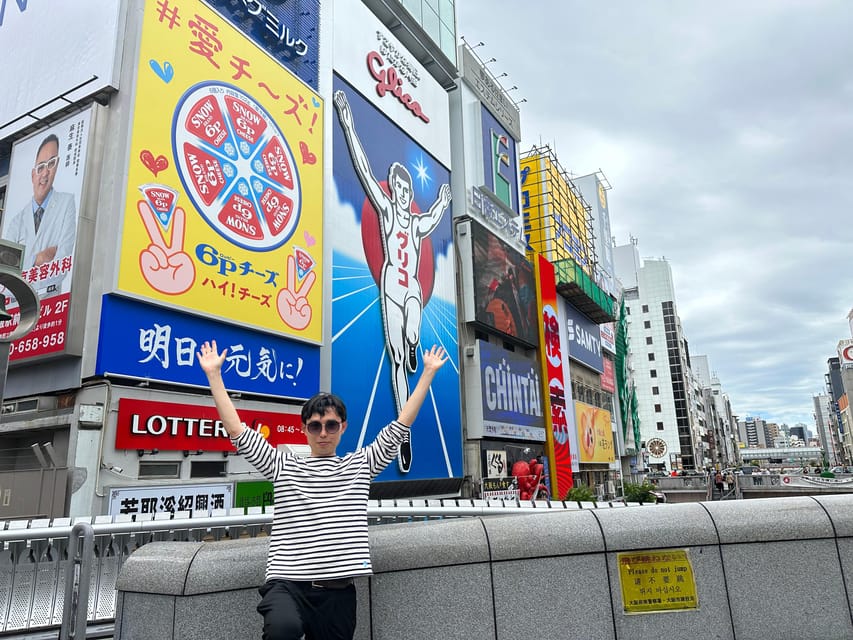
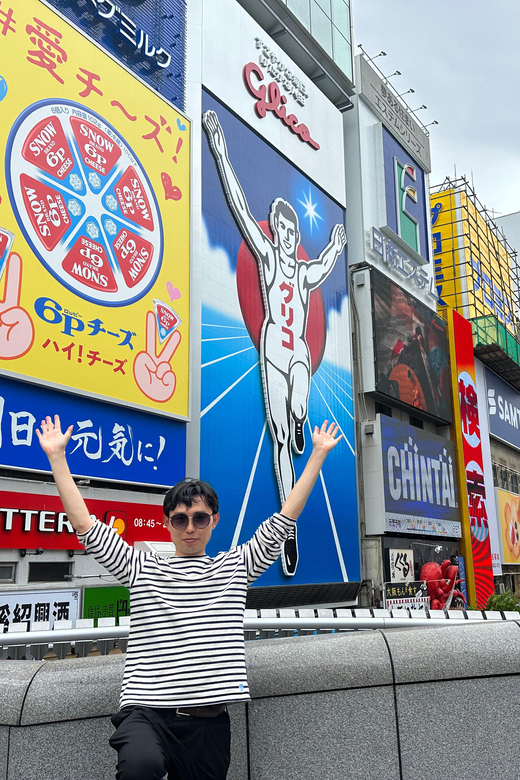
After another transfer, the tour reaches Dotonbori for 30 minutes of sightseeing, followed by one hour for lunch. This is Osaka’s loud, bright entertainment district, famous for neon signs, food displays, and the Glico running man sign.
The first half hour lets you get your bearings and see the best-known visual markers. Dotonbori can be overwhelming if you arrive without a plan. A guide can point out what is worth noticing, explain the area’s food culture, and help you avoid spending the whole visit simply weaving through crowds.
Lunch is not included, so budget separately for your meal and drinks. That is both a limitation and a useful bit of freedom. You are not locked into a fixed dish, and the guide can help you choose from the many options. One particularly useful recommendation from the guiding team has been sushi in Dotonbori, an appealing choice if you want a meal tied to Osaka’s food identity.
Do not expect a quiet, slow lunch. The area is designed for movement, spectacle, and eating on the go. I like that the tour gives you a full hour rather than treating Dotonbori as a five-minute photo stop, but you should still be ready for noise and a busy atmosphere.
More guided walks on foot:
- Deep Backstreet Osaka Tours (Option to add Dinner)
★ 5.0 · 1,290 reviews - Osaka Local Foodie Walking Tour in Dotonbori and Shinsekai
★ 5.0 · 985 reviews - Osaka: Deep Backstreets Walking Tour with Dinner Option
★ 4.9 · 902 reviews - Private Osaka Walking Tour: Highlights & Hidden Gems
★ 5.0 · 569 reviews
Kuromon Ichiba Market: Osaka through food
A 15-minute transfer brings you to Kuromon Ichiba Market for 45 minutes. This stop changes the feel of the day. Dotonbori is built around entertainment and bright presentation, while Kuromon gives you a closer look at ingredients, prepared food, seafood, and the everyday pleasure of browsing market stalls.
You can expect fresh local delicacies and plenty to inspect, but food and drinks are not included. Bring some spending money if you want to taste something. The guide can make the market easier to approach, especially if you are unsure what a dish is or how a particular stall works.
Forty-five minutes is enough for a purposeful walk through the market, with time to look and perhaps buy a snack. It is not long enough for a slow meal or a thorough examination of every vendor. Keep your expectations realistic, and treat it as a guided food walk rather than a formal tasting course.
This is also one of the places where a private guide can add more than a standard route. You can ask questions about ingredients, eating habits, and local specialties. That kind of conversation helps turn a market from a row of stalls into part of Osaka’s daily life.
Shitenno-ji: a calmer temple visit
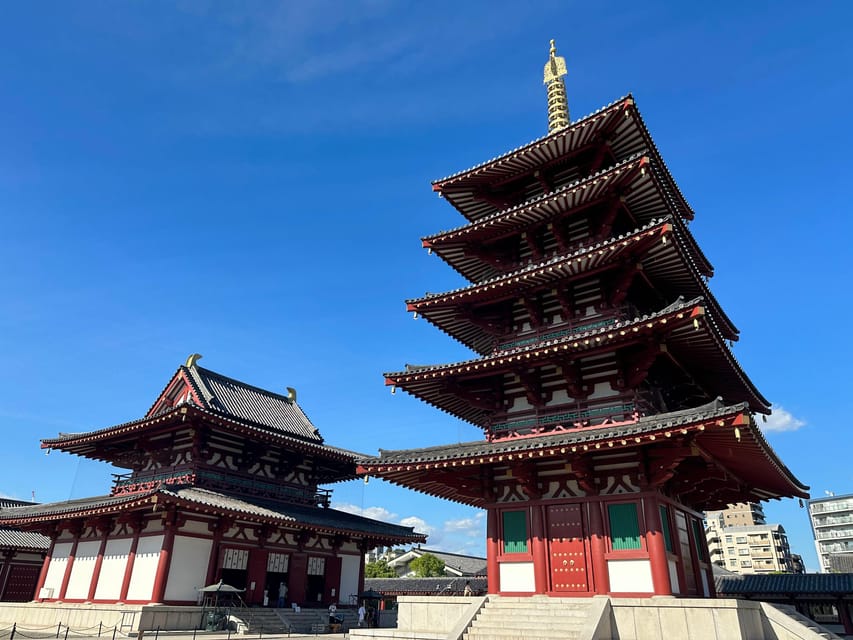
After another 20-minute transfer, the tour reaches Shitenno-ji for a 45-minute guided visit. Founded as one of Japan’s oldest temples, Shitenno-ji provides a useful counterpoint to the commercial energy of the earlier stops.
The temple is valuable for the way it broadens your view of Osaka. The city is not only castles, signs, and food. It also has long religious traditions and spaces where the pace feels more reflective. A guide can explain the temple’s place in Japanese culture and help you notice details you might otherwise pass without understanding.
Forty-five minutes keeps the visit focused. You will not have unlimited time to wander, sit, or explore every corner. Still, after Dotonbori and the market, this pause can feel welcome. If you enjoy temples, history, and architecture, you may wish the schedule allowed longer. If you are new to Japanese religious sites, the guided introduction should give you a useful foundation without making the day too academic.
Photography is allowed, though restrictions can apply in certain places. Follow the guide’s instructions and observe the tone of the temple. Comfortable, respectful clothing and quiet behavior are sensible choices.
Tsutenkaku and Shinsekai at the end of the route
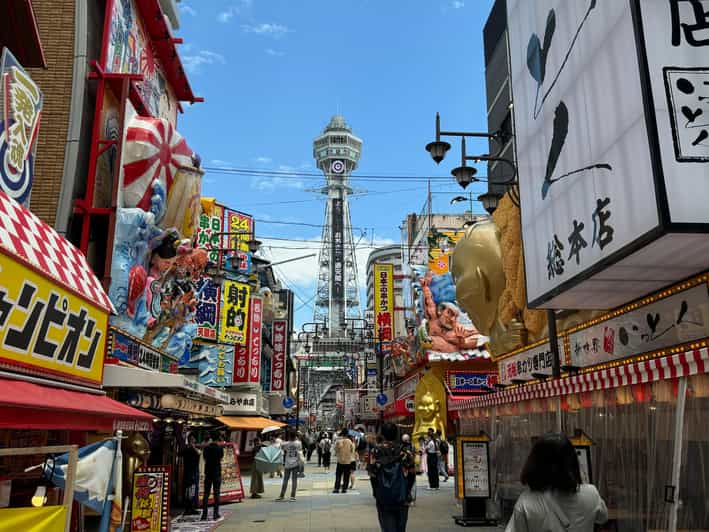
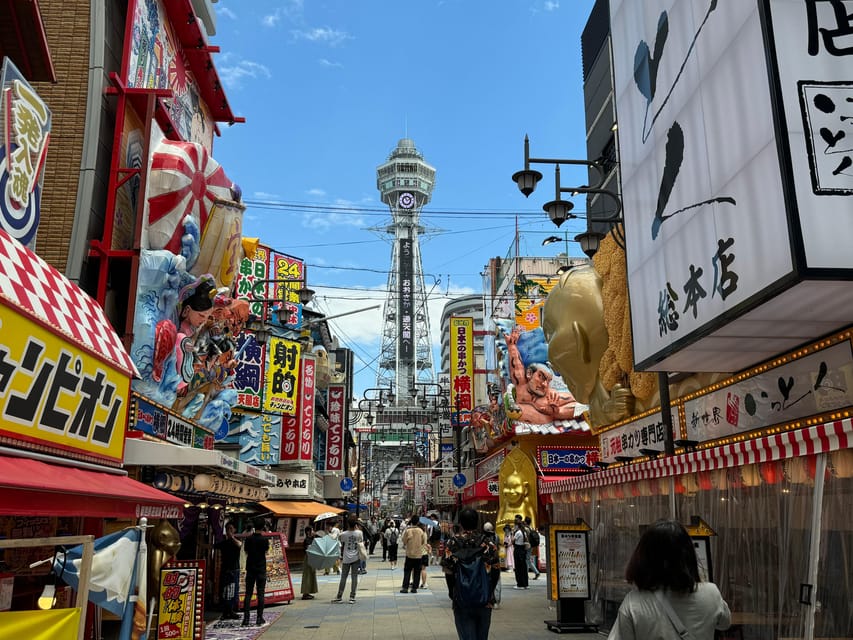
The final transfer takes about 15 minutes, leading to Tsutenkaku for 45 minutes of sightseeing. The tower is associated with Shinsekai, a district with a nostalgic, old Osaka character. After the polished grandeur of Osaka Castle and the neon intensity of Dotonbori, this final stop gives the day a different visual note.
The tour finishes at Tsutenkaku, so plan your evening from there. You may want to keep exploring, find dinner nearby, or make your own way back to your accommodation. The guide can offer practical advice during the day, but transport back is not included.
Forty-five minutes gives you time to take in the tower and surrounding area without rushing through it. The stop works well as a finale because it returns the focus to Osaka’s popular culture and neighborhood character. It also means the day ends away from the central station, which is convenient for some plans and less convenient for others.
Why the private format matters
The private group setup is the strongest reason to choose this experience over a larger sightseeing tour. You are not trying to match the pace of strangers, and the guide can respond to your interests. If you want more explanation at Osaka Castle, more time for photos, or a short look inside a small shop, the day has some room to bend.
That flexibility has made a clear difference for past participants. Yoshi adjusted the day around her group, helped with shared holiday photos, and included extra places that were not part of the five main sights. Emi was praised for careful attention and for explaining enough about Osaka to help a couple continue exploring on their own. Kaoru was described as friendly and lively while sharing information about Japanese culture and everyday life.
Those details matter because a private guide is only worth the extra cost if the person improves the day. Here, the guiding style appears to focus on conversation, local suggestions, photography help, and practical advice, not only reciting facts. You should still tell your guide early if food, shopping, history, or photography is your priority.
The languages offered are English and Japanese. The group remains private, which is useful for couples, families, and friends who want an easier pace or more direct questions.
Is $154 per person fair value?
At $154 per person, this is not the cheapest way to see Osaka’s major sights. You are paying for a private guide, a full seven-and-a-half-hour day, a planned route, Osaka Castle admission, and the convenience of having someone connect five very different areas.
The price makes the most sense for first-time visitors with limited time, people who want cultural explanation rather than independent sightseeing, and couples or families who value personal attention. It is harder to justify if you already know Osaka well, are comfortable navigating rail connections, or prefer to choose your own lunch stops and spend as long as you like at each sight.
Meals, drinks, personal purchases, and hotel transfers cost extra. The listing specifically includes Osaka Castle admission, but you should check the booking details for any other entry fees you may need to pay. Bring cash or another convenient way to pay for food and small purchases, since the market and Dotonbori are important parts of the experience.
The flexible cancellation policy also reduces some booking risk: you can cancel up to 24 hours in advance for a full refund. Reserve now and pay later is available, which helps if your Osaka plans are still shifting.
Who should book this Osaka tour?
I would choose this tour if you have one full day in Osaka and want the main sights arranged into a sensible route. It suits visitors who want a guide’s help with cultural context, food choices, photographs, and the small practical questions that can slow down independent sightseeing.
It is also a good fit for couples and private groups who want to ask questions freely. The personal format can be especially helpful if different people in your group have different interests, since the guide can balance castles, temples, food, and city views.
I would think twice if you dislike long days, have difficulty walking, or want lots of unplanned time. The experience is not suitable for wheelchair users or people with mobility impairments, and there is no hotel pickup. Weather can affect comfort, so wear practical shoes, carry water, and use sunscreen on sunny days.
FAQ
How long does the Osaka walking tour last?
The tour lasts 450 minutes, which is seven and a half hours.
Where does the tour begin?
It begins at Toki no Hiroba, or Time and Space Plaza, on the fifth floor of JR Osaka Station. Meet outside the ticket counter near the Golden Clock.
How will I find my guide?
Your guide will be holding a bright yellow DeepExperience signboard.
Which sights are included?
The route visits Osaka Castle, Dotonbori, Kuromon Ichiba Market, Shitenno-ji Temple, and Tsutenkaku.
Are meals and drinks included?
No. Meals and beverages are not included. The tour allows one hour for lunch in Dotonbori, and food purchases at Kuromon Ichiba Market are also your own expense.
Is the tour suitable for wheelchair users?
No. The experience is not suitable for wheelchair users or people with mobility impairments.
Should you book it?
Book this tour if you want a personal introduction to Osaka and can handle a full day on your feet. The strongest features are the private guide, the mix of history and food, and the practical help offered by guides such as Yoshi, Emi, and Kaoru.
Skip it if you prefer independent travel, need a slower pace, or want every admission and meal covered in the price. For everyone else, $154 buys structure, conversation, and a broad first look at Osaka, from castle towers to market snacks and the lights of Dotonbori.
Just added around Osaka
- Nara Day Trip from Osaka with a Licensed Guide★ 5.0 · 3 reviews
- Osaka Early Morning Osaka Castle Tour Avoid Crowds★ 5.0 · 3 reviews
- Guided Tour of Some Attractions in Osaka by Private Car★ 5.0 · 3 reviews
- Private Transfer Between Kyoto and Kansai Airport KIX★ 5.0 · 3 reviews
- Shared Arrival Transfer: Osaka Itami Airport to Osaka City★ 5.0 · 3 reviews
- Osaka: Sushi Making Class and Dotonbori Food Tour★ 4.7 · 3 reviews
- Osaka Night Photography Workshop★ 5.0 · 3 reviews
- Kyoto Full day Tour Kinkakuji, Kiyomizu-dera and Fushimi Inari★ 4.5 · 3 reviews
Osaka Highlights & Hidden Gems Tours, compared.

Ultimate Osaka Walking Tour: Castle, Dotonbori & Hidden Gems
Read our review →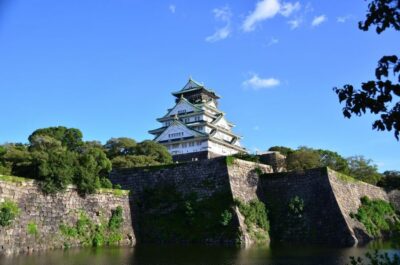
Main Sights and Hidden Spots Guided Walking Tour
Read our review →
Private Osaka Walking Tour: Highlights & Hidden Gems
Read our review →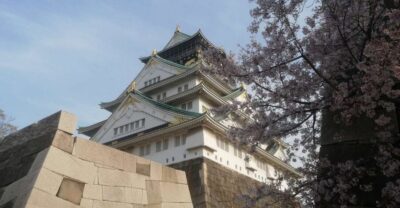
Five Must-See Highlights Walking Tour & Ramen Lunch
Read our review →
Ancient Capital Tour: Kyoto and Nara Highlights from Kyoto/Osaka
Read our review →
Walking Tour of Osaka’s 5 Must-See Sights, with Ramen for Lunch
Read our review →
Osaka Highlights: 4-Hour Walking Tour with Castle
Read our review →Browse the lists this tour appears in