
Reviewed · TOURS
Mount Koya from Osaka: Cultural Small Group Day Tour
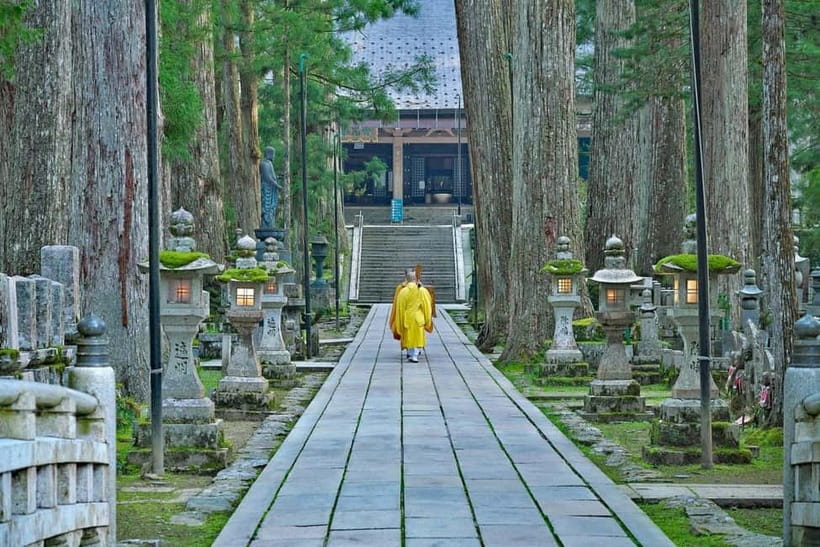
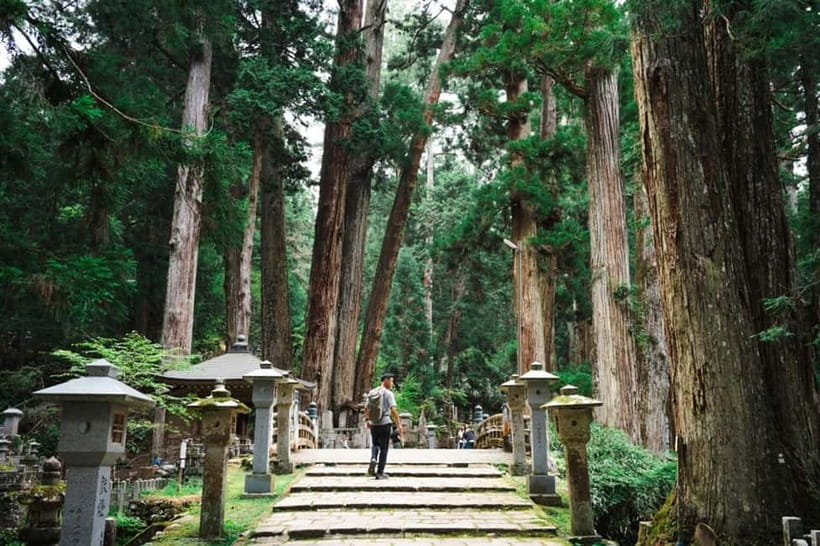
Mount Koya is most powerful at Okunoin Cemetery, where a cedar-lined stone path leads past thousands of moss-covered tombs to Kobo Daishi’s mausoleum. The setting is quiet, cool, and solemn, with none of Osaka’s city noise. It feels less like a sightseeing stop and more like a walk through a living place of faith.
I like the way this tour combines the cemetery with shojin ryori, a vegetarian Buddhist meal, and the chance to copy a sutra by hand. I also like the private transport from central Osaka, since reaching Mount Koya on your own takes more planning. The main drawback is the price: at $251 per person, this is a serious day-trip expense, and the 12-hour schedule includes plenty of walking.
In This Review
- Key points to know
- Why Mount Koya feels different from Osaka
- Walking the cedar trail at Okunoin Cemetery
- A quiet Buddhist meal with shojin ryori
- Kongobuji and Banryutei’s stone dragons
- Sutra copying or a Goma fire ritual
- Danjo Garan and the mandala-like temple complex
- What the Reihokan Museum adds
- Is $251 a fair price for this day?
- Timing, walking, and practical limits
- Who should book this Mount Koya tour?
- FAQ
- How long does the Mount Koya tour from Osaka last?
- Where does pickup take place?
- What language does the guide speak?
- Is transportation included?
- What food is served for lunch?
- Can the lunch menu be changed for special dietary needs?
- Will I definitely copy a Buddhist sutra?
- How much walking is involved?
- Can I cancel the tour for a refund?
- Should you book it?
Key points to know
- Okunoin’s cedar trail is the emotional center: Allow yourself to walk slowly and absorb the silence.
- Lunch is part of the cultural lesson: Shojin ryori uses no meat or fish and focuses on seasonal vegetables and careful preparation.
- Kongobuji gives you art and space: See painted sliding doors and Banryutei, Japan’s largest rock garden.
- The Buddhist activity may vary: You will copy a sutra or, depending on temple availability, observe a Goma fire ritual.
- Private transport saves time: Pickup is available from hotels in central Osaka, with the mountain journey handled for you.
- This suits active sightseers: Comfortable shoes are essential, and the tour is not suitable for people with mobility impairments.
Why Mount Koya feels different from Osaka
Osaka is loud, fast, and food-focused. Mount Koya offers the opposite kind of day. The mountain is a major center of Shingon Buddhism, and its temples, cemetery, rituals, and shops all connect to religious practice rather than ordinary sightseeing.
You begin with hotel pickup in central Osaka and travel in a private, comfortable vehicle. That matters because this is a long day, about 12 hours in total. Instead of changing trains, managing mountain connections, and finding each temple yourself, you can use the ride to rest or listen to your guide’s introduction.
Your English-speaking guide explains the background of Mount Koya before the first major walk. No guide name is provided in the tour details, but the experience includes live guiding in English or Japanese. If you want the religious and historical context to make sense, stay close during the introductions. The temples are beautiful, but the meaning behind them is what turns this from a collection of buildings into a coherent visit.
The mountain can also be cooler than Osaka, so bring a layer even if the city feels warm. You will want comfortable clothing and shoes, plus cash for personal purchases. Smoking, pets, food in the vehicle, and alcoholic drinks in the vehicle are not allowed.
More trips up to Mount Koya:
- Mt Koya Full Day Tour from Osaka with Licensed Guide and Vehicle
★ 5.0 · 8 reviews - Koyasan: A Mysterious Meditation Journey
★ 3.8 · 5 reviews - Koyasan Day Trip by Private Car from Osaka
★ 5.0 · 5 reviews
Walking the cedar trail at Okunoin Cemetery
Okunoin is the strongest stop on the day. It is described as Japan’s largest and most revered cemetery, but that description does not quite prepare you for the scale of the setting. The route follows a stone-paved path through ancient cedar trees, with tombstones and memorials spread along both sides.
Many of the stones are covered in moss. The combination of tall trees, filtered light, damp stone, and silence gives the walk a serious mood. You may find that you naturally lower your voice. This is not a place to rush through while taking quick photographs.
The path leads toward the mausoleum of Kobo Daishi, the founder of Shingon Buddhism. Buddhist tradition holds that he remains in eternal meditation there. Your guide can help explain why the mausoleum matters and how it fits into Mount Koya’s religious life.
The scheduled visit lasts about 90 minutes. That is enough time for a meaningful walk and guided explanation, but it is not an unlimited amount of time for exploring every corner. Keep your pace steady, and listen for instructions about where photography or conversation may be inappropriate.
I especially like that Okunoin comes early in the main sightseeing portion of the day. It sets the tone for everything that follows. After this walk, the meal and temple visits feel connected to the place rather than added as unrelated attractions.
The path is not ideal for anyone who struggles with walking. The tour specifically advises comfortable shoes and is not suitable for people with mobility impairments. Even visitors who walk easily should expect a full day on their feet.
A quiet Buddhist meal with shojin ryori
Lunch lasts about 75 minutes and features traditional shojin ryori. This is Buddhist temple cuisine prepared without meat or fish. Strong seasonings are avoided, and the focus falls on vegetables, tofu, grains, and seasonal ingredients, although the exact menu is not specified.
The value of this meal is not only culinary. Shojin ryori reflects Buddhist ideas of restraint, gratitude, and care in preparation. The food is meant to be noticed. Instead of looking for one dramatic main course, pay attention to texture, color, and the small differences between each dish.
If you are used to rich sauces or large portions, the meal may feel simple. That is part of the point, but it is also a practical consideration. Special dietary substitutions are not included, so you should not book this meal expecting customized changes. The tour information does not state that the menu can be adjusted for allergies or other requirements.
The meal gives you a welcome sitting break after Okunoin. It also prepares you for the quieter rhythm of the afternoon. I would treat it as a cultural activity, not merely a convenient lunch stop.
Kongobuji and Banryutei’s stone dragons
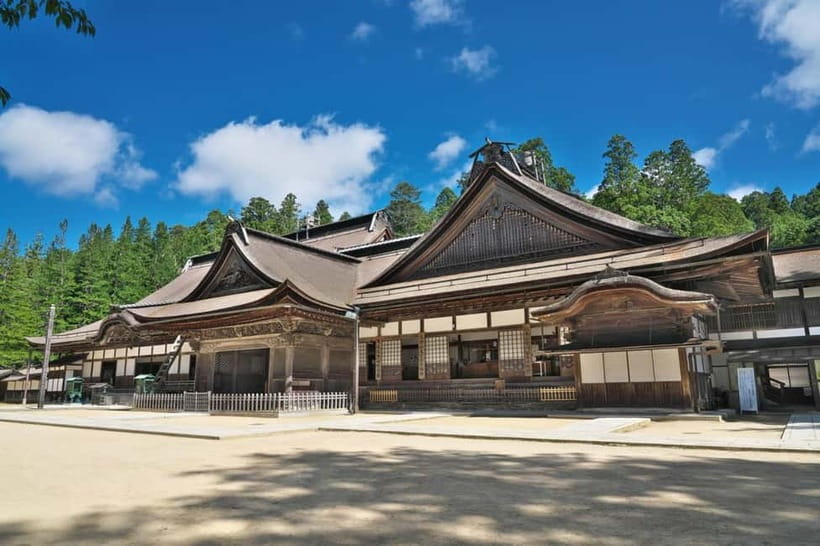
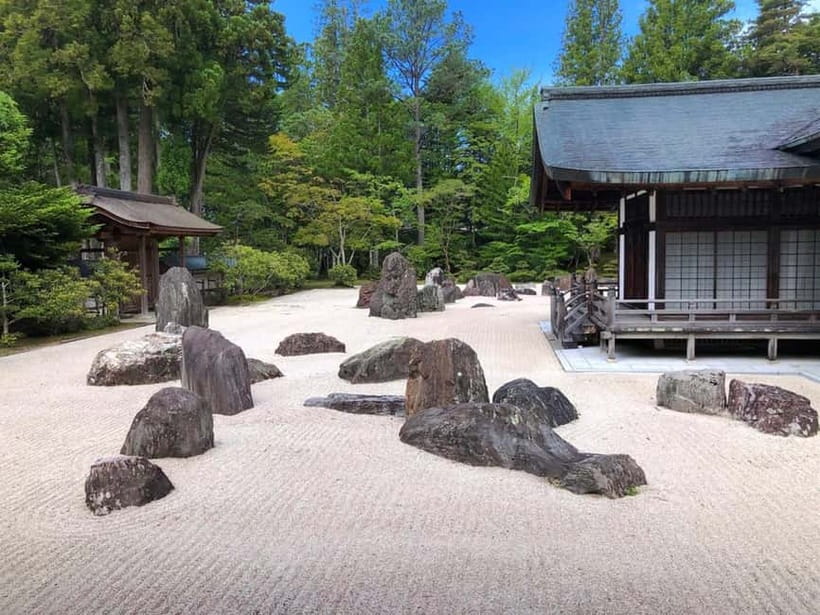
Kongobuji is the head temple of Shingon Buddhism and one of the tour’s main architectural stops. Inside, you can see elegant fusuma, or sliding doors, decorated with traditional ink paintings. These rooms show how Japanese religious architecture uses empty space, natural materials, and carefully framed views.
The visit is scheduled for about 45 minutes after lunch. That is enough for a guided look at the major features, though you should not expect a slow, unstructured temple visit. Keep your eyes open for the details your guide points out, especially the painted doors and the way the rooms connect.
The highlight here is Banryutei, described as Japan’s largest rock garden. Its stones are arranged to suggest dragons emerging from clouds. A rock garden can seem spare at first glance, but the arrangement rewards stillness. Walk around the viewing area, then pause. The garden is easier to appreciate when you stop trying to find a single correct interpretation.
This is a good contrast with Okunoin. The cemetery gives you trees, stone paths, and memorials in a broad outdoor setting. Kongobuji brings you into carefully designed rooms and a controlled garden. Together, they show two different sides of Mount Koya’s religious character.
A completely different way to spend a day in Osaka:
- Osaka Go Karting Tour with Funny Costume
★ 5.0 · 2,658 reviews - Osaka Castle: Museum and Tower Entry Ticket
★ 4.5 · 2,380 reviews - Osaka: Shinsekai Food Tour with 13-15 Dishes at 5 Eateries
★ 4.8 · 2,204 reviews - Osaka Food Tour: 13 Dishes at 5 Local Eateries
★ 5.0 · 2,149 reviews
Sutra copying or a Goma fire ritual
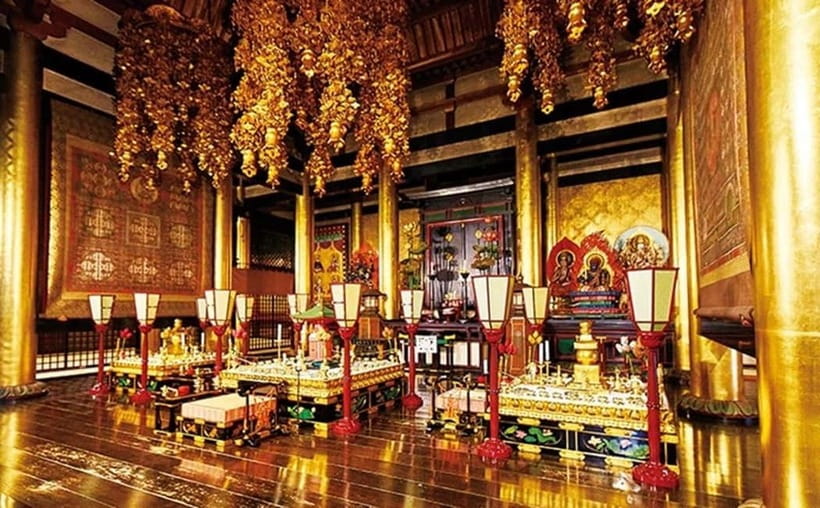
The tour includes a Buddhist practice, but the exact activity depends on temple availability. You may take part in Shakyo, the copying of a sutra, or observe a Goma fire ritual.
Shakyo is the calmer option. You copy sacred text by hand, working slowly and carefully. You do not need to approach it as an art class. The value is in the concentration. For many people, this becomes the most personal part of the day because it asks you to stop sightseeing and focus on one small task.
A Goma ritual has a different energy. It uses fire as part of a prayer ceremony and is intended to cleanse negative energies. You observe rather than assume you can control the schedule or format. Because the ritual depends on temple availability, the tour cannot promise which experience will take place.
The scheduled class portion is listed as about two hours, which makes this a substantial part of the day. That timing is important. This is not a quick stamp or photo opportunity added between temples. You need to be comfortable sitting quietly and following the guide’s instructions.
If you have a strong preference for sutra copying, ask about availability when booking. The supplied information confirms that sutra copying is included, but it also says the activity may change to a Goma ritual. Go with the expectation of a Buddhist practice rather than one guaranteed format.
Danjo Garan and the mandala-like temple complex
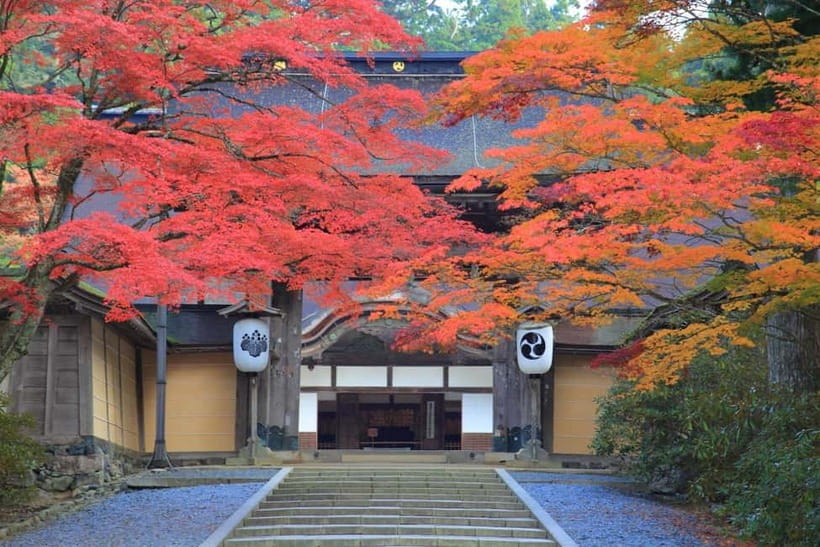
Danjo Garan is a symbolic complex of halls, pagodas, and statues arranged in mandala-like harmony. The tour presents it as another key part of Mount Koya, not simply a quick exterior photo stop.
The complex helps explain how Buddhist ideas are expressed through placement and design. Look at how the buildings relate to one another, then ask your guide about the purpose of the halls and statues. The supplied schedule does not give a separate time for Danjo Garan, so its visit is part of the broader Mount Koya touring period.
This is one reason a live guide adds value. Without context, you may see pagodas and temple buildings without understanding why the arrangement matters. With an explanation, the complex becomes a visual expression of Buddhist teaching.
The mountain has several quiet corners, and free time before the return trip gives you a chance to slow down. You can browse for incense or prayer beads, or simply sit and take in the surroundings. Personal purchases are not included, so carry cash if you want souvenirs.
What the Reihokan Museum adds
The tour also includes about 90 minutes at the Reihokan Museum. The information provided does not specify the individual exhibits, so I would not book this stop expecting a particular artifact or named gallery.
Its role is clear, though. After seeing active temple spaces, a museum visit gives you another way to understand Mount Koya’s Buddhist culture and objects. It also provides an indoor stop in a mountain environment where weather may change quickly.
Ninety minutes is a generous museum period compared with a quick pass through. If museums are important to you, this will add depth. If you prefer outdoor walks and temple architecture, it may feel like the least immediately exciting section of the day. Your guide’s explanations should help connect what you see there with Okunoin, Kongobuji, and Danjo Garan.
Is $251 a fair price for this day?
The $251 price covers hotel pickup in central Osaka, private transport, a professional English-speaking guide, the main temple and cemetery visits, the traditional lunch, and the sutra copying experience. That is a lot of cost bundled into one day, but the price is still high compared with a basic independent visit to Mount Koya.
I see the value in the transport and structure. Mount Koya is not next door to Osaka, and the tour avoids the need to plan every train, road connection, local transfer, and temple entrance. You also receive interpretation throughout the day, which is especially useful at Okunoin and Danjo Garan.
The private vehicle is another advantage for a long excursion. You will not need to navigate the return journey after a full day of walking and sitting in temples. The tradeoff is that private transport does not make this a private one-person tour. The experience requires at least four participants, and the small-group format is the basis for the departure.
For me, the price makes the most sense if you want a guided cultural day and have limited time in the Kansai region. It makes less sense if you enjoy planning rail trips, already understand Shingon Buddhism, or want to spend several days exploring Mount Koya at a slower pace.
Timing, walking, and practical limits
This is a full 12-hour day, so plan around it. Pickup takes place at the front entrance of your central Osaka hotel, and you should wait there at the stated pickup time. The tour information does not provide a single universal starting time, so check the available date and departure details before booking.
Wear shoes that are comfortable for extended walking on stone paths. The mountain weather can be cooler than Osaka, and the outdoor portions at Okunoin and Danjo Garan make a jacket or extra layer useful.
The tour is not suitable for people with mobility impairments, babies under one year, or people over 95 years old. That does not mean every step is difficult, but the day combines cemetery paths, temple grounds, museum time, and a long round trip. You should be comfortable with a busy schedule.
The minimum of four participants also matters. If fewer than four people join, the tour will be cancelled. Free cancellation is available up to 24 hours in advance for a full refund, and you can reserve now and pay later, which helps if your Osaka plans are still shifting.
Who should book this Mount Koya tour?
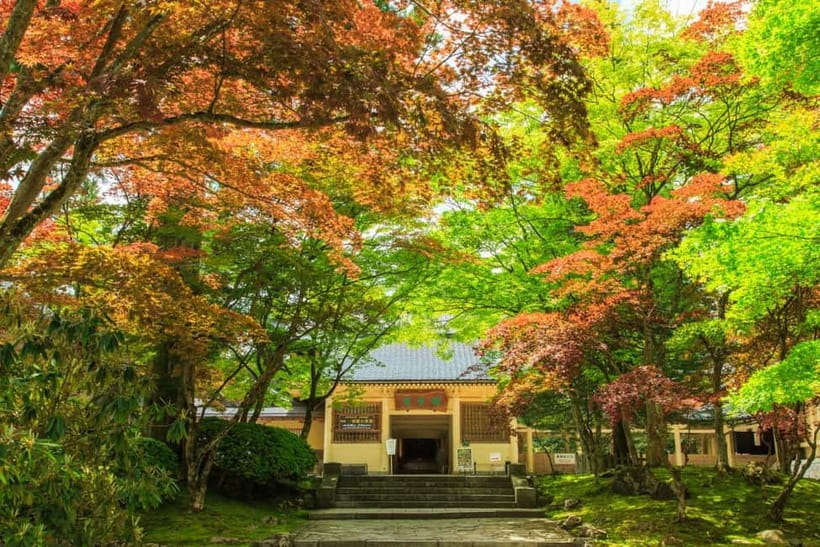
I would choose this tour if you want Mount Koya’s major spiritual sights in one organized day from Osaka. It is especially suited to first-time visitors who want an English-speaking guide to explain Kobo Daishi, Shingon Buddhism, temple design, and the meaning of the rituals.
It also works well for people who value authentic activities over a checklist of photo stops. Okunoin is contemplative, the lunch is tied to Buddhist practice, and sutra copying asks you to participate rather than simply look.
I would hesitate if you dislike long days, cannot walk comfortably, need specific meal substitutions, or want complete control over your timing. You should also think twice if the $251 cost would make you feel rushed or disappointed by the mountain travel time.
FAQ
How long does the Mount Koya tour from Osaka last?
The tour lasts 12 hours, including hotel pickup in central Osaka, transportation to Mount Koya, sightseeing, lunch, and the return to Osaka.
Where does pickup take place?
Pickup is included from hotels in central Osaka. You should wait at the front entrance of your hotel at the scheduled pickup time.
What language does the guide speak?
Live guiding is available in English and Japanese.
Is transportation included?
Yes. The tour includes private transport in a comfortable vehicle between central Osaka and Mount Koya.
What food is served for lunch?
Lunch is traditional shojin ryori, a Buddhist vegetarian meal prepared without meat or fish and without strong seasonings.
Can the lunch menu be changed for special dietary needs?
Special dietary substitutions are not included. The available information does not promise customized meal changes.
Will I definitely copy a Buddhist sutra?
Sutra copying is included, but the activity may change to observing a Goma fire ritual depending on temple availability.
How much walking is involved?
The tour involves a fair amount of walking, including the cedar-lined route through Okunoin Cemetery and visits to temple grounds. Comfortable shoes are recommended.
Can I cancel the tour for a refund?
You can cancel up to 24 hours in advance for a full refund. The tour also offers a reserve-now-and-pay-later option.
Should you book it?
Book this Mount Koya day tour if you want a carefully organized introduction to the mountain’s most important religious sites, with transport, lunch, guiding, and a hands-on Buddhist activity handled in one day. The quiet Okunoin walk, thoughtful shojin ryori, and sutra copying give it more substance than a standard temple bus tour.
Skip it if you need a relaxed pace, have mobility concerns, require a modified meal, or prefer independent travel. At $251, the tour earns its price through convenience and cultural explanation, not through luxury. For the right visitor, that trade is worthwhile.
Just added around Osaka
- Nara Day Trip from Osaka with a Licensed Guide★ 5.0 · 3 reviews
- Osaka Early Morning Osaka Castle Tour Avoid Crowds★ 5.0 · 3 reviews
- Guided Tour of Some Attractions in Osaka by Private Car★ 5.0 · 3 reviews
- Private Transfer Between Kyoto and Kansai Airport KIX★ 5.0 · 3 reviews
- Shared Arrival Transfer: Osaka Itami Airport to Osaka City★ 5.0 · 3 reviews
- Osaka: Sushi Making Class and Dotonbori Food Tour★ 4.7 · 3 reviews
- Osaka Night Photography Workshop★ 5.0 · 3 reviews
- Kyoto Full day Tour Kinkakuji, Kiyomizu-dera and Fushimi Inari★ 4.5 · 3 reviews
Tours, compared.
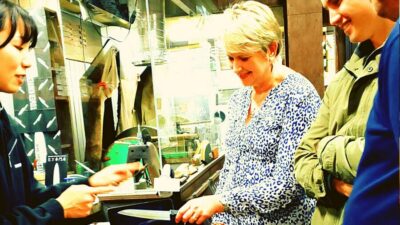
Shinsekai Food Tour with 13-15 Dishes at 5 Eateries
Read our review →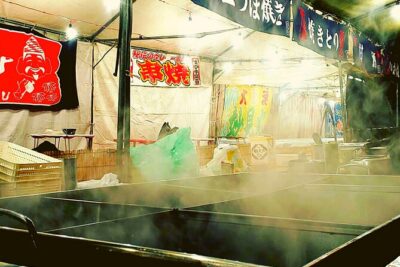
Osaka Food Tour: 13 Dishes at 5 Local Eateries
Read our review →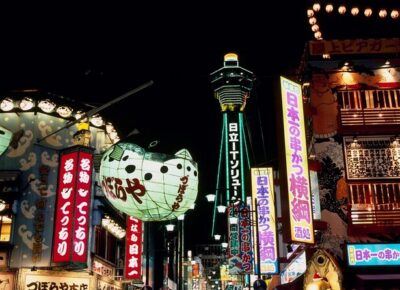
Hungry Osaka Street Food Tour:15 Tastings & 3 Drinks with a Local
Read our review →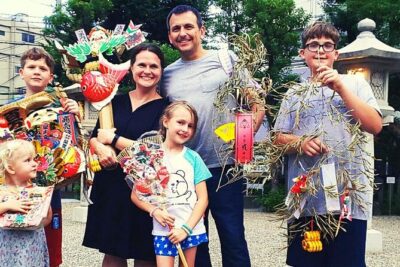
Deep Backstreet Osaka Tours (Option to add Dinner)
Read our review →
Osaka Local Foodie Walking Tour in Dotonbori and Shinsekai
Read our review →