
Reviewed · OSAKA COOKING CLASSES
Making Soba noodles at Temple
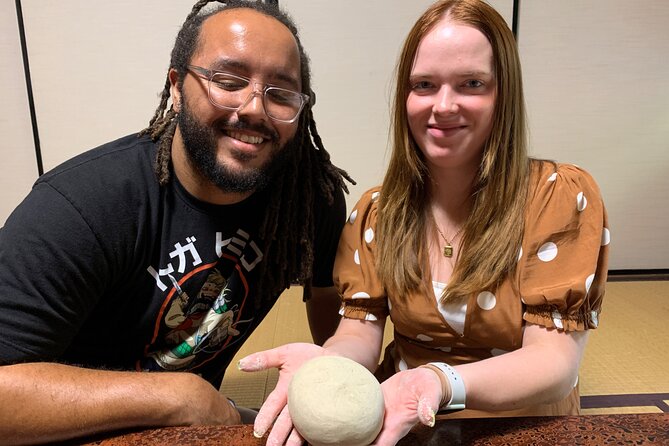
Making soba in a quiet temple is a fine way to see a more personal side of Osaka. This two-hour class combines hands-on cooking with a visit to the temple’s main hall and Buddha statue, all in a small private setting.
I like the chance to eat noodles you have prepared yourself, and I like the gentle pace. Guide Hiro has been praised for patient teaching and for taking photos during the class, then sending them to participants. The main thing to consider is the price, $68.29 per person, plus the need to cancel at least 24 hours ahead if your plans change.
In This Review
- Key Points
- Starting at the Osaka Temple
- A Small Class With a Personal Feel
- Turning Buckwheat Flour Into Soba
- Eating at a Japanese-Style Table
- The Main Hall and Buddha Statue
- What Makes the Setting Valuable
- Is $68.29 a Fair Price?
- Who Will Enjoy This Most?
- Timing, Tickets, and Cancellation
- The Main Strengths and Limitations
- Should You Book This Soba Class?
- FAQ
- Where does the soba-making experience start?
- Where does the activity end?
- How long does the class last?
- How much does it cost?
- Is this a private activity?
- Is transportation included?
- Will I eat the soba I make?
- Can I visit the temple during the activity?
- Is the activity suitable for someone with a buckwheat allergy?
- Can I cancel for a refund?
Key Points
- Make soba inside a historic temple: The setting gives a simple cooking class a strong sense of place.
- Eat the noodles you prepare: The soba is not just a demonstration. You sample your own finished work.
- Private group format: Only your group participates, which allows for a calm, personal lesson.
- Meet Hiro: He guides the class and may take photos for you during the activity.
- Visit the main hall and Buddha statue: The experience includes more than food preparation.
- Plan around allergies and weather: Buckwheat is central to soba, and the activity requires good weather.
Starting at the Osaka Temple
The class begins at 1-chōme-3-68 Shitaderamachi, in Osaka’s Tennoji Ward. The meeting point is near public transportation, but private transportation is not included, so you need to make your own way there.
That location matters. You are not heading into a standard cooking studio with bright counters and a busy schedule. You are entering a temple setting, where the tone is quieter and more reflective. The food lesson takes place alongside a chance to see part of a working religious site.
The experience lasts about two hours, including the soba lesson, eating time, and temple visit. That is long enough to learn the basic process without consuming an entire afternoon. I would place it on a day when you want a slower activity between Osaka’s larger sights.
Because the meeting point and ending point are the same, you do not need to arrange a second pickup location. The activity ends back where it starts, which keeps the plan simple.
More Japanese home cooking classes:
- Osaka: Ramen and Gyoza Cooking Class in Dotonbori
★ 5.0 · 378 reviews - Osaka: Sumo Stage Show with Bento or Snack + Fight & Photo
★ 4.3 · 364 reviews - Osaka: Traditional Mochi Pounding Experience with Tasting
★ 4.9 · 306 reviews
A Small Class With a Personal Feel
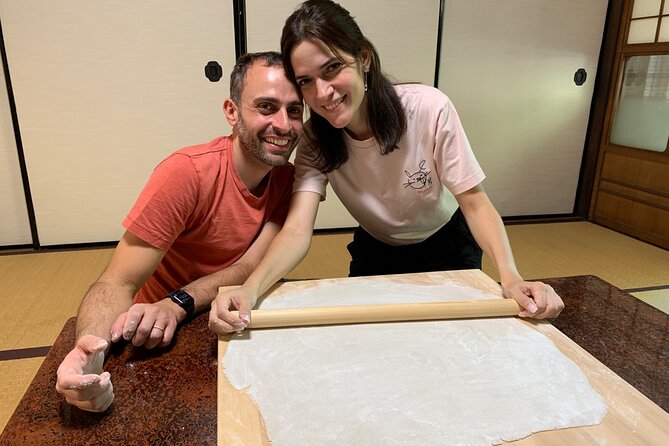
This is a private activity, so only your group participates. That is one of the strongest reasons to consider it. A small family or group of friends can ask questions, work at its own pace, and enjoy the temple without sharing the lesson with a large class.
The setting also gives the activity a warm, almost home-visit quality. The host describes the atmosphere as similar to returning to your parents’ house. That does not mean you should expect a formal restaurant meal or a long cultural lecture. It means the experience aims for personal contact, quiet conversation, and a relaxed welcome.
Hiro has been singled out for making the lesson fun and for serving as an effective teacher. One especially useful touch is the photo record of the class. He took several pictures and sent them by AirDrop at the end. If you use an iPhone, that may be convenient. If not, it would be sensible to ask how the photos can be shared with your group.
You should not book this expecting a large demonstration or a packed schedule of temple sights. The appeal is the modest scale. You spend time making one traditional food well, then enjoy the result.
Turning Buckwheat Flour Into Soba
Soba is made from buckwheat flour, and the preparation requires more care than simply boiling noodles from a package. The point of the class is to take part in the process and then taste the finished soba yourself.
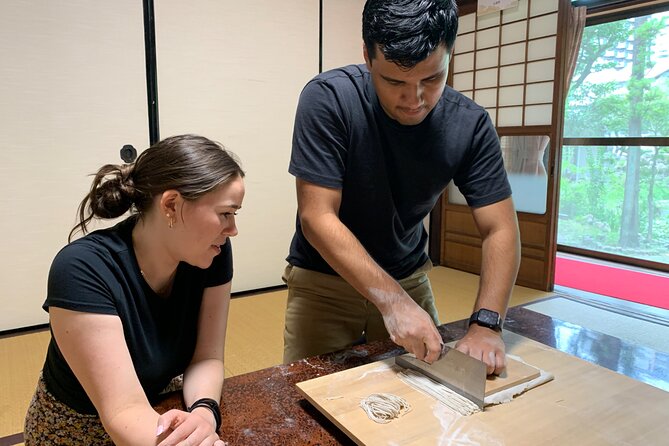
The supplied details do not set out every step or specify how much time is spent mixing, rolling, cutting, or cooking. You should therefore think of this as a guided introduction rather than a technical professional course. Hiro leads the activity, and your group works through the process with his help.
That distinction is useful. If you want to master restaurant-level soba production, two hours will not do it. If you want to understand the work behind a familiar Japanese dish and enjoy making it with your own hands, the format makes good sense.
The best part comes after the preparation. Your group eats the soba you made. That gives the class a clear reward and makes the food feel connected to the place and the effort. The taste may be simple, but it is yours, and that changes the experience.
The included food is described as soba noodles and snacks. You should not assume that a full multi-course meal is provided. The clear promise is the chance to sample your handmade noodles after the lesson.
Eating at a Japanese-Style Table
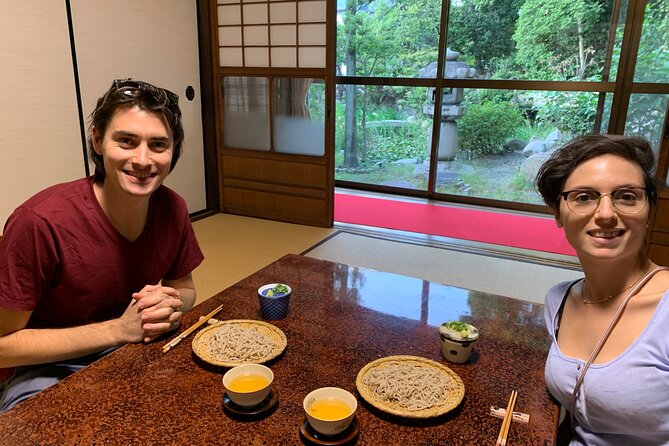
The meal is served at a Japanese-style table, adding another small cultural detail to the class. This is not a grand dining room experience, and you should not judge it by the standards of a high-end Osaka restaurant.
Instead, the table is part of the lesson’s quiet rhythm. You prepare the noodles, sit down, and taste the result in the same calm setting. The arrangement lets the food remain the focus without turning the class into a rushed cooking show.
I like this kind of finish because it gives the activity a proper ending. You are not sent away immediately after the last cutting step. You have time to enjoy what you made and share the moment with your group.
The private format is especially useful here. Families can eat together without worrying about disturbing a larger class, and couples or friends can keep the experience conversational. Since the meal is tied to the class, it also gives children a reason to stay involved during the preparation.
More temples and shrines worth the walk:
- Osaka: Minoh, Katsuoji Temple, & Minoh Falls Full-day Tour
★ 4.9 · 172 reviews - Sagano Romantic Train & Arashiyama, Kiyomizudera, Fushimi Inari Taisha Day Tour
★ 4.5 · 171 reviews - Full Day Kyoto Tour : Bamboo Forest, Golden Temple, Fushimi Inari
★ 5.0 · 84 reviews - Osaka Temple Cool Foot Bath & Matcha Experience〈45min〉
★ 4.9 · 82 reviews
The Main Hall and Buddha Statue
The temple visit adds cultural context without requiring a separate sightseeing stop. You can visit the main hall and see the Buddha statue during the experience.
The available information does not identify the temple’s name or provide a detailed history of the building, so you should not expect a full historical tour. Still, the chance to move from the cooking area to the main hall gives the class more depth than a food-only activity.
For many people, this will be the most memorable contrast of the day. Soba making is practical and hands-on. The main hall and Buddha statue offer a quiet moment for observation. Together, the two parts show how food and religious places can share space in Japanese daily life.
Keep your expectations measured. This is not advertised as an extensive temple circuit, and the two-hour length limits how much formal sightseeing can fit in. Think of the visit as a meaningful part of the class, not a replacement for a major temple tour.
What Makes the Setting Valuable
Osaka is famous for food, but a temple soba class gives you a different way to connect with that reputation. You are not only ordering a dish from a menu. You are learning about one traditional food through touch, effort, and taste.
The setting also changes the mood. A busy city can make sightseeing feel like a series of crowded stops. This class offers a pause. The small team format and quiet temple surroundings are designed to create a private period away from the city’s faster pace.
I would especially consider this activity if your itinerary already includes Osaka’s shopping streets and major attractions. It gives you something slower and more focused. It also works well for people who prefer participating in a tradition rather than only looking at monuments.
At the same time, the calm atmosphere will not suit everyone. If you want constant movement, a long list of sights, or a large group with lots of social energy, this class may feel too gentle. Its value depends on your interest in food, craft, and place.
Is $68.29 a Fair Price?
At $68.29 per person, this is not the cheapest way to eat soba in Osaka. A restaurant meal will cost less, and you can buy excellent noodles without taking a class.
The price makes more sense when you separate the food from the activity. You are paying for about two hours of instruction, a private group setting, use of the temple space, the noodle-making process, the chance to eat your own soba, and a visit to the main hall and Buddha statue. Hiro’s personal guidance and the photo sharing also add value.
For a private lesson, the cost can be reasonable for a couple, family, or small group that wants a shared memory. A solo visitor may find it harder to justify unless hands-on food experiences are a major part of the trip.
I would compare it with the cost of other private cultural activities, not with the price of a bowl of noodles. The food itself is only one part of the purchase. The setting and personal instruction are the reasons to book.
The activity has an average booking lead time of 47 days. That suggests you should plan ahead, especially if you have a narrow window in Osaka. If your preferred date or time is unavailable, you can contact the provider to ask about joining.
Who Will Enjoy This Most?
This class fits several types of visitors particularly well:
- Families: Children can take part in making food, and the private format avoids the pressure of a large class.
- Couples and friends: The activity creates a shared project, followed by a meal at a Japanese-style table.
- Food-focused visitors: You get to see how soba is made rather than simply ordering it.
- Culture-focused visitors: The temple, main hall, and Buddha statue add a traditional setting.
- Visitors wanting a quiet break: The small team and calm pace offer a change from Osaka’s busier areas.
I would be cautious about booking it for someone with a buckwheat allergy. Soba is made from buckwheat flour, and the activity specifically warns that some people may not be able to eat it. Ask before booking if anyone in your group has a food allergy.
The weather note also deserves attention. The activity requires good weather, and poor conditions can lead to a different date or a full refund. Since the class is in a temple setting, check the forecast as your date approaches and keep some flexibility if possible.
Timing, Tickets, and Cancellation
Your confirmation is provided at the time of booking, and the ticket is mobile. You should have the booking information ready when you arrive at the meeting point.
The activity begins and ends at the same Osaka address. Private transportation is not part of the experience, but the meeting point is near public transportation. Allow enough time to reach Tennoji Ward without rushing, especially since the value of the class depends partly on its calm start.
Free cancellation is available if you cancel at least 24 hours before the start time. Cancellations made less than 24 hours ahead are not refunded, and late changes are not accepted. The cut-off uses Osaka local time, so check the time carefully if you are changing plans from another time zone.
If bad weather causes the provider to cancel, you are offered another date or a full refund. That protection is useful, but it does not remove the need to keep your schedule flexible.
The Main Strengths and Limitations
The strongest feature is the combination of place and participation. You are not simply in a temple, and you are not simply making noodles. The two parts support each other and create a more personal experience.
The private group format is another major advantage. Hiro can focus on your group, take photos, and guide you through the preparation without the class feeling crowded.
The finished soba is also important. Eating your own noodles gives the lesson a satisfying purpose, and the Japanese-style table helps the activity end on a relaxed note.
The limitations are clear. The class is only about two hours, so it cannot offer an extensive temple tour or advanced noodle training. The price is high compared with a normal soba meal, and buckwheat allergies may rule it out entirely.
You also need to arrange your own transportation and accept the weather policy. None of these points is a deal breaker, but they should be part of your decision.
Should You Book This Soba Class?
Book it if you want a private, hands-on cultural experience rather than another restaurant meal. It is a good match for families, couples, and small groups who value quiet surroundings, personal instruction, and the simple pleasure of eating food they helped make.
Skip it if your main goal is cheap food, advanced soba training, or a full temple sightseeing tour. The $68.29 price is paying for the setting, guide, private attention, and shared memory as much as the noodles.
For the right visitor, this is a thoughtful Osaka activity. You leave with a taste of handmade soba, a look inside the temple’s main hall, a view of the Buddha statue, and photos that help preserve the afternoon.
FAQ
Where does the soba-making experience start?
It starts at 1-chōme-3-68 Shitaderamachi, Tennoji Ward, Osaka, 543-0076, Japan.
Where does the activity end?
The experience ends back at the meeting point.
How long does the class last?
The activity lasts approximately two hours.
How much does it cost?
The listed price is $68.29 per person.
Is this a private activity?
Yes. Only your group participates.
Is transportation included?
No. Private transportation is not included. The meeting point is near public transportation.
Will I eat the soba I make?
Yes. You can sample the soba you prepare during the class.
Can I visit the temple during the activity?
Yes. The experience includes a visit to the temple’s main hall and Buddha statue.
Is the activity suitable for someone with a buckwheat allergy?
Buckwheat is used to make soba, so people with buckwheat allergies may not be able to eat it.
Can I cancel for a refund?
You can receive a full refund if you cancel at least 24 hours before the experience start time. Cancellations made later are not refunded.
Just added around Osaka
- Nara Day Trip from Osaka with a Licensed Guide★ 5.0 · 3 reviews
- Osaka Early Morning Osaka Castle Tour Avoid Crowds★ 5.0 · 3 reviews
- Guided Tour of Some Attractions in Osaka by Private Car★ 5.0 · 3 reviews
- Private Transfer Between Kyoto and Kansai Airport KIX★ 5.0 · 3 reviews
- Shared Arrival Transfer: Osaka Itami Airport to Osaka City★ 5.0 · 3 reviews
- Osaka: Sushi Making Class and Dotonbori Food Tour★ 4.7 · 3 reviews
- Osaka Night Photography Workshop★ 5.0 · 3 reviews
- Kyoto Full day Tour Kinkakuji, Kiyomizu-dera and Fushimi Inari★ 4.5 · 3 reviews
Osaka Cooking Classes, compared.


Sumo Stage Show with Bento or Snack + Fight & Photo
Read our review →
Traditional Mochi Pounding Experience with Tasting
Read our review →
Osaka Cooking Class: Okonomiyaki &Japanese cuisines experience
Read our review →


Osaka Sake Tasting & Takoyaki Cooking Experience
Read our review →
Cooking Ramen&Gyoza/KatsuCurry/Bento/Okonomiyaki+Store Tour@Osaka
Read our review →Browse the lists this tour appears in