
Reviewed · OSAKA COOKING CLASSES
Katsu Curry OR Bento Making Cooking Class & Local Shop Tour
The best part of this Osaka experience happens before you pick up a knife. You meet at the large main gate of Osaka Tenmangu Shrine, then walk through nearby shops while your guide explains Japanese ingredients and everyday food customs. After that, you cook either katsu curry or a bento meal from scratch.
I like the mix of local shopping and hands-on cooking, since you see ingredients in context instead of simply being handed a recipe. I also like the small-group format, limited to eight people, which gives you room to ask questions. The main consideration is that the class lasts about 150 minutes, so it is a focused introduction rather than a full-day food tour.
In This Review
- Key points at a glance
- From Osaka Tenmangu Shrine to the neighborhood shops
- Choosing between katsu curry and bento
- A kitchen lesson built for participation
- The cultural exchange is part of the meal
- Eating what you made
- Timing, booking, and the small details that matter
- Who will enjoy this Osaka cooking class most
- Should you book it?
- FAQ
- Where does the activity begin?
- Should I go to the small back gate of the shrine?
- How long does the cooking class last?
- What dishes can I learn to make?
- Is food included?
- Are drinks included?
- What language is used?
- How many people can join?
- Is the experience suitable for children?
- How far in advance should I reserve?
- Can I cancel for a full refund?
Key points at a glance
- Start at Osaka Tenmangu Shrine: Meet at the large main gate, not the smaller back entrance.
- Choose your main dish: Learn katsu curry or assemble a traditional bento box.
- Visit local shops first: See Japanese ingredients and hear why they matter in daily cooking.
- English guidance throughout: Translation help is provided during the shopping and kitchen portions.
- Small groups make a difference: The activity accepts no more than eight participants.
- Optional drinks are available: Water is included, while other drinks and sake tasting cost extra.
From Osaka Tenmangu Shrine to the neighborhood shops
Your meeting point is easy to identify if you use the right entrance. The guide waits in front of the large main gate of Osaka Tenmangu Shrine. Do not head for the small back gate, a useful detail to note before leaving your hotel.
The shrine gives the activity a pleasant beginning. You do not simply walk into a kitchen and start chopping. You first meet in a place tied to Osaka’s local life, then move into the surrounding neighborhood. The tour includes a few local shops, where the guide introduces ingredients and explains their place in Japanese cooking.
The shopping portion is not designed as a major market expedition. It is shorter and more focused. That works well if you want useful food context without spending half a day following a guide from stall to stall. You might see ingredients that are familiar from restaurant menus but less obvious in a Japanese shop, and translation help lets you understand what you are looking at.
This is also where the class gains much of its cultural value. A curry or bento recipe can be found online. It is harder to understand why certain ingredients are used, how they appear in ordinary meals, or how Japanese food habits connect to shopping and home cooking. Your guide can answer those questions while the ingredients are still in front of you.
The walk is also a gentle way to get your bearings in Osaka. You should not expect a long architectural tour or a detailed shrine lecture. The emphasis is food, daily life, and conversation.
More Japanese home cooking classes:
- Osaka: Ramen and Gyoza Cooking Class in Dotonbori
★ 5.0 · 378 reviews - Osaka: Sumo Stage Show with Bento or Snack + Fight & Photo
★ 4.3 · 364 reviews - Osaka: Traditional Mochi Pounding Experience with Tasting
★ 4.9 · 306 reviews
Choosing between katsu curry and bento
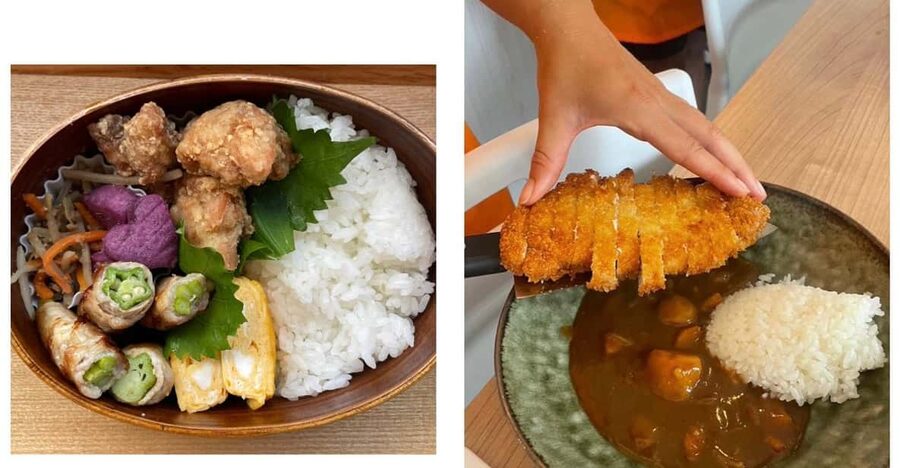
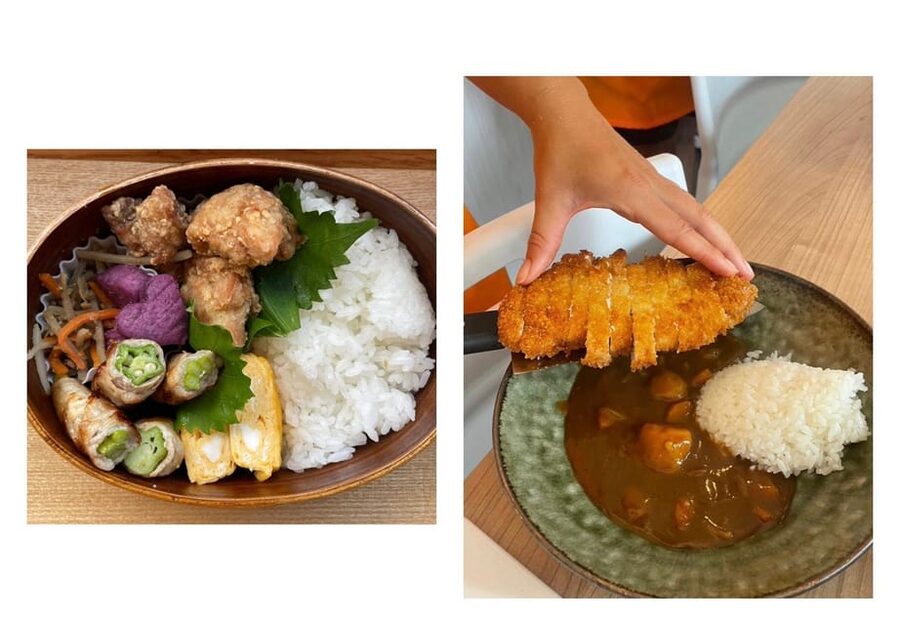
The central choice is simple: katsu curry or a bento box. Both options are practical dishes to learn because they translate well to a home kitchen.
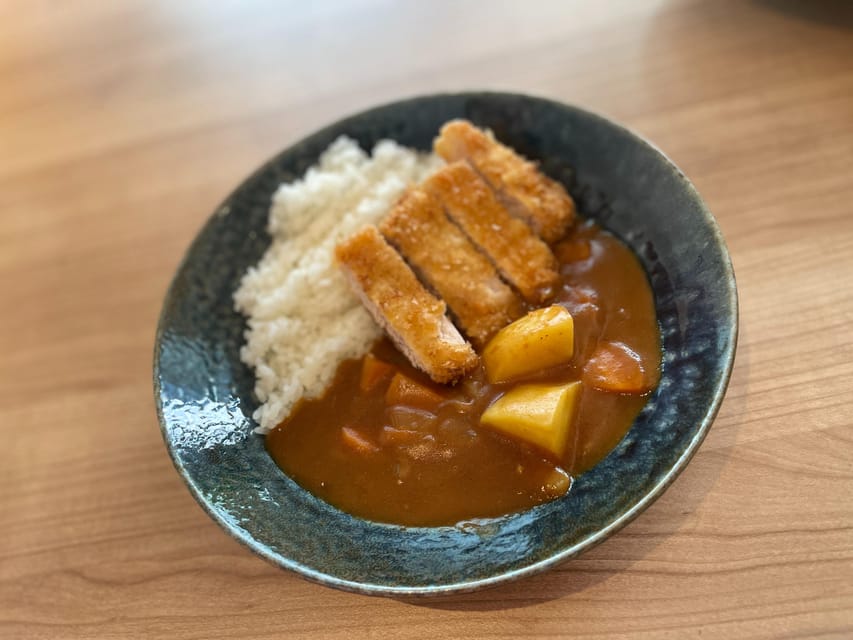
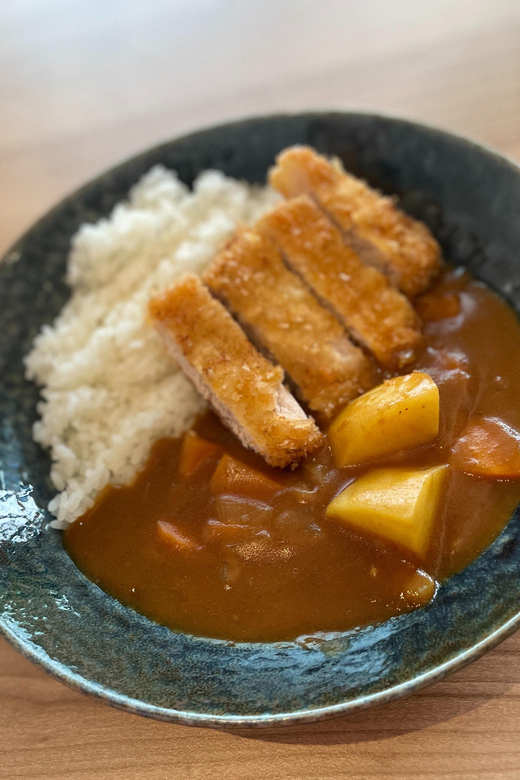
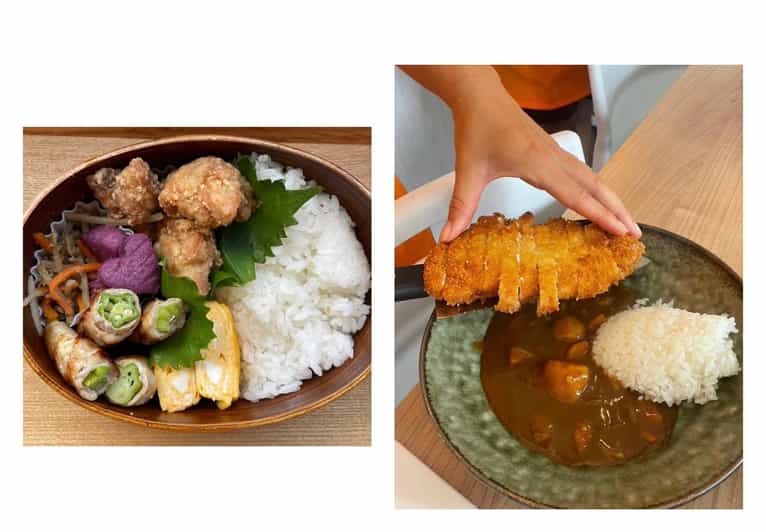
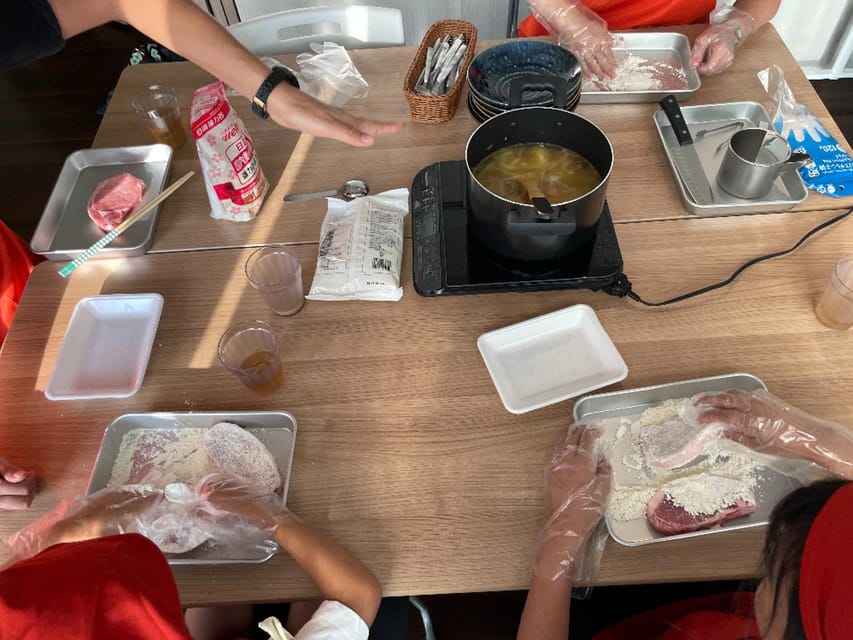
Katsu curry combines a crisp cutlet with Japanese-style curry and rice. It is a comforting, filling meal, and the step-by-step format helps you follow the process rather than watch a chef work at a distance. The class is intended to teach techniques you can repeat at home, so the goal is not merely to produce lunch on the day.
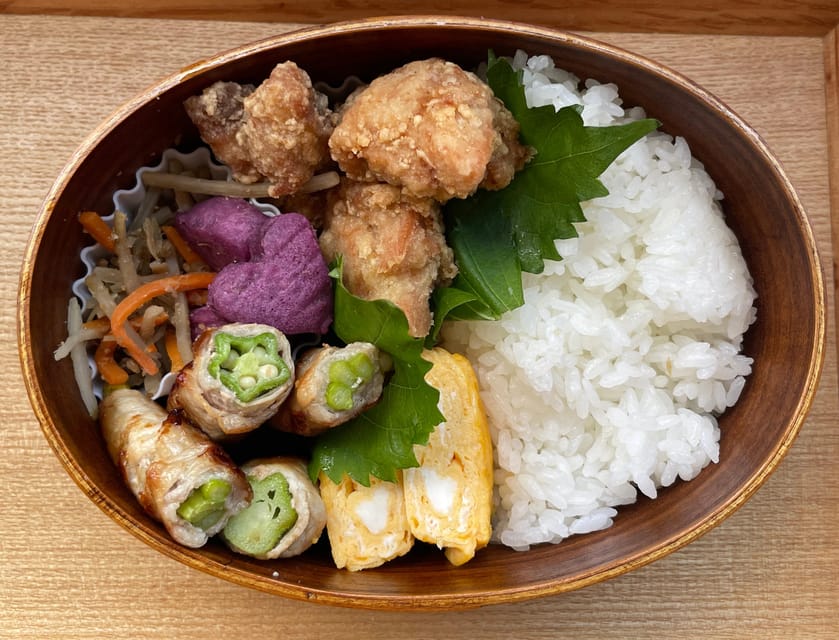
The bento option gives you a different kind of satisfaction. Instead of one main dish with sauce and rice, you arrange a complete lunchbox. One participant described feeling a real sense of achievement after putting the bento together, and that makes sense: presentation is part of the lesson. The finished box becomes both your meal and a record of what you learned.
Your booking should specify the dish you want, since the experience is offered as a choice rather than a promise that you will cook both. If you are traveling with family or friends, decide ahead of time which option interests the group. The supplied details do not explain if mixed choices within one booking are possible, so ask Osaka Cooking Base before reserving if that matters to you.
A kitchen lesson built for participation
Once you reach the kitchen, the guide takes you through the recipe one stage at a time. The format is designed for active participation. You are not there only to watch a demonstration and eat the result.
That structure is especially helpful if Japanese cooking is new to you. You can ask what an ingredient is, why it is used, and how the preparation fits into the finished dish. English is the teaching language, and translation assistance is part of the experience, so you can follow the instructions and the cultural explanation together.
The class is advertised for all ages, from young children to seniors. A family booking can work well because the activity leaves space for questions and shared tasks. One family found the children’s many questions welcomed, with Yuka patiently explaining how to cook from scratch. That is a good sign for parents who worry that a cooking class might be too formal or too fast.
Still, keep your expectations sensible. The information provided does not list specific dietary substitutions, allergy arrangements, or kitchen accessibility details. If you have food allergies, dietary restrictions, or mobility concerns, contact the provider before booking rather than relying on changes being possible on the day.
The small-group limit is one of the strongest practical features. The published maximum is eight people, while an earlier session had only one participant. A smaller class means better access to the instructor and less waiting for your turn. It also makes the conversation more natural, though the exact group size will depend on bookings.
The cultural exchange is part of the meal
This is not a silent recipe lesson. Conversation runs through the shopping walk and the cooking period. You can ask about Japanese culture, Osaka, local food, or daily life, and the guide aims to answer as you work.
That makes the experience useful for first-time visitors who want more than a restaurant meal. Food becomes the common language, but the questions can move beyond ingredients. You might leave with a clearer sense of how Japanese home meals are put together and how food shopping fits into ordinary routines.
Several guides have led sessions, including Miyako, Yuka, and Tomoko. Miyako was praised for keeping the class engaging and for making a solo booking feel worthwhile. Yuka led the katsu curry sessions and was noted for explaining both the cooking and the local area with patience. Tomoko also helped with food recommendations, which is handy if you are deciding where to eat after class.
Guide assignments can change, so you should not book on the assumption that one particular person will lead your session. The useful point is that the experience depends heavily on the guide’s ability to explain, translate, and chat. Based on the available sessions, that personal contact is a major part of what you are paying for.
More market and shopping streets:
- Cooking Ramen&Gyoza/KatsuCurry/Bento/Okonomiyaki+Store Tour@Osaka
★ 5.0 · 138 reviews - Kuromon Market Tour: All inclusive 6~8 Dishes & 3~4 samplings
★ 5.0 · 103 reviews - Osaka Cooking Class and Sake Tasting with Local Supermarket Visit
★ 5.0 · 79 reviews - Osaka: Cooking Class & Sake Tasting with Local Market Visit
★ 4.8 · 31 reviews
Eating what you made
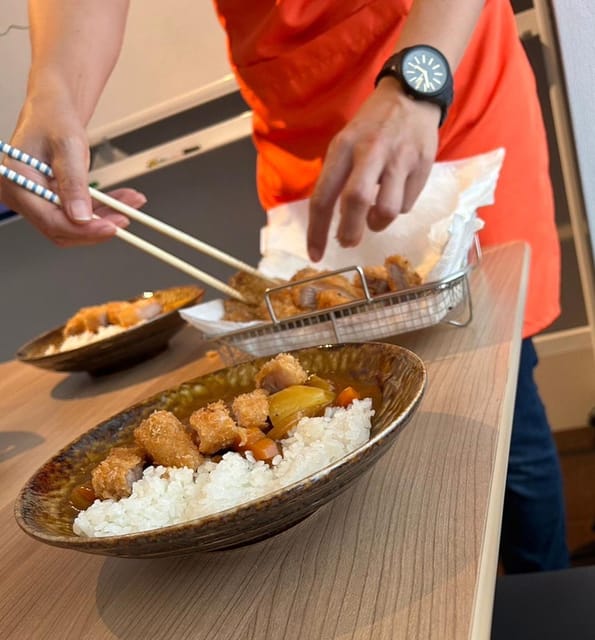
The meal at the end is not an extra tasting. It is the payoff for the work you have just done. You sit down with the katsu curry or bento you prepared, giving you a chance to see how the separate steps came together.
This makes the class more rewarding than a cooking demonstration. You can judge the texture, flavor, and presentation of your own dish, then think about what you would change at home. The bento course offers a particularly clear finished product because the box shows how the components fit together.
Food is included in the $83 per-person price. Drinks other than water are optional, and sake tasting is also listed as an extra. That keeps the basic cost clear, though you should budget more if you want drinks with your meal.
At $83, the value depends on what you want from an Osaka activity. If you only want a cheap lunch, this is not the right choice. You are paying for the meal, the instruction, the local shop walk, translation help, and a small-group cultural conversation. For a visitor who wants a practical skill and direct contact with a local guide, the price is easier to justify.
The recipes are also a useful form of travel souvenir. A photograph disappears into your phone. A dish you can make again at home has a longer life, especially if the class gives you enough confidence to repeat it.
Timing, booking, and the small details that matter
The main session lasts 150 minutes, or about two and a half hours. Starting times vary, so you need to check availability for your date. The activity description also gives a duration range of 150 minutes to one day, but the detailed plan clearly describes a 2.5-hour cooking and local-shop experience. Treat the class itself as a half-day activity and confirm the selected time when you book.
Reserve at least 24 hours ahead. This is not the kind of activity to leave until you reach Osaka, especially if you want a particular morning or afternoon. The group is small, and a last-minute booking may not fit your schedule.
Cancellation is flexible up to 24 hours before the start, with a full refund. You can also reserve now and pay later, which helps if you are still arranging your Osaka plans. These policies reduce the risk of fitting the class into a busy itinerary.
Plan your route to the correct shrine gate and allow enough time to arrive without rushing. The meeting point instruction is unusually important here because going to the small back gate could leave you searching in the wrong place.
The experience is listed with free cancellation, reserve-now-pay-later booking, English instruction, food, and a local tour of a few shops. Optional drinks are not part of the base inclusion. Those details are worth checking against your final booking, especially if you want sake tasting.
Who will enjoy this Osaka cooking class most
I would recommend this to families looking for an activity that keeps children involved. The teaching style is intended for all ages, and the chance to ask many questions makes it less rigid than a formal culinary workshop.
It also suits solo visitors. A one-person session has taken place, and the small-group setup can make it easier to talk with the guide than on a large bus tour. If you are traveling alone and want an activity with built-in conversation, this is a good fit.
Food lovers will appreciate the link between shops, ingredients, and the finished plate. So will visitors who prefer local activities over a standard sightseeing checklist. You do not need advanced cooking skills, since the lesson is step by step and aimed at food you can recreate at home.
You might choose something else if your priority is a long market tour, a full-day culinary itinerary, or a broad menu with many dishes. The local walk covers only a few shops, and the cooking choice is either katsu curry or bento. It is focused, not sprawling.
The class may also be less suitable if you need guaranteed dietary changes. The supplied information does not confirm vegetarian, vegan, gluten-free, or allergy-friendly options. Ask before booking and explain your needs clearly.
Should you book it?
Book this class if you want to turn an Osaka meal into a useful memory. The combination of Osaka Tenmangu Shrine, neighborhood shops, English guidance, and hands-on cooking gives you more contact with local life than a restaurant reservation alone.
I especially like it for families, solo visitors, and first-time Japan visitors who want patient explanations. The $83 price is fair when you value the small group, instruction, meal, and cultural conversation together.
Skip it if you are searching for a full-day food crawl or a highly technical chef-led course. For everyone else, this is a friendly, practical way to spend a morning or afternoon in Osaka, with a recipe you can carry home.
FAQ
Where does the activity begin?
The meeting point is in front of the large main gate of Osaka Tenmangu Shrine.
Should I go to the small back gate of the shrine?
No. The meeting instructions specify the large main gate, so take care not to head to the smaller back entrance.
How long does the cooking class last?
The detailed experience lasts 150 minutes, or about two and a half hours. Starting times are available when you check the date.
What dishes can I learn to make?
You can choose between katsu curry and a bento box.
Is food included?
Yes. The selected katsu curry or bento meal is included.
Are drinks included?
Water is included. Other drinks, including sake tasting, are optional and cost extra.
What language is used?
The instructor teaches in English, and translation assistance is provided during the local shop tour and cooking class.
How many people can join?
The activity is limited to eight participants.
Is the experience suitable for children?
Yes. The class is designed to be engaging and educational for all ages, including young children and seniors.
How far in advance should I reserve?
You should make your reservation at least 24 hours in advance.
Can I cancel for a full refund?
Yes. You can cancel up to 24 hours before the activity for a full refund.
Just added around Osaka
- Nara Day Trip from Osaka with a Licensed Guide★ 5.0 · 3 reviews
- Osaka Early Morning Osaka Castle Tour Avoid Crowds★ 5.0 · 3 reviews
- Guided Tour of Some Attractions in Osaka by Private Car★ 5.0 · 3 reviews
- Private Transfer Between Kyoto and Kansai Airport KIX★ 5.0 · 3 reviews
- Shared Arrival Transfer: Osaka Itami Airport to Osaka City★ 5.0 · 3 reviews
- Osaka: Sushi Making Class and Dotonbori Food Tour★ 4.7 · 3 reviews
- Osaka Night Photography Workshop★ 5.0 · 3 reviews
- Kyoto Full day Tour Kinkakuji, Kiyomizu-dera and Fushimi Inari★ 4.5 · 3 reviews
Osaka Cooking Classes, compared.


Sumo Stage Show with Bento or Snack + Fight & Photo
Read our review →
Traditional Mochi Pounding Experience with Tasting
Read our review →
Osaka Cooking Class: Okonomiyaki &Japanese cuisines experience
Read our review →


Osaka Sake Tasting & Takoyaki Cooking Experience
Read our review →
Cooking Ramen&Gyoza/KatsuCurry/Bento/Okonomiyaki+Store Tour@Osaka
Read our review →Browse the lists this tour appears in