
Reviewed · OSAKA CASTLE TOURS
Full Day Walking Tour in Osaka Castle Temples and Ukiyoe
Osaka’s appeal comes from its sharp contrasts, and this tour puts them side by side. You’ll start with Osaka Castle and Shitennoji, then move into Kuromon Market, Nihonbashi, Dotonbori, and Shinsaibashi. In one day, you get the city’s grand historical story and its loud, hungry, street-level personality.
I like the way the tour includes train tickets and admission fees, so you are not stopping to sort out every small payment. I also like the ukiyo-e activity, which gives you something to do rather than simply take photos. The main drawback is the pace: eight hours of walking, temples, markets, shopping streets, and public transport can feel long, especially if you want a slow meal or extended time at Osaka Castle.
- Osaka Castle Museum: Learn how the castle was built in 1597, destroyed, and rebuilt by the Japanese government in 1995.
- Shitennoji Temple: Visit what the tour presents as Japan’s first Buddhist temple and trace Buddhism’s route from India through China to Japan.
- Kuromon Market: Allow one hour to browse about 150 shops selling food, produce, clothing, and drinks.
- Dotonbori and Nihonbashi: See Osaka’s famous oversized signs and its lively downtown side after the quieter historical stops.
- Ukiyo-e activity: Try a traditional Japanese art form with roots reaching back to the 1670s.
- Small-group feel: The maximum group size is 20, though one booking became a one-on-one day with guide Wingki.
In This Review
- Two Osakas in One Full Day
- Osaka Castle and the 1597 Story
- Shitennoji and the Arrival of Buddhism
- Kuromon Market and the Cost of Lunch
- Dotonbori, Nihonbashi, and the Big Signs
- Trying Ukiyo-e Instead of Just Looking at It
- Walking, Trains, and Group Size
- Is $165.19 a Fair Price?
- Who Should Book This Osaka Tour?
- Cancellation and Practical Details
- Should You Book It?
- FAQ
- How long does the Osaka walking tour last?
- What sights are included?
- Are Osaka Castle and Shitennoji admission fees included?
- Are train tickets included?
- Is food included?
- Is the tour conducted in English?
- How large can the group be?
Two Osakas in One Full Day
This tour works because it does not treat Osaka as only a castle city or only a food town. You begin with rulers, temples, and religious history, then shift to markets, neon signs, shopping, and ukiyo-e. That change of mood is the heart of the day.
The schedule runs about eight hours, with two hours at Osaka Castle, two hours at Shitennoji, one hour at Kuromon Market, and three hours around Dotonbori and Shinsaibashi. Those time blocks give you a useful first look at Osaka, but they also mean you should expect a full, active day rather than a relaxed stroll.
Your English-speaking guide is a major part of the experience. Wingki is the guide named in the available comments, where she is described as friendly, patient, enthusiastic, and good at answering first-time Japan questions. One booking even became a one-on-one tour after the guest arrived late and had trouble finding the meeting point. That suggests a guide who can handle a little travel-day confusion without turning it into a crisis, though you should still plan carefully.
Osaka Castle and the 1597 Story
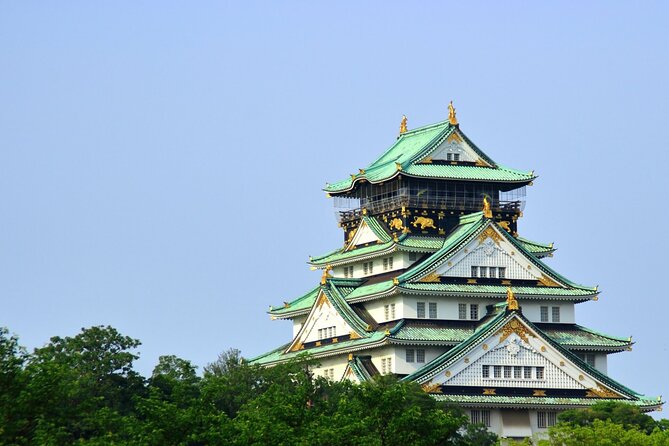
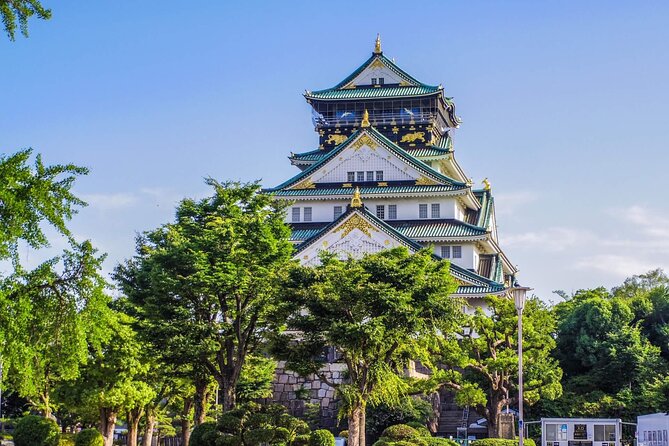
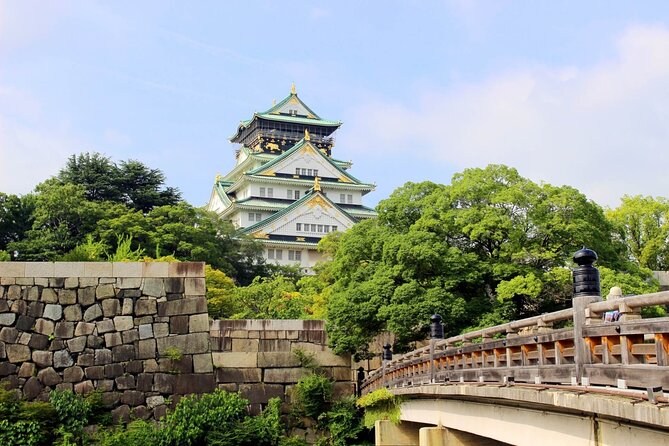
The day begins at Osaka Castle, where you enter the museum and spend about two hours learning about the castle and Osaka. The original castle was completed in 1597, but the building you see today is not the original structure. It was destroyed more than once and rebuilt by the Japanese government in 1995.
That distinction matters. You are not touring a perfectly preserved sixteenth-century fortress. You are seeing a modern reconstruction connected to one of Osaka’s most important historical sites. A good guide can help you separate the physical building from the political and military story behind it.
The included admission is useful here. You do not have to decide at the entrance whether the museum is worth an extra charge, and the guide can give the displays a clear place in the wider tour. If you only walk around the outside, the castle can become a quick photograph. The museum visit gives the stop more substance.
Two hours is enough for a focused introduction, but not enough for every corner of the castle grounds and museum in great detail. I would treat this as an orientation to Osaka’s past, not a specialist castle visit. If you have a strong interest in Japanese military history, you may want additional independent time on another day.
More tours of Osaka Castle and its grounds:
- Osaka Castle: Museum and Tower Entry Ticket
★ 4.5 · 2,380 reviews - Osaka Castle Walking Tour and Castle Tower Admission
★ 5.0 · 561 reviews - 5-Hour Osaka Bike Tour to the Neighborhood of Osaka Castle
★ 5.0 · 319 reviews
Shitennoji and the Arrival of Buddhism
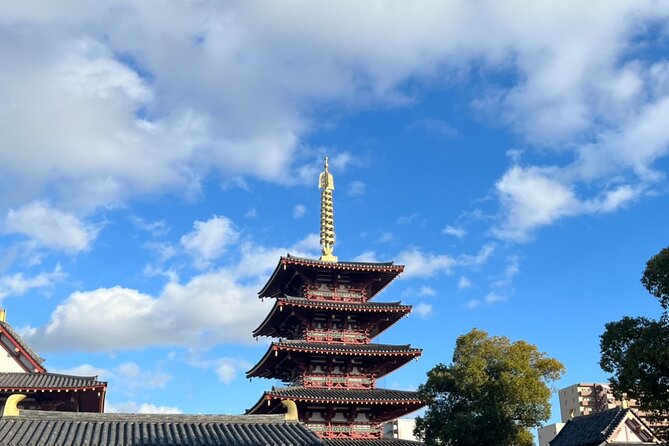
After Osaka Castle, the tour moves to Shitennoji Temple, with about two hours set aside for the temple and its story. The tour presents Shitennoji as the first Buddhist temple in Japan, making it an important place to discuss how Buddhism traveled from India to China and then reached Japan.
This is the kind of context that can make a temple visit much more meaningful. Without explanation, you may notice gates, buildings, and religious details but miss the larger movement of ideas across Asia. Your guide can connect the site to the route Buddhism took before it reached Japan and explain why Shitennoji matters.
The two-hour block also gives this stop proper weight. You are not rushing in for a quick look before heading to lunch. At the same time, the exact pace depends on the guide and group, so the experience may feel more like a guided introduction than a quiet personal visit.
The contrast with Osaka Castle is useful. The castle represents political power and repeated rebuilding. Shitennoji shifts the focus to faith, cultural exchange, and centuries of religious practice. Together, the first two stops give you a much better sense of Osaka than a day spent only around the famous signs of Dotonbori.
Kuromon Market and the Cost of Lunch
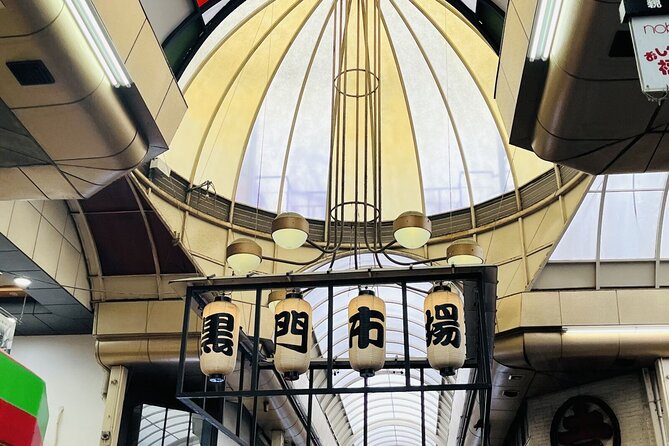
Kuromon Market brings the tour down to street level. About 150 shops line roughly 580 meters of market space, selling fresh seafood, vegetables, fruit, food, drinks, clothing, and other goods. You have about one hour here, and admission is free.
Food is not included, so this is the point where you will pay directly for what you choose. That is actually helpful because you can decide how much or how little to eat. You might find plenty of tempting options, but the tour does not promise a set meal, tasting menu, or specific vendor.
One hour is enough to look around and pick up a snack or small meal. It is less generous if you want to compare many stalls or sit down for a long lunch. Since the schedule continues to Dotonbori, I would avoid treating Kuromon as your only major meal unless you are comfortable eating quickly.
The market also helps explain Osaka’s food reputation in a practical way. You are not simply being shown a famous shopping street. You are seeing a market built around ingredients, prepared food, and everyday commerce. Keep your group together here, since markets can be crowded and easy places to lose sight of a guide.
Dotonbori, Nihonbashi, and the Big Signs
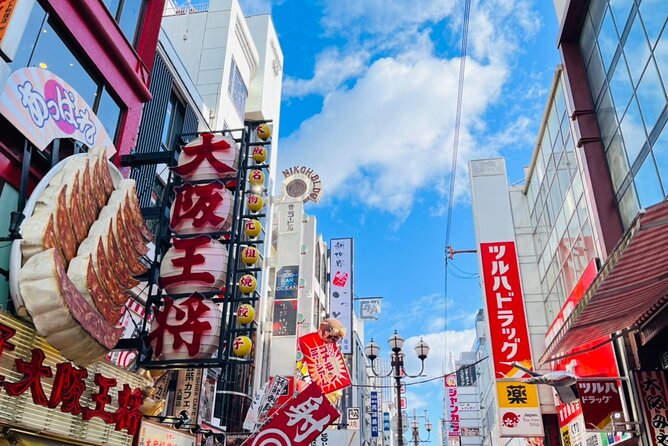
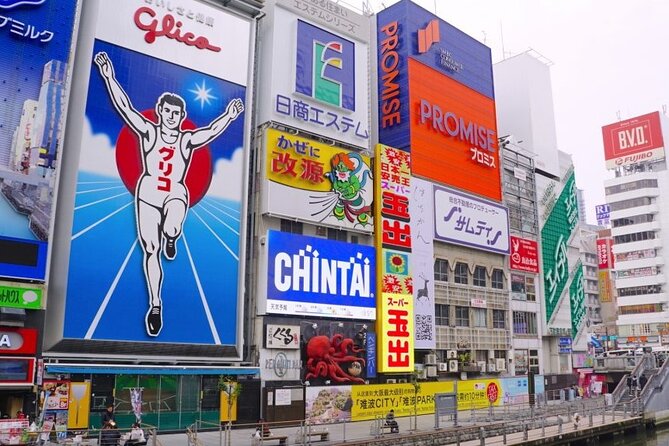
The final three-hour section covers Dotonbori and the area around Nihonbashi, then continues through Shinsaibashi. This is the most energetic part of the day, with huge three-dimensional billboards and the unmistakable visual style of Osaka’s Minami district.
Dotonbori is often reduced to its famous signs and restaurant fronts, but the tour gives you a wider look at the surrounding downtown area. You can see how the market, shopping streets, entertainment signs, and small local businesses fit together. The route is less about checking off one viewpoint and more about getting a feel for Osaka’s everyday public life.
The itinerary also includes a unique shrine in the area. The exact shrine is not specified, so you should not expect a particular named site as a guaranteed highlight. Your guide will help place that stop within the neighborhood’s history and culture.
The three-hour block is generous compared with the other sections, but it also includes the ukiyo-e activity, walking through Shinsaibashi, and the return toward Osaka and Shin-Osaka Station. You may not have unlimited time for shopping or wandering. If you want a serious shopping session in Shinsaibashi, plan to return on your own later.
More temples and shrines worth the walk:
- Osaka: Minoh, Katsuoji Temple, & Minoh Falls Full-day Tour
★ 4.9 · 172 reviews - Sagano Romantic Train & Arashiyama, Kiyomizudera, Fushimi Inari Taisha Day Tour
★ 4.5 · 171 reviews - Full Day Kyoto Tour : Bamboo Forest, Golden Temple, Fushimi Inari
★ 5.0 · 84 reviews - Osaka Temple Cool Foot Bath & Matcha Experience〈45min〉
★ 4.9 · 82 reviews
Trying Ukiyo-e Instead of Just Looking at It
Ukiyo-e gives the tour a welcome hands-on element. The art form began in the 1670s and flourished from the seventeenth through nineteenth centuries. It is now one of the images most closely associated with Japan.
You will not only hear about ukiyo-e as an old art form. The activity fee is included, so you get a chance to take part in the tradition during the Dotonbori portion of the day. That makes this stop more memorable than another short explanation in front of a display.
The supplied details do not specify the exact technique, finished item, or length of the activity. Keep your expectations practical: this is an introduction built into a larger city tour, not a full art workshop. Still, it gives you a cultural experience you can remember after the castle photos and market snacks have blurred together.
I especially like the balance here. Osaka’s history is not presented only through buildings. You also get a traditional art form, a market, and the modern city. That mix suits you if you want cultural context without spending an entire day inside museums.
Walking, Trains, and Group Size
This is a walking tour, but it is not a single continuous walk from Osaka Castle to Dotonbori. Train tickets needed during the tour are included, which makes the movement between districts easier and helps keep the day organized.
The tour is near public transportation, and most people can participate. Still, you should expect a full day on your feet, with time spent walking between sights, through markets, and along shopping streets. Wear comfortable shoes and keep your belongings easy to manage.
The maximum group size is 20. That is small enough to be more personal than a large coach tour, though it is not the same as a private tour. A group of 20 can be harder to keep together in Kuromon Market or Dotonbori, and questions may take longer to answer.
The guide quality can make a big difference. Wingki is praised for adapting to guests, answering questions, and keeping the tone friendly. If she leads your tour, you may get the same personal touch described by the people who booked with her, but guide assignment is not guaranteed in the information provided.
Is $165.19 a Fair Price?
At $165.19 per person, this is not a bargain-priced walking tour. The value depends on how much structure and explanation you want during your first Osaka visit.
The price includes entrance fees for each scheduled spot, train tickets required for the route, the ukiyo-e experience, and an English-speaking guide. Food and drinks are extra, so your total cost will rise if you eat several items at Kuromon Market or Dotonbori.
I think the price makes more sense if you want one carefully organized day that combines major sights with local-feeling districts. You are paying for the guide, transport planning, admissions, and the art activity, not just for walking from one landmark to another. It is less attractive if you prefer to explore slowly, choose your own restaurants, or spend several hours at one site.
The tour is booked an average of 65 days ahead, which suggests you should not leave it until the last minute if the date matters. Confirmation arrives at booking, and the mobile ticket is convenient for keeping the details on your phone.
Who Should Book This Osaka Tour?

I would choose this tour for a first visit when you want a clear introduction to Osaka’s past and present in one day. It suits you if you enjoy asking questions, changing neighborhoods, using public transport, and trying an activity such as ukiyo-e.
It also fits solo visitors and couples who want company and local guidance without joining a large bus group. The experience with Wingki shows that the tour can work well even when a guest has trouble finding the meeting point, but you should still arrive on time and follow the meeting instructions closely.
Families and older visitors should think about the walking load. The tour is open to most people, but eight hours with several major stops is not a light outing. The market and Dotonbori sections can also be less restful than the temple visits.
You may want a different plan if your main goal is shopping, nightlife, or a long food tour. This experience gives you a taste of each, but it does not leave much room for lingering.
Cancellation and Practical Details
You can cancel for a full refund up to 24 hours before the local start time. Cancellations or changes made less than 24 hours before the start are not accepted for a refund.
Food and drinks are not included, so bring room in your budget for Kuromon Market and Dotonbori. The mobile ticket, included train fares, and included admissions remove several small hassles from the day.
Should You Book It?
Book this tour if you want Osaka explained as a city of castles, temples, markets, bold downtown streets, and traditional art, all in one organized day. The strongest reasons are the good mix of stops, included transport and admissions, and the chance to meet a guide such as Wingki who can answer questions and adjust to your needs.
Skip it if you want a slow schedule, a private food crawl, or long independent time at Osaka Castle and Shinsaibashi. At $165.19, the tour earns its price through structure and personal guidance, not through cheap meals or unlimited free time.
FAQ
How long does the Osaka walking tour last?
The tour lasts approximately eight hours.
What sights are included?
The tour includes Osaka Castle Museum, Shitennoji Temple, Kuromon Market, Dotonbori, a nearby shrine, the Nihonbashi area, Shinsaibashi, and an ukiyo-e activity.
Are Osaka Castle and Shitennoji admission fees included?
Yes. Entrance fees for each scheduled spot during the tour are included.
Are train tickets included?
Yes. Train tickets required for the tour are included in the price.
Is food included?
No. Food and drinks are not included, so you pay separately for anything you purchase at Kuromon Market, Dotonbori, or elsewhere.
Is the tour conducted in English?
Yes. The tour includes an English-speaking guide.
How large can the group be?
The tour has a maximum of 20 participants.
More Full-Day in Osaka
- Osaka’s Best and Brightest: Private Full-Day Tour by Vehicle
★ 5.0 · 147 reviews - Full Day Tour of Kyoto with Private Transportation
★ 5.0 · 130 reviews - Full Day Hiroshima and Miyajima Tour by Bullet Train from Osaka
★ 4.5 · 117 reviews - Amanohashidate & Ine Funaya Sightseeing Full Day Trip from Kyoto
★ 4.5 · 62 reviews
More Guided Walks on Foot
- Deep Backstreet Osaka Tours (Option to add Dinner)
★ 5.0 · 1,290 reviews - Osaka Local Foodie Walking Tour in Dotonbori and Shinsekai
★ 5.0 · 985 reviews - Osaka: Deep Backstreets Walking Tour with Dinner Option
★ 4.9 · 902 reviews - Ultimate Osaka Walking Tour: Castle, Dotonbori & Hidden Gems
★ 5.0 · 862 reviews
Just added around Osaka
- Nara Day Trip from Osaka with a Licensed Guide★ 5.0 · 3 reviews
- Osaka Early Morning Osaka Castle Tour Avoid Crowds★ 5.0 · 3 reviews
- Guided Tour of Some Attractions in Osaka by Private Car★ 5.0 · 3 reviews
- Private Transfer Between Kyoto and Kansai Airport KIX★ 5.0 · 3 reviews
- Shared Arrival Transfer: Osaka Itami Airport to Osaka City★ 5.0 · 3 reviews
- Osaka: Sushi Making Class and Dotonbori Food Tour★ 4.7 · 3 reviews
- Osaka Night Photography Workshop★ 5.0 · 3 reviews
- Kyoto Full day Tour Kinkakuji, Kiyomizu-dera and Fushimi Inari★ 4.5 · 3 reviews
Osaka Castle Tours, compared.
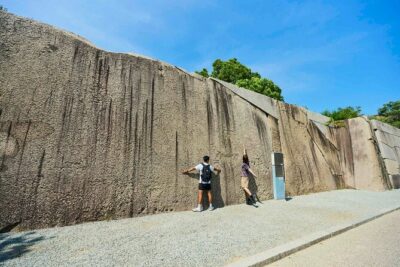
Osaka Castle Walking Tour and Castle Tower Admission
Read our review →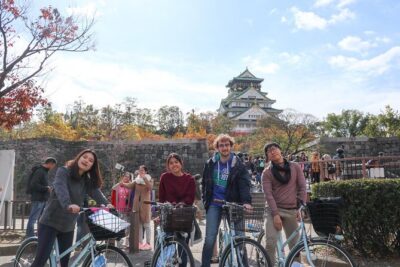
5-Hour Osaka Bike Tour to the Neighborhood of Osaka Castle
Read our review →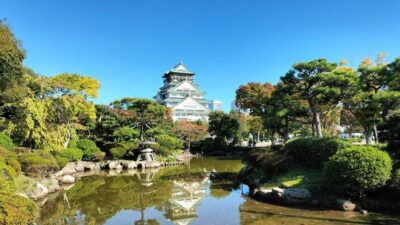
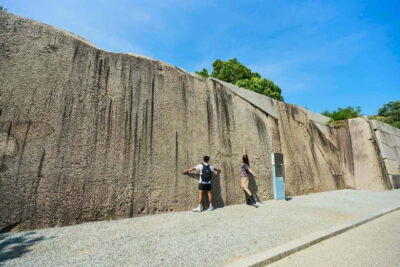
Castle History Walking Tour / Castle Tower Admission
Read our review →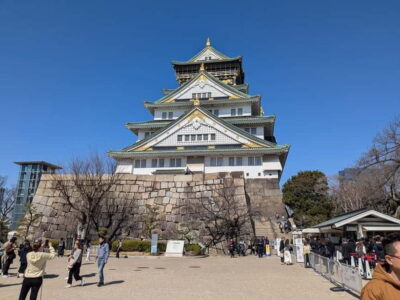

PRIVATE 6hr, Food tour from Osaka Castle, Kuromon, Dotonbori.
Read our review →
A Tour to Explore the Symbol of Osaka: Osaka Castle
Read our review →Browse the lists this tour appears in