
Reviewed · OKONOMIYAKI & TAKOYAKI CLASSES
Experience Cooking Takoyaki in its Birthplace, Osaka
Osaka’s famous takoyaki is more than a quick street snack here. At 369 Kitchen Studio, you learn the home-style way to pour, fill, and rotate the batter until the outside turns crisp and the center stays soft. The class is led by hosts including Zen, Lisa, Masa, and Risa, depending on the session.
I like two things right away: you can use cheese or crab sticks instead of octopus, and the teachers give patient, practical help as you learn the tricky turning technique. You also get Ramune, the old-fashioned Japanese soda with a glass marble in the bottle. The main consideration is that this is a hands-on food class, not a broad Osaka sightseeing tour, so allow about two hours in one location.
In This Review
- Key points about this Osaka cooking class
- Why making takoyaki teaches you about Osaka
- Finding 369 Kitchen Studio in Sonezakishinchi
- The first 20 minutes: batter, fillings, and heat
- Turning the takoyaki is the real lesson
- Eating the takoyaki while it is still hot
- What the teachers add to the experience
- Is $42.35 a fair price?
- Who should book this experience?
- My call: book it for a hands-on Osaka memory
- FAQ
- Where does the takoyaki cooking experience take place?
- How long does the experience last?
- What is included with the takoyaki?
- Do I have to use octopus?
- How many people can join the class?
- Is the experience suitable for children?
- How do I find the meeting location?
- Does the activity end at a different location?
- When will my booking be confirmed?
- Can I cancel for a full refund?
Key points about this Osaka cooking class
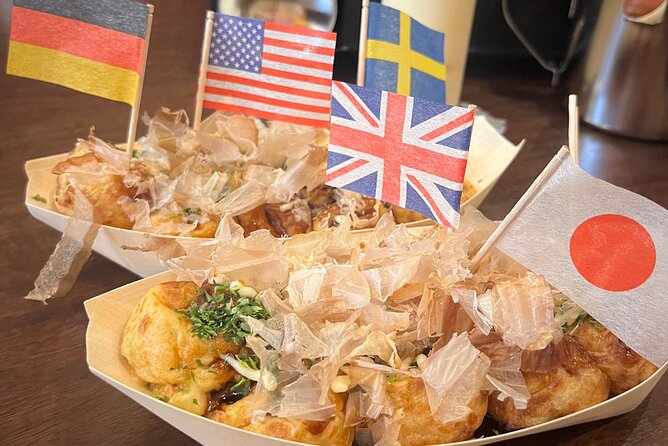
- You learn the rotating technique: Cook the batter in a special takoyaki machine and turn each piece as it sets.
- The filling is flexible: Use traditional octopus, or make versions with cheese and crab sticks.
- Fresh food is the payoff: The takoyaki should be ready in about 20 minutes and is eaten hot.
- Ramune comes with the experience: Try a classic Japanese carbonated drink with the food.
- Small-group format: The class accepts a maximum of 12 people.
- Central Osaka meeting point: Meet at 2-1-13 Sonezakishinchi, Kita Ward, Osaka, near public transportation.
Why making takoyaki teaches you about Osaka
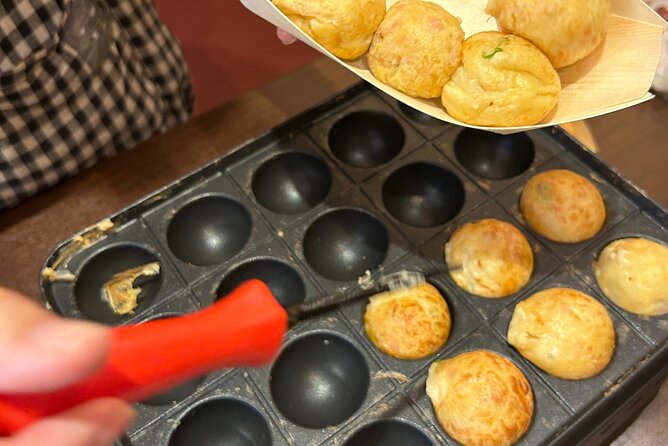
You can buy takoyaki all over Osaka. Street stalls and casual shops make it look easy: batter goes in, ingredients follow, and a cook spins the little balls with two picks. The first surprise is how much timing and hand control the process takes.
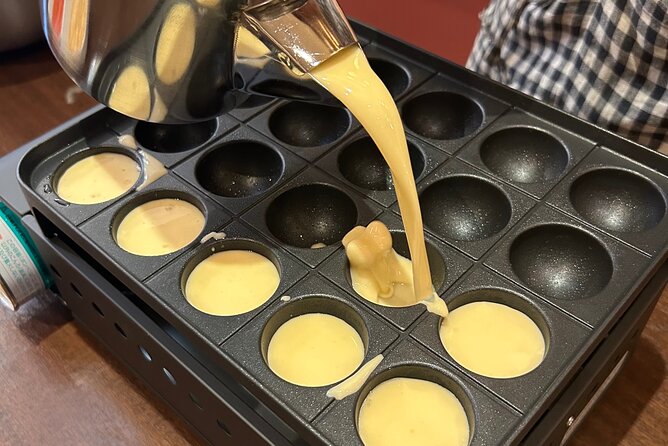
This class gives you the reason behind that familiar motion. You cook the batter in a special takoyaki machine, then rotate the pieces while the outside firms up. The goal is a lightly crisp shell with a soft interior. The class explains the steps as you work, so you are not simply watching someone else prepare the food.
That matters because takoyaki is also a social food. In Osaka homes, people can gather around the machine and cook together rather than serving one finished dish from the kitchen. You get a small taste of that shared meal tradition here, with everyone making and eating the food at the same table.
The class also gives useful food context about Osaka. You learn why takoyaki is such a local point of pride, while still seeing how flexible the dish can be. Octopus is traditional, but cheese and crab sticks show how easily you can adapt the filling to your own taste.
More okonomiyaki and takoyaki classes:
- Osaka Cooking Class: Okonomiyaki &Japanese cuisines experience
★ 5.0 · 261 reviews - Osaka Sake Tasting with Takoyaki Cooking
★ 5.0 · 156 reviews - Osaka Sake Tasting & Takoyaki Cooking Experience
★ 5.0 · 149 reviews
Finding 369 Kitchen Studio in Sonezakishinchi
The meeting point is at Japan, 〒530-0002 Osaka, Kita Ward, Sonezakishinchi, 2-chōme−1−13, in the 巽住宅 梅田ビル. The area is near public transportation, which makes this a practical choice if you are staying around Osaka or Umeda.
You receive a mobile ticket, and confirmation is sent within 48 hours of booking, subject to availability. The class has a maximum of 12 people. That is large enough to create a friendly group but small enough for the instructors to give individual help, especially during the turning stage.
Finding a cooking studio in a city building can take a little care. Directions with photos have been provided for some sessions, which is useful because a building entrance is not always obvious when you are moving through central Osaka. I would arrive with enough time to locate the exact building rather than counting on walking in at the last second.
The activity ends back at the same meeting point. That makes it easy to continue exploring Osaka afterward, but it also means the class does not include a guided walk through nearby neighborhoods.
The first 20 minutes: batter, fillings, and heat
Once the class begins, you learn how the takoyaki machine works and how to fill the round cooking spaces. The machine is the heart of the activity. It lets you cook many small portions at once, but each one needs attention as the batter changes texture.
You can make traditional takoyaki with octopus, or choose cheese and crab sticks for some of your pieces. This is a strong feature for families and mixed groups, since not everyone wants the same filling. A vegetarian participant was accommodated in one class, and the flexible ingredient choices make that possible in a straightforward way.
The class explains the process while you cook. You learn how to judge when the batter is ready to turn and how to shape each piece. In about 20 minutes, the takoyaki should have a crisp outside and a soft center.
Do not expect every piece to look perfect on the first attempt. That is part of the fun, and the hosts are there to help. Zen and Lisa have been praised for patient instruction and for sharing small tips that improve your technique. Masa and Risa have also been described as welcoming and attentive during the cooking process.
The most useful part is not just the recipe. It is learning how to manage the machine, the heat, and the turning motion. Once you understand that, you can try making the dish again at home.
Turning the takoyaki is the real lesson
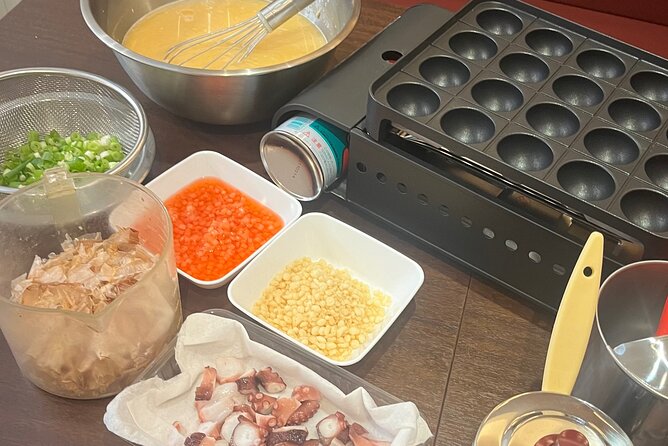
The turning stage is where this experience earns its place on an Osaka itinerary. At first, the batter may look loose and uneven. You use picks to rotate each piece gradually, pulling in the cooked edges and creating a round shape.
The instructors guide you through the motion rather than expecting you to know it already. They also share tips and tricks to help you improve. That direct help makes the class suitable for beginners, including children, as long as an adult takes normal care around the hot machine.
You will probably have a few odd-shaped pieces along the way. That is not a problem. Takoyaki is forgiving, and the finished food is still enjoyable even if your balls are not as neat as the teacher’s.
I like this part because it gives you a skill you can take home. Eating a plate of takoyaki takes only a few minutes. Learning how to cook it gives you a better sense of how the dish is made and why the cooks at busy Osaka shops work so quickly.
The class also leaves room for conversation. The hosts have talked with participants about Osaka, food, anime, sumo, travel, and daily life. If you enjoy meeting local people through a shared activity, the relaxed cooking format gives you more contact than a quick stop at a food stall.
More Japanese home cooking classes:
- Osaka: Ramen and Gyoza Cooking Class in Dotonbori
★ 5.0 · 378 reviews - Osaka: Sumo Stage Show with Bento or Snack + Fight & Photo
★ 4.3 · 364 reviews - Osaka: Traditional Mochi Pounding Experience with Tasting
★ 4.9 · 306 reviews - Ramen and Gyoza Cooking Class in Osaka
★ 5.0 · 202 reviews
Eating the takoyaki while it is still hot
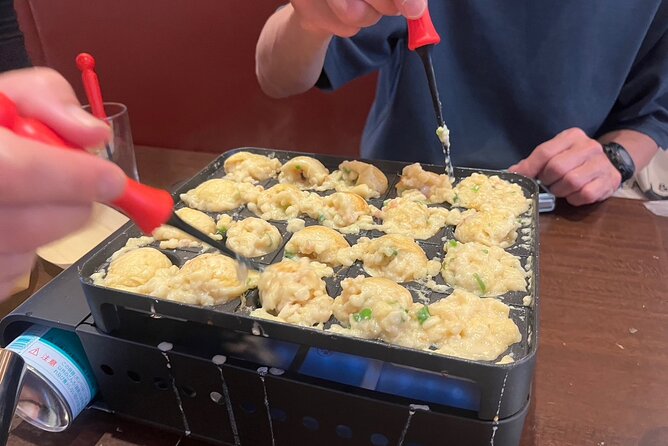
After cooking, you eat the takoyaki fresh. The contrast is the point: a lightly crisp surface gives way to a soft center, with the filling inside. Let the pieces cool enough to eat safely, since freshly cooked takoyaki can hold a great deal of heat.
The food is served with Ramune, a Japanese carbonated drink known for the glass ball inside its bottle. Opening the bottle is part of the experience, especially if you have never tried it before. The soda adds a sweet, fizzy counterpoint to the savory food.
Because you make several versions, you can compare the traditional octopus filling with cheese or crab stick. That makes the meal more interesting than a standard tasting, and it helps you decide which ingredients you would use in your own kitchen.
The finished takoyaki has also impressed people who had eaten the dish outside Japan. That is understandable: you are eating it immediately after cooking rather than after it has been sitting in a display case or takeaway container. Still, the result depends partly on your group’s technique, so do not expect every piece to match a professional cook’s presentation.
What the teachers add to the experience
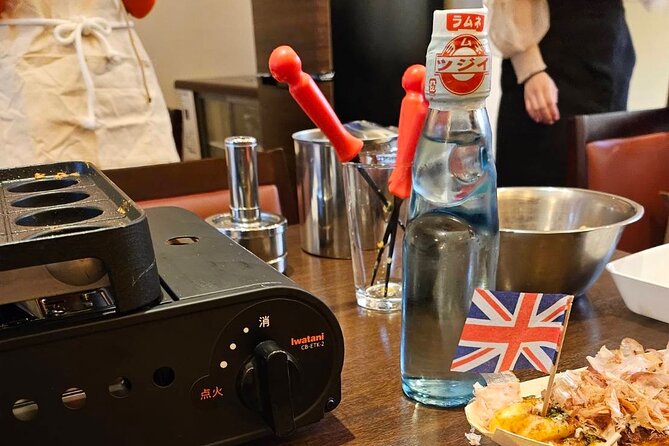
The strongest part of the class is the instruction. Zen and Lisa are described as practiced and patient, with time for questions and conversation. Masa and Risa are also associated with warm welcomes and careful attention to first-time cooks.
That consistency matters. Takoyaki looks simple, but beginners need help with when to turn the batter and how much to rotate each piece. A teacher who steps in with a small correction can save a batch from becoming a loose pile of cooked batter.
The hosts also add local context instead of treating the class as a basic recipe lesson. You hear about Osaka’s food culture and the role of takoyaki in family and friend gatherings. The class has a friendly social side, but it remains focused on cooking.
Several sessions have included families and parent-child pairs. One daughter and her parent treated it as a highlight of their Osaka visit, while another family group enjoyed taking photos together while cooking. If you are visiting with children, the shared task gives them something active to do, though hot equipment still requires adult supervision.
Vegetarians should ask about the available ingredients when booking or confirming. The activity has accommodated a vegetarian participant, and cheese and crab sticks are listed as alternatives to octopus. However, the supplied details do not specify every ingredient or preparation surface, so a strict vegetarian or someone with allergies should confirm the setup in advance.
Is $42.35 a fair price?
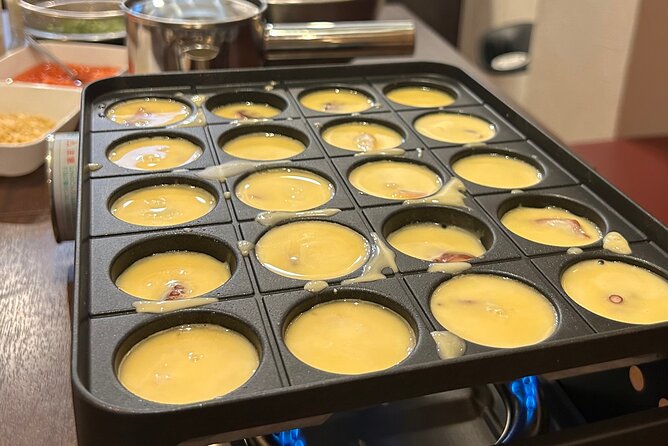
At $42.35 per person, this is not the cheapest way to eat takoyaki in Osaka. You can buy the finished dish for far less at a shop. The value here comes from the instruction, the social setting, the chance to customize your fillings, and the memory of making the food yourself.
I think the price is easier to justify if you are curious about Japanese food culture or want a shared activity with family and friends. It is also good value for a visitor who has already seen Osaka’s major sights and wants something interactive rather than another viewing stop.
The value is less convincing if your only goal is to taste takoyaki quickly. You spend about two hours at the studio, and the class ends where it began. For a short Osaka visit, you need to decide if the cooking lesson matters more to you than fitting in another neighborhood, museum, or meal.
A group of up to 12 keeps the cost and format manageable, though the exact feel depends on how many people book your session. The small-group limit should allow useful help during the turning process without making the class feel like a large demonstration.
Who should book this experience?
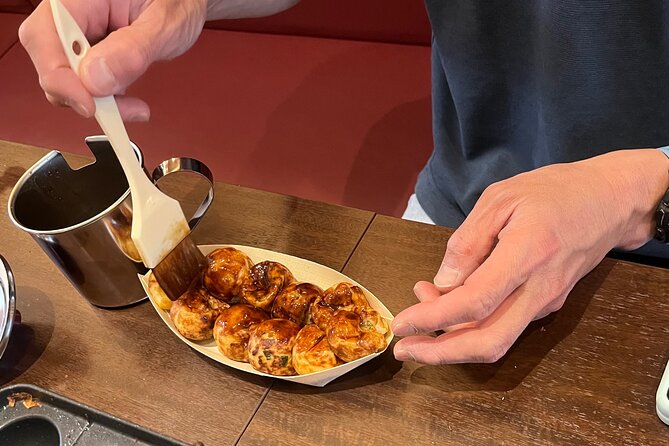
I would recommend it to first-time takoyaki cooks, families with children, couples, and friends who enjoy food-based activities. You do not need cooking experience, and the teachers are used to helping beginners through the process.
It also suits anyone who wants more than a photograph of Osaka food. You learn a simple technique, hear about the dish’s place in local life, and eat what you have made. The flexible fillings make it easier to include people who do not want octopus.
This is not the best match for someone seeking a full Osaka food tour, a restaurant crawl, or a long cultural lecture. It centers on one dish in one studio. The experience is practical and social, with the cooking itself taking up most of the time.
Book ahead if your schedule is tight. It is commonly booked around 15 days in advance, and confirmation depends on availability. Free cancellation is allowed until 24 hours before the start time for a full refund. Late cancellations and changes are not accepted, according to the stated policy.
The activity may also be canceled if the minimum number of people is not reached or if poor weather affects the session. In those cases, you are offered another date or experience, or a full refund.
My call: book it for a hands-on Osaka memory
Book this class if you want to understand takoyaki by making it, not just eating it. The patient teaching, choice of fillings, hot food, and Ramune create a compact experience with a clear local connection.
I especially like that you can take the technique home. You leave with more than a full stomach: you understand how to use the machine, how to turn the batter, and how a familiar Osaka snack becomes a shared family meal.
Skip it if you have very little time in Osaka or only want a quick, inexpensive taste. For everyone else, $42.35 is a reasonable price for two hours of cooking, conversation, and freshly made takoyaki at its source.
FAQ
Where does the takoyaki cooking experience take place?
It takes place at 369 Kitchen Studio, at 2-1-13 Sonezakishinchi, Kita Ward, Osaka, 〒530-0002, in the 巽住宅 梅田ビル.
How long does the experience last?
The activity lasts approximately two hours.
What is included with the takoyaki?
You cook and eat takoyaki, with octopus, cheese, and crab stick options available. Ramune, a traditional Japanese carbonated drink, is also included with the experience.
Do I have to use octopus?
No. You can use cheese or crab sticks instead of octopus and create your own combinations.
How many people can join the class?
The maximum group size is 12 people.
Is the experience suitable for children?
The activity states that even small children can enjoy it safely. Since the class uses a hot cooking machine, children should have appropriate adult supervision.
How do I find the meeting location?
The meeting point is near public transportation. Directions with photos have been provided for some sessions to make the classroom easier to find.
Does the activity end at a different location?
No. The experience ends back at the meeting point.
When will my booking be confirmed?
Confirmation is sent within 48 hours of booking, subject to availability.
Can I cancel for a full refund?
Yes. You can cancel at least 24 hours before the experience start time for a full refund. Cancellations or changes made less than 24 hours before the start time are not accepted for a refund.
Just added around Osaka
- Nara Day Trip from Osaka with a Licensed Guide★ 5.0 · 3 reviews
- Osaka Early Morning Osaka Castle Tour Avoid Crowds★ 5.0 · 3 reviews
- Guided Tour of Some Attractions in Osaka by Private Car★ 5.0 · 3 reviews
- Private Transfer Between Kyoto and Kansai Airport KIX★ 5.0 · 3 reviews
- Shared Arrival Transfer: Osaka Itami Airport to Osaka City★ 5.0 · 3 reviews
- Osaka: Sushi Making Class and Dotonbori Food Tour★ 4.7 · 3 reviews
- Osaka Night Photography Workshop★ 5.0 · 3 reviews
- Kyoto Full day Tour Kinkakuji, Kiyomizu-dera and Fushimi Inari★ 4.5 · 3 reviews
Okonomiyaki & Takoyaki Classes, compared.

Osaka Cooking Class: Okonomiyaki &Japanese cuisines experience
Read our review →

Osaka Sake Tasting & Takoyaki Cooking Experience
Read our review →
Cooking Ramen&Gyoza/KatsuCurry/Bento/Okonomiyaki+Store Tour@Osaka
Read our review →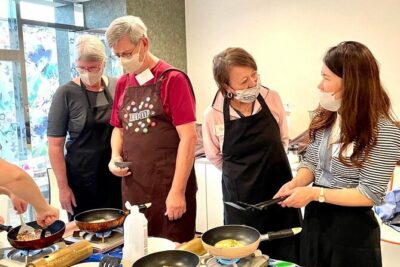
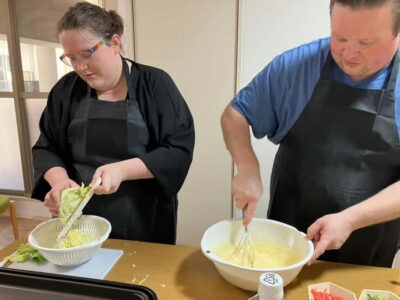
Cooking Class Okonomiyaki & Takoyaki course in Nanba
Read our review →
Osaka Okonomiyaki Cooking Class “Learn here and make it at home”
Read our review →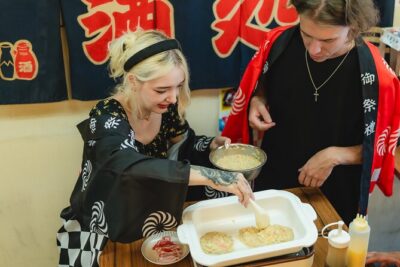
Osaka Street Food Festival :Takoyaki&Okonomiyaki for Families
Read our review →Browse the lists this tour appears in