
Reviewed · OSAKA STREET FOOD TOURS
Deep Dive: Osaka Food Markets from Local to Luxurious!
Osaka’s food culture makes more sense when you see where people actually shop. This private walking tour moves from the polished basement food hall at Takashimaya to local wet markets, Korea Town, Kuromon Market, and the kitchenware shops of Doguyasuji. It is less about sitting down to a prepared meal and more about learning how the city buys, sells, cooks, and eats.
I like the range of neighborhoods, from a grand department store to a local market and historic Korea Town. I also like the flexibility of a private guide, especially when guides such as Ferdinand, Kevin, Lito, Alejandro, Thomas, and Damian can explain food, culture, and shopping in clear English while adapting to your interests.
The main catch is simple: food and transportation are extra. Despite the tour’s food focus, tastings are not included, and one experience ended without any sampling. You should plan to buy snacks yourself, and expect a fair amount of walking.
In This Review
- Key points to know before you book
- Osaka food culture from basement counters to market stalls
- Takashimaya’s depachika shows the polished side of food
- Pulala Tenma brings you closer to ordinary Osaka shopping
- Tenjinbashi-suji turns shopping into a lesson in city life
- Tsuruhashi Korea Town adds another side to Osaka’s food story
- Kuromon Market delivers the famous Osaka food scene
- Doguyasuji is a treat for cooks and design-minded shoppers
- Namba and Dotonbori provide a lively finish
- What your guide adds to the experience
- Price, food costs, and the question of value
- Walking, timing, and meeting details
- Who should book this Osaka market tour?
- FAQ
- How long does the Osaka food market tour last?
- Is the tour available in the morning and afternoon?
- Is this a private tour?
- What food is included in the price?
- Is transportation included?
- Where does the tour start?
- Where does the tour end?
- Can children join the tour?
- Should you book it?
Key points to know before you book
- Seven Osaka stops in about four hours: The route can include Takashimaya, Pulala Tenma, Tenjinbashi-suji, Tsuruhashi Korea Town, Kuromon Market, Doguyasuji, and Namba.
- A private experience: Only your group participates, making it easier to ask questions, shop, pause for photos, or request a change of focus.
- Food shopping, not a fixed tasting menu: You can buy snacks and meals along the way, but samples, refreshments, and other food items are not included.
- Local markets beside tourist favorites: You see everyday shopping at Pulala Tenma and a local supermarket as well as the more famous Kuromon Market.
- Guides make the difference: Ferdinand, Kevin, Lito, Thomas, Damian, Alejandro, and Oshi have been praised for cultural explanations, translation help, humor, and flexibility.
- Bring energy and a little spending money: The tour involves moderate walking, local transport costs about 330 yen per adult, and you may want cash for snacks or souvenirs.
Osaka food culture from basement counters to market stalls
This tour’s real strength is contrast. Osaka food is not just takoyaki stands and restaurant signs in Dotonbori. It also lives in department-store displays, neighborhood groceries, seafood counters, Korean ingredients, knives, ceramics, and the quiet routines of people buying dinner.
The route gives you a useful frame for the city. You begin with the expensive and carefully presented side of Japanese food shopping, then move through ordinary local markets, long shopping arcades, Korea Town, and places aimed at visitors. By the end, you have seen both the glossy version of Osaka food culture and the practical version.
That is why I would not treat this as a standard eat-your-way-through-town food tour. It is closer to a guided market lesson, with chances to purchase food along the route. If you want a planned list of included tastings, this may feel thin for the price. If you want help understanding what you are looking at and how locals shop, it offers more.
More street food walks and tastings:
- Osaka: Shinsekai Food Tour with 13-15 Dishes at 5 Eateries
★ 4.8 · 2,204 reviews - Osaka Food Tour: 13 Dishes at 5 Local Eateries
★ 5.0 · 2,149 reviews - Hungry Osaka Street Food Tour:15 Tastings & 3 Drinks with a Local
★ 5.0 · 1,727 reviews
Takashimaya’s depachika shows the polished side of food
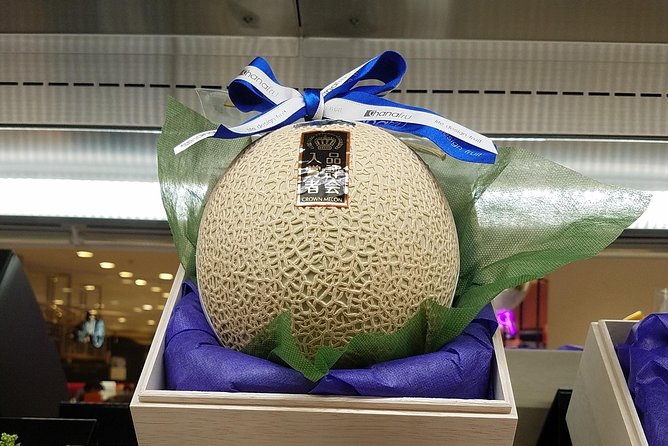
The first stop is the underground food hall at Takashimaya Osaka Store. In Japan, these department-store basements are called depachika, and they are among the best places to see food presented as both daily shopping and high craft.
Expect displays of raw ingredients, prepared Japanese foods, Western sweets, and carefully packaged gifts. The short visit, about 20 minutes, is less about buying a full meal and more about learning to read the visual language of Japanese food retail.
This is also where a good guide earns the fee. Ferdinand’s culinary background, for example, allowed him to explain ingredients, dishes, knives, and how foods developed in Japan. A guide can point out items you might otherwise pass without understanding.
The drawback is that the food can look more impressive than affordable. The tour itself does not cover purchases, so do not assume every beautiful tray is part of your ticket.
Pulala Tenma brings you closer to ordinary Osaka shopping
Pulala Tenma offers a sharper change of pace. This local wet market presents seafood, meat, vegetables, and other ingredients without the glossy department-store finish.
The stop lasts about 30 minutes and gives your guide room to explain how these ingredients fit into everyday cooking. You may find this more useful than a row of ready-to-eat snacks because it shows the building blocks behind Japanese meals.
For first-time visitors, this is one of the most valuable stops. You learn what a local market looks like when it serves the neighborhood, not just people taking photos. It is also a good place to ask practical questions about freshness, seasonality, cuts of meat, seafood, or packaged ingredients.
Do keep your expectations clear. This is not a guaranteed tasting stop. You can purchase something if you wish, but the cost is yours, and the tour provider specifically excludes snacks and food items.
Tenjinbashi-suji turns shopping into a lesson in city life
Tenjinbashi-suji Shopping Street is described as Japan’s longest covered shopping arcade. The tour spends about 40 minutes here, making it one of the longer stops.
The arcade helps connect food to the wider life of Osaka. You are not simply looking at stalls. You are seeing a traditional shopping street that still serves local needs while also attracting people who want to browse.
The group also visits a very Osaka-style supermarket. This may sound less exciting than a famous market, but I think it is one of the tour’s smarter choices. Supermarkets reveal what people buy for home, how products are packaged, and how prepared foods fit into a normal day.
This section can feel slow if you only want dramatic food displays. For anyone curious about daily life, though, it adds context that a restaurant crawl often misses.
A completely different way to spend a day in Osaka:
- Osaka Go Karting Tour with Funny Costume
★ 5.0 · 2,658 reviews - Osaka Castle: Museum and Tower Entry Ticket
★ 4.5 · 2,380 reviews - Osaka: Tea Ceremony Experience
★ 4.9 · 1,426 reviews - Osaka Kickstart: Hotspots & Hidden Gems Tour
★ 5.0 · 1,306 reviews
Tsuruhashi Korea Town adds another side to Osaka’s food story
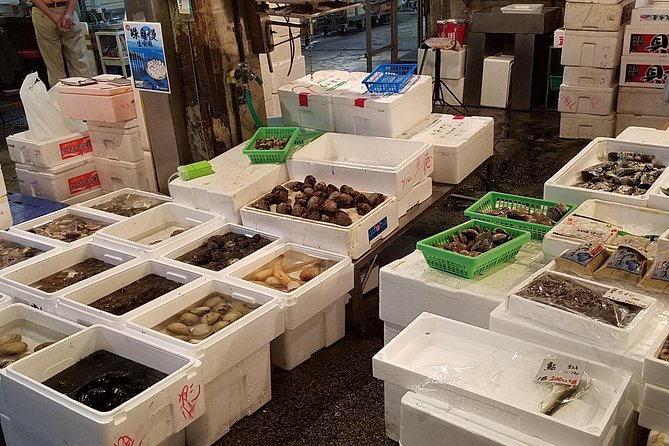
Osaka Tsuruhashi Ichiba takes you into one of the city’s best-known Korean neighborhoods. The stop lasts roughly 30 minutes and covers more than food.
You may see Korean ingredients, snacks, clothing, and other goods. The guide can also explain the cultural connections between Japanese and Korean communities, giving the market a wider meaning than a simple place to buy lunch.
This is where the tour feels most distinct from a typical Osaka market visit. You are not staying only in the central tourist zones. You are seeing how another food tradition has become part of Osaka’s city life.
A guide who can discuss Japanese, Chinese, and Korean cultural influences adds real value here. Kevin was praised for explaining those connections in detail, while other guides helped with translations when visitors wanted to order particular foods.
If you are traveling with children, this stop may also help keep the pace varied. One guide tailored part of the visit around children interested in mochi and gaming, showing how the private format can work for a family.
Kuromon Market delivers the famous Osaka food scene
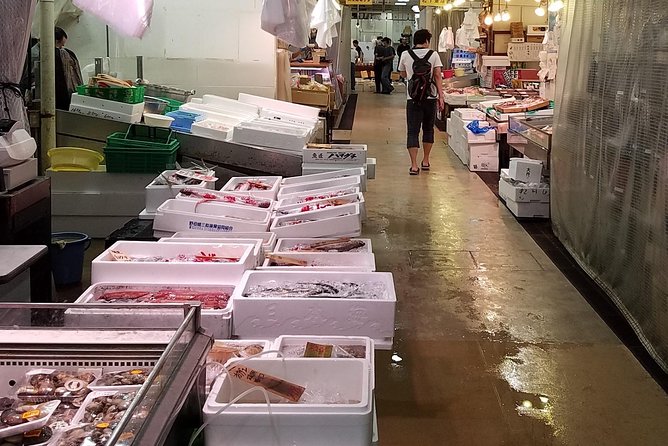
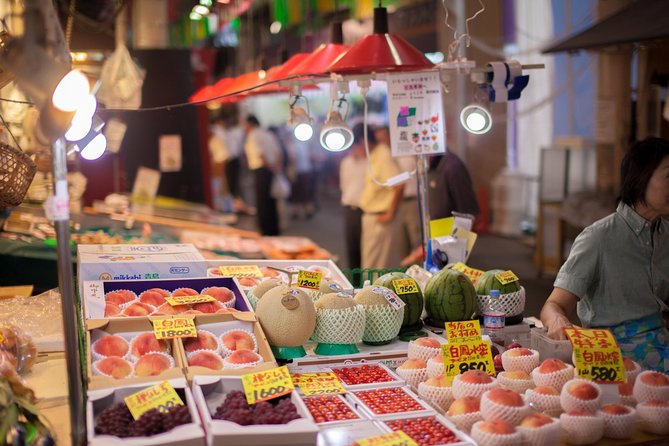
Kuromon Market is the best-known tourist stop on the route. Its seafood, produce, prepared foods, and snack counters offer plenty to see, and the tour allows about 25 minutes.
The market is visually strong. You can find high-quality ingredients and foods prepared for immediate purchase. It is a good place to spend some of your snack budget, especially if you want to try something specific with your guide’s help.
The warning is price. Kuromon is popular, and prices can be higher than at local markets. That does not mean the food is poor. It means you should compare before buying and avoid assuming that the most photogenic counter is the best value.
This stop works better after Pulala Tenma and Tenjinbashi-suji. By then, you have seen local shopping and can better understand how Kuromon differs. The contrast is part of the point.
Doguyasuji is a treat for cooks and design-minded shoppers
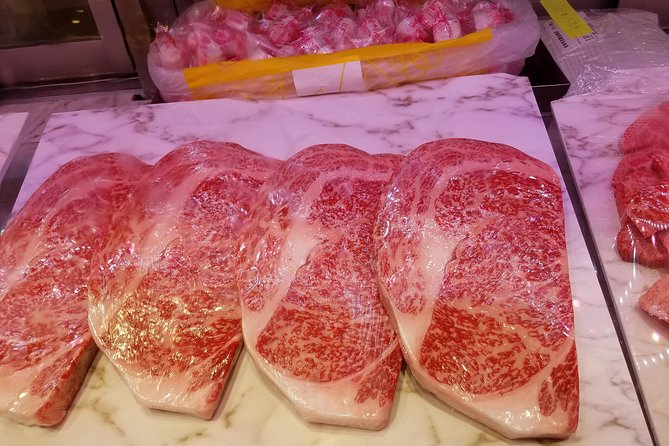
Sennichimae Doguyasuji Shopping Street shifts attention from eating to cooking. The approximately 25-minute stop is packed with kitchenware.
You might find Japanese cooking knives, ceramics, serving dishes, tea cups, lacquer chopsticks, and the famous wax food models used to show restaurant dishes. Even if you do not cook much, the displays explain why Japanese meals pay so much attention to tools, serving pieces, and presentation.
This is a particularly good stop if you want a practical souvenir. A knife or ceramic dish may be more useful than another packaged snack, though you should remember that all purchases are extra. If you buy a knife, consider how you will pack and transport it before committing.
The short time here may not satisfy serious shoppers. A private guide can help you focus, but you should not expect a long specialist shopping session.
Namba and Dotonbori provide a lively finish
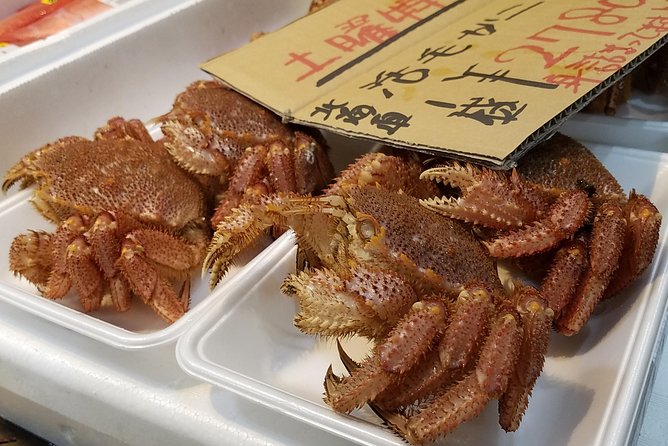
If time remains, the route finishes around Minami, Namba, and Dotonbori, ending at Ebisu Bridge. The planned stop is about 20 minutes.
This gives you a chance to connect the market tour with one of Osaka’s most famous central areas. You may see some of the main sights around Dotonbori and finish with a better sense of where the city’s restaurant and entertainment center fits into the wider food scene.
The ending is convenient if you plan to continue exploring Namba. It is less useful if you need to return to your hotel right away, although one guide escorted a group back to its hotel. Do not count on that as a standard part of the tour.
Because the route has many stops, time at Namba may vary. The itinerary includes seven possible locations, while the overview describes four main foodie areas. In practice, the guide may adjust the balance based on pace, interests, shopping, and remaining time.
What your guide adds to the experience
The guide is the most important part of this tour. The markets are open to anyone, but their meaning is not always obvious.
Guides named in the experience include Ferdinand, Kevin, Lito, Thomas, Alejandro, Damian, and Oshi. The strongest feedback centers on clear communication, cultural explanation, humor, translation help, and a willingness to adapt.
Ferdinand was especially praised for connecting food with history and for helping visitors understand dishes, ingredients, knives, and Korean influences. Kevin was noted for detailed explanations of Japanese, Chinese, and Korean culture. Lito adjusted the route to fit a group’s schedule and interests, while Alejandro was praised for excellent English and a custom approach.
Damian took time for questions, shopping, and photographs. Thomas adapted parts of the outing for children. Oshi guided a group through a hot day and included a recommended local eatery and a cool drink stop.
Those details matter because a market tour can easily become a march from stall to stall. The private format gives you a better chance to slow down and ask why something matters.
Price, food costs, and the question of value
At $91 per person, this is not a cheap way to buy lunch. The fee covers a private tour with a native or near-native speaker in your chosen language, but not transportation, food, refreshments, snacks, or souvenirs.
Local transport costs about 330 yen per adult. The route is spread across several areas, so this small extra charge is reasonable, but you should include it when comparing prices.
The bigger issue is food. The tour description uses food-tour language, yet the fine print says samples are not included. One participant completed the outing without food tastings and felt hungry afterward. Another group stopped at a local restaurant, and others bought and sampled foods along the way.
So bring money and decide in advance what you want. If you expect the guide to provide a tasting menu, you may find the price high. If you see the fee as payment for private interpretation, translation, neighborhood access, and help choosing what to buy, the value improves.
The 4.8 rating from 31 reviews and 97 percent recommendation figure suggest strong overall satisfaction, but the criticism about cost and missing tastings is fair. This experience works best for people who value context more than quantity of food.
Walking, timing, and meeting details
The tour lasts about four hours and offers morning or afternoon departures. The start point is the McDonald’s in front of Temma Station at 4-chōme-12-1 Tenjinbashi, Kita Ward.
The route ends at Ebisu Bridge in Dotonbori. That start-to-finish layout matters. You are not returning to the starting point, so plan your next activity from Namba rather than Temma.
There is a moderate amount of walking, and several stops involve standing or moving through busy shopping areas. A past outing included difficult heat, and another participant specifically warned that the tour requires stamina. Comfortable shoes are essential.
Children can participate when accompanied by an adult, but the pace and walking may be tiring for young kids. The private format helps, since your guide can pause for photos or adjust the focus, but it does not remove the distance between neighborhoods.
Pickup is offered, and the activity is near public transportation. Confirmation is provided at booking, and free cancellation is available up to 24 hours before the start time.
Who should book this Osaka market tour?
I would choose this for a first or second visit to Osaka if you want to understand food beyond restaurant menus. It suits curious eaters, home cooks, shoppers, families who need a flexible guide, and anyone uneasy about ordering unfamiliar foods.
It is also a good choice if you want to see Korea Town, a local wet market, and a supermarket alongside Kuromon and Dotonbori. That mix gives you a fuller picture of Osaka than a tour focused only on famous street foods.
I would skip it if your main goal is a large number of included tastings. I would also hesitate if you have limited time in Osaka, dislike walking, or want a low-cost activity. You can visit many markets on your own, though you will lose the explanations and translation help.
FAQ
How long does the Osaka food market tour last?
The experience lasts approximately four hours.
Is the tour available in the morning and afternoon?
Yes. You can choose a morning or afternoon tour.
Is this a private tour?
Yes. Only your group participates in the activity.
What food is included in the price?
Food samples, snacks, refreshments, and other food purchases are not included. You are responsible for buying any food you want during the tour.
Is transportation included?
No. Transportation during the tour costs about 330 yen per adult and is paid separately.
Where does the tour start?
The meeting point is the McDonald’s in front of Temma Station at 4-chōme-12-1 Tenjinbashi, Kita Ward, Osaka.
Where does the tour end?
The listed end point is Ebisu Bridge in Dotonbori, at 1 Chome-6 Dotonbori.
Can children join the tour?
Yes, children can participate when accompanied by an adult. The tour includes a moderate amount of walking, so consider the pace when bringing young children.
Should you book it?
Book this tour if you want a guided look at how Osaka shops for food, not simply a string of free samples. The mix of depachika displays, local markets, Korea Town, Kuromon, Doguyasuji, and Namba is unusually broad, and a strong guide can turn ordinary shopping into a useful lesson.
Go in with comfortable shoes, spending money, and a clear expectation that tastings are optional purchases. For food culture, neighborhood context, and personal guidance, it is a solid choice. For a cheaper, meal-centered outing, choose something else.
Just added around Osaka
- Nara Day Trip from Osaka with a Licensed Guide★ 5.0 · 3 reviews
- Osaka Early Morning Osaka Castle Tour Avoid Crowds★ 5.0 · 3 reviews
- Guided Tour of Some Attractions in Osaka by Private Car★ 5.0 · 3 reviews
- Private Transfer Between Kyoto and Kansai Airport KIX★ 5.0 · 3 reviews
- Shared Arrival Transfer: Osaka Itami Airport to Osaka City★ 5.0 · 3 reviews
- Osaka: Sushi Making Class and Dotonbori Food Tour★ 4.7 · 3 reviews
- Osaka Night Photography Workshop★ 5.0 · 3 reviews
- Kyoto Full day Tour Kinkakuji, Kiyomizu-dera and Fushimi Inari★ 4.5 · 3 reviews
Osaka Street Food Tours, compared.
Shinsekai Food Tour with 13-15 Dishes at 5 Eateries
Read our review →
Osaka Food Tour: 13 Dishes at 5 Local Eateries
Read our review →
Hungry Osaka Street Food Tour:15 Tastings & 3 Drinks with a Local
Read our review →
Osaka Local Foodie Walking Tour in Dotonbori and Shinsekai
Read our review →
Hungry Osaka Street Food Tour: 15 Dishes & 3 Drinks
Read our review →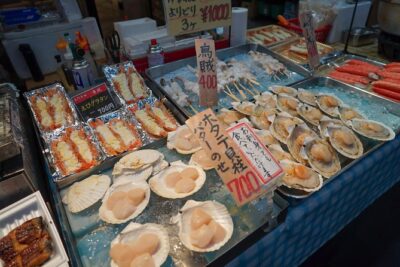
Kuromon Market Food Walking Tour in Osaka (6 stops, 6 tastes)
Read our review →
Guided Food Tour with 12 Dishes at 4 Local Eateries
Read our review →
Browse the lists this tour appears in