
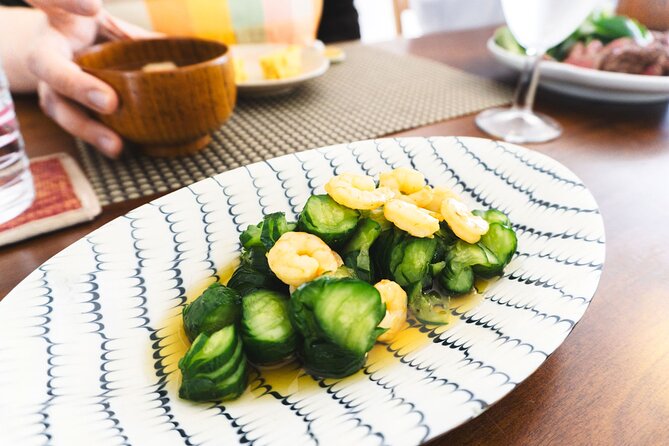
Reviewed · OSAKA COOKING CLASSES
Private Japanese Cooking Class in Osaka with Culinary Expert Yoko
The best part of this Osaka experience is the setting: you cook in Yoko’s private home, not in a polished school built for tourists. She explains Japanese tastes, seaweed, dried fish, and everyday cooking methods before handing you an apron and putting you to work. I like the personal setting, and I like that you leave with recipes and tips you can use outside Japan.
I also like the private format. You can ask questions freely, and the meal gives you time to chat with Yoko about Japanese food and life. The main consideration is the price, $182 per person, which is a serious outlay for three hours. The published details also vary between five specialties and three dishes prepared from scratch, so ask about the exact menu when booking.
In This Review
- Key points at a glance
- A cooking class that begins at Minami-Morimachi Station
- Slippers, aprons, and the customs of a Japanese kitchen
- The hands-on kitchen session lasts about 90 minutes
- What you take away besides dinner
- The strongest feature is Yoko herself
- Is $182 per person a fair price?
- Dietary needs and menu planning
- Who will enjoy this Osaka experience most?
- Practical details before you book
- Should you book Yoko’s home cooking class?
- FAQ
- Where does the cooking class begin?
- Where does the experience end?
- Is hotel pickup included?
- How long does the experience last?
- How many dishes will I prepare?
- Who teaches the class?
- Is the class private?
- Are vegetarian and vegan options available?
- What is included in the price?
Key points at a glance
- Meet at Minami-Morimachi Station: Yoko collects you at the subway station and gives you a short look at her neighborhood before the lesson.
- Cook inside a real Osaka home: You remove your shoes, put on slippers, and share the kitchen rather than entering a commercial cooking studio.
- Learn the ingredients behind Japanese flavor: Seaweed, dried fish, and the five basic tastes are part of the introduction.
- Work with a trained chef: Yoko studied at a culinary institute and explains techniques step by step.
- Taste more than the dishes you prepare: The experience includes a home-cooked meal and sake tasting, with green tea ice cream and dishes such as sushi, Japanese pancake, or fried chicken possible depending on the menu.
- Plan ahead for dietary needs: Vegetarian and vegan options are available if requested at booking, and the menu changes with the season.
A cooking class that begins at Minami-Morimachi Station
Your meeting point is Minami-Morimachi Station, at 2 Chome-1 Minamimorimachi in Osaka’s Kita Ward. Yoko picks you up there, so you do not need to find a private apartment on your own.
The short neighborhood walk is a useful opening. It gives you a little context before the food begins and helps the experience feel like a visit to someone’s home, not simply a scheduled lesson. The apartment is near Osaka Castle, one of the city’s major sights, though the class itself is not presented as an Osaka Castle tour.
The meeting point is convenient for anyone already using Osaka’s subway system. Hotel pickup and drop-off are not included, so you need to make your own way to the station and return there at the end. Build in enough time to locate the correct station exit and meeting place, especially if you are still learning Osaka’s large rail network.
More Japanese home cooking classes:
- Osaka: Ramen and Gyoza Cooking Class in Dotonbori
★ 5.0 · 378 reviews - Osaka: Sumo Stage Show with Bento or Snack + Fight & Photo
★ 4.3 · 364 reviews - Osaka: Traditional Mochi Pounding Experience with Tasting
★ 4.9 · 306 reviews
Slippers, aprons, and the customs of a Japanese kitchen
At Yoko’s apartment, you take off your shoes and put on slippers. This small detail matters because it sets the tone for the visit. You are entering a private home, and the class gives you a direct look at an ordinary Japanese household practice that a restaurant lesson would not provide.
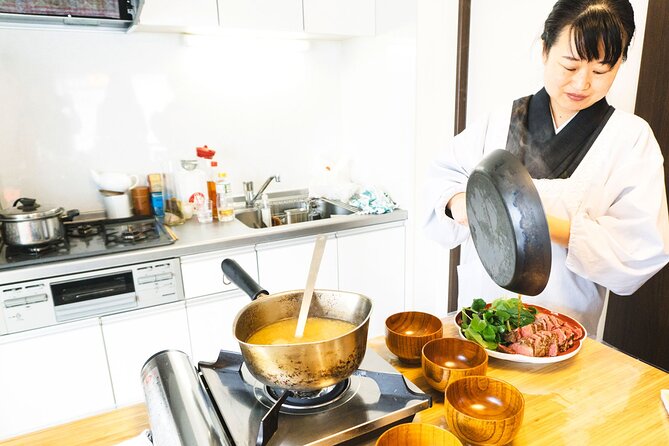
The home is described as simple and clean. That is useful to know if you are expecting a large teaching kitchen or a professional studio. Space and equipment are likely to feel domestic rather than industrial, which suits the purpose but may not appeal to someone looking for a formal culinary school atmosphere.
Before cooking, Yoko introduces Japanese cooking techniques and explains the five different tastes. She also displays key ingredients, including seaweed and dried fish. This is one of the most valuable parts of the lesson because these ingredients often shape Japanese flavor without appearing prominently on the plate.
You are not simply following a recipe by numbers. You get a basic sense of how savory depth is built and why certain pantry items appear again and again in Japanese food. If you are curious, use this time to ask how to find substitutes at home.
The hands-on kitchen session lasts about 90 minutes
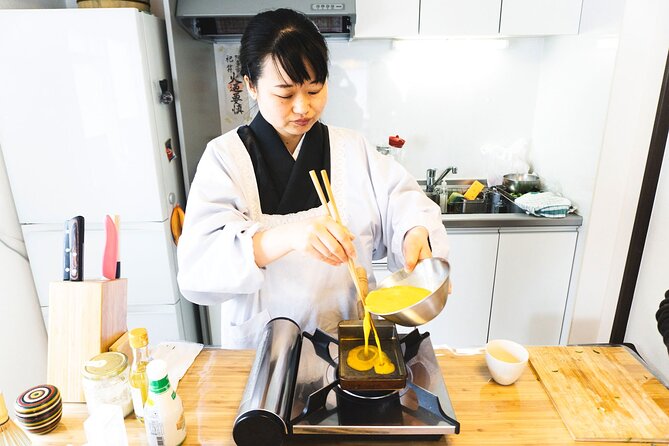
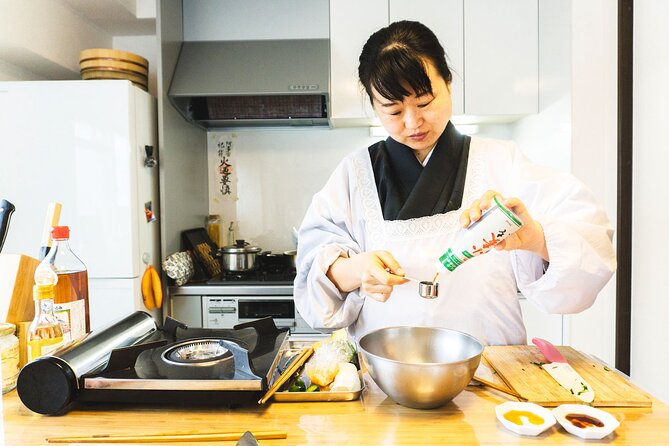
The cooking portion is both demonstration and practice. Yoko prepares some items ahead of time, then shows you how to cut and cook the rest. You put on an apron, roll up your sleeves, and take part rather than watching from the side.
The detailed itinerary says you prepare three dishes from scratch during about one and a half hours of cooking. The wider description refers to five different Japanese specialties, so the exact number may depend on the selected menu and how the dishes are organized. This is worth clarifying before you pay, particularly if the number of recipes is central to your decision.
Possible dishes may include sushi, Japanese pancake, or Japanese fried chicken. The menu can change with the season, so you should treat these as examples rather than promises. A changing menu can be a plus because it lets Yoko work with ingredients suited to the time of year, but it means you should not book expecting one exact dish unless it has been confirmed.
Yoko explains each stage carefully and welcomes questions. That makes this a good choice if you want to understand technique, not just assemble a meal. You can ask about Japanese cooking styles, ingredient swaps, and the small tips that make a recipe practical in a home kitchen.
What you take away besides dinner
The meal is the obvious reward, but the useful part continues after the plates are cleared. You receive recipes, giving you a way to repeat the dishes when you return home. That matters more than a one-time tasting, especially if Japanese food is difficult to find in your local area.
Yoko also explains how to adapt recipes when Japanese products are not easy to obtain. This was specifically useful for a former participant who wanted to recreate the food at home with limited access to Japanese ingredients. Ask her to identify the ingredients that are essential and the ones that can be replaced.
The class includes a home-cooked Japanese meal and sake tasting. The meal is shared with Yoko, so you have time to talk rather than rushing out as soon as the cooking ends. Her international travel experience gives you another natural topic of conversation, and the social side is a meaningful part of the visit.
The final sweet may include green tea ice cream. Since the menu varies, consider it a likely finishing touch rather than a guarantee. The same applies to any specific main dish.
A few more Osaka tours and experiences worth a look
- Private Osaka Walking Tour: Highlights & Hidden Gems
★ 5.0 · 569 reviews - 3/4/5 Hours Private Tour in Osaka with Local Guide
★ 5.0 · 189 reviews - Osaka’s Best and Brightest: Private Full-Day Tour by Vehicle
★ 5.0 · 147 reviews - Full Day Tour of Kyoto with Private Transportation
★ 5.0 · 130 reviews
The strongest feature is Yoko herself
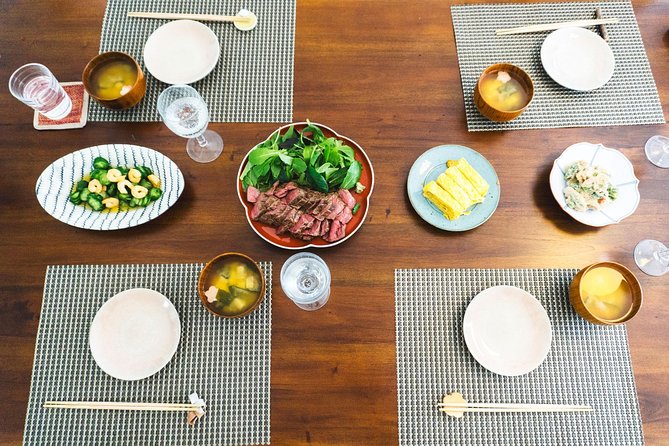
Yoko’s teaching style is the heart of the experience. She is trained at a culinary institute, but the setting remains relaxed and personal. You get professional instruction without the feel of a large group class.
I especially like the balance between prepared demonstrations and hands-on work. A fully hands-off demonstration would leave you with pleasant memories but little confidence. A lesson that makes you do every task without showing the method first can feel stressful. Here, Yoko handles some preparation, shows you the process, and then lets you take part in cutting and cooking.
The private format also changes the pace. Only your group participates, so you can ask for more explanation or spend longer on a technique that interests you. A group discount may be available, making the price easier to justify for friends or family traveling together.
The experience is also recommended for couples and small private groups who want a shared activity beyond sightseeing. It is less suited to someone who wants a low-cost meal, a fast demonstration, or a fixed menu with every dish guaranteed in advance.
Is $182 per person a fair price?
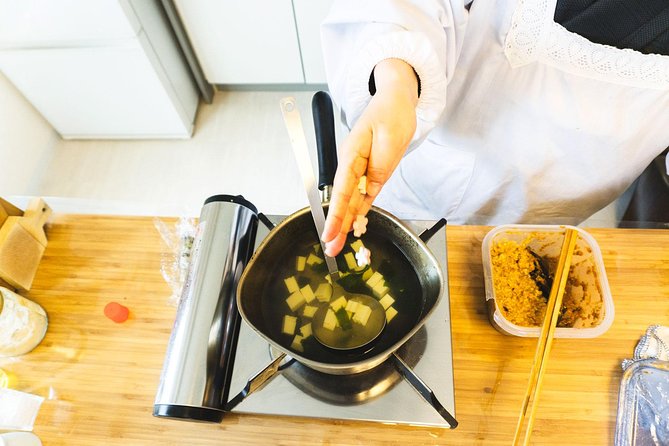
At $182 per person, this is not a bargain meal. You are paying for a private experience, a trained host, hands-on instruction, the neighborhood introduction, the meal, sake tasting, and the chance to cook inside a local home.
For a private group that values conversation and instruction, the cost can make sense. A standard restaurant meal may cost far less, but it will not give you recipes, kitchen practice, or a personal look at Japanese home cooking. A large cooking class may also be cheaper, but it will usually offer less one-to-one attention.
The value depends on your goal. If you want to learn dishes you can repeat, Yoko’s practical advice about ingredient substitutions adds real worth. If you mainly want to eat sushi or fried chicken, you can do that more cheaply elsewhere in Osaka.
The three-hour duration gives the outing enough room for the station meeting, neighborhood walk, introduction, cooking, meal, and conversation. Keep in mind that only about 90 minutes is described as active cooking. The rest is part of the welcome, teaching, dining, and social experience.
Dietary needs and menu planning
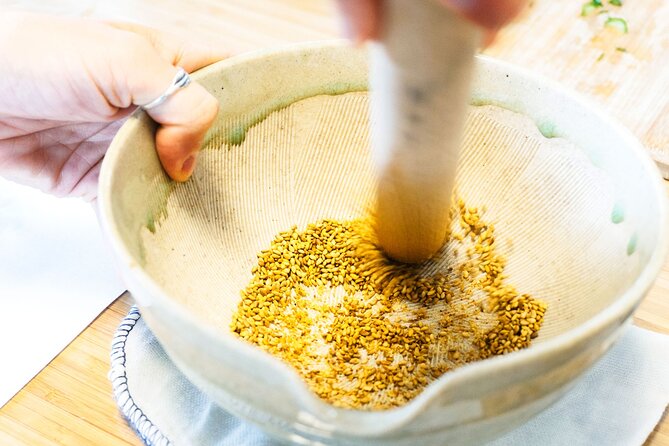
Vegetarian and vegan options are available, but you must request them in the special requirements box when booking. The same advice applies to allergies and other dietary needs. Do not wait until you arrive at the apartment, since the menu and shopping need to be planned in advance.
The menu changes with the season. This can work in your favor if you like local produce and do not need a particular dish. If you are booking because you want to learn sushi, Japanese pancake, or fried chicken, ask if that item can be included before your reservation is finalized.
The available information does not promise a specific number of dishes in every version of the class. One section describes five specialties, while the detailed schedule describes three dishes made from scratch. Ask Yoko or the provider to explain what the current menu includes.
Who will enjoy this Osaka experience most?
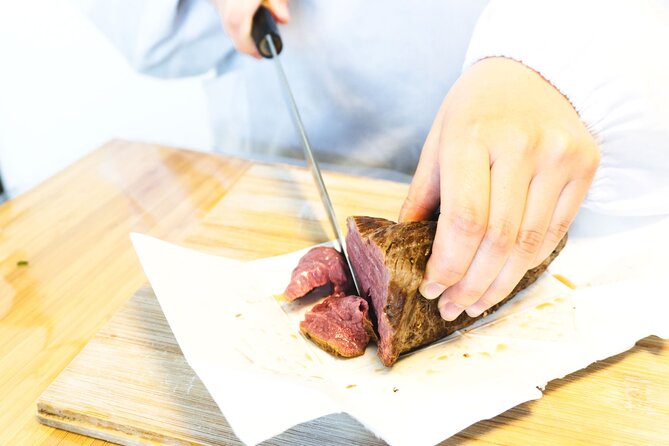
I would recommend this for you if food is a major part of your trip and you want to understand Japanese home cooking rather than simply sample it. It is also a good fit if you enjoy meeting local people, asking questions, and taking your time over a shared meal.
Families and private groups may appreciate the format because the experience is reserved for your party. The group discount can also improve the value, although the amount of any discount is not specified.
This is a particularly good choice for cooks of mixed ability. Beginners get clear instruction, while more experienced home cooks can ask about seasoning, preparation, and substitutions. You do not need to arrive with professional skills.
I would hesitate if your schedule is tight, you dislike eating in private homes, or you want a large, highly equipped kitchen. I would also think twice if $182 feels too high for a three-hour activity, even with the meal and sake included.
Practical details before you book
Confirmation is sent within 48 hours, subject to availability. The activity is booked in advance by an average of 72 days, which suggests that you should not leave it until the last part of your Osaka stay if the timing matters.
You meet Yoko at Minami-Morimachi Station and finish back at the same meeting point. Hotel transportation is not included. The activity has a mobile ticket, and it is near public transportation.
Free cancellation is available if you cancel at least 24 hours before the local start time. Cancellations or changes made inside that 24-hour window are not refunded or accepted.
Wear something comfortable for kitchen work. The provided information confirms that slippers and aprons are part of the home routine, but it does not specify clothing requirements beyond that. Since you will be cutting and cooking, practical clothing is the sensible choice.
Should you book Yoko’s home cooking class?
Book it if you want personal instruction, home cooking, and conversation in one small private experience. Yoko’s careful teaching, recipe guidance, sake tasting, and advice on replacing hard-to-find Japanese ingredients give the class value beyond the meal itself.
Skip it if you are looking for the cheapest way to eat, a guaranteed five-course menu, or a formal cooking school with professional facilities. Before booking, confirm the current dish count and menu, especially since the description allows for seasonal changes.
For the right visitor, this is a warm and useful way to spend an Osaka afternoon or evening. You return to the city with a meal in you, recipes in hand, and a better feel for how Japanese flavor is built at home.
FAQ
Where does the cooking class begin?
It begins at Minami-Morimachi Station, at 2 Chome-1 Minamimorimachi, Kita Ward, Osaka, 530-0054, Japan.
Where does the experience end?
The activity ends back at the meeting point at Minami-Morimachi Station.
Is hotel pickup included?
No. Hotel pickup and drop-off are not included. You need to travel to and from the station yourself.
How long does the experience last?
The full experience lasts approximately three hours. The cooking portion is described as about one and a half hours.
How many dishes will I prepare?
The detailed schedule says you will prepare three dishes from scratch. The broader description refers to five Japanese specialties, so you should confirm the current menu and dish count when booking.
Who teaches the class?
The class is taught by Yoko, a Japanese chef trained at a culinary institute.
Is the class private?
Yes. Only your group participates in the activity.
Are vegetarian and vegan options available?
Yes. Vegetarian and vegan options are available if you request them when booking. You should also provide any other dietary requirements in the special requirements box.
What is included in the price?
The price includes the private home cooking class with Yoko, a home-cooked Japanese meal, sake tasting, and pickup from Minami-Morimachi Station.
Just added around Osaka
- Nara Day Trip from Osaka with a Licensed Guide★ 5.0 · 3 reviews
- Osaka Early Morning Osaka Castle Tour Avoid Crowds★ 5.0 · 3 reviews
- Guided Tour of Some Attractions in Osaka by Private Car★ 5.0 · 3 reviews
- Private Transfer Between Kyoto and Kansai Airport KIX★ 5.0 · 3 reviews
- Shared Arrival Transfer: Osaka Itami Airport to Osaka City★ 5.0 · 3 reviews
- Osaka: Sushi Making Class and Dotonbori Food Tour★ 4.7 · 3 reviews
- Osaka Night Photography Workshop★ 5.0 · 3 reviews
- Kyoto Full day Tour Kinkakuji, Kiyomizu-dera and Fushimi Inari★ 4.5 · 3 reviews
Osaka Cooking Classes, compared.


Sumo Stage Show with Bento or Snack + Fight & Photo
Read our review →
Traditional Mochi Pounding Experience with Tasting
Read our review →
Osaka Cooking Class: Okonomiyaki &Japanese cuisines experience
Read our review →


Osaka Sake Tasting & Takoyaki Cooking Experience
Read our review →
Cooking Ramen&Gyoza/KatsuCurry/Bento/Okonomiyaki+Store Tour@Osaka
Read our review →Browse the lists this tour appears in