
Reviewed · DOTONBORI & NAMBA TOURS
Osaka Dotonbori Daytime Food Tour
Osaka’s famous neon is only half the story. This three-hour walk moves past the Glico Man sign and the crowded Dotonbori canal into market lanes, small eateries, shrines, and old shopping arcades where you can taste local food without guessing which queue is worth your time. The guide adds the cultural background that makes each bite more than a quick snack.
I like the small maximum of 10 people, which makes it easier to ask questions and easier for the guide to adjust the pace. I also like the mix of food and place: takoyaki, Japanese sweets, market stalls, Hozenji Yokocho, Kuromon Market, and the Doguyasuji kitchenware arcade all give you a useful first look at Osaka.
The main caution is the price, $209 per person. That is a serious spend for three hours, especially since transport, extra food, extra drinks, hotel pickup, and gratuity are not included. You are paying for guidance, access to several tastings, and a smooth introduction to a confusing food district.
In This Review
- Key points to know before you book
- Why this is a useful first taste of Osaka
- Glico Man and the first Osaka lesson
- Dotonbori without wasting the afternoon
- Namba, Hozenji Yokocho, and a quieter side of Minami
- Street food and the case for takoyaki
- Kuromon Market and Sennichimae’s food culture
- What the guides add to the meal
- Food restrictions and walking demands
- Is $209 a fair price?
- Timing, meeting point, and cancellation
- Who should book this Dotonbori food walk?
- Should you book it?
- FAQ
- How long does the Osaka Dotonbori Daytime Food Tour last?
- What food and drinks are included?
- Where does the tour start and end?
- What time does the tour begin?
- Can dietary restrictions be accommodated?
- Can I cancel for a refund?
Key points to know before you book
- Four food stops in three hours: You sample several local specialties rather than sit down for one long meal.
- Dotonbori beyond the main signs: The route adds Hozenji Yokocho, Namba, market streets, and possible izakaya stops.
- Takoyaki is a likely highlight: Several tours have featured especially memorable takoyaki, though food choices can change.
- A guide-led cultural walk: Guides including Ron, Russ, Chiyoe, Miki, Kevin, and Natsumi have brought local history and customs into the meal.
- Dietary needs can be accommodated: Vegetarian, vegan, pescetarian, shellfish-free, and pork-free options are available.
- Best for first-time Osaka visitors: You finish near Sennichimae with a better sense of where to eat and what to order next.
Why this is a useful first taste of Osaka
Osaka calls itself Japan’s Kitchen for good reason. Food is part of the city’s identity, but the sheer number of signs, restaurants, market stalls, and queues can make a first visit feel like work.
Dotonbori is the obvious place to start. Its giant signs and glowing storefronts are fun to photograph, but the most visible restaurants are not always the most rewarding. You can spend much of your day waiting in line for food that looks more famous than local.
This tour solves that problem by giving you a route and a guide. You walk, stop, taste, and keep moving. I like this format for the first day or two of an Osaka visit because you can ask what to eat later, which neighborhoods deserve more time, and how to avoid spending every meal in the same tourist-heavy strip.
The tour begins at 11:00 am outside the Starbucks at Tsutaya Ebisubashi in Dotonbori. That puts you right in the middle of the action, so allow extra time to find the meeting point. The route ends in the Sennichimae area, not back at the starting point.
More of Dotonbori and Namba after dark:
- Osaka Local Foodie Walking Tour in Dotonbori and Shinsekai
★ 5.0 · 985 reviews - Osaka: Dotonbori District River Cruise with Drink Discount
★ 4.2 · 876 reviews - Ultimate Osaka Walking Tour: Castle, Dotonbori & Hidden Gems
★ 5.0 · 862 reviews
Glico Man and the first Osaka lesson
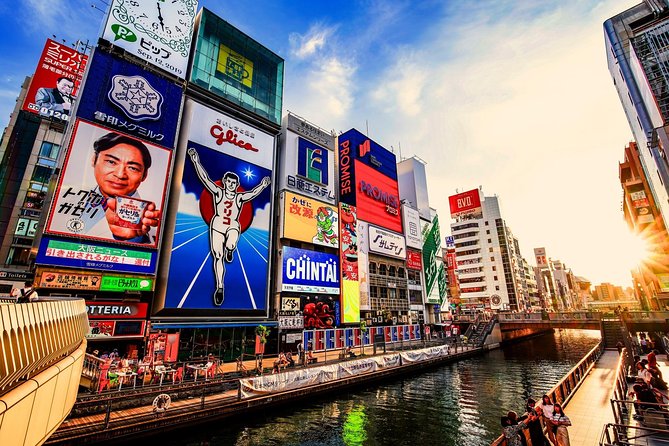
The opening stop is the Dotombori Glico Sign, one of Osaka’s best-known photo spots. The guide explains the story behind the running athlete on the sign, including Fortunato Catalon, a Filipino sprinter whose image inspired the company and became part of Osaka’s visual identity.
This is a short stop, about five minutes, but it gives you a quick orientation to the district. You learn why people gather here for photos and why the sign has become tied to Osaka’s public image.
Do not expect a long museum-style explanation. The value is in getting the story at the place itself, then moving on before the crowd and noise begin to wear you down. If you want the classic Dotonbori photograph, this is the natural moment to take it.
Dotonbori without wasting the afternoon
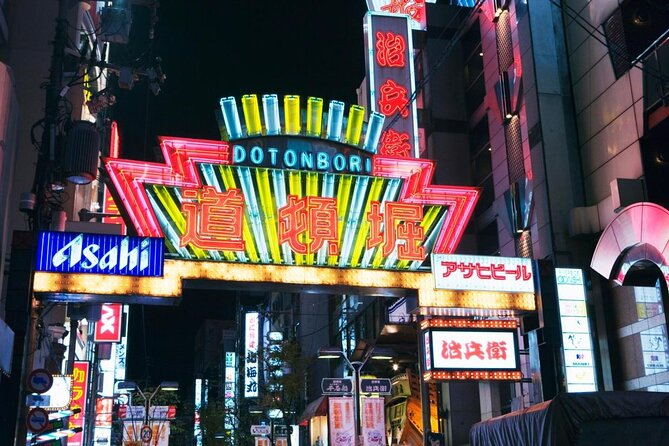
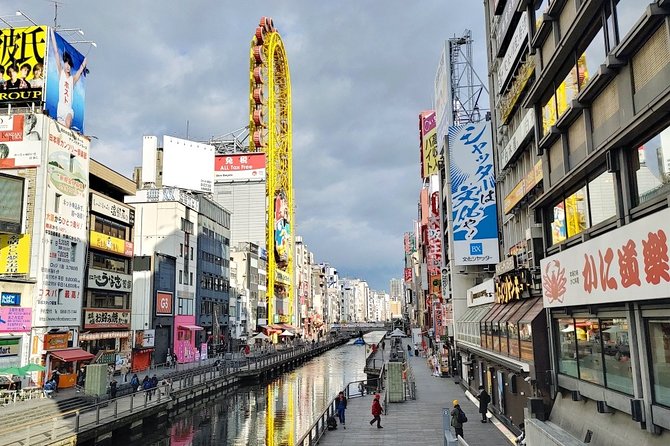
From the sign, the walk continues through Dotonbori. The area has a reputation for giant restaurant signs, bright lights, loud music, and lines of tourists. That spectacle is part of the fun, but it can also pull you toward restaurants chosen for visibility rather than quality.
Your guide helps you read the district more carefully. The point is not to ignore the famous street, but to understand where the main crowds thin out and where smaller places fit into Osaka’s eating culture.
The walk through Dotonbori is listed as about 15 minutes, though the entire route lasts roughly three hours. Expect the guide to use this section for photos, orientation, and short stories about local habits.
One story that may come up concerns baseball fans throwing a KFC statue into the river during celebrations. It is the sort of odd local detail that explains how sports, advertising, food, and Osaka pride overlap. The exact stories can vary by guide, but guides such as Natsumi and Miki have brought this kind of cultural background into the walk.
Namba, Hozenji Yokocho, and a quieter side of Minami
Minami is the broad name for the Namba and Dotonbori district. It is a good area for a food walk because the dramatic main streets sit close to much older lanes and neighborhood stops.
Hozenji Yokocho is one of the most atmospheric parts of the route. Its narrow lanes and traditional feel offer a sharp contrast to the electronic signs along the canal. The nearby Hozenji temple is known for its moss-covered Fudo Myoo statue, which gives the walk a small spiritual pause between food stops.
A guide can explain local customs here and point out details you might pass without noticing. One guide, Chiyoe, has included narrow alleys and a special Buddha statue in the route, making this section more than a shortcut between restaurants.
This is also a good place to slow down for photographs. The lane is compact, so it is not a major sightseeing stop, but it helps you see that Osaka is not only neon, shopping, and oversized food displays.
More street food walks and tastings:
- Osaka: Shinsekai Food Tour with 13-15 Dishes at 5 Eateries
★ 4.8 · 2,204 reviews - Osaka Food Tour: 13 Dishes at 5 Local Eateries
★ 5.0 · 2,149 reviews - Hungry Osaka Street Food Tour:15 Tastings & 3 Drinks with a Local
★ 5.0 · 1,727 reviews - Hungry Osaka Street Food Tour: 15 Dishes & 3 Drinks
★ 4.9 · 694 reviews
Street food and the case for takoyaki
The food portion is the heart of the experience. You visit four food stops and receive one drink plus a traditional Japanese dessert. The exact menu changes with season, availability, restaurant schedules, public holidays, and other conditions, so you should not book this expecting a fixed tasting list.
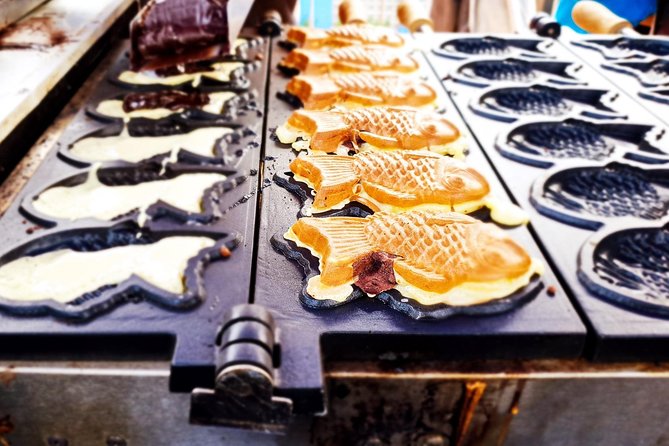
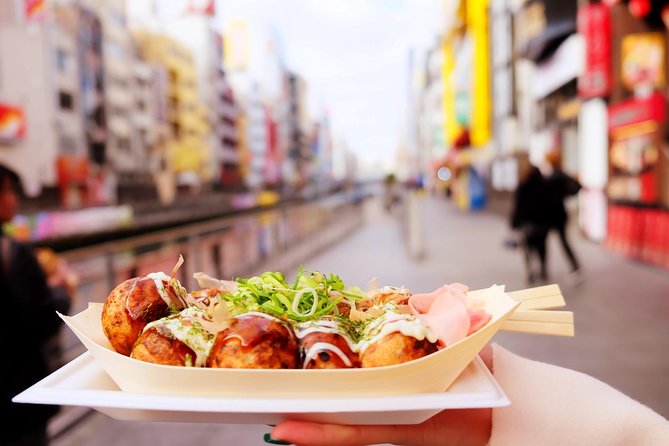
Takoyaki has been a clear favorite among the dishes featured on past walks. These hot batter balls filled with octopus are closely linked with Osaka, and they are best understood as casual street food rather than a formal restaurant dish. The texture and toppings are part of the fun, but let the food cool before eating. Fresh takoyaki can be very hot inside.
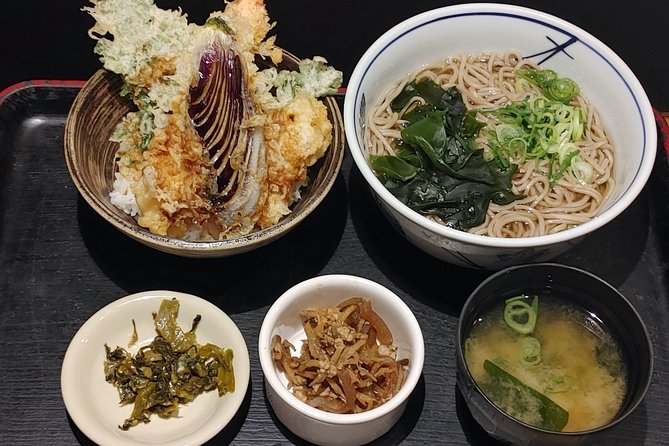
Other tastings may come from small shops, open-market stalls, or local eating places. The tour has also included tucked-away izakaya-style settings and Japanese cakes. I appreciate that range because it gives you more than one version of Osaka food: quick snacks, sweets, and places where people gather for a drink and small plates.
The included drink is a useful touch, but it is only one drink. The minimum drinking age is 21, and additional drinks or food cost extra. If you arrive hungry, you may want to eat a light breakfast, but do not arrive expecting a full restaurant lunch with unlimited portions.
Kuromon Market and Sennichimae’s food culture
Kuromon Market is one of the key areas on the route. It is a long market district with food shops, produce, seafood, snacks, and kitchen-related businesses. The market can be busy, and the best way to enjoy it is to let the guide direct your attention instead of trying to inspect every stall.
The advantage of visiting with a local is practical. You can learn what a food is, how it is normally eaten, and which items make sense for a short tasting. The guide can also help you avoid buying more than you can comfortably eat during a walking tour.
Nearby Sennichimae is the ending area. You do not need to return to Dotonbori, and that is useful if you plan to continue exploring Namba afterward. The tour’s finish also puts you close to more food options, shopping streets, and public transportation.
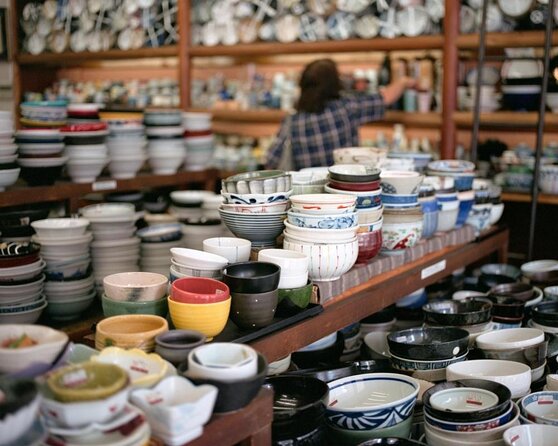
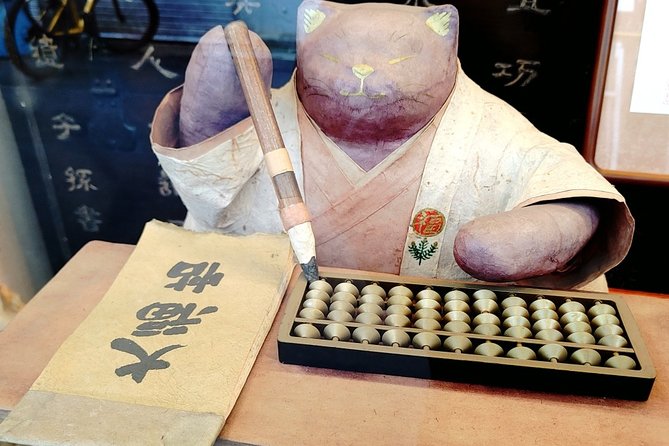
Sennichimae Doguyasuji Shotengai adds a different angle. This shopping arcade is associated with cooking tools and restaurant supplies, so it shows the working side of Osaka’s food culture. You may see the kind of equipment that supports the city’s restaurants, rather than only the finished dishes placed in front of you.
What the guides add to the meal
The guide makes or breaks a food walk. This experience uses local English-speaking guides, and several names have appeared in past tours, including Ron, Russ, Chiyoe, Miki, Kevin, and Natsumi. You should not assume a particular guide will lead your date, but the range of feedback points to an experience shaped by the individual guide.
Ron has been praised for taking people to places they were unlikely to find alone and for connecting food with Japanese culture. Russ has led walks through open markets and tucked-away izakayas while adding history along the way.
Chiyoe has been especially attentive, offering a personal pace and including shrines, alleyways, takoyaki, and Japanese cakes. Kevin has been noted for making a small group feel personal while explaining both food and culture. Natsumi has led a warm, informal walk and brought in local stories.
The practical lesson is to use your guide. Ask for restaurant suggestions, neighborhoods to explore, dishes to try, and advice for the rest of your Osaka stay. The tour promises recommendations, and this may be one of its most useful long-term benefits.
Food restrictions and walking demands
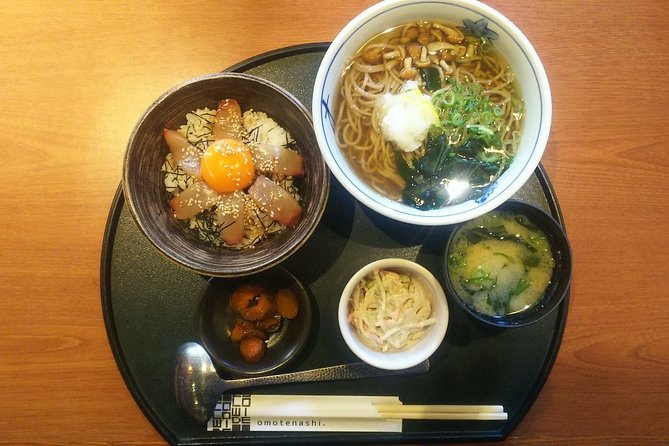
The tour is listed as friendly to vegetarian, vegan, pescetarian, shellfish-free, and pork-free diets. Still, tell the operator about your needs when booking and remind the guide at the start. Japanese food often uses stock, sauces, or toppings that are not obvious, so clear communication matters.
Food changes are possible because the route depends on restaurant hours, weather, holidays, and availability. Substitutions may be made if a planned stop cannot operate. That flexibility is sensible, but it means you should think of the tour as a guided food experience rather than a guaranteed menu.
You need a moderate level of fitness. The activity involves walking through commercial streets, alleys, markets, and shopping arcades, with time spent standing at food stops. Children must be with an adult, and a copy of passport information is required for children aged 10 and above.
The group can have up to 10 people. That is small enough for questions and conversation, though it is not a private tour unless you book accordingly. Single participants are accepted, and the experience is family-friendly.
Is $209 a fair price?
At $209 per person, this is not a bargain food crawl. You receive four food stops, one drink, dessert, and about three hours with a local English-speaking guide. You do not receive hotel pickup, transportation, gratuity, or unlimited food and drink.
The price makes the most sense if you value efficiency. You are paying to avoid research, reduce the chance of tourist-trap choices, and get several food experiences in a short time. You also receive cultural context and a route through parts of Namba that can be confusing on your own.
The value is weaker if you are comfortable choosing restaurants yourself or if your main goal is simply to eat a large lunch. You could spend less by visiting Dotonbori and Kuromon Market independently, though you would need to manage the language, ordering, queues, and route yourself.
I would judge the price based on timing. Book it early in your Osaka stay, and the guide’s recommendations can improve the rest of your meals. Book it on your final day, and you still get a fun farewell, but you lose some of the practical benefit. Some people have used it as a final-night activity, and the format works well for that too.
Timing, meeting point, and cancellation
The start time is 11:00 am, making this a late-morning food activity rather than an evening bar crawl. You meet at the Starbucks Coffee at Tsutaya Ebisubashi, 1-8-19 Dotonbori, Chuo Ward, Osaka.
The end point is in Sennichimae. Since no hotel pickup is included, you are responsible for reaching Dotonbori and arranging your onward transport. The meeting point is near public transportation, and the mobile ticket makes check-in simple.
Free cancellation is available if you cancel at least 24 hours before the local start time. Changes made inside that window are not accepted, and a late cancellation is not refunded.
The activity requires good weather and a minimum number of participants. If poor weather or low enrollment causes cancellation, you are offered another date or experience, or a full refund.
Who should book this Dotonbori food walk?
I would choose this tour for a first visit to Osaka, especially if you want a quick orientation before exploring on your own. It suits people who enjoy tasting several things, walking between stops, and asking questions as they go.
It is also a good fit for solo visitors, couples, families with older children, and small groups who want a shared introduction to Namba. The maximum group size of 10 keeps it more personal than a large coach-style outing.
I would hesitate if you need a precise menu, have a very limited budget, dislike walking, or want a long sit-down meal. Food substitutions are part of the deal, and the listed price is high for the time involved.
Should you book it?
Book this Osaka Dotonbori Daytime Food Tour if you want a well-organized introduction to local food, market streets, and Namba culture, and if $209 fits your budget. The strongest reasons are the small group, the combination of four tastings with cultural stops, and the chance to get practical dining advice from guides such as Ron, Chiyoe, Russ, Miki, Kevin, or Natsumi.
Skip it if you would rather explore independently and spend your money directly on meals. For the right person, though, this is a useful way to get your bearings fast, try Osaka specialties such as takoyaki, and learn where to return after the three-hour walk ends.
FAQ
How long does the Osaka Dotonbori Daytime Food Tour last?
The tour lasts approximately three hours.
What food and drinks are included?
The price includes tastings at four food stops, one drink, and a traditional Japanese dessert. Extra food and drinks are available at your own expense.
Where does the tour start and end?
You meet at Starbucks Coffee at Tsutaya Ebisubashi, 1-8-19 Dotonbori, Chuo Ward, Osaka. The tour ends in the Sennichimae area.
What time does the tour begin?
The start time is 11:00 am.
Can dietary restrictions be accommodated?
The tour is suitable for vegetarian, vegan, pescetarian, shellfish-free, and pork-free diets. Food can change based on season and availability, so advise the operator of your needs when booking.
Can I cancel for a refund?
You can cancel at least 24 hours before the start time for a full refund. Cancellations or changes made less than 24 hours before the tour are not accepted for a refund.
Just added around Osaka
- Nara Day Trip from Osaka with a Licensed Guide★ 5.0 · 3 reviews
- Osaka Early Morning Osaka Castle Tour Avoid Crowds★ 5.0 · 3 reviews
- Guided Tour of Some Attractions in Osaka by Private Car★ 5.0 · 3 reviews
- Private Transfer Between Kyoto and Kansai Airport KIX★ 5.0 · 3 reviews
- Shared Arrival Transfer: Osaka Itami Airport to Osaka City★ 5.0 · 3 reviews
- Osaka: Sushi Making Class and Dotonbori Food Tour★ 4.7 · 3 reviews
- Osaka Night Photography Workshop★ 5.0 · 3 reviews
- Kyoto Full day Tour Kinkakuji, Kiyomizu-dera and Fushimi Inari★ 4.5 · 3 reviews
Dotonbori & Namba Tours, compared.

Osaka Local Foodie Walking Tour in Dotonbori and Shinsekai
Read our review →
Dotonbori District River Cruise with Drink Discount
Read our review →
Ultimate Osaka Walking Tour: Castle, Dotonbori & Hidden Gems
Read our review →


Dotonbori River Cruise with Glico Sign & Neon Views
Read our review →
Browse the lists this tour appears in