
Reviewed · OSAKA STREET FOOD TOURS
Osaka: Daytime Hanami (Cherry Blossom) and Food Tour
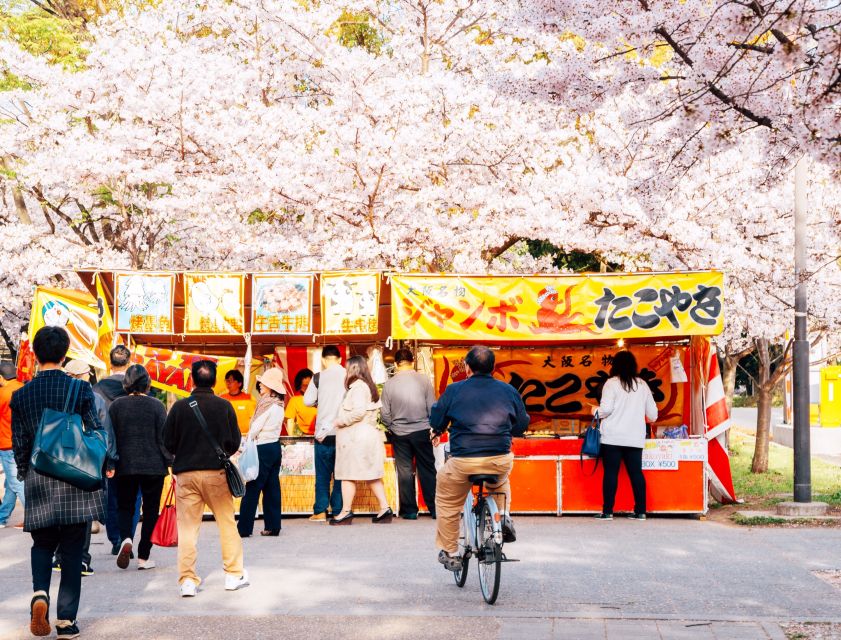
Osaka’s best cherry-blossom moments are not always found in the city’s biggest parks. This three-hour walk through Karahori leads you along old backstreets, past wooden houses and small shops, then finishes at a quieter shrine and cherry-tree spot where you can sit, eat, and enjoy hanami at a local pace. I like the mix of sakura, food, and old Osaka character. The seasonal snacks and drinks give the blossoms a useful local context instead of making the tour only a photo stop.
I also like the small group of no more than 10 people. Guides such as Miki and Sanae can make the walk feel personal, and Sanae has been praised for combining a traditional restaurant meal, tea ceremony, and a visit to a seaweed shop. The main caution is timing: cherry blossoms are short-lived, and poor weather or an early or late bloom can mean fewer flowers than you hoped to see.
In This Review
- Key points to know before booking
- Why Karahori makes a good hanami base
- Walking the old lanes around Matsuyamachi
- Seasonal snacks and drinks along the route
- Tea, local shops, and the slower side of Osaka
- Reaching the quiet hanami spot
- Is $161 a fair price for three hours?
- Timing, comfort, and who should book
- Should you book the Karahori hanami food tour?
- FAQ
- Where does the Osaka hanami food tour begin?
- How do I reach the meeting point by train?
- Where does the tour end?
- How long does the experience last?
- What food and drinks are included?
- Is the tour conducted in English?
- Is the tour suitable for wheelchair users?
Key points to know before booking
- Karahori’s old backstreets: Walk through a part of central Osaka known for traditional wooden houses, small businesses, and a slower feel than the neon districts.
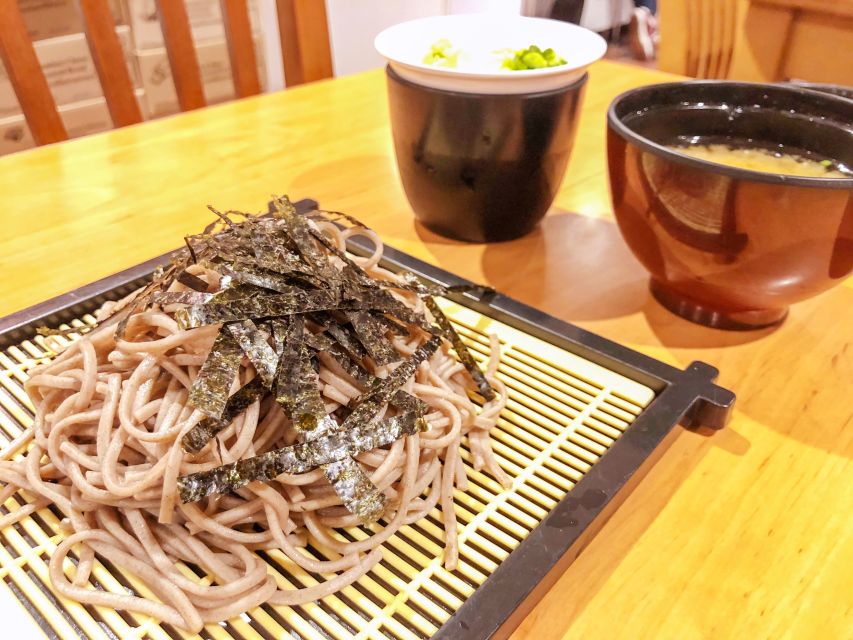
- Seasonal food at several stops: Try snacks inspired by spring, along with tea, sake, beer, or other included drinks.
- A quieter hanami finish: End near shrines and cherry trees, with time to sit, snack, and watch the petals.
- Guides who shape the outing: English-speaking guides such as Miki and Sanae can adjust the experience, especially when rain affects the plan.
- Peak-season limitation: This tour runs only around the heart of sakura season, and flowers are never guaranteed.
- Easy rail access: Meet outside Masumuraningyoten Sueyoshibashiten at Matsuyamachi Station, Exit 2.
Why Karahori makes a good hanami base
Karahori gives you a different view of Osaka from the one built around giant shopping arcades and bright signs. The district’s maze-like lanes are lined with old wooden homes, artisan shops, and small places that preserve the feel of old Osaka. You are still in the city center, but the pace changes quickly once you leave Matsuyamachi Station.
That setting matters because hanami is not only about finding the largest concentration of trees. It is also about walking, eating, talking, and taking a break beneath the blossoms. This tour uses the neighborhood as part of the experience, so you get a look at local streets before settling down for the cherry trees.
I would not choose this outing if your only goal is to photograph a huge wall of blossoms. The appeal is the combination of neighborhood character and seasonal food. The flowers are part of the day, not the entire day.
The route begins outside the doll shop Masumuraningyoten Sueyoshibashiten, directly outside Matsuyamachi Station. Take the Osaka Metro Nagahori Tsurumi Ryokuchi Line to Matsuyamachi and use Exit 2. That makes the meeting point fairly simple to reach, but allow enough time to find the correct side of the station and arrive ready to walk.
More street food walks and tastings:
- Osaka: Shinsekai Food Tour with 13-15 Dishes at 5 Eateries
★ 4.8 · 2,204 reviews - Osaka Food Tour: 13 Dishes at 5 Local Eateries
★ 5.0 · 2,149 reviews - Hungry Osaka Street Food Tour:15 Tastings & 3 Drinks with a Local
★ 5.0 · 1,727 reviews
Walking the old lanes around Matsuyamachi
The first part of the tour is a walking introduction to the Karahori area. You will pass traditional wooden houses and artisan shops, with the guide explaining the neighborhood as you go. The value here is visual and social rather than monument-based. You are seeing the kind of streets that are easy to pass by when moving between major Osaka sights.
The backstreets can feel uneven and confusing, which is part of their charm but also explains the advice to wear comfortable shoes. This is not a coach tour or a short stop beside a station. You will be on foot for much of the three hours, and the route includes enough walking that practical footwear is more important than looking polished.
A small group helps in these lanes. Ten people or fewer can stay together more easily than a large party, and you should have a better chance to hear the guide when stopping beside a shop or narrow street. It also leaves room for questions about food, local customs, and the neighborhood.
Your guide is the main link between the places you see and the food you taste. Miki has helped visitors find local food spots and adjust the experience when rain spoiled the cherry trees. Sanae, whose name means rice plant, has been praised for her English, warmth, and ability to bring the old part of Osaka to life. Guide assignments can vary, so you should not book on the assumption that one particular guide will lead your date.
Seasonal snacks and drinks along the route
Food is the other half of this experience. You will stop at seasonal street food stalls and several food points for a variety of local dishes. The exact menu can change, which is normal for a cherry-blossom tour tied to a short spring season.
Expect the food to reflect hanami rather than a standard restaurant tasting. Sakura-inspired specialties, local snacks, and spring flavors are designed to fit the season. Tea, sake, beer, or other drinks are included, giving you several ways to enjoy the stops without having to purchase every beverage separately.
One useful detail is that additional food and drinks are not included, but you can buy them at your own expense. That gives you some flexibility if a particular snack catches your eye or you want another drink. It also means the $161 price should be judged as a guided food walk with several tastings, not as an all-you-can-eat meal.
The food stops are especially useful if you are still learning how Osaka eats. A guide can point you toward small local businesses and explain what makes a snack seasonal or typical of the area. This is more practical than simply being handed a plate of food with no context.
One of the strongest parts of the experience can be the stop at a traditional bar or restaurant. Sanae’s outing included a superb meal in a traditional setting, along with a tea ceremony. Since the exact stops may differ by date and guide, treat this as a possible feature rather than a guaranteed menu item. Still, it shows the range of the tour: you are not limited to outdoor stalls.
A visit to a seaweed shop is another memorable possibility. Seaweed is a basic part of Japanese cooking, but it is easy for a first-time visitor to overlook. A small specialist shop can make that everyday ingredient more understandable, especially when a guide explains how it fits into local food.
Tea, local shops, and the slower side of Osaka
The tea ceremony is not listed as a guaranteed inclusion in the general description, but it was part of Sanae’s tour and was singled out as a special moment. If it appears on your route, expect a quieter pause in the middle of a food-focused walk. Tea provides a change of rhythm after moving through streets and tasting snacks.
That change is important. A three-hour tour can easily become a string of quick bites. A tea stop or traditional restaurant gives you time to sit and notice the setting. It also connects the cherry-blossom season with Japanese customs that are more lasting than the flowers themselves.
The local shops add another layer. Karahori is home to small businesses and artisans, so the walk gives you a chance to see how older commercial traditions remain part of the neighborhood. You may find that the most interesting moments are not dramatic sights, but brief exchanges with shopkeepers and the details of a shop that you would not have found alone.
This is a good tour for you if you like food with a sense of place. It is less suitable if you want a tightly timed checklist of famous Osaka landmarks. The guide’s role is to interpret the area and adapt the pace, not to rush you from one major attraction to another.
More cherry blossom season tours:
- Osaka Private Cherry Blossom Tour with a Local – Picnic Included
★ 4.5 · 6 reviews - Cherry Blossom Buddha and Mt.Yoshino with Strawberry Picking Tour
★ 4.5 · 5 reviews - Sakura Magic and Nabana No Sato Day Tour From Osaka
★ 4.5 · 3 reviews
Reaching the quiet hanami spot
The final section brings you to a more secluded place where shrines and cherry trees come together. Here you can sit, snack, and enjoy the blossoms in the local hanami tradition. That ending is the emotional center of the tour because it gives you time to stop moving.
The phrase off the beaten path should be understood in a modest way. This is still Osaka, not a remote countryside escape. The point is that you are being taken away from the city’s most obvious flower-viewing crowds and into a quieter setting connected to the neighborhood.
The flowers are also the tour’s biggest uncertainty. Sakura dates vary from year to year, and even during the expected season, wind and rain can strip trees quickly. One outing encountered poor weather and very few cooperative cherry trees, with some ume blossoms and a smaller number of sakura trees available instead.
That does not make the tour a poor choice, but it changes how you should book it. Think of the food and Karahori walk as the reliable core. The full cherry-blossom spectacle is a seasonal bonus. If the trees are in peak bloom, the final stop may be beautiful. If the weather turns, the guide may need to focus more on food and neighborhood sights.
Miki handled rainy conditions by customizing the experience and keeping it enjoyable. That kind of flexibility matters here. A fixed flower-viewing plan can fail quickly in spring rain, while a food walk has other parts that can still work.
Is $161 a fair price for three hours?
At $161 per person, this is not a cheap snack crawl. You are paying for an English-speaking guide, a small group, several food stops, seasonal street food, and included tea, sake, beer, or another beverage. The price also covers the planning that connects Karahori’s streets, local shops, food, and hanami into one short outing.
I see the value most clearly if you are staying in Osaka for a limited time and want help finding places beyond the main tourist routes. A guide can save you the work of locating small food businesses and help you understand what you are eating. The small group makes the cost easier to justify than a large group tour, since the pace and conversation should feel more personal.
The value is weaker if you mainly want a park visit or a large meal. Transportation costs are not included, hotel pickup is not provided, and extra food or drinks cost more. You also finish back at the original meeting point, so you should allow time and budget to travel onward yourself.
For me, the price makes sense for visitors who want a guided cultural food experience during a narrow seasonal window. It makes less sense for people who are comfortable exploring Osaka’s food scene alone and only need a place to see blossoms.
Timing, comfort, and who should book
The tour lasts three hours, with starting times shown when you check availability. That duration is long enough to include a proper neighborhood walk and several stops without consuming an entire day. You can schedule it alongside other Osaka plans, but do not treat it as a quick one-hour activity.
Wear comfortable shoes. You will walk through backstreets and spend time moving between food stops, and the tour is not suitable for wheelchair users. Since the activity runs outdoors as well as through shops and food venues, spring weather can affect your comfort. A light rain layer is a sensible choice, even though it is not listed as required equipment.
I would recommend this tour for:
- First-time Osaka visitors who want help with local food
- People who enjoy small neighborhoods more than major attractions
- Couples or small groups looking for a seasonal activity
- Visitors who want an English-speaking guide during sakura season
- Anyone who likes combining food, walking, and cultural stops
I would think twice if you need step-free access, dislike walking, or want guaranteed peak-bloom views. The experience depends on the season, the weather, and the condition of the trees on the day you go.
You can cancel up to 24 hours ahead for a full refund, and the reserve-now, pay-later option keeps your plans flexible. Those policies are useful for a short seasonal tour, since your Osaka schedule may change as the weather forecast develops.
Should you book the Karahori hanami food tour?
Book it if you want more than a cherry-tree photograph. The best reason to go is the blend of old Osaka streets, seasonal snacks, local drinks, small shops, and a quiet place to sit beneath the blossoms. Sanae’s version, with a traditional restaurant, tea ceremony, and seaweed shop, shows how varied the experience can be, while Miki’s response to rain shows the benefit of having a flexible guide.
Do not book it expecting a guaranteed flower-filled spectacle or a full day of eating. The sakura may be sparse, the weather may interfere, and the $161 cost is a premium for a three-hour experience. But if you accept the flowers as part of a wider Karahori food walk, this is a thoughtful way to spend a spring morning or afternoon in Osaka.
FAQ
Where does the Osaka hanami food tour begin?
The tour begins in front of the doll shop Masumuraningyoten Sueyoshibashiten, directly outside Matsuyamachi Station. The address is 2-8 Matsuyamachi, Chuo Ward, Osaka, 542-0067.
How do I reach the meeting point by train?
Take the Osaka Metro Nagahori Tsurumi Ryokuchi Line to Matsuyamachi Station and use Exit 2.
Where does the tour end?
The activity ends back at the original meeting point near Matsuyamachi Station.
How long does the experience last?
The tour lasts three hours. Starting times vary, so check availability for the date you want.
What food and drinks are included?
The experience includes local snacks from seasonal street food stalls, a variety of dishes at multiple food stops, and tea, sake, beer, or other beverages. Additional food and drinks can be purchased at your own expense.
Is the tour conducted in English?
Yes. The tour includes a live English-speaking guide.
Is the tour suitable for wheelchair users?
No. The activity is not suitable for wheelchair users, and comfortable shoes are recommended because walking is involved.
Just added around Osaka
- Guided Tour of Some Attractions in Osaka by Private Car★ 5.0 · 3 reviews
- Nara Day Trip from Osaka with a Licensed Guide★ 5.0 · 3 reviews
- Osaka Early Morning Osaka Castle Tour Avoid Crowds★ 5.0 · 3 reviews
- Private Transfer Between Kyoto and Kansai Airport KIX★ 5.0 · 3 reviews
- Shared Arrival Transfer: Osaka Itami Airport to Osaka City★ 5.0 · 3 reviews
- Osaka: Sushi Making Class and Dotonbori Food Tour★ 4.7 · 3 reviews
- Osaka Night Photography Workshop★ 5.0 · 3 reviews
- Kyoto Full day Tour Kinkakuji, Kiyomizu-dera and Fushimi Inari★ 4.5 · 3 reviews
Osaka Street Food Tours, compared.
Shinsekai Food Tour with 13-15 Dishes at 5 Eateries
Read our review →
Osaka Food Tour: 13 Dishes at 5 Local Eateries
Read our review →
Hungry Osaka Street Food Tour:15 Tastings & 3 Drinks with a Local
Read our review →
Osaka Local Foodie Walking Tour in Dotonbori and Shinsekai
Read our review →
Hungry Osaka Street Food Tour: 15 Dishes & 3 Drinks
Read our review →
Kuromon Market Food Walking Tour in Osaka (6 stops, 6 tastes)
Read our review →
Guided Food Tour with 12 Dishes at 4 Local Eateries
Read our review →
Browse the lists this tour appears in