
Reviewed · NARA DAY TRIPS FROM OSAKA
Nara 8hr Private Tour – Osaka DEP. with Licensed Guide
Nara’s best feature is its mix of grand Buddhist temples, quiet gardens, old merchant streets, and free-roaming deer. This private tour lets you choose three or four sights instead of marching through a fixed schedule, with guides such as Noriko, Momoyo, Hiro, and Kaeko available through the operator. Personal pacing and English guidance are the big draws.
I like that your guide handles the navigation and language gap, especially on a long day from Osaka. I also like the chance to shape the day around temples, gardens, museums, or food stops, rather than spending equal time at places that do not interest you.
The main catch is value. At $198.72 per person, this makes the most sense for a private group that wants help and flexibility. Admission fees, food, drinks, and other personal costs are extra, and an eight-hour walking day can be demanding.
In This Review
- The four decisions that shape your Nara day
- Why a private Nara tour can be worth the price
- Starting with Todai-ji and Nara Park
- Kasuga Grand Shrine and Mt. Wakakusa
- Horyu-ji, the far-reaching temple choice
- Naramachi and the city’s everyday side
- Kofuku-ji and the Nara National Museum
- Yakushi-ji and Shin-Yakushiji
- Heijo Palace Museum and Nara’s capital past
- Toshodai-ji, Isuien Garden, and Yoshikien
- What the guides add to the day
- Walking, timing, and practical costs
- Should you book the Osaka to Nara private tour?
- FAQ
- How long does the Nara private tour last?
- Where does the tour begin?
- Can the tour depart from Kyoto?
- How many sights can I visit?
- Are entrance tickets included?
- Is this a private group activity?
- What happens if I need to cancel?
The four decisions that shape your Nara day
- Choose three or four sights: You are not expected to visit all 14 places. Pick a focused combination with your guide.
- Meet in Osaka on foot: Pickup is offered within a designated Osaka area, but the guide does not provide a private vehicle.
- Expect a serious walking day: One guest reported more than 25,000 steps, so good shoes matter.
- Go beyond the deer: Nara Park is only the beginning. Temples, gardens, museums, and Naramachi give the day its depth.
- Admission is mostly separate: Todai-ji, Horyu-ji, Kofuku-ji, Yakushi-ji, Shin-Yakushiji, the museums, gardens, and other paid sights may require extra payment.
- Private means private: Only your own group participates, and multiple separate reservations cannot be combined.
Why a private Nara tour can be worth the price
Nara is easy to underestimate. Many people picture deer bowing for crackers and a quick look at the Great Buddha. That is the postcard version. The city was Japan’s capital during most of the Nara Period, from 710 to 794, and its temples, shrines, gardens, and former palace grounds tell a much larger story.
The practical problem is deciding how to use one day. Nara’s sights are spread across several areas, and the tour offers fourteen possible stops. You can ask your guide to build a temple-heavy day, a garden-and-museum day, or a broad first visit with Nara Park, Todai-ji, Kasuga Grand Shrine, and Naramachi.
That flexibility is the real product here. You are paying for a licensed guide, route planning, explanations in English, and the ability to slow down or change direction. A large group tour may cost less, but it will rarely adapt if you want more time at a garden or less time in a museum.
The price is easier to justify when shared across a family or small private group. At $198.72 per person, it is not a bargain for a solo visitor. For several people who want a guide’s help and do not want to work out the day alone, the cost may feel fair.
More day trips over to Nara:
- Ancient Capital Tour: Kyoto and Nara Highlights from Kyoto/Osaka
★ 4.5 · 332 reviews - Kyoto and Nara Day Trip from Osaka
★ 4.0 · 175 reviews - Discover Himeji, Kobe and Nara from Osaka
★ 5.0 · 101 reviews
Starting with Todai-ji and Nara Park
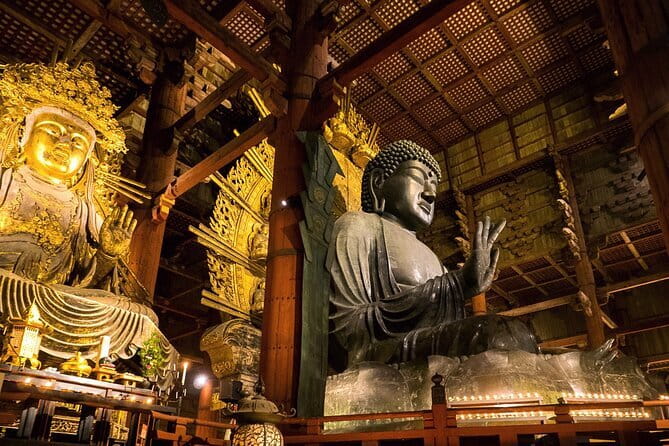
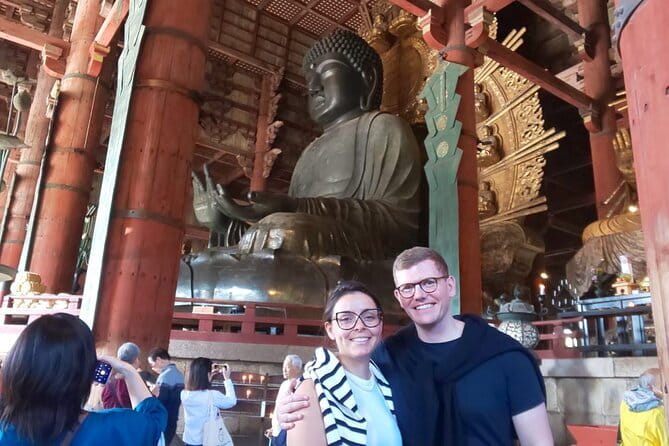
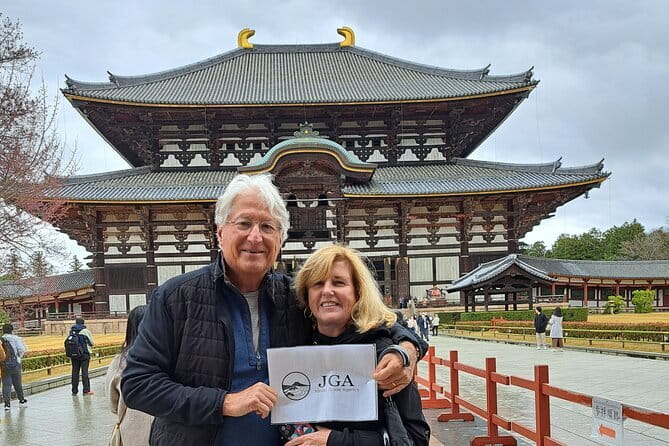
Todai-ji is the natural anchor for a first visit. Built in 752 as the head temple of Japan’s provincial temples, it is one of the country’s most important Buddhist sites. The temple’s scale is the point. Even before you focus on the details, the buildings make clear that Nara was once the center of national religious and political life.
The tour allows about 30 minutes at Todai-ji, though your private format gives you a chance to discuss the timing with your guide. Admission is not included. If Todai-ji is your main reason for visiting Nara, tell the guide early so the day is not overloaded with too many distant stops.
Next door, Nara Park provides the familiar deer encounter, but it is more than an animal stop. Established in 1880, the park contains or borders several of Nara’s main sights, including Todai-ji, Kasuga Grand Shrine, Kofuku-ji, and the Nara National Museum.
The deer are a highlight, especially for families, but they can also make the park feel crowded and distracting. Your guide can help turn a quick feeding stop into a route through the wider park, where the temples, forest paths, and shrine approaches matter just as much as the animals.
Kasuga Grand Shrine and Mt. Wakakusa
Kasuga Grand Shrine was founded when Nara became the capital and is dedicated to the deity linked with protecting the city. Its setting gives you a different experience from Todai-ji. Instead of one huge temple hall, you get a shrine complex connected to the wooded eastern side of Nara Park.
The tour allows about 30 minutes here, with admission listed as free. That short stop works if you want an overview, but you may want more time if shrine architecture, religious customs, or the approach through the trees interests you.
Mt. Wakakusa rises behind Nara Park between Todai-ji and Kasuga Grand Shrine. At about 350 meters high, it offers broad views over Nara. Admission is not included, and the stop may be less appealing if you prefer level walking or want to spend the day inside temples and museums.
I would pair Mt. Wakakusa with Todai-ji and Kasuga Grand Shrine rather than trying to fit it into a route that also reaches far western Nara. The mountain adds open views and a change of pace, but it also uses energy on a day that can already exceed 20,000 steps.
Horyu-ji, the far-reaching temple choice
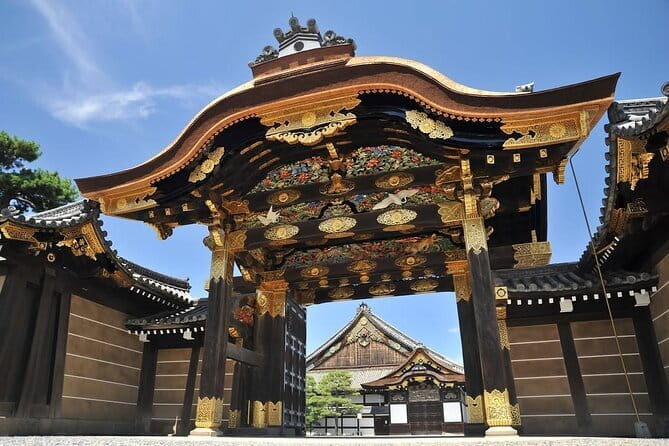
Horyu-ji is one of Japan’s oldest temples, founded in 607 by Prince Shotoku. It contains what is described as the world’s oldest wooden building, giving it unusual importance for anyone interested in early Japanese architecture and Buddhism.
The tradeoff is distance. The tour lists around 30 minutes here, with admission extra, but the wider route from Osaka to Nara and back can become ambitious if you also choose several central Nara sights. Ask your guide to plan the day around Horyu-ji if this is a priority.
This is a good example of why the private format matters. A fixed group may simply include Horyu-ji because it appears on a standard route. Here, you can decide if an older, quieter temple complex matters more to you than Nara Park or a museum.
A few more Osaka tours and experiences worth a look
- Private Osaka Walking Tour: Highlights & Hidden Gems
★ 5.0 · 569 reviews - 3/4/5 Hours Private Tour in Osaka with Local Guide
★ 5.0 · 189 reviews - Osaka’s Best and Brightest: Private Full-Day Tour by Vehicle
★ 5.0 · 147 reviews - Full Day Tour of Kyoto with Private Transportation
★ 5.0 · 130 reviews
Naramachi and the city’s everyday side
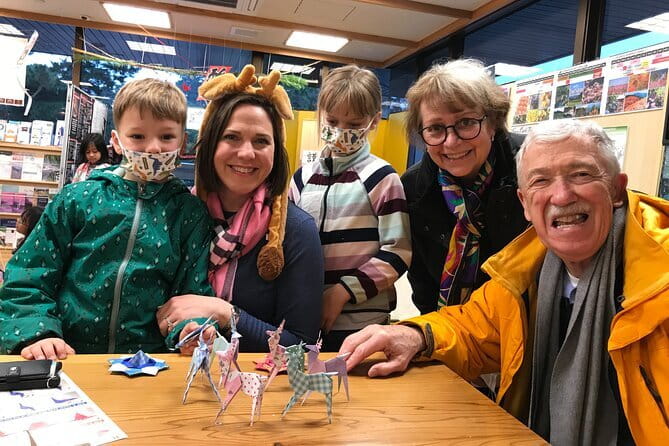
Naramachi was once Nara’s merchant district. Traditional homes and storehouses remain, and the area now includes small shops, cafes, and boutiques. It offers a useful counterpoint to the grand religious monuments.
I like Naramachi for visitors who want to see how Nara worked as a town, not only as a place of imperial temples. It is also a sensible choice if your group wants time for browsing or a meal. Food and drinks are not included, so this is one place to ask your guide about a break.
The planned stop is about 30 minutes, but private touring can make that feel less rigid. If you enjoy crafts, local goods, or old streets, you may prefer to spend longer here and drop a second temple. If you want monumental architecture above all else, Naramachi may feel less dramatic.
Kofuku-ji and the Nara National Museum
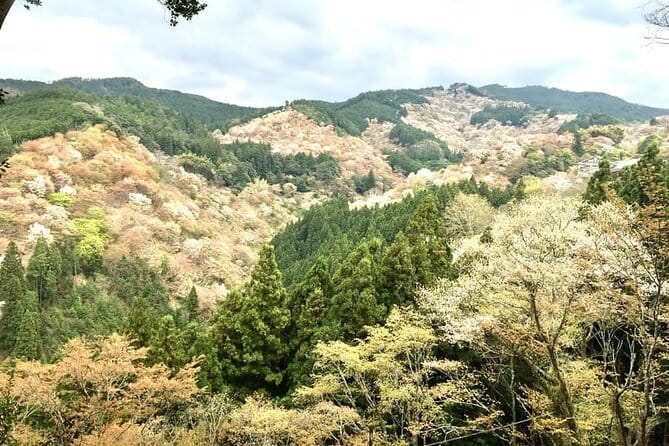
Kofuku-ji was the family temple of the Fujiwara clan, one of the most powerful aristocratic families during the Nara and Heian periods. The temple was established in Nara when the capital moved there, making it an important stop for understanding the city’s political connections.
Admission is not included, and the visit is planned for about 30 minutes. Kofuku-ji fits neatly with Nara Park and Todai-ji because the sites are in the same central area. It is a practical choice when you want several major sights without spending the day going back and forth.
The Nara National Museum focuses mainly on Japanese Buddhist art. Founded in 1889, it retains historic museum buildings and offers a change from outdoor temple visits. Admission is extra, and 30 minutes is enough for a quick look but not a serious museum visit.
Choose the museum if you value sculpture, painting, and religious art. Skip it if your group is already tiring or if the goal is gardens and old streets. A private guide can help explain what you are seeing, but you should not expect a full museum study session in half an hour.
Yakushi-ji and Shin-Yakushiji
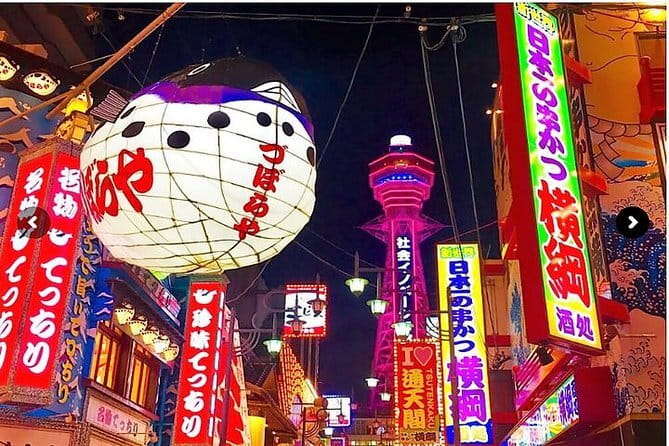
Yakushi-ji was built by Emperor Tenmu in the late seventh century for the recovery of his sick wife. Its strictly symmetrical layout makes it different from the more irregular temple settings in Nara Park. Admission is extra, and the visit is planned for about 30 minutes.
Shin-Yakushiji was founded during the Nara Period by an empress for an ailing emperor. It is devoted to Yakushi Buddha, the Buddhist figure associated with healing. The name can cause confusion, since Shin-Yakushiji and Yakushi-ji are separate temples.
These two stops suit visitors who want a more focused look at Nara’s Buddhist traditions. They are less obvious choices for a first day if you want deer, a famous shrine, and the Great Buddha. With only three or four places available, choose them because their religious purpose and architecture interest you, not simply because they appear on the menu.
Heijo Palace Museum and Nara’s capital past
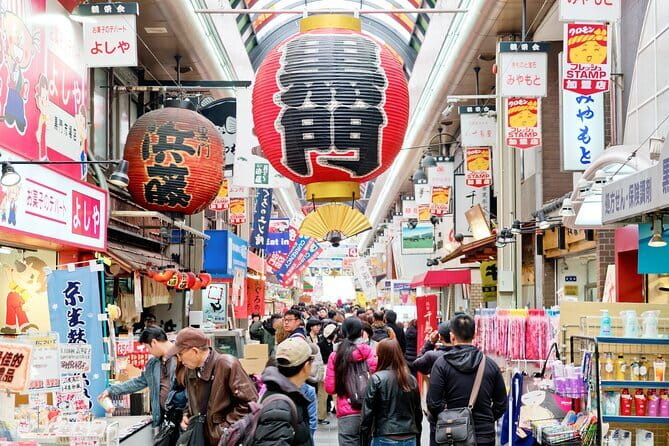
Heijo Palace was the center of Nara when the city served as Japan’s capital. The palace area once extended roughly one kilometer by one kilometer, giving you a sense of the scale of the imperial city.
The Heijo Palace Museum is an appealing choice if you want historical context before visiting more temples. Admission is extra, and the planned stop is about 30 minutes. That timing makes it a compact introduction, not a complete examination of the former capital.
I would combine Heijo Palace with one or two central sights rather than attempt every corner of Nara in one day. The palace area adds space and historical perspective, but it does not replace the visual impact of Todai-ji or the atmosphere of Kasuga Grand Shrine.
Toshodai-ji, Isuien Garden, and Yoshikien
Toshodai-ji was founded in 759 by Ganjin, a Chinese priest invited to Japan to train priests and improve Japanese Buddhism. His role points to the strong links between Japan and the Asian mainland during this period.
Admission is extra, and the stop is scheduled for about 30 minutes. Toshodai-ji is best for you if religious history and temple design matter more than the standard Nara highlights. It can also make a good choice for a second visit.
Isuien Garden uses Todai-ji’s Nandaimon Gate and Mt. Wakakusa as borrowed scenery. That means the garden’s design intentionally frames features beyond its own boundaries. Admission is extra, and the planned visit is about 30 minutes.
Yoshikien is another central Nara garden, named for the Yoshikigawa River beside it. It occupies the site of a former Kofuku-ji priests’ residence and provides a quieter alternative to the main temple compounds.
The gardens are especially useful when you need a calmer part of the day. One guest praised the serenity of a garden visit and found it a welcome break from a hectic touring schedule. I would not promise the same setting as the Silver Pavilion mentioned in that account, but the point applies well here: gardens give your eyes and feet a rest.
What the guides add to the day
The tour’s value depends heavily on the guide you receive. The operator identifies a government-licensed guide and English support, while individual guide names associated with past bookings include Noriko, Momoyo, Hiro, and Kaeko.
Noriko was punctual and helped one group see lesser-known places in addition to the main sights. That day included sake and mochi, along with a long walking route of more than 25,000 steps. Momoyo helped a family recover a phone left behind, a useful reminder that a local guide can help with small problems that are hard to solve across a language barrier.
Hiro was praised for organized planning and strong English. A tea ceremony was added to one booking, but you should treat that as a possible arrangement rather than a guaranteed part of this tour. Ask before booking if a tea ceremony or another special activity matters to you.
The private setup also lets you set the tone. You can ask for more history, more photo time, a food stop, or fewer major monuments. Be clear about your priorities at the start, since three or four sights cannot cover every part of Nara.
Walking, timing, and practical costs
The advertised duration is about eight hours. That sounds generous until you account for the journey from Osaka, walking between sights, meals, pauses, and the fact that Nara offers many tempting detours.
Pickup is on foot within a designated area of Osaka. You are not getting a private car or a driver. The guide leads the way, but you should still expect public transportation or walking as part of the day unless a separate arrangement is made.
The tour is near public transportation, and most people can participate. Service animals are allowed. The activity is private, with only your own group taking part, but separate reservations cannot be joined together into one larger party.
Admission tickets are not included at several major stops. Food, drinks, and personal expenses are also extra. Ask your guide early which paid sites you will visit so you can budget properly.
You can cancel for a full refund up to 24 hours before the start time. Changes or cancellations inside that window are not accepted for a refund, and the cut-off follows local time.
Should you book the Osaka to Nara private tour?
Book it if you want a guide to handle the route, explain the temples in English, and shape the day around your interests. It is particularly well suited to families, small groups, first-time visitors, and anyone who would rather ask questions than read signs while trying to find the next train or entrance.
Think twice if you are comfortable navigating alone, want a slow day with only one or two sights, or are watching your budget closely. The price is high for one person, the admission fees add up, and Nara can involve a great deal of walking.
For the best value, decide on your top two priorities before meeting the guide. Then leave room for one flexible choice, such as Naramachi, Isuien Garden, or a food stop. That approach gives you the help of a private guide without turning eight hours into a race through every famous name in Nara.
FAQ
How long does the Nara private tour last?
The tour lasts approximately eight hours.
Where does the tour begin?
The guide meets your group on foot within a designated area of Osaka.
Can the tour depart from Kyoto?
The experience information states that you can choose to visit Nara from Osaka or Kyoto, while the included pickup details specify a meet-up within a designated area of Osaka. Confirm the departure point when booking.
How many sights can I visit?
The private tour includes a customizable plan covering three to four sights of your choice.
Are entrance tickets included?
No. Admission is not included for several attractions, including Todai-ji, Mt. Wakakusa, Horyu-ji, Kofuku-ji, Yakushi-ji, Shin-Yakushiji, the Nara National Museum, Heijo Palace Museum, Toshodai-ji, Isuien Garden, and Yoshikien. Nara Park and Kasuga Grand Shrine are listed as free.
Is this a private group activity?
Yes. Only your own group participates, and separate reservations cannot be combined into one larger group.
What happens if I need to cancel?
You can receive a full refund if you cancel at least 24 hours before the experience start time. Cancellations or changes made less than 24 hours before the start time are not refunded or accepted.
Just added around Osaka
- Osaka Early Morning Osaka Castle Tour Avoid Crowds★ 5.0 · 3 reviews
- Guided Tour of Some Attractions in Osaka by Private Car★ 5.0 · 3 reviews
- Nara Day Trip from Osaka with a Licensed Guide★ 5.0 · 3 reviews
- Private Transfer Between Kyoto and Kansai Airport KIX★ 5.0 · 3 reviews
- Shared Arrival Transfer: Osaka Itami Airport to Osaka City★ 5.0 · 3 reviews
- Osaka: Sushi Making Class and Dotonbori Food Tour★ 4.7 · 3 reviews
- Osaka Night Photography Workshop★ 5.0 · 3 reviews
- Kyoto Full day Tour Kinkakuji, Kiyomizu-dera and Fushimi Inari★ 4.5 · 3 reviews
Nara Day Trips from Osaka, compared.

Ancient Capital Tour: Kyoto and Nara Highlights from Kyoto/Osaka
Read our review →

Kyoto & Nara Private customized tour with English speaking Guide
Read our review →
Kyoto and Nara UNESCO Highlights Full-day Tour From Osaka
Read our review →
Kyoto & Nara & Uji: Full Day Sightseeing Tour from Osaka or Kyoto
Read our review →Browse the lists this tour appears in