
Reviewed · OSAKA CASTLE TOURS
Learn Zen in a class of making Matcha tea near Osaka Castle
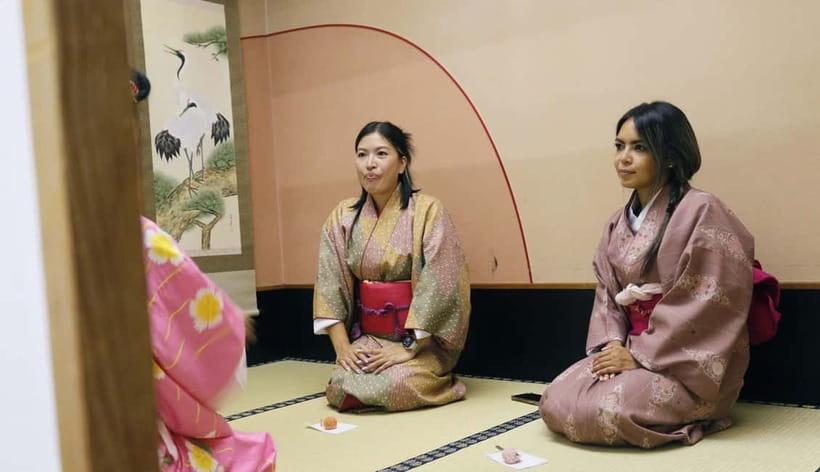
Passing through the low tea-room entrance is meant to reset the room: everyone is treated equally, no matter their age, nationality, gender, or social standing. In a one-hour class near Osaka Castle, you dress in kimono or hakama, learn the manners of chanoyu, and prepare matcha for one another.
I like the careful cultural framing, especially the lesson on wagashi and the Japanese love of the four seasons. I also like the small group limit of six, plus the included photo service, which lets you focus on the ceremony instead of asking someone to take pictures. The main consideration is time: one hour goes quickly, and hair styling, outdoor photos, and some traditional accessories cost extra.
In This Review
- Key points to know before booking
- A tea ceremony with a samurai setting
- What happens after you change clothes
- Wagashi explains Japanese beauty better than a lecture
- Kimono, hair, and the photo session
- Why the small group matters
- Is $40 a fair price?
- Getting there and planning the day
- Who will enjoy this most
- What the strongest praise points to
- Should you book this matcha class?
- FAQ
- Where does the matcha tea ceremony take place?
- How long does the experience last?
- What clothing is included?
- Is hair styling included?
- Is photography included?
- Can children participate?
- Is the activity available in English?
- How many people can join the class?
- What is included in the $40 price?
Key points to know before booking
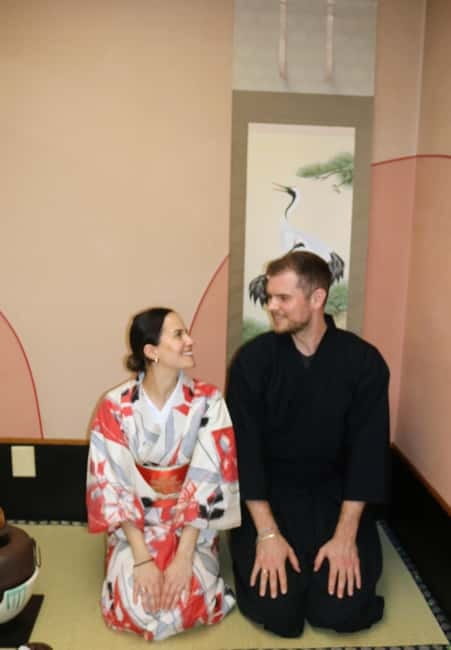
- Enter as a samurai or Yamato Nadeshiko: Men wear hakama and a traditional robe, while women wear kimono with an option for additional hair styling and accessories.
- Learn by doing: You do not only watch the tea master. You practice bows, sitting, walking, handling the bowl, and preparing matcha for another participant.
- Taste seasonal wagashi: These hand-shaped sweets connect tea, Japanese food culture, wabi-sabi, and the four seasons.
- Keep the group small: The class is limited to six people, giving each participant time to take part.
- Receive ceremony photos: Included photos are sent to your designated email address, while outdoor photography and movie shooting are paid options.
- Arrive early: Reach the Samurai Honor meeting point 30 minutes before your booked time for instructions and changing clothes.
A tea ceremony with a samurai setting
This is not simply a cup of green tea in a pretty room. The class presents tea ceremony as a lesson in conduct, hospitality, and shared attention. At Bushi no Homare, also called Samurai Honor, the setting links matcha with samurai culture, martial arts, calligraphy, and traditional dress.
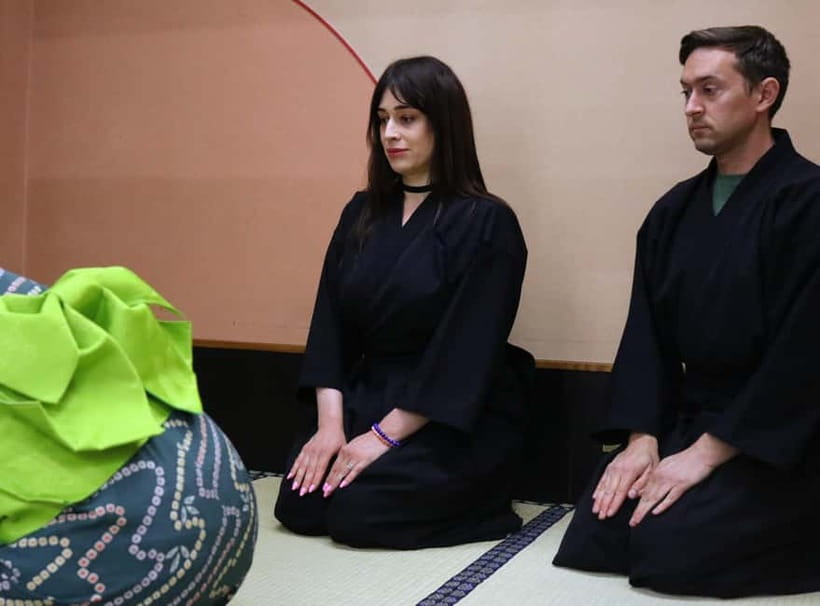
Men change into hakama and dogi, becoming samurai for the activity. Women wear kimono and take on the traditional image of Yamato Nadeshiko. The costumes make the experience more memorable, but they also change how you move. A kimono asks you to take smaller steps, sit carefully, and pay attention to every gesture.
You should arrive 30 minutes early. That extra time is not part of the one-hour ceremony itself. It is used for instructions and changing clothes, so arriving at the booked start time would leave you rushed.
The meeting point is at Excellence Takayama 1F, 2-3-19 Shiginonishi, Joto-ku, Osaka-shi, Osaka 536-0014. Look for the wooden sign reading Honor of the Samurai, the rack of Samurai Honor pamphlets, and traditional clothing hanging near the shop. The supplied directions warn that Apple Maps gives the wrong address, so use Google Maps for navigation.
More tours of Osaka Castle and its grounds:
- Osaka Castle: Museum and Tower Entry Ticket
★ 4.5 · 2,380 reviews - Osaka Castle Walking Tour and Castle Tower Admission
★ 5.0 · 561 reviews - 5-Hour Osaka Bike Tour to the Neighborhood of Osaka Castle
★ 5.0 · 319 reviews
What happens after you change clothes
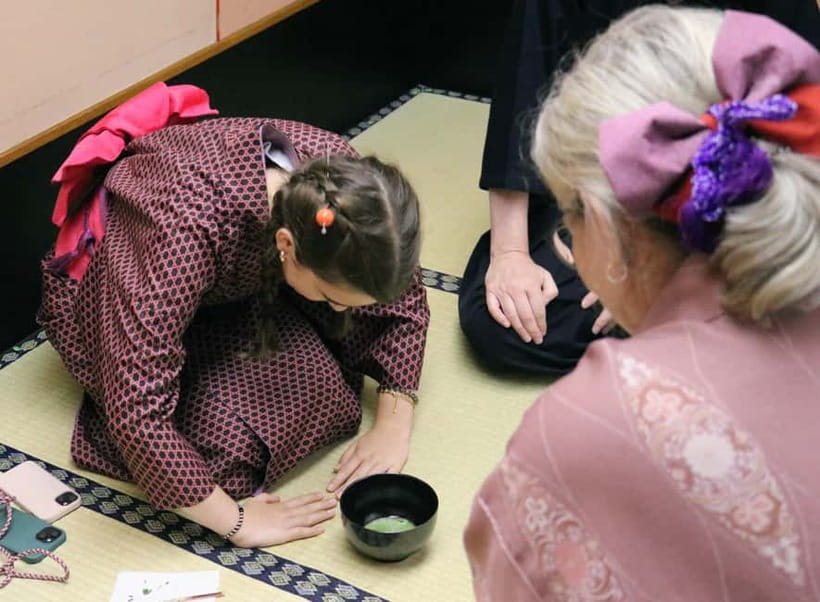
Once dressed, you receive an introduction to the ceremony and its basic manners. The English-speaking staff explain how to sit, bow, stand, walk, and receive the tea bowl. These rules can seem fussy at first, but the point is not to test your memory. They give everyone a shared way to show respect.
The host serves matcha according to traditional etiquette. You observe the preparation, then learn how the tea is handled and presented. Participants also have the chance to prepare tea for one another, turning the class from a demonstration into a hands-on lesson.
That exchange is important. Chanoyu is based on mutual care. The host offers hospitality, but the person receiving it responds with attention and courtesy. You learn that the atmosphere is created by both sides, not by the tea master alone.
The ceremony also teaches a quiet form of equality. The nijiriguchi, or low entrance to the tea room, requires you to bend as you enter. Traditionally, this entrance helped leave rank and status outside. In the room, the stated ideal is simple: everyone is treated alike.
You do not need prior knowledge of Japanese tea ceremony. The instructor demonstrates the actions and gives you time to practice. The class is conducted in English and Japanese, with English interpreter staff provided by default. Italian, Spanish, French, Chinese, Thai, and Indonesian interpretation may be possible, but you need to ask about staff availability before booking.
Wagashi explains Japanese beauty better than a lecture
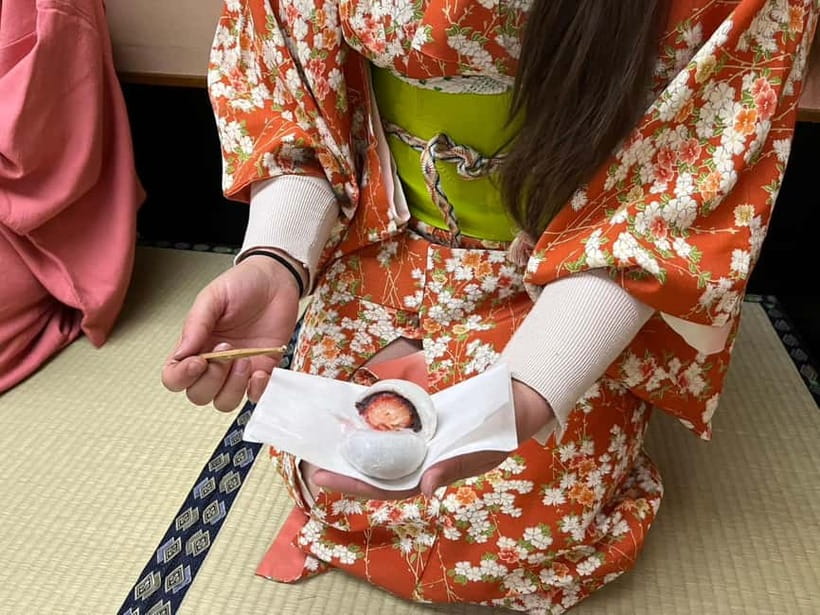
The sweet served with matcha is wagashi, a traditional Japanese confection associated with tea culture. It is usually small, handmade, and shaped with care. Here, wagashi is not treated as a random snack. It becomes part of the cultural lesson.
You learn how its colors and forms refer to the seasons. Spring, summer, autumn, and winter are central to Japanese food culture, and wagashi expresses that connection through its appearance. A sweet may suggest flowers, leaves, snow, or another seasonal image, with the exact design changing through the year.
This is also a useful introduction to wabi and sabi. These ideas are difficult to translate into a single English phrase, but they relate to simplicity, restraint, natural change, and the beauty of things that are modest or imperfect. The tiny sweet, made by hand one at a time, gives you something concrete to look at and taste while the instructor explains the ideas.
I find this part especially valuable for visitors who want more than a costume photo. The wagashi helps connect the ceremony to Japanese food, craft, history, and the changing year. You may decide it is too pretty to eat, but eating it is part of the experience.
Kimono, hair, and the photo session
The clothing is one of the main reasons to book this class. You select a kimono from the available colors and change before the tea ceremony. Men wear kimono with an obi, tabi socks, and geta wooden clogs, while women wear kimono with an obi, tabi, zori sandals, and a basket-style bag.
The supplied experience information lists wagami, meaning arranged hair with kanzashi, as a paid option. Some participants have had their hair put up and decorated with flowers, but you should confirm exactly what is included when you reserve. The same applies to outdoor photo sessions.
Photography during the ceremony is included. A staff photographer takes pictures while you concentrate on the tea, clothing, and etiquette. The finished data is sent to your designated email address, and the stated service sends it on the same day. That is a useful touch, particularly if this is your main traditional portrait in Osaka.
An outdoor photo shoot is available as a paid option. For women, that option can include kimono, obi, tabi, zori, a basket bag, and outdoor photography. For men, it can include kimono, obi, tabi, geta, and outdoor photography. Movie shooting is also listed as an extra.
Keep the one-hour schedule in mind. The class includes changing, instruction, tea, wagashi, participation, and photographs. If you want elaborate hair, an outdoor session, or video, allow for extra time and cost rather than assuming it is part of the basic booking.
More tea ceremonies and matcha sessions:
- Osaka: Tea Ceremony Experience
★ 4.9 · 1,426 reviews - Tea Ceremony Experience in Osaka Doutonbori
★ 5.0 · 754 reviews - Matcha Making Class in Osaka with Authentic Japanese Sweets Set
★ 5.0 · 509 reviews - Osaka: Matcha Making Experience with Japanese Sweets
★ 5.0 · 146 reviews
Why the small group matters
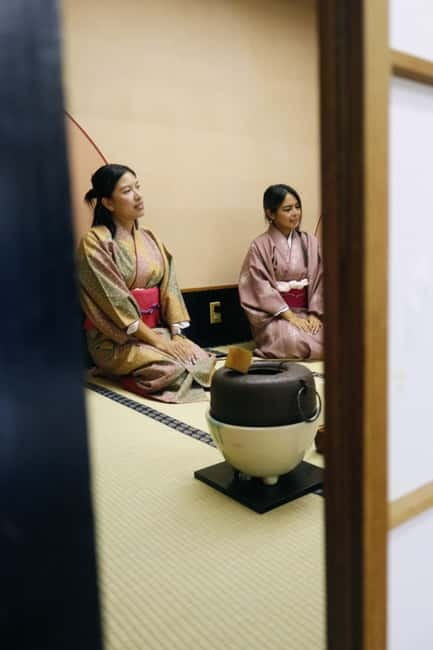
The maximum group size is six. That is small enough for the instructor to watch each person practice, correct a bow, explain how to hold the bowl, or give another turn at making matcha.
The value of the small group depends on how full your session is. Some bookings may be private or nearly private, while others may include several participants. In either case, a six-person limit is more personal than a large stage-style cultural show.
It also suits families, provided every child is at least 10 years old. Parents and children can dress up together, learn the same sequence, and take home shared photos. Younger children are not accepted, and the formal movements may require patience from children who prefer fast activities.
The class is also a good fit for couples and friends who want to participate together. You are not simply watching a master work. You can serve tea to another person, respond to the host, and share the small responsibilities that make the ceremony work.
Is $40 a fair price?
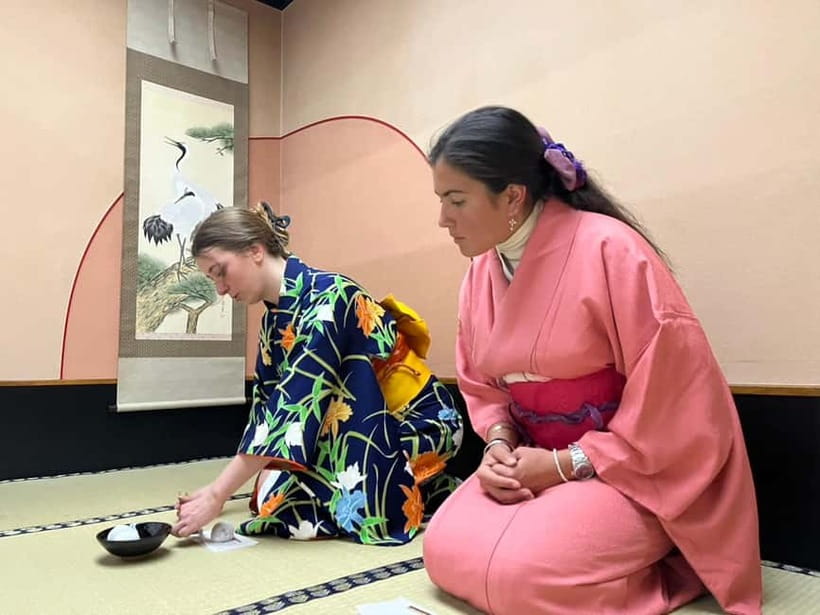
At $40 per person, the basic price covers quite a lot for a one-hour cultural activity. You receive kimono clothing, matcha, wagashi, an English interpreter guide, a certified professional instructor, taxes, tips, and ceremony photos sent by email.
I would judge the price mainly by what you want from the experience. If you want a quick introduction to matcha, traditional clothing, and Japanese manners, the package is sensibly priced. The included photography adds value, since a professional camera records the ceremony without requiring you to interrupt it.
The price is less complete if your main goal is a full makeover or an outdoor portrait session. Arranged hair with kanzashi, outdoor photography, and movie shooting are paid options. Transportation from a hotel or train station is not included either.
Compared with a longer cultural workshop, this is a compact introduction. You get a focused hour rather than a full day of tea study. That makes it easy to fit into an Osaka itinerary, but it also means the history and etiquette are presented in a condensed form.
Getting there and planning the day
The activity is in Osaka’s Joto-ku, at the Samurai Honor location listed above. It is described as being near Osaka Castle, but pickup and drop-off are not provided. You must arrange your own transportation to the meeting point.
Use Google Maps rather than Apple Maps, since the address on Apple Maps is reported as incorrect. Give yourself enough time to find the wooden Honor of the Samurai sign and arrive 30 minutes before the appointment.
Wear or bring a T-shirt. This is the stated item to bring, and it is practical beneath traditional clothing. Pets, alcohol, drugs, and nudity are not allowed.
The activity lasts one hour, but your total commitment will be longer because of early arrival and changing. If you have a tightly timed Osaka Castle visit, leave a buffer before your next plan. Costumes, photographs, and group instruction are not things to rush.
Who will enjoy this most
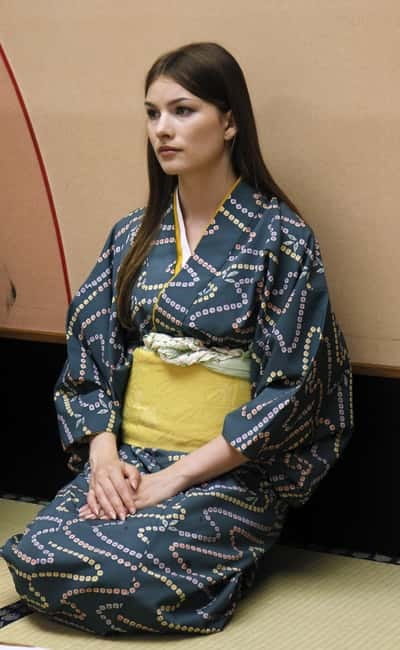
I would choose this for you if you want a hands-on cultural activity rather than a passive performance. It works particularly well for first-time visitors who want to understand why tea ceremony involves so many gestures and why wagashi matters.
It is also a strong choice for anyone who wants traditional clothing photos without booking a separate studio session. The basic experience includes ceremony photography, and the staff can send the images to you by email.
Families with children aged 10 and up can use the class as a shared activity. Couples and friends will appreciate preparing tea for each other. Solo participants can also take part, though the social side depends on the size of the group booked that day.
I would be more cautious if you dislike formal rules, sitting carefully, or changing into layered clothing. The session is friendly, but it is still built around manners and controlled movements. It is not a casual tea tasting.
People over 95 and those with altitude sickness are listed as unsuitable for the activity. No special access details are provided, so you should contact the provider if you have mobility or other support needs.
What the strongest praise points to
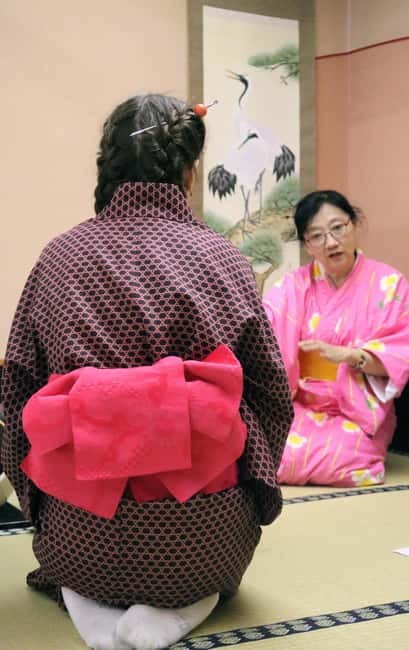
The most consistent strengths are the warmth of the instruction, the costumes, the clear cultural explanation, and the photographs. Kaori is specifically praised for explaining the historical and cultural setting while showing the preparation step by step.
Another participant valued having time for each person to make tea. That is exactly the feature to protect when comparing this class with larger demonstrations. You want enough time to handle the bowl and whisk, not just watch someone else do it.
The clothing also receives strong attention. You can choose among kimono colors, and some sessions have included beautifully arranged hair with flowers. Since hair arrangement appears as a paid option in the activity details, confirm the package before you count on it.
The English-speaking instructors are described as kind and clear, which matters here. A tea ceremony can feel mysterious when you do not know why you are bowing or turning the bowl. Good explanation turns a string of rules into a connected cultural practice.
Should you book this matcha class?
Book it if you want a short, personal introduction to Japanese tea ceremony with traditional clothing, wagashi, and photos. The $40 price is reasonable for the included items, particularly the small group size, professional instruction, and email photography.
Before paying, check the extras. Ask about arranged hair, kanzashi, outdoor photographs, and any language other than English or Japanese. Also confirm the meeting point on Google Maps and arrive 30 minutes early.
I would not choose it as a substitute for a long tea-study course. I would choose it as a thoughtful Osaka activity that gives you something to do, wear, taste, and remember. The best part is not pretending to be a samurai or posing in a kimono. It is learning how host and participant work together to create a respectful moment.
FAQ
Where does the matcha tea ceremony take place?
It takes place at Bushi no Homare, also called Samurai Honor, at Excellence Takayama 1F, 2-3-19 Shiginonishi, Joto-ku, Osaka-shi, Osaka 536-0014. The activity is near Osaka Castle.
How long does the experience last?
The ceremony experience lasts one hour. You should arrive 30 minutes before your reserved time for instructions and changing clothes.
What clothing is included?
Kimono clothing is included. Men wear hakama and dogi, while women wear kimono. Additional traditional items such as obi, tabi, zori, geta, and bags are associated with the clothing options listed for the activity.
Is hair styling included?
Arranged hair with kanzashi is listed as a paid option. Confirm the exact hair and accessory package before booking.
Is photography included?
Photo shooting during the ceremony is included, with the data sent to your designated email address. Outdoor photo sessions and movie shooting are paid options.
Can children participate?
Children must be at least 10 years old. The activity is not suitable for children under 10.
Is the activity available in English?
Yes. English and Japanese are available, and the default interpreter language is English. Italian, Spanish, French, Chinese, Thai, and Indonesian interpretation may be possible depending on staff schedules.
How many people can join the class?
The class is limited to six participants.
What is included in the $40 price?
The price includes kimono clothing, matcha, wagashi, English interpreter guide staff, a certified professional instructor, taxes, tips, and photo shooting with the images sent by email. Transportation and personal expenses are not included.
Just added around Osaka
- Nara Day Trip from Osaka with a Licensed Guide★ 5.0 · 3 reviews
- Osaka Early Morning Osaka Castle Tour Avoid Crowds★ 5.0 · 3 reviews
- Guided Tour of Some Attractions in Osaka by Private Car★ 5.0 · 3 reviews
- Private Transfer Between Kyoto and Kansai Airport KIX★ 5.0 · 3 reviews
- Shared Arrival Transfer: Osaka Itami Airport to Osaka City★ 5.0 · 3 reviews
- Osaka: Sushi Making Class and Dotonbori Food Tour★ 4.7 · 3 reviews
- Osaka Night Photography Workshop★ 5.0 · 3 reviews
- Kyoto Full day Tour Kinkakuji, Kiyomizu-dera and Fushimi Inari★ 4.5 · 3 reviews
Osaka Castle Tours, compared.
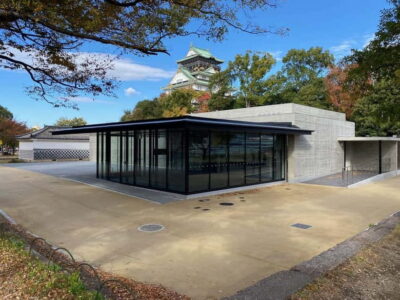
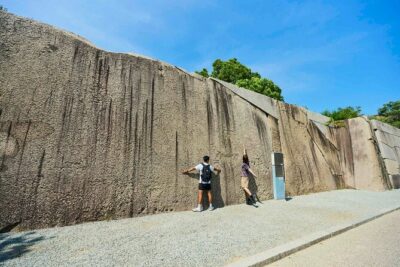
Osaka Castle Walking Tour and Castle Tower Admission
Read our review →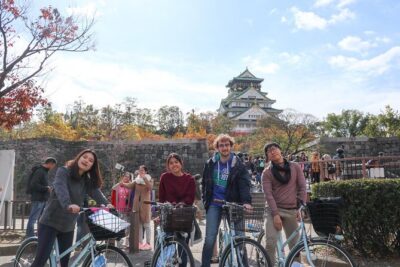
5-Hour Osaka Bike Tour to the Neighborhood of Osaka Castle
Read our review →
Castle History Walking Tour / Castle Tower Admission
Read our review →

PRIVATE 6hr, Food tour from Osaka Castle, Kuromon, Dotonbori.
Read our review →
A Tour to Explore the Symbol of Osaka: Osaka Castle
Read our review →Browse the lists this tour appears in