
Reviewed · KYOTO DAY TRIPS FROM OSAKA
Kyoto Full-Day Private Tour (Osaka departure) with Government-Licensed Guide
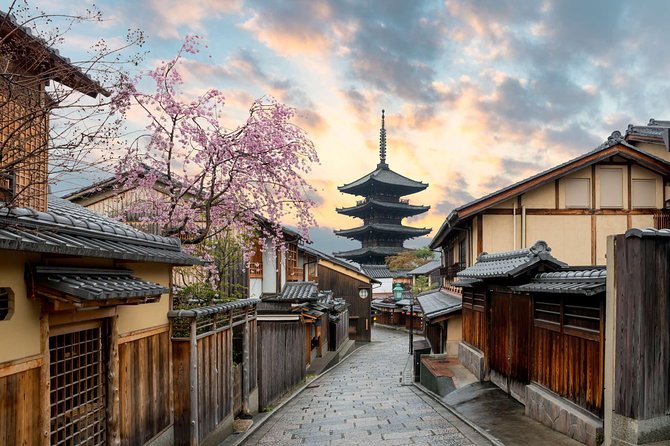
Kyoto packs centuries of shrines, temples, gardens, old streets, and food stalls into a city that can feel confusing even with a good map. This private day trip lets you choose three or four priorities from 35 sites, then reach them with a licensed guide such as Rie, Ichiro, Haru, Bell, or Yuko. The custom route is the main attraction.
I like the practical help with trains, buses, and station changes, especially when you are coming from Osaka or an Osaka cruise port. I also like the chance to shape the day around your interests, from Gion and Nishiki Market to Arashiyama or the quieter northern temples. The catch is simple: Kyoto is large, and eight hours goes quickly. Trying to squeeze in too many places can turn a pleasant day into a fast march.
In This Review
- Key points at a glance
- What this private Kyoto day is really designed to do
- Starting from Osaka by train, bus, or on foot
- Fushimi Inari and southeastern Kyoto
- Kiyomizu-dera and the old streets of Higashiyama
- Nijo Castle and Kyoto’s political past
- Nishiki Market, Pontocho, and a useful lunch break
- Arashiyama, bamboo, and western Kyoto
- Northern temples and quieter choices
- Mountain escapes: Shugakuin, Kibune, and Kurama
- How much walking and rushing should you expect?
- Is $201.46 per person a fair price?
- Who should book this Kyoto tour?
- FAQ
- How long does the Kyoto tour last?
- Where does the tour start?
- Is transportation included?
- Is a private vehicle included?
- How many Kyoto sites can I choose?
- Are entrance fees included?
- Is lunch included?
- Can I cancel for a full refund?
Key points at a glance
- Choose three or four Kyoto sights: The 35 possible stops include major temples, imperial villas, historic districts, markets, and the Uji landmark of Byodoin.
- Travel by public transportation: Your guide can help with the train, subway, and bus system, but transportation costs are extra.
- Meet in Osaka: Pickup is offered within designated Osaka areas, including arrangements at some hotels and cruise terminals.
- Expect a lot of walking: Several popular stops involve temple grounds, hills, stairs, old lanes, and crowded streets.
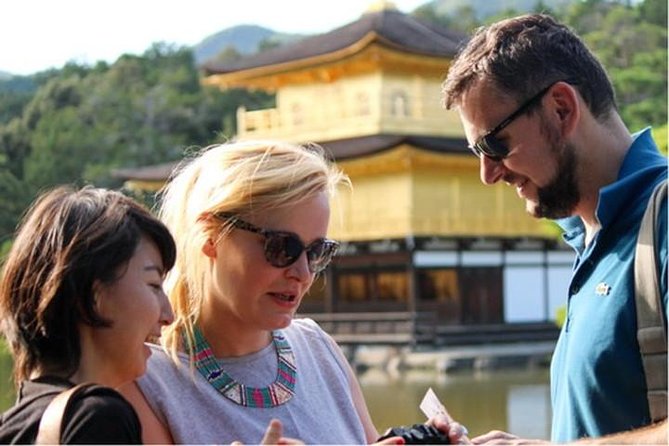
- Use the guide for local judgment: Guides such as Ichiro, Rie, Reo, Haru, Bell, and Yuko have helped guests adjust routes, avoid wasted time, and find suitable meals.
- Budget beyond the tour price: The $201.46 per-person cost covers the licensed guide and private service, not admissions, lunch, trains, buses, or a private vehicle.
What this private Kyoto day is really designed to do
This is not a sightseeing bus with a fixed loop. It is a private walking tour that starts in Osaka and uses Kyoto’s public transportation network to connect a short list of places that matter most to you.
Before the day, you can discuss interests and build a route from the available choices. A family might choose Fushimi Inari, Kiyomizu-dera, Nishiki Market, and Gion. A first-time visitor focused on classic images might pick Kinkaku-ji, Arashiyama, the bamboo grove, and Nijo Castle. A repeat visitor could choose quieter temples such as Jojakkoji, Gio-ji, or Nanzenji.
That flexibility matters because Kyoto’s major sights are spread across the city. Fushimi Inari is in the southeast, Kinkaku-ji is in the north, and Arashiyama is far to the west. You cannot sensibly cover all 35 choices in one day, despite the long menu of possibilities.
The provider’s suggested format is three or four Kyoto sites. That is a realistic target. You may pass through extra neighborhoods or see brief photo stops along the way, but a proper visit requires time for transport, orientation, admission lines, walking, and the sites themselves.
More day trips over to Kyoto:
- Osaka/Kyoto: Hiroshima Miyajima Bus Tour & Shinkansen Ticket
★ 4.7 · 919 reviews - Ancient Capital Tour: Kyoto and Nara Highlights from Kyoto/Osaka
★ 4.5 · 332 reviews - Osaka/Kyoto: Amanohashidate & Miyama Tour with Boat & Lunch
★ 4.6 · 207 reviews
Starting from Osaka by train, bus, or on foot
Pickup means meeting your guide on foot within designated Osaka areas. Some groups have met guides at Osaka hotels or cruise terminals, then traveled together to Kyoto. A private vehicle is not included, but one can be requested and must be booked at least five days ahead.
Public transportation is part of the experience, not a minor detail. Osaka and Kyoto have several rail operators, subway lines, and bus routes, and the best connection can change with your chosen sights. Guides including Ichiro, Tatsuya Ito, Haru, and Yuka have helped groups handle train travel and return to Osaka on schedule.
This is especially useful if you have only one day between cruise activities. One group had about eight hours from an Osaka cruise port and still reached Kyoto’s historic areas before returning safely. That said, you should tell the guide your hard return time before setting the route. A day with Arashiyama on one side of Kyoto and Fushimi Inari on the other can become tight.
The tour price does not include fares. Carry money for trains, buses, temple admissions, meals, and personal purchases. Japan is increasingly cashless, but cash is still useful, and one guide specifically noted that cashless payment has not spread everywhere.
Fushimi Inari and southeastern Kyoto
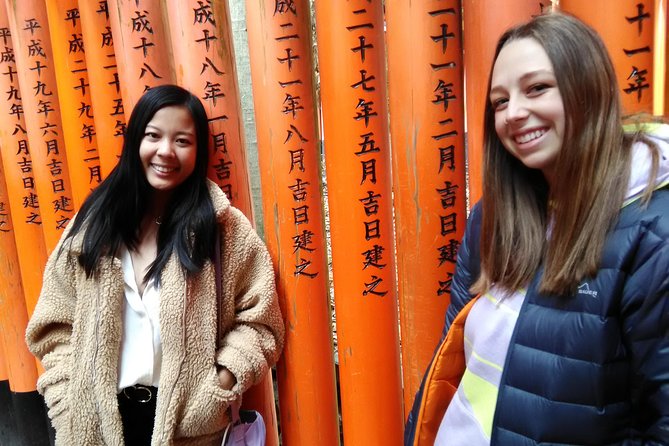
Fushimi Inari-taisha is one of the city’s most recognizable shrines, with its long run of orange torii gates climbing into the wooded hills. It is also one of the busiest places on a standard Kyoto route, so timing and pacing matter.
The short stop shown in the schedule should not be mistaken for a full hike to the summit. You can see the lower shrine area and begin along the torii path, but a serious climb needs much more time. Ask your guide in advance how far you plan to walk.
Nearby Tofuku-ji offers a very different mood. This large Zen temple is known for its autumn color and broad grounds. Toji, the East Temple, connects Kyoto to the early Heian period, when the capital moved to the city. These sites make sense for visitors who want temples without focusing only on the most famous photo spots.
Byodoin in Uji is another possible choice, but it requires extra travel time outside central Kyoto. Its Phoenix Hall is a National Treasure and part of a UNESCO World Heritage site. It can be a rewarding choice for architecture and Buddhist art, but adding it to a route that already includes central Kyoto means giving up something else.
Kiyomizu-dera and the old streets of Higashiyama
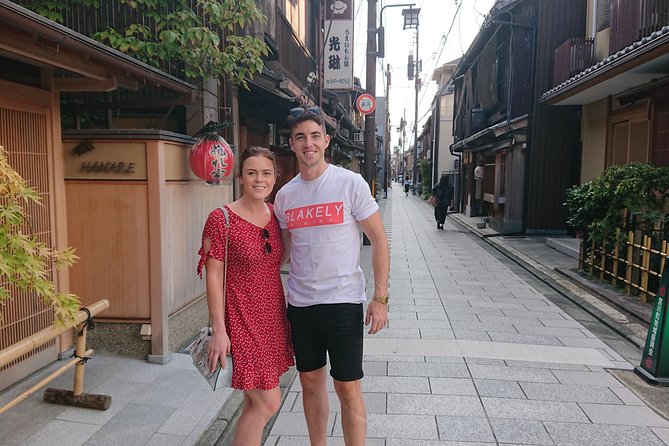
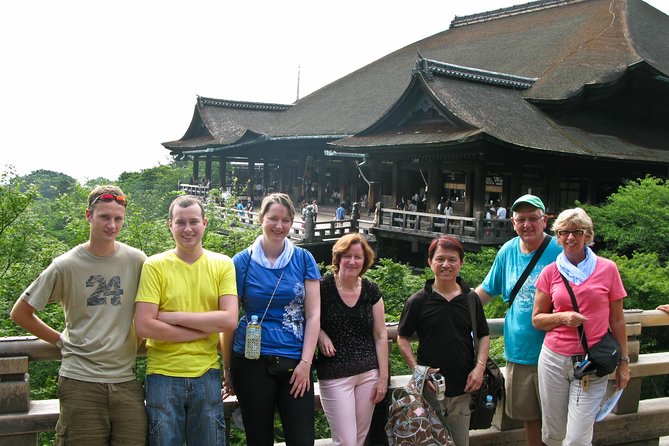
Kiyomizu-dera is a strong pick for a first Kyoto day. The temple sits on the eastern hills and gives you grand wooden buildings, traditional approaches, and broad city views. Admission is extra, and the route through the grounds includes slopes and walking.
The surrounding Higashiyama district helps turn a temple visit into a neighborhood experience. Old streets lead toward shops, small eateries, and other historic buildings, though the area can become crowded. A guide is useful here because it is easy to spend too much time browsing and then lose the schedule.
Gion continues the old-Kyoto atmosphere with narrow lanes and traditional architecture. It is best treated as a historic district, not a guaranteed geisha sighting. One group happened to see a geisha in full makeup while walking with guide Kiriko, but that was luck, not a promised part of the tour. Please behave quietly and respectfully, especially around private homes and working businesses.
Kennin-ji, close to Hanamikoji and Shijo streets, gives you a calmer temple stop near Gion. Its spacious grounds and dry gardens offer a useful pause from the busy lanes. The schedule allows only a very short listed visit, so you should select it as one of your main stops if you want time to look around.
A few more Osaka tours and experiences worth a look
- Osaka: Minoh, Katsuoji Temple, & Minoh Falls Full-day Tour
★ 4.9 · 172 reviews - Osaka’s Best and Brightest: Private Full-Day Tour by Vehicle
★ 5.0 · 147 reviews - Full Day Tour of Kyoto with Private Transportation
★ 5.0 · 130 reviews - Full Day Hiroshima and Miyajima Tour by Bullet Train from Osaka
★ 4.5 · 117 reviews
Nijo Castle and Kyoto’s political past
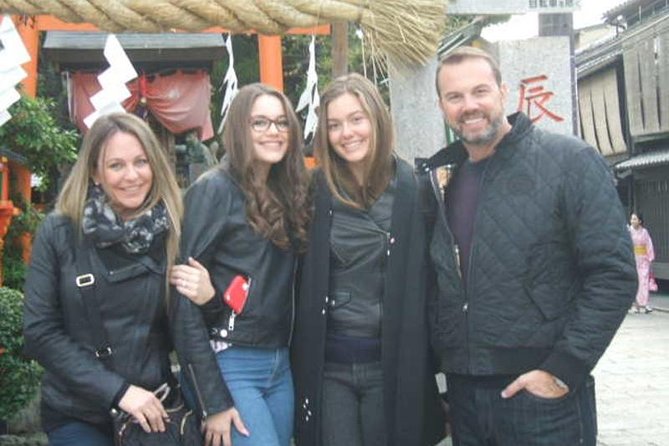
Nijo Castle was built in 1603 as the Kyoto residence of Tokugawa Ieyasu, the first shogun of the Edo period. It brings political history into a day otherwise filled with religious buildings and scenic districts.
This is a good choice if you want more than gardens and photographs. The castle helps explain the relationship between the shogunate, the emperor, and Kyoto’s role as Japan’s imperial capital. Admission is extra.
The Kyoto Imperial Palace offers another piece of that story. It was the imperial family’s residence until 1868, when the emperor and capital moved to Tokyo. The palace grounds are spacious, so allow time for walking even if you do not enter every building.
Nijo Castle, the Imperial Palace, and Nishiki Market can form a logical central Kyoto day. The drawback is that this combination is less scenic than Arashiyama or Higashiyama, and you will still be outdoors for much of the day.
Nishiki Market, Pontocho, and a useful lunch break
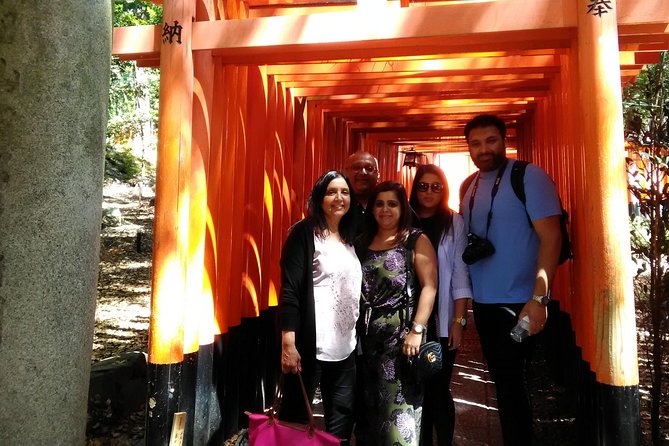
Nishiki Market is a narrow, five-block shopping street known as Kyoto’s Kitchen. More than 100 shops and restaurants sell food and local specialties. It is a practical place to sample small items, browse souvenirs, and see how food fits into daily Kyoto life.
Do not expect a quiet sit-down meal while walking the market. Crowds can make it hard to move, and some vendors have rules about where you may eat. Ask your guide to suggest a restaurant if you prefer a proper lunch.
Pontocho, the narrow dining alley west of the Kamogawa River, works well as an evening-oriented cultural stop, though this tour finishes within its eight-hour daytime frame. Its traditional frontage and restaurant entrances make it a pleasant walk, but you may not have time for a meal there.
Several guides have helped groups choose lunch, including Emiko, who recommended a traditional Japanese restaurant, and Haru, who found a ramen stop for a family. These suggestions can add real value, but lunch remains your own expense.
Arashiyama, bamboo, and western Kyoto
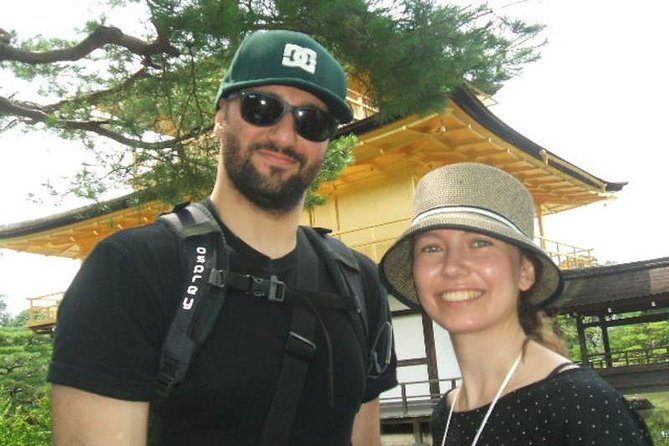
Arashiyama is one of the most requested areas in Kyoto, and for good reason. The district combines the Togetsukyo Bridge, river scenery, temples, gardens, and bamboo paths in a compact part of western Kyoto.
The bamboo grove is attractive, but it is a walking path rather than a secluded wilderness experience. Go for the tall stalks and the distinctive setting, while keeping expectations realistic about crowds. The Togetsukyo Bridge, whose name means Moon Crossing Bridge, is the area’s best-known landmark.
Tenryu-ji is the major temple here and a sensible anchor for an Arashiyama route. Its garden and Zen setting provide more substance than a quick bamboo photograph. Admission is extra.
If you want a quieter, more detailed Arashiyama day, the choices expand. Jojakkoji has small buildings, moss, and maple trees on the hillside. Nisonin has a more imposing layout and tree-lined paths. Gio-ji is known for its moss garden and thatched buildings. Adashino Nenbutsuji has stone figures connected with memorial rites, while Otagi Nenbutsuji is known for roughly 1,200 distinctive stone rakan figures.
Okochi Sanso Garden, the former villa of actor Okochi Denjiro, adds landscaped grounds and buildings behind the bamboo grove. These smaller sites cost extra and require more walking, but they may suit you better than trying to collect several famous names in one rushed circuit.
Northern temples and quieter choices
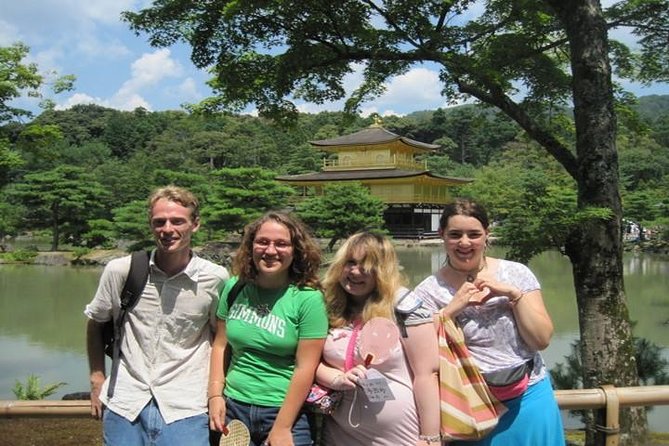
Kinkaku-ji, the Golden Pavilion, is a powerful visual stop. Its upper two floors are covered in gold leaf, and the temple reflects in the pond when conditions are right. Admission is extra, and the visit follows a set route, so the experience is more about the view and setting than wandering freely.
Ryoan-ji offers Japan’s best-known rock garden. Its spare design rewards a few quiet minutes of looking, though the site can be busy. Pairing Ryoan-ji with Kinkaku-ji and Ninna-ji creates a focused northern temple day, rather than an attempt to cross the whole city.
Ninna-ji is a World Heritage temple and the head temple of the Omuro school of Shingon Buddhism. Nanzen-ji, at the foot of the eastern mountains, is one of Kyoto’s major Zen temples and is known for its spacious grounds and brick aqueduct, Nanzenji Suirokaku.
Ginkaku-ji, the Silver Pavilion, began as Ashikaga Yoshimasa’s retirement villa in 1482. Despite its name, it is not covered in silver. Its gardens and understated design make it an appealing counterpoint to Kinkaku-ji’s glitter.
The northern and eastern options are not easy to combine with Arashiyama in a relaxed day. Choose by region whenever possible.
Mountain escapes: Shugakuin, Kibune, and Kurama
The tour menu also reaches beyond the standard central Kyoto circuit. Shugakuin Imperial Villa includes upper, middle, and lower villa areas and is managed by the Imperial Household Agency. It offers a very different look at imperial garden design, but admission is extra and the location requires careful planning.
Kibune is a small mountain settlement built around Kifune Shrine, while Kurama is a rural town known for Kurama-dera and its hot spring. These places offer forest, hills, and a break from the city’s famous temple route.
I would choose one of these only if you have a clear interest in mountain scenery or a return visit to Kyoto. They are poor additions to a day already centered on Fushimi Inari, Gion, and Arashiyama.
How much walking and rushing should you expect?
The schedule lists short time blocks at many stops, but the included service describes a customizable walking tour with three or four chosen sites. In practice, the day’s pace depends on your route, your group, and how long you want inside each place.
You should prepare for substantial walking. Temple grounds may include stairs, slopes, gravel, and long approaches. One family needed the guide to adjust the pace for a young daughter, while other groups found the walking more demanding than expected. Bring water and a snack. Comfortable shoes matter more than dressy clothes.
Communication style can vary by guide. English-speaking guides named in the feedback include Rie, Ichiro, Bell, Reo, Kiriko, Yuka, Haru, and others. Most praised guides for clear explanations, warmth, organization, and transport help. One poor experience involved a guide walking ahead, giving little explanation, and communicating poorly in rain. If you need frequent stops, slower walking, or detailed explanations, say so before the day begins and speak up during the tour.
Is $201.46 per person a fair price?
At $201.46 per person, this is not the cheapest way to visit Kyoto. You still pay for transportation, temple admissions, lunch, and personal expenses. A private vehicle is also extra unless arranged in advance.
The value comes from the guide’s time and the private format. You are not stuck with a fixed group route, and your guide can help you choose sensible sites, handle public transportation, explain customs and history, and adjust when a family member tires. That matters most when you are coming from Osaka for a single day or must return to a ship.
The price makes less sense if you already know Kyoto’s transit system, want only one or two sights, or prefer to wander at your own pace. It makes more sense for first-time visitors, families, small groups, and anyone worried about losing hours between distant neighborhoods. Group discounts may improve the per-person value for larger parties.
Who should book this Kyoto tour?
Book it if you want a private day built around your priorities and you appreciate help with Osaka to Kyoto transportation. It is especially useful for a cruise-port stop, a first visit, or a family group with different interests.
Choose a focused route. Fushimi Inari, Kiyomizu-dera, Gion, and Nishiki Market make a busy but sensible first day. Arashiyama deserves its own western Kyoto plan. Kinkaku-ji, Ryoan-ji, and Ninna-ji work well together. Byodoin, Kurama, and Shugakuin are better for a more specialized day.
Skip it if you want a slow temple visit, a long lunch, or a self-guided stroll with no clock. This is an active eight-hour outing, and the strongest guides help you see more, not less. Your part is to set a realistic pace.
Free cancellation is available up to 24 hours before the start time. Most people can participate, and service animals are allowed. The tour is private, but it is still a walking experience using public transportation unless you pre-book a vehicle.
FAQ
How long does the Kyoto tour last?
The experience lasts approximately eight hours.
Where does the tour start?
The tour begins in Osaka, with pickup offered on foot within designated Osaka areas. Some arrangements have started at Osaka hotels or cruise terminals.
Is transportation included?
No. Transportation is not included, so you should budget for trains, buses, or other public transit used during the day.
Is a private vehicle included?
No. A private vehicle can be requested, but it must be pre-booked at least five days in advance.
How many Kyoto sites can I choose?
The experience offers more than 35 possible points of interest, with a customizable walking tour that generally chooses three or four sites.
Are entrance fees included?
No. Entrance fees are not included for places such as Kiyomizu-dera, Nijo Castle, Kinkaku-ji, and other paid attractions.
Is lunch included?
No. Lunch and personal expenses are extra.
Can I cancel for a full refund?
Yes. You can cancel at least 24 hours before the experience start time for a full refund. Changes or cancellations made less than 24 hours before the start time are not accepted for a refund.
Just added around Osaka
- Nara Day Trip from Osaka with a Licensed Guide★ 5.0 · 3 reviews
- Osaka Early Morning Osaka Castle Tour Avoid Crowds★ 5.0 · 3 reviews
- Guided Tour of Some Attractions in Osaka by Private Car★ 5.0 · 3 reviews
- Private Transfer Between Kyoto and Kansai Airport KIX★ 5.0 · 3 reviews
- Shared Arrival Transfer: Osaka Itami Airport to Osaka City★ 5.0 · 3 reviews
- Osaka: Sushi Making Class and Dotonbori Food Tour★ 4.7 · 3 reviews
- Osaka Night Photography Workshop★ 5.0 · 3 reviews
- Kyoto Full day Tour Kinkakuji, Kiyomizu-dera and Fushimi Inari★ 4.5 · 3 reviews
Kyoto Day Trips from Osaka, compared.

Osaka/Kyoto: Hiroshima Miyajima Bus Tour & Shinkansen Ticket
Read our review →
Ancient Capital Tour: Kyoto and Nara Highlights from Kyoto/Osaka
Read our review →
Osaka/Kyoto: Amanohashidate & Miyama Tour with Boat & Lunch
Read our review →

Sagano Romantic Train & Arashiyama, Kiyomizudera, Fushimi Inari Taisha Day Tour
Read our review →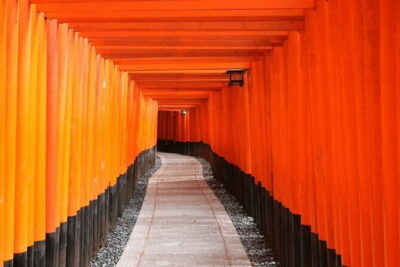
Full Day Tour of Kyoto with Private Transportation
Read our review →
Kyoto & Nara Private customized tour with English speaking Guide
Read our review →Full Day Kyoto Tour : Bamboo Forest, Golden Temple, Fushimi Inari
Read our review →Browse the lists this tour appears in