
Reviewed · OSAKA COOKING CLASSES
Enjoy artistic TEMPURA Cooking Class
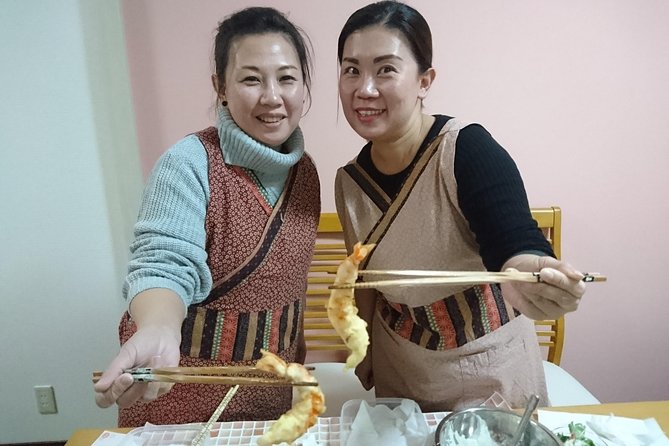
The best part of this Osaka class is that you do not simply watch someone fry tempura. You make four vegetable and two seafood tempura, including one large shrimp, then sit down and eat the meal you prepared. The class also covers dashi, the savory Japanese stock that gives many soups their depth.
I like the small maximum of eight people, which gives the instructor room to guide each person at the stove and cutting board. I also like the practical finish: you receive recipes to take home, so the class can continue in your own kitchen. The main consideration is the two-hour limit. You will learn a focused set of techniques, not every corner of Japanese cooking.
The instructor has been praised for being courteous and joyful, which matters in a hands-on class where clear guidance makes all the difference. Still, this is a cooking lesson rather than a sightseeing tour, so choose it for food skills and a shared meal, not for Osaka landmarks.
In This Review
- Key Points Before You Book
- What This Osaka Cooking Class Actually Teaches
- Making Dashi Before the Frying Starts
- Preparing Four Vegetables and Two Seafood Tempura
- The Art of Frying Tempura
- Eating What You Prepare With Rice and Tofu
- Why the Eight-Person Limit Matters
- Location, Timing, and Practical Value
- Is $70.79 a Fair Price?
- Who Will Enjoy This Class Most
- Booking and Cancellation Details
- Should You Book This Osaka Tempura Class?
- FAQ
- Where does the tempura cooking class meet?
- Where does the activity end?
- How long does the class last?
- How many people can join the class?
- Is the class offered at lunch and dinner?
- What types of food do you prepare?
- Do I eat the food made during the class?
- Are cooking tools provided?
- Do I receive recipes to take home?
- How much does the experience cost?
- Can I cancel for a full refund?
Key Points Before You Book
- Six types of tempura: Prepare four vegetables and two seafood items, including a large shrimp.
- Dashi is part of the lesson: Learn to make a basic Japanese broth before preparing the fried dishes.
- Your meal is the reward: Eat the tempura with steamed rice, chilled tofu, and chopsticks.
- Eight people maximum: The limited group size should allow for more direct help.
- Lunch or dinner timing: Pick the session that fits your Osaka plans.
- Recipes go home with you: You can try the techniques again after your trip.
What This Osaka Cooking Class Actually Teaches
Tempura looks simple on a plate, but good tempura depends on small choices. The batter must be handled with care, the ingredients need proper preparation, and the cooking process requires attention. This class gives you a short, useful introduction to those basics without turning the session into a lecture.
You begin with dashi, a traditional Japanese broth. That is a smart choice because dashi appears in many Japanese dishes, and it teaches you about flavor before you move on to frying. The instructor takes you through the process step by step, including tips for making a savory broth and a good soup.
I like that dashi is included rather than treated as an optional extra. Many visitors focus on sushi or ramen, but learning a Japanese stock gives you a skill you can use in soups and other dishes at home. The class also lets you see how a complete Japanese meal comes together, rather than presenting tempura as an isolated snack.
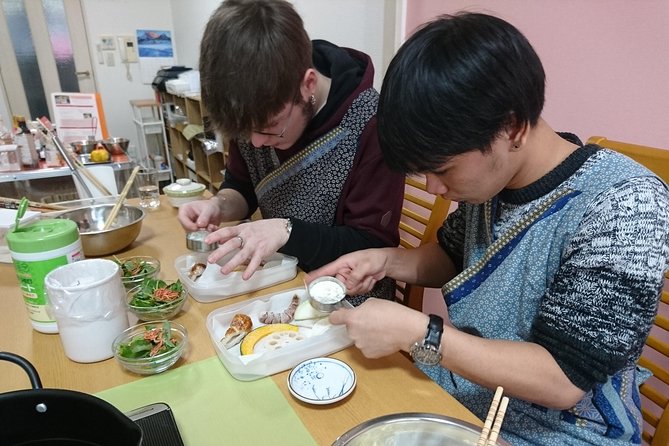
The session then shifts to preparation. Each participant receives a kitchen knife and chopping board, so you are not simply standing behind someone else while the work gets done. You prepare the ingredients yourself, with guidance from the instructor.
The menu includes four kinds of vegetable tempura and two kinds of seafood tempura. One seafood item is a large shrimp, a satisfying centerpiece for the meal. The supplied information does not name every vegetable or seafood ingredient, so you should book this class for the overall technique and menu structure rather than for a guaranteed list of specific items.
More Japanese home cooking classes:
- Osaka: Ramen and Gyoza Cooking Class in Dotonbori
★ 5.0 · 378 reviews - Osaka: Sumo Stage Show with Bento or Snack + Fight & Photo
★ 4.3 · 364 reviews - Osaka: Traditional Mochi Pounding Experience with Tasting
★ 4.9 · 306 reviews
Making Dashi Before the Frying Starts
The opening dashi lesson gives the class a calm start. You put on an apron, settle into the kitchen, and work on the broth before dealing with hot oil. That order makes sense for beginners because it eases you into the class and gives you an early kitchen task.
The instructor demonstrates how to make a savory dashi and offers tips for preparing a pleasing soup. You can expect step-by-step direction, though the exact amount of hands-on work for each person is not specified. With no more than eight people, the setup is much more personal than a large demonstration class.
Dashi is valuable for another reason: it connects the meal to everyday Japanese cooking. The finished broth is not just a side project. It helps you understand the clean, savory flavor often found in Japanese soups and sauces.
If you are already an experienced cook, the dashi portion may feel familiar or brief. For most visitors, though, it adds useful range. You are not spending the full two hours on batter and frying. You are learning one basic broth and one famous cooking method in the same session.
Preparing Four Vegetables and Two Seafood Tempura
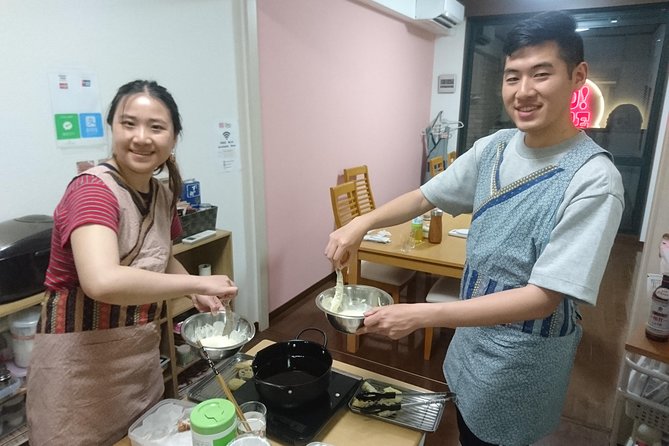
After the broth, you prepare the tempura ingredients. Your knife and chopping board are supplied, and the instructor guides you through the work. This is where the class becomes most practical. Cutting ingredients for frying is part of understanding how they cook, and your preparation affects the final texture.
The menu has a good balance. Four vegetable items give you several chances to see how different ingredients behave, while two seafood items bring a different texture and cooking need. The large shrimp gives the meal a classic tempura feature and makes the finished plate feel substantial.
You should expect to work at a steady pace. There are six types of tempura to prepare, plus dashi, so the class cannot spend a long time on every small detail. That is not a flaw, but it is worth knowing. You will leave with a useful introduction and recipes, not professional kitchen training.
The instructor’s job matters here. One published rating is 4.6 out of 5 from five reviews, and the clearest personal praise focuses on the instructor’s courteous, joyful manner. That kind of attitude can make a real difference when you are handling a knife, preparing unfamiliar ingredients, or trying a technique for the first time.
The Art of Frying Tempura
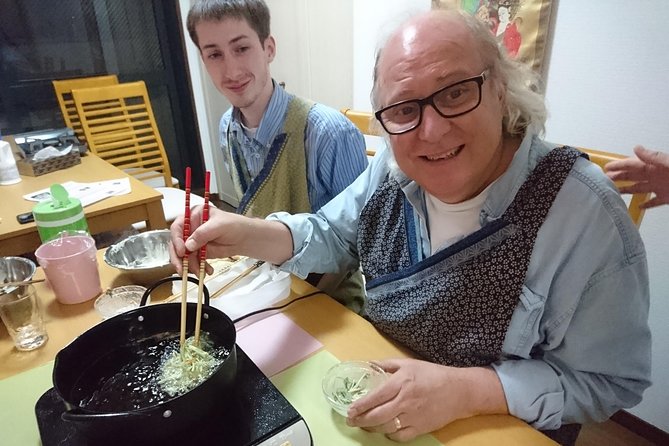
The title calls the class artistic tempura cooking, and there is a reason tempura rewards care. The appeal is not just the golden color. The batter should complement the ingredient instead of burying it, and the finished pieces should be light enough to remain enjoyable across six different types.
You will be guided through the preparation and cooking process, but the supplied details do not promise a particular batter formula, oil temperature, dipping sauce, or special frying tool. I would not book this class expecting a professional-level technical masterclass on every part of tempura.
What you do get is a chance to handle the ingredients and take part in the full process. That is much more useful than watching a chef fry a plate while you take photographs. You will understand the sequence: prepare the ingredients, work through the tempura, plate the food, and sit down to eat it.
The class also has a sensible rhythm. Dashi comes first, ingredient preparation follows, and the meal comes at the end. You can enjoy the food while the process is still fresh in your mind.
A completely different way to spend a day in Osaka:
- Osaka Go Karting Tour with Funny Costume
★ 5.0 · 2,658 reviews - Osaka Castle: Museum and Tower Entry Ticket
★ 4.5 · 2,380 reviews - Osaka: Shinsekai Food Tour with 13-15 Dishes at 5 Eateries
★ 4.8 · 2,204 reviews - Osaka Food Tour: 13 Dishes at 5 Local Eateries
★ 5.0 · 2,149 reviews
Eating What You Prepare With Rice and Tofu
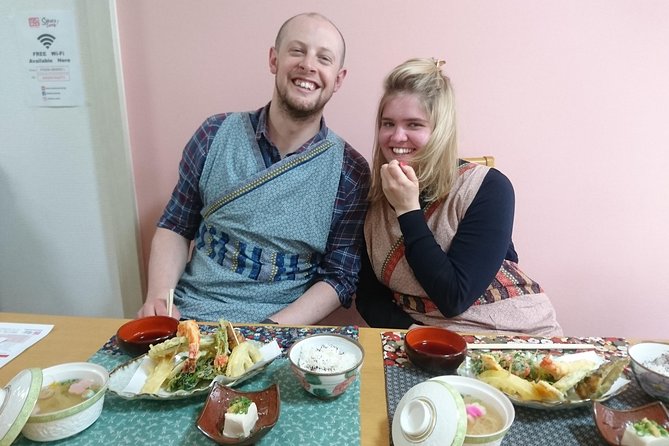
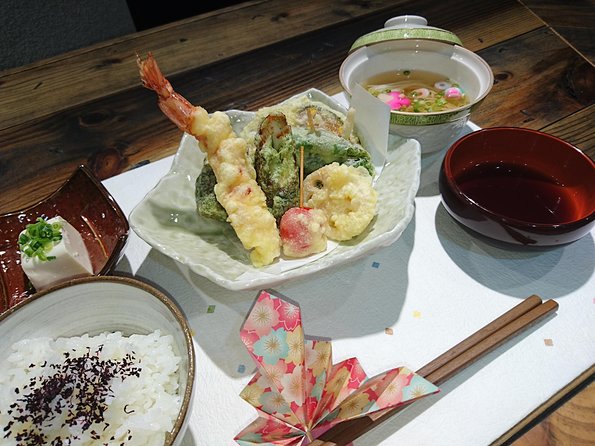
At the end, the food is placed on the table with chopsticks. You say Itadakimasu, then eat the tempura you made. The meal includes steamed rice and chilled tofu, giving you more than a pile of fried pieces.
That complete meal is one of the strongest reasons to consider the class. You get to see how tempura fits into a Japanese table setting. The rice provides a plain base, while chilled tofu adds a cool contrast to the hot fried food.
I also like the simple rule that you eat everything you prepare. There is no uncertainty about what happens to your dishes after the lesson. The class ends with a shared meal that lets you judge your own work and enjoy the results without rushing straight out of the kitchen.
The final meal may be especially welcome if you choose the dinner session. If you select lunch, it can give your day a structured food stop before you continue exploring Osaka. The class offers both options, so you can fit it around your sightseeing plans.
Why the Eight-Person Limit Matters
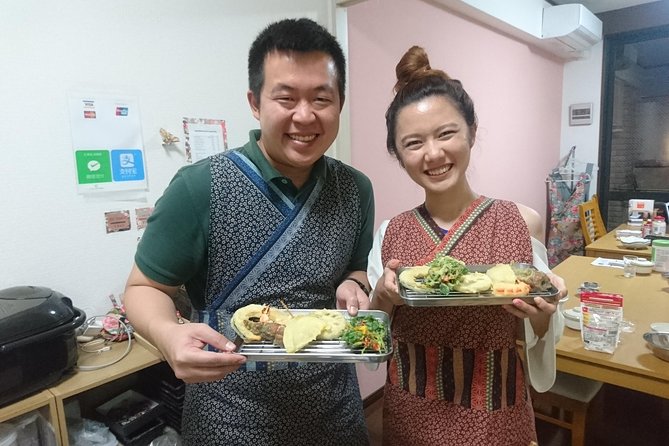
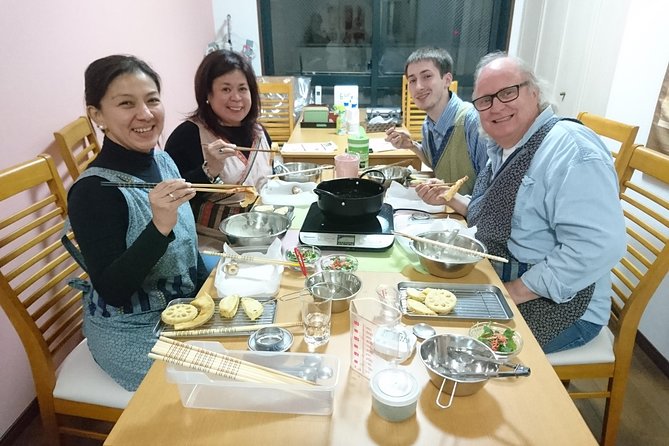
A maximum of eight participants is a useful feature for a practical cooking class. You are more likely to see what the instructor is doing and get help when you need it. It also keeps the meal at the end more personal than a large group event.
The small size does not guarantee that every person receives constant one-to-one instruction. You will still share the instructor’s attention, and the class has several tasks to complete in about two hours. But eight is a reasonable limit for a session involving knives, chopping boards, ingredients, and hot cooking equipment.
This format suits solo visitors, couples, and small family groups who want to meet other people through food. It can also work for beginners who would feel lost in a large demonstration. If you prefer complete independence and dislike following a set class schedule, a guided lesson may feel more structured than you want.
Location, Timing, and Practical Value
The meeting point is at 1-chōme-17-20 Kitahorie, Nishi Ward, Osaka, 550-0014, Japan. The location is near public transportation, which makes it easier to reach without arranging a private transfer. The activity ends back at the same meeting point.
The class lasts about two hours. That is long enough to cover dashi, preparation, six tempura types, and the final meal, but short enough to fit into a busy Osaka itinerary. I would leave a little extra time around the start and finish for finding the address and getting to your next stop, even though the listed activity time is approximately two hours.
You can choose lunch or dinner. That flexibility is useful in Osaka, where meals and sightseeing often compete for the same part of the day. Check the available session when booking, since confirmation is subject to availability and may arrive within 48 hours.
The experience comes with a mobile ticket. You do not need to print a paper ticket based on the details provided, but you should keep your booking information easy to access on your phone.
Is $70.79 a Fair Price?
At $70.79 per person, this is not a budget meal. You are paying for more than the ingredients, though. The price covers an approximately two-hour guided lesson, use of kitchen equipment, instruction in dashi and tempura, a meal with rice and chilled tofu, and recipes to take home.
The value is strongest if you want to cook. A restaurant meal would let you taste tempura, but it would not teach you how to prepare four vegetables, two seafood items, and a Japanese broth. The recipes also give the class a life beyond the day itself.
The value is weaker if you only want to eat tempura or if you have little interest in cooking after your trip. In that case, a restaurant can offer a simpler and possibly less expensive meal. You should also remember that the class is compact. It gives you a focused introduction, not an advanced course.
For food-focused visitors, the price is reasonable when you treat the session as both a meal and a practical activity. The large shrimp, six tempura types, dashi lesson, and small group make the cost easier to justify than a basic cooking demonstration.
Who Will Enjoy This Class Most
I would recommend this class to you if you want to understand how Japanese food is made rather than simply order it. It is a good match for first-time cooks, home cooks looking for a new dish, and visitors who enjoy eating the results of a hands-on activity.
Families may like the clear structure, though the supplied details do not state a minimum age or special child arrangements. You should confirm any age requirements before booking if children are part of your group.
The class is also a good fit for people staying in Osaka long enough to choose between lunch and dinner. Since it begins and ends at the Kitahorie meeting point, it can act as one planned stop in your day.
You may want to skip it if your schedule is extremely tight, you dislike kitchen work, or you are seeking a food tour that moves through several restaurants. This class stays in one place and focuses on making one meal.
Booking and Cancellation Details
The experience is often booked about 56 days ahead, so popular dates may not remain open close to your visit. Confirmation arrives within 48 hours of booking, subject to availability.
Free cancellation is available when you cancel at least 24 hours before the local start time. If you cancel within 24 hours, you will not receive a refund, and changes made during that final 24-hour period are not accepted. Keep the local cut-off time in mind if you are booking from another time zone.
Should You Book This Osaka Tempura Class?
Book it if you want a small, hands-on food lesson with a proper meal at the end. The combination of dashi, six tempura types, steamed rice, chilled tofu, and take-home recipes gives you more substance than a quick cooking demonstration.
I would be more cautious if your main goal is sightseeing or if you want a highly advanced tempura course. The class lasts about two hours and covers several tasks, so the instruction is likely to remain focused and practical.
For most food-minded visitors, the strongest case is simple: you prepare the meal yourself, receive personal guidance in a group of no more than eight, and leave with recipes you can try again. At $70.79, that is a fair trade for a useful Osaka memory and a skill you can carry home.
FAQ
Where does the tempura cooking class meet?
The class meets at 1-chōme-17-20 Kitahorie, Nishi Ward, Osaka, 550-0014, Japan.
Where does the activity end?
The class ends back at the meeting point in Kitahorie.
How long does the class last?
The activity lasts approximately two hours.
How many people can join the class?
The group has a maximum of eight participants.
Is the class offered at lunch and dinner?
Yes. You can choose either a lunch or dinner experience, subject to availability.
What types of food do you prepare?
You prepare four kinds of vegetable tempura and two kinds of seafood tempura, including one large shrimp. You also learn how to make dashi soup stock.
Do I eat the food made during the class?
Yes. You eat the dishes you prepare, served with steamed rice and chilled tofu.
Are cooking tools provided?
A kitchen knife and chopping board are provided for each participant. You also wear an apron during the class.
Do I receive recipes to take home?
Yes. The instructor provides recipes so you can use the skills again after the class.
How much does the experience cost?
The listed price is $70.79 per person.
Can I cancel for a full refund?
Yes, if you cancel at least 24 hours before the local start time. Cancellations made less than 24 hours before the start are not refunded, and changes during that period are not accepted.
Just added around Osaka
- Nara Day Trip from Osaka with a Licensed Guide★ 5.0 · 3 reviews
- Osaka Early Morning Osaka Castle Tour Avoid Crowds★ 5.0 · 3 reviews
- Guided Tour of Some Attractions in Osaka by Private Car★ 5.0 · 3 reviews
- Private Transfer Between Kyoto and Kansai Airport KIX★ 5.0 · 3 reviews
- Shared Arrival Transfer: Osaka Itami Airport to Osaka City★ 5.0 · 3 reviews
- Osaka: Sushi Making Class and Dotonbori Food Tour★ 4.7 · 3 reviews
- Osaka Night Photography Workshop★ 5.0 · 3 reviews
- Kyoto Full day Tour Kinkakuji, Kiyomizu-dera and Fushimi Inari★ 4.5 · 3 reviews
Osaka Cooking Classes, compared.


Sumo Stage Show with Bento or Snack + Fight & Photo
Read our review →
Traditional Mochi Pounding Experience with Tasting
Read our review →
Osaka Cooking Class: Okonomiyaki &Japanese cuisines experience
Read our review →


Osaka Sake Tasting & Takoyaki Cooking Experience
Read our review →
Cooking Ramen&Gyoza/KatsuCurry/Bento/Okonomiyaki+Store Tour@Osaka
Read our review →Browse the lists this tour appears in