
Reviewed · OSAKA COOKING CLASSES
Discover Osaka Cuisine through Cooking Class Experience
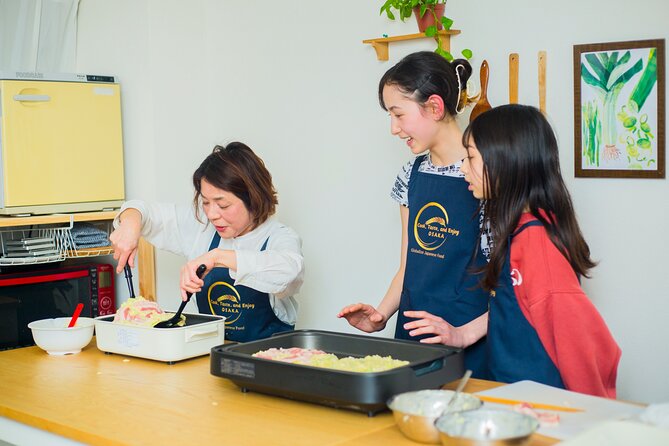
Osaka’s famous food is hands-on, and this class puts you right at the griddle. You learn to make two Osaka staples, usually including takoyaki and okonomiyaki, with an Osaka mother who has lived in the city for more than 60 years. I like the warm, personal teaching and the chance to hear local tips that go beyond the usual sightseeing route.
I also like the small group, capped at eight people, and the low price of $65.04 for a 90-minute class. The main consideration is that this is a focused food lesson, not a full traditional-culture program, and drinks besides water cost extra.
In This Review
- Key points to know before booking
- Why Osaka food makes a good cooking lesson
- Meeting the Osaka mother near Nishishinsaibashi
- The 90-minute cooking session
- What the food lesson teaches you about Osaka
- Group size, language, and the feel of the class
- Is $65.04 good value for 90 minutes?
- Who will enjoy this Osaka cooking class?
- Timing the class around your Osaka day
- Final call: book it for food, not ceremony
- FAQ
- Where does the cooking class begin and end?
- How long does the experience last?
- Which Osaka dishes will I make?
- How many people can join?
- Is water included in the price?
- Can I cancel for a full refund?
Key points to know before booking
- Two of Osaka’s three soul foods: The class focuses on takoyaki, okonomiyaki, and yakisoba, with two prepared during the session.
- A local Osaka teacher: Your instructor is an older Osaka mother who has lived in the city for over six decades.
- Small maximum group: No more than eight people can join, which allows room for questions and personal help.
- A practical 90 minutes: The class fits neatly into a morning or afternoon around sightseeing in central Osaka.
- Local tips come with lunch: The instructor can share information about lesser-known places in Osaka.
- Water is included: Other beverages, including alcohol, cost extra at the class.
Why Osaka food makes a good cooking lesson
Osaka is often called Japan’s kitchen, and the nickname makes sense once you look at the city’s everyday food. The cooking here is social, affordable, and often built around a hot plate or griddle. Takoyaki, okonomiyaki, and yakisoba are not formal restaurant dishes reserved for special occasions. They are casual foods meant to be cooked, shared, and enjoyed without ceremony.
That makes this a useful class for a first visit. You are not simply eating a finished plate and moving on. You get a look at how the food is shaped, cooked, dressed, and served. The lesson also gives you a better chance of recognizing the ingredients and cooking methods when you see food stalls and casual restaurants later in your trip.
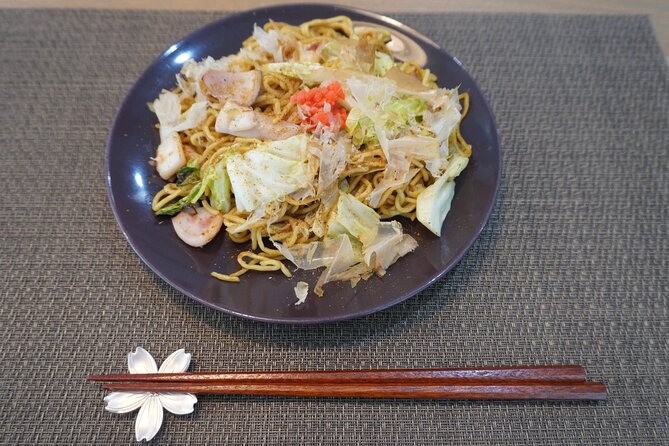
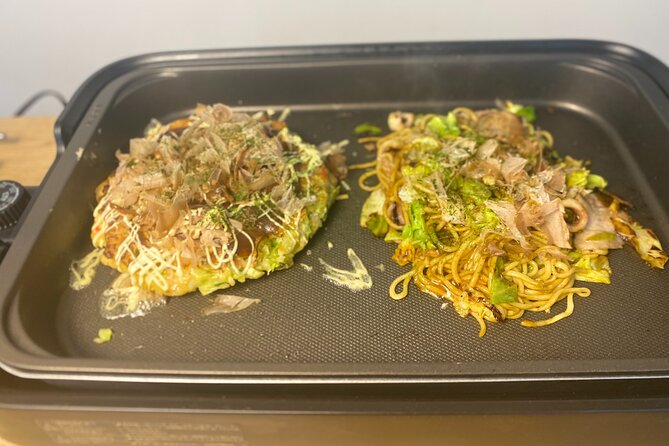
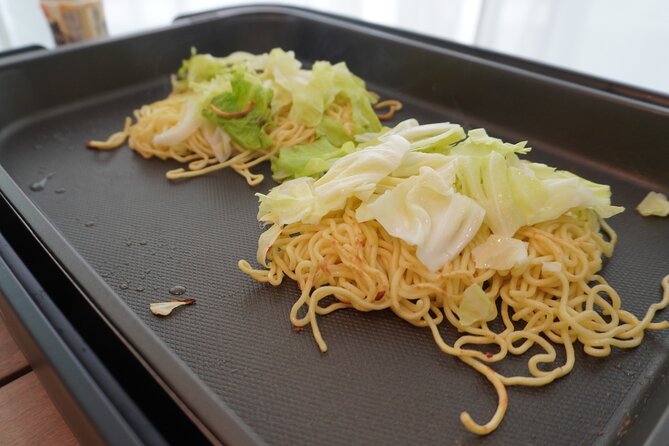
The class centers on two of the three main Osaka dishes. Takoyaki are small balls of batter cooked in a special round mold, usually with octopus inside. Okonomiyaki is a savory pancake-style dish prepared on a hot surface. Yakisoba is fried noodles with vegetables and other ingredients. The exact pair can matter if you have a favorite, so check the class details or ask before booking if you want one particular dish.
The experience does not include a separate traditional-culture session. That is worth spelling out because the broader cultural program offered by the provider can include more than food. This particular product is intentionally simpler and less expensive. You come to cook and eat, with cultural background folded into the food lesson.
More Japanese home cooking classes:
- Osaka: Ramen and Gyoza Cooking Class in Dotonbori
★ 5.0 · 378 reviews - Osaka: Sumo Stage Show with Bento or Snack + Fight & Photo
★ 4.3 · 364 reviews - Osaka: Traditional Mochi Pounding Experience with Tasting
★ 4.9 · 306 reviews
Meeting the Osaka mother near Nishishinsaibashi
The meeting point is at 2-chōme-13-16 Nishishinsaibashi in Chuo Ward, a central Osaka location near public transportation. Nishishinsaibashi is a practical base for a food class because it puts you close to the city’s main shopping and entertainment areas. You can fit the session into a day spent around Shinsaibashi and nearby parts of central Osaka.
The activity begins and ends at the same meeting point. That makes planning easier than a class that drops you in a different neighborhood. Still, allow time to find the address, especially if you are coming from a large station or navigating Osaka for the first time. The information provided gives the street address but not a detailed landmark or station exit, so having the mobile ticket and location ready on your phone is sensible.
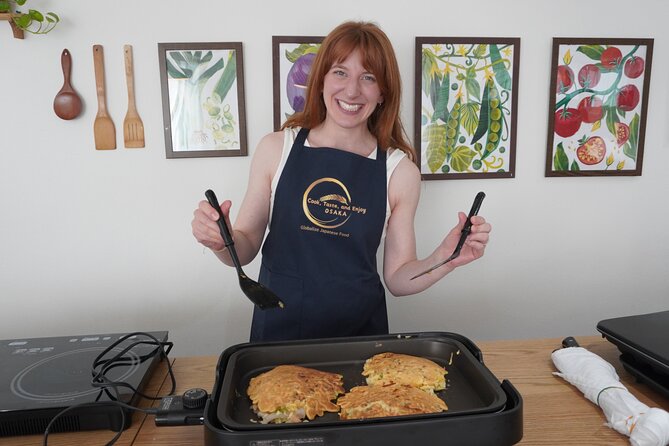
The teacher is described as an elderly Osaka mother who has lived in the city for more than 60 years. That is one of the strongest reasons to choose this class. You are learning from someone with long personal ties to Osaka, not just following a standard recipe read from a card.
Her role also shapes the tone of the class. The lesson includes the background of the food and practical instruction, while the host or staff can provide information about local places to visit. One English-speaking host has been described as easy to talk with, while communication with staff may be lighter in English at other times. You should be comfortable with a friendly, informal exchange rather than expecting a highly polished lecture in English.
The 90-minute cooking session
The class lasts about an hour and a half. That is long enough to prepare food from start to finish but short enough to protect most of your sightseeing day. I would place it between two other central Osaka activities rather than treat it as a full-day event.
The opening portion should introduce the dishes and explain what makes them part of Osaka’s food culture. The teacher carefully explains how to make the food and provides context about its background. This is where the class offers more than a recipe. You begin to see why these dishes are associated with Osaka and how they fit into ordinary local eating.
The active cooking portion is the heart of the experience. You make two of the three featured foods: takoyaki, okonomiyaki, or yakisoba. The available feedback specifically describes making okonomiyaki and takoyaki, as well as choosing fillings for takoyaki. That choice is a nice touch because it gives you some control over the final taste instead of having every plate come out exactly the same.
Takoyaki requires a little attention. The batter sits in round cavities, and the pieces need to be turned as they cook. That movement is part of the fun and part of the skill. You get to see how a soft mixture becomes a neat golden ball, then add the familiar toppings and sauces. The lesson gives you a better appreciation for the speed and control used by cooks at Osaka food stalls.
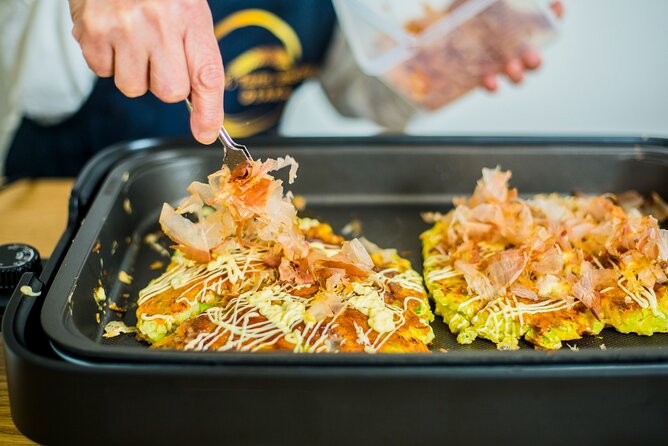
Okonomiyaki offers a different lesson in texture and timing. The mixture is cooked as a larger savory pancake, so you can compare the process with the smaller, more delicate takoyaki. If yakisoba is included instead, you get a noodle-based dish with a different rhythm and feel. Since the experience promises two of the three rather than all three, ask about the day’s menu if the specific dishes are important to you.
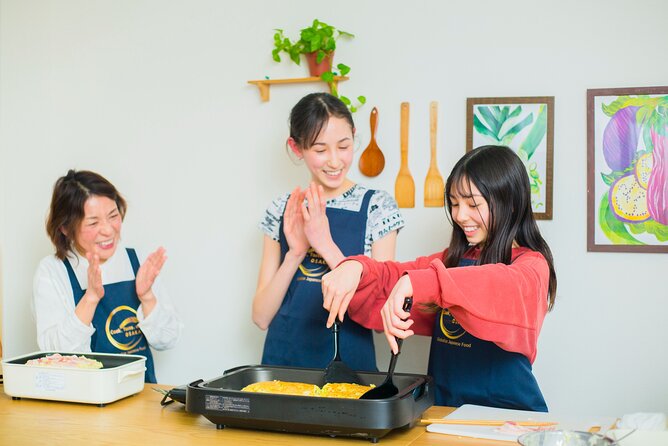
The class is interactive, not a demonstration where you sit back and watch. That is especially useful for families, couples, and friends who want a shared activity. It also works for solo visitors who like meeting people around a table, though the small group size means the exact mix of participants will shape the mood.
What the food lesson teaches you about Osaka
A cooking class can be a good way to place familiar street food in context. You have probably seen takoyaki stands around Osaka, with cooks turning rows of batter quickly while customers wait. After making the dish yourself, you can look at those stalls with a sharper eye. You understand that the small balls are not simply poured and left alone. Their shape depends on timing, turning, and heat.
The same is true of okonomiyaki. The name is often explained as cook it as you like, and the dish allows for variation in fillings and toppings. This class gives you a practical sense of that flexibility without requiring a long culinary course.
The teacher also explains the background of the food. The supplied details do not give a full historical lecture or a fixed list of topics, so you should not book this expecting an academic study of Osaka cuisine. The value is more personal: food knowledge tied to the instructor’s long life in Osaka and to the dishes people commonly associate with the city.
The local sightseeing advice adds another layer. The instructor knows Osaka well and can point you toward places outside the most familiar tourist route. The information does not promise a separate walking tour or a printed guide, so treat these tips as useful conversation rather than a formal neighborhood excursion.
A completely different way to spend a day in Osaka:
- Osaka Go Karting Tour with Funny Costume
★ 5.0 · 2,658 reviews - Osaka Castle: Museum and Tower Entry Ticket
★ 4.5 · 2,380 reviews - Osaka: Shinsekai Food Tour with 13-15 Dishes at 5 Eateries
★ 4.8 · 2,204 reviews - Osaka Food Tour: 13 Dishes at 5 Local Eateries
★ 5.0 · 2,149 reviews
Group size, language, and the feel of the class
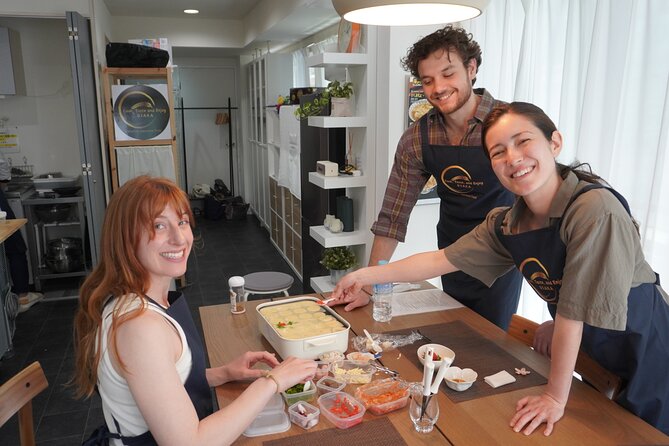
The maximum group is eight people. That is small enough to keep the cooking active and gives the instructor a reasonable chance to help each person. With a large class, turning takoyaki or managing a hot cooking surface can become a spectator activity. Eight keeps the experience more personal.
The available comments describe the staff as kind, welcoming, and good teachers. One participant with a strong familiarity with Japanese food still found useful material in the lesson. That suggests the class is not only for people who have never seen takoyaki before. If you already know Japanese food, you may still enjoy the cooking practice and the Osaka-specific background.
Language is the one area where expectations should stay flexible. A host has been described as friendly and comfortable speaking English, while another participant had limited English conversation with staff. The core steps can often be shown as well as explained, but you should not assume every exchange will be fluent or detailed in English.
The mood appears to be warm and personal rather than formal. The teacher is an older local woman, and the experience is built around sharing food and knowledge. If you prefer a slick studio class with precise professional presentation, this may feel more relaxed. If you want contact with a local person and a chance to ask about Osaka, that relaxed quality is part of the appeal.
Is $65.04 good value for 90 minutes?
At $65.04 per person, this is not the cheapest meal you can buy in Osaka. You can find inexpensive takoyaki and noodles throughout the city for far less. The price needs to be judged as the cost of an activity, instruction, food, and local conversation, not as the price of lunch alone.
I think the value is strongest if you want a memory and a skill, not just a plate. You prepare two dishes yourself, learn the basic method, and gain enough context to make later food stops more meaningful. The small maximum group also helps justify the cost because you are not paying for a large demonstration with little participation.
The price is kept lower because this product does not add a separate traditional-culture experience. That makes it a sensible choice if food is your priority. The provider also offers a 10 percent discount on other cultural-experience courses, which may improve the value if you plan to book another activity with the same provider.
Water is included. Other drinks cost extra, including alcoholic beverages. This is a small point, but it matters if you are comparing the total price of several food experiences. The supplied details do not say exactly how much additional drinks cost, so plan for a separate charge rather than assuming all refreshments are covered.
Who will enjoy this Osaka cooking class?
I would recommend this experience to anyone who wants a short, active introduction to Osaka food. It suits first-time visitors who have seen takoyaki on menus but want to know how it is made. It also suits people who enjoy cooking with their hands more than sitting through a long cultural presentation.
Families can benefit from the interactive format, though the information provided does not specify a minimum age or child policy. Couples and friends get a simple shared activity, and solo visitors can join a small group centered on food. People who already live in Japan may still find it worthwhile if they want Osaka-specific instruction rather than a general Japanese cooking lesson.
It is less suitable if you want to make all three dishes. The class covers two, not the full trio. It is also not the right choice if your main goal is a formal traditional-culture course, since that is not part of this product.
Food preferences are another point to consider. Takoyaki traditionally includes octopus, and the class descriptions refer to choosing fillings, but no complete ingredient list or allergy policy is provided. If you have a serious allergy or avoid particular foods, ask the provider before booking rather than relying on substitutions.
Timing the class around your Osaka day
The 90-minute length makes this easy to place into a central Osaka schedule. Since you return to the same meeting point, you do not have to arrange a separate pickup or figure out a new neighborhood afterward. You can continue shopping, sightseeing, or eating nearby once the class ends.
I would avoid scheduling it too tightly against a train departure or another timed admission. The class is listed as approximately 1.5 hours, and cooking sessions can feel less rushed when you have a little breathing room. A relaxed schedule also leaves time for the instructor’s Osaka suggestions.
The activity is booked an average of 48 days ahead, which signals that you should not wait until the last moment if your dates are fixed. Confirmation arrives at booking, and the mobile ticket is convenient for a phone-based travel plan. Free cancellation is available until 24 hours before the start time. Inside that window, the payment is not refunded and changes are not accepted.
Final call: book it for food, not ceremony
I would book this class if you want to make Osaka’s best-known casual foods with a local teacher and keep the activity small and manageable. The strongest reasons are the six decades of Osaka experience behind the instruction, the chance to prepare two dishes yourself, and the useful local conversation that comes with the cooking.
I would skip it if you want a full traditional-culture program, a guaranteed menu of all three dishes, or a long formal lesson in fluent English. For everyone else, $65.04 is a fair price for a personal 90-minute introduction to Osaka’s food culture, especially if you value doing something rather than simply ordering another plate.
FAQ
Where does the cooking class begin and end?
The class begins at 2-chōme-13-16 Nishishinsaibashi, Chuo Ward, Osaka, 542-0086, Japan. It ends back at the same meeting point.
How long does the experience last?
The cooking class lasts approximately 1 hour and 30 minutes.
Which Osaka dishes will I make?
You will make two of Osaka’s three featured foods: takoyaki, okonomiyaki, or yakisoba. The available information specifically describes sessions that made takoyaki and okonomiyaki.
How many people can join?
The activity has a maximum of eight travelers.
Is water included in the price?
Bottled water is complimentary. Other drinks, including alcoholic beverages, cost extra at the class.
Can I cancel for a full refund?
Yes. You can cancel for a full refund if you do so at least 24 hours before the experience start time. Cancellations or changes made less than 24 hours in advance are not accepted for a refund.
Just added around Osaka
- Nara Day Trip from Osaka with a Licensed Guide★ 5.0 · 3 reviews
- Osaka Early Morning Osaka Castle Tour Avoid Crowds★ 5.0 · 3 reviews
- Guided Tour of Some Attractions in Osaka by Private Car★ 5.0 · 3 reviews
- Private Transfer Between Kyoto and Kansai Airport KIX★ 5.0 · 3 reviews
- Shared Arrival Transfer: Osaka Itami Airport to Osaka City★ 5.0 · 3 reviews
- Osaka: Sushi Making Class and Dotonbori Food Tour★ 4.7 · 3 reviews
- Osaka Night Photography Workshop★ 5.0 · 3 reviews
- Kyoto Full day Tour Kinkakuji, Kiyomizu-dera and Fushimi Inari★ 4.5 · 3 reviews
Osaka Cooking Classes, compared.


Sumo Stage Show with Bento or Snack + Fight & Photo
Read our review →
Traditional Mochi Pounding Experience with Tasting
Read our review →
Osaka Cooking Class: Okonomiyaki &Japanese cuisines experience
Read our review →


Osaka Sake Tasting & Takoyaki Cooking Experience
Read our review →
Cooking Ramen&Gyoza/KatsuCurry/Bento/Okonomiyaki+Store Tour@Osaka
Read our review →Browse the lists this tour appears in