
Reviewed · OSAKA COOKING CLASSES
Beautiful Wagashi (Japanese Sweet) Making Class
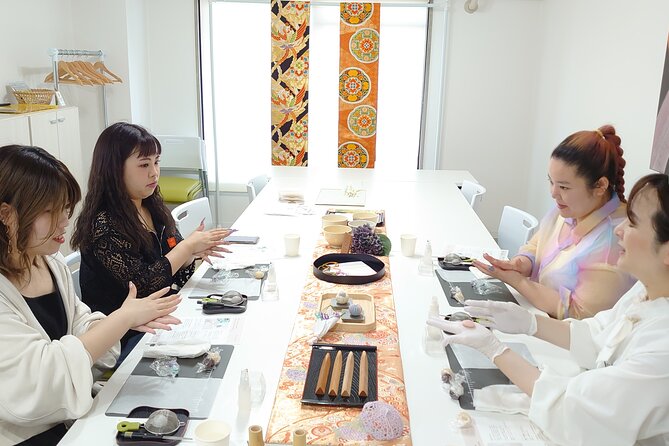
Japanese wagashi are edible works of art, and this Osaka class lets you make one of the finest types, nerikiri, rather than simply buying a sweet from a shop. You shape the dough, tint it in gentle colors, and turn it into flowers before enjoying your work with matcha. I like the hands-on process and the fact that you receive recipes to try at home.
I also like the small maximum group of eight, which leaves room for clear guidance and questions. Fumi’s English explanations make the steps easier to follow, and the class includes a pleasant matcha-making lesson with Japanese utensils. The main drawback is the meeting point, which can be a little hard to spot, so allow time to find the entrance.
In This Review
- Key points to know before booking
- Why nerikiri makes a good Osaka food experience
- A one-hour class with a clear sequence
- Learning with Fumi in a small group
- The matcha addition gives the class extra context
- What you actually make and eat
- Price and value at $45.53
- Finding Banix Kitahorie
- Who will enjoy this class most
- Booking, timing, and cancellation details
- Should you book the wagashi class?
- FAQ
- Where does the wagashi-making class meet?
- How long does the activity last?
- What type of Japanese sweet will I make?
- How many people can join the class?
- Is the class taught in English?
- Can I eat the sweets at the venue?
- Is matcha included?
- What happens if I need to cancel?
Key points to know before booking
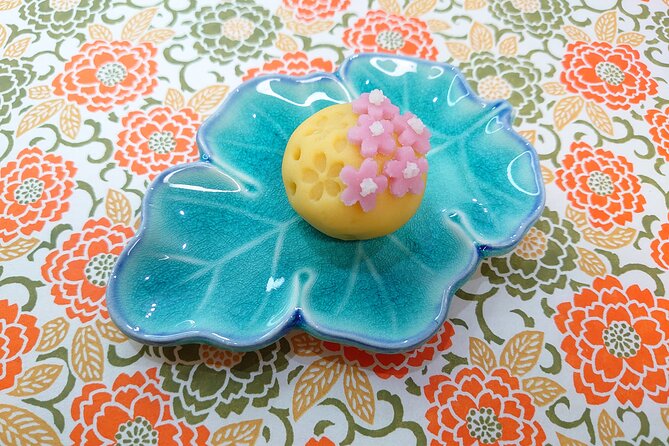
- Make nerikiri from scratch: Start with white bean paste and glutinous rice flour, then shape the mixture into delicate sweets.
- Create two finished sweets: The class gives you a chance to form, decorate, and eat or take away your creations.
- Learn with Fumi: Clear English translations help you follow each stage without guessing.
- Try matcha preparation: The class includes matcha made with traditional Japanese instruments.
- Small class size: Up to eight people means more personal help than you would get in a large demonstration.
- Plan for the entrance: The activity begins at Banix Kitahorie, and the entrance may take a moment to identify.
Why nerikiri makes a good Osaka food experience
Many Japanese sweets are made for the eye as much as the palate. Nerikiri is a refined wagashi often served with matcha, especially in a tea ceremony setting. Its soft colors and flower shapes are not just decoration. They reflect the Japanese habit of linking food with seasons, nature, and careful presentation.
This class gives you a useful look at that idea without requiring a full day or advanced baking skills. In about an hour, you move from plain dough to a finished sweet that looks far more delicate than its simple ingredients suggest.
The base is made from white bean paste and glutinous rice flour. That makes the class suitable for people looking for a vegan or vegetarian-friendly food activity, though you should still confirm any strict dietary needs when booking. The ingredients are familiar enough to understand, but the shaping technique gives the experience its special character.
I like this balance. You are not only watching someone make a pretty Japanese dessert, and you are not spending half a day on a formal cooking course. You learn a traditional food craft, make something with your hands, and eat the result before moving on with your Osaka day.
More Japanese home cooking classes:
- Osaka: Ramen and Gyoza Cooking Class in Dotonbori
★ 5.0 · 378 reviews - Osaka: Sumo Stage Show with Bento or Snack + Fight & Photo
★ 4.3 · 364 reviews - Osaka: Traditional Mochi Pounding Experience with Tasting
★ 4.9 · 306 reviews
A one-hour class with a clear sequence
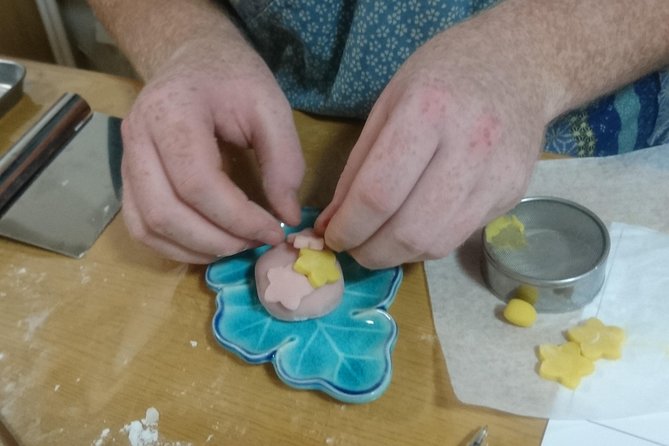
The lesson follows a simple order, which matters when the finished sweets depend on several small steps. First, you learn how to prepare the dough from scratch. The class then moves into coloring, shaping, and decoration.
The dough is divided and colored in soft shades. This is where your sweets begin to look like flowers rather than ordinary balls of paste. The process requires some care, but the instructions are designed to keep you moving through each stage.
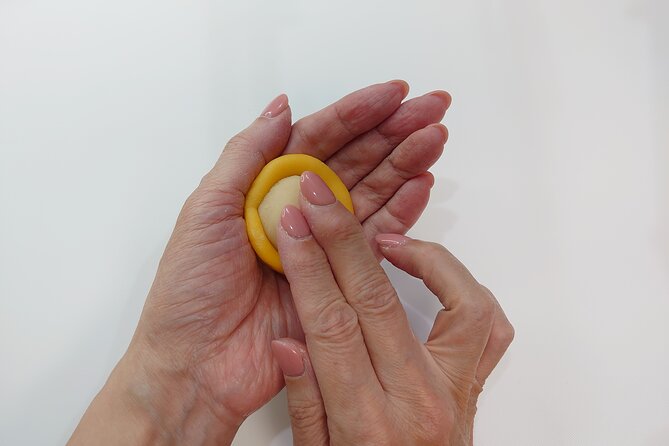
You then shape the dough into balls and add decorative flowers. The work is precise, but it is also forgiving in the sense that your finished piece does not need to match a professional confectioner’s example perfectly. Small differences are part of the fun. Your sweet becomes your own.
The class ends with the best part: you photograph the finished wagashi, then eat them at the venue or take them away. The experience produces two lovely and edible results, according to the available class details. That gives you a small reward for the careful shaping work and a souvenir that does not clutter your luggage.
The short format is useful for families, couples, and solo visitors who want a cultural activity between sightseeing stops. It is also a good choice if you want to try Japanese food preparation but do not want a long lesson built around several complicated dishes.
Learning with Fumi in a small group
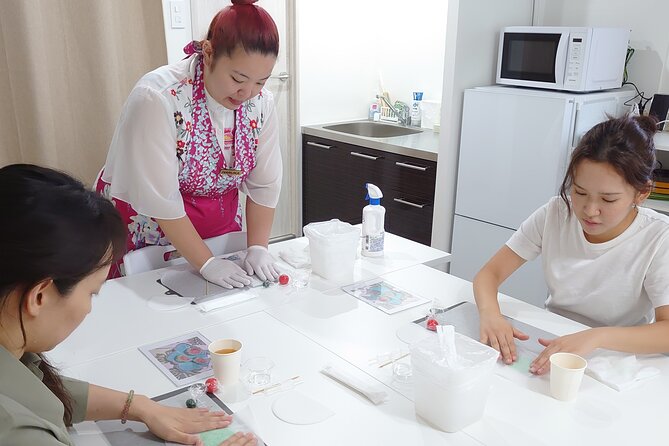
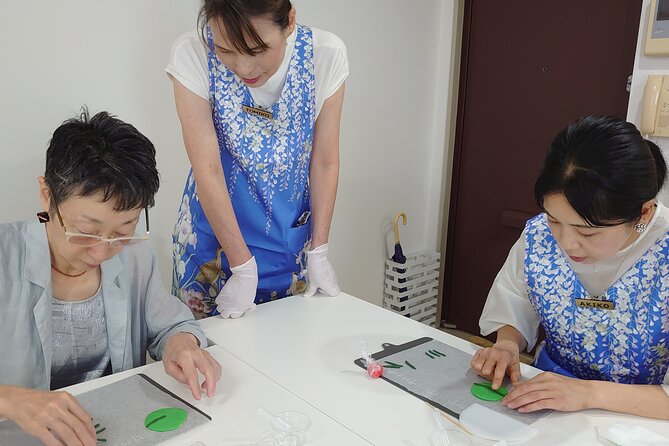
Instruction makes or breaks a hands-on class. Here, Fumi leads the activity and provides clear English translations. That is important because wagashi shaping depends on visual demonstrations and small movements, not just a printed recipe.
The class has a maximum of eight people. A group this size should give you a better chance of getting help when a flower shape starts to lose its form or when you are unsure how much color to use. It also keeps the mood more personal than a large cooking studio where everyone simply copies the instructor from a distance.
One account of the class describes having the instructor’s full attention while learning and talking about Japanese sweets. That detail makes this particularly appealing for solo visitors. You do not need to arrive as part of a group to have a social experience.
At the same time, a small class is not a guarantee that you will be alone with the instructor. Up to eight people may attend, and the pace can feel different depending on who is in the room. If you prefer quiet, focused activities, the shaping work gives you plenty to concentrate on. If you enjoy conversation, the class leaves space for it.
Children must be accompanied by an adult. The details do not set a minimum age, so families should check before booking if they are bringing a young child. The activity involves coloring and shaping rather than hot cooking, but careful hands are still needed for the decorative work.
The matcha addition gives the class extra context
The wagashi lesson is the main event, but the matcha preparation adds a welcome cultural layer. You get to make matcha using Japanese instruments, then pair the tea with the sweet you have just made.
This pairing helps explain why nerikiri is more than a decorative dessert. Its sweetness works with the bitter, grassy taste of matcha, and the two are traditionally enjoyed together. Even a short lesson feels more complete when you can taste the sweet in that setting.
The matcha portion is also a pleasant bonus for anyone who has already sampled Osaka’s famous street food and wants something calmer. You are not rushing between stalls or trying to identify ingredients in a crowded market. You are sitting with a small handmade food, paying attention to its shape, texture, and flavor.
Do not book this expecting a full tea ceremony. The information describes matcha preparation with Japanese instruments, not a formal ceremony with an extended ritual. Still, it gives you a practical introduction to the tools and the relationship between tea and wagashi.
A completely different way to spend a day in Osaka:
- Osaka Go Karting Tour with Funny Costume
★ 5.0 · 2,658 reviews - Osaka Castle: Museum and Tower Entry Ticket
★ 4.5 · 2,380 reviews - Osaka: Shinsekai Food Tour with 13-15 Dishes at 5 Eateries
★ 4.8 · 2,204 reviews - Osaka Food Tour: 13 Dishes at 5 Local Eateries
★ 5.0 · 2,149 reviews
What you actually make and eat
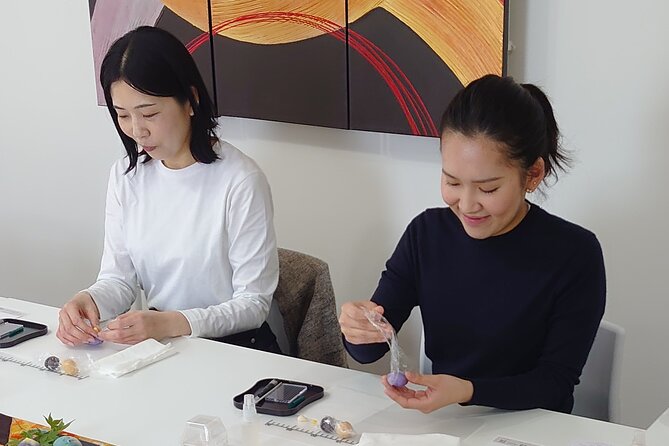
The focus is nerikiri, described as a high-quality wagashi often used in tea ceremony settings. You make the dough, color it, form it into balls, and finish it with decorative flowers.
The visual element is the class’s strongest feature. You are not just mixing ingredients and waiting for something to bake. You are learning how pressure, color, and shape change the final result. The finished sweets are small, delicate, and made to be admired before they disappear.
The flavor is likely to be gentler and less familiar than the rich pastries many visitors expect. White bean paste brings the sweetness, while glutinous rice flour helps give the dough its structure. Since the sweets are made from natural ingredients such as beans and rice flour, the experience offers a useful contrast to Western cakes and cookies.
You can eat the wagashi at the class or take them away. Take-away is handy if you want to photograph them in better light, share them later, or save room for another Osaka meal. Just remember that the value of these sweets is partly in their freshness and appearance, so they are best treated as a short-term edible souvenir.
Price and value at $45.53
At $45.53 per person, this is not the cheapest way to taste a Japanese sweet. You can buy wagashi more cheaply in a department-store food hall or confectionery shop. The price makes more sense when you count the instruction, ingredients, small-group setting, matcha activity, and recipes for home use.
I see the value in the fact that you create the sweets rather than simply receive them. You leave with a technique, not just a snack. The recipes also extend the experience beyond Osaka, especially if you are the sort of person who returns from Japan wanting to recreate a small part of the trip in your own kitchen.
The class is less valuable for someone who only wants a quick tasting or who dislikes detailed handwork. You spend much of the hour shaping and decorating. That is the point, but it may feel slow if your ideal food tour means eating several different dishes.
For food lovers, home bakers, and people who enjoy crafts, the price is reasonable. You get a focused cultural activity with a clear result, rather than a general talk about Japanese sweets. The one-hour duration also limits the opportunity cost. You can fit it into a day of exploring Osaka without giving up a major block of sightseeing time.
Finding Banix Kitahorie
The meeting point is Banix Kitahorie, at Systema Gallery in Osaka’s Nishi Ward:
Banix北堀江
3-chōme 6-2 Kitahorie
Nishi Ward, Osaka 550-0014, Japan
The location is near public transportation, but the entrance can be difficult to find. This is the most practical warning for the day. Do not arrive at the last minute and expect to spot the class instantly.
Use the mobile ticket for your booking and check the meeting-point details before leaving. Updated entrance pictures are available, so look at those in advance. Give yourself extra time to identify the correct doorway, especially if you are unfamiliar with Japanese addresses or are arriving with children.
The activity ends back at the meeting point. There is no separate drop-off or final sightseeing stop to plan around. That makes the class easy to combine with other plans in Osaka, though the short duration does not include time for a guided walk through the neighborhood.
Who will enjoy this class most
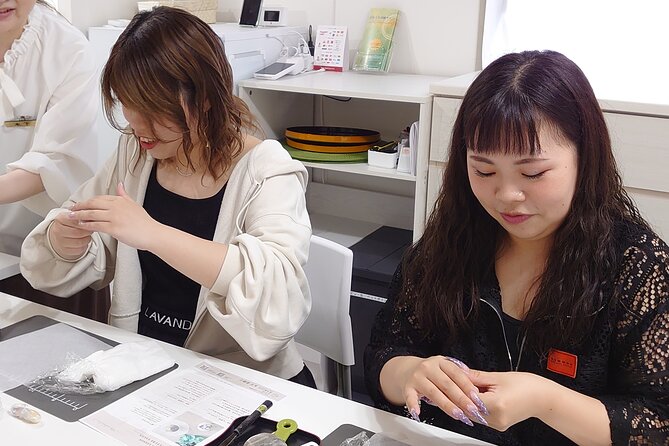
I would recommend this experience to:
- Foodies who want to understand a Japanese sweet rather than simply buy one
- Home bakers interested in learning a new technique
- Visitors looking for a short cultural activity in Osaka
- Solo visitors who appreciate small classes and direct instruction
- Couples or friends who want attractive food photos and a hands-on memory
- Vegetarians and vegans seeking a class based on bean paste and rice flour, subject to confirming dietary details
It is also a good fit for anyone who likes creative work. The pleasure comes from making something neat and attractive with your fingers. You do not need to produce a perfect flower. The class is about learning the method and seeing how your own version takes shape.
I would hesitate to recommend it to someone with very limited time who cannot allow for the meeting-point search. I would also think twice if you are looking for a broad Japanese cooking lesson. This is a focused wagashi class, not a survey of savory dishes, sushi, noodles, and desserts.
Booking, timing, and cancellation details
The class lasts about one hour and accepts a maximum of eight participants. Confirmation is sent within 48 hours of booking, subject to availability, so do not assume your place is final until you receive confirmation.
The activity is booked, on average, 24 days ahead. That does not guarantee that every date sells out, but it is a useful sign that you should reserve early if your Osaka schedule is fixed.
Free cancellation is available if you cancel at least 24 hours before the local start time. Cancellations made less than 24 hours ahead are not refunded, and changes inside that window are not accepted. Keep the local cut-off time in mind if you are booking from another time zone.
Should you book the wagashi class?
Book it if you want a short, creative introduction to Japanese food culture and like the idea of making two delicate sweets yourself. Fumi’s English guidance, the small group, the matcha preparation, and the recipes for home use make this more useful than a simple tasting.
Skip it if your priority is quantity, speed, or a wide-ranging food tour. The entrance may take extra effort to find, and the class centers on one specialized sweet. For the right visitor, though, that narrow focus is exactly what makes the hour worthwhile. You leave with a better sense of how much patience and skill can go into a tiny Japanese dessert.
FAQ
Where does the wagashi-making class meet?
The class meets at Banix Kitahorie, Systema Gallery, 3-chōme 6-2 Kitahorie, Nishi Ward, Osaka 550-0014, Japan.
How long does the activity last?
The class lasts approximately one hour.
What type of Japanese sweet will I make?
You will make nerikiri, a refined wagashi made from white bean paste and glutinous rice flour.
How many people can join the class?
The activity has a maximum of eight participants.
Is the class taught in English?
Fumi provides clear English translations during the experience.
Can I eat the sweets at the venue?
Yes. You can eat your wagashi at the class or take them away.
Is matcha included?
Yes. The class includes making matcha with Japanese instruments.
What happens if I need to cancel?
You can receive a full refund if you cancel at least 24 hours before the local start time. Cancellations or changes made less than 24 hours before the start are not accepted for a refund.
Just added around Osaka
- Nara Day Trip from Osaka with a Licensed Guide★ 5.0 · 3 reviews
- Osaka Early Morning Osaka Castle Tour Avoid Crowds★ 5.0 · 3 reviews
- Guided Tour of Some Attractions in Osaka by Private Car★ 5.0 · 3 reviews
- Private Transfer Between Kyoto and Kansai Airport KIX★ 5.0 · 3 reviews
- Shared Arrival Transfer: Osaka Itami Airport to Osaka City★ 5.0 · 3 reviews
- Osaka: Sushi Making Class and Dotonbori Food Tour★ 4.7 · 3 reviews
- Osaka Night Photography Workshop★ 5.0 · 3 reviews
- Kyoto Full day Tour Kinkakuji, Kiyomizu-dera and Fushimi Inari★ 4.5 · 3 reviews
Osaka Cooking Classes, compared.


Sumo Stage Show with Bento or Snack + Fight & Photo
Read our review →
Traditional Mochi Pounding Experience with Tasting
Read our review →
Osaka Cooking Class: Okonomiyaki &Japanese cuisines experience
Read our review →


Osaka Sake Tasting & Takoyaki Cooking Experience
Read our review →
Cooking Ramen&Gyoza/KatsuCurry/Bento/Okonomiyaki+Store Tour@Osaka
Read our review →Browse the lists this tour appears in