
Reviewed · OSAKA COOKING CLASSES
90 min Shared Handmade Udon Experience
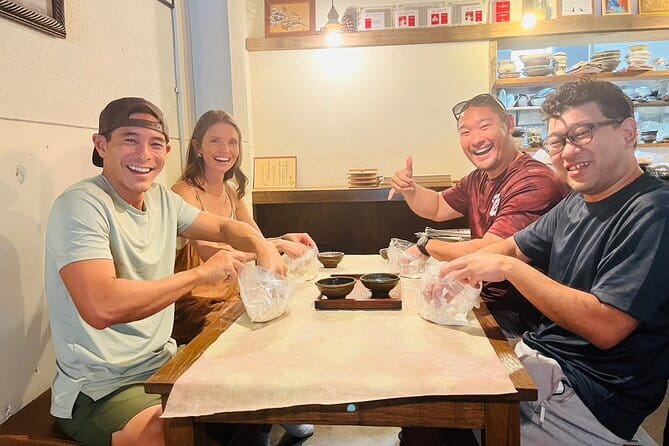
The unusual part comes first: you knead Sanuki udon dough with your feet. It sounds silly until you learn that this is what gives the noodles their firm yet smooth bite. At UDONZIN美糸, the chef then cooks what you make and serves it in the restaurant with broth built from kombu, shiitake mushrooms, and katsuobushi.
I like two things in particular. You get a recipe to take home, so the class has value beyond one meal. I also like the warm, small-restaurant setting and the personal teaching from hosts such as Keiko and Nozomi. The main consideration is that this is a working class, not a quiet tasting: you may share your table with other people, and the dough process can get messy.
In This Review
- Key points at a glance
- Foot-kneaded udon at UDONZIN美糸
- What happens during the 90 minutes
- Why the broth matters
- A small restaurant with a personal feel
- A useful choice for families
- Vegetarian and dietary details
- Is $52.85 good value?
- Location, timing, and what to wear
- The class works best for these people
- What I would keep in mind before booking
- Should you book this udon class?
- FAQ
- How long does the handmade udon experience last?
- Where does the class take place?
- Where does the activity end?
- Does the class include a meal?
- Is the udon tasting included in the price?
- Are drinks included?
- Can vegetarians participate?
- Can children join the class?
- Can I join alone?
- What should I wear?
- Is the class suitable for someone with a wheat allergy?
- How many people can join the class?
- Do I receive a recipe?
- Are photos included?
- Can I cancel for a full refund?
Key points at a glance
- Foot-kneaded Sanuki noodles: The traditional method creates udon with a firm but smooth texture.
- Your noodles become your meal: The chef cooks them after class and serves them hot or cold.
- Natural Japanese broth: Kombu, shiitake mushrooms, and bonito stock provide the main flavor.
- A useful take-home recipe: You can try the process again after returning home.
- Friendly small-group format: The class can include other participants and has a maximum of 20 people.
- Good for families: Children aged 2 and above can join, with a child fee of ¥5,000.
Foot-kneaded udon at UDONZIN美糸
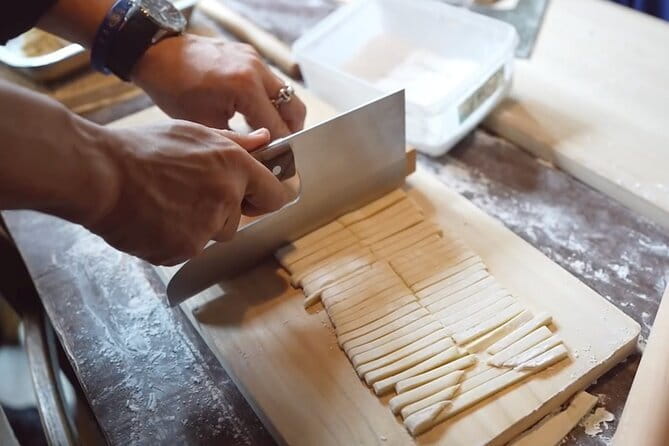
This 90-minute class takes place at UDONZIN美糸, at 1-chōme-16-17 Shinmachi in Osaka’s Nishi Ward. The restaurant is close to public transportation, and the activity begins and ends at the same address.
The class focuses on Sanuki udon, a style associated with noodles that are springy, smooth, and substantial. The key technique is kneading the dough with your feet. You are not simply watching a chef work. You take part in the physical process, which makes this a more memorable food activity than a standard meal.
The foot-kneading step also works well for mixed groups. You do not need cooking experience, and children can take part with adult supervision. The process is playful, but it is not just a gimmick. The pressure helps develop the texture that makes fresh udon different from packaged noodles.
Plan to arrive on time. The restaurant returns to serving regular customers after the class, so the schedule is set rather than open-ended. Wear clothes you do not mind getting dusty or splashed with flour and water.
More Japanese home cooking classes:
- Osaka: Ramen and Gyoza Cooking Class in Dotonbori
★ 5.0 · 378 reviews - Osaka: Sumo Stage Show with Bento or Snack + Fight & Photo
★ 4.3 · 364 reviews - Osaka: Traditional Mochi Pounding Experience with Tasting
★ 4.9 · 306 reviews
What happens during the 90 minutes
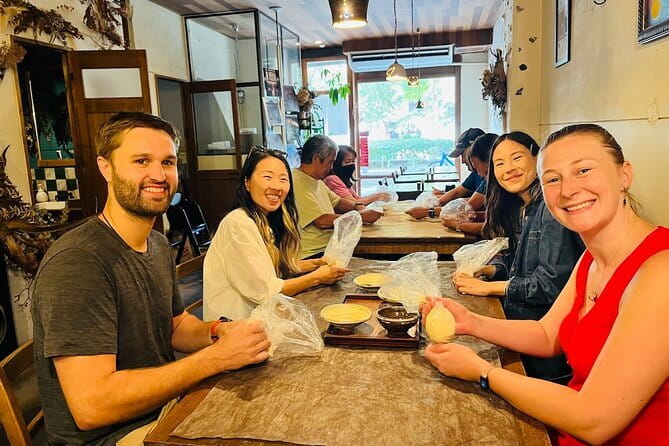
The session begins with an introduction to udon and the process behind it. Keiko and Nozomi are named instructors associated with the class, and the teaching style is suited to first-time cooks. You are guided through each stage rather than left to guess what to do.
You then work the dough by hand and foot. This is the part most likely to produce laughs, especially in a family group or a mixed class. Since the activity may combine separate bookings, you should be ready to share the experience with people you have not met.
After the dough has been prepared, the chef takes over the cooking. That is a practical choice. Cooking timing matters with udon, and the class keeps its focus on making the noodles rather than asking you to manage a busy restaurant kitchen.
Your finished udon is served as the tasting portion. You can have it hot or cold, which gives you a small choice in how you experience the noodles. Hot udon lets the broth take center stage, while cold udon puts more attention on the noodle texture.
The instructor also takes photos during the class and shares them with you. That is a useful extra for families, since hands and feet covered in dough are difficult to photograph while you are busy working.
Why the broth matters
The noodles are only half the meal. The restaurant prepares its special broth from additive-free ingredients, including kombu, shiitake mushrooms, and katsuobushi, or bonito stock.
This combination gives you a clear taste of basic Japanese stock-making. Kombu adds a gentle savory note, shiitake brings earthy depth, and bonito adds a more pronounced fish flavor. The broth is not an afterthought poured over the finished noodles. It helps show why fresh udon is often judged by both texture and soup.
The tasting is included in the class price, but the meal is not an unlimited restaurant order. You can purchase extra udon or side dishes such as tempura separately. Alcohol is also extra, with Japanese sake and beer available if you want a drink while making the noodles.
That pricing detail matters. At $52.85 per person, you are paying for instruction, ingredients, the tasting, a recipe, photos, and local taxes. You are not paying for a large meal with several courses. If you want tempura, extra noodles, sake, or beer, plan on an additional charge.
A small restaurant with a personal feel
The restaurant is described as small and cozy, with cohesive decor and a clean bathroom. That setting is a good match for a hands-on class. You are close enough to the instructor to follow the process, ask questions, and see how the dough changes.
A class of up to 20 people is allowed, so the experience may feel intimate or fairly full depending on the booking. A large family or friend group can fit, but solo participants should contact the provider before booking. The class requires at least two participants, and a single adult with children should also check in advance for a suitable session.
Keiko has been praised for creating a welcoming atmosphere for groups that included children, including kids aged 4 and 10. Nozomi is another instructor connected with the class and is described as a kind, effective teacher. The practical lesson here is simple: the human side of this experience matters as much as the noodles. You are joining a hosted activity, not picking up a self-guided cooking kit.
A completely different way to spend a day in Osaka:
- Osaka Go Karting Tour with Funny Costume
★ 5.0 · 2,658 reviews - Osaka Castle: Museum and Tower Entry Ticket
★ 4.5 · 2,380 reviews - Osaka: Shinsekai Food Tour with 13-15 Dishes at 5 Eateries
★ 4.8 · 2,204 reviews - Osaka Food Tour: 13 Dishes at 5 Local Eateries
★ 5.0 · 2,149 reviews
A useful choice for families

Children aged 2 and above can participate, and the listed child price is ¥5,000. The activity has an easy hook for young participants: stepping on dough is more exciting than watching someone chop vegetables.
Older children can also follow the food story, learn how the dough is handled, and eat the noodles they helped create. The 90-minute length is long enough to feel like a real activity but short enough to fit into a busy Osaka day.
You should still consider the practical side. Flour, dough, and wet hands are part of the session, so dress accordingly. The class may also include other people, which can be fun for outgoing children but less comfortable for a family hoping for a private lesson.
Vegetarian and dietary details
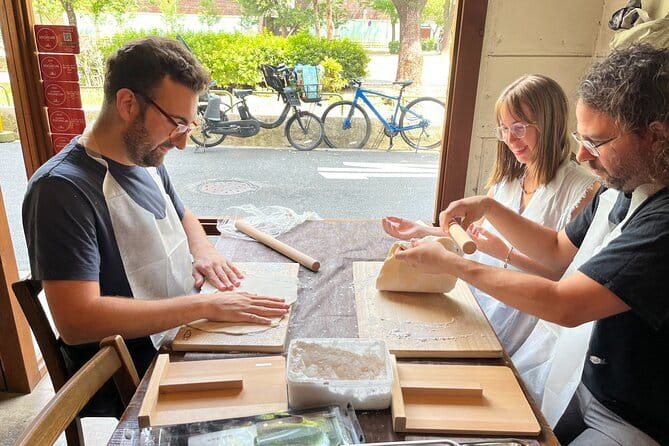
Vegetarians are welcome, but you need to share dietary restrictions in advance. That is especially important here because the standard broth includes katsuobushi, a fish-based ingredient.
Do not book this class if you have a wheat allergy. Udon is a wheat noodle, and the activity involves direct contact with the dough as well as eating it. The available information does not promise substitutes for wheat or fish-based broth, so ask before booking if your needs go beyond the stated vegetarian option.
For everyone else, the simple ingredients are part of the appeal. You get to see how flour, water, kneading, and cooking produce a food that is central to everyday Japanese eating. The lesson does not require specialist cooking knowledge, which makes it accessible without making it feel empty.
Is $52.85 good value?
The price is fair if you want an activity rather than only lunch. A regular bowl of udon would cost less, but it would not include the guided preparation, foot-kneading lesson, recipe, photos, or the chance to eat noodles made during the session.
I see the recipe as one of the better inclusions. Many short cooking activities end when the meal is finished. Here, you receive a way to repeat the process at home, though you should remember that matching the exact restaurant texture may take practice.
The included photos also add value for families and couples. You do not have to ask someone else to document the class, and the instructor can capture the more awkward stages of the process.
The price becomes less attractive if you want a full restaurant meal, several side dishes, or drinks. Tempura, extra udon, sake, and beer are not included. Budget for those only if they matter to you.
Location, timing, and what to wear
The meeting point is UDONZIN美糸, 1-chōme-16-17 Shinmachi, Nishi Ward, Osaka, 550-0013. The activity ends at the same place, so there is no separate drop-off point to find.
The duration is approximately 1 hour and 30 minutes. That makes it easy to pair with other Osaka plans, but you should leave enough time to reach the restaurant before the scheduled start. Late arrival is a poor fit because the restaurant resumes normal service after the class.
A mobile ticket is provided, and confirmation is received at booking. The restaurant is near public transportation, which is helpful in Osaka, where a short walk from a station is often easier than arranging a taxi.
Wear casual clothes that can handle flour and dough. This is not the time for delicate fabric or an outfit you want to keep spotless for dinner. If you are visiting during a warm season, comfort matters too, since the class involves movement.
The class works best for these people
I would recommend this activity to you if you want a food experience with some hands-on work and a clear connection to Japanese daily cooking. It suits families, couples, small groups of friends, and solo visitors who are comfortable joining a shared session after confirming availability.
It is also a good choice if you have already eaten plenty of Osaka specialties and want something you cannot get simply by ordering from a menu. The foot-kneading method gives the class a distinct identity, while the final tasting keeps the lesson grounded in a real meal.
You may want to skip it if you dislike group activities, need a private class, have a wheat allergy, or want a long, elaborate lunch. The maximum group size is 20, and the experience can include other bookings. It is friendly and practical, but not designed as a private chef demonstration.
What I would keep in mind before booking
Contact the provider in advance if you are alone, if your group includes one adult and children, or if you have dietary restrictions. The minimum class size is two participants, so a solo booking is not guaranteed without prior contact.
Book with the cancellation rule in mind. You can receive a full refund if you cancel at least 24 hours before the start time. Cancellations or changes inside that window are not refunded or accepted, and the local time in Osaka controls the deadline.
The activity itself requires a minimum number of participants. If the session is canceled because that number is not reached, you are offered another date or experience, or a full refund.
Should you book this udon class?
Book it if you want to do something with your hands, learn a Japanese food technique, and eat the result soon afterward. The combination of foot-kneaded Sanuki dough, natural broth, a take-home recipe, and shared photos gives the 90 minutes a clear purpose.
I especially like it for families and visitors who value a personal host. Keiko and Nozomi bring the kind of warm instruction that helps beginners relax, while the restaurant setting keeps the activity connected to ordinary Osaka food culture.
Skip it if you are searching for a private culinary lesson, a large meal, or a wheat-free experience. For everyone else, $52.85 is a sensible price for a short, memorable class that teaches you something and feeds you at the end.
FAQ
How long does the handmade udon experience last?
The class lasts approximately 1 hour and 30 minutes.
Where does the class take place?
It takes place at UDONZIN美糸, 1-chōme-16-17 Shinmachi, Nishi Ward, Osaka, 550-0013, Japan.
Where does the activity end?
The activity ends back at the meeting point, at UDONZIN美糸.
Does the class include a meal?
Yes. The chef cooks the udon you make and serves it as a tasting portion, hot or cold.
Is the udon tasting included in the price?
Yes, the handmade udon lesson and udon tasting are included. Extra udon and side dishes such as tempura cost more.
Are drinks included?
No. Japanese sake and beer are available at an additional cost.
Can vegetarians participate?
Yes. A vegetarian option is available, but you must share dietary restrictions in advance.
Can children join the class?
Yes. Children aged 2 and above can participate. The listed child fee is ¥5,000.
Can I join alone?
The class requires a minimum of two participants. If you want to join alone, contact the provider in advance to find a suitable session.
What should I wear?
Wear clothes you do not mind getting messy, since the dough-making process involves flour and hands-on work.
Is the class suitable for someone with a wheat allergy?
No. The activity is not recommended for people with a wheat allergy.
How many people can join the class?
The maximum group size is 20 people. You may be grouped with other participants.
Do I receive a recipe?
Yes. A recipe for making udon at home is included.
Are photos included?
Yes. The instructor takes photos during the class and shares them with you.
Can I cancel for a full refund?
Yes, if you cancel at least 24 hours before the experience start time. Cancellations made less than 24 hours in advance are not refunded.
Just added around Osaka
- Nara Day Trip from Osaka with a Licensed Guide★ 5.0 · 3 reviews
- Osaka Early Morning Osaka Castle Tour Avoid Crowds★ 5.0 · 3 reviews
- Guided Tour of Some Attractions in Osaka by Private Car★ 5.0 · 3 reviews
- Private Transfer Between Kyoto and Kansai Airport KIX★ 5.0 · 3 reviews
- Shared Arrival Transfer: Osaka Itami Airport to Osaka City★ 5.0 · 3 reviews
- Osaka: Sushi Making Class and Dotonbori Food Tour★ 4.7 · 3 reviews
- Osaka Night Photography Workshop★ 5.0 · 3 reviews
- Kyoto Full day Tour Kinkakuji, Kiyomizu-dera and Fushimi Inari★ 4.5 · 3 reviews
Osaka Cooking Classes, compared.


Sumo Stage Show with Bento or Snack + Fight & Photo
Read our review →
Traditional Mochi Pounding Experience with Tasting
Read our review →
Osaka Cooking Class: Okonomiyaki &Japanese cuisines experience
Read our review →


Osaka Sake Tasting & Takoyaki Cooking Experience
Read our review →
Cooking Ramen&Gyoza/KatsuCurry/Bento/Okonomiyaki+Store Tour@Osaka
Read our review →Browse the lists this tour appears in